
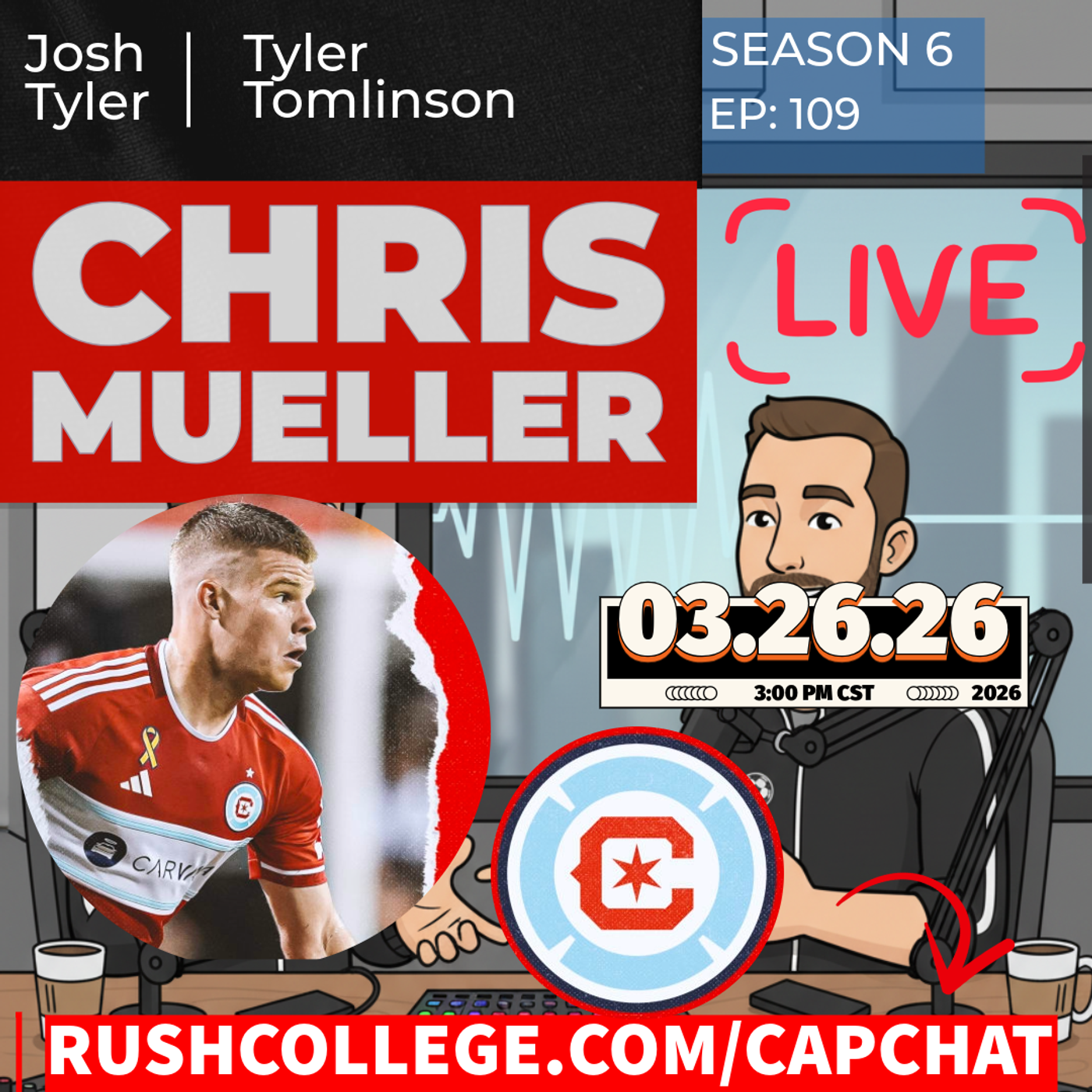
CAP Chat Live! · CAP Chat
Powered By Vita Coco: 3.5X the electrolytes than the leading sports drink The conversation covers the journey of Chris Mueller from his youth sports specialization to his transition to professional soccer, including his college soccer experience, MLS draft, move to Europe, and the challenges he faced in the new team dynamics. It highlights the importance of multi-sport youth athletes transitioning to soccer, the growth and development experienced in college soccer, the excitement and challenges of professional soccer, and the emotional toll of transitioning to a new team in Europe. The conversation with Chris Mueller covers his experiences in soccer, focusing on the themes of adversity and resilience, as well as the importance of reading and education. Chris shares his journey of facing stigma as an American player in Europe, his debut with the men's national team, and his battle with a heart condition. He also discusses his high-performance mentorship platform, Be The Best, and the impact of literacy on personal development. Takeaways Youth Sports Specialization College Soccer Experience Adversity and resilience Importance of reading and education Chapters 00:00 Youth Sports Specialization and Transition to Soccer 10:06 College Soccer Experience and Growth 16:16 Transition to Professional Soccer and MLS Draft 21:18 Move to Europe and Challenges 28:00 Challenges in Europe and Team Dynamics 53:49 Importance of Reading and Education
Josh Tyler: Hey, we're live everyone. Happy day, whatever day you're listening to. It's still March for me here in the Midwest. Chris is, I think you're in the Midwest. Where are we finding you today, Chris? All right, all right. Cool, cool, cool guest today. Chris Midwest kid, Schomburg, Illinois. Got some really cool stories to talk about his journey. He's got some cool products and some really cool things. He's currently playing. Chris Mueller: Thank you. So. Josh Tyler: and the MLS in his hometown Chicago Fire, which has got to be really cool. That's a really cool situation for you. So current MLS player, played Europe for a while in Scotland and came back here. So ⁓ the comeback is great. So, we're diving. Chris, thanks for joining us today, man. How are you? Chris Mueller: I'm great. Yeah, no complaints. Thanks for having me on. Obviously, excited to be on and chat a little bit about my journey and everything that's kind of going on with me and in my life. So yeah, looking to provide some value where I can. But again, appreciate the opportunity to just have me on. Josh Tyler: Yeah. Well, let's start with kind of your, your, your, your background. he said, you know, Schomburg, Illinois, the Midwest. but, ⁓ can talk about your, your, journey. I know you weren't a rush player, but we're pretend, you know, I think you're the shockers is where you're in the plane. And, ⁓ but talk about your pathway to as a youth player and how you you to where you are today. Chris Mueller: Yeah, so was a multi-sport athlete like so many kids. in the states, you know, playing various sports. I was big in wrestling, basketball, baseball and stuff. And ultimately when the time came, when I turned, maybe it was, you know, 10, 11, 12 years old, something in there, I decided to become a one sport athlete and move just to soccer and, you know, try and pursue that a little bit more seriously. I think my parents saw a little bit of potential in me and wanted to give me a good platform. I was just playing rec soccer, not mean travel soccer at the time, just for like the standard city, you know, clubs that come up through like the why so and stuff like nature. So moved me over to the soccer's when I was ⁓ around that age, 10 years old. And yeah, like just developed there my entire time as a youth player, had some great coaches, learned some great things, obviously was able to recruited to play in college, which was a really awesome experience. went to university of Wisconsin. I was a young freshman. I got there at because of my birthday. It was kind of that weird in between where I was like a little bit in front of the cutoff. But so I finished at 21 when I got drafted, but played there all four years, uh, three and a half years in school, four seasons with the team. And then got drafted to Orlando city in 2018. Um, and then yeah, played there for four seasons, made my debut with the national team, got brought over, uh, from the team from, uh, Scotland named Hibernian Hibs was the team. And, uh, then obviously had the chance to come back and play for my hometown team, which was. something I'd always wanted to do as a little kid and I knew that at some point in my career I was going to try and make that move. So just cool to be able to do that. Josh Tyler: Covered a lot of ground there. So let's start. So you're two sport athlete. What was the and how would we you and you said you? Started 100 % focused on soccer Chris Mueller: I was probably 10. Yeah. Josh Tyler: Was that a tough decision? Were you a standout at all sports or were you new to soccer? What was your thought if you remember being 10? Chris Mueller: Yeah, no, like I definitely was the best at soccer out of all the ones. know, basketball, didn't have a great shot. was athletic and quick so I could get around people, but... You know, I didn't really know if I had much of a future when in relation to a lot of the other kids, I love to wrestle. Wrestle was probably my second favorite just because I love the individual aspect of that sport where there was no one to blame if stuff didn't go right. was just like it all that was output was determined by your input, you know, and it was like just you in the mat, ⁓ and one other guy and it's just wrestling, you know, so, so there was some component of that I definitely enjoyed. And I actually joined that sport just to get the physical endurance and, ⁓ of stretch myself in different ways. ⁓ Josh Tyler: interesting. Chris Mueller: ⁓ grow in different ways and so that was the reason for that but I ended up really liking it and you know still I think at the end of the day I was just the best at soccer and I enjoyed that one the most I had a lot of good friends that was like another big determining factor was the friendships that I had ⁓ to build at the club and you know I was like I think that soccer is probably the way that I just with how I've already developed relationships, how I'll probably continue to relationships. And some of the kids that I play soccer with are still some of my best friends to this day. So it was definitely at, I would say 10 was when we made that transition over to the soccer's and took it a little bit more seriously. Josh Tyler: Okay, in order to wrestle, we see a lot of defenders as wrestlers as well, because they just have that mentality that I'm, you know, one of our best players I've seen is he's just, got the player that we need to mark out of the game, he's a wrestler, his name's Drake. I'm like, Drake, you're just marking this guy out of the game. They just stick to him like glue. It's an unbelievable sport. I have no idea how to wrestle, but it's an unbelievable sport to watch. Chris Mueller: Totally. Josh Tyler: Wisconsin, the Badgers, University of Wisconsin Badgers, correct? Okay, so talk about that journey for you ⁓ of what was that recruitment process look like? It's obviously a little bit now, but what was the recruitment process and what ultimately made you just settle on becoming a Badger? Chris Mueller: Yep. Yeah, it's funny, you I was actually really adamant about not going to college when I was like, I was doing really well in the academy with the soccer's and I kept telling my parents, I felt like I was very overlooked and underrated as a young player. saw a lot of kids get into the ODP teams and the national teams and stuff like that, that, you know, they, they were good players obviously, but I felt like I could be there as well. And, you know, I always got a little bit of chip on my shoulder for that reason. And I thought that the system was overlooking me. So I was like, mom, going to, I'm going overseas. I'm going to Europe. You know, this is, this is my dream. a trial and you know we'll just try and take it from there I don't need the college scheme so that was my idea and I ended up actually getting a trial I got some interest from a team in Germany and I went over on a ⁓ two weeks and didn't get a contract and I came back head in my head in my hands and thinking like what am I gonna do you know so I just ⁓ I kept and just you know trying to find my way in the college game just acquiring interest from obviously playing at the soccer is I ⁓ went to few showcases and was just trying to build up my name, you know, as much as you obviously can by doing the right things over a long period of time. But yeah, acquired some interest from Wisconsin and I was really between them and Loyola Chicago. and was going through different components of that recruitment journey as well, and trying to determine distance from home. And there's all these different parts of the equation, which conference you want to play in, scholarship money. A lot of things start to weigh on you that mean maybe a little bit more than soccer. But ultimately, the Big Ten experience that I thought that I could have while at Wisconsin, as well as the academic, plus the athletic opportunity and potential really, was that University of Wisconsin. I was like, okay, this is definitely going be the place for me. also had a great relationship relationship, least I felt like from the coach, know, he did still a lot of belief in me and even though I wasn't on, you know, a huge scholarship, I was on a smaller ⁓ scholarship, but I felt like, you know, he was honest with me. He felt like he saw potential in me in terms of what I could become and yeah, it kind of went that way and I decided to commit and take a run for my money. Josh Tyler: So go back, so I have two boys, 15 and 13, and I can't imagine as a parent, how that conversation with your mom to say, I wanna go overseas? Obviously they seem very supportive ⁓ from ⁓ What that conversation like? ⁓ My would have cried. Going overseas, how did that conversation go? Chris Mueller: you Yeah, she was, she, wouldn't say that she nor my dad were happy, you know, and my mom, uh, my parents weren't together. So I had separate conversations with each of them, but my mom had told me like, look, Chris, I'll support you, but we're not going to pay for your way there. Like we think you need to go to college. So you're gonna have to figure it out. So ultimately I ended up going and, know, applying at a bunch of different places, looking for a job, you know, at Starbucks and, uh, Home Depot, all these places I was applying at, I ended up landing a job at Costco in high school, you know? So I was like, okay, I'm going to start working at Costco. was on the four AM to noon. shift summer and ended up making enough money to obviously buy my ticket. So I did and I went and I actually thought I did really well over there and ⁓ came back obviously didn't get the contract. But it was the first kind of taste of reality for me just into the pro game as well being in the locker room with those guys. But yeah, it was definitely a difficult conversation I think when I came back and they got to, we got to obviously revisit the idea of going to school and trying to actually start to answer some of these emails and really start to hone in on the recruitment process and what that looked like. there were steps that I needed to take and things that I needed to do to improve my odds of getting into school in of just like academics and things of that nature. But, you know, my parents were ultimately supportive and really influential in terms of helping me decide where I wanted to go to school and helping me understand why it was important. And it's why now today I'm such a big proponent for the college game because I think it just taught me we can get into that later but taught me so much about what it takes to be successful even in the pros. Josh Tyler: Let's talk about that. you were a standout 2017, led the entire nation in assists. And so you're the Big Ten offensive player of the year. So you had a very successful collegiate career and obviously got you led to being drafted. So let's stick with the college game right now and talk about what you think the importance of that growth there for you. Chris Mueller: Yeah, well, you know, it's easy to pinpoint my senior year just in terms of what I was able to do. But like, you know, we forget to mention my first year I was barely playing. I didn't score a single goal my freshman year. sophomore year, I started playing a little bit more. I scored a few goals. But even that year, the team, we had only won like four games the whole season. Freshman year was three. So like we were abysmal. You know, we're the worst team in the Big Ten. And for overnight, you know, after that second year, was some real adversity that I was going through because, you know, my dreams of becoming a pro were slowly diminishing. I was at a not quote unquote good school in terms of the rankings and get my potential to get drafted was low. wasn't barely playing, you know, and I remember telling my mom, I was actually crying on the phone with her because I was like, I think I need to transfer and go somewhere where I'm going to play more. And, know, this just isn't working. I've been here for two years. The team, the culture is not great. We don't have a winning culture. We're at bottom of the big 10. And both of my parents had told me like separately, you know, you're there. You have a great opportunity. You kind of got to put your hands in the dirt and take on a little bit more responsibility. You know, like I can't keep pointing fingers and you really got to decide if this is something you want to do. And if you do, you got to commit heavier than you ever really have. So, you know, for me to go from where I was my first two years and to go through that adversity and then prove it to myself by becoming the only two time all-American at University of Wisconsin ever overnight, you know, from that never playing or ⁓ playing that much, you know, my, my sophomore year to that, my junior, senior year. I think that that was the most improbable thing maybe ever, you know, if I told you to go on and do that after my sophomore year, people would have said like, you're crazy, you know, and you would been right for saying that. Josh Tyler: Yeah. Chris Mueller: that it was crazy but you know just having pushed through some circumstances like that and learning to ⁓ on myself, committing myself to the process of growth even more and like learning my responsibility and my life's outcomes were only on my shoulders that the golden token me you know that's what really changed my life it changed my outcomes on the field and it was like literally overnight because of that process and because of the confidence I've developed on the back end of creating that process It, you know, I literally, you know, I had the all American year and then my senior year obviously broke the record for assists. I think there was only one person who got more than 20 assists in the history of NCAA. So that was, yeah, it was an incredible ⁓ We won the big 10, you know, won the big 10 championship. I still got the rings up here behind me. was one of the best moments of my career. ⁓ even after the time in the pros, just because of how, you know, hard we had worked as a group and turn the culture around. And ⁓ was just the, it was the cherry on top for me. Josh Tyler: Yes. Ha! Chris Mueller: know, when you really commit your mind to something and you believe in something even when nobody else does, if you show up for yourself and you do the right things, like you get rewarded for that. And to have gone from that point and beating Maryland in the semifinal and beating Indiana in the final, ⁓ know, ⁓ things that I couldn't have imagined were possible, but it's always a reminder to me that, you know, ⁓ it cliche, but it's true. Like you can do what you set your mind to. Josh Tyler: Yeah, I love that you talk about kind of your lifestyle change. So you had a flip with a switch because that is a huge jump from your sophomore, senior year. Talk about the physicality differences. You mentioned the mental aspect, but what was your off season like? something, a light bulb switched and you said, okay, I'm all in. What was your off season like to come back for that? that's because for that because we have a lot of players I'm sure right now especially the landscape they're not playing like they feel they should be there's a lot of transfers and you have two options I'm just like you said I'm gonna I could I could do it I'm gonna make the most of it and you made the most of it but specifically only like the physicality aspect and what you did over like in your offseason to come back as a junior. Chris Mueller: Yeah, you know, think ultimately that proponent comes down to just being willing to take on that responsibility. you know, you're going to be done pointing fingers at the coach for not playing you or that you didn't score because the rain that day or it was too cold and you know, whatever the situation might be, you can always point fingers and you know, to take on that responsibility is also difficult when you're not where you want to be because that means that you are there because of yourself, you know, but it also empowers you moving forward, knowing that your actions can make a difference in your future, you know, and so, you know, my off season that year specifically, even in all years, I was never one to take much time off, but I, started to reframe me and one of my teammates at the time. ⁓ off season to the separation season, you know, because everyone else was taking time off and they were just doing slight training and whatever. But we, you know, ⁓ ⁓ out 100%. Like we were doing, I remember Sean T's insanity CDs, like we were doing them in my friend's basement before we would go ⁓ train at the Bridges to Pros in Chicago at soccer city with Brett Hall and some of these big time pros. was hours of training. So we'd start at 7 a.m. and do, you 45 minutes to an hour of ⁓ rigorous exercise in terms of strength. stuff and then we would get in the car We would go train and play soccer for you know three hours ⁓ the bridge to the pros program and then sometimes we'd hit the gym after that and go and lift up our body do core stretch Do that sort of stuff where we really start to build a routine? That when we came back that next season we were so confident because we knew we were doing stuff that only 1 % of people were doing so it's a matter who was across the white lines Another side of us we were like there's no way you're more prepared than us and there's no way you've worked Josh Tyler: Yeah. Chris Mueller: harder than us so we're gonna beat you guys and that piece of confidence just came from again the willingness to do what nobody else was willing to do Josh Tyler: Man, that's incredible. That's incredible. And it pays off. Like you said, the two time All-American. Being an All-American is a hell of achievement anyways. Being a two time All-American is awesome. And then so you get drafted in 2018. It's a six overall pick, which is, most people know football. watch it. To be in the first round is big. talk us through how excited were you, were you, were you eyeing? We obviously don't, if you don't want say you weren't wanting to go to Orlando, but were you eyeing Orlando? Like what was it like to be picked? you know, what was that moment there for you? Chris Mueller: Yeah, you know, my, was lucky in the sense that I had a great agent at the time who was very transparent with me and the idea that, you know, teams could say they're going to draft you at any point. You know, it's like, ⁓ we're going to take him at six. We're going to take him at six. And, know, the, nature of the draft is like the first pick is always the one that's unpredictable and it's uncertain. And it's like, it throws a domino effect where everybody else thought, ⁓ that guy was not picked. And maybe now they take him and the whole draft order just kind of changes. So he was like, look, you got to be prepared to go anywhere. And I was getting interviewed at the combine by 10. plus teams with their GMs and sporting directors. So I was like totally open to seeing where I was going to go. And it's funny, I was sitting there and I'm just like waiting and I had an idea that I was going to probably go in the top 10. I obviously didn't know, but I was just based on my season and kind of the hype that was going around and all the draft, you know, things that you see going out. And I was like, all right, we'll see. Like maybe I will. So I'm sitting there and just like waiting. My grandparents are there. My parents are there. My brothers, you know, it was a, it was a big day over in Philadelphia. It was actually funny. Chicago fire had the fifth pick, you know, so I was like, ⁓ man, like, they going to take me back home? You know, are they going to pick me? They passed on me and then sixth came and it was Orlando city. And I was honestly, I was excited because Orlando was a fairly new team. had Kaka on the team and they had a massive brand new stadium, massive following, lots of amazing fans. And the culture was just bleeding soccer down in Orlando. So I was like, this is going to be an amazing opportunity. Obviously get the good weather and all that. Josh Tyler: Yeah. Mm-hmm. Chris Mueller: So I was thrilled, you know, just to get going and have the chance to go to O'Rourke and down I went almost pretty much straight to my first preseason. Josh Tyler: Wow. Yeah. And I mean, you left there. you still, think you're still maybe at the time you're the Orlando's all time appearance, maybe you 126 matches. What's the key to longevity there? Like how did your mind shift? So you made it and like, it's like every step I made it and then there's one more level for it. There's one more level. What was it like you going to a training camp with grown men, right? And at that time, do they Do they care who you are? you walk in like, hey, look at me, I'm too tall, I'm not American. They're like, who cares? Who cares, kiddo? What was it like? Chris Mueller: Yeah, nobody has any idea what the Big Ten is, you know, like... Josh Tyler: Hahaha Chris Mueller: American guys do but I mean you play there's probably 75 % you know International guys who are from France from the guys there was a guy from Peru who's playing in the World Cup and guys from Colombia and they have no idea where you're coming from they have no idea who you are and you're stepping you're going from being a big fish in a small pond which is still no small feet obviously right like becoming in the top 10 of the players in the country and in college but um you know then you step into being a tiny fish in a massive pond you know I'm playing with Sasha question who led the the MLS and assist the last two seasons and Dom Dwyer, who was banging goals for years before that. And they just spent $4 million on another winger from Paraguay. like, you know, it's a much different level and the level was obviously better and it took some adopting for me, but ultimately it was always about just trying to stay ready and like maximize some opportunities, my opportunities, try and maintain the confidence that I was building in, you know, as a college player and try and just build on that. And I got a good opportunity in preseason. One of the guys got injured and I got to step in and play up top. And I think I I scored five goals in my six preseason games with Orlando and earned the start for the first game and was kind of always that for the first year I was kind of always that in between a starter and then between the sixth man, the first guy off the bench. And that was amazing for me just to get reps under my belt. think that my tenacity and I play with my heart on my sleeve a lot. You know, I'm a very emotional player and I want to win. I think the fans resonated with that. The fact that I was an American kid that, you know, came from the draft. you know, it's hard for the kids in the stands to relate to players who are from different countries who don't walk that same route. You know, so I think, you know, by nature and just, became kind of a fan favorite down there, I guess, for lack of a better phrase. And, you I was just. Josh Tyler: Mm. Chris Mueller: maximizing on my chances and just showing I guess like a really nice willingness to win that maybe they hadn't seen a lot of that like real passion for for trying to win yet maybe you know I don't know what it was exactly but from there kind of just like sprouted my career and gave me like a lot of chances to continue to step onto the field to keep making a name for myself and then obviously as you stay prepared you got to take those moments as well right if you're I scoring some goals I was getting assists you know and being like I said a guy from college they don't expect massive production from those guys right away So the fact that I was producing was run up for rookie of the year that first year. And yeah, it obviously gave me a good foundation to continue to build my career. Josh Tyler: Mm-hmm. Wow, and just to think three years earlier, you're barely kind of, you're fighting for minutes, and then you're coming in and that's incredible. That's incredible. So what was the move to Europe though, to Scott? What was that, how involved are you in this process of moving? Was this, you requested or kind of explained that to, I guess I don't really know how. Chris Mueller: Yeah. Josh Tyler: that folio happens of going alone or what that looks like. Chris Mueller: Yeah. Yeah, so I was on a four year contract with Orlando. It was a one plus one plus one plus one, like all options on the club's end. So, ⁓ not a lot of power for the player there, but if you do well, they obviously pick it up. And I was on a rookie contract. So it wasn't like it was massive for them to pick up given what I was doing on the field. and that third season, ⁓ you know, I had double digit goals, a lot of assists, and was one of the best wingers in the league statistically at that time. And got called into the U S national team, scored two goals on my debut. like I was in a. Josh Tyler: Okay. Chris Mueller: really good moment in my career where like, you know, I knew I was coming up on a contract year and hopefully I could either get a new contract with Orlando or, know, my dream had always been to play in Europe as a little kid, you know, to be honest and just playing the different types of environments, you know, and I got some trouble when I was in Orlando for saying that when I signed with Hibbs, like I'm so excited to go ⁓ play in front of fans who will just like live and breathe the game, you know, and a lot of took that personally, but it's, it's, ⁓ just true. You know, I don't think we can argue when you go step into an Edinburgh Derby and it's Hibbs versus Hartz or you watch Celtic and Rangers, like the fans are, it is a different atmosphere to playing. And I can tell you that just from my own experience. like, I was excited about that opportunity, but nonetheless, like I was very involved in the process. So Orlando was coming back and saying they wanted to resign me. They weren't necessarily giving me ⁓ great offer that I felt like was worthy of what I was producing on the field, especially granted the reputation I'd built up with the fans and how I was within the club. So, ⁓ you I was like, it's fine. I'm just going to, you know, write out my contract. and probably I'm going to look to go to Europe, you know. So me and my agent were looking around. I had a bunch of teams from, you know, one in the Bundesliga lower team who was probably going to be fighting relegation. And I don't know if I wanted that. So then I was looking at a team, a couple of teams in the Netherlands and then Hibs came on the board. And more than anything else, I wanted to be involved with the team that I felt like wanted me as well. That was important. was like, I want to go somewhere where they want me to be there. They have big plans for me there. And it's a good fit. I'm going to get some good time. And I can obviously make another move after that if that opportunity comes. So when Hibbs came around and they were showing massive interest in me, the coach was a big fan really wanted me over there to help the team continue to push because they were third place in Scotland, pushing for Champions League. ⁓ And I was like, yeah, this is going to be the right move. So I was trying to get Orlando to sell me and I was going essentially every day to the GM's office, knocking on the door, like, please, you know, just sell me, let me go. they were like, ⁓ you know, you're, it doesn't make sense for us business wise to sell you right now. Like we're going to keep you. And so got, kind of, signed a pre contract with Lips to go in like six months after my contract was about to run out. ⁓ And you that was probably one of the hardest spells of my career because I wanted to go somewhere and I couldn't do what I wanted to do, like just completely held hostage essentially. And it wasn't hostage, right? I'm still playing for Orlando and it was great, but I was ready to move on and ready to go. And I think it was the right time. They were offering a lot of money for me. So I thought that it would have been great to get out there at that time. But I mean, I was, I was really involved. was calling the GM constantly talking to the coach after training and just trying to get moved, you know, and ⁓ obviously didn't happen at that point. And ⁓ I to wait six months until I could actually go over to Scotland and and join the team. yeah, difficult spell, especially considering I ⁓ the six months and ⁓ day I landed in Scotland, I went to go and take my picture with the with my jersey. And it was like a big moment because the fans had all been waiting six months for me to get there. So was like a lot hype. They had a lot of opportunity to market and build it up. ⁓ I there and they fired the coach. They lost the game that night and they sacked the coach who signed me. So I was like, my God, know, ⁓ like just, course, just. Josh Tyler: Yeah, that's cool. Chris Mueller: wild experience and so I moved all the way across the world with my wife and moved all my stuff and then it's like the coach who signs me gets fired. I was like, ⁓ man, what's this going to bring? was an amazing experience. But yeah, that was, ⁓ was pretty heavily involved in that whole process. Josh Tyler: Well, and there's a lot of things I want to get back to a couple of things. I want to stay here for a moment. it's crazy for when you talk about asking someone to sell you. That's insane to me. You wanted to go in and you're powerless at that point. And you have to still continue to perform. I guess you don't have to. You could boycott it. But you got to still go out and play knowing that. yeah, talk a little more about the emotional toll there of Did you feel completely powerless? Chris Mueller: Yeah, it was brutal. It was really hard, you know, because I felt like I had done the club really well, given what they were paying me and like my output, like that's just clearly what it was. And just like how I had put my all in for the club. And I think it would have just been a great time to get rid of me and ⁓ me move on considering they had said they wanted to sign me, but they weren't giving me like a fair offer. So it was like, this it's getting kind of weird. then, you know, to be there for those six months was really hard for me. You know, I'm like training and you know, some people are saying just stop coming and start to you know, it's like then that's your character and I don't want to get build that reputation either. So you got to continue to do what's right, you know, even though it's hard and I don't want to like let my teammates down and but ultimately like it was it was set up to be like an amazing move for me, you know, so it was ⁓ was a massive challenge like it was a massive emotional toll. My wife saw it. I was distraught, you know, for a lot of it and I was young as well emotional you know, probably a little bit more reactive than I am now and just because you want these things in your Josh Tyler: Yeah. Chris Mueller: career to go that you want them to go. But in that sense, you know, you are an asset in a lot of ways, you know, that's one of the components of the industry of professional soccer that, you know, people overlook. They think it's a lot of diamonds and they don't realize that a lot of times there's, there's cost that comes with that. Josh Tyler: Mm-hmm. Yeah, and we'll dive into that too, because I know you've talked about the less glamorous side of the reality. So you get there, what an emotional rollercoaster. Now you're there, the fan meet, like everything. You take the picture, fans are waiting for you. Your manager now gets sacked. What was the reality there? you're American Europe. Again, you had a good career in Orlando. Now you're back here. Do your teammates care? You're starting over again, right? You're another player to them now, right? Chris Mueller: Yes, yeah, they also knew that the club had done a lot to bring me in and I was told I was going to be given the number 10 kit the next season. So like that just says something in and of itself. They knew I was there to play an important role. And yeah, like I said, the club had just done a lot to bring me and I think pulled a lot of resources to make it happen. So like I was grateful for that and I knew that the opportunity, which should still be there, granted that. But then, you know, they hired a new coach who Josh Tyler: Yeah. ⁓ yeah. Chris Mueller: For some reason it felt like he had something against American kids. He was a Scottish guy and he brought a couple of kids on loan from Celtic, ⁓ who played my position and it was like, I was in and out of the team that I feel like he felt like he had to play me, but he didn't want to play me. And then I'm starting to get upset. I'm talking to the owner. I'm like, dude, you brought me all the way here and I'm not playing like this. know, I was in some games, the team was also struggling a lot. Like we went through a tough spell after they sack Jack Ross. And, know, I think that because of the nature of ⁓ who I was on the team, all the fans were blaming me. So like I was on, couldn't, if a team lost, I couldn't leave my house. the team didn't play well on Instagram and stuff, I was getting killed. So a different beast to play over there, especially. ⁓ Josh Tyler: Alright. Pause there for a second. can't leave your you couldn't leave your house explain this things explain this to to to our my simple mind Midwest Mind here. Like you you could you couldn't leave us because you fear for your safety Chris Mueller: Not for my safety, like, you know, I remember there was one game we played at home against Celtic at like noon, right? So the game was at 12. We played Celtic at home. I started in the game and played 90 minutes and I played fairly well. We lost one, no. And remember my dad was at the game. He flew in from Las Vegas, right? So he's living in Las Vegas. He flies to London on like a ⁓ hour flight and then takes the train up to Edinburgh. So like he crosses the world to come and see me play to see the city of Edinburgh. Like it's a, it's an amazing city. I was like, you know what? The game's over. I'm going to take you out to dinner. Like, well, I'll show you a little bit around downtown and stuff. And we went to dinner and I was getting heckled at dinner, you know? So it was like, I he was like, let's just go back, man. You know, this isn't even worth it. And so it's, it's just like things like that, I guess, you know, it's not like. your safety is in trouble, but you're just getting a bunch of stick by everyone in the city knows you. know, I landed there the day I landed there in Edinburgh. I walked in the city center with my wife and I got noticed like 15 times taking pictures of people. You know, it was like, it was way different than if you walk in, you know, downtown Chicago or something. And even there are like in coffee shops when I do get noticed here, it's like people will come and just ask for a photo. And it's like, they're nice. It's not like they're all over you. If you don't win on the weekend against Philly, it's a much different feeling. So, Josh Tyler: Yeah. Chris Mueller: you know, from that standpoint, I would say I wouldn't leave my house if I lost just because I wasn't trying to take steak from anybody. Josh Tyler: Yeah, that makes sense. So how much different is the game there? And that's interesting you brought out. I want to pause. Like you felt, and I know you said this in other interviews, is felt the stigma like they looked, you feel they look down upon you or look down upon us as Americans. Like ⁓ not as good as us. You're the style of play. Cause this was back in, mean, that's four years ago, but ⁓ was. I mean, it was that you think that had a lot to do with it. They look they think less of you as a player. Maybe the manager did less use a player because we're American. Chris Mueller: I think they don't think we know as much about the game because we're Americans. Especially when things aren't going well, it's just like an easy scapegoat. know what I mean? Like if things are going great, maybe we're cool with it, but definitely when things aren't going well, you have that component of just, it is what it is. You're an American guy over there and they definitely have that stigma. Josh Tyler: Yeah. Yeah, yeah, yeah, silly American. Wow. And then I know you kind of glazed past in 2022, or 2020, excuse me, your debut with the men's national team. And you scored two goals in assist. You just kind of breezed over that. like, that's big deal. That's a big deal. Did you dream of playing for the... Because I know you talk about dreaming of playing in Europe and playing pro. Was the national team like a... goal you always wanted or I think every kid maybe dreams of it but was that something that you're fighting for is kind of unexpected or I mean what was that what was that like? Chris Mueller: Yeah, I mean, by no means was it expected. And I guess I did just glaze over that briefly, but you know, it was. Josh Tyler: Yeah, no big deal. score two goals for the national team on my opening debut. hey, no, know, next. Chris Mueller: I was, yeah, would say I definitely had, I wouldn't say I'd. Totally had dreamt about it like but over while I was growing up I saw so many kids in the youth national teams and that I wasn't getting called and I kind of had felt like the national team wasn't going to be for me when I was younger like because they had just preferred players who were different than me and you know, I almost came to just like use that as a chip on my shoulder like though I'm gonna show that I'm better than those national team kids every time you know, and a lot of those kids got youth national team debuts But they never had made it to the full men's team, you know So for me to be able to have done that and you know, I remember standing in my hotel room when I was called in and then like I was in the room we had the training camp in January and I found out that I was going to start in the game and I was like I was in my tracksuit in the hotel in Miami and I was I was I just had my headphones on and I was just thinking I was literally sitting there like for 20 minutes before the bus left for the game and I was like I can't believe my life right now like I can't believe I'm here at this point and about to go put on the US men's national team jersey and you know I think it's only something that maybe less than 1200 people have ever done in the history of US soccer you know so Like just to be able to have that moment and you know, my dad was in the crowd and my girlfriend who is my wife now obviously, but you know, it was a really special day and I think that it was kind of just like the cherry on top for everything that ⁓ done and worked for to be able to represent your country no matter what level it's on to have gotten myself in that pool finally after all the years of getting turned away from the U-12, U-13, U-14, U-15, U-16 national teams, you know, ⁓ the way up the totem pole ⁓ that point. And then obviously having that moment. Josh Tyler: ⁓ how cool. Chris Mueller: to score two goals in the debut, and just cap it off was like, yeah, I don't think I slept that night. Let's put it that way. Josh Tyler: Oh man, that's incredible. Yeah, that's so cool. If you just join us, we're talking to Chris Mueller, currently playing for the Chicago Fire in MLS group. Haven't yet even got to what he does in his website, b2btheofficial.com. wrote a book talking about his journey, pathway to pro. So we are getting there, I promise everyone, but I keep getting sidetracked by some of his stories. So I want to, if you don't mind, want to ask, I want to get to the couple of things that your heart condition, I know that in that change things, your B2B, the official, your book, if you don't mind, you have kids or what you married for? Did I read you have two to three kids or am I dreaming that? Chris Mueller: No, I got two kids, one year old and two and a half currently. Josh Tyler: ⁓ wow, that's crazy. How's that, how's that, or I remember those ages. How's that going? Is that neat for him? It changes your whole mindset, doesn't it, when you have kids? Chris Mueller: Absolutely, yeah. Perspective, totally different. It's the first time in my life I've ever, ⁓ know, moved down the totem pole of importance. You know, it's like my career's always been number one and it's like, ⁓ something higher up the hierarchy now, you know? So, ⁓ no, it's been amazing. It's something that makes you ⁓ that life is so much bigger than soccer as well. So, ⁓ you I've thoroughly enjoyed being a dad and ⁓ just of taking on that role. It's been You know, I can't even put words to it. Josh Tyler: Yeah Yeah. Yeah, yeah. And obviously, I no, grew up around the game. I'm not a pro player, but I had two boys and that was first question. Do you hope they play soccer? think ⁓ political answer is like, I'm just happy if they're healthy. But ⁓ be honest with you, both of my boys play. But I was like, yeah, I'm going to be honest with you. I wanted to play soccer. Do you feel that? There's got be some like, I want them to play. You're good. They should be good. ⁓ Is there of that in you? Or have you got to that stage yet? Chris Mueller: Yeah, no, I want, I think that playing sports will be good for them, you know, like regardless of what that is, we'll see what that is. I think that they might be inclined to play soccer just because their dad did. ⁓ You know, I would say right now I'm indifferent about it. Maybe as they get a little older, I'll feel different, but. Josh Tyler: Yeah. Yeah. Yeah. Chris Mueller: Well, as of right now, I'm pretty just to be around them and obviously want to see them just like have fun and enjoy whatever they're doing, you know? So we'll see where that brings us. ⁓ Josh Tyler: That's cool. But it does certainly make a bad night on the pitch or fans unhappy to go home and everything melts away, man. There's nothing else like it. Good for you. our switchkey is here a little bit. I practice pronouncing it. I'm still going to screw it up. I'm going let you, I can explain what it is. You have inflammation around your heart that, and let's talk about that. I'll let you pronounce what diagnosis was and kind of talk about that. Chris Mueller: Thank you. Yeah, it's called pericarditis. I, this was last year in preseason, right? Like a big, big year for me just in general, coming off of a pretty poor for the whole fire and, myself individually, I came off of a hip surgery 2023, you know, wasn't my best in 2024 nor like I said, what's the team, it was just a difficult season for everyone. So once they announced that they had hired Greg and I had the relationship with him in the national team, he had brought me in, gave me my debut. So I was excited to be able to work with him and you the club was really taking an exciting direction. So I had gone super hard that off season, went out to San Diego and did some personal training to work on my first step and getting that explosiveness back, putting in a ton of time with it. And then preseason came around, really like I could like refurbish myself and give myself another, ⁓ it the time to see an uptake in my career. then, yeah, I woke up in the middle of the night while we were away at preseason in Florida with really chest pain, and like... ⁓ was scared, didn't know what it was, knew it wasn't. I had had acid reflux and stuff before, but didn't really think that it was correlated and called the trainers and, you know, long story short, get brought to the ER later that morning. Or I actually went to an urgent care first and. the doctor brought me in and listened to me on the stethoscope, you know, and I'm 28, 29 years old, right? I didn't think that there's anything like super severe wrong, but I'm obviously scared because they're taking me to the urgent care. I'm in a ton of pain, like a lot of pain. My wife's at home pregnant with my second kid, you know, she's in the third trimester, so she can't fly down. And so like I'm in the urgent care and the doctor is like listening to my heart and he's like, I don't want to freak you out, but like I hear a pericardial rub and I think you need to go to the emergency room, you know? So I was like... What are you telling me right now? I don't even care if I play soccer again, but at least let me get back home to see my kids. You know what I mean? I go back, I go to the ER and you know, they run a bunch of tests. They get me on some painkillers to help me like obviously tolerate the pain that I was in. And then I ultimately get diagnosed with that thing called pericarditis, which is like an inflammation of the pericardium, which is the sack that the heart sits in. And so, was trying to come back multiple times last season and just kept having these like recurrent flares. call them where maybe I was playing too quickly and the friction from the heart rate to the, on the pericardium causes like a reflare. and like that happened multiple times until finally, they put me on the IR and I had to take off three full months of no activity at all. yeah, it was a really long time, you know, being someone who was so accustomed to routine and someone who had craved rhythm in my life and, physical activity, I, you know, it became habituated in my life. So that was a massive shock and just a massive adversity. was on a contract year, so I didn't know if I was going to play the next season and if the fire was going to resign me, like what was going to happen with my life, you know, and it was just like all of Josh Tyler: ⁓ my goodness. Chris Mueller: in the air so tons of anxiety, tons of fears and concerns being a dad, having two kids, and getting about insurance for the next year, know, like all this stuff crosses your mind. Josh Tyler: Yeah. Chris Mueller: And so yeah, battling that obviously last year was no, no joke, you know, definitely the hardest thing that I've ever been through in my life. And also opened my mind to the fact that life is, is so much more, you know, about things that aren't just the game of soccer. You know, it is just a game at the end of the day. And you realize that when, your health is on the line and you know, it didn't end up becoming anything that was life threatening by any means, but at the same time, you know, I'd been in the ER overnight and I had 10 doctors rushing in and flicking on the lights and checking me and you know, cause they, my heart rate got too low when I was sleeping. So that, I mean that which was just normal for me like 40, 42 for when I'm sleeping is, is what it usually is. So like, but they didn't know that and just to be woken up and scared and they're like acting like I was dying, you know, and like, it's just, they were traumatic moments, obviously that will stick with me and ⁓ just makes me remember too that, you know, your health is everything. So ⁓ new perspective. I know that was a long wind story about it, but. Josh Tyler: No, no, it's part of your story now. That's I think that's the thing. it. never been anything through that traumatic, obviously, ⁓ and but it like every. It's like step of your journey, it's just like some kind of setback a little bit and some more another reason to another another chip on your shoulder and like you just keep building. And I mean, just part of your journey now and. And so coming back three months without it, I mean, anyone's listening, if you play the game, you take two weeks off, you're a totally different player. Like you lose some of that game fitness. So when was when were you cleared? When was you like when you cleared to come back and you can go run again now? Or when you cleared for physical activity? And how did that feel like? mean. Chris Mueller: Yeah, so like my last, had been, after the initial flare, I started working out probably within a week. You know, they tested CRP, which is the inflammatory marker in your blood and it had regulated. But typically the textbook says like, if you have a flare of pericarditis, you need to take three months of absolute user activity. But since I was a pro athlete and they were trying to like kind of give me back, the doctors, they had decided, you know, let's try it. Your CRP is normal and you know, just start slow and obviously we'll see where you can get. Josh Tyler: Okay. Chris Mueller: Probably a month after that, I had another flare. And so like the same pain came back for a few days. I had to get back on ibuprofen knock down that inflammation. And then I took even longer off, not months, but it was like maybe four weeks of absolutely no activity. So then I get my hopes back up again. I start training again, get my heart rate back up. And same thing happened, you know, in the middle of the summer, that was probably May or June. I don't remember which exact month, but then from there, I started working with a different cardiologist as well, downtown in the city, more of a specialist in Chicago. And he had told me like, look, you need to take the three months off completely and then we'll slowly figure out an RTP plan, a return to play plan from there. You know, so I was directed to sit out. The club put me on the injury reserve list ⁓ for season. And then obviously we were, you know, they still believed in me and knew that I could ⁓ help team in some, by some you know? And so they, did resign me for this year, obviously at different terms. But. all things considered, like obviously grateful for the opportunity just to be able to have the chance to come back and prove myself again. And, you know, yeah, it was, it was a long ramp back up, but May was the last flare. then obviously after the three months, you know, in September, October, I started ⁓ up before preseason. Josh Tyler: Awesome. And so far, mean, you've started, you're getting minutes back. I mean, essentially, you're starting, I want to say completely grind zero, I mean, you're still a professional athlete, but you're starting from scratch again. And good for Chicago, your hometown, your club, and they still believe in you. But so you're slowly getting minutes back out there and building back into the starting line. But I would imagine your goal is to be in the starting line by the end of the year. and you're slowly getting there. how's the comeback going for you? I guess mentally and physically. Chris Mueller: Yeah, no, like mentally I think I have a different perspective, right? It's like, I'm just grateful to be out here. You know, like even start or not start. It's like, I'm just playing professional. I didn't realize how hard it was until I stopped completely. And then I came back in pre-season and was just like, my body was in shock because I hadn't done that. Those movements, it's long at that intensity for that duration. So it was definitely a shock to the body, but like, you know, I had a really strong pre-season. I scored a bunch of goals in Coachella and had a couple of assists. I think I had the most goal contributions while we were there. So like having taken them out year. Josh Tyler: Yeah. Chris Mueller: off and then still being as sharp as I was, I felt really confident about that. It gave me lot of momentum moving into the season and then, you know, I came off the bench in the first game. didn't play the second game, started the third game in Columbus for the first time in like a year and a half I started, which was awesome. It was their home opener. was a great atmosphere. And unfortunately in that game, I hurt my adapter a little bit. So ⁓ been out since then. It's only been one game, but you know, yeah, I'm definitely moving in that direction. ⁓ I more than anything, I just want to be able to contribute what I can, where the coaches feel like they can use me. My role ⁓ you know, different in by some definition this year, just granted everything that I've been through last year. So, you know, just building myself back up and trying to gain that confidence and trust again in the coaching staff and my teammates and stuff. It's obviously been a while for me, but I think a lot of people are pleased with how I've come back and I'm obviously just trying to build on that momentum and see where it takes me. Josh Tyler: Yeah. Well, I can sit and talk to you for it. There's things I didn't even get a chance to talk to. You've talked on different interviews and podcasts about the inverted winger traditional. And I can do that for hours. But I do want to get to, I guess one of the big reasons is you have Be The Best, which is a high performance mentorship platform. You wrote a book about that. Talk a little bit about and we'll put the website up here as well. it's b2b, be the best, theofficial.com. Talk a little bit about that and what's brought you to this journey and what you guys do. Chris Mueller: Yeah, so B2B was the brand that I started while I was in Orlando and it's the entity that I wrote my book under and obviously now and granted all the extra time that I had last year and trying to think about what I wanted to instill in the game just from the people that I could obviously touch and reach to give in my platform and the social proof that I have in this field. I wanted to create like an online course that can touch on part of the market that I felt like was lacking a little bit. feel like a lot of players are and young adults ⁓ generally even speaking are lacking. direction and you know have a lot of anxiety given all the potential options of things that they could be doing for their lives they don't know what to do that will actually increase their odds of success in the future and you know like I said I switched my mindset in my sophomore year of college going into my junior year my life had changed forever as a result of you know instilling new habits and you could see behind me I'm a big reader you know so the book was a big component for me that I wanted to get out and ⁓ these of habits that kids I don't necessarily know are in our aware of these systems that they could implement that could really drastically change the direction of their lives. know, if they just choose to do a few things differently and start to be consistent and committed to those habits, it's like how they'll build confidence in themselves and how they'll obviously increase the likelihood that they'll live a life that they're proud of, you know, know, much farther beyond the game of soccer. It's about life, you know, because I feel like ⁓ me, for example, facing this hard condition, it was... think I tolerated the adversity better because of how many times in my life I've proven that I am who I say I am. You know, I ⁓ I can show up for myself. I know I can push through difficult things because I've been through my whole life and you know, I've showed up for myself when no one was there when I did the running. I didn't cut corners. I didn't, you know, cheat myself in any way. So like when you face these sort of adversities in life, the same adversities that you face on the field, that stuff will translate, you know, so, you know, that's why I truly inherently believe that it is about a lot more. Josh Tyler: Yeah. Chris Mueller: soccer, you know, it's about helping kids understand what they're up against because I think a lot of kids right now are under the interpretation that maybe they're further ahead than maybe they are, they're better than they are and they don't understand like this is a huge mountain that you're looking to climb if you even want to play D1 and D2 sports, you know, it's like 1.5 % of kids who actually get to that level. So you talk about wanting to get into the 1.5%. You have to have the blueprint to do what 99 % of people aren't doing and the things that are actually going to help you move the needle. know, so like just again, given my experience and everything that I've done in my career, I look back at like the 14, 15, 16 year old version of myself who knew I had to do more, who knew I had to go in the gym and lift weights when, you know, nobody else was. I didn't know what to do in the gym. You know, I didn't know what I should be eating. I didn't know what perspective I should have and how I should really be focused on training and what type of habits I should be instilling off the field to help. Josh Tyler: Yeah. Chris Mueller: me get to where I wanted to go. So I start reading tons of books. spent, you know, I was in the locker room with Nani who lived in the house with Cristiano Ronaldo for three years in Manchester. I'm asking him everything about his routines and his diet and you know, what does he do when he goes home? And so I've taken just like all this time to learn so much. And now I obviously have my own routines that I follow to make sure that I'm fit to play in the games, to make sure that I'm confident in myself and ready to take care of my opportunities. Like all of these things, this like overall developmental blueprint for for young players to not only help them succeed on the soccer field, but also to help them succeed in life. Because obviously that's the most important thing. And I think that's what parents are looking for as well. I look at my kids and you want to develop strong and confident and competent people ⁓ than you want your kid to be a D1 athlete. You want to ⁓ sure that they know who they are, that they're confident in their abilities to go through things and know that they'll be able to. Josh Tyler: Yeah. Chris Mueller: to be there for themselves, to really understand who they are, to know what they bring to the table, to be able to negotiate for themselves when they're looking for a job or whatever that is. I truly think being the best soccer player that you can be right now and trying to follow that journey diligently, it's gonna aid your life because the success principles are iterable across whether it's soccer, whether it's business, whether it's you wanna be a lawyer or a doctor, whatever that looks like, all the same stuff. At least I truly believe that. I know a lot of people who are successful in just my life that I've spoken to and got mentored by, believe that. so, you know, again, it's just about instilling and trying to provide that blueprint for kids. Cause I felt like I saw a need for it. And obviously you can tell, I can talk about it all day. I'm super passionate about, you know, getting that message out and just ultimately giving direction to young players who feel maybe directionless. Josh Tyler: And I think, thing, one, super impressed by the books. I'm gonna be honest with you, I thought that was a digital, a virtual background. ⁓ And I think that's awesome. I think two huge key takeaways there is that you're constantly, constantly, constantly learning. I'm very impressed by that. You're constantly learning, constantly picking people's brains, constantly trying to make yourself a better human being. Chris Mueller: That's right. Josh Tyler: And two, man, the adversity. It's so much easier just to give up. Like I hate to say that. That's obviously not the advice, but it's so much easier to give up. It's hard. Like you did the hard stuff. It's easy to go, you know, I didn't make it, or this, ⁓ I'm not starting my sophomore year. You know, that's ⁓ the path. ⁓ it's what's the bird that reinvents itself? Is that a phoenix? Chris Mueller: It's nice though. Yeah. Josh Tyler: Yeah, like you've reinvented yourself and like I said, that chip on your shoulder keeps going. That is incredibly impressive by your journey and your tenacity to go and just keep grinding, man. It's hard. It's hard. Chris Mueller: Yeah, you know, it's a It's one of the things that I try and instill in the kids in my course, know, and the kids that I work with is that, you know, first and foremost, curiosity, like you said, like you're constantly trying to learn. You know, I couldn't say that my life is, and the results that I've experienced in my life is a compilation of anything other than my desire to learn and to look at people who had what I wanted and follow the same routines that they did. You know, so it was like, I was a young kid, you know, a young boy who wanted to be successful, to make money, to be different, to stand out, you know, like those are all things that I think you. Josh Tyler: Yeah. Chris Mueller: male specifically and maybe females do as well but I can only relate to the young men but like it's like you want to be different you want to stand out you want to be cool in front of your friends you want to be respected I wanted to be able to say I committed to Wisconsin and that differentiates me in front of my friends you know like that those are feelings that I think are normal and then it's like I read the quote when I'm in college that you know you read seven books a year and you increase your likelihood of being a millionaire by a hundred twenty two percent and I'm like oh for sure I'm doing that then too you know so I'm like I'm just picking up whatever the people who successful and have what I want and they tell me what I need to do, I'll do it. You know, and it's nothing more than that. But like you said, too, it's it is a choice. You you face these adverse situations in your life and you know, you can either choose to aim up and still bring your best and obviously continue to push through and be persistent or ⁓ become bitter and resentful at the fact that you haven't had what you want. And, you know, ultimately, you're not going to get anywhere. And that's that's the part the part that saddens me most is that kids and people have so much more potential and capability to handle these things and to take on responsibility. for themselves. You know, and ultimately they need to, the kids need to understand that like their life is going to be a direct result of the inputs that they have. You know, it's nothing, nobody's coming to save them. No one's going to come and dig a hole, dig you out of the hole that you find yourself in, whether that's in your career, whether that's in whatever situation, you know, it is on you, you know, like no one's going to fight for your dreams more than you do. And if you don't understand that, like ultimately at end of the day, like you're not going to, lead the life that you want, you're not going to feel proud of that. And that's a hard pill to swallow. it's like, yes, it's hard to follow that. journey towards the best version of yourself, but it's also hard to live with the idea that you have potential that's being wasted. So I'm really trying to drive that fact home into kids and to get them to understand that, again, it's about more than soccer in my program and give them the tactical blueprint, but at the same time, teaching them how they can differentiate themselves on the field as well. Josh Tyler: you I love it. And then also you donate, give money back, you have a legacy foundation as well. What that? Where's that go to? ⁓ Talk little bit about that too, because you're making this. It's awesome you're giving back. Chris Mueller: Yeah, so 100 % of the proceeds of my book have gone to literacy. summer we're hosting an event in ⁓ with UIC Center for Literacy. And it's a massive book giveaway and literacy event we're hosting for adults in the city. just to use the funds to help people understand the power of reading. know, again, because it's all about awareness and what you know, if you could be doing things better. I don't, anything, anything that I've learned in my life, whether that's about, you know, habits, health, finances, whatever it is, I've read from somebody who's had what I wanted and ⁓ tried to instill the same routines, you know, and I feel like ⁓ don't understand the power of reading and how much information is out there. And I figured, you know, if people don't know how to read, that's the biggest disadvantage of them all, you know, like the opportunities are always there, but Josh Tyler: Yeah. Chris Mueller: But if you don't know how to read, you know, you're up against it, at least in my opinion. So like that was why I wanted to donate all the proceeds of the book to literacy or any causes for literacy. And that's gone to various places. This specific, I guess, bunch of ⁓ is going to go towards this event. And then, you know, we'll continue to partner with different ⁓ as we move forward in the future and look for more ways to support literacy just amongst adults and children around. Josh Tyler: That's incredible. if people want, I'm assuming they can donate Can people donate to cause ⁓ as well? mean, obviously the book and people donate. What's driving people your website? Chris Mueller: Yeah, the only mode of like real donation right now is just from purchasing the book. You know, I don't take it. I take literally zero dollars. So, it all goes to the book and I haven't like opened it up for outside donation. You know, maybe I will eventually in the future ⁓ figure that out. I probably should, but, as of right now, it's just been through, you know, the purchasing of the book, buy it, give it to your friend, give it to your kid, your, your friend's kid. You know, ⁓ that's the best way I would say you can do that. Josh Tyler: Well that's fantastic. No, that's really cool. The book is called Bet on Yourself, How to Unshakeable Confidence, Tune Out the Noise and Rise to the Occasion, which is, when you put in a sentence, seems so simple, doesn't it? But my goodness, you've been through, I've taken an hour of your time, so I incredibly appreciate it. I tell you this, you talk about the reading and things like that, ⁓ if, I have to imagine as a parent, your parent, is your dad still with us? he still alive for parents? Yeah, I would, I bet everything you've done off the field would be, is what they're probably the most proud of. Like I know it's man, I've seen my kid play in the national team, but you've done a lot with the obstacles and the adversity you've overcome, but I think your kids are lucky to have you as a dad. take away half of what you've done they're gonna be incredible human beings Chris. I mean that sincerely. You've done a lot and it's been an absolute joy to talk I could talk to you for five more hours. So ⁓ really cool. So guys check out BeToBeTheOfficial.com. ⁓ can buy ⁓ Mueller's book. Bet yourself. It's also the Be The Best ⁓ High Mentorship Program. all the proceeds of the book goes literacy which is just incredible so Chris any final words of advice Chris Mueller: Yeah, no, just, ⁓ you know, obviously you could find more of me at btbtheofficial.com. I'm on Instagram. We have an Instagram handle for that as well. ⁓ obviously just launched this year, ⁓ path to pro program. That's not only the path to the professionals, but like everything else I've mentioned on this, this podcast about all things, just personal development for young players and helping them. ⁓ achieve what they want, not only in their careers, but in their life. So you could also find that on the website. You know, that started up, there's a mentorship component involved as well. If kids want to that tier and get mentored by me personally throughout the duration of the course. But, you know, an eight module ⁓ course that's, you know, lifetime access to. again, just I think it's a tremendous resource and a value that a lot of kids can benefit from. And obviously I'm passionate about it as everyone can hear. So nonetheless, I do appreciate your time. ⁓ thank you for the opportunity. ⁓ fun. And yeah, here for anything else, but we can stay in touch as well. Josh Tyler: Well, I appreciate it. Good luck this season with your rehab. I those kids of yours and thank you so much for joining us. Chris Mueller: Yeah, perfect. Thanks Josh, thanks everyone.