
Call of the Outdoors · Pennsylvania Game Commission
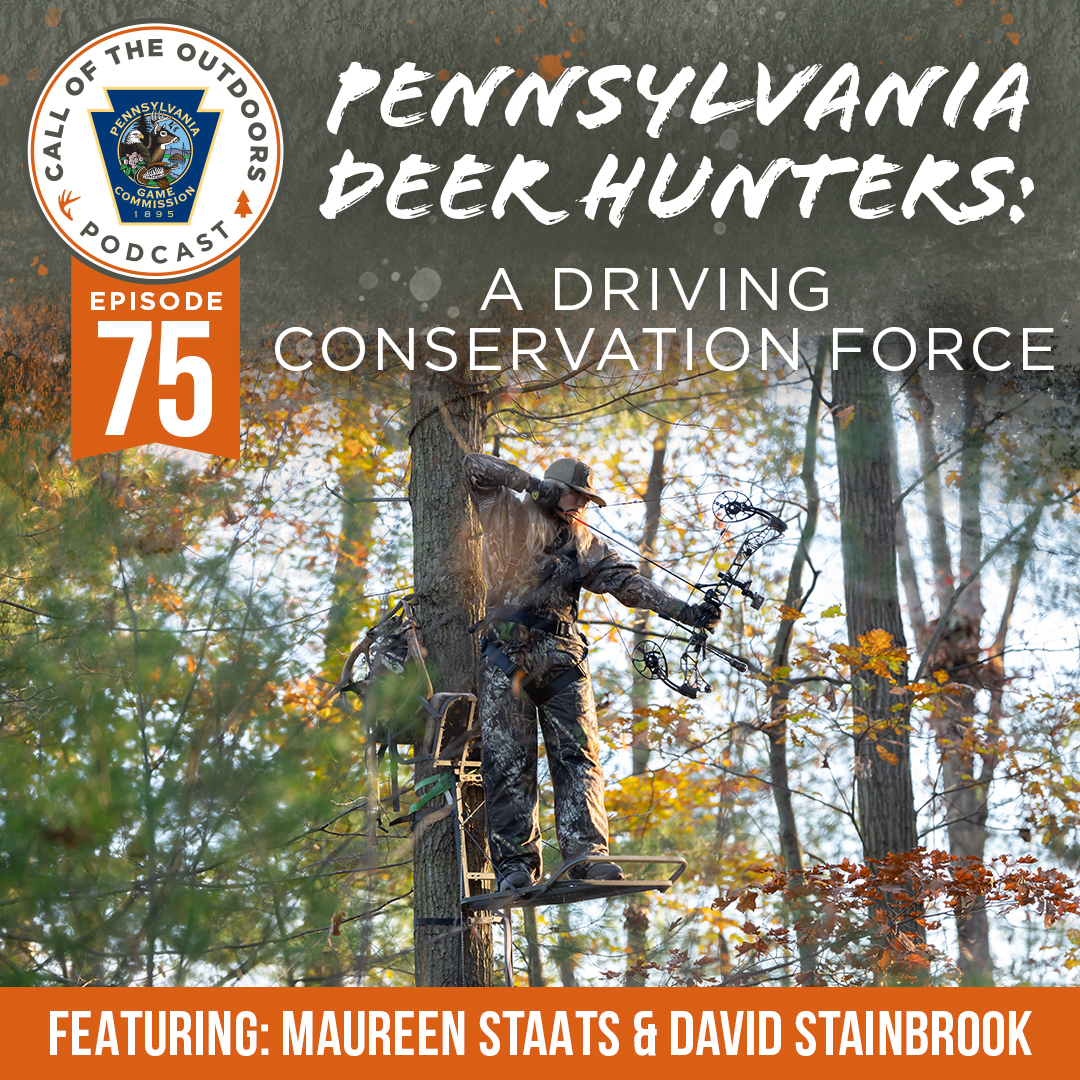
Are deer populations dwindling in Pennsylvania? Or are way too many whitetails running around? Biologists Maureen Staats and David Stainbrook join host Matt Morrett to share insights from managing deer throughout the Keystone State. Learn which metrics actually matter for determining herd health, when to hit the woods for peak rut action, and why antlerless allocations change from year to year. Episode Highlights: Why the Game Commission manages deer at the WMU level When the peak rut happens in Pennsylvania What deer aging tells us about the herd and harvest How antlerless allocation works Why hunters should fill their antlerless tags The impact of antler point restrictions Updates to CWD regulations Resources: Learn more about healthy forests and healthy deer. Check out the Landowner Resources Office. Review CWD regulations.
0:00Speaker AThe number one question we get from a reporter for a newspaper or, you know, a magazine or even from our hunters, like, how many deer are here or here or across the state, like, how many deer in the state?
0:12Speaker BYou come to work and your thought is, how do we make it better every day? And that's what we're here to do.
0:17Speaker CIn PA, I think we're around 650,000 hunters, which is very fortunate. And that's not comparable to most other states. Most other states, hunter numbers are decreasing, have been decreasing over time, but they're nowhere near the numbers that we have.
0:39Speaker BHello and welcome to Call the Outdoors the podcast of the Pennsylvania Game Commission. You know, it is in the air. Hunting season is here. Archery season has started. And today we're going to talk about white tailed deer. We have on today deer and elk section supervisor David Stainbrook and our white tailed deer biologist, Maureen Staats. We have a really special podcast here today because we have the folks that are behind the scenes of everything that happens, whitetail deer here at the, at the Game Commission. And I know that we all want to learn about things. There's so much that goes on and we're going to try to dig down in the weeds and a lot of what happens here at the Game Commission, especially when we talk about whitetails and the biology part of it and just, just a lot of nuts and bolts. And I'm just going to pass it right over to David Stainbrook. If you would just tell everybody, you know, really your background and how you got here to the Game Commission.
1:28Speaker ASure, of course. Thank you. Thank you for having us on here. So I grew up in northwestern Pennsylvania, Crawford county, right between Connaught Lake and Paimatuning Lake. And you know, being outdoors was a big part of my, my life. Had family, uncles that were farmers and biologists across the country. Really kind of made me excited to get into this field after.
1:52Speaker BBy the way, that's almost Canada where you're from.
1:55Speaker AThat is right up there near Lake Erie, also about five minutes from the Ohio border. So as far as, like, how it fits into the state of Pennsylvania, it's much different type of landscape there. It's almost like Ohio. It's very high ag. We have vineyards up there, so very productive part of the state.
2:11Speaker BAnd the dirt's a little different up
2:13Speaker Athere, A little bit darker brown.
2:14Speaker BYeah, absolutely.
2:15Speaker AYeah. Well, that's really good for farming.
2:17Speaker BThat's something we're going to talk about too. You, you know, and I'm, we just talked about talking over. I Just something just hit me. One of the tasks you have, and this is something that we should talk about later on is like, when you look at the state as a whole, managing deer across this whole state is very complex. But go back to what you were talking.
2:33Speaker AYeah, absolutely. We'll get there. So after that, I went on to college for biology and then went on to grad school at Penn State and did wildlife science, which was I was able to do fortunate enough to do a project in Gettysburg National Park. Capturing deer and looking at ways to better estimate the populations in that area. Also was really interesting because I was able to get my hands on deer and really see where they're going with the GPS collars and everything. So after that, looking for my first job. Would have loved to get a full time position with the Game Commission, but nothing was available at the time. But I did actually do some of the seasonal jobs when I was in college over the summer. So I was able to work under our waterfowl biologists up in that area and do some waterfowl trapping. And then the year before I got into grad school, I was actually a member of one of our deer capture teams.
3:29Speaker BAwesome.
3:30Speaker AUp in the north central part of the state. So that's like my first experience with the Game Commission after getting into grad school, looking for that first full time position, a position opened up in the state of Massachusetts as the deer and moose biologist. And so I was fortunate enough to get that position. Started a family up there was in that position for almost 10 years. And then when a position opened up here in the Game Commission for this particular position, which is the deer and elk section supervisor, I was able to get that position. And I've been in that role for about five or six years now.