
Call of the Outdoors · Pennsylvania Game Commission
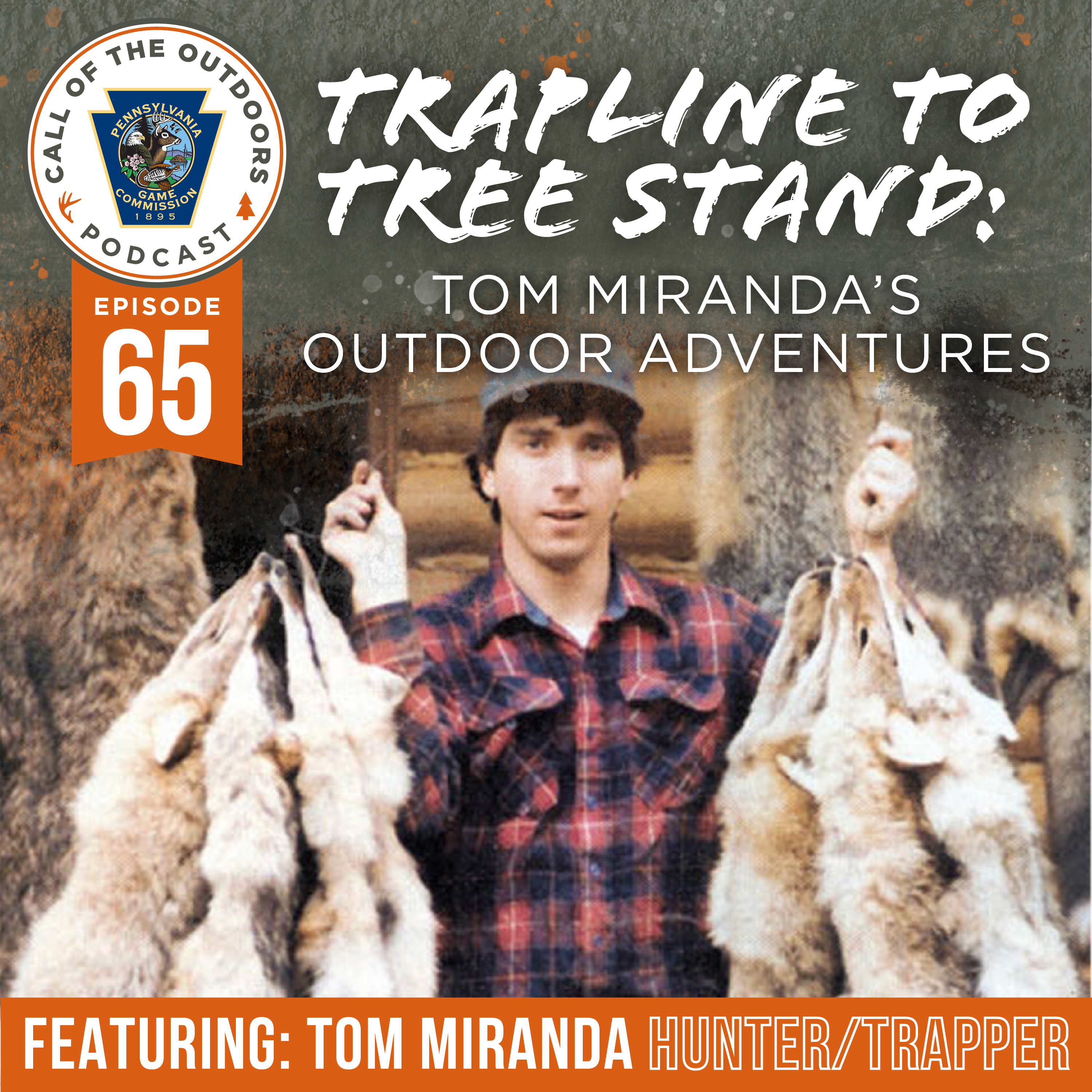
Hall of Fame trapper and award-winning bowhunter Tom Miranda joins host Matt Morrett to share insights from over 40 years in outdoor television and a lifetime in the woods. Learn what it takes to be a wilderness trapper, how he achieved the highest honor in conservation, and who he credits with influencing his hunting success. Episode Highlights: What trapping taught Tom about the woods How he got his start in outdoor media Why trappers make the best bowhunters How he completed the archery Super Slam Tom’s tips for trapping and bowhunting Resources: Get started trapping. Visit Tom Miranda’s website. Learn more about the Pennsylvania Trappers Association Rendezvous.
0:00Speaker AObviously, conservation is wise use, and there's no better form of conservation than legal hunting or trapping.
0:07Speaker BThere's something to be said about a trapper when you can get your target animal to step on that little pan.
0:14Speaker AAlways stick to the basics and don't quit. Those are the two things you know.
0:23Speaker BHello, and welcome to Call of the Outdoors, the podcast of the Pennsylvania Game Commission 2026 is here. It's kind of crazy. Lots going on here at the agency. We got a board meeting coming up at the end of the month and you know where the board is going to look at suggestions for seasons and bags and in the year ahead in 26, 27. And, you know, be sure to tune in. That's live stream on on our YouTube channel for sure. You can check that out. But we have a really special guest today to start the year off, an old friend of mine from back in the probably late 80s, early 90s, the person that, like, really helped us start in video and television in my career back at Hunter Specialties, a gentleman by the name of Tom Miranda. Tom was instrumental in starting outdoor television on espn. And his roots go back into trapping is how it got started. And we're just going to have a conversation with Tom and start the new year off right. So thank you for joining us here on Call of the Outdoors. Well, Tom, thanks so much for joining us here in Call of the Outdoors. You know, you and I go way back. I was trying to think this morning, it's over 30 years ago that that I met you and spent some time in Florida. I still have that Osceola that we we got with Jim Conley down there in central Florida. It sits in my office. It's one of my most favorite mounts that I have because we finished that grand slam on turkeys. But all that aside, I think that our audience out there here in Pennsylvania, trapping is still so big. And I want to talk about you and how you got started, because it's been a heck of a ride for you and you're back to your roots, as they say. What I've been watching on social media this fall, absolutely.
2:01Speaker AYou know, I grew up trapping. I started trapping when I was 11 years old, and that was in 1969. So, you know, if you do the math, I'm getting up there. But the reality of it is is that's how I learned about the woods. Trapping was what I did. It was the first muskrats and then raccoons, and I even caught a weasel or two. And then there's the mink that shows up, and pretty soon you're into the foxes, and then coyotes move into Ohio. And it just grew and grew and grew. And I trapped all through school, and I loved it. I loved everything about it. And it's what got me into the outdoors, really.
2:37Speaker BThere's something to be said about a trapper when you can get your target animal to step on that little pan. I mean, it's, you know, when you. When you look at hunting in general, you know, that's what it's all about is putting yourself in those places to make it happen. And that's why, you know, I've always respected you, you know, ever since I met you when I was in my 20s. You know, you. You've taught so many people throughout this country. I mean, you were probably one of the first to do videos on. On trapping and how tos that you still sell today, right?
3:06Speaker AAbsolutely. Yeah, I was pretty much a pioneer in the how to video side of it, especially on the trapping end. Yeah, it was, it was interesting. I was kind of hated by a lot of trappers back then because a lot of guys would give lessons, you know, and this video realm was kind of new. And it's like, why is this guy giving away his secrets for a $40 video? In reality, they're getting four or five hundred dollars to get somebody to come for a week, you know, or a couple days and get lessons. So it was. That's kind of what I went through with that. But, you know, it was always about giving back. You know, I've always kind of come from that side of it where, you know, my dad taught me not to trap, but just to be a better person. When I learned how to trap, I tried to give back to others. And that's what I did with my books and videos. And you just kind of grow with it. I remember early on I told my dad I wanted to be a trapper. And he looked at me like he was gut shot, man. You know, like you can't get to make a living trapping. But it's not about just catching the furs, you know, it's making the lures, writing the books, doing the videos, giving the lessons, you know, doing the seminars. And it's all that wrapped together that allowed me to make a living and trapping and. And eventually became a government trapper. Eventually, you know, I. I tell everybody I bought my first jeep with trapping money. I bought my first house with trapping money. I bought my first airplane with trapping money. I used to fly my trap line in South Dakota. Why? Because I Needed to fly? No, it was a novelty. And it helped my sell a lot of videos because people would watch me fly my trap line. And it was on the video. So, you know, it's some of its marketing. A lot of it, it was just enjoying the outdoors and being a trapper.
4:41Speaker BWell, it was Tom Miranda's outdoor adventure magazine. There wasn't too many things you weren't scared to do. I actually dug my old shirt out. You know, my dad, who's still with us, he saves everything that I've ever did in my life. And I still have the ESPN Tom Miranda shirt that I'll pass on to my daughter when I'm gone, because it was pretty special time in my life. But, you know, talk about, you know, flying your trap line and doing all that stuff in government trap. I'd like to talk a little bit about that because I know, you know, just from our discussions, like when you got out of high school, didn't you move to the UP of Michigan just to trap?
5:16Speaker AAbsolutely. It was kind of a dream, you know, to do a. Be a wilderness trapper. To go somewhere where there's just, you know, woods and no electric and the river and, you know, be a trapper like you'd read in the Fur Fish Game magazine, you know. And after high school, that's what I did, actually. I had a buddy, he was a trapping partner, and we had that dream together. And what it ended up was he decided to stay and work, and I decided to quit my job and go north. North. And I spent three years in the Upper Peninsula of Michigan trapping and honing my skills. The fur prices went down, you know, so I really couldn't make a living just on the furs. And I started writing, doing some of the other things, making lures, and eventually figured out that maybe I needed to get a government trapper job. And I found a place in South Dakota that was hiring. I got. I got hired and actually a guy named Pete Askins, who was the research and development professional for Woodstream Corporation, which is right there in Pennsylvania, back in the. You know, he lives around Harrisburg. Anyways, he helped me get that job. And when I became a government trapper, then I was able to hone my skills even more on especially coyotes and beaver. And so, yeah, it was just a building process all the way through. I eventually quit that job, made my trapping videos, fur fishing game. Saw what I was doing. So I started making videos for the Furfish Game magazine. Trapper Predator Caller magazine saw what I was doing. They wanted some videos. And you Know, eventually I made five videos for myself, eight videos for Furfish Game magazine and two videos for Trapper Predator Caller, all about trapping.
6:49Speaker BThat's amazing. And really when you look at it, it wasn't that long ago that this has happened. I remember sitting with you in your studio in South Dakota when we put our first turkey video together and you know, clip by clip by, you know, linear at that time and to today's digital world, it's unbelievable. But you talked about your buddy that you were going to move to just personally. Was that Paul Vaz?
7:11Speaker AIt was Paul Vaz, absolutely.
7:13Speaker BI remember Paul very well. But when you went to South Dakota, let's talk about your responsibilities, you know, as a government trapper in South Dakota. What, what was your exactly your job up there?
7:24Speaker AWell, I, you know, I basically caught coyotes that were killing sheep or trapped beaver that were doing damage or skunk under the house. I had a 10 county area in central South Dakota. I lived in Chamberlain, which was I90 in the Missouri River. And so, yeah, that's what I did. I had a secretary. You know, the game warden's office was right across from mine so I could keep an eye on him, you know, you know how those game warden guys are. Anyway, yeah, you know, I'm the trapper, so, you know, like I'm the guy out at night, you know, I'm the guy that's out there in the dark running traps. But anyway, yeah, it was, it was great. And you know, I got damage complaints, so I went and did them and I had that 10 county area, so that's how I did it. And you know, a lot of guys had their own snowmobiles, they had their own quads. But I got an opportunity to do a little aerial gunning early on because out in South Dakota you can, you can denim den the coyotes, you can M44 cyanide the coyotes, you can snare the coyotes, you can trap the coyotes or you can shoot them out of an airplane any way you can get rid of them that, especially if they're killing calves or killing sheep. That's what you did. And that was just part of the job. And you know, out west, it's a totally different world. The landowners are, have large, huge tracts of land and they control a lot of what goes on, you know, and they, they affect politically what happens a lot in those states like Montana and South Dakota, North Dakota, Wyoming, all those areas have government trappers or state trappers or both. And that's what I did and I really enjoyed it. It was a Great. I don't know, kind of a. It was kind of a resume builder for me because I had done the wilderness trapping, I'd done the farmland trapping, and now I'm doing the government trapping. So it's just one more, you know, resume, one more box ticked off on the trapping.
9:09Speaker BRight. And you know, obviously being in the industry as long as you have, you got to probably rub elbows with some famous people from our part of the world in Pennsylvania. You know, when you look at some of the names and do you have any fond memories of any of the, you know, folks from around Pennsylvania that you've got to spend some time with in the trapping world?
9:29Speaker AWell, I mean, trapper wise, Pennsylvania is, you know, it's the place the very first trappers association started in Pennsylvania. Okay. And you know, when you start talking about Stanley Hallbacher, you know, these guys are somewhat before my time, but you know, that guy was the king of the cottage industry trappers. You know, I mean, he has a lure line, he sold books, he did whatever it took to get people interested in trapping. And so, you know, a lot of the trappers, I mean, I was a really good friend of Bob Folkrod and he's a Pennsylvania guy and he was a trapper growing up and he ended up being a big game hunter. You know, so there's a lot of trappers. And we had mentioned earlier in this cast that, you know, I think trappers make the best bow hunters. And I think that because of the attention to detail, the fact that, well, not only the fact that we got to go out there every day, rain sleet or shine, and run our traps, there's a lot of work ethic involved. But the attention to detail, to see those little kitten mink tracks or to know which tracks are which, what trails are which, where you set your traps and how all that goes about. And yeah, you learn a lot. And that was the cool thing about doing the TV show. You know, I had got to have Bob Folk right on my TV show and you know, I learned a lot from him because he was at the time, he was very well known bow hunter, he was a trapper. So, you know, he dotted the eyes and crossed the T's on his bow hunting. And the opportunity to have Bob Folkrod on my TV show on ESPN was really great.