
Call of the Outdoors · Pennsylvania Game Commission
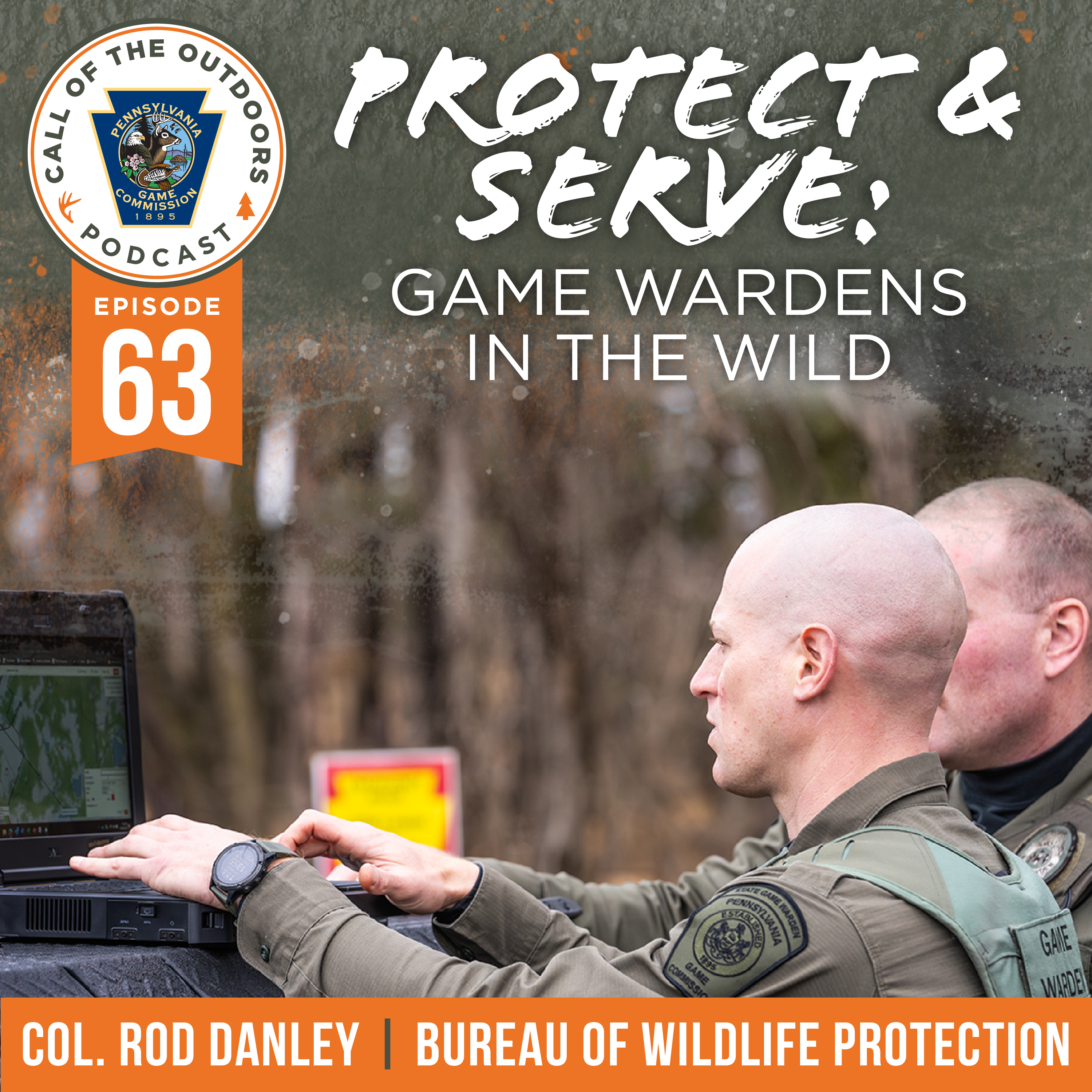
Pennsylvania state game wardens don’t just check hunting licenses in the field — they wear many hats to protect people, wildlife, and habitats. Col. Rod Danley, the new director of the Bureau of Wildlife Protection, joins host Matt Morrett to share the history of game wardens in Pennsylvania, the passion they share for wildlife, and how hunters can have a great interaction with a warden in the woods. Episode Highlights: The role of Pennsylvania state game wardens Tips for trapping coyotes and hunting the rut What to do if a game warden approaches you Why game laws are in place and common regulation questions Col. Danley’s vision leading law enforcement for the agency Resources: Review the Hunting & Trapping Digest. Find tips for safe hunting. Learn more about Operation Game Thief.
0:00Speaker AYour game woman is a part of your community. You know, treat them as you would your neighbor, and, you know, they're there to help you. They're there to make you successful, and they're there to stop the people that want to cheat.
0:13Speaker BWe're all in it to when we leave this agency and leave this earth that there's still wildlife here in Pennsylvania for the future.
0:20Speaker AOne of the things that's amazing about, you know, the North American model of wildlife conservation is that, you know, we share all the ownership of these animals. And when you have somebody going out and they're legitimately killing, taking more than they're entitled to, they're stealing from all of us.
0:41Speaker BHello again, and welcome to Call of the Outdoors, the podcast of the Pennsylvania Game Commission. You know, it's that time of year. The leaves have probably almost dropped by now in most places. Still a lot of color here in central Pennsylvania, and it's the time of year that we're all looking forward to. And the shame of it is it goes too fast the older you get. And, you know, the rut is upon us. And there's lots of people that we've seen, gotten lots of pictures, lots of people are successful out there in the field, whether it's deer or small game. And November is just a great month. But we also have a very exciting guest today. We have a brand new colonel of our law enforcement here in Pennsylvania at the Game Commission, Mr. Rod Danley. Good morning, Rod.
1:23Speaker AMorning. Thanks for having me.
1:24Speaker BAbsolutely. And we're excited about it. And, you know, we want to talk about a lot of things, you know, a lot of history about yourself and some of the vision that you have here when you. When, you know, you came into headquarters and leading the field of great men and women we have out there as game wardens that are out there every day protecting wildlife. And, you know, sometimes folks don't understand why there are game wardens, and we want to kind of get into that today. But before we do, you know, Rod, let's talk about yourself and why you're here today.
1:56Speaker ASure. I think, like most of us in this agency, we kind of all have a passion for some sort of outdoors activity. And as a young person, as a young kid, I was always into hunting and trapping. And, you know, you think about that career path you're gonna take, and it's like, well, doing something outdoors is probably something that I want to pursue, like being a biologist or a forester or something like that, because kind of as I got a little bit older, I started to realize that law enforcement was something I had an interest in. And being a game warden was kind of one of those driving like, well, I can combine the biology aspect of it at the same time as kind of moving into a law enforcement realm. I think all of us have had experiences as well in our youth where you see somebody do something and you're like, boy, I wish somebody would be here to stop that. My personal experience was a. A fishing trout derby that I watched some guys doing some stuff as a young man that I was like, man, there should be a fish officer here to handle that. And that was really kind of my catalyst for wanting to move into this direction. And, you know, I was originally looking at colleges to kind of pursue that. And there was a college fair at the convention center down in Philadelphia, and I was. I was heart set on going to University of Alaska. That's where I wanted to go for wildlife biology. So as I was walking around all the booths, there was a little college for Maine called Unity College. And they had their little booth set up where they were giving out their brochures and handing that stuff around. And kind of walked up to them and said, what's your wildlife biology program like? And they said, well, what do you want to do? I said, well, ultimately I'd like to be a game warden. And they said, oh, we have a conservation law enforcement degree. So. So at the time, it was the only college in the country that had a four year bachelor's Conservation law enforcement. So I went up there for four years, earned my degree in conservation law, and, you know, pretty much from there is what started me on the journey.
3:50Speaker BMaine's a terrible place to live.
3:51Speaker AIt was horrible.
3:52Speaker BIt was horrible if you like the outdoors. But when you, you know, let's talk about after those college days and how you got to the Game Commission here and what you had to do. You know, when I look at the class that's in there right now, and even back years ago, there was a lot more people that applied for the class and the competition was really stiff to get into the Russ Leffler school.
4:13Speaker AYeah, I tested in 1998, so got hired in 99. So I've been doing this 26 years now. But at the time, the competition, as you said, was quite a bit more rigid. And I went into the testing process thinking that, well, this will be my first attempt at seeing if I could be successful and we'll move on from there. Most people were telling me it would take three times to get in. And I was fortunate enough to Luck into it. My first time, and at 23 years old, I started the academy in 1999. It was an interesting experience, to say the least. You go from a college atmosphere to an academy. And our academy is paramilitary, as you know. It was a bit of a shocking experience to understand that I had to polish my boots and make my bed and be where they tell me to be when they need me to be there. It was a bit of a transition, but, yeah, that was my original avenue to get here. And then upon graduation, I was assigned to central headquarters here in Harrisburg, where I worked for five years in our investigative section. So it was our special investigative section. So I did that for. For the first five years of my career, which was exciting.
5:30Speaker BWe're gonna. We're gonna talk about that a little later, for sure.
5:33Speaker AAfter that, I had wanted to live or wanted a district over in central Pennsylvania, specifically in Huntington county, which is where my half of my family was from. And I waited for the. The word in there, John Rohr, to retire. And when he finally retired, I transferred into that position and. And spent additional five years there and then promoted into the Huntington headquarters, the division headquarters, as they used to call them. Now they're the regional offices. But I went in there and served as the information education supervisor for about six months until the law enforcement supervisor position opened up. And I had that position since 2012.
6:14Speaker BOh, wow. So we work with the IES quite a bit in our bureau. And, you know, one thing that happens with game wardens or, you know, across the state that folks don't realize is they're tasked with a lot of duties. When you said earlier about, like, being a biologist, they assist the biologist. I mean, law enforcement's one part of it. But the game warden. The game wardens across the state, there are first folks that people see with the agency a lot of times, whether it's at a gas station, a restaurant in the field, or whatever. And they're always trying to provide that information to folks that they need. I mean, you know, we have to admit that, you know, when you open our law book, there's lots of laws out there. The Digest is a snippet of, you know, what the game laws are, and we're gonna talk about that a little bit more, too. And you take that oath to enforce those laws on behalf of the agency and on behalf of the state, and, you know, that's one of your jobs. But the game wardens jobs are so entailed with lots of different things. And one of the things I say this all the time being from the outside, in the last six years, have learned so much about the duties and tasks. But the brotherhood and sisterhood that game wardens have is pretty amazing in our agency. And we're all in it to when we leave this agency and leave this earth that there's still wildlife here in Pennsylvania for the future. And I think that's one of the most important role that we have to do as employees of the agency, in my opinion.
7:38Speaker ADefinitely. Definitely. I think one of the things that we all do in this agency that is very interesting is that, you know, we generally come here because we have a passion for wildlife, whether that be just wildlife viewing or whether it be hunting, fur taking. And then we have to kind of set that on a shelf when we come here, because this career path interferes with your ability to do those things. You know, you have. If you want to go deer hunting as a game warden, you're going to have to go out there and check deer hunters. So that limits your opportunities to do that. So I think everybody who works here sacrifices a little bit, which makes it a very noble endeavor because, you know, all the guys that work our bear check stations, all the folks that are out there checking deer heads at butcher shops, they all could be doing what they really want to do, which is get after white tailed deer, if that's the case. So it takes a special type of person that does what we do as a group. Gay Mordens, obviously, as you said, they are the ones that get tasked with having to explain why we do what we do most often, whether that be at a gas station or in a public venue where they stand up and talk to people. But they're just one part of what we do. There's so many other employees that work here, and I'm proud to say that our game wardens do an excellent job of representing our agency.