
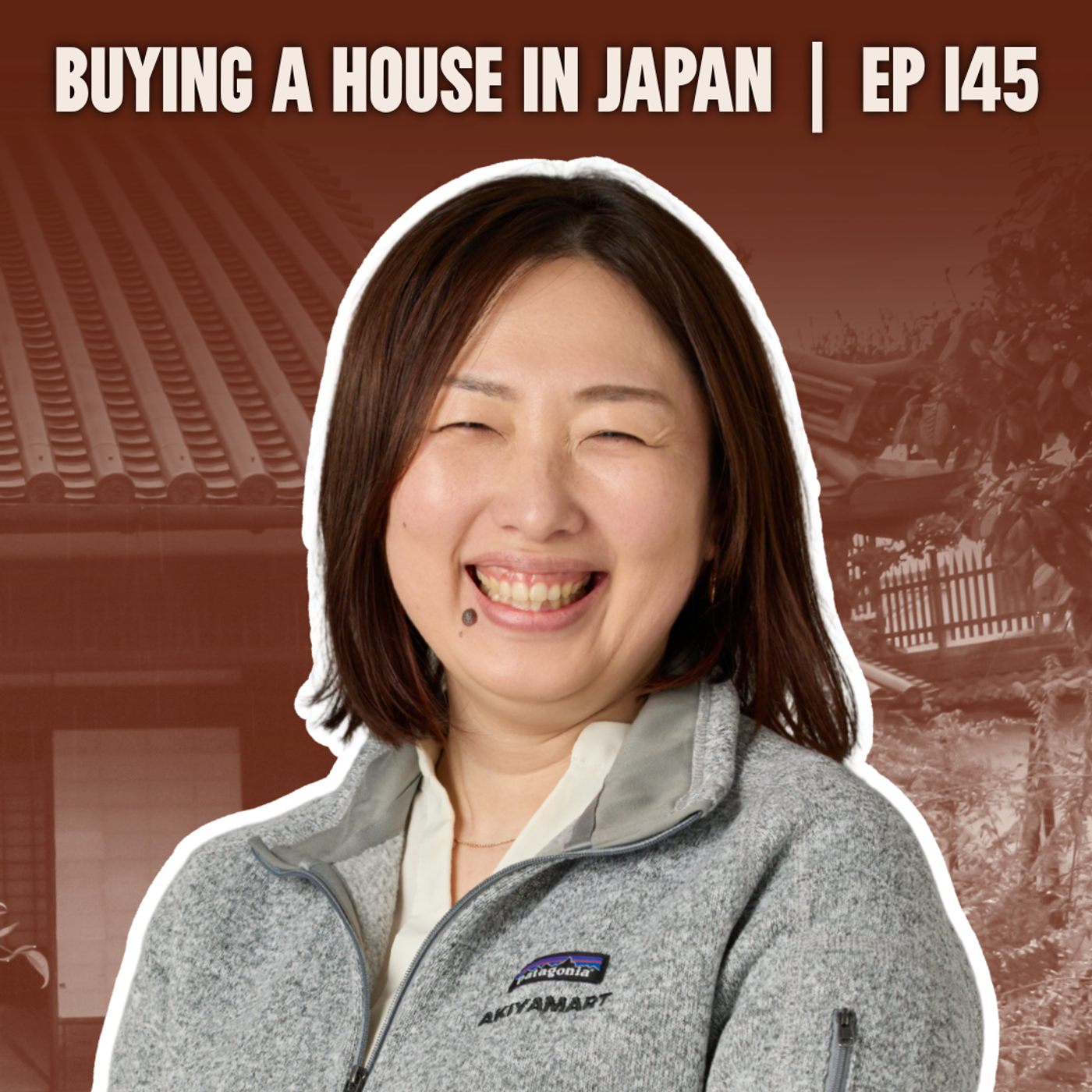
Buying a House in Japan · Mokomoko Productions
Buying a house in Japan is just step one. What happens next? This week, Joey and Take sit down with Akane Hoshino, the operations lead behind their new post-purchase support program, Mokomoko Buyers Club. Akane has spent the past year helping foreign homeowners navigate the parts of Japanese life that don't show up in any listing: utility setup, tax paperwork, and neighborhood customs. Key Takeaways: - Setting up gas, water, and electric in Japan often requires a Japanese bank account, in-person scheduling, and multiple phone calls, and the process varies by company and by region - Foreign homeowners who aren't tax residents of Japan need a designated tax representative to handle property tax communication with the government - Neighbor greeting gifts are a real and important custom when moving into a Japanese home, and food is not always the safest choice - Priest blessings (typically Shinto) are a common and meaningful step for new homeowners, especially in older houses - Internet setup can take up to a month through providers like NTT, which is why the team now ships every customer a Starlink Mini instead In This Episode Akane's international upbringing across Japan, the U.S., Singapore, and the Philippines, and how it shapes her work with foreign clients - A breakdown of the "core five" post-purchase services: utility setup, bill payment, tax representation, neighbor greetings, and priest blessings - Real client stories, including Joey's own frustrating internet installation experience - Why the team switched to Starlink Mini for faster, English-language internet setup - Akane's picks for where she'd buy a house in Japan outside Tokyo: Fukushima and Aomori Resources Mentioned - Ikea Mart / Mokomoko Buyers Club post-purchase program - Starlink Mini for satellite internet setup Connect With Us Looking for a home in Japan? Browse over half a million English-friendly listings on our site, or reach out with questions and feedback by email. You can also find us on Instagram and TikTok for property tips, home-buying updates, and renovation progress. If you found this episode helpful, leave us a five-star rating. It takes five seconds and helps other foreign buyers find the show
speaker-0: The internet specifically, first the building administration told you incorrect information. They first they said NTT, which is the actual like the hard copper or fiber optic lines company. They said, ⁓ well, you're still in the previous tenant is still in contract, right? And that was it not true at all. And how did we figure that out? We had to talk to the building management. For them to contact the previous tenant and the previous tenant was like, No, I canceled my contract, so we had to go back to NTT. From a client's perspective, like that is not a problem. I wanted to unwind, and Akane did a fantastic job. And the whole time I'm like complaining to Akane about this, like, I need internet this week, and you and you're like, they're telling me it's gonna be a month, and I'm like, Can I pay them more to do it this week? Welcome back to another episode of the Buying a House in Japan podcast, the number one Japanese real estate podcast in the world. ⁓ my name is Joey, joined by co-host Take. Today we have a special guest, Akane Hoshino. Akane is a friend of the podcast. She has been a fantastic administrative coordinator, travel coordinator, post purchase partner, company mom, you name it. She has been there with us ⁓ through thick and thin and has really taken a ton of ⁓ work off of Bainatake's shoulders. So thanks for all the hard work, Akane, and welcome to the podcast. speaker-1: Thank you. speaker-2: It's been long time coming. ⁓ we've had we've been working with Akane for the past year, year and a half, maybe. ⁓ time really flies. How do we find Akane? It was like LinkedIn. speaker-0: LinkedIn, I think yeah, yeah. I think I message you on LinkedIn. Yeah. speaker-2: ⁓ Akana, you wanna give the audience a quick introduction of yourself? speaker-1: Okay. ⁓ hi, my name is Akane Hoshino and I'm ⁓ working with Akio Mart and ⁓ Okamoka, sorry. Yes, and I'm yes, helping with a lot of stuffs, helping. speaker-2: No moco moco. Fun fact, ⁓ Akana and I went to the same Japanese kindergarten or preschool in California. So tell us a little bit about and maybe Ryan, like tell us a little bit about your background, where did you grow up? speaker-0: And maybe Ryan too. speaker-1: Okay, so ⁓ I was born in Japan, but ⁓ I went to ⁓ California, San Jose and I went to that ⁓ the local school and I went to the Japanese school ⁓ to learn maintain my Japanese and then I came back to Japan and I stayed for a few years and then in the fifth grades I went to Singapore and the Philippines and then came back to Singapore and I came back to Japan ⁓ from high school. speaker-2: Whoa. So you went to Singapore, Philippines, back to Singapore? speaker-0: With your dad's work, you mentioned he was a Fujitsu man. speaker-2: Okay. So you've you've had a very international childhood to date, right? So interesting. And that's why I think your English is is perfect. You know, it it sounds like it we've been work trying to find people to work with that is like very easy to communicate and it kinda has definitely been one of those. speaker-0: Is that Japanese school in sorry, San Diego? Where where was it? San Jose. San Jose. Was that that was that that wasn't weekends you were saying earlier? That was like after school, you go to a second school. speaker-1: Yes, it was after school. So like I think it was Tuesday and Thursday every weekday. speaker-0: Man, I remember elementary junior high elementary so I was not going to a second school after school. I know. speaker-2: hated saying like I could not speak Japanese and everyone else spoke Japanese and they were like I was telling before the podcast like they'd make me sing in Japanese and I didn't know the song so I'd just be opening my mouth and like everyone it was it was a not a traumatic time for me but like a very confusing time where I like just playing with kids without language. But I guess I learned some Japanese there. But how'd you like Sangu? Sorry to taint that ⁓ memory of mine. speaker-1: I don't know, I feel it was very strict but it maintained my Japanese. So when I went back to Japan it was very easy to go in through the class classmates. speaker-0: You didn't lose it or anything yet. speaker-1: I didn't use this. ⁓ I think the kanji I learned kanji in the Saiku and that helped me a lot when I went back to Japan. I didn't speaker-2: What grade do kids start learning kanji in? Like what's yeah. Thirst first grade? Yes. When do they learn hiragana katakana? speaker-1: Prospect. ⁓ preschool. Maybe preschool, but we they do learn at the first grade, but they like most of the kids learn before. So they just write down and do the work. But they know it already. So they can write down their name already. speaker-2: Like in the US we're like we don't learn how to how to write our name till like first grade earliest, maybe. speaker-0: I always wanted to go back, you know the like when you're writing or e even like hiragana, like not even just kanji, like hiragana, you those like four squares. Yeah, the four squares. Like I feel like there's like a gaijin way of writing hiragana katakana that you can tell it's like, okay, this was not a Japanese native speaker that wrote this. This was like someone Japanese as a as a second language or whatever. And I but I feel like a lot of it comes down to understanding in those four squares where each part of the cut the hiragana goes. I feel like a lot Depends on that. And I also feel like foreigners do a lot of like they exaggerate the like the ticks of like the things, maybe a little too speaker-2: Yeah, and the top I like I like it 'cause that's speaker-0: journey. So I gotta go back and get I feel like the kids learning, have the kids learn here at Ghana and just like, you know, drill it over and over and over again. speaker-2: Yes. Akane has like the best handwriting, I I think. So we ⁓ you might have heard on a previous podcast, we sent a letter to the coin laundry owner and we're like, Akane, we need you a handwritten letter. And I remember Ryan getting that letter and be like, This is the most beautiful handwriting I've ever seen in my soul. speaker-0: Someone else caught yeah, maybe it was Ryan, yes. ⁓ I think someone else said it too, yeah. Very nice handwriting. speaker-2: Someone else said it. How did you get so good at handwriting? speaker-1: I don't know, I didn't learn Shuji or anything, so I just What's Shuji? Shuiji is like a Japanese ⁓ yeah, call ⁓ caliber. I don't know. Calligraphy, yeah. We learn it, but we do it at school. So every kid's learn that in school. speaker-0: Calligraphy. Were you were you like really good at the four the four square thing? Of course. speaker-2: Ryan's had perfect proportions or something like that. speaker-0: The proportions. speaker-1: I practice a lot, so I know I liked practicing, I guess. speaker-2: What do you think the hardest miswritten hiragana or katakana character for foreigners is? Like Tsu and Ts she? speaker-0: Yeah, yeah, yeah, yeah. So and Tzu and Shi definitely. Like Yeah, so and she Takana. speaker-2: What do you think of cut? speaker-1: Tsu and Chi is always difficult for kids too. speaker-2: So what yeah, she is more like vertical or like katakana she? speaker-0: It it's the stroke direction. It's whether you're starting up and ending down or starting down, ending up for speaker-2: So you go up, down. speaker-0: Zoo is from the top down. speaker-2: And then she is from the bottom. Okay. speaker-1: Yes, yeah. ⁓ so and the the ten the ten is a little bit different. The angle is different. So it's speaker-2: Okay, I'm doing it I'm doing it on the desk right here. speaker-0: I I I think safely I feel like I always exaggerate the verticalness of Tsu and then for she I go way more horizontal and I feel like there's less confusion. Yeah. Mm-hmm speaker-2: Okay, sorry. We went off topic here. But Akane, you're very international. So you went to Singapore. You grew up kind of like in a very international community. Hence, I think why we love working with you. I think a lot of our customers obviously are foreigners that we've helped through the purchasing program today. Wanted to discuss the post purchase with you. Akane is going to be helping lead our kind of new post purchasing program, Moco Moco Buyers Club. We're not 100% on the name yet, but ⁓ Akane is going to be the operation side of like getting you as an owner set up to live here in Japan. So ⁓ to our understanding there's a ton of things you need in the post-purchase program, but the three or four basic ones that we've kind of isolated it to are one utility setup. Who's going to set up the utilities? Gas, water, electric, who's going to pay those bills? ⁓ we'll talk about it more, but it's not easy for foreigners to pay those bills. Third, tax representative. Where does the Japanese government send the bill to? And then four, what was it? Four Greening Neighbors, I think was one. There's another one. Priest blessing. Priest blessing. A couple of those things. A couple extra nice to have things, but ⁓ kind of tell us a little bit. You've been helping some customers already. How's that experience been thus far? speaker-1: ⁓ I feel like it's very difficult for foreigners to ⁓ do it by themselves but and ⁓ yeah but and it depends on where they live. So it's very difficult. It's not like a simple thing. So it's very I I like it to help ⁓ that part and speaker-0: Yeah. Let's let's w windback the clock. It kind of helped me in Ishigaki. Set up utilities. I was probably one of the worst clients that we'll get. ⁓ I was very frustrated at that time with the specifically the internet. But I would also say the other problem with me as a client was that like I just kept forgetting who's like how is the gas getting paid, which bank like it got very complicated, I would say. It's is part of the frustration, and there's other things I was trying to figure out at the same time. But just even one like apartment. in for example this Ishigaki thing, there's like the different utility providers, I feel like they're all getting paid in different ways. It's not just like direct debit from one bank account. Some, you know, there's there's problems with like they can dictate which bank you need to pay them from. So you have to get a bank account at that specific bank. There was like delays. How how was I as a client? Like can could you I I would like to hear from ⁓ your experience. What were some of the frustrations from your side of it? speaker-2: Light ⁓ up. Light ⁓ up. Put ⁓ on the podcast. Here we go. speaker-0: Well I kinda did very well by the speaker-2: I don't know. speaker-1: But I think what Joey thought and like what what opinions you just gave me was like very I think very natural because ⁓ if I was Joey, I would say the same thing. But it's very complicated and it depends on the company and like even the company staff kind of doesn't know sometimes. So I have to ask several times that if this is okay or not. So I like to be in that position to help support and make it like very simple for customers. speaker-0: So kind of just like to illustrate the the point a little bit more, first with the internet specifically, first the building administration told you incorrect information. They first they said, or NTT, which is the actual like the hard copper or fiber optic lines company. They said, ⁓ well, you're still in the previous tenant is still in contract, right? And that was it not true at all. And how did we figure that out? We had to talk to the building management. For them to contact the previous tenant and the previous tenant like, no, I canceled my contract, so we had to go back to NTT. It's just like that kind of getting passed around. All these conversations are in Japanese. Like, there's Japanese documents from a client's perspective, like that is not a problem. I wanted to unwind. And Akane did a fantastic job. And the whole time I'm like complaining to Akane about this, like, I need internet this week. And you and you're like, they're telling me it's gonna be a month, and I'm like, Can I pay them more to do it this week? And ⁓ I don't know. Yeah. Yeah. That was that was the kind of experience here. speaker-1: Yeah. The internet is very slow to set up, I guess, for like like normally. So I I think it's kinda part hard part to set speaker-2: Okay, so kinda I I think it's good to break this down. ⁓ I'm an Akiya buyer or real estate buyer in Japan. I purchased my home. How do we get utilities set up? Gas, water, electric. Do you mind kind of walking through that process? speaker-1: So you check the the the previous owner how they got the gas or the the company that they were using and ⁓ if they have information, ⁓ you just contact them again will be very this the simplest way. So if they have the information, you contact the gas company, the util ⁓ the electricity company and the water company. And if not, ⁓ you just check the go to ⁓ call the ⁓ I don't know, the the city office. The city of yes. And ⁓ yes, tech what is the best way best co best company. Okay. speaker-2: So And then call them. I feel like you made that sound really simple. So as as a foreigner though, it's it's pretty difficult to do this, or like you need to have Japanese language. Or do you think doing this with Google Translate? speaker-0: There's at least like three phone three phone calls in Japanese. speaker-2: Many phone calls do you do do you need to make in Japanese? speaker-1: ⁓ yeah, three. Okay. Basic or maybe more because I have to call other companies. speaker-0: So sorry, going back to the previous so do you contact the previous tenant and figure out what service providers they were using? Or you you said the first step is like figure out what service providers the previous tenant was using. Is that are you contacting the utilities company or are you actually trying to get in touch with the previous tenant? How do you figure that out? ⁓ speaker-1: It's in the document. speaker-2: Yeah. speaker-0: ⁓ it's in documents. speaker-1: See the documents and if I can contact the previous owner or the agents, I can c I sometimes contact them. speaker-0: Okay. speaker-2: What we're trying to do and build this program is like we have our agents do the transaction and they can pass that document over to a kinda and we so we can start getting that ball rolling earlier. So typically what would happen in maybe other real estate services is they would do and get you the keys and then they would start figuring that stuff out. I think the goal with our Mocomo Buyers Club is to try to make it a seamless thing that like when you get keys soon after we have already done some of that work and figured out, ⁓ okay, we need to get the electric on this day or we need to do XYZ. So that's the goal of having Akani on board to help with that. ⁓ speaker-0: The information's teed up for her. So once the keys are in hand, then we can start contacting the utility providers to turn it on. speaker-2: So of those three, I can you do all of them remotely or do you need to have someone come in for the gas, for example, or the water or the electric? speaker-1: ⁓ sometimes water and gas you have to someone there when they open up. So yeah, basically yeah, they have to have it have that. speaker-0: Yeah, I went through that. So the gas guy came and it was very quick. It was like a twenty minute, half hour kind of thing and he did something under the sink, he did something outside, and then he was basically like showed me how to press the stove and like turn the stove on and then made me do it once and then that and then made me turn it off and like that was the whole thing. And then I just asked him some questions like what should I do if I'm leaving the country for extended period of time and he was just like, Just turn this off here kind of thing. So speaker-2: I think something that ⁓ people don't realize about Japan is a lot of time there's this like l liquid propane tanks. It's not like ⁓ wired in gas, right? So a lot of these homes, especially Akias, have like in our Betu spot we have just like one cylinder and the gas guy comes like every month and changes, or what what does that look like? Or do they come every month typically to maintain or it speaker-1: Depend it depends on the place. Yeah. So ⁓ I always ask what what is the the system goes and it depends on yeah, it really depends on the place. So speaker-0: Right. Yeah. Yeah. It's I so my understanding with Bet Bu versus here. So here we're wired in gas, city gas line. Bet Boo they had the tanks and it's the same thing. I think the guy, like the gas guy just comes on our property, doesn't ask and just walks around the house, checks the meter, and the guy does the same thing in Bet Bu. Yeah. They just walk on, check the meter and see. speaker-2: That's something different than US. I feel like they they just like assume they can go in and they I I think they'll go in. And Eric was talking about like the guy will grab mail and drop it in their front door, stuff like that once in a while. But which of the utilities is the hardest to set up, you think, when when setting up customers? speaker-1: Gas, I guess. Mm-hmm. Because they have to be there and I have to schedule with the customer that has to be there and also the gas company. But I think yeah, if you can call in a Japanese, well, I think it will be like for for setting up will be the same as the same. speaker-2: Yes. What about like the paperwork and stuff? Is it quite complicated? Can you do it online or is it typically always paper? speaker-1: ⁓ recently it's on all mostly online. Okay. Yes. speaker-2: And ⁓ so in this situation when you work with us too, we would probably be our company would be registered because you need a bank account or how yeah, how what are s why can't a foreigner just do it themselves other than setting it up? Is there like paperwork and registration that needs to be tied to a Japanese bank account or something like that? speaker-1: At that point it ha it depends on the company as well. So yeah, some company they need a bank account if they want to ⁓ pay automatically or like online. yes. Sometimes you can do it by their bank, but I think it you need a Japanese company ⁓ bank account. speaker-2: Right. How long does it take to set up these utilities? You'd say, like let's say we got you all the information, Port of Matters document. What would you think think is like an average time to be able to get the lights, water and gas all set up? speaker-1: ⁓ just to s set up ⁓ the application will be one day, but ⁓ the from the day to the setup complete, it depends on what month because some months ⁓ there's a lot of ⁓ moving April yeah, April and after summer, maybe yeah. So maybe speaker-0: April. You cannot pay for faster service we we tried. We tried. speaker-2: Tell us more about that. Tell us more about that. speaker-0: Did d actually I'm curious, did you ever ask? Remember I was like saying something like, ⁓ could we pay like a expedited service fee? How about like eight man yen? Like did you ever did you ever try to pit pitch that to them? I speaker-1: talks to them a little bit. But they were like a little bit thinking, but they said Yeah they thought about it. But yeah, they had like a strict rule so they couldn't do it. speaker-2: Yeah. Okay. Okay. So I kinda can help with a setup and how does the bill pay work? So every ⁓ how how often do we get billed for gas, water, electric, and how does that get paid typically? speaker-1: ⁓ so it's it will be like one month. So ⁓ every month and ⁓ it depends, but if you don't have a Japanese bank account, ⁓ you will have like a payment slip to your home address and it will go to your home and you have to pick it up up and pay it at convenience store or the bank in Japan. speaker-0: Man. So actually in this house T B C just 'cause I've gone through so many other receipts, it's actually every three months that we pay the water bill. We get the usage notification every month, but we only get a bill every three months. And it's it's not like once a quarter in the sense that it's that it's like, hey, on you know, April first you get it, it's like a random like May seventeenth, but it's it's roughly three month chunks. ⁓ which I thought was interesting. I don't know if that's normal or not, but yeah, for this house. Water bills every three months. speaker-1: If you maybe don't use a lot, maybe that could happen. speaker-0: ⁓ speaker-2: That could be it. You didn't hit like a certain threshold. Yes, yes. Okay, that might be it. ⁓ Okay, so you need the Japanese bank account. If not, you can pay you could do it where they send you the slip and you go to the seven eleven and you pay at one of those machines. Right. speaker-0: In cash only. In cash. In cash only? In cash only. You cannot pay with card. Not a single one. speaker-1: Yeah. If you have like a pay pay account or if you ha ⁓ some company does accept the clear credit card. So it depends. But yeah, at the yeah. If they cannot, that will be it. speaker-2: Okay. So another one of our services here is because most people don't have a Japanese bank account, we would be paying for you and then billing you after. ⁓ a lot of times still they need to get the the pay in person, right? Or like is everything auto withdrawal from banks, or there's still some cities that require you to go in person to pay at a combini? Where? ⁓ or like physically to get the the the bill and pay it. speaker-1: In person to The bill will be in your house. ⁓ speaker-2: So yeah. Or can you pay everything online? Or can we pay everything online? No, no. No. Okay. speaker-0: Like again, go back to the Ishigaki example. I think there's at least one that we're paying in cash. Yes. I can't remember which one it is, but do you know off the top of your head? It's either water or gas or electric, but or internet. speaker-1: Yeah, internet yeah internet you can pay it. speaker-0: Anyways, and then the the further thing about the Japanese bank account is like for some reason Okinawa I believe operates a little bit differently and they're forcing us to get a bank account at one of their banks. So it's just like it it's case by case too. I feel like it's not like you can accept ⁓ expect the same kind of setup if you bought a house in one part of Japan versus a different part of Japan. I I feel like there's like local rules depending on where you go. That's speaker-2: Why do you think they're what's your bet? Are they gonna change that in the next couple of years? I feel like that just from an American person, like that just does not make sense. Like I gotta write the check and go to the mailbox and pay for electric versus just auto withdrawal. Yeah. speaker-0: Seven eleven Seven Elec the the chains of Combines, convenience stores across the chain, that's infrastructure at this point. Like they can't get rid of that. People depend on that to pay utility bills. Like it's infrastructure. speaker-2: So you don't think it's gonna change any time soon? speaker-1: No, maybe not, maybe like ten years, maybe it could, but not like this two years. speaker-2: Okay. ⁓ well, if you want to do this utility stuff yourself, you are more than welcome to get that get that slip and go to the Combini. But if not, our goal again is to help streamline this process. speaker-0: And and don't forget the like the mail that I get associated with utilities. I'm getting like lots of dense documents in Japanese, like something like, you know, lots of this mail. And it's like, what's going on? You can use Google Translate, but it's just like it's a lot of like complicated Japanese documents about utilities coming to your house that it's it's just another sort of like, I don't know, weight on your shoulders to like figure out daily life in Japan. speaker-2: Yeah, part of the program too is we will scan some of these tax bills and and utility payments and Akana will basically get them and make sure that again, these bills are paid. So it's one less thing you as a foreign owner need to be worried about. Again, the whole purpose of this program is to make it simpler for you as a customer, I think was our goal. And again, I Akani is doing a lot of that legwork and operations behind the scene. All right, let's talk about the third one, tax representative here. ⁓ Joey, what do we need it? Can I be a tax representative of our houses here? speaker-0: So I think it's that, you know, Japanese government, yeah, anyone can buy a house in Japan. There's no restrictions on nationality when purchasing a property in Japan, but it's taxes where they currently are a little bit more you know, they want to make sure that they get their tax dollars. So you need a tax representative if you are not a tax resident, a current tax resident of Japan. ⁓ and you can designate somebody else to be your Tax basically this is for paying property tax and I guess other related taxes ⁓ on the property. You designate someone else. ⁓ it can be your ⁓ real estate agent sometimes. ⁓ we're gonna be bringing this in-house here at ⁓ Mokomoko, previously Akiamart. But yeah, it's basically the Japanese government wants someone with a more permanent attachment to the country to worst case scenario, if you're not paying the taxes, you know, they have a contact and a reference they can go to to figure out where this tax money is is. how they're gonna get it. speaker-2: Kind of is this a I know you haven't done too many yet. Is this a hard setup you think or is it just paperwork or any any any thoughts on this? speaker-1: ⁓ it's ⁓ paperwork, but again, it's kind of hard if you're not living in Japan. Yeah, staying along in Japan. Okay. So you have to have a address in Japan, so speaker-0: Tax guarantor is really what it is. Yeah. speaker-2: We are taking the liability here. You know, if if unfortunately like you guys buy a house and we are the tax representative, we are on the hook to pay their property taxes or their the Japanese government is gonna be contacting us. So this is something we're figuring out. You know, honestly, this entire program is we are taking a lot of risk. ⁓ but it is something needed, right? speaker-0: Favorite. Yeah, and you know, interesting to figure out what happens, ⁓ given a delinquent client, right? ⁓ what actions can be done. I'm sure the gov I'm there must be something where you can, you know, talk to the government and be like, Hey, we need to f you know, put a lien on the house or I don't know how that works, but speaker-2: Okay. So those are the three big things utility setup, tax representation, and like utility payment and tax payment ⁓ that our our program currently ca encapsulates, which Akin is going to be leading the charge on the operation side. ⁓ there's two a couple more fun ones that we're adding in here. ⁓ which one do we want to talk about first? speaker-0: I think the neighbor greeting is an interesting one that's kinda like new to us as well. ⁓ the idea being like ⁓ I think that Japanese homes are very close to each other, right? I feel like closer than the average home in Canada or America is to your neighbors. So being on good terms with your neighbors is very important and there's some standard things that Japanese people will do. When they move into a new neighborhood, if they're hosting a barbecue and might be a little bit loud outside, there's you know, ⁓ kind of like writing a letter to your neighbor or giving them a small gift goes a long way. And we're thinking of doing like an introduction where to your neighbors for you, or basically sending you a kind of like a kit that's ready to go. Maybe it will have a few small gifts for your two immediate neighbors on your side and like a pre-written letter for you, basically explaining who you are. And you're moving into the neighborhood kind of thing. And like you just go to the neighbors, go say hi, maybe use some Google Translate to have a quick conversation with them. Give them the gift. Give them the letter. They'll understand from the letter. And like just really sets you off on a very good foot ⁓ with your neighbors. Do you have any thoughts on that, Akani? And what are some appropriate gifts? ⁓ speaker-1: The gift could be so the food is not really the best option because the they sometimes like like it or not like it and we don't know how our neighbors are. speaker-0: Like a omiyage style gift you're saying is not a good one. Yes. speaker-1: It's it's it's okay, but it's not the best. The best the best will be like a ziploc, which maybe can be speaker-2: Prize though. speaker-0: Yeah. Sounds funny to me. It's like okay, is it like speaker-1: So yeah, we we Japanese people, like when we moved in, we like prepare those small gifts that that is not like a food that could be used anytime they want, but if they ha have that, they'll be it will be helpful for their lives. So something speaker-0: Is it wrapped or not wrapped? Yeah, wrapped, wrapped, wrapped. Okay. ⁓ it must be wrapped. Yeah. Because from my experience, if a neighbor gave me Ziploc, I'd like, you just grabbed whatever you had, whatever was within arm's reach. Right. speaker-1: Yeah. Yeah. The raffle will be the be best. So so it could be like a small gift and ⁓ and like a small note maybe or if you can like talk to them, yeah. But yeah, the the note will be the best. speaker-0: If I got wrapped it like I'd be like, Is this a joke? speaker-2: When when when Akani suggested that for our barbecue, I was like, ⁓ okay. And then like Linda was like reaffirmed, like, ⁓ that's a good gift. And I'm like, ⁓ okay. Yeah. What are some other good gifts you think for for neighbors when you first first get in? ⁓ speaker-0: I actually agree. Yeah, kinda comment. speaker-1: ⁓ like maybe like a towel, like a white towel that you could use like for a like kidding. A small one that you could use for anything could be like a good gift. speaker-0: I guess. Not like the on sand towel. Like a a dish rag we would call it, like a something to dry dishes with. Or yeah. speaker-1: I'll send all ⁓ Yeah, or like something like a small like hand towel could be good. Like anything that they could use, like Perfect. Yeah. But something that disappear will be the best because like it c it's a small gift but like it doesn't remain there. So like like that's why the ziploc could ⁓ speaker-0: No, they don't have to keep it around if they don't like it. 'Cause what if I come over someday I'm like, Where's the towel? I don't see speaker-2: Okay. speaker-1: ⁓ yeah. But sometimes cells ⁓ can be a good gift. So yeah. speaker-2: So that's so that's so interesting. Like again, like in the US I would not be like yeah, like what what are you giving me this for, you know? So you recommend when a customer gets their place, hopefully we got all their lights and stuff turned on, they're there, that they go to each one of their neighbors and they introduce themselves and give this small kind of gift, right? speaker-0: His paper tab. Yeah. Toilet paper or that's weird. ⁓ more like a kitchen thing. speaker-1: Okay. ⁓ speaker-2: Yes. One of our ideas and something we're working on is like how can we help all our people that go through the Moco Moco Buyers Club? Maybe we give ⁓ like a little kit with already like pre made pre made gifts. Just make it make it brainless for them. speaker-0: ⁓ Mm-hmm. ⁓ speaker-2: Little notes and I think just dropping it. Yes. Do you think ⁓ is it appropriate to like they should ring the doorbell and they should talk to them or do you think they should just leave it there if they're shy? speaker-1: ⁓ they should ring the door once because like communication with like d like face to face will be the best. So if you can do it that will be the best. But yeah, sometimes they're not in homes and you cannot contact them. You can just so if it's not a food. So again, so you can just ⁓ put it on the door with a note and that will still be bit better. speaker-2: Maybe we get all our customers like a script. Try to try to pronounce this Japanese and here's the here's what you try to say. I think that would help. You know, it it's scary. Like if you don't know Japanese and you're speaker-0: Hajime Arce, basically. speaker-2: Yeah, basically like this is the the no, like I am your new name. Here's the contact I they always want contact information actually. speaker-0: Roshi Ku. speaker-2: Do hm. I guess line. What's every line's hard to get, huh? What n what how would you recommend giving contact? Like an email address? Like yeah, what would you write on the bottom of that? speaker-0: Mine's hard to get. speaker-1: ⁓ if you're like ⁓ just only turning your neighbor, you don't have to write your like information. It's not like mandatory because you can just knock out the door. So if you want to write, so maybe there will be elderly people that doesn't use lines. So maybe like phone number would be the best. Okay. Yeah. speaker-0: Sorry. speaker-2: Okay. So yeah, neighbor gifts we we've talked about on the podcast is quite important and I think we're trying to make it easier for you guys. ⁓ of course, like bringing something from out of like your home country, I think always also works in in supplement, but we want to get you guys kinda like preset gifts. speaker-0: Thought that counts, but you can do this is how you nail the gift. Yeah. Yeah. speaker-2: Okay, let's talk about the I maybe last and final one. Something we're trying to add in into our product is a priest blessing. Have you ⁓ had any experience with this stuff or what is typical speaker-0: Like a Japanese priest. Yeah. Shinto priest, Buddhist priest. speaker-1: So when you move to a new house, you sometimes ⁓ invite a priest and do like a priest ⁓ blessing a house too, yeah. speaker-2: Bless the house. speaker-0: What's the priest call are they bozu or is that like a rude way to say but speaker-1: ⁓ it's not it's Shinto so it will be speaker-0: Yeah. speaker-2: Can pick which which kind of priest or is it usually o mostly Shinto priests that do the blessings? speaker-1: ⁓ I don't maybe it depends on the ⁓ the place or what what you yeah. But ⁓ mostly Shinto, I guess. speaker-0: I think it's sh Yeah. I I mean you're gonna sh I'm gonna say something and then it's gonna be clear that I know nothing about either Shinto or Buddhism. But like the Shinto stuff is about the kamisama, the the gods and like all the things, right? Like the and so I feel like they're coming in, they're getting rid of the bad ones maybe or whereas Buddhism is something else, unrelated. ⁓ yeah. Gods and and little things. speaker-2: Have you seen one? I've never never seen one. It's like, do they just come and like they they ch do chanting and they do some kind of like ritual or what does that look like? speaker-1: So I saw once in in a new house they they just came there and nobody was read there but they were doing it for the new new owner. Yes. So it happens very often. speaker-0: Okay. Do you think it's like a fast thing or is it like an hour or is it like a five minute thing? speaker-1: I think it takes maybe an hour, I guess. speaker-2: Okay, we're gonna try to get our house here blessed. I think that's worth worth an experiment, but I ⁓ no customers have ⁓ honestly asked for this, but I do think most people want it, right? At least from like even a cultural experience, like, hey, the house is cleared of the energy. Now it's now it's ready for the new owner. speaker-0: I think especially if it's like an older house, you know, maybe the buyers kind of think, ⁓ did you know, did the o elderly people that were living here before die in the house? Who knows? Like maybe if they're thinking around that, you know, sort of story in their mind, maybe they you know, they would appreciate it. Yeah. I guess. Mm-hmm. Yeah, freshness. speaker-2: So those are some of the things that we're Akana is gonna help us. ⁓ we often say we're we're building the plane as we're flying it. So a lot of these things we are not gonna be smooth initially, but us as a squad are gonna try to help you figure it out. If there are other things that people want too, I think we're definitely down. But that's kind of the the core five that we're starting out with at this point. speaker-0: What about internet? speaker-2: Yeah, what about internet actually? Joey, what about internet? speaker-0: It's interesting. I would I'm I'm a tech bro. I would have assumed that ninety nine point nine nine nine percent of our clients would want internet ⁓ installed and that is apparently not the case. It seems speaker-2: But fifty percent, I feel like, from the people we've already helped. speaker-0: Okay, Eric said something like 30, but ⁓ you know it's much, much lower than I would have expected. I would have expected at least 80% and above. ⁓ so that has been interesting to me. And internet is a trickier one to get set up and takes a lot of time as I've experienced ⁓ at at my own place here. So we've decided to send ⁓ every ⁓ customer a Starlink mini instead. So The advantages of the Starlink Mini is that the setup is in English. You know, you can do it yourself. You're not calling NTT to get them to bring the fiber optic cable in. You're not getting, you know, an inch thick booklet written in Japanese on how to set up your internet, et cetera. It's not taking months. You'll have the Starlink Mini ready to go and you can set it up yourself. You can also it's the mini, so you can also bring it with you as you travel around Japan, put it on the roof of your car. The disadvantage of the Starlink Mini. is that ⁓ and you can also pay for it with an American credit card, Australian credit card, US you know, you don't have to have a Japanese bank account and go through all that rigor there. The only disadvantage is that you might not have the clearest line of sight depending on where you purchase, but it should be enough to get up and going ⁓ in your first few weeks there. And if you do want to switch to fiber optic or something later, you know that's something maybe Alocar we can handle. speaker-2: Yeah, another experiment. We don't know if this is going to work, but it's at least better than waiting a month for for like hardwired internet, which seems to be very challenging. And I think for even our Bepu house, we don't have wired internet. And I think we've just tried a Starlink and it works better. That being said, the Starlink is not going to work everywhere, but at some point, like if you really need internet, you have a Starlink, you could take a taxi to a middle field and just like get some signals. So that's kind of our thought about it. It's not the perfect solution, but it at least you can get internet if you really need it. speaker-0: Yeah. And I mean I think the like the English language and being able to pay for it with wherever your credit card Australian American credit card is like the huge advantage there as well. Yeah. speaker-2: All okay. I want to ask you a couple of Japan type questions here. Does it s are you are how frustrated are you with some of these processes? Like, do you are you just used to like going through some of these hurdles like paper a lot like paperwork or like going to the combini? Like, does this bother you at all? Or are you just kinda like, this is the way it's done in Japan and you're speaker-0: Do Japanese people go through all this too, or is this just speaker-1: ⁓ yeah, so the the Japanese people go through all this, but most of them have a Japanese cut bank and everything. So like it could be easier, but yeah, it's frustrating for us too. speaker-2: Okay. So everyone's thinks like okay, they're like they're not just like this is the way it they one, they think this is the way it is. Is they or or they're sub are you surprised by like, why is it like this? speaker-1: ⁓ I think we think as this is the way it is. Okay. speaker-2: This is just like the this is the natural way it should be done. speaker-0: Anyway. I think so too. Like going from Amer like the banking system in America is better than Canada. And when I moved from the States to Canada, it was kind of like I you know, I had a lot to complain about with the banking system in Canada, but like everyone there that it's just like how it's done. They're just used to it kind of thing. Yeah. There's you know, there's no nothing even close to a mercury bank in Canada. So I do think probably the same for Japan. People are just used to how it works. And, you know, unless you're moving around from country to country as an adult and trying to set up all these things, ⁓ you don't, you know. You don't know what the rest of the world has. speaker-2: Yeah. Okay. If you had a magic wand and you could change one thing in Japan, what would you change? speaker-1: ⁓ no. I would like to change maybe the make it everything simple, I guess. A a lot of things are very complicated and very like localized, I guess. So I want to make it very more simple, like more simple for everyone. Yes. And yeah, that's I think that's one thing I want to do. speaker-2: Agree. That would be that would be great. You know, I feel like everything is not simple in Japan, unfortunately. And that's why our business exists though too, is that we ⁓ you know, there's friction and we can there's also opportunity. ⁓ okay. And then final question if you had unlimited budget, where would you buy a house in Japan that's outside of Tokyo? Or like what prefecture, what kind of city? A lot of our a lot of our audience is always asking us where should I buy? And you know, we want to give them a glimpse of where some locals might be interested in. speaker-1: ⁓ well, okay. So I have two places in mind. Is it okay? Okay. So one is Fukushima. So I lived in Fukushima a few years ago with with ⁓ my family and the fruits was delicious, the vegetable is delicious and people are very nice. ⁓ they're very nice to kids and we were very comfortable living there. And we also had ⁓ experience doing farming. ⁓ and they l taught us very ⁓ like a lot about it. Like they were ⁓ easy to talk about a lot of it. And I didn't experience that in Tokyo. So that's Fukushima. Yeah, Fukushima. speaker-2: What kinda what kind of vegetables and stuff were you farming or like learning to farm? speaker-1: ⁓ onions, tomatoes and ⁓ we did a lot like ⁓ cabbage and stuff and speaker-0: Yeah. A l a lot of farming chatter recently. We gotta do no yoiken or something like that. speaker-2: We were just talking to Eric. We gotta send Eric to Fukushima. Eric, Eric Eric grew like a white eggplant that's sitting in our fridge right now that we we didn't grill. So ⁓ but okay, awesome. So you learned some farming, your kids learned some farming. So Fukushima's hot on the list. Yes, hot. What what's number two? speaker-1: Number two is ⁓ Aomori. ⁓ yes. So ⁓ I I we travel a lot, ⁓ Tohoku when we lived in Fukushima and Aomori was the climate was very good. Like it was cold in summer and I didn't go to winter, so I'm not sure about the winter, but ⁓ w yeah, for visiting summer place will be I think the Aomori was the best. And they have a big ⁓ Matsuri too, so speaker-2: Awesome. I don't think we've had anyone buy an Al Mori to date. Fukushima, we have a couple customers. speaker-0: Yeah, Tohoku rare, I think. But like I mean, check the snowfall map, check the ski map. Like there's there's resorts in Tohoku and they get a lot of snow there too for so on I would say undiscovered ski areas to everyone listening out there. Okay. speaker-2: Cool, Connie. ⁓ well, thank you so much for being on the podcast. Again, ⁓ part of this is recording and introducing you to some of our our customers who go through the post purchase program. ⁓ really excited to help have you help us figure this out. This is like a huge knot. And again, we're we're building the plane as we fly it, but appreciate you being on board with us and ⁓ hopefully we have a whole bunch of people's utility set up soon. Yes. speaker-1: So I'm happy to go in to get speaker-2: Cool. Thanks so much. speaker-0: Thanks for listening to this week's episode of Buying a House in Japan. If you find the show helpful or at least entertaining, give us a five-star rating. Takes five seconds and really goes a long way. speaker-2: If you or someone you know is looking for a Japanese home, check out Akiamart.com, our English friendly site that lets you browse over half a million listings. That's a K-I-Y-A-M-A-R-T dot com to find your dream home in Japan. If you speaker-0: If you've questions or feedback, drop us a line, email contact at akiamart.com. You can also find us on Instagram as well as TikTok where we post properties, tips on the home buying process, and updates on our own purchases and renovations. speaker-2: Thanks again for listening and we'll see you next week.