
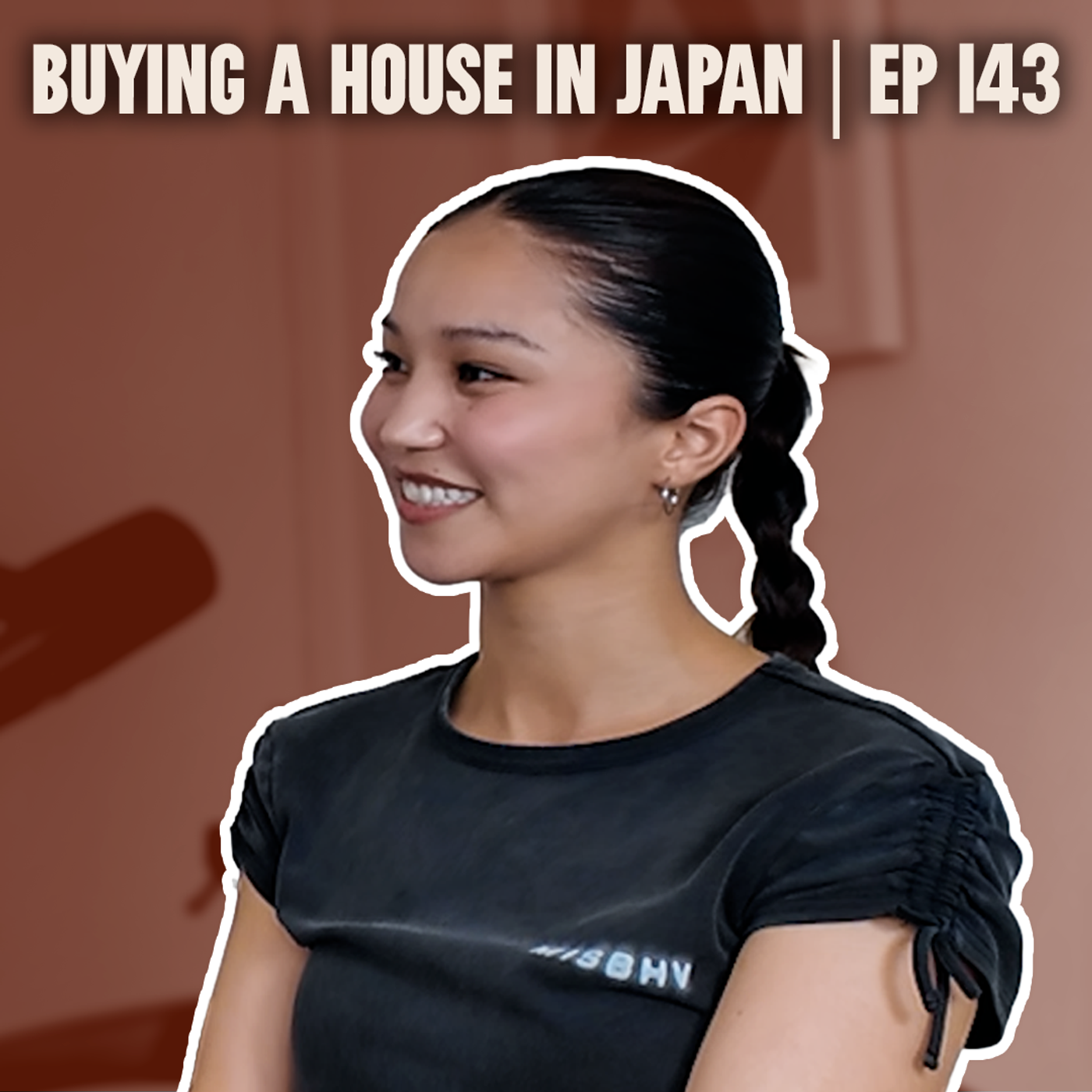
Buying a House in Japan · Mokomoko Productions
This week we welcome Narumi, our newest team member and consultant, for her first appearance on the show. Narumi is Swiss Japanese, grew up in the German-speaking part of Switzerland, and moved to Tokyo two years ago to reconnect with her Japanese heritage and chase what she calls her big city girl dream. She walks us through her path from language school in Kobe to a role at the Swiss Embassy in Japan to a cross border M&A company, and shares what she has learned helping clients navigate buying property in Japan. Key Takeaways Narumi grew up speaking German, English, and French, and started learning Japanese from scratch when she moved to Kobe for language school Full immersion, working at a Japanese company where no one spoke English, made the biggest difference in her fluency Japan's vacant home crisis has a lesser known parallel: small business owners without successors, sometimes giving away entire companies for free Shikoku (Takamatsu, Kochi, Tokushima) came up as an underrated region worth a look, though it is harder to reach and better suited to buyers with some Japan experience already Japanese bureaucracy can be a serious hurdle for foreign residents, including family register requirements that require support from relatives back in Japan Younger generations in both Switzerland and Japan increasingly doubt they will ever be able to afford a home, which is part of why more people are exploring options like Akiya In This Episode Narumi's background, her apprenticeship in Switzerland, and her decision to move to Japan Her JLPT journey, including a near miss on the N2 exam and her upcoming retake Working at the Swiss Embassy and later in cross border M&A, sourcing succession deals between Japanese business owners and international investors The connection between Japan's declining population, its vacant home problem, and its business succession problem Frequently asked questions from consultation clients, including "where should I buy" and "are these prices actually real" A candid conversation about phone anxiety in a second language and tricks for getting simpler Japanese from customer service Recommendations for underrated regions, ferry routes, and Narumi's own dream home picks (Kamakura and Takamatsu) Resources Mentioned Buying a House in Japan's property listing site (linked in show notes) Book a consultation with the team, including Narumi Follow along on Instagram and TikTok for property tips and renovation updates Call to Action If this episode helped you or made you smile, leave us a five star rating. It takes five seconds and helps other listeners find the show. Got a question or a topic you want covered?
speaker-0: I don't know about your generation, but I don't think Chen Z ever thought it would be possible to still be able to buy property than maybe our parents or older generations were able to. speaker-1: Think like millennials we have the glimmer of hope that we're like, Okay, we could do it. Yeah, like Gen Z, like I don't you there I feel like there's like nope, not not happening, right? speaker-2: We believed it. We believe it is possible. Yeah. speaker-0: Yeah. Yeah, when I hear the prices of property in Switzerland and then compare it especially, you know, hearing now the prices of some okos that you can get, of course, in the countryside more. It's just crazy. Like yeah, Japan is really this unique case with all those vacant homes. And in Switzerland it's like it will be unimaginable. speaker-2: Welcome back to the Buying a House in Japan podcast, the number one ⁓ real estate podcast for Japanese in on in the world. I'm your host, Joey, joined by co-host Take. What up? Welcome back, Take. ⁓ we are joined by a very special guest today, Narumi. ⁓ Narumi's been helping us out. I cannot stress enough how much of a help she has been. Recording content is very difficult. ⁓ everybody out there that's never speaker-1: Yeah, I'm okay. speaker-2: try to be on camera, trying to talk about ⁓ you know, some specific topic and kind of pushing out content and ⁓ Notami has been such a big help there so far. Welcome, Natomi. Do you mind giving a c a quick ⁓ introduction of yourself? Yeah. speaker-0: Sure. Thank you so much for the intro and thank you for having me. ⁓ so yeah, I'm Narumi. I'm 26. ⁓ originally from Zurich, Switzerland, so the German speaking part. ⁓ half Swiss Japanese and yeah, moved to Japan two years ago. And ⁓ yeah, ever since then been living in Tokyo. speaker-1: Awesome, Natumi. It's actually your birthday today. Yes. ⁓ okay. July fourth. Natomi has ⁓ sacrificed her birthday to hang out with us. So we are thankful that you've come so far. Where do you live right now? speaker-0: July fourth. ⁓ I live in Setagayaku in Tokyo. speaker-2: Okay, number one popul populated ⁓ municipality in Japan, nine hundred and forty number one. I was looking at it recently. What's ⁓ what's the story? So you moved to Japan a few years ago, right? What's the story? Why did you why did you ⁓ decide to pick up your life and move here? speaker-1: How does it always? speaker-0: I think I've always always been kind of interested in learning more about my Japanese side. So my dad is Japanese, my mom Swiss. And yeah, when I grew up I I didn't know that many other Japanese people and I also didn't learn the language while growing up. So then after my apprenticeship in Switzerland I speaker-1: Well, apprenticeship. What's an apprenticeship? Is that an internship or something or what did you speaker-0: Yeah, it's like it's we have the system so everyone goes to high school until sixteen. Okay. And then you can choose either to continue kind of with high school or you choose like apprenticeship, w which usually goes like three years. And I choose to work at a media company. So I was always interested in the media industry. speaker-1: That's why that's why okay, all right. Things are connected okay, so apprenticeship at a media company. Exactly. speaker-0: Exactly, exactly. And after that was finished, I was like, okay, let's take a gap year and learn some Japanese. So I moved to Osaka. and yeah, spent five months there, went to language school in Kobe. That was my first living experience in Japan. speaker-2: Cool. And so the purpose initially for coming here was reconnect with your ⁓ heritage, your Japanese heritage and learn some Japanese. Interesting. Exactly. Where where where's your Japanese if you had to on a scale of ten? I w I thought you were a ten out of ten, but I didn't I wasn't sure that you I didn't understand that you had come here to learn the language. speaker-0: Yeah, so actually I took the JLPT N two in December. Didn't pass because of one point. So actually I'm retaking it like ⁓ on the seventh of July. Alright. speaker-1: Yeah. speaker-2: And two. I believe I could pass the N two, although you can pass the N2. I'm more I'm more Hazakashi speaking, but what was the hardest part about the N two? Like what was the trickiest part? speaker-0: The kanji. Definitely. Yeah. Okay. Yeah. Yeah. speaker-1: For the for the listener, so the JLPT N, whatever it is like the language proficient proficiency test in Japan. What is the range? N one is the highest and the hardest. What's the lowest? N five? N five. I'm gonna try to pass N five. I'm gonna pass it. Twenty seven goal. N five. Okay, sorry, continue. N two missed by one point. Yeah. speaker-0: Five. speaker-2: Let's get you an N five twenty twenty seven goal. speaker-0: Yeah, so I'm retaking it. So the past month I was trying to, you know, repeat a bit like the grammar and kanji and hopefully I can pass this time. speaker-1: A lot of our listeners are trying to up their Japanese game here and like what did you you know, where did you start? What was your beginning level? Like did you know some Japanese or speaker-0: I really started at the beginning. Like I knew some katakana hiragana. I studied that before. but yeah, compared to a lot of my other half Japanese friends, I didn't go like to Japanese school on the weekends, like in Europe. so yeah, I knew that kind of, but no kanji before I went to language school. So that's where I started. speaker-2: ⁓ so you went to so you were at language school in Osaka, is that correct? In Kobe. ⁓ in Kobe. Yeah. speaker-0: Yeah. speaker-1: Okay. And so you're like your dad did not like try to teach you any Japanese or like speaker-0: Okay, how was it for you? speaker-1: ⁓ my dad, same deal. Like I I got like I c I can write and write hiragana and katakana because like yeah, that's all I could do. And but my mom moms are the ones that speak the Japanese, right, typically. speaker-0: Yeah. speaker-2: So your parents spoke what at home? German or what was the household household language? Okay. speaker-0: Yeah, so my dad is quite fluent now in German. Yeah, but yeah. speaker-1: Okay, so you what year did you come to Kobe for language school? speaker-0: In two thousand nineteen. ⁓ speaker-1: When you've hit the N two? Okay. But there was like you're going you're you're close to the N two. I can do it. I can do Okay, but hold on. Not I mean, how many languages do you know? speaker-2: Okay. speaker-0: As a Swiss German, my native language, ⁓ English and then French intermediate because it's mandatory to put French in school there. But how was it in Canada? You also had French? speaker-1: English. French intermediate? speaker-2: ⁓ it's not mandatory. Okay. ⁓ so you can ⁓ join I'm I don't know if every ⁓ you know, school in Canada offers this, but I think many of them do offer like a French immersion, they call it, where all your and that's what ⁓ I was in and yeah, all your classes are in French. The problem is that, you know, I lived in the English part of Canada. So all your friends, you know, that you hang out with at recess or outside of school, you know, you speak with them in English. I'm not gonna talk to my friend in French. Yeah. So it's like you never really learn the speaking aspect of it. I think you get ⁓ pr not bad understand passive ⁓ like listening and reading comprehension of French, but like in terms of speaking and writing, like no, I'm I'm I'm kinda zero, I would say there. speaker-0: Yeah, yeah. speaker-1: Okay, so you know four languages coming in to trying to learn Japanese. So you you have a language ability. Screwed, I only know English, so I'm I'm the speaker-2: Right. Yeah, natural ability. And speaker-0: But I think I was also kind of forced because Switzerland alone has four official national languages. What are the louder ones? ⁓ so yeah, French, German, Italian, and then one Omanche it's called, like an older language. But not many people speak it anymore, yeah. Okay. Yeah. speaker-1: Okay, l how helpful was the language school? A lot of people actually are considering coming here 'cause the visa's easier to get for a language school. How was your experience with language school? speaker-0: Honestly, in my case it was pretty chill. Like, ⁓ not super drilled. I think they give a lot of freedom in that sense. ⁓ but I think especially I don't know if you want to meet new people too and if you you like kind of the learning environment, not just like self study. I think like a perfect environment also to meet new people. And you also usually learn about the culture, right? Not just the language. So yeah, I'm really happy I did that. speaker-1: Okay. Okay. So N2 in my mind is fluent. Like quite quite fluent, very proficient. Like what helped you the most in those seven years since you've started studying the language to like was there something you would redo if you were to go back in time? speaker-0: I mean honestly compared to language school, when I did the most process in my language ability was when I joined this Japanese cross border MA company. So I was working there nine month last year. And there my coworkers all spoke just Japanese, not English. So that really forced me to speak like Japanese with my coworkers. And I think that's when I made the most progress. speaker-1: Immer immersion. Immersion is the best. speaker-2: Yeah. I always wondered if I could hack it in a Japanese company. I'm not sure. speaker-1: I could it. I believe in you, Joey. I think that's what like when I come to Tokyo, I'm screwed because all my friends speak fluent English and they're like half American. It's just like I'm not gonna try to like speak Japanese to my fluent English friends typically. speaker-0: Yeah, but I get you. I mean I also live in Tokyo, right? And of course more international people. Most of my friends also have an international background, so it's just speaking English is crazy. speaker-2: I was saying the same thing. I was like what I like I speak way or like you know go out of my way and I speak way more Japanese when I'm in Okinawa. Yeah. But in here in Tokyo it's just like everyone's speaking English. Everyone I know here speaks English. Like I'm I'm just around an English community. speaker-0: Yeah, yeah. speaker-1: Okay, so if you want to get better at the language, immersion, don't be in Tokyo, don't have any English speaking friends. Yeah. And yeah. speaker-0: Probably. speaker-2: Grind it out somewhere in the countryside. speaker-1: Find it out. speaker-0: Probably moving to a countryside or just speaker-1: You hidden the flashcard and stuff too for like the kanji and vocabulary or Anki Anki Anki's popular. speaker-0: Yeah, like unkies. Okay. Yeah, yeah. speaker-2: So no interest in moving back to Switzerland at all and like starting a career there or or so it was kinda like, All right, burn the bridge behind you. Really? speaker-1: Okay, talk why why? In my mind, I think as an American, like Switzerland is a a well functioning country. I visited Interlock and the Beautiful, Grindelwald, I don't know. Yeah. Like in my mind I Switzerland is like a one of the best countries out there. speaker-0: Yeah, definitely. I mean, I'm really grateful that I grew up in Switzerland. I think also in school, you know, it was really that kind of learning cell, a lot of like discussion also, like, you know, discuss with your ⁓ other students, like classmates. and yeah, really beautiful country, but it's really small country, right? So I was always like kind of interested of moving to Japan and especially Tokyo. It's like the big city girl dream. speaker-1: Okay, you're living at night speaker-0: Definitely. And yeah, I mean around my teenage years I really became interested in Japanese literature and also Japanese street fashion and Japanese movies. So yeah, I was like, Japan seems so interesting to live in your twenties, especially. speaker-1: Yeah. And you used to visit as a kid, right? speaker-0: Yeah, like every three years. Just for like summer holiday. Nigata. speaker-1: And where's your f where's your family from? Prefecture. So you would go to Niigata every three years. Did you enjoy that as a kid? Like I I I loved it as a kid actually. You loved it? I loved coming. Like I loved jobs. I was like a fat fat Asian kid, you know? Like a Yeah, I had a had cabook but yeah. Did you enjoy coming here? speaker-2: Kabu Tomoshi where you collect. speaker-0: I enjoyed it so much. Like I have a lot of cousins also in Nigata. And yeah, it was just like the best holidays I felt like. You know, barbecue at the beach. yeah, so they're from a town called Itoigawa in Nigata. So also the beach is there. Yeah. ⁓ also ski resort. speaker-1: We just recorded a podcast with Chris who bought a house in Itoegawa. So two two votes for Itoigawa. So continue. So surf, potentially on the beach, get some snow. speaker-0: Mm. And yeah, I mean it was like always the highlight, also a kind of drive to Choi Tzu. There's like this big eomal. Okay. For that compared to Toigawa. So it was just this highlight, just going there, going to Daiso, kind of get speaker-1: Big city, big city vibe. Yeah, stuff. As like a teenager is like sick getting let loose in a Japanese mall, you're like, ⁓ let me speaker-0: All these cool things. Yeah. Yeah. And so I always got so excited also going back to Switzerland because I brought all those cool like stuff from Japan that they didn't know like Hawaii stuff. So yeah. Then I was the cool kid. speaker-1: Okay. So yeah, was there a moment when you're in Switzerland, you're like, okay, I'm done with I'm I'm moving to Japan or was it just like you was the the the pull to Japan stronger or the push from to move out of Switzerland stronger for you? speaker-0: probably the pool. I mean I love Switzerland. I still go back like every year. I will also go back in August. but yeah, I was just kind of curious because I never kind of lived in Japan. And ⁓ yeah, I was not so exposed to Japanese culture. So I was like best way also to learn the language is to move here. speaker-2: What about your brother? What's his situation? He wants to be in Japan at all or what's he what's going on with your brother? speaker-0: Not really. So I have one older brother and one younger sister and they will visit next week actually and we will go to Fukuoka but yeah less interested I feel like. Yeah. speaker-2: Fuoka though. So Narumi was mentioning that she's potentially considering a move to Fukuoka. I think Fukuoka's a great city. What ⁓ why are you thinking of the move? Eve like I I know it's just a brainstorm move. speaker-0: I heard so many good things about Fukuoka. I also follow a lot of like fashion accounts on Instagram and I see always like this Fukuoka street snap. And I was like, wait, there's so many young people also in Fukuoka and it seems like quite an international tool. So I think it's kind of seems similar to Tokyo, but you know, in terms of like kind of that urban life, but then you also have the beach near close by. Yeah. Kind of this international life. speaker-2: Yeah. Yeah. I my impression of Fukuoka is exactly that. Like when we were here in university in you know 2010 or 2011, how I remember Tokyo then is like how I feel like I experienced Fukuoka now. Like less people, but you still have everything. It's still a big city, a ton you know, ton going on ⁓ you know for young people there, but it's missing all the crowds that the you know the kind of like intense crowding of the trains here in Tokyo and just like the it's speaker-1: getting crowded though. I there are times I remember when we saw that bakery and the line was like super long. We're like, what the hell? speaker-2: Getting there maybe, but still I think better than Tokyo for crowds. Yeah. speaker-0: Yeah. Yeah, and I've been living here like two years and I feel like sometimes it definitely gets like too crowded. I mean now luckily I don't have to take the the commuting train in the morning anymore. But when I was working at the ⁓ and A company it was like every morning, every evening. It's just crowded all the time. It's tough. And also on the weekends, right? You wanna go to cafes or restaurants. It's just like so many places people line up. Yeah, yeah. speaker-1: Yeah. Yeah. I think like I we mean Joey have said this. Like if we were to re roll our Japan experience and start fresh, I think Fukuoka is a very, very viable option. Mm-hmm. I think we're stuck here though from from a business perspective and a friend existing friend group, like everyone's in Tokyo. And unfortunately. But speaker-2: Yeah, I agree with that. It's such like ⁓ and also coming in from the airport, like I don't think I have any flights that go to Fukuoka from Canada. speaker-0: Yeah, and definitely ever since started working with you guys, you know, I'm helping with consultations and it got me inspired also to talk to different people who are like interested, you know, in locations outside of Tokyo and you definitely see like, you know, all the benefits of like the smaller cities too and better access to nature. And yeah, I'm kinda speaker-1: Yeah, well. So where in these consultations we do, if you're ever interested, go ahead and book one on our site. Notami again might be one of your consultants. ⁓ people often go like, Where should I buy? you know, and like we we have our answer, but like, where do you recommend? Is is there anywhere in Japan that you think is kind of off the radar of typical buyers? speaker-0: I didn't h hear much about like people interested in Shikuku in my consultation so far, but I think Shikuku is such a cool area. Yeah. ⁓ I think you also went there like speaker-1: Shikoku boys. Anyone else has done Shikoku other than people living there. speaker-2: We've been there more than anybody else I know. speaker-0: Yeah. Yeah yeah. So I I think it's so much to offer. Like last summer I travelled around Shikoku, like Takamatsu, Kochi City and Tokushima. Yep. And it has so much to offer. Like you could also surf there, right? you have Naoshima close by if you're like or interested in art. speaker-1: Kakamatsu, yeah. speaker-2: Cool coastlines too, like some of the properties we checked out. You know, this one house we were looking at, you know, it's right there. There's like a little path you can walk down to almost like a private beach. Like you get kind of really interesting properties with really interesting kind of like I don't know. Personally, I I I really like the coastline stuff. So I remember this one ⁓ specifically. But like, yeah, I I don't know. I do think Shikoku, if you're okay with like smaller, like Takamatsu or Kochi City or even like a little bit more rural life. I also agree, Shikoku I think is a good place, especially, you know, or the Seto Uchi kind of like inland sea of Japan. I think very interesting stuff. speaker-0: Yeah. I really like Takamatsu. ⁓ it was also interesting, like I went to Takamatsu and then I stayed on an island close by called Megishima. And the owner of the guest house there, he told me yeah, Takamatsu actually has a lot of like investments too. speaker-1: I've heard about that. It's kind of growing. It's growing it's growing quite a bit. Yeah. speaker-0: Yeah. So I don't know, first I also didn't expect such a big city, but actually it seemed quite like big and speaker-1: Okay. speaker-2: Gala. speaker-0: Yeah, yeah. I think so. speaker-2: So I think it's like kind of up, upper right. speaker-0: Yeah. speaker-1: Yeah. Okay, so Shikoku Shikoku is the off the radar and I I think both Joey and I agree, but I also do think it is hard mode if you don't have a lot of Japan experien ⁓ we have a couple of people that have moved straight there, I think, but it is a it is more challenging because like that entire all of Shikoku is like in my mind quite inaka less transportation, yeah, kind of stuff like that. Yeah. speaker-2: Safe from Nankai. Yes. ⁓ You're gonna fly in an arita then have to get on another plane or you're gonna have like rent a car and drive. ⁓ yeah, harder to get to but speaker-0: How I actually did it, I went to Kyoto for a few days and then I took the bus to Takamatsu and that was only I think like two and a half hours. Mm-hmm. So that could be also kind of a good route. speaker-2: Right on. Across that bridge. There's like that other island there with the Notter Dog or something. speaker-0: Yeah, yeah, yeah, yeah, yeah. And I think it's also quite famous for like people who do cycling. I think speaker-1: Sh Shinana Shima Nami Kaya. speaker-0: Something about yeah. speaker-2: Would you ever do that? Should we do it as a team? speaker-1: Think we should. speaker-0: I don't how long is it actually? speaker-1: Team team offsite. Yeah, yeah. Bike bike trip. speaker-0: Next company trip. speaker-2: So after the okay, so the language school, you got your first job. Mm-hmm. Was that kind of your last job or did you have several jobs here in Japan so far? Several jobs. Okay, let's see. speaker-1: Career path of Natami. speaker-0: Yeah. so because of my ⁓ you know, university degree was also quite diverse, right? So I studied international management. So I had some finance classes, I had some marketing classes, some like international relations. ⁓ so actually when I graduated I wasn't not one hundred percent sure which direction I kind of want to go. And yeah, then I basically got this job offer after graduating, I got this job offer at the Swiss Embassy in Japan. So that was kind of the reason I moved back. to Japan. Yeah, yeah. so yeah, I was working there and then the contract was finished and ⁓ yeah then I actually choose to switch to that cross border ⁓ L A company. So totally different. speaker-2: ⁓ sweet, embassy gig. speaker-1: Cross border ⁓ A, okay. What did you do at that company actually? Curious. speaker-0: That was more like a consulting assistant position. so it was mostly sales actually, kind of finding, for example, we had a Japanese business owner, he had no successor. So ⁓ then our company kind of identified maybe some, especially investors, corporate investors from like the Apex region. ⁓ the company also had an office in Singapore. ⁓ so it was kind of like identifying a potential ⁓ merger ⁓ with maybe a Singapore company. ⁓ who would be interested in a Japanese company. speaker-1: So you'd find distressed Japanese companies without inheritors and they would your company would help ⁓ kind of ex c connect the dots to a Singapore investor. speaker-0: Or vice versa. For example, we had a Singapore travel company and they were also interested in the Japanese market. So then we look also for a potential merger. speaker-1: That's interesting. We were trying to buy a coin laundry a little while ago and so I think the ⁓ and A side, we could've used your advice earlier, but it's a it's a really interesting space in Japan with so many of these businesses not having inheritors. ⁓ like I'm curious, what are your general thoughts? You know, do you think is a big problem in Japan or like speaker-0: ⁓ definitely. ⁓ I think when first time I got really interested in the topic was when I came across this New York Times article about maybe you saw it to like a Japanese business owner in Hokkaido. I think he had a big agriculture company and he was willing to give his company away for free because he couldn't find any successor. And yeah, I think it's really I mean, of course it's really connected to the declining population. so Yeah, I'm a bit worried because most of these companies really small ones, but they're, you know, maybe ⁓ involved in like craftsmanship. So I'm a bit worried that some of this Japanese craftsmanship also will go away because of speaker-2: Yeah. Difficult problem. And you know, it mirrors the Akiya issue in Japan like almost perfectly. It's the same reason why, you know, sometimes there's houses given away for free, sometimes there's businesses given away for free. ⁓ I think that I've seen personally online like some really interesting businesses that ⁓ there's like a few very Japanese ⁓ websites for MA, and I've looked at some of them, like some interesting like sake distilleries and that kind of stuff. I still feel like it's very difficult as a foreigner to come in and purchase one of these businesses. And maybe that's why you need these MA companies that can help you out. We, as Taki alluded to, we tried to purchase a coin laundry and that totally fell through. We made some mistakes. ⁓ I think if there's anybody out there that wants to build a business in this space, ⁓ I think it's a fantastic opportunities, but very difficult, I think. ⁓ because we, you know. We're here, we have a Japanese company and we're trying to purchase this business as a Japanese company with a Japanese rep director. Still difficult. So difficult problem to solve. Sounds like some businesses are having success in it. Did you ever see any like what were some of the interesting business? Did you see interesting businesses or was it more kind of like accounting firms? speaker-0: ⁓ honestly, the time I was working there it was something that that's super how can I say sexy businesses. like I don't know, one was like hair implementant company. But actually ⁓ Japan is quite famous for kind of coming up with this. Turkey too. ⁓ but actually Japan also in the Asian region. Yeah. speaker-1: Good business. That's a good business. I thought it'd be like turkey. speaker-0: ⁓ so there was one company. ⁓ another was just like travel agencies. ⁓ we had two. but yeah, these were top of my mind. But yeah, that's definitely also why I got interested in like Akiya and your business. Because, you know, that ⁓ and A was connected with that visible problem of like declining population in Japan and also the same with Akios, right? I feel like there's so many still like beautiful properties, right? But ⁓ Yeah, over nine million vacant homes and I feel like a lot of potential also for foreigners. speaker-1: Such a big problem that every Japanese person kind of like ignores almost like the declining popul everyone knows what's happening, but like no one is doing any. I guess maybe the government is doing something, but it feels like everyone's just a there's a like a ⁓ yeah, ignoring it. There's like a little cloud over everyone's head that, like, okay, we'll we'll figure it out later, or like ⁓ you know. Yeah. speaker-2: Kind ignoring it for now. The cliff's getting closer. Yeah. If you had a magic wand after your experience here in Japan, is there any one thing you would change about Japan if you had a magic wand where you could just like magically change that? For me, it would be the Kaiten Zushi menus. They're always so confusing. Like you know, they're so weird. So many options and just the layout makes no sense. And like I would change that to better design. speaker-0: ⁓ Too many options. say I think of course you also have the experience with the Japan Japanese bureaucracy, right? So I think that's what just from a foreign perspective frustrates. speaker-2: Like what, what's that? speaker-1: Yeah, give us an example. speaker-0: Like for example, I had to renew my Japanese passport. ⁓ it was also kindly my fault because I was a bit like last minute. but yeah, I wanted to renew it ⁓ here in Tokyo and then they I don't know, they needed so many documents. It was I don't know, three years ago, but they kind of needed my family register who was in Niigata. Right. Yeah. And I was like, h why can that city office in Niigata not send directly, I don't know, even by fax machine or that document to like the Tokyo like city office? No. They needed my grandma, who still lives in Niigata, to go to the city office, get that document, and she has to send the paper by post to the city office here. And this is the only rule. Yep. Like the only way. speaker-1: Yep. Yep. I had to do that also. ⁓ really? Not kinda sucked. I was like in the US. I'm like, ⁓ shit, okay. Gotta go to Japan. I got brought my buddy Max with me. Where is Tama? It's Kod what's you know that Kodakuan Hall? Like that big I think it's like a boxing or whatever, like is it it's a big stadium? Somewhere somewhere around there, I think is it I have no idea why. I guess maybe that's where my dad was registered. ⁓ I see. But okay, so yeah, I agree with you on the bureaucracy. speaker-2: Saw wrestling. Yeah. speaker-1: Yeah. And and dealing with that. But was your Jap do you feel like your Japanese was good enough to navigate it at that point or was it still challenging? speaker-0: ⁓ back then I had a friend who came with me. speaker-1: That that seems to be the move. Like really just getting the bring a friend to the city hall office. We were just talking speaker-0: Also for me it was so complicated because I didn't really know exactly what they speaker-2: Yeah. How's your strategy? So recently, you know, my job, your jab is is is most likely way better than mine. ⁓ so you know, I still get nervous when I need to call on the phone, but I'm getting better at it. I think it's just like, you you you put more reps in and you get better at it. Yeah. But I've been I've I came up with a new strategy. I'm curious if you have any strategies or if you just feel comfortable on the phone. But I'll tell them I'll be like, so I've tried the like the the speak slowly. I've like, I've been try I've I've tried that before. I'm like, ⁓ could you please speak slowly? But the problem is They still use complicated terms. I feel like on the phone, they're very formal. Yeah, cago a lot of the time. And like that's not helping me. It's not like, okay, slowly maybe helps a little bit, but I'm still not understanding the word. So I've I've been saying, like, speak to me like a child. Please speak to me like a child. And if they get too complicated, I'm like, I I hit them again with like, no, no, no, no, speak to me like a child kind of thing. It's been working. Yeah. I think they don't want to do it, but they they will do it. And I feel like ⁓ it's my phone conversations have been way easier after I just kind of like gave speaker-0: No, I remember also before I didn't know Keigo, then I also was like, I don't know if you were just reserve a restaurant or something, then I don't know please yesashini hung on the show. Or say like please talk to me like a child. Yeah, yeah, yeah. ⁓ speaker-1: Yeah. So you hit him with the mm muzika and go like they understand that though. speaker-0: Yeah. Yeah. And they also hear your accent probably, right? speaker-1: ⁓ I see Joey. ⁓ on the phone, yeah, yeah. They can tell. speaker-2: Yeah. How's your f I do you get nervous if you have to speak on the phone, if you had to do something fun speaker-0: Yeah, but also in German I still get nervous. I have to pick up the phone. speaker-2: Yeah. speaker-1: Do you see a lot of y ⁓ like we don't have too many European customers? I'm curious from a Swiss perspective, do you think a lot of people are looking at buying a home here or like how is it buying a home in Switzerland actually? speaker-0: Yeah, the housing market got really tough in Switzerland too. Like ⁓ definitely some crisis. Actually there was a recent recent ⁓ initiative ⁓ that they wanna perhaps cap the Swiss population to like ten million. Because of like so much increasing population, also it was so hard to find like, you know, property in Switzerland. ⁓ didn't pass though ⁓ that initiative. But yeah, definitely more d demand than supply. speaker-1: Are a lot of your friends in Switzerland like buying homes or they're still renting? No. speaker-0: But I feel like also in general kind of I don't know about your generation, but I don't think Chen Z ever thought it would be possible to still be able to buy property than maybe our parents ⁓ or older generations were able to. speaker-1: I think like millennials we have the glimmer of hope that we're like okay, we could do it. Possible. Yeah, like Gen Z, like I I don't you there I feel like there's like nope, not not happening, right? speaker-2: We believed it, we believe it. Yeah. speaker-0: Yeah. So yeah, when I hear the prices of property in Switzerland and then compared especially, you know, hearing now the prices of some okos that you can get, of course, in the countryside more. ⁓ it's just crazy. Like I feel like ⁓ yeah, Japan is really this unique case with all those vacant homes and in Switzerland it's like it will be unimaginable. speaker-1: So not I you talked to a lot of our your front of line talking to a lot of the customers, like any common trends or like frequently asked questions you feel like you get in these consults that you know you'd like to tell the audience? speaker-0: definitely like of course, where do you recommend? I think you had that in past podcasts too. yeah, some people, of course, they've been to Japan, but some of them not. And then they ask me, okay, where in Japan do you recommend? Which is always hard to answer because it really depends, you know, on the lifestyle you're looking for, too. And then yeah, a lot of people discover us through social media or heard about, you know, the Akios through social media and they're like, they hear really these cheap prices, and then they're really cur curious to hear, okay, ca is this really true? Like is it possible? And I think that's where we really try in consultations to show like, okay, these are the actual costs and like be prepared kind of speaker-2: It's so hard to believe f coming from like, you know, even small town Canada, like, you know, the the cheapest home in that neighborhood is probably, you know, just shy of half a million dollars, right? So it's like to hear about housing in the, you know, ten thousand dollar, twenty thousand dollar, thirty thousand dollar range. It's like, you know, it's hard to believe. Yeah. 'Cause we're just so used to a housing market that is always expensive and only getting more expensive. speaker-0: Yeah, definitely. Yeah, yeah. So I think those are the most two common questions, I get. Yeah. Yeah. speaker-1: Are you where do you want to buy a Nakia? Are you considering it? Not a Nakia, maybe just a house in Japan. Have you have you considered it? I know your Gen Z, you might ⁓ might have a whole glimmer of hope now, right? Like speaker-0: Yeah. I mean if it would be like a permanent home, I think Kamakura ⁓ the dream speaker-1: Okay, yeah. And game real estate. speaker-2: Excellent choice. speaker-0: Excellent choice, right? But Kamakura got really popular, right? speaker-1: Amocuda's like kinda yeah, end game real estate. speaker-0: Yeah. Yeah. speaker-1: So Kamakura's your your permanent home? Beach. speaker-2: Town close to Tokyo. speaker-0: Close to Tokyo, right? So I think yeah, Kamakura. And if it's like vacation home, ⁓ yeah, I do like Shikoku somewhere. speaker-1: Okay. There we go. Wearing Shikoku. speaker-0: Hmm. I think Takamatsu. Okay. Yeah. Because you can still go with the ferry to a lot of islands. I love ferries. Yeah. speaker-1: Well welcome welcome to our welcome to our welcome to the club. You're on the right you're on the right team here. speaker-0: ⁓ but you still get kind of this city. Yeah. ⁓ so I think it's a really good ma ⁓ kind of mix. speaker-2: Two ferries I wanna take. I got ferries that I wanna take. The one from ⁓ Tokyo to the what's it called? Ogasawata islands, like way down by Guam. There's like a few Japanese islands. Yeah. ⁓ Chichijima like Hahajima. Yeah. Way down there. It's ⁓ like a twenty six hour overnight ferry. But you're going w into the Pacific Ocean and I feel like it's gonna be rocking and rolling. ⁓ yeah, yeah. The other one is from I think Joetsu to Otaru up in Hokkaido, I bet that's a good figure. speaker-0: Yeah. Actually one route I want to take with the ferry is there's I forgot the name, but there's one island that still belongs to Tokyo Prefecture. speaker-1: We should try that in the fall, actually. Yeah. ⁓ Nijima? Or ⁓ speaker-2: Hachiojima. speaker-0: Sure but speaker-1: I think it's Nijima Nijima. There's a we used to do a bunch. We used to take like in college to take the ferry over and like party on the boat and like everyone yet. Everyone would like yell at us and then we'd get to the island and we'd just have a continual party and like looking back I could not sound fun. It was it was it was so fun. Yeah, we were definitely the the worst, unfortunately. But it was mostly Japanese people. Or like we're or my Japanese friends that were doing it. speaker-0: Yeah, I don't know. It looked like really cool. I think there's still some dunes there. So it's kind of black. But you can also kind of take a ⁓ I say chitenta, I forgot the word in English. Yeah bike. And kinda speaker-2: And four JLP and four forgetting it. speaker-0: ⁓ but yeah, the one ferry I really liked was actually from Tokushima and then Towakayama. You can also take that one. speaker-1: That's a short ferry, right? Tokeship to Wakayama, yeah. speaker-0: Yeah, it was like only I think two, three hours. Yeah, yeah. speaker-1: Right on. Yeah. Cool, Narumi. ⁓ wanna thank you and welcome you to the team. Thanks. First off, and happy birthday. Thanks. Hopefully the next time we have you on our podcast, it is you're gonna be an N two J L P T N two, I believe. Yeah. It's been a long day of recording content. Narumi is now our face of Acumart, I believe. So you'll be seeing a lot of her content. ⁓ but now we must ⁓ celebrate her birthday with the barbecue. Ooh. speaker-0: I hope so yeah. Side or speaker-1: Let's go. Let's do it. So thank you for being on the podcast, Natomi. Excited to have you back again soon. speaker-0: Thank you. It was fun talking to you. speaker-1: Boom, happy birthday. Thank you. Okay, thanks. speaker-2: Thanks for listening to this week's episode of Buying a House in Japan. If you find the show helpful or at least entertaining, give us a five-star rating. Takes five seconds and really goes a long way. speaker-1: You or someone you know is looking for a Japanese home, check out Akiamart.com, our English-friendly site that lets you browse over half a million listings. That's a-K-I-Y-A-M-A-R-T dot com to find your dream home in Japan. speaker-2: If you've got questions or feedback, drop us a line, email contact at akiamart.com. You can also find us on Instagram as well as TikTok where we post properties, tips on the home buying process, and updates on our own purchases and renovations. speaker-1: Thanks again for listening and we'll see you next week.