
Build Beyond Podcast · christopher.netley
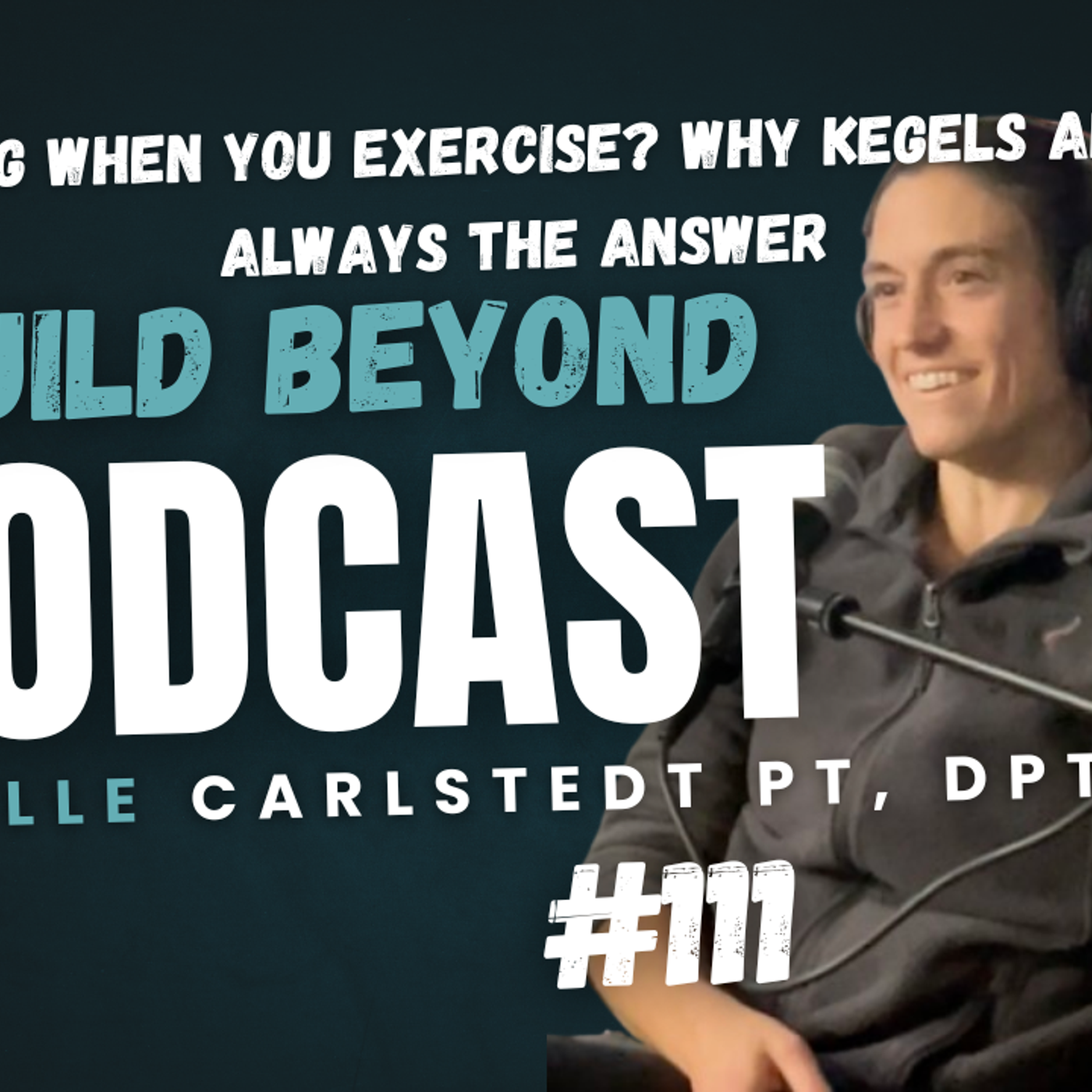
Urinary leakage is common, especially after childbirth, but that doesn't mean you have to accept it as your new normal! In this episode of the Build Beyond Podcast, I'm joined by Dr. Michelle Carlstedt, a Doctor of Physical Therapy specializing in pelvic floor rehabilitation, to discuss stress urinary incontinence and why Kegels aren't always the answer. Many women experience urinary leakage when running, jumping, lifting weights, coughing, or sneezing. Unfortunately, they're often told it's just part of getting older or having children. But there's much more to pelvic floor health than simply strengthening weak muscles. Michelle explains how breathing, pressure management, core strength, hip function, and even stress can contribute to urinary leakage—and why an individualized, whole-body approach can make a difference. In this episode, we discuss: Why urinary leakage is common but doesn't have to be accepted as normal Why Kegels don't work for everyone How breathing, core strength, and movement affect pelvic floor function What to expect during a pelvic floor physical therapy evaluation Why internal examinations aren't always necessary How pelvic floor rehabilitation can help women return to exercise and everyday activities with confidence Whether you're dealing with urinary leakage yourself or simply want to better understand pelvic floor health, this episode offers practical insights and a reminder that you have more options than you might realize. 🎧 Listen now and learn how to move beyond managing symptoms and get back to doing the things you love. Chapters 00:00 Introduction to stress incontinence and its prevalence 01:54 Limitations of traditional Kegel exercises 04:49 Holistic and global approach to pelvic health 09:51 Pressure management and force absorption techniques 14:57 Role of breathing and core stability in treatment 19:59 Assessment strategies and internal vs external exams 24:56 Activities that trigger leakage and lifestyle considerations 30:10 Personalized treatment timelines and expectations 34:57 The importance of individualized care and holistic assessment Where to find Dr. Michelle Carlstedt PT, DPT: VersatileFitnessPT.com Instagram: @versatilefitnesspt Where to find Chris Netley: BuildBeyondHealth.com Instagram: @BuildBeyondHealth YouTube: @chrisnetleyDC X (formerly Twitter): @chrisnetleyDC Facebook: Build Beyond Health, PLLC Music licensed through Soundstripe. Code: 0I3GTLTPEB1VHGTA
Chris: Before we jump into today's episode, if you enjoy the podcast and you want to support the show, please do me a quick favor, hit the like button and then make sure you're following or subscribed. That way you'll know whenever a new episode comes out and it really helps more people find the show. All right, let's get into it. So what is the topic today? I think we decided on stress incontinence or just you know, leaking. Okay. Or, you know, people or women who like leak when they either exercise or cough, sneeze, something like that. I didn't prepare for this at all because I've never had stress incontinence. I don't treat it. Yes. I know nothing about it other than my wife. Has had it after childbirth. Okay. So I am going to learn a bunch of stuff today. Cool. Yeah. Good. It seems like this may be one of the more common things that you deal with. I'd say, and that's why when you asked me earlier, like, what, you know, topic or topic should we talk about? That's probably the first one that came to my mind. because it is really common and one of the most common things I hear. like women say is like I had a baby so I pee myself when I do this, but there's not a lot I can do about it. Or I tried Kegels and it didn't work. And so it th there's more to it than that. So I'm like, man, I think we should keep we should talk more about this. Keegels are then the most common thing they get prescribed for this? Yeah. I would say that's that's still a problem that I see is either like no pelvic floor therapy is like offered or if it is or like usually it's just, well, my OBGYN or my doctor just said like, like, you know, practice, you know, squeezing at or the common thing is every red light you sit at, just, you know, do your Kegels or squeeze your pelvic floor. or if they go to pelvic PT, then maybe there's like some level of pelvic floor therapy they try, but it's pretty siloed and specific to in a kind of operating under an assumption of a weak pelvic floor. And I think there's just a lot there's been a lot more research in the past, you know, three to five years and kind of a there's a lot of different approaches or a different approach that you can take now and that I've seen a lot of success with. So yeah. Well before we get into the different approaches, coach me through a key goal. Because I remember learning it at some point. I've never coached anyone doing it. And I can't even remember even I'm sure I attempted one at one point. I mean, guys can do them, I'm assuming. Yeah, yeah, definitely. and I guess a lot of times I don't even use Kegels as part of my pelvic floor rehab. But you know, if I'm testing someone's pelvic floor strength, essentially what a Kegel is is just a pelvic floor contraction. So you want to tighten and kind of raise the pelvic floor a little bit if you're able to. as opposed to like straining or pushing or bearing down like the opposite direction. Like if you think like pushing out a bowel movement or birthing a baby, that would be like bearing down. So you know, if I want someone to, you know, just a test to see how those pelvic floor muscles are working in isolation, then I'll usually I'd ask to see what they think it is, but how I would coach it is usually like just subtly like mm like try to stop the flow of urine. Like if you're, you know, urinating, how do you stop the flow? Or just think about you know, squeezing a blueberry or something that is in the vaginal opening or something, and like tightening it to not let something come out. Interesting. Yeah. If someone can't figure that out, yeah. Wha ha what are the cues? Because that's Irregular. I can't imagine too many people have actually tried to squeeze a blueberry. Yeah, for sure. honestly I don't dwell on it too much. Not or mostly because I I don't think it matters a lot. I I do think like the stopping the flow of urine helps. 'cause people can kind of think about if they had to like stop their pee. trying to think of some other ones. But sometimes I think try to tell them to think of their pelvic floor as like an A frame house or like an elevator or something, so they want to maybe like rise like it to kinda come up or or like tighten a little bit. but yeah, y usually if someone can't get out of dwelling it too much because your pelvic floor was really never meant to work in isolation. So I think there's a place for like turning that back on. But, you know, I've worked with a lot of people where they never like their Kegel sucks and it like doesn't really matter. Okay. So Kegel ends up being the go-to exercise for this, but it's less effective than other options because it's an isolation exercise, not respecting the complexity of the region. Yeah, well, so I mean there's there's nuance to it, right? So I think it depends on, you know, the time someone's coming in. So I'll say that like you know, I think it's helpful to have someone quote, find their pelvic floor and be able to kind of like move with it and if it's like like really early postpartum, then a great you know, gentle exercise is just some of those like squeezes of the pelvic floor. but yeah, I don't th it's it in my opinion it's really not that effective. because there's just so many other variables, involved and it it does depend on the person. Okay. So I would imagine that a a lot of women struggle with this issue and then they either go somewhere and get the Kegel exercise or they're online researching it and that's probably what comes up a lot. And then they get frustrated. And then ideally they come and they find someone like you. So if someone has you've been using Kegels or not using Kegels and they're just they're they're struggling with this issue, where do you start? Yeah, so I would start like if they came to me with the issue or just like on the phone or called me up and was like, hey, what do I Well that's yeah, that's okay, that's a good one. Where where does this conversation usually start with you? Is this someone is actually s like they know what to search online and they find you? Or is this more of people who are completely ignorant And they've got to connect with someone who's got results. I mean, is this is this something that like at the level of knowledge for your patients, do they even know where to look? Yeah, well, I think like, you know, part of the reason I'm on the podcast is because it is a you know, it's a problem many people s many women struggle with, and but there's still a huge part of the population that thinks that like that's their new normal and they have to live with it. So once we're past that, we're they're like, wait, I don't have to live with this. then, you know, I think pelvic floor P T is gaining traction and and so ideally they would search, find me, and then I could, you know, I'd learn more about, you know, I like to know like when they're leaking. you know, is it during a certain activity? Is it during running or is it during like sneezing? Or is it you know, that that kind of matters, like when and why and then how often, how long it's been going on, that's all gonna affect how I examine and treat what they're dealing with. and so yeah, I mean, I if I can get someone right away, awesome. Sometimes they'll go to a more traditional pelvic floor PT place, and with more like internal work or specific pelvic floor exercises like Kegels or biofeedback and get some results. and then think that that's as far as they can go. but I just yeah. I don't think a lot of people yet treat like fully holistically. Is there pain associated with this or is it just leakage? I mean, I've worked with people with some pelvic pain too. I don't know. I I don't want to say they go hand in hand, but I mean sometimes it's just a lot of times it's just like leaking, like just peas coming out when they're doing activities. Other times there's some pelvic pain, not associated, I think, with the leaking, but just like if if someone's leaking at the pelvic floor, then like that might not be the only dysfunction they have, right? It's kind of a signal that something's wrong. So it's like, you know, is there anything else going on? So it, you know, it can happen, but I would say it's usually different. Hmm. What are some so this becomes the new normal for people and they just kind of live with it. What are some activities then where it becomes the most normal? You know, like I always pee my pants when I do this this. 'Cause I'm picturing like CrossFit burpees, but that's really strenuous. I mean I might pee my pants doing you know what I mean? Like it's hard like I'm picturing something really hard, but is it su are there is it are the are activities that are even more mild something that sets it off? You know, like groceries or yeah, it depends on the kid, things like that. For sure, yeah. It depends on the person, but I mean obviously there's the exercise. side of of things that might bring it on. But there's also like, you know, sneezing, coughing, laughing. and then to your point, like picking up groceries, picking up someone's, you know, child or, you know, a big one I get is like I can't jump with my kid on the trampoline. or just like chase after them. or things of that nature. It doesn't have to be like a full, strenuous workout. sometimes it can be pretty mild things that bring it on. So then I would imagine that part of the part of the problem if you're struggling with this is not just like the leakage, it's everything that goes around it. I would imagine you've got to bring clean underwear with you and you've gotta I don't know, the d it you've gotta probably pick what you're gonna wear in case it leaks because you wouldn't want it to sh show on certain clothing. I mean I I would imagine that I'm trying to get I'm trying to step into the shoes of a woman and think about how even as a guy, like let's say I had a problem like that, I would have to select certain pants, I'd have to have certain underwear, I would have to avoid wear a pad all day. Yeah, I would have to avoid certain scenarios or always make sure that there's a bathroom in the vicinity. I probably wouldn't want to drink too much liquid. You know, I it would be it would almost cause anxiety, I feel like, because you're it's it would be dominating my thoughts. You know, I it's like a could I I'd be questioning everything because it'd be so embarrassing, you know, to pee your pants in public as an adult. And to be fair, it's I mean, no, it's definitely it's horrible. Like it sucks. But I would say with with this type of accountants too, sometimes it's just dribbles. But over the you know, the course of the day or part of the day, like, yeah, it's super bothersome. Yeah. Okay. So someone contacts you and she says, I've got this problem. I've been dealing with it for a while. I've tried Kegels, it's not working. What what do you get what's the next step? Yeah, so I want to learn more about the person's situation. so like I already alluded to, like how long it's been going on for, how frequently is this happening, and with with what activities? Because that matters. it actually matters quite a bit from a treatment perspective. And then yeah, those are the big ones. Are th is there anything else associated with with the leaking? Like you mentioned, pain, but is there, you know, anything else? Like do they also have low back pain? Is there s you know, other, you know, issues like constipation or, you know, urgency where like the urge comes on really fast or they have to pee frequently. So there's like a lot of things that go with it, but I'm kinda trying to get the whole picture of the person. and you know, their age too, in what context is it happening? You know, are they six weeks postpartum or is it like eight years postpartum? Or maybe they've never had kids and just have what's we call athletic incontinence, which is like just some girls who have not had kids, you know, are young and and this happens still in in sport. Or maybe they're in perimenopause and there's a lot of changes going on hormonally. and so that's a big population as well. perimenopause, postmenopause. So, wanna get the whole picture and after that I feel like that helps with kind of the exam moving forward. So when you get into the exam, is this one of those things that often requires an internal exam? so I don't like to say requires. I think I mean more information is always helpful. So I am am trained to do internal exam intravaginally, and I think it's extremely helpful. It usually helps yeah, helps me understand what's happening when they do certain movements and helps kind of them even find that pelvic floor a little bit better. but it's not required, right? So I've worked with plenty of people who are like, let's start without it and usually just based on a good subjective history, getting all the context, watching them move, talking through it, we can usually get a pretty good idea of what's going on on the pelvic floor, even if it's an external exam. I could see how that would be helpful because if you think about muscles you can't see. Mm-hmm. You know, if you say contract your bicep, well I can look at it, you know, and I can reach around and can touch it. But if you're trying to get someone to maybe move their shoulder blade a certain way, they can't see it. It's hard to reach around and touch it. Sometimes they can't find that. But having that if I can come up behind someone and put my hand and put poke and be like, no, squeeze here or push against this. Yeah, the tactile case. And then and then all of a sudden now they're moving the shoulder blade. Because they understand, that's what that feels like. Is that how it works with internal exams? I think a lot. Like I've I've I have yet to have someone like who I have done it with say, like, like I wish I wouldn't have done that. Usually people are really glad because it's actually I think when women think internal exam, they kind of think of like like the only sometimes the only reference point they have is like a pap smear at like an OBGYN office and that's like the speculum, it's like and you know, they're not really like you're not learning or doing anything and it's like and it's cold and it's like not like painful, but it's not pleasant, right? And you don't really gain anything from it. And this is just very different overall. And then yeah, it's it it is like that helpful tactile cueing of like, you know, kind of figuring out what's going on where my public floor is and then if you know, can they move it, talking through that and then like almost like finding the range of motion of this muscle group, just like you would like a shoulder or, you know, hip or anything. But it's the pelvic floor. So So it can be a shortcut in a way to get you right to what n like the muscles that need work or or what maybe what's deficient or overactive, maybe? Yeah, I think it's a like I said, it's just another piece of the puzzle. and it's more helpful. Like like imagine someone came to you for a shoulder evaluation, but they were like, but I don't want you to like touch my shoulder or like look at it really. so that's like you could you would probably be able to still, you know, with your knowledge, learn a ton about it and their specific problem and like, you know, when their pain is or when things are happening and still probably be able to do a pretty good you know, exam of everything around it and have your hypotheses for what's going on. But it just is a little easier, right? If you can get right on the muscle groups or the area of you know, that the issue's occurring at well it's very different, I guess, in some maybe ways that aren't as obvious if people haven't done that before, because I would with a shoulder, for example. Even if someone's fully clothed and I haven't touched them, I'm watching them through even a screen online, I can be like, Well, what hurts? push up hurts, let me watch you do the push up and then I can give them a cue, try this, try this, try this stretch, and then we can test and retest. it's I would imagine that's very different with someone who's got incontinence because you can't like, all right, pee your pants. Yeah. Now let's try this. Now see if we pee your p you know what mean? It's profoundly different in so many ways that I would imagine it would be hard to treat without the exam. Yeah. well, I mean Yes and no, like I said, it's helpful, but like it really I've I have treated a lot of people without the internal exam and and it usually go it usually goes really well. There's definitely some people and sometimes it doesn't it doesn't have to be on day one, right? So sometimes it'll be like maybe we'll be three visits in and I'll be feeling more strongly that like and we have a better connection and you know, more trust and everything and it'll be like, Hey, I think this will, you know, really help you get over the hump or other times they don't Someone doesn't even need it. And that's because sometimes it's not always a pelvic floor problem, which sounds crazy, but the leaking sometimes there's I mean, up and down the chain there's issues, there's more global issues, and that's kind of more of or it's more of like the victim or the consequence of other areas, I should say. So other areas like the abdominal region, or are we talking outside of yeah, I would say like up the chain kind of rib cage thorax, abdomen, and then down the chain, hips, like how important it once again it does depend on when they're leaking, right? but like hips all the way down to the foot even sometimes. So it's like 'cause how are they absorbing force? Like so yeah, all all this just to say and I can go into detail on any of if you want, but all this to To just say that it the internal exam's helpful initially, but you know, I don't spend a lot of time after that in there. And it's usually more I have more of a global approach. Okay. So talk to me about global approach then, because I think a lot of people who are especially apprehensive about an internal exam, like global approach, good. We're working, there's other things because I think that might be a deterrent for some people thinking like I don't want someone touching me or looking there or things so like glob like from a more broad perspective, how do you what do you usually do? Quick favor before we keep going. If you're enjoying this episode, please hit the like button and make sure you're following or subscribed. It's a really simple way to support the podcast and help more people find the show. All right, back at it. Yeah. So I think I'll just say that when I say like global approach, I just mean I I wasn't always a pelvic floor therapist. Like I didn't go to PT school and then right into like pelvic floor specific residency or anything like that. I like worked with older adults, which I feel like is always more you know, more functional, kind of more of a holistic approach. And then, you know, as an orthopedicist and then I added pelvic floor therapy into it. and I just like pelvic floor therapy itself, I feel like people think of it and it's so like siloed of just like when they think pelvic floor therapy, it's like internal exam, but also just like internal work, or I have to like do all this, it's like this weird black box separate thing, but it's just another part of your body. It's just another area of muscles, like a whole muscle group and connective tissue. and it it's skeletal muscle like everywhere else in your body. And so coming more from like an orthopedic sports background, it was you know, I just think that there's a different way you can look at it. And I've had a lot of success with it. So as far as global approach goes, it's kind of like you have to think of like why is this problem occurring? So like why is this woman leaking, right? And so I think the longtime assumption that didn't have a ton of evidence to back it up was just that like, well, you're you're leaking, so you must have a weak pelvic floor, right? So we just need to do Kegels to strengthen it. Or we need to if you have an overactive pelvic floor then we need to work on it to relax it. but If you actually think about why leaking occurs, it's it's usually a pressure issue. So like it's a pressure mismanagement going on. So you have like the simplest way to explain it is that you have too much pressure going down on the pelvic floor. and so and not enough, you know, muscle against it, so you leak. So like everyone's like, yeah, it's probably just weak. Well, that's just not always the case. Like, there's so many ways that you can mitigate pressure and and manage that pressure. So really it's a game of figuring out, you know, how do we how do we lessen that pressure? And that doesn't just mean like, just lift less weight or do less of the thing that causes it. Cause that's not the goal, right? We want people to do the things that they love. so I think the best way, and I can't take credit for this, but a a mentor of mine said it in like simpler terms, so anyone's like into math or anything, but like the pressure equation of just like pressure equals force over area, right? So if we want to decrease pressure, we have a few ways to do it. We can decrease force on the pelvic floor and we can also increase the area of like the muscles, the tension, all of that. So there's, you know, there's different ways to do that. And that's kind of more of my approach. And that's why it becomes global is because it's less about just, okay, like the muscles being quote weak and because when I work with a lot of active women like they don't have weak pelvic floors anyway. So like their pelvic floors like that's not really the problem. So then you kind of are like, no, now what? so anyway, that's like what I mean when I say global approach. So give me some examples of decreasing the pressure. Mm-hmm. I imagine it can be different for different people, but what are some more common ones? So I'm a woman, I'm leaking, you do an exam, I've got a strong pelvic floor, but I'm still leaking. So you're thinking, okay, maybe there's just too much pressure. Like what are some of the options? Like what do we go to next? Yeah. Where what are you in this hypothetical situation? When are you leaking? Let's say A a variety of activities. Anything that's like strenuous. So CrossFit, definitely, but it could be like especially if I haven't used the restroom in a while and I'm running around after my kids, any quick movements. I'm just trying to like think about what my wife would say. But yeah, things like that where it's like either I'm in an extreme exercise situation or I haven't used the restroom in a while and I'm moving around and I'm stressed out. Okay. Yeah. so that's still like fairly broad and it sounds ridiculous, but but yeah, that I think what was your question? How would I treat our exam? Yeah, and so you did an exam on me and you're like, Okay, you do not have a weak pelvic floor. We can cross that off the list. Yeah. So we're thinking maybe a pressure issue. So there's you said there's different ways to affect pressure. So what are some g like w w how are we I I I guess I still can't picture like how do we do that. Yeah. Like how do we change the rib cage? How do we What do we do? Yeah. So I would say like starting I would have to still do an assessment to see because there's like so many avenues you can go down. but really, you know, it sounds so maybe silly and simple, but really one of the first things I I look at and very easy thing to look at is someone's like breathing. and their ability, like their thoracic mobility, their rib mobility, how they can expand. Like are they just breathing straight up and down into their accessory muscles? not saying that like someone needs to like breathe a certain way all throughout life. No. But just like you know do they have that like mobility and ability to move that way? How are how is their core? I'm also just kind of looking you know, are they just super dominant in one area of the core? Are they able to yeah, like just kind of how are they like when they do a core movement, what's turning on, and then also just their thoracic and rib cage mobility. So I'm kind of looking at that through breathing and different range of motion tests. and then if there's something there, it's pretty easy and that's common with I guess women who like leak when they, you know, cough or sneeze, or, you know, times when it's like going down, right, on the pelvic floor. Can we disperse that pressure? That would be an example of decreasing the force, right? Can we improve how that force is being dispersed up the chain? so that's one way to, you know, decrease the pressure. And I'm thinking of with people maybe with like impact exercises, strenuous exercises, you know, we can decrease force coming up the chain by improving their force absorption. So, a lot of times, especially like in you know, after childbirth, postpartum time frame, like we all just everyone's just like, my pelvic floor, and we just like are just so like narrowly thinking about that as the problem. But like what about everything else that happened during that time as far as like making room for baby, you know, ribs moving up and out, like your diaphragm getting flattened and not being able to kind of get that deep breath. you know, your deep hip stabilizer muscles or some of the pelvic floor muscles that couple as that plus pelvic floor muscles, how are they being affected? and then if you weren't able to be as active as you wanted to in pregnancy in the postpartum period, like, you know, I find that a lot of people, a lot of women postpartum don't have the like single leg stability, or some of the more like deeper accessory muscle strength that's required for like force absorption for higher level activities, and maybe they didn't even realize that. and so I'm kind of looking at all of that too. And then if we can improve some of those areas, then a lot of times that will help clear up the leaking as well. and then the other part of it is just increasing area of the muscles. So if it's someone who's like they have a strong pelvic floor and they've just been keegling the crap out of their pelvic floor, then maybe it it is too tight and maybe it's like a little overactive and maybe they're just constantly clenching to try and mitigate this you know this problem that they're having. But it's they actually need a little bit of length, right? If you think of being able to absorb force. Now at the pelvic floor itself. If it's like really tight and like overworking all the time, then it's actually not gonna absorb force as well. So sorry, I feel like I just like word vomited everything there. I don't know if that was helpful. It is. So what is the timeline for most women? I imagine this is highly variable 'cause obviously if this is if you have ten kids and this has been going on for the last fifteen years, it's probably a little bit more complex than Maybe someone who's eighteen who hasn't had kids yet who's just playing sports and having an issue. But is there a timeline that you start to look at where like, okay, this isn't working, we need to pivot to something else or you know, or s someone maybe gets frustrated and you go, Look, it's got it's just gonna take more time. How do you how do you prep people for the amount of time it's gonna take? Yeah. I usually don't don't even have that conversation 'til after the evaluation. and then even sometimes, like I'll give my best guess to meet, but then sometimes it takes a few treatment visits. And I would really hope, even just with one or two visits, that we can at least make some pretty significant changes. Even if it's more like there's like a you know, short term management, of course, and then there's like a longer term plan of like things that are gonna take longer to like clear it up more. So it's it's just highly dependent on the situation. yeah, I mean, if it's someone who's, you know, had a lot of kids, deconditioned, I mean, you know, everyone's birth story is different too, or multiple birth stories, like what is, you know, what's going on down there? You know, how bad was the tearing? Was there any previous pelvic floor therapy? and how often is it happening and everything. So You know, that can take a long a long time, to really help. But I do th think that there's like f faster term management strategies. Then you have someone like, you know, I could use myself as an example, who just had one you know, one kid so far and it was leaking a little bit after, which is fairly normal, right? but tried to like nip it in the butt, right, and did the things that I know to do and to be careful and, you know, hasn't been a problem since four weeks postpartum. So that's an important thing to note then is that if people are proactive about it, that it can be a shorter a much shorter problem or much easier to deal with than letting it it's not something you have to just let it become the new normal and just deal with it for a decade. Yeah. And you I I'm sure you can attest to that. That's true with a lot of things, right? If we treated, you know, our bodies the same way we tr you know, treated our cars when like a a gas light or a engine light came on, then we'd probably bodies would probably be a little happier. Yeah, but I think the nice thing about a car is that it's very clear. I feel like sometimes, you know, you it's not like, I just drove four hours, so the light might No, the light if the light comes on, that's bad. But if you've just had a kid, you can normalize all kinds of stuff. Yeah. And then if you're playing on other having other kids, you might just be like, well, I'll just keep dealing with it. And you might have other women in your life who are telling you, Well, I dealt with you know, that's just the normal thing. I don't think anyone's gonna look at your car dashboard and see multiple check engine lights and be like, That's normal. That's fine. You know, we all I think we all recognize that, that is Mm-hmm. Flashing red for a reason. Yeah. But I feel like with the our bodies, we find all kinds of ways to look at a check engine light, you know, quote unquote, and be like, yeah, it's fine. And then you just keep going. Mm-hmm. Yeah, that's a great point. So I don't know. I think that maybe that's an important distinction for women who are listening who, you know, are ha struggling with this, that you don't have to you don't have to struggle. We it can be addressed. Mm-hmm. So what's the prognosis for something like this? I mean, the timeline's highly variable. But can women expect a full recovery to get back to doing the not having to carry extra underwear with them and leak constantly throughout the day? Is that Yeah, I'd say in most cases, yes. I definitely have had plenty of women who have had pretty much a hundred percent improvement. Maybe the occasional like they got sick and were just coughing, sneezing nonstop for like an entire week and then that, you know, maybe that was just too, you know, too much pressure, fatigue on everything. But generally I I've worked with plenty of women who've had a hundred percent improvement. And then but I have worked with some as well who don't have a hundred percent. But even if you could get fifty to eighty percent, like what a quality of life shift. So that's like usually what we're after is like What needs to happen for it to, you know, improve your quality of life like exponentially. And a lot of times, like that isn't a hundred percent leak free. And I mean, a lot of times we exceed expectations, which is great. Like, you know, kind of the it's sad, but sometimes the nice things people come in with kind of not a lot of not high expectations on like what they can gain from. You know, the therapy and improvement in their their issues and you can usually e exceed that. So obviously we wanna get to a hundred percent, but you know, really I'm after, you know, what are like what's bothering you the most in your life and how can we like fix most of that? Okay. For most women, is there Are there things that they more con like goals that they that you hear more often? Yeah, I'd say like once again it's it's pretty dependent, but I think a lot a lot of them are related to you know, to their kids. Like they are like I wanna be able to go on this hike and that worry about it or I wanna chase after and pick up my kid. I wanna, you know, dance and jump with them, you know, and have fun and not like worry about that. Or it's the mental side, like you mentioned, like the anxiety of just like feeling like you always have to pack extra stuff or have extra pads. and then, you know, for some athletes or people who like I see a lot with runners. I it actually like makes me sad. I think maybe 'cause I like I love to run so much, but, you know I've worked with a lot of women, and especially like older adults who said, I had to give up running after my second child because you know, I I just peed myself. And so I just am like, okay, well then then what? Well, nothing. I just gave up running and I just haven't run in years and years. And so that like hits home for me. That's sad. and so I think being able to continue running or or you know, fill in the blank of the activity that they love. So without like having to deal with that. So So it seems like this is just a a problem that is incredibly common. It but it and it gets normalized. Many people just deal with it even though it causes an incredible amount of of anxiety because there's just preparation and mitigation and it's just you always have to it's always part of the possible outcomes, whether it's frustrating or embarrassing or just logistically a nightmare. There is a way to deal with it though, but that the The way you deal with it is highly variable depending on your age, what why why it may have started, not so much what's going on, but but why the symptoms are occurring, 'cause that could be a long list that has nothing to do with your pelvic floor or very little to do with it. So it just seems like to to me from the outside looking in and for I think for a lot of people, it just seems like a simple like thing. It's like, there's a muscle that's either tight or weak. We fix that. You fix the problem. And maybe that's why if we s it's been simplified and we just just throw kegels at it and she'll probably be fine. But it doesn't work for a lot of people. Yeah, and it might work for some. I mean, I'm not gonna deny it. We still we have, you know, Cochrane level evidence to show that like pelvic floor muscle training. So more of that, like the, you know, Kegel core, more of the traditional way to treat the pelvic floor, does improve outcomes. Like, but that's really specific to like the pregnancy and early postpartum, like that those people. and it doesn't improve it all the way. And also a lot of those those studies are kind of comparing it with like nothing. So it's kinda like, Okay, well, you know, obviously usually doing something is better than nothing. So I'd argue that. but yeah, and I'm not trying to make it more complicated. I'm almost it's it's more just I almost want it to just be more empowering that like there's more maybe more areas at play and more that can be done that people realize. so they might think, There's nothing I can do about it or yay, I can do something about it and then like Kegel's wise and then it doesn't really work or it only works to a point and then they think, this is this is it then. This is how I have to live unless I want to have a bladder lift or something. Yeah, so if you fail, if kegels don't work for you, a lot of times from many people, well that's it. Mm-hmm. So I guess I'm just broken. I'm just gonna have to deal with it. Yeah, and I yeah, I think that's still kind of the like what's prevailing, which is sad and it's not in all cases and yeah. Yeah, I guess that's that's a Okay. Are we missing anything else about it? About what? About dealing with leaking? like in general? Yeah. Anything else that You think is important for people to know? Yeah, I just think that you know, stress, sleep like there's there's bigger things that affect it too, than just like the biomechanics or the muscles or things of that nature. So just like with other injuries or areas of the body, I think we have to be conscious of like, you know, how stress might affect that as well. and how the anxiety can worsen it or like going more and more frequently, which I see a lot. how that can also make things worse almost. Yeah. so thinking of it from that s point of view as well. But Okay. Cool. Well I learned a lot today. Good, yeah. Sorry I couldn't give more specific timelines, time frames for for everything. No, I think that just speaks to the I guess the the benefit of individual care because if it was that simple, you know, it and it didn't work for somebody, then what options do you have? And I guess the solution is to have someone take a look at your specific situation and then there's a list of possibilities and start crossing things off the list and see what you know, what you actually need to focus on. Yeah. Because if you have a strong pelvic floor And you're just doing keagles, making it stronger and it's not getting better, you know, I don't that's kind of you're gonna quit at some point. Yeah. If it's not working. Or you're just gonna keep doing it and then you're gonna carry around that frustration. I think that's another a common one, depending on your personality. Where people will just keep doing the same thing for like a decade. Mm-hmm. Not getting any results, but it's what they have been led to believe that they should be doing. Mm-hmm. And then they it's kind of like, I don't want to say it's a waste of time, but the the time could have been better used because I look at people like that and I go, Man, you've put in so much effort, time and effort over the last ten years doing something that clearly didn't work. Mm-hmm. Because you didn't realize he had another option. If we could go back in time We and just repurpose your time and energy, this could have been taken care of, you know, a long time ago. Mm-hmm. Or maybe not completely gone, but like you could be doing what you want to do. It could be acceptable. Yeah. And I think that's frustrating for people when they realize that, man, you know, I've been investing my time and energy poorly when I could have gotten the results that I wanted. And then I think from an orthopedic standpoint, sometimes it's like, man, we could have taken care of this ten years ago, probab and the prognosis would have been good. Yeah. It's been so long, I don't I don't know that you can get what you want at this point. We can try, but it it would have been so much easier had we dealt with it sooner. And then there's that level of regret 'cause then people feel like, I should have known or why didn't I then they they almost feel like they're the a f they failed. And that's distressing too, because if you don't know or you were maybe you went to go get help and you were only given one option and that option didn't work. And so I don't know. I think just understanding that it could be complex. Mm-hmm. It might not be, but it could be depending on you as an individual. I think it's because we always want to simplify things. Like, what's the weak muscle? It's like Yeah. It might not be that. Or okay, what's the tight muscle? It's like, yeah. You know what I mean? It could be the pressure, it could be this, it could be there could be a lot of things going on. Mm-hmm. So I think just if people can understand that there might be more to it than something that's weak or tight. Yeah. Then you know, then you're you're asking better questions, like, okay, well what else could it be? Like what's my list of possibilities? And I think once you're open to that, then you know understand that, you know, that individualized care is gonna be important. Absolutely. Well said. All right. Well, thanks for coming on the show. Yeah, thanks for having again. Thanks for listening. If you enjoyed this episode and you want to support the podcast, please hit the like button and make sure you're following or subscribed. You'll get updates whenever a new episode comes out and it really does help the show continue to grow. Thanks again for listening and I'll see you on the next episode.