
Build Beyond Podcast · christopher.netley
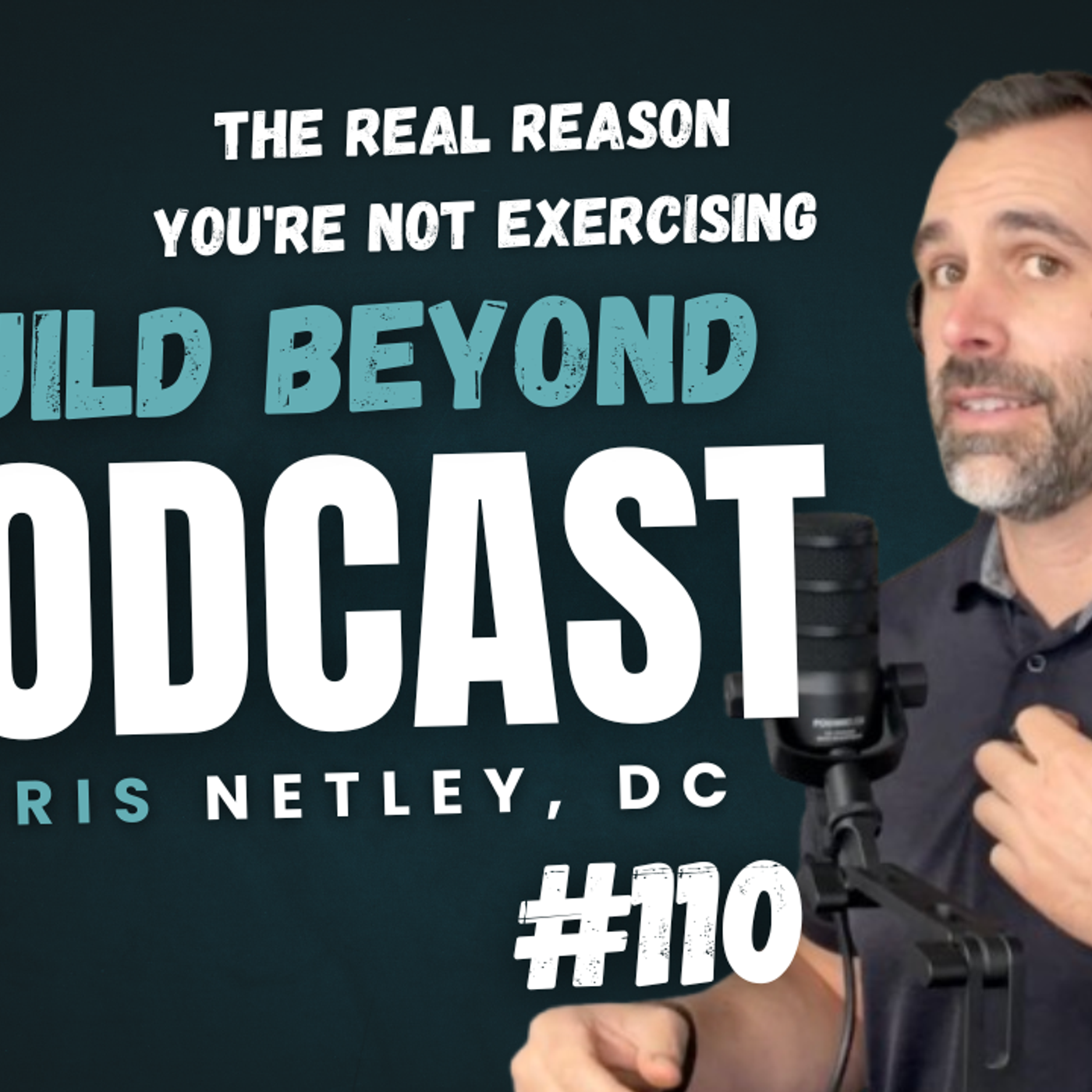
You know exercise is good for you. You know you should be doing more of it. So why aren't you? In this episode of the Build Beyond Podcast, Chris explores the real reasons people struggle to make physical activity a consistent part of their lives. Most people blame a lack of time, uncertainty about what to do, or fear of injury. But what if the biggest barrier isn't your schedule, your knowledge, or your physical abilities? What if it's the way you see yourself? Chris discusses the difference between knowing exercise is beneficial and actually believing you're capable of making lasting changes. He explains why self-confidence, personal responsibility, and small, consistent actions are often more important than finding the perfect workout program. In this episode, you'll learn: Why common excuses for not exercising often hide deeper barriers. How your beliefs about yourself influence your ability to change. Why small, manageable actions can lead to significant improvements in your health. How to start building confidence through consistent physical activity. Why asking for help and accountability can be the key to long-term success. Plus, Chris shares a surprisingly simple challenge involving seven apples and ten push-ups that could be your first step toward a healthier lifestyle. You don't need to change everything overnight. You just need to start somewhere. Chapters 00:00 Introduction and episode overview 00:22 Chris's background in chiropractic and traditional practices 02:14 The importance of listening to patients' barriers 03:21 Common objections to starting physical activity 04:23 Time as a barrier and how to overcome it 06:33 Safety and knowing what to do 09:01 The real reason people don't exercise: self-efficacy 11:46 The power of small, manageable changes 18:06 The 'mouse fart' strategy: tiny course corrections 19:30 The benefits of consistent small habits 20:18 Encouragement to take responsibility and seek help Where to find Chris Netley: BuildBeyondHealth.com Instagram: @chrisnetleydc | @BuildBeyondHealth | @podcastbuildbeyond YouTube: @chrisnetleyDC X (formerly Twitter): @chrisnetleyDC Facebook: Build Beyond Podcast Music licensed through Soundstripe. Code: 1JT7CGKJR9NT3KOE
Chris: Before we jump into today's episode, if you enjoy the podcast and you want to support the show, please do me a quick favor, hit the like button and then make sure you're following or subscribed. That way you'll know whenever a new episode comes out and it really helps more people find the show. All right, let's get into it. Welcome back the Build Beyond Podcast. Today I was talking to someone and I was asked why I care so much about physical activity and exercise. The question caught me off guard. I'm not going to be able to recreate the conversation but I felt like the person who asked the question left the w left the conversation. Satisfied with the answer? He may not have agreed with what I was saying, but I felt like he understood where I was coming from. I wish I had been able to record it, but I while it's fresh in my mind, I want to I wanna recreate this. This episode is going to be important for people who know that they need to add physical activity to their life, but they don't. So when I became a chiropractor and I started practicing, I worked in two different chiropractic clinics that I would describe as very traditional. It was a very traditional experience for the doctor and for the patient. By that I mean we put a huge emphasis on cracking backs. The appointment times were relatively short. If you've been to most chiropractic clinics, many chiropractic clinics I will say y it's probably somewhat of a similar experience. When I made the decision to leave that type of practice I didn't really have a clear vision of what I wanted to do. So I set myself up to have hour long visits because I felt like if I had time with people, I could figure it out. I bet on myself, I I feel like I'm a good problem solver. Spending an hour with people gives me time to get to know them and it gives me time to listen. And as I listen I start to notice themes. One theme with people who come to me with pain or injury is that they are not meeting physical activity guidelines. Or they're currently trying to, but they had a long period of their life where they didn't they didn't even get close. Now I'm not saying that if you meet physical activity guidelines you won't have pain or injury. So just going out and getting stronger or improving your cardio, it's not a cause and effect. But there are sit relationships, but there are associations. So if you if you think about people who are not meeting physical activity guidelines or spent years of their life not doing it and are trying to do it now, there are common, there's a there's a common continuum of objections that I hear. You may have these objections right now, or you they may resonate with you because you've had them in the past and you've overcome them. Some things I say might frustrate you and upset you. And if I rub you the wrong way with this episode, I want you to pause and think about why that is, because usually that means I'm I hit the nail on the head. And it's a sensitive topic. The most okay, so the most common objection is that people feel like they don't have enough time. They're too busy. six, eight months ago and the priest said something and I actually made this a podcast series where we're we've been talking about religion and faith. But he said don't let the important things get in the way of the essential things. No, he's talking about a relationship with God, but I say this to patients all the time. There are a lot of important things in life. Very few of them are essential. And I would say that your physical health and your physical fitness, those are essential. Maybe only second to your relationship with God. Anyway, people will say I don't have time. And then I I could say something like, okay, well, in the last year, how many push-ups have you done? Just ballpark it. Most people will say, Well, none. I can't do push-ups at all. Okay. How long would it take you to lean up against your kitchen counter and do 10 push-ups? Could you do that? Most people could say, yeah, at least partially. Okay, how long would that take you? 10 seconds? Yeah. So you can do it. You know it's important. And you have time to do it, but you don't do it. So what what where's the breakdown there? And if if I have this conversation with enough people, then a small portion of them will s the you know, the the light bulb will turn on and they'll go, I g I get it and they're off and they don't need any more help. But that's only a small sliver of people. So for most people we have to keep going deeper because they're not going to start spontaneously moving more because of that conversation. So then I ask, well, what what else is it? And the next most common objection is that, well, I don't know what to do. Even if I earmarked time for it, I don't know how to use it efficiently. Am I doing the right thing? Am I going to get injured? This is an easy objection to overcome. Exercise is safe unless you have some kind of kind of specific condition and it's a specific type of exercise. For example, if you have epilepsy, swimming might not be your thing. That might be too dangerous, right? But that's a very specific example. For most people, most forms of exercise are safe. In fact, you're at a greater risk for not doing them than you are for doing them. So safety in general is not a factor. And if you don't know what to do and you're not doing anything, then if you go from nothing to something, you win. You're already it doesn't really matter. And if someone says, Well, I still want a a plan, well, we all for the most part have access to the internet at this point. Most of us carry smartphones in our pockets. Just get on YouTube and you could find a YouTube channel that you think looks moderately interesting, where someone's demonstrating some things that you think you could do and then go do those things. And whatever time you can earmark, that's what you do. So if you only have if you say, Well, I could do five minutes a day, great. Even if it's a thirty minute YouTube video, just do five minutes of it and move on. So you can imagine, even with the ten push ups thing, if you did ten push ups a day for three hundred and sixty five days, you would be very good at push ups. You would improve your strength, you would increase your physical activity. There you would get all you'd be able to access all the benefits. Quick favor before we keep going. If you're enjoying this episode, please hit the like button and make sure you're following or subscribed. It's a really simple way to support the podcast and help more people find the show. All right, back at it. So at this point, I've overcome a lot of objections. Time isn't a factor. We can get wake and work around that easily. Injury, fear of injury, not really a factor. Even if you even if you're in even if you have a broken leg or I can't exercise, I have a broken leg, you got arms, you could do something with everybody. There's always a way to do something. So you have the time, you have the ability, you don't need the equipment, it's free, and you have access to unlimited free programming and guidance. And a lot of people still, even if we've overcome all of those objections, they're still not going to increase physical activity. So then there's the big question, why? What is the holdup? I have an answer to this. I don't know if it's a good answer. It's a working answer at this point. I have a feeling it's a good answer because it frustrates a lot of people. And I feel like when when I say something and I suggest something and it frustrates someone, I'm hitting the nail on the head. I'm getting close to hitting the nail on the head at least. uncomfortably close. I think that most people believe that physical activity and exercise are good. I think that most people believe that they that they are possible these things are possible to do. So there is a sense of general efficacy. Push-ups are a thing that people do. Walking is a thing that someone would do. Squats are is an exercise that that other people do. I think A lot of people have a lack of self-efficacy. These things are not the types of things that I will do, that I can do. I can't access these. It's like it's like I'm talking about a lifestyle and you're not invited. You're not the type of person who would do this. You're not the type of person who would consistently make this change. Now why do people feel that way? I I don't even I don't even know if we have to figure that out. I just know that a lot of people wake up every morning and they hate the way their body looks. They hate the way their body feels. They hate the way their clothes fit. They're they they hate that there's things that they can't do. And they just get used to that. That becomes the norm. And I'm the I might be describing you to a certain extent. And then you segregate yourself as other. Yes, push-ups and walking and exercise and all these great things, they are things that people do. They're not things that I do. I don't have access to these things. And so people have this low self-esteem, they have this low self-efficacy, and they don't see a path forward. If I gave them, but if I gave them a test, I could give them an essay exam. And they could write out everything that's important for health, important for physical activity and ways to do it, but it's still not something that they think that they can access. Now the only way for these people to get what they want that I have figured out is to hold their hand. And there's no shame in that. I take them by the hand and I walk with them each step. I don't carry them. They have to do everything for themselves, but I'm right there with them. That's the service that I provide. It's it's looking for an extra excellent solution to their problem. And then we find ways to overwhelm their problem with that excellent solution. And if overwhelming their problem with an excellent solution isn't possible for various reasons, then we like we think about, well, what would we have to take away from this excellent solution to make it a slightly less excellent solution that you could actually execute? What's a good first step? How do we start and then how do we build up to that excellent solution? Because a lot of times you can't start with the excellent solution. You start with something small and then we build on it until the excellent solution is just the norm. It's just your lifestyle. That's hard to do. It's simple, but it's hard. And if you're thinking, well, what's the big deal? Why do I even care about physical activity? Or why why why yeah, it's good, but who cares? I mean, it can affect your mood, it can affect your sleep, it can affect your energy levels. I should have already sold most of you on that. It can decrease your risk for heart disease, number one killer. It can decrease your risk for cancer. That's a scary thing. It can decrease your risk for stroke. It can decrease your it can help you manage your blood pressure. If you're not sold yet, I'll keep going. It can decrease your risk for dementia and Alzheimer's. It can affect your immune system. So, you know, I it just makes your life better, right? 'Cause you get you get to do more stuff and enjoy more stuff and you get to like the way your body feels and start to like the way your body looks and start to like the way your clothes fit and you start to enjoy physical activity and you start to enjoy being around people who value physical activity and then it becomes this kind of gateway drug where you you want to make better nutrition choices and as you do that you start to have more energy and you recover better. And you start performing better and now you're sleeping better and you're in a better mood and you've got better. Do you see how this is snowballing in the direction that you want? Can you think of anything else? Anything. It could be a surgery, a drug, some miracle supplement from I don't know, some lost rainforest, somewhere that was you know, I I'm just a cleanse. There's nothing out there like this. And the coolest thing is it's a hundred percent free. Push-ups are free, walking are free, walking is free, lunges are free. And there's and if you're like I can't do any of those, there's some variation of you of those you can do. If you can sit on a toilet, you can squat. If you can push open a door, you can do a push up, at least off a a countertop. There's stuff that you can do. And I know a lot of people who can't take a knee, they can't do a lunge, they can't get on the floor and on their back and then up again. That's scary. I don't man. And for some people it's unavoidable. Maybe you get in a huge car wreck and you're just you're you're paralyzed. I don't know. But I'm not talking about that. I'm talking about able bodied people who just let their bodies go not because they don't know or because they don't have time There are no barriers other than the barriers between your ears. That the the way you perceive yourself. You just don't think you have access to it. And while I respect that and I can empathize with that, I don't accept it. You are in a situation right now, and it's not your fault. Completely. Some of it's your fault, probably. But There are a lot of other factors that contributed to you being in the physical state you're in right now. It's not your fault. But it is your responsibility if you want to change. And part of taking responsibility sometimes is asking for help, and that's where I help you. But I don't have any tricks. You know, it have I dunno, have you ever heard of the term mouse fart? Sounds like it's off topic, but I'll bring it back around and connect it. There's a YouTuber named Mark Robert. Mark is a engineer, former NASA engineer. If you don't know what I'm talking about, get on there. His YouTube channel is amazing. My son loves it. And I listened to a podcast interview with him where he's talking about launching stuff to Mars. And because the distance is so great, you have to get that trajectory right. Because if you don't, Even just the tiniest fraction of a degree off, it'll amplify by the time you actually get out towards Mars and you're gonna miss it. So if you have to course correct, they have these little while it's out in space, they have these little booster type things that just it's like a little p and it just barely could change the tr trajectory of whatever you're launching so that you don't overcorrect. And they they call them mouse farts. And I think that's interesting. So sometimes people feel like, I've got to make this huge change. No, you gotta it's a mouse fart. It's a minor course correction. And I'm gonna give you a mouse fart right now. This would literally change your life. If you're not, if your diet sucks and you don't exercise, I am throwing you a life preserver right now. You need to listen to this. Go to the store today and buy seven apples. Don't put them in your fridge. Put line up on your countertop. I don't I want you to see them every day. For the next seven days, you're gonna eat seven apples, one apple per day. Before you leave the house in the morning, and before you pick up that apple to walk out the door, you're gonna do ten push-ups. If you can't drop down on the ground to do 10 push-ups, you're gonna lean against the counter that the apple is sitting on, and you're gonna knock out 10 push-ups, you're gonna pick up that apple, take a bite, and walk out the door and eat it on your way to work. When those seven apples run out, you're gonna buy seven more apples. So that every day you're gonna eat an apple and do pushups. That's your mouse fart. You do that, you're gonna get bored. You might start doing more push ups. You might start eating more fruit. I don't know. These are positive changes that are small. They're well, push ups are free. Apples cost money, but you gotta spend money on food anyway, and they're relatively cheap and they're available. For most people. I mean, you can even usually get apples at a convenience store at a gas station. They y most of them have apples. but it can be anything. I'm just saying apple because they last on the counter. But if you don't like apples, pick something else. but that's it. That's your mouse for it. Seven apples, ten push ups a day. Boom. Keep doing that. You're gonna change. Do that long enough. Do that for a year. See what happens with an apple a day and ten push ups a day. You will improve, I promise you. The one of the worst things that you can do, or that we can do as humans, and we all do this, I'm guilty as well. We there's a difference between excuses and and legitimate reasons. What ends up happening, we have a tendency as humans to find excuses and then lie to ourselves and tell ourselves that they are legitimate reasons. Believing our own lies is it's a problem. So if you haven't been exercising And you're still listening to this, and I frustrated you anywhere in this. Then you need to make a change. It doesn't have to be what I recommended, but there you there's some kind of change that you need to make. I think the Apple push-up thing is pretty simple. Just do that. But there's a I have a million other ideas. You want ideas? Shoot me a message. follow this podcast, like the episode, message me. My contact is in the comments. And you know, even if you're not in the state of Michigan, we'll we'll correspond via email. or I'll I'll connect you with someone. I'll find some I'll help you find someone in your area who can help create a plan and help hold your hand in. Because those people are out there. All right. I hope this is helpful. I think I did a decent job recreating the essence of this conversation that I just had. I hope that if it doesn't help you, that maybe you can send it to someone who you think it might help. Because that's what this podcast is for. Ultimately, so that you can access your full potential. And to do that. Sometimes you gotta hold someone's hand and there's no shame with that. All right. Thanks for listening. I'll catch you later. If you enjoyed this episode and you want to support the podcast, please hit the like button and make sure you're following or subscribed. You'll get updates whenever a new episode comes out and it really does help the show continue to grow. Thanks again for listening and I'll see you on the next episode.