
Build Beyond Podcast · christopher.netley
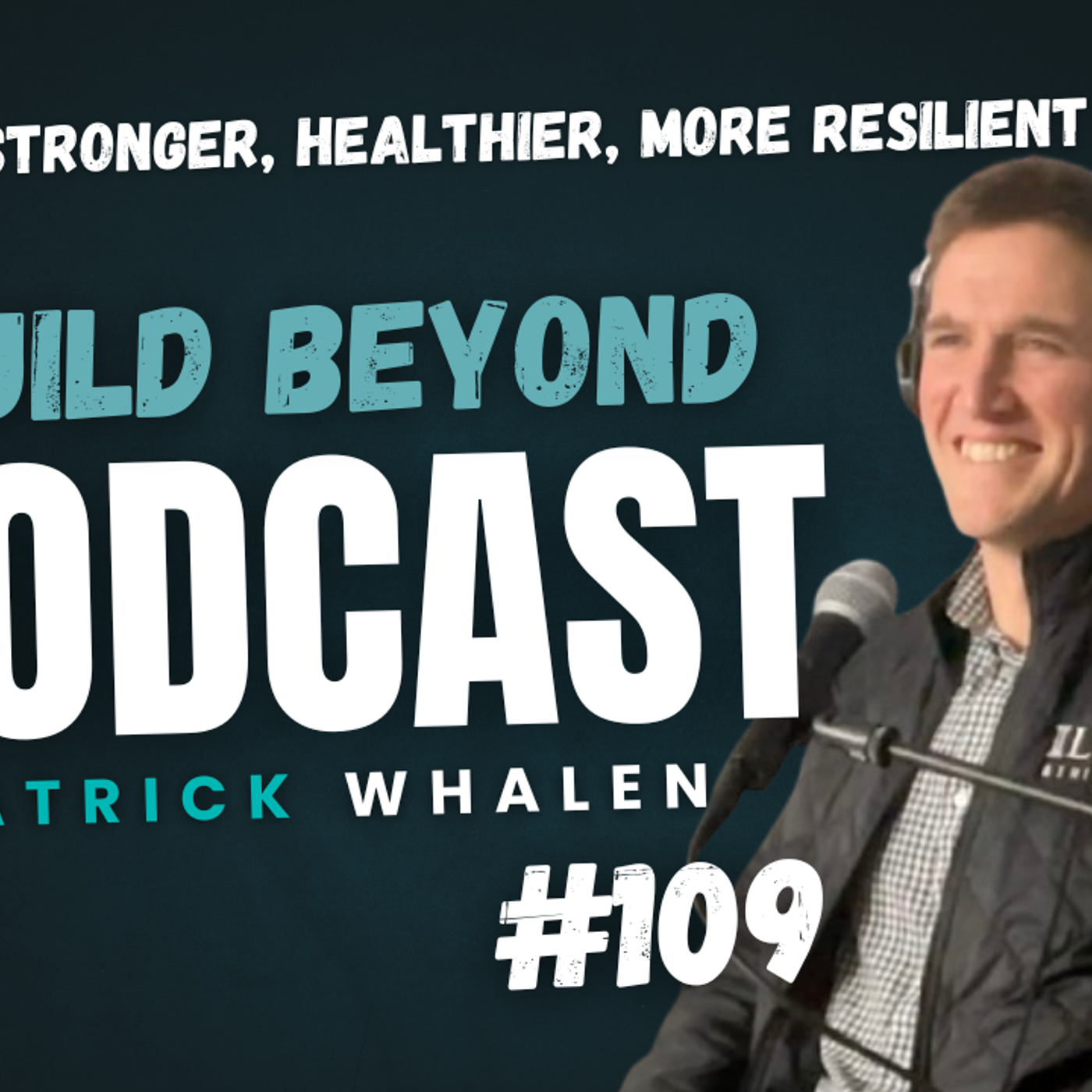
Are we doing enough to prepare our kids for a healthy, active, and successful life? In this episode of the Build Beyond Podcast, Chris sits down with Patrick Whalen, founder and owner of Iliad Athletics, to discuss why physical education should be about much more than sports, exercise, and gym class. Patrick shares how Iliad Athletics is working to rebuild America's physical culture through physical education, outdoor experiences, and character development. Together, Chris and Patrick explore how physical challenges can teach kids resilience, perseverance, teamwork, and the confidence to overcome obstacles. They also discuss the shortcomings of traditional physical education, the potential downsides of early sports specialization, the connection between physical activity and academic performance, and why developing healthy habits early in life can have lifelong benefits. In this episode, you'll learn: Why physical education deserves a bigger role in our schools. How physical challenges help build character and resilience. Why playing sports doesn't always prepare kids for lifelong fitness. How exercise can support learning, mental health, and long-term health. How Iliad Athletics is helping teachers develop stronger, more capable students. Whether you're a parent, teacher, coach, or simply someone who believes in the power of movement, this conversation will challenge you to rethink what physical education can—and should—accomplish. Because the goal isn't just to raise better athletes. It's to raise healthier, stronger, more capable people. Chapters 00:00 Introduction and episode overview 03:05 Historical influences: Aristotle and classical physical education 08:28 CrossFit Kids and foundational movement education 11:45 Physical activity's impact on academic performance 16:31 General athleticism versus specialization 20:28 The role of physical activity in disease prevention 24:48 Embodied practice and character growth 28:24 Discomfort and decision-making in physical challenges 33:18 Physical challenges and character virtues 38:04 The benefits of physical activity for mental health 41:01 The spiritual dimension of physical health 42:16 The importance of personal responsibility in health 43:16 Why focus on people over programs 44:13 The teacher's role in cultivating physical culture 45:10 The legacy of physical culture and education 47:36 Establishing physical culture leaders in communities 49:23 The value of individuals over curricula 50:18 Efficiency in teaching and embodied learning 52:13 Integrating physical activity and nutrition education 54:13 The future of physical culture in education and society Where to find Patrick Whalen: Instagram: @iliad_athletics IliadAthletics.com Where to find Chris Netley: BuildBeyondHealth.com Instagram: @BuildBeyondHealth YouTube: @chrisnetleyDC X (formerly Twitter): @chrisnetleyDC Facebook: Build Beyond Health, PLLC Music licensed through Soundstripe. Code: LESM1N4G9Q9KQJNA
Chris: Before we jump into today's episode, if you enjoy the podcast and you want to support the show, please do me a quick favor, hit the like button and then make sure you're following or subscribed. That way you'll know whenever a new episode comes out and it really helps more people find the show. All right, let's get into it. I wanna learn as much as I can about Iliad athletics because I've watched from a distance and been curious because initially what I saw was the summer camps. Yep. With with the younger kids. And then learning that you have you create curriculum and you can actually teach teachers how to do these things. Yeah. Can you describe first of all, like what what is Iliad Athletics? Yeah. Yeah. yeah, awesome. Thank you. It's a f so the way I like to put it is we're a physical culture company. So we're trying to build America's physical culture. Yeah. And the way we do that is chiefly through physical education curriculum. the teacher training and professional development to support executing the curriculum. And then we also do camps that break down into two categories. Some half of them are like day camps that we'll go to a school and we'll take the students for half a day or even a full day and put through a bunch of different physical challenges, exercises, cognitive challenges and exercises, and then put them under some pressure, turn up the volume a little bit and and see how they do and then debrief and talk through what went while went went poorly. The other half is actually classic outdoorsmanship stuff. We're teaching how to build fires, how to navigate with a map and compass, some of these basic outdoorsmanship skills. And that seems like a lot of stuff to throw into one bucket, but that's why I say it's a physical culture company. And the the the uniting theme running through all of this is that I think it's very healthy for kids to have an experience of reality, of nature. And that that experience of reality of nature is actually a foundation that the rest of their education gets built on. And so if you're missing that foundation, which starts with your own body, if you're missing that foundation, the rest of this is unlikely to make as make make as much sense. But then second of all, there are going to be long-term health consequences that are going to impact really Every part of your life from then on out. So is this it seems like in education there's been a progressive move away from physical fitness. Is this an attempt to go back to once like what we had in the past or an attempt to move in a different, even better direction than what we previously had? Yeah, that's a it's a that's an awesome question. Maybe I'd maybe I don't know, in part because I don't want to make too strong a claim about the way it used to be, because then the question would become, well, used to be when, where, for how long. There are some examples of programs historically and and we have our heroes from the kind of pantheon of physical educators that we love to point to. But I don't know that there's a a kind of golden age of physical education or of physicality in education that we point back to. On on the other hand, I don't pretend like we're creating some revolutionary new thing. We really are simply trying to give kids back the gift of their bodies in nature, in reality. And you know, and that's like we didn't come up with that. That's not my idea. But there's no then there's no really contemporary example that you're you're using as a foundation. You're just basically looking at what you consider to be foundational elements and building a program off of that. So the pantheon let me let me I think this will help is kind of describing our our you know our heroes. and you can go all the way back to Aristotle who which is you know we and we do classical physical education I love the classics named the company after a a classical text the Iliad the famous poem about about struggle but Aristotle way back described the best kind of athlete. He writes about this in The Ethics. He describes the best kind of athlete as being the pent athlete, which means performance at five different events, some involving running, some involving wrestling. So five different events, combinations of endurance, strength. Essentially, he described a a kind of a multifunctional or a cross-fit athlete. And I don't mean cross-fit like the the brand or the company, although I I would include Greg Glassman in our pantheon of heroes in the work that he did in founding CrossFit. Just brilliant, absolutely brilliant work. And the idea is, so Aristotle describes like the human form is capable of all the things it's capable of. And so to be excellent, to cultivate the excellence of the human form would be to kind of maximize your functional ability. Fast forward several thousand years and you have Greg Glassman saying, you know, fitness, defining fitness as the ability, you know, increased work capacity across broad time and modal domains. I would translate that and in our program we're we're trying to maximize the physical potential inherent in each student. and so so the the the anyway, so the folks that we look to, starting with Aristotle, but then you can fast forward all the way up. there's a guy named George Hubert, French military officer who developed what he called the natural method. strong emphasis on the ability of the body to manipulate itself through obstacles in the real world. In America, and this is kind of close to a contemporary physical education thing, in the sixties, there was this big program at the La Sierra Public High School out in California. a US Navy veteran, guy named Stan Leproti, got out of the Navy and he became a PE teacher at a local public high school. And he developed this just gnarly PE program, heavy base in calisthenics and then like George H. Berrett, introduction of lots of obstacle navigation and manipulation. and then the other thing he did that that we really like is that he measured. So so we tend to measure what we think is important. And then what we measure is a signal to the students of what we think is important. Like we do grades and classes, we think it's a sign to the students that this is important. I j Stan Leprati in the La Sierra program, he built these, all these different measures. And so you could take this series of physical tests and depending on how you performed on the physical test, you would kind of be recognized publicly with all these different colors. So we use that. We have a much smaller set of measures. There are like seven, six or seven, depending on your age, that are objective benchmarks and they're designed to be measures of your overall. functional fitness. and then we use, you know, so we measure those and we report on them trying to do two things really. One is signal to the students that this is important, this matters, and we're going to keep track of it and mark your progress over the years. So that's ought ideally helping to motivate you. Then the second thing that we're trying to do with the with the benchmarks is signal home to the families that like, hey, your child has a body and they have the potential to maximize the health and functioning of that body. And here's a report about how they're doing. The idea is let's get them interested in this too, so that we're we're all kind of like on the same page working toward this goal together. Mm. Does that make sense? It does. Have you so looking at CrossFit, have you looked at CrossFit kids and how they have kind of that kind of grew out of Yeah. Kind of just almost out of nothing where it's like, well, let's get the kids involved and it's become its own I love the pro program and and it I love the program. I admire, I admire it so much. I love the program. And really one one of the things we, you know, our program is not CrossFit Kids, but I think we share with them a sense that t teaching children the fundamentals of movement very early is like it's is a no-brainer. and not only that, but done well, it'll be fun, it'll be engaging, it's gonna set them up for success for the rest of their lives. So we I share that kind of commitment with CrossFit. Really, what w with CrossFit kids, what we're trying to do is so imagine you are a PE teacher at a school. In our experience, so many of these folks don't have a curriculum. They get hired. So like, hey, Chris, welcome. Here's your first day on the job. you're gonna be the PE teacher. And yeah, so just kind of figure that out and enjoy the year. You know, and I'm I'm like I'm I'm oversimplifying a little bit, but but maybe not a whole lot. so many of these PE teachers are actually just totally out to see coming up with stuff. And they might not even have a background in in and I don't think you need to have a background in exercise science to to be a PE teacher, but you do need to know how to do it. Yeah. And and you'll also kind of need to be committed to it yourself. So you're setting a good example. We were talking talking about setting the example earlier. so so our goal is to provide those people. The PE teachers who are kind of, hey, I'm I'm thrown into this job. I wanna do a great job. I know this matters. I know it's gonna impact the kids' long term health. It's also gonna impact the school culture. we give them a set of resources that is gonna make this turn the school year, it's not just a series of WODs, work out of the day, day after day after day after day. We try to give them the resources to have this kind of coherent, structured year long approach to building functional fitness. That has dates for for measuring. You know, that's the benchmarking. And the the other thing is that we've intentionally built into all of the physical practice a character development practice. Because you your body might be capable of, you know, whatever, sprinting for 800 meters. But your body's not going to do it if your character doesn't have the the force to to compel it to do it. So if you don't have the virtue of perseverance. and so we've we've really spent a lot of time focusing on how to come how can we program into this physical practice this practice of the character, practice of the virtues. Since you measure everything, you must see then or have reported to you that there's an effect on academics outside of the fitness realm. Yeah. There's do you know that that that Great book Spark that came out years ago. yeah, so Spark would be huge fans of that work and just think it's I mean, we think it's kind of common sense, although you know, it's the kind of common sense that we hope to help evangelize, you know, tell tell more people that story. It's an investment in a way. You give you give up time and resources and what you get back is better retention and that's right. There's strong arguments. strong are and we've we've tried to kind of you know, we've built some resource libraries of of all the studies that correspond with, you know, with with telling the story. But but yeah, physical activity and and not just physical activity, but even physical activity outside. Like getting getting kids outdoors is really, really important. and it yeah, increased attention span, overall ability to focus. yeah, academic performance does tend to now I can't you know, I haven't done the study myself and I can't claim causation. But I do think, and even from a parent perspective, I think this this corresponds. I do think there's strong correlation between a lot of vigorous physical activity and increased academic performance, not to mention psychological health and stability. One of my favorite anecdotes from that book was there these two girls showed up to an eight AM SAT exam soaking wet. Yeah. Because the school had put kayaks in the pool and they were taking a kayak class and they really liked it. Yeah. And they did it in the morning before class and it helped them. They felt like helping so they felt like they're prep for taking the SAT. They got the school to open up and they they did it for so long they were soaking wet and they came in and they took SATs. That's awesome. After they got out of the pool, didn't change their clothes. But it but I think that's a good example of not just making kids do stuff. Yeah. It's Teaching them why it's important and then letting them experience the benefit so that then there's the buy in. It's not like, I have to do this because it's my PE class. It's I get to do this, I understand, I see the benefit, and I want to keep doing it. I would c I would consider our work kind of a failure if when kids are graduating from the program they don't have the knowledge and the habit To do this for themselves. Like the goal is, I mean, and I think all of education should be like this. You're not gonna be their teacher forever. You don't wanna be. You want them to grow up and do this thing for themselves, like take this show on the road. And so we've we I feel very strongly that that's our pro our PE program and why the curriculum is structured the way it is, ought to contribute to these students doing it for themselves. So sometimes you see, I mean. I'm a huge fan of sports programs, athletics programs. But one of the one of the reasons that I advocate for PE in addition to those is that sports programs focus on a on a particular physical specialty. now, some of them, like gymnastics, is a very broad physical specialty. So I think that's awesome. Wrestling is a very broad physical. but with many of the high school sports or or even K through 12 sports. the the actual practice that the exper the student experiences doesn't necessarily contribute to them staying fit o when they are no longer on a team or when they no longer have this tempo of of practices and and sports. So so just the sports programs don't necessarily contribute to this life this goal that we have of life a lifetime of fitness and doing it for yourself, you know, without a coach yelling at you. Yeah, and I feel like the rise of club sports is probably making it even worse. Yeah. And not that I don't know. I I haven't been a product of club sports. I played club soccer growing up. And then I went on to play all through college and probably could have gone on farther than that had I had I really wanted to. I don't I don't know like h how high I could have gone with it. But I there's a very small percentage of people and I think about a lot of the people who dedicated their life to club soccer and the families that did that. Yes. But they they didn't have that opportunity. They just didn't have the physical gift. Yes. And they got weeded out. And it was like you missed out on so many other opportunities. That's right. Whether it be, you know, missing time at church or missing time in your community or missing time doing other sports or or or doing things. And and it's not a sport where it's like I'm just gonna keep doing this necessarily. Some people will will, but you can't your body can't I don't know, it's I think to your point where it's not something that serves you long term necessarily, where they could have gotten something else out of out of your time. Especially like beyond the you know, I think of this in terms of specialization versus generalization. And sports tend to specialize You that many of them build on a base a kind of a general athleticism. Yeah. And then they build a specialty. and those specialties tend to reduce in value to us physically as we get older. So if I'm, yeah, really fancy footwork, I'm amazing. I've I've great you know, explosive power. Well, that's that's awesome for playing soccer, but but yeah, it f first of all, if you don't have a habit of fitness for yourself, but you're only practice of fitnesses as a member of a team when your coach is having you do it, then it's not unlikely that, you know, if you're playing in college, you graduate from college, you you stop working out. You mean you see this sadly with with collegiate level athletes all the time. They graduate, they're not on the team anymore, they don't have that accountability structure, and they kind of fall apart or they lose their focus on on physical discipline and integrity as a part of their life for the long run. And so In a way, that's a problem of specialization. Like you specialize too much into your sport and you didn't have the general human thing that applies to all of us, whether we're physically gifted in a specialized way or not. We all of us, even even people with disabilities, all of us actually have the ability to cultivate to maximize our physical potential and health over the course of a lifetime. and then, you know, so a good PE program would be doing that, which ought to just help. you know, build your base of athleticism that then your coaches can great, all my students have this this high level of general athleticism, this generalized fitness. And then I can in my in my sp particular sport now I'm focused on specialization. So fine. That's great. So you've chosen this as your path. Yeah, yeah. Because you think that this is area where it's not a strength. Like I don't want to I don't want to go so far to say it's a weakness in American culture, although I think you could probably make a strong argument for why it's a weakness, but you see a critic a critical vulnerability. Yeah. And you feel like Iliad athletics and what you're doing can actually have a profound effect because if students improve their fitness but understand why they're doing it and they value it. And they build their character and then they go on to be productive adults, they will raise children. So you s you see it as like not just filling a gap, but building something that is possibly sustainable long term. And that could that could augment what's going on with everything else in academics. Is that I absolutely. And I think you did a great a great job of describ. I mean, I'll I'll tell y there are pediatricians in Michigan, which is a state that has mandatory physical education like up through you know certain certain grades? there they're 12 year olds who are being prescribed with GLP ones. so we we've got to pr and and and if you can imagine like what what how difficult that would be to you know for your leisure and recreation, what do you if if that's you, what kind of recreational opportunities are going to be the you're likely to engage in. I mean, and and so then that's kind of setting you're 12 years old. Your patterns of life are being established. I do not think and and it's just kind of a it's a tragedy, I think a cultural tragedy that that we've gotten to this point. And I get it. Like there are medical exceptions and there are there are situations. I totally get it. But I think we have to ask like are we doing a great job if if so if most kids spend most of Most of the days in school, how is school contributing in this very fundamental way to their long-term physical integrity? It's funny because I had a conversation maybe like a year ago with someone who's a grad student in education. And I was like, What's the deal with homework? Like, how what's your thought process on homework? And she was like, What are you talking about? I was like, Okay, if I'm a sport coach and I have athletes for six hours a day. And then I send them home and I go, you gotta do more stuff. Well, what am I doing for six hours? Like like why why wouldn't I want them to go home and rest and recover and not do these things? Because they just spent all day with me or with one of my other coaches. What's the what's the deal with that? Like why is it a lack of efficiency? Or is it just what why would why would kids need that? And I think it's an interesting thing when you think about being efficient, like the minimum effective dose with like the maximum outcome. And I feel like PE and sports and exercise is something that where that's can be valued. You know what I mean? You want to do if your athletes ha you want the athletes doing the least amount of work and still winning. Right. So they can recover more because you're basically graded on the your outcome as a coach. Right. But in the same environment, if you're an academic, you know, that you're not, like it's not necessarily from someone who's been through undergrad high school, undergrad, grad programs, you know what I mean? Like I look back on the education and the in grad school, the best class I had was the I don't know if they still do this, but it was the best kept secret on campus. It was a diagnosis course. You would show up for three hours and then the the professor would put stuff on the board, like he would the projector, it would be a a patient case. And he would let you know ahead of time, these are the these are the topics we're gonna talk about. Learn as much as you can. And then he would call on someone to stand up and he would ask you a question. And if you didn't say it Answer with any kind of confidence. He would he'd be like an an upset patient. Yeah. Yeah. And he would make you tap dance. And everyone around you would be like, my gosh. And then he would ask people to save you. And he would do this day after day. Yeah. And then you would show up, and sometimes there'd be a test. No warning. And the test would be the same thing. Sometimes it's individual, sometimes it'd be a group. He'd put something up on the board. You'd have a piece of paper. If it was a small group, you have 90 seconds to write down, and then one of his assistants would take it away. Yeah. And then it would and you didn't know when you're gonna have a quiz, you didn't know when you were gonna have an exam. The the best kept secret was he didn't grade anything, he just he threw it all away. Everyone got an A. He just wanted you to have an experience where you were like, There is a benefit to preparing, yeah, and to having confidence, and there is a consequence. For not doing those things. Yeah. And he introduced stress. Yeah, yeah, yeah. And to but the dose makes the poison or the medicine. It was enough stress. Where everyone around I still remember diagnoses of things that I will never probably see. Yeah, yeah. Because of those situations. And because and then you put a little bit more effort into it, not regurgitating facts, but having To talk through it. Why would because it wouldn't be like, if you got the right answer, why would you would do you would run this test? They wouldn't let you off the hook. You'd be well, why? Yeah. Like you would have to explain the lot, like, yep, yes, true. But like, are you just, did you just memorize that or do you understand? And that style of education to me was unique. I'd never had that before and I've never had it since. And and I and it's and it's something that like I think where someone who was a sports doctor, oddly enough, who had worked with a lot of NFL teams and with Olympic committee for a while, would put you in that situation. And it was all it was very much like what I would imagine is like a Bill Belichick coaching experience. Yeah. So there's a guy who is a doctor who only works in academics and patient care who decided to run an academic course like like like we were on a football team and I loved it. And I think everybody, even if they hated it, walked out of their bedder. Yeah. And then but it it's an interesting thing because you had mentioned before, you know, introducing some type of stress or some type of challenge. Yep. Is that what you're going for? Is that like you're like, hey, we're exactly it's it's it's great that you know how to start a fire. Sure. But you know, can you can you do it when you're tired? Can you do it when as a team or can like when things aren't going well? Is that Quick favor before we keep going. If you're enjoying this episode, please hit the like button and make sure you're following or subscribed. It's a really simple way to support the podcast and help more people find the show. All right, back at it. This is exactly the this i i the story you tell you're telling about this class where where the the you know the professor is pitching these live scenarios. I mean they're not they're not live in that they're they're you have real patients there, but they're they're actual scenarios. this we you know, I I know we share a background in the Marine Corps and one of the things that we have introduced, we've kind of woven into our PE curriculum is the concept of a tactical decision game. So but we do them physically. So we'll place you know, so as part of our physical practice, we're working on developing these fundamental physical skills and practices and then and we're building in the the virtues and the k and character development through all that. So then we'll pitch them as scenario. Because you don't you don't internalize these mere by merely handling them conceptually. the perseverance is something that you develop by practicing it and having opportunities to practice. And so what we can do in a PE class is create these really beautiful opportunities to practice per the virtue virtue of perseverance, for example. And so we use tactical decision games as part of the structure. And it's actually just like what this professor of yours was doing, where we'll say, okay, here's the scenario. This is the mission you've got to accomplish. This is and the mission might be a game of chess. and you have to earn each move on the chessboard by completing some physical task. And there's a may you know, a handful of different physical tasks that you can pick from. So now as a as a team, you're solving this problem in real time, but all of your strengths and weaknesses as a team are coming into play. Some kids are physically stronger. Maybe they're knocking out more of the pull-ups or doing the bear crawl faster. But then maybe somebody on the team, and we've had this happen, is not very physically strong, but is like a brilliant chess player. So and so now you're building into their physical e experience, this reality of combining strengths and weaknesses, negotiating differences on a team under stress of basic competition between two teams to win a chess board a game. Yeah. It's like classic Mike Tyson exactly where it's like everyone has got that plan until you get punched. Exactly. Exactly. And right. And so you might this another fun one that we do is we'll it just one on one chess, but in the plank position. And also it was really easy to make good decisions when I was comfortable. And then we've just introduced discomfort. You're just holding the plank. Nobody's yelling at you. You're you know, you're you're just in a plank. But all of us it's amazing how quickly our decision making process degrades given that discomfort. I remember at basic school we went to like it was Mounttown, for people who are listening. It's it's like urban warfare. Yeah. But it was they they hired actors and it was Towards the end of training, it was the probably other than training at the FBI Academy, it was probably the most realistic thing. And they they really tried to make it like we would we're gonna experience in Afghanistan. And we were rotating platoon commanders and we had a guy, a buddy of mine who was in charge, and they let him run through this scenario and then they let us go all the way through it. Yeah. They pulled us aside and they said, You've all failed. If that had happened in real life, you do go to prison. Oof. Like you did like there's no you would have angered everyone in this town. The next platoon who came through here would have been annihilated because you made so many enemies. But the it was such a stressful experience. We'd been out in the field for a week, been sleeping on concrete floors. Yeah. Getting yelled at. You know, it was just it was just like a uncomfortable. And they presented a scenario where manhandling people was a viable option. Yeah. And they wanted to see if we would take the bait. Which way are you going to go? And we all and he led it and we all f we did it. Yeah. Yeah. Yeah. And it was it was one of those things where you know you sit there after and you're like, man, under stress. This gets way harder. You could make some some really bad decisions. Yeah. And I th that was important that they did that because, you know, there were other platoons watching us. Yeah. And they want they knew someone was gonna do it. Yeah. And we were the first ones to go and the first one so I think they were very excited about that. Yeah, less than learn. Okay. So we had to do it again, obviously after everyone else went and w it went fine. Yeah. and I think my buddy went on to have a great career. Yeah. It wasn't I mean it wasn't like we executed anyone, but it was just Yeah. It just it culturally, you know, we had had a culture brief. We just fi we just did so many so many bad things that just would have would have backfired on a deployment. But that we would have never learned that had they not put all of this stress on it. So if you had taken the stress away, we would have executed textbook at that point. Yeah. Everything would have been perfect. Yeah. And they just put us in this imperfect scenario. Which was probably more like real going to be like real life as much as they could and you know, and it worked. You know what I mean? Like we learned a valuable lesson that could not have been learned without the element of stress. Yep. And so is that is that is that the direction you're going for? Where no, I mean obviously not not to that extreme, but no, but that I absolutely I think that's right. And and And this is this is one of the things that I think s sometimes scares parents or even or or maybe even more than parents, administrators, is they hear stress and they think bad this is this is like this is a problem. We we're trying to avoid that. And I think in the same way that a in a math class, when you're when a concept is introduced that you don't not you do not know how to handle it, it's the same as like gradually lifting heavier and heavier weights. You're putting this system under stress. In the math class, it's a cognitive system. You're you're stretching your flex, you're putting the brain under stress, it's learning new things, it's growing that process of challenge and then growth, which is the response to challenge. That's what we mean by stress. And so we're introduced you know, it you would never grow if you were never challenged. And that includes like morally with your character, and that includes physically in your body, and includes intellectually in the classroom with the concepts that you're dealing with. I the w you know, when you do an after action after these students have gone through the scenario and then you ask them what what were you experiencing, not only are they first of all, the their the beautiful thing about PE class and doing this work in PE class is you can talk all day in a classroom about courage or about fortitude or perseverance or even charity, like to your to your fellow students. It's easy. Talk is cheap. Easy to talk in the classroom. But then once you've they're you know, they're pouring sweat, they're winded, they're out of breath, they've just completed some some serious challenge. And then you ask them, Okay, how did that go? What was your team dynamic like that in that scenario? And they're like, Well, I did this because I was tired or I think we did a really good job at this. B and the reason it felt like we did a great job is because of how tired we were and we worked well together anyway. That's you you're actually getting repetitions, just like the scenario you're describing. That is practice. It's not just conceptual. It's actually embodied practice. And I feel like that is how we grow you know, that's how we grow our characters. Yeah. That's also why, on the physical side of the house, why we're committed to to functional fitness is because y you might not have the soccer pitch when you're forty years old, but y you might have to pick up a bag of dog, you know, the great Greg Glassman example he always tells the doctor forbid the old lady from doing squats or deadlifts anything forget for forbid all of that and and and Greg is asked, you know, do you have a dog? Yes. Okay. Do you feed the dog? And so how do you get the dog food? Well I go out to go to the store. Did you forbid this lady from shopping? Because the dog food's gonna be on this shelf here and she's gonna have to squat down there, grab this thing and deadlift it up, heave it into the the cart. and so if you you forbade her from the training stimulus that is going to enable her to live a rich, full human life doing the things that she wants to do. Like simple case, have a dog and be able to feed the dog. Yeah. So that's why we like the functional is because the stresses of the real world, just the natural stresses, we need to build bodies that are durable and viable. For that. Yeah. It's interesting too because I think heart disease at this point is the number one killer. Yeah. so mo and I would make this sales pitch to my students when I was teaching with college students, 'cause like you know, teenagers typically don't care as much. Yeah, like they don't they're gonna live forever in their minds. Yes, that's right. I just tell them, like, you know, and it you come back for a twenty year reunion, statistically some of you won't be here. Not because you got time commitments, because you're dead. Yeah. And those of you who are worried about dying of cancer, you many of you won't live long enough to have that luxury. You're gonna have a cardio you're you know, you're gonna die of a heart attack or stroke. And it's like not trying to be morbid, but you know, it's just statistically. But you can control these things to a certain extent. At least you have some agency. Yeah, yeah, yeah. But I think what you're talking about too, just beyond building character. in creating a culture and having people enjoy their bodies and and meet meet their full potential. Yeah. You are working towards reducing the risk for s some of these diseases that we spend billions of dollars a year trying to other ways. And it's like you're trying to stop the problem before it becomes a problem. Yeah. You know, if people are compulsively active i and they're Across all you know, they're strong, yeah, they're powerful, they're mobile, they've got good VO two max, they have good muscular endurance, they've got flexibility, they have accuracy. I'm just going through like the all the thing. Okay, so they have these things, they understand them, they value them, they use them regularly. and so that in order to do that, they have to be active. And we know that increasing physical activity can improve mood and and which You know, mental health is a big problem that we have. It's huge. It can affect your sleep. A lot of people have sleep problems. It decreases your risk for Alzheimer's, dementia, heart disease, stroke, some types of cancer, type two diabetes. These are all s I'm I just name like the some of the scariest things that people think about. It has it has a profound effect on your immune system. So just we saw that in COVID. How robust are you? Can you can you sti withstand a a decent virus? Right. And and And and your body can can it recover from it. Can you what kind of energy levels do you have? So if you look at the benefits, the second and third order benefits of routine physical activity. Yes. If we could bottle it up and make it a pill, we would be we would we Elon Musk would be cleaning my house. Yeah. It'd be you know what mean? That's how that's how wealthy you would be. Yeah. That is literally and it's free. Yeah. That's Push-ups are free. That's right. Walking is free. Squats are free. Lunges are free. and on top of that, you know, what is it from Spark? It's like twenty percent better retention within like a f an hour or two. that's right. So it's like on top of that you'll l you can you can retain more information. That's right. I what kind of sales pitch like I it's and there's no side effects other than more energy and better sleep. That's right, longevity and enjoying your body. No, it's it's it's almost So crazy that we don't don't value it in academics, that we don't value it in healthcare. Because in healthcare, it's usually nothing more than a pamphlet or you know, an off the cuff recommendation. Yeah, you should move more, you should exercise more. You know, we don't really put an emphasis on these th on this thing. And it's something that I know Greg Glassman has been talking about and I heard him on a podcast not too long ago and he's like I'm just tired of talking about it to be honest. He's like my recommendations haven't changed. Yeah in the last thirty years I'm just sick and tired of telling people the same thing over and over again. Yeah. It is what it is. I'm not going to change the wording. I'm not I'm just it's just it's old at this point. And if you're not going to do it, if you're not going to value it, then I don't know if I can help you. Yeah. It's a it's a funny thing. Why it's why I say we're we're not reinventing the wheel. Like there is no a revolutionary new product here. Yeah. I think we've got a great approach to K through twelve physical education and teacher training and integrating building agency and character. But it's not we we're you know, this is not crazy new. If it's like if you love somebody, like your children, there's kind of one there's one thing that has this outsized impact on literally every aspect of thriving in their life. I would I would argue including spiritually. and that one thing is cultivating this rich physical culture, a robust physical culture. it's such a it's so low hanging fruit. You know, and if they're gonna spend seven hours a day in school, how about we do well during those seven hours, this one thing that has an outsize impact on literally every other aspect of their life? Well it's the I don't wanna say it's the only thing that matters because I think When when I when I think about helping people reach their full potential, it's something that I've talked a lot more recently about on the podcast, but like the the spiritual aspect I think in the connection with God is really important. Yeah. Yeah. I just don't have the expertise to to to guide people in there, but I wanna make known that I think that that is probably the most important. It it not probably it is the most important thing because the body will die at some point, regardless of how well you take care of it. And that is paramount. But if we're gonna go second, your Nothing matters when you lose your physical health. And I remember it I have like a v like I remember my dad died. You know, it like in those last few hours, you know, that when someone like withers away and he had cancer. You know what I mean? Like they're clean he's it's it's a it's a hard thing to watch him. We all go through it when you feel if you lose parents or siblings or friends, you know what I mean? Like when someone has to acknowledge that this is it, yeah. I have limited time. Yeah. That like my ticket has been punched. Yeah. They all of this other stuff you think about, like your ability to litigate, nobody cares. The books you've written, nobody cares. You know I mean? You're your athletic pro your your whatever you did as a as a high school athlete, nobody cares. You were a specialist, like you could throw a fastball when you were a senior. Nobody cares about that. All these things that we think are so important, it all just fades away. And I see it as a healthcare provider. When your health is threatened and you realize that there might be a problem, suddenly all these things that you thought were so important are not important anymore. So I I think about people who Who have made the choice to neglect their body and they have a lot of reasons why. And they're legitimate reasons. And for many people, it's not their fault. If you grow up in a family that doesn't value these things and you reach young adulthood with obesity, to the point where you're a teenager and they're recommending a GLP one, that is not your fault. Now it's easy grocery shopping. Yeah, it's easy now to turn to the parents and be like, it's your fault. But they had the The same cycle. So it's not your fault, but it is your responsibility if you want to make that change. Yes. And so if you can take that responsibility, then it's just more of a question of how. Not not why, because you understand why. Because you this is because you want to change whatever your personal motivation is for change, it can be whatever you want it to be. But then there's that next question, okay, how? Yeah. And I think that's the fascinating thing about things like CrossFit, about CrossFit Kids. Yep. Iliad athletics. Yep. When someone decides it's n it's my responsibility, how, then they can go, Well, I need guidance, I need help, I need a coach. Yeah. Whether you're a PE teacher or an academic person who's like, How do I do this? Or you're just someone as a parent who's like, I my my kid needs something better. How what's the next step? Yeah. I feel like when I look at what you do, that you are A viable option, or you provide a viable option. But why have you chosen to do this? Because you are you have so you have so many options. You're educated, former Marine, you've got other stuff going on. You could pretty much do whatever you want, yet you're dedicating so much time and effort to building something that people need but don't want. That's also an interesting thing. It's like you're selling You're selling longevity and happiness and joy and all these things. People but people are going to be resistant to that. Yeah. Yeah. Why are why have you chosen yeah to to do something so challenging? It it's funny. It's it I think it's I think it's more b I I'm like an inveterate teacher and and I can't quit and and so ultimately that's why do you know that the John A. Lejeune, General Lejeune, the he's got that famous quote, the the relationship between an officer and his men is like that between a teacher and his students. and there's so so even in the Marine Corps I felt like as an officer, y you're kind of in the role of teaching. And and you could be a team leader and you're a teacher, you know, you've got three other guys you're responsible for. So even starting from my youngest age as it professionally, I was I felt like I was a teacher. And then when I left active duty, I you know, did some graduate school, started a school, I've been teaching and working in education since. And I think it's just that experience that if you look at the if you love somebody, you know, and so like I think that the the goal of a teacher, all all teachers, whatever your discipline like, if you're if you're doing your job, you are trying to help these young people become The absolute best that they have it within them to become. Not carbon copies of each other, not what but but they within them is some sort of principle of growth that will culminate in the best version of them that they could be. And like as a teacher, you have the beautiful you know, job to like help them. So then if you like, how am I gonna best help? Well, what what like what's standing in the way of this child thriving? It super big, existential, obvious one right out of the gate, is if your body's not working, if you can't sit still, if you're eating a hundred grams of sugar for breakfast, if if your prospects after you graduate are that you're gonna be on a pharmaceutical for the r literally the rest of your life, I f you know, maybe I'm a weirdo, but I feel like that's probably not the best version of you that that is within you to become. And so like let's start removing these obstacles. Let's cultivate physical integrity and agency of ki within your character, because then you are you're in charge for the rest of your life. You've got this. But if you know, so in a way it's actually the why am I doing this? Because it's the most obvious, at least to me, it's the most obvious thing to do. Like I'm I'm I'm not a genius. I'm starting at the beginning. Yeah. Like this our bodies. This is what we have. You know. Let's say the president came to you and said, Look, I'll let you do one thing. I'll let you change one thing. And I'm gonna write it in I'm gonna make sure that even the person who comes after me, no one can change it. And I can guarantee you this is an impossible scenario, but I can I can guarantee you that this will be a legacy that will carry on for the next hundred years in this country. But you can only do one thing. If you had that opportunity. Yeah. I think it would be this is kinda weird, but I think it would be like Establish a establish a a billet at each school. or community or any place where children and families kind of gather to grow their children together. Establish a billet and a training program for the person to fill that billet of kind of physical integrity, physical culture. I I'm not saying mandate the curriculum because I think there's something more important than the curriculum itself. And I think it's the person Doing it. I think much stronger than a curriculum is an example and an individual who gets it and can give it. so and yeah, so that would be like the one thing, right? Is that that person, that position in each place where where the young of our country gather, who is who has this mission and the training to to to maximize those kids' physical potential, give them the tools. For physical integrity integrity for a lifetime. That's fascinating. So not investing in stuff or programs, but in people. I think so. I think I may could be wrong. I think that's it's my conviction that you can take away a lot of stuff. You could take away with our with it the people running our program at at at great schools with great teachers, if they lost the online portal with all the different exercises and the structure and scope and sequence. I still know that that teacher's got it, you know, got it in her chest, got it in his chest, and knows how to do it. And you know, better that than than a really great curriculum with a teacher who doesn't really care, doesn't get it, doesn't model it. so Yeah. That is interesting. Someone had asked me one time when I was teaching because I w w at the college I basically took an academic course but moved it to the gym. Yeah, cool. So we you know, I which I guess doesn't say a lot about academics, but basically I looked at the my course objectives and I was able to accomplish those and then some with ten minute mini lectures at the end of training. Yeah, yeah, yeah, yeah. So it shows you like the yeah I talk about the efficiency of you've got students for so long, what are you actually doing? It it Especially if you're activating their intelligence through physically. Yeah. And that recall is so much more powerful and and kind of Yeah. It's it's interesting because when you think about being efficient and then teaching people, you know, in a way that inspires them to carry on. You wonder like, how could you make a difference? Because if you think about like Yeah. Children who are struggling with obesity and the parents, yeah. It's not, you know, they're they were raised the same way. So how do you break that cycle? Yep. I a I had I've had Nikki Ellis on a couple of times. She our local pediatrician. Yeah, yeah, yeah. And last time she was on, I asked her that question, you know, if you could change if if Maha was like, make a change, what would you do? And she was like, she said, reinstate home ec, but do it well. that's a great answer. And that's a good idea because from a nutrition standpoint, if we're talking about obesity, physical activity is it's important, but that the maintaining a healthy body weight while you're overeating is hard. I mean it's impossible to be honest. You can't yeah, you can't so to to have students, regardless of what's going on at home, because you can't do anything about the parents, but to teach them how to cook certain things and to enjoy certain foods and expose them to different things and give them those skills in the kitchen to show them the cooking is fun, essentially to teach them the skills so that when they go out on their own, even if their parents are setting the food environment and it's not the healthiest, they would still have had that experience. And then when they get to make the choice, that they would have another option, another viable option. At least they would have had that tangible experience to r to reference and to think about and to lean on. Totally. And so I think you know, I think like if I could pair what you're talking about with Iliad Atletics with what Dr. Ellis was talking about with Home Ec. Yeah. And now if I'm now if the the president comes to me and I was like, What are you gonna do? And I'm like I was like, Well, I'm not gonna do anything. But what I'm gonna do is I'm gonna pull two people together and we're just gonna have I'm gonna make it one program where the students every day will get an hour of very intentional physical activity with challenges built in and we're gonna teach them how to cook and appreciate good quality food. I mean and we're gonna do that for the next, you know, from middle school all the way through the end of high school. I think we'd have a chance, yeah, regardless of what's going on at home, yep. At, you know, and we you almost can take some pressure off the parents in a way where it's like, okay, you weren't raised that way. I don't exp you're busy. I got you. This is part of our job. Yeah, that's right. As educators is to We're partnering with you to to to help pull this off because you love your kids. Yeah. And then if I feel like parents could get behind that in a way where if it's not like pointing the finger at them, it's like, no, this is a resource. You want the best for your kids. We want the best for your kids. We'll do the heavy lifting. Just don't be a roadblock. Yeah. Yeah. I'm in. I mean, that's that's why I like this term physical culture, 'cause if it's just f like Because it inc it necessarily includes more than just exercise. And just exercise is amazing. But I think Nikki's point is on is right over the target. And it's and and then even if you consider things like w we're an ambulatory family. We we we don't just veg out on screens. We as part of our family identify we're gonna walk, you know, whatever. We're gonna We go our recreation is Thanks for listening to this episode. Unfortunately, I lost the last little bit of the episode during the editing process. I don't know what happened. I'm not a good I'm not a good podcast engineer, apparently, but you get to listen to most of it. You only lost a little bit. So if you would do me a favor, if you like this this podcast and you want to help us grow, please subscribe. It helps more than you know. And if you have time, after you subscribe, if you could write us a review or give us like a a five star rating or maybe even leave a comment. It goes a long way when someone follows, subscribes, and interacts with the show. It only takes a few seconds and like I said, it really helps the podcast. So in advance, thank you and I look forward to publishing the next episode. All right. Have a good one.