
Born or Made · Larry Dix
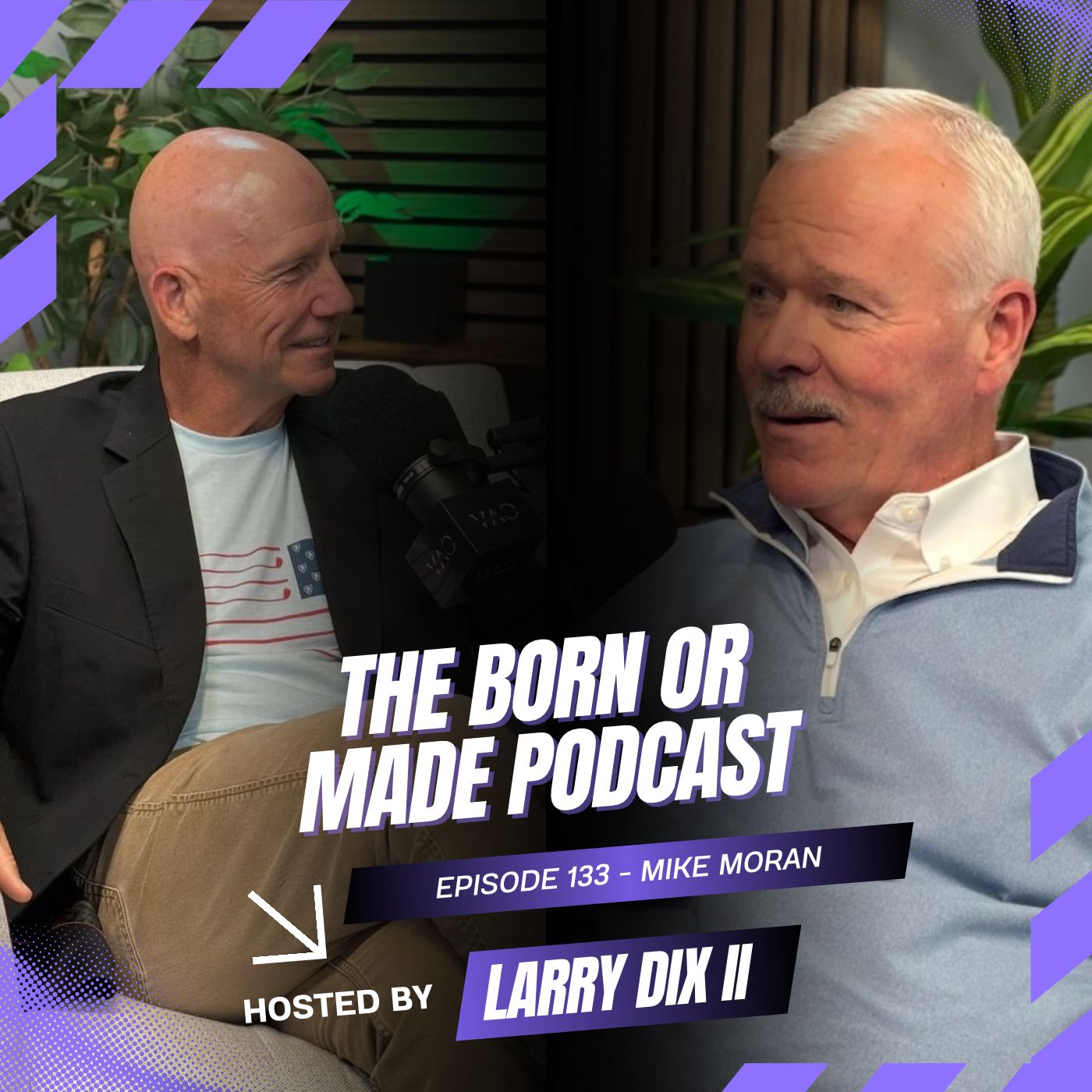
Mike Moran is the President and CEO of the Stamford Center for the Arts, home to the historic 1,636-seat Palace Theatre in Stamford, Connecticut. A graduate of the University of Maine, Mike leads one of Fairfield County’s premier performing arts venues, bringing live entertainment, music, comedy, and cultural experiences to the community. Through his leadership, he continues to support the arts while creating opportunities for performers and audiences to connect. On this episode of Larry Dix II’s Born or Made Podcast, Mike shares insights on leadership, the entertainment industry, and what it takes to run a successful performing arts organization.
BMP Mike Moran FINAL VIDEO: Well, Mike, good morning. Welcome to the Born or Maid Podcast. Thank you very much for having me. Happy to be here. Yeah, I'm excited. So, first question we always like to ask is where were you born? Okay. Well, I say that I grew up in Lewiston, Maine. Okay. Interestingly enough, I was born in Bitterford, Maine. Okay. My parents were not married. I was born in a convent. A convent? In 1960. No kidding. So what in the Excode into this. I gotta hear all about that. So I'm a love child. I'm a love child. Love child. Apparently my father had been married once before and his first wife did not want to have children. So interestingly enough, as the story progresses, I end up being a witness at their church wedding when I was sixteen. But to get there, my father had to get divorced and then married my mother. They w met in Massachusetts in the Springfield Agwam area and then ended up making residence in Lewiston, Maine, where my mom grew up. I'll thank my grandmother for pulling all the strings to make all of that happen because I'm sure that back in nineteen sixty this was not a traditional way to go ahead and start a family. No. so I was born in the convent, grew up in Lewiston, Maine. So the convent thing. So tell me explicitly I have no memory. None. So you're just there and then and then so then you Parents get married, you just start off with a regular life. So did you kind of grow up and stay in that area all through kind of K through twelve? I stayed in Lewiston until nineteen eighty-three. I was twenty three when I moved to Connecticut. And it was it was a great little city. Second biggest city in the state of Maine. And that's not saying much because there are not a lot of big I don't think there's a city with over a hundred thousand people. really? Yeah. and I was, you know, my father was Irish, my mother was French, and it was a very, very French Canadian community. I've been told that outside of the French quarter in New Orleans, it is the most densely populated French community in the country. Is the architecture based on that? not necessarily. No, it was I think it thrived really during World War II. It was a mill town. Okay. It was on the Andres Coggan River and all the mills were built on rivers back then. did their fair share of damage, but the economics were driven by a lot of government contracts. For various things that military needs. And World War Two was the the boom for Lewiston, Maine. No kidding. World War Two was a big boom for a lot of places in this country. Not a lot ever happened there. Yeah. I believe that's where Cassius Clay knocked out Sonny Liston with the phantom punch in the first round. Really? Story goes that he was a conscientious objector and didn't want to go into the military and The fight was scheduled for the old Boston Garden, but Boston being that Catholic community that it is wasn't having it. And so it ended up at the two thousand seat central Maine whatever it was, community center or something like that. And it was over before it started. So that was when he was Cassius Clay. Yeah. Yeah. Most people I you know, I don't even think about that anymore because he was always Muhammad Ali. And he did right 'cause that's why he changed his name, because he couldn't want to go to the war. Correct. Yeah, I remember that. Yep. Yeah, that was a big deal. But he ultimately became such a great fighter. Everybody was willing to look the other way, especially later in life. But yeah, yeah, what a great fighter. So so talk to me about your life there. So you grew up there, you were going you kind of c kind of K through twelve. I mean, were you big into sports or you just an academic? No, no. I was a complete school underachiever. Perfect. It really interests me a whole lot. But you know, actually school was very social. That's where you made all your friends and that's how you learned a lot of things besides what they were teaching in the books. So I did. I grew up there, went to element kindergarten elementary school and high school, all right in Lewiston, public school system. big school, my graduating class, I think, big comparatively speaking, was a little over five hundred kids. It's huge. Which is even which is pretty big. Yeah, even by today's that's still a big class. there was there were two high schools. There was the Catholic high school and then there was the public school and my parents my father was World War Two and w he lost a leg Ansio Beach. So we were fixed income growing up. And so public school was really the only option. We didn't even have it. I mean we just we went to the public school system. I mean that was just the way I mean, I think you and I are close to the same age. I mean, that was just I mean, I d I don't think I knew a single kid that went to private school. I grew up in Texas, there wasn't a lot of private schools where I grew up at in the small town. You know, Saint Dom's Dominic's was the Catholic high school and they were renowned for their hockey program. You know, well in Maine, you've got eight months of winter, so the winter sports were pretty popular. I would think so. Yeah. And so a lot of the great at the the super athletes would go to Saint Dom's so they could play hockey. But Lewiston ended up be you know, we had all of We had soccer, basketball, baseball, football, hockey, tennis, swimming. Well, yeah, was that big a school you'd get. We had everything. I played a little bit of basketball, but as you can see from my stature, I wasn't gifted with the athleticism, the size, the speed that a basketball player needs to have. So I I played through my freshman year of college and then that was it. I was done. I knew there was no future in it for me. Yeah, well, at least you played in college. You can say you did. One year. Yeah. Yep. So you so what'd you get your degree in? Business administration. Okay. So just got went in, got a BA. So you grew you had said earlier you left the area about eighty three. So was that graduating college at that point? I had finished college and I was the manager of the local drive in. Okay. The Lewiston Driving. And And you were the manager. I was the manager. I quit I quit my paper at the age of fifteen and I went to work at the drive in. By the time I was eighteen, I was the manager. And that was strictly because my best friend, my best man, his mother was the manager, and she got transferred to Enfield, Connecticut. And so there were two drive ins, the Lewiston driving and the Auburn drive in. He managed one, I his my friend managed one and I did the other until he joined the military. And I s you I stayed behind military wasn't for me. I actually I thought about it for a little while. I did too, yeah. I actually went to get a physical done and nobody told me that I was supposed to take my contact lenses out for the vision exam. You had contact lenses back then. Okay, wow. Yeah. And so I couldn't complete the physical. And thought about it a little more and I said, No, I don't I don't think so. I don't think this is for me. School, a job. The way it's the way my you know, everybody that I knew did it except for a couple of close friends that joined the military. so nineteen eighty three, I graduated from college and I was facing questions about what I was gonna do when my seasonal job ended in the fall and the driving. Well that's right. I didn't think about that. They're done. Okay. Now what? So I actually got a job with it was a very similar to friendlies ice cream. It's called Deering Ice Cream. And I worked there for a few months and the drive in owners called me and they said, Well you're gonna come back in April and I said, I don't know. I need something year round. And they said, Listen, you come back and run the drive in this summer and we'll find you something in the fall. So I said, okay. And in the fall, they offered me a four screen movie theater in Waterboro, Connecticut. So this family obviously owned was into theaters. They owned theaters across New England. it was called SBC Management back then. They were ultimately bought out by Hoytz, an Australian firm, and they had places all over. I mean, the Danbury Fair Mall is built on the old Danbury Drive in property. Really? Yeah. So they had they had a lot of properties and they found me this four-screen movie theater and here I am in a box truck, twenty twenty-four-foot box truck, taking all my belongings to Waterbury, Connecticut. Culture shock. Why? Because Lewiston, I I you know, it's just color. Lewiston had five African American families in town. And I think I knew them all. And I played basketball, some men's summer basketball against them all. And I Got to Waterbury, Connecticut, and the first night that I went to work, I was the only white guy. Really? And it's like, okay. Interesting. Okay. I don't stand out much. No, not at all. but I mean it worked out really, really well. It was a very busy shopping center. Not necessarily busy in a good way. It was the the hangout in Waterbury on Friday and Saturday nights. There was an off-track betting operation on one side of the theater and crazy Billiards Hall on the other side of the theater. And it's where everyone went to meet and mingle on Friday and Saturday night. But it was a great little theater, always busy. great learning experience moving from Lewiston to Waterbury. And I stayed with that organization, I think, for about 17 years between the drive in and the indoor theaters. Then did you stay right there at that or did they start moving you around? No, I I lived in Waterbury and that was my only location for that company in Waterbury. And when I left them in eighty-three, no, not eighty-three, eighty-seven, I went to work for what was Translux Theaters. And Translux was really owned by Paramount. wow. After the Justice Department said that it was okay for studios to own movie theaters and distribute films, the monopoly was blessed. Really? Okay. So I went to work for Translux. my paycheck said Paramount. And I did that for a while. I had ups and downs there. I thought that I was kind of a rising star and I was a single unit manager, then I became a city manager, then I became the general manager for the company. And like a lot of other things, somebody comes in, new management team, and I got kind of bumped down, way to the bottom of the ladder. it it's okay. It all worked out for the best. but I spent I guess 13 years working for Translux Theaters in its various configurations. It was ultimately bought by the the Crown family. And I worked for them, I don't know, seven years, I guess, before I jumped ship. I was always told that I would get the first corporate opening when one presented itself. And after five years of the new management, nothing presented itself. And I had an opportunity to leave and go to work for my current employer. The controller at Stanford Center for the Arts at the time had been the controller at Translux Theatres, and they were having a problem in one of the departments. And I said, let's let's just talk to Mike. Let's bring Mike in. I think Mike can fix this. So I went to work as the box office manager in 2000 with no aspirations. It's just okay. It's not a 365 day year job. I had two young girls at the time. They were six and seven. And I said, I you know, I don't really want to work on Thanksgiving, Christmas, New Year's Eve, New Year's Day anymore. I want to spend that time with my family. And the live theaters were not open on Christmas and New Year's and Thanksgiving. It just they didn't want it live. It's expensive to do live shows. Didn't want to compete with the whole thing. The people probably didn't want to work either. They were doing the shows. so I I I joined that and it has worked out extremely well. Extremely well. There the old rumor was that I started as the janitor, which is not true. Don't believe that one. I actually met with a guy today from Red Light Management. They manage a lot of comedians, musicians, et cetera. And somehow he pulled up a bio of me that referred to that story that I started as the janitor. And I don't know how that got started, but it's not true. I started in the box office and then over the course of it's I'm I'm winning the war of attrition. As people would leave, I would move up. And then it's 2012, I guess it was, they made me the executive director. and it's, you know, it's not an easy geek. People look at the Palace Theater. You've been there. yeah. It looks like it's a commercial operation and that everything is great. It's a 501c3. We are a not-for-profit, and the fundraising element is just as important as the programming element and the education element. Do you have to do the fundraising? Do you have to well I contribute a little bit? Yeah, I'm terrible at that, by the way. I can't. It's hard to ask for money. Yeah, I'm not I'm not that guy. Never have been. But it's necessary. You know, there's some compelling stories along the way. So the mission is to entertain, educate, and enrich. And when I'm entertaining, I have Diana Ross on Sunday. Everyone knows about it. When I'm educating, not so much. People don't necessarily pay attention. But we've got a great success story. We do a program called the Triple Threat Performer Intensive. It's two weeks in the summertime, and we have a Broadway director producer that comes up and works with the kids for two weeks. And lo and behold, after seven years, I've got this one kid who is now touring the world in the cast of Stomp. And he credits everything to arts education. Really? Yep. Dylan Cantrell, great kid. And he actually comes back now and works with the Broadway Luis Salgado to teach the next generation of kids what he learned and instill some confidence in them. And not everyone's gonna be an athlete. Right. Not everyone's gonna be, you know, Bob Dylan or Mick Jagger. But you gotta have some opportunities. And if if you find something that you like and you can excel at it, then you gotta have some opportunities to go ahead and explore it. And I think our education programs do that. So it's just as important as education. And then you know, enrich. How do you enrich your community? Well, we've got a local school that doesn't have an auditorium big enough for a graduation, so they do the graduation with us. Stanford has a police academy. I didn't know that until two years ago when they were graduating a class of cadets and they needed a place to have the graduation ceremony. Let's do it at the palace. So I'd like to think that we're a resource for our community just as much as we are anything else. you know, and I've been working in downtown Stanford now for 39 years. So I see the importance of it. Selling it, getting someone to buy into it is not as easy as one might think, but it's a necessary component of the job. And I've got a de a development office, we've got people that are in there that limit thank you letters, they're solicitating, they're creating sponsorship packages. Doing a golf outing in September. We have a gala every year in the spring. So we work as best we can to try to utilize that facility, that ninety nine year old facility. So it is old. It's gonna be a hundred on June second of twenty twenty seven. When I was in there I thought it was old, but I didn't think it was that old. It's old. It's old. And it always needs something. I can't even I just had a team of people that were in there for two weeks, This month doing some plaster repair work on the ceiling. Don't say the ceiling's gotta be brutal and that's high. What is that thing from the bottom? Any idea from the bottom when you're down at the stage to that? It's thirty feet, thirty five feet, sometimes it seems higher than that. It just seems so when you're up in the top, it just seems it's big. Like you're like, wow. Yeah. Yeah, it's an amazing theater. Like it's super cool. Thomas Lamb was the architect. Thomas Land did the second Madison Square Garden. He did the Capitol Theater in Port Chester, amongst other theaters. Wow. and there's just something about a Lamb Theater. When you walk in, you just you can see how spectacular it must have been. And we have done, God, thanks to state and city funding, we have probably done about $10 million of capital improvements in the last 14 years. And now I'm standing in line again because the the ceiling. I don't know if you noticed it when you were in there. I I actually has some safety netting. No, I don't think I remember seeing that. Yeah, we And unlike big piece of plaster phone. I know it's crazy, right? we were scheduled to have some work done, and then when Canning and Company came in to start doing the work, they just poked around and wanted to see what the rest of the building was like. And the gentleman walks up to me and he says, You can't have anybody in here. I said, What are you talking about? Why, because you're doing some work? You want me to wear a hard hat? He said, No, that ceiling is not stable. You cannot have any occupants in this auditorium. I said, my God, what am I gonna do? I've got shows scheduled for September. So again, the city the city pitched in and helped out and we came up with some money as well. And it cost, I think, close to a hundred and fifty thousand dollars to install the safety netting, which comes with a ten year warranty. So it's up there for a year now, I'm good for nine. kidding. But the the cost to actually restore that back to its original ornate million grandeur, five million dollars. So you gotta take it all off, put all new stuff up there. Yep. And they'll do paint samples and everything else, and they'll find the original palette and scheme and they'll restore it to so they'll go through their peel back the layers and figure out exactly what the original color was. Because back then when it was built, I mean, even when you had that, it was not color. It was all black and white. Well, all the pictures I have are black and white. Yeah, that's right. Yeah. Any asbestos in it? They're the only asbestos that we found in the building was in the flashing on the roof. Okay, nearly. And when we replaced the roof, we discovered that. And so we but that was outdoor, so remediation is a bit different than indoor. We had to do some work indoors on plumbing and we found that the hot water pipes were wrapped with an asbestos thing. And so the remediation was a little bit more challenging for that. Hazmat suits, plastic everywhere, bag it, take it out, state inspectors come in. Yeah. but That's just another hurdle in a ninety nine year old building. You know, you don't I don't know, I wasn't around ninety nine years ago. I have no clue what the heck they did to build these things. And is it all wooden structure above it? I mean, can you get up in the attic up? You can. You can that's kinda cool. Yeah, we call it the catwalks. Yeah, the catwalk. Yeah. So you can you can do that both on the stage, above the fly system. There are catwalks, and then you could do it above the auditorium. And then below the auditorium is a plenum. It's just Kind of an open air space where heating and cooling were very different back then. And so they're in the water system than the original floor. Okay. And so the cooling, heating and cooling in that building don't make a lot of sense. They both come from above. Okay. And the air is forced down and then it falls through grates in the floor, and there's a return in the plenum that brings the air back up. So that it can be processed through whatever it is. We have an old boiler system for heat and the standard rooftop units for cooling. So you still have boiler in that thing? We do. Okay. Those are unusual. And that's a big building. That's a big boiler. It's about a fifty five thousand square foot building, but the auditorium is separate. So when you walk by now, we did what we'll call what I'll call an expansion that started in nineteen ninety nine and was completed in three. We had no lobby. Used to walk in off the street, basically walk right into the auditorium. So that huge lobby. Really? A huge lobby was yeah. there had been, fortunately for us, a restaurant next door called Il Forno. Unfortunately for them it did. And when the property became available, we bought it and we built this lobby. So now we've got a merchandise booth and a concession stand and a coat check and all the amenities, restrooms and handicap ramp to get in and whatnot. So that's two thousand three, I guess we did the grand reopening. and we did a joint event with what was Stanford Symphony Orchestra at the time. They're currently Orchestra Lumos and the Connecticut Grand Opera and Orchestra. We're also one of the organizations that performed there. and we did this crazy grand opening fundraising thing in two thousand three. We were still putting the carpet down in the lobby that afternoon. Ooh, there's some stress there. You're still the janitor. I I I was still the janitor. I don't know. I might have been director of operations at the time or something like that. so but but we did it. But it just needs something every year. Every year. I can't imagine some kind of necessary repair because the building is failing, or whether it be something that you want to do because the electrical I mean. Just the the I mean, I I'm assuming that's originally b probably been upgraded at some point. Yeah, yeah. But that's still massive. Yeah, companies come in with it infrared detectors and they want to see if your breaker boxes are emitting anything. yeah. Yeah, they're serious. Insurance companies are always on top of stuff. So we're about fire. Yeah. so it you know, it's an interesting building. I think that it's in much better shape now than it was when I took the leadership position. Most of my predecessors were concerned about programming and it's a theater. That's what you want to do. You wanna put something on that people are gonna come to and you gotta have shows. but you know, the ceiling is leaking, and the seats were put in in nineteen sixty four in the orchestra. And I think, God, I need new seats. So the orchestra down in front of there's an orchestra up there in the front of Well, so we we refer to the ground level seating as the orchestra level, and then upstairs is balcony and mezzanine. you know, and nobody did Any repairs to the unless something was leaking badly, you'd bring in a roofing company and they'd do a patch. But I was able to go again through the city and the state and get some funding and we put a new roof on it. And I said, okay, now we a new roof. Now we need seats. Let's put in new seats. And we did that. But when we had a touring Broadway show, you need to have an orchestra pit for the musicians. And the way our orchestra pit was created. We had these masonite panels on the stage that came forward all the way to the front of the stage, and there was an apron. It was kind of a crescent shaped front. And you'd have to bring eight stage hands in for basically a day to disassemble the aluminum superstructure that was holding that apron area up. And then you had an exposed orchestra pit. So the musicians had someplace to play. And I said, Wouldn't it be great if we could put in like a hydraulic pitlift here? And instead of bringing eight people in, you could push a button and the thing would drop the pit level. The city saw that it was something that would be a good investment and it would save us a lot of money in the long run and give us an opportunity to do some additional programming. So they came up with the money and we put in the hydraulic pitlift. and also we were able to get some funding for Some additional seats. So we actually installed forty two new seats in the front so that when you come to see a comedian, and I don't need the orchestra pet, I get to sell forty two more tickets at the highest price point. And it's that kind of cliche, teach a man to fish or give a man a fish. So they taught us to fish and we took advantage of it. So can you do movies in there? Is there like a movie thing up? There is. Okay. annually we typically do the Warren Miller ski movie. They've been doing that for 50 some odd years, and we typically do that every year in the fall. I've been toying with the idea of bringing Ferris Bueller in now, sometime in the fall. It's the 40th anniversary of Ferris Bueller. So I do some family stuff. We've done Sing Along Frozen a couple of times, which is always very popular. We did a sing along Wicked a couple of years ago, which was very popular. So we do movies. What has changed from the time when you started in a drive in from a movie to today though? Is cause now I'm assuming it's all digital pretty much now? You know, back then you were doing reels and I remember they'd bust, you be sitting there watching a Disney show and all of a sudden and then you'd see the white, you know, that thing was gone. go back to my drive in days. you had to have a a license to be a projectionist. And way back in the day, it was really I think more of a public safety concern because You didn't have xenon light bulbs creating the light source. You had positive and negative electrical currents going through carbon rods, which would create a light source. And the film was flammable. You may have seen depictions, whether it be in current day movies or witnessed it yourself, where you see bubbles on the screen. Yeah. That's the film has stopped. It's not moving fast enough. It used to be twenty four frames per seven. per second over the aperture and the light source would create the motion that you'd see on the screen. And it's you're right now. It's all digital. I believe the f the everything is downloaded on Thursday or the day before the movie opens and you don't have a projectionist. It's on a hard drive and you hit a button. All automated. You can have it automated to the point where the auditorium doors closed and open when the lights go up and the lights go down and it's just I couldn't do it today. I I I would have no working knowledge, but boy, give me twenty minute reels, two thousand feet of film and changing between projector one and projector two and that was the I don't know, you wanna call it a talent, a skill set. Antiquated really? Yeah. So why would you have two f projectors? So you would ha 'cause the film wasn't long enough and you would be kinda you'd it would stop and then you'd start the other one up? Yeah. So for real. I you and you may have seen this too. They had cue marks. So on Friday morning A truck would show up with whatever three cans of film. Okay. Three reels in each can. Every reel was approximately twenty minutes long. So you would put reel one into projector one and reel two into projector two. And you'd get it all threaded up and ready to go. And you would have cue marks in the upper right hand corner of the screen. It would be four frames of film that you would mark with a little etcher. And that would tell you that you had whatever it was, ten seconds, twelve seconds left to switch from one projector to the other. And I remember back in the drive in days, it became an art, right? On Friday, you weren't really sure if you could get from projector one to projector two without some kind of a blip in the audio. Yeah, you would think I mean but by Sunday night you were spot on. You would have it so that if mid if the Switched reels, mid sentence, you would have the full sentence, and it was kind of it was kind of cool. So you would literally turn the one off and the other one on at the same time. They would transition, and if you did a good job, you and me sitting out in my car, I really seamless. You wouldn't know it. Really? Because I've been to plenty of drive throughs as a kid and never thought anything about it. I saw first one ever movie I ever saw was God I remember this, I was about fifteen years old. We snuck in the trunk, of course, maybe and it was The Exorcist. Okay. And man, I remember being that yeah. yeah. That was the first that was literally the first one I ever went to. You know, that was some kind of cult thing too, sneaking into the trunk. yeah. One year we actually went to a car load price. Really? We what we used to do is if you came to the box office of the drive in as a single, we'd write down your license plate number. Cause we knew. And we would go around twenty minutes before the show would start. And if there were four heads in that car instead of one, we made you walk to the box office and buy three more tickets. And then we went to five dollars a car load. People were still sneaking in on the trunk. I don't understand why. They just didn't get the concept. They had to do it. They had to see if the whatever. I'm not writing license plates down. I literally was in the trunk. I remember specifically. You weren't the only one. Yeah, yeah. We thought, man, we had it figured out. They didn't we didn't we didn't have to pay either. Okay. Yeah, isn't that crazy? Yeah. And now I mean We had a drive in in Fredericksburg where we where we we live now and that's now a big industrial complex. Yeah. So there's I think there's still one in a in a small area out in western part of Virginia that there's still a drive in. It's only in the I think they're great. I think they're great. Everyone should have a lot of town. I they drive it's a destination. People have picnics, everything. So when I was a little boy, I I'd forgot. We went to the drive ins when I was a little boy. So my parents I was born in sixty three, so a couple of years after you. And we used to have these little s my purchases my parents both smoked, you know, so we'd sit in there and watch the movies that they smoke and there were these little circular things and they would burn those for the mosquitoes. That's correct. Yeah. Yeah, the little box, you'd take that thing and set it on the window and there would be a little foil thing that you flipped up and there was a little hole in the center of it. You'd place that on the tray and yeah. We what do we call them? Pick. Pick mosquito repellent. I don't remember, but I I specifically remember those things. They just be sitting there smoking and of course. It might like incense. Yeah, it literally like an incense, but it was circular. I remember that it would burn. Yep. Yeah. Yeah, it shows our age. Yeah. And then I I think in even then, I think we had a there was a there was like a g a break in the middle of the movie too, where you could go get concessions. It seemed like we did that. Double features. You had to have intermissions. Yep. So you could sell concessions because you know, that was a lot of your revenue stream was in those concessions. And usually had they had playgrounds. Yeah, I don't remember ever getting to do that, but I remember like the concession was in the back, kind of where the where the movie where the actual So for us it was always kinda in the middle. Okay. Because the projector had to be somewhere DC. Yeah, I just remember they were all in that same building kind of. Yep. The projection, the restrooms, the concession stand were all in one little single structure. Yeah, I've got that roof. You'd open that at six o'clock in an afternoon and walk in and it would just be an inferno. I can't eat. Yeah. Crazy. yeah. Yeah, do that in Texas. It melted the film. So when you so I I thought that so you would get the film on Friday, and then you had to send it back at some point, right? Because you didn't you didn't just keep it. No. So how did that work? No. So there was a company that basically that's what they did. They distributed the film. So they'd come down on the next Friday and they'd pick up Two movies that you had shown for a week and they'd drop off two more movies and you just complete the cycle over and over and over again. And then I guess they had to do some sort of revenue share or something, or maybe you just paid a thousand dollars for the movie and then whatever you made that was it or something like that. No, well, see, that's kind of what I do now when I show a film, but back then there was it was a percentage of the box office. Okay. and they would give you credit for advertising. They would do all the ad media assets that you needed and you had to buy them, but then they would give you a credit. When you settled up your run of the film, they would give you a credit. and of course you got to keep all your concessions. Yeah, I loved you as a kid growing in growing up and with my grandparents would give us a twenty they'd give us twenty five cents, me and my two cousins, and we'd go to the theater and they and we could get entry was kind of free, we'll call it, I don't remember exactly, and you were able to get A popcorn, a drink, and a candy or something like that for twenty five cents. Those were the days. I mean, it was so it when it was so much fun. And it just be me and me me and my three cousins. We take milk duds and throw at the you know, at the screen. that was you, huh? Yeah, that was me. I was that kid for sure. But yeah, it was it was so much fun. I mean, what great memories. Now I d I mean, honestly, I haven't been to a movie theater and probably other I I did go to yours, but I haven't been to an actual movie theater in probably God, it may be Six, seven years now. It's gotten too expensive and you can do it at home now. And But they've got membership programs and things now. You could become a monthly member. I've heard about that. Yeah. When it's want to see a movie, it's whatever, ten dollars instead of eighteen or something like that. but I'm with you. I don't remember the last time I stepped fort into a movie theater. I just watch everything at home now. I mean the T V qualities are so amazing with this high definition. You can stop, you know, go to the bathroom. Get you something else to eat or don't have to worry about people making noises or the tall guy in front of you, you sitting in front of me. That guy's got a big head, you know, that kind of stuff. Yeah, they my kid my grandkids still go occasionally, but I I never go. And these now, the ones we have in Fredericsburg, 'cause we're a small market, probably smaller than this. you can eat there now. They've got like you got a section where you can sit up there and you can get cocktails or, you know, whatever and have food served and stuff like that. You know, they have to reinvent themselves. It's the same thing today. I'm sure that, you know, fifty percent right off the top of the box office ends up going to the film company. And so you gotta try to find ways to generate that extra revenue. Well, we have two in town that have closed. Okay. In our small town. One of was pretty old and the family sold it. But and it's closed down now. And then we kinda have the big one by the mall and that's I think that's the only one we have left now. Because people aren't I don't think people are I think that is all dropping off. It i I think COVID really Accelerated was was devastating for that industry. But then I'm hearing things in the past week that Spider Man is breaking records at the box office. Really? So I guess you know, whether we're just well p well beyond that COVID pandemic, everybody's settling back in. If there's something that you want to see, and I used to say this all the time because you know, somebody would come up to me with a complaint, I'll never come back here again. Until I have the next movie that you want to see. And then you'll have to make a decision. Do I want to drive three towns or do I want to see it in my local theater? And chances are you're going to come back and see it because while you might have been unhappy in the moment, the complaint was probably not that big. And so I think that there could be a resurgence for well-run theaters today if the product is there. I mean, Hollywood has to put the product out that people want to see. And when they do, of course, that's a crapshoot. What do they want to see? I ask myself the same thing every day when I go to book a show at the palace. Do they want comedy? Do they want Blippy and Bluey? Do they want Sticks and Ario Speedwagon? Do what what do they want? What will they come see? in movie theaters, they you know, that whole industry has got the same question that they need to answer, but well in advance. I mean, when I want to book a show, I might reach out to an agent and make an offer for an artist six. eight, ten months in advance. Really? But if you're gonna actually put a production team together and hire actors and actresses and grips and cinematographers and directors and producers, that process starts well before the film ever gets into the theater. Yeah. Wow. So what's what's the what's the best part of the business right now? What do you enjoy? I mean, people You know what enjoy? I enjoy people walking out after a show with a smile on their face. Occasionally They'll walk up and they'll say, you know, thank you. That was great. That was better than on Broadway. And it's using the the touring Broadway shows. And I don't do a lot of them because they're incredibly expensive. And when three tractor trailers roll up at six o'clock in the morning, you need whatever, 40, 50, 60 guys to unload them and put the show up on the stage. So it's expensive to do. But I, you know, it's kind of one of my best stories. I'm working at the palace and we've got 42nd Street. And my daughter wants to go. She must have been, who knows, ten, eleven at the time. And so she comes to see Forty Second Street. And I I happen to watch that particular performance too. And to this day I think it's my favorite Broadway musical. Really? Yeah. And so we're getting ready to leave and she said, Dad, are you working tomorrow? I said, Yeah. She says, Can I come see it again? Wow. I said, Sure. So I brought her. She s she saw it a second time. And we're walking out and she said, Dad. You think it'll ever be on Broadway? I said, It's on Broadway right now. It'll actually be closing in January. She's can we go see it? So we went in. I didn't have tickets. I walked into the box office. And I know that there's usually seats that are set aside in case a dignitary or someone in the cast needs a ticket, and they let them go 30 minutes or an hour before showtime. And I walked up and they didn't have anything for me. But lo and behold, I went back about 30 minutes before show and I had told them that I worked in the business and They found me four tickets and we saw 42nd Street on Broadway. But our production at the palace was much better. The touring show is much better. And that might have been because the cast knew the show was closing and maybe their hearts weren't in it where they were wondering where the next job was gonna be. And so our our cast was phenomenal. It was great. So do you enjoy the the Broadway stuff of of anything that you bring in there? Or I'm like everybody else. I've got things that I like that nobody else does. And there are things that everybody else likes that I don't. So the touring Broadway stuff can be really entertaining if you've got the right show. Forty Second Street was one of them. Amonty Python Spamelot was one of them. Once was one of them. but generally speaking, it it's just doesn't make sense financially for us to do it. I tend to like country music. And I try desperately to get country music in here, and I'm struggling. I've had Chris Jansen, Lee Bryce, the Eli Young band, Brett Young. But I would do country every week if I thought I could get away with it, because I think it's probably the most popular genre of music out there right now. but I c I just can't always get it. And so probably the most exciting show that we so we got Diana Ross on Sunday. That's gonna be spectacular. She puts on a Vegas style show. She might be eighty two, but she's still got her chops. And so that'll be great. And then I booked Sticks, the band Sticks. So I heard you say that. So the original, like, is it how many of the guys are there? The original I don't know, but so there's really kind of two versions of the I love Sticks, but I actually saw them in concert. Okay. When I was a young man, like probably in the early eighties. Right. Sticks, Ario, Speedwagon, Journey, Boston. Boston was like the so my story is that's when I knew I was gonna be an entrepreneur. I didn't actually, but so literally Frit we're in Austin, Texas, the Frank Irwin Center. They called it the drum. For whatever reason my parents thought it'd be a great idea if they I said, I want to spend the night out there sitting line. I want to get tickets to Boston. I bought for eight dollars. They were on the floor and I sold for ten and me and my girlfriend went for free. And you know, eight dollars a ticket. Yep. And I mean, we were literally right there. So Boston was my first band that I ever saw in concert. So I got a couple I got a couple of years. I mean, my first one, you may not even remember the name of the band or the or anything they sang, was Brownsville Station. No, I don't remember that. Smoking in the boys' room. yeah, I remember that. Okay. But nobody remembers that it was Brownsville Station. That was my first concert. but I saw it again, Lewiston, Maine, the same place where Cassius Clay knocked out Sonny Liston. That's the concert venue in Lewiston, Maine. So I saw Boston, Bloist, Dracult, Bachman Turner Overdrive, Brownsville Station. that was the place to be. kidding. So can you get bands like sticks pretty easily or it's hard. Yeah. And again, there's a lot of competition in the market, right? Well, because our generation, we have the money, right? We were we're at a different stage in our lives. We want to see these guys. Like I wished I'd I wished I would have gotten to seen the Eagles. Like out of all the bands I ever watched online, watched it, w they I didn't realize how good they were. Like I was shocked at how many songs those guys had. But the way they orchestrate the music, they're probably one of the most talented bands of our lifetime ever. Like I mean, so many people could do and you'd you'd see the one guy, he'd be singing and the next thing he's playing a guitar and then he'd be behind there playing the drum. You're just like, the talent of these people was just and every song was great. Yep. Yeah, I saw on my big seventy two inch screen H D T V at the house, and I was just like, Man, I wished I'd have got to see them. I do a the Eagles tribute band almost every year. I've done them all. I've done Hotel California, Best of the Eagles, Eagle Mania, and I you know, I can still sell seven hundred tickets to see an Eagles tribute band because the music is that good. Yeah. Yeah, they're good. You know, and sticks, well, you know, there are different configurations. All summer long they're out touring, whether it be amphitheaters or stadiums or whatever with another band. And so that's a completely different experience. but I got lucky. couple of years ago I didn't get sticks. I went to another venue in the state and this year I put my offer in again and lo and behold I found out about two weeks ago that I've got them on a Tuesday night in February. No kidding. Yep. And you got a good chance probably do you think you'll get six, seven hundred seats sold? no, I think I'll get like fourteen, fifteen hundred seats sold. Really? Yeah. And i it's the experience, right? It might be great to take a bunch of friends, go tailgate in a stadium parking lot or an amphitheater parking lot and go see a show at night. But To see them in a sixteen hundred seat theater. Not gonna be. And so there are two there are two versions, right? Tommy, there was Tommy DiCarlo, I think was his main name with Styx, and he still tours and he does what I'll call the adult contemporary version of Styx. And then you've got no, Tommy DeCarlo is Boston. Who the heck? Dennis DeYoung is the adult contemporary version of Sticks. And then there's Tommy Shaw, who's still with this version of Styx, and that's the rock version. And that's a great show. High energy show, they're running all over the stage. And and a sixteen hundred seat venue. Which there's not a bad seat in the house. There really isn't. Mm mm. I literally was in the nosebleed and it was fantastic. Like I thought it was so cool when I was in that theater. I was so excited. That's why I was excited when I heard 'cause I've actually been asking to try to interview you for a while. I've been here about three or four times and you're scheduled to go out and stuff like that and then finally to get you this time was great. So so what is the is there anything new and exciting in the industry you're excited about or you think new and exciting. Well, I don't know. The challenges seem to continue to mount, and one of them is ticketing. Ticketing in our industry is under siege. And what happens is you've got somebody who's a ticket broker and they're basically working out of their house and they're going online and they're buying tickets. And I recently had a show who the heck was it? Can't remember who it was. And the tickets, the top ticket price was probably $100. And I go online, my lobbyist had called me up, and I think I was in Jamaica in February. And she says, you know, there's going to be a public hearing, and can you give me some examples of what's wrong with ticketing? And I sent her some screen screenshots. It was Trevor Noah. And people were selling tickets online for like $2,000. Here's the problem: they didn't have a ticket. Selling it strictly on spec. And what happens is you're the innocent victim, you go online, you pay some company, boxoffice dot com, mm-hmm, two thousand dollars for a ticket, and then they scramble to try to go out and find you a ticket. And you may or may not have a ticket. you know, there was a whole World Cup Ticket debacle this year where people were traveling to different cities and they were supposed to have their tickets at three o'clock and they didn't get their tickets and families were like stuck in hotel rooms. And so ticketing in the live entertainment sector is struggling to find its way. And states are coming, they're coming along for the ride now. Connecticut just passed some legislation which will go into effect on January first. That basically makes it illegal to replicate someone's website. So you can't use my venue name if you're a reseller. And while they didn't cap the max that you could charge, they've eliminated the speculative portion of this. If you have a ticket, you own it, you can resell it. If you don't have it, you can't. You can contract. If I'm a broker, I can contract with you to get you a ticket within seventy-two hours. That's that'll stay legal. But you have to be you knowingly are going in with that expectation. And I really don't have a problem with the secondary ticketing market. Yeah. I grew up a Celtic fan. I grew up in Maine. And so if there was a game that I wanted to go see and it was sold out, which back in the day the Celtics were always sold out. And so there's a little place across the street called Ace Ticket. And if you walked into Ace Ticket, you knew you were going to walk out with a ticket that when you got to the garden You walked in. you know, they didn't even have scanners back then. yeah, no, they just tore it in half. Yeah. You know, you knew the ticket was good. They had gotten from a season ticket holder or something like that, and that was fine. So I don't necessarily object to the secondary market. I object to people trying to be creative at the same time misrepresenting. Mm-hmm. Yeah, 100%. Yeah. That's interesting. So how do we how do we get in touch with you? How do we get in touch if we want to buy tickets from the palace? How does that work? So palacestanford.org is the website. if you go to the website and scroll to the staff listing, I'm there with my email address and my phone number. Okay. So I'm pretty easily accessible. I'm thinking about changing that. Just put my picture and my name, my title. Take my email address and my phone number off. I don't I don't know. We'll see. Like a lot of websites, you never can't talk to a single person. But I mean the trouble is, like I said, I've been working in downtown Stanford for thirty nine years. I've got a lot of relationships that I've developed over the years, whether it be with what you know, city officials or local businessmen or the police department, the fire department. It's just it's inevitable. You run into people over the course of time. Absolutely, yeah, yeah. so I you know, and we'll see. A hundred years old on June second. That's exciting. So listening to this you know, your amazing life story and stuff like that. So do you think you were born or do you think you were made? I think I was made. Okay. I really do. though, and I I would have to sit here and debate anybody that thought that they were born. Because it's life's experiences that get you to where you are. And and I had actually I watched one of the examples that Brendan had sent me of of somebody answering that question. It's like she said something about a baby falls down. A baby learns to walk, a baby falls down. I think that we're all made. We get up, we dust ourselves off, you find opportunities. For me, that's my style is be opportunistic. It doesn't matter what I've really experienced. I can try to make educated decisions based on things that haven't worked in my life. You know, from driving too fast and getting a ticket to doing what I'm doing today. I I think that we're all made. I love that answer. Well, Mike, well, thank you very much for being on the Born or Made podcast. It's been great. My pleasure. Thanks for having me. I appreciate it. Yes, sir.