
Born or Made · Larry Dix
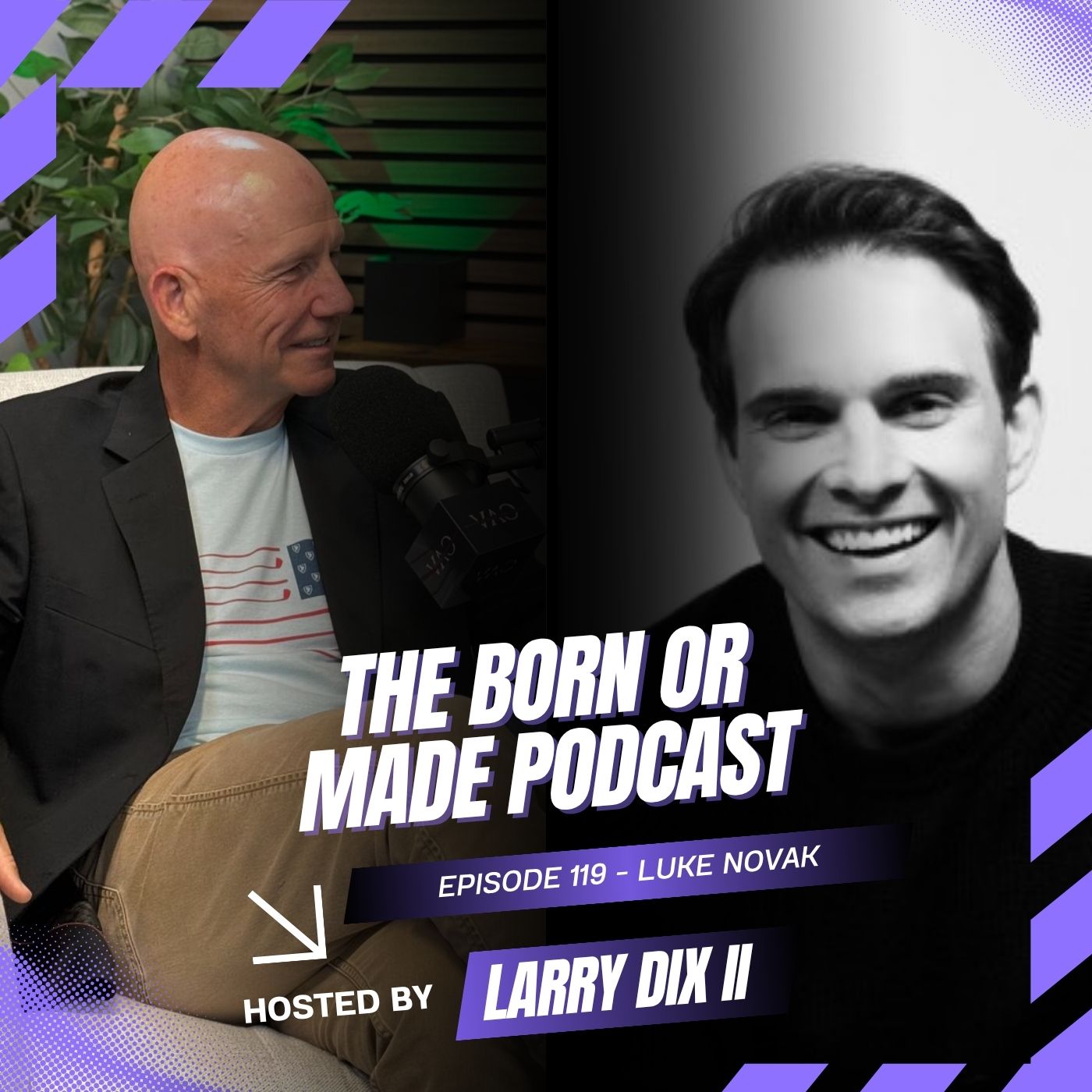
Luke Novak is the Co-Founder of TIES, a men's fertility and performance company changing the way men approach preconception health. Built on the belief that fatherhood begins long before a child is born, TIES empowers men to take an active role in the fertility journey with doctor-formulated, research-backed supplements designed to support reproductive health. In this episode of the Born or Made Podcast, Luke shares why men's fertility has been overlooked for so long, what inspired the creation of TIES, and how education, science, and personal responsibility can help more couples start the families they've dreamed of.
Larry: Well, Luke, welcome to the Born or Made Podcast. Thanks for having me. Excited to be here. Yeah, excited to have you. So tell me where you were born. I was born in Waukeshire, Wisconsin. it's in between Milwaukee and Madison. but yeah, about twenty minutes outside Milwaukee, born and raised. So did you stay in that area your whole your whole childhood? just about. So I moved around quite a bit. in the fact that so I lived there up through kind of the high school time, but I was a f in my former life I was a hockey player. And so hockey kind of took me all over the globe. I lived in British Columbia for a little while and then I lived in Amarillo, Texas, and then ultimately Wayne, New Jersey before ending up at school in Indiana. and so from school kinda went all over the place from there, but more or less was born So in high school you were playing hockey in Amarillo? Yeah. Yeah. So don't think about don't think about hockey at Amarillo. Yeah. So junior hockey is kind of an interesting setup for a lot of people. you play juniors before you go into college hockey. And for myself, the route to do that was to go and play at whatever team you're drafted by or whatever city you were you were gonna play in. And so I started out in British Columbia, lived on Vancouver Island for a little while and then bounced around a little bit during those two to three years of junior hockey. So were you by yourself? I mean, do you Yeah. Yeah. So you so you live with you live with a host family. They call it a billet family. I was super blessed if I had a couple of really, really cool billet families that I still keep in touch with to this day. and but yeah, it's a really unique experience, especially for the hockey community. but you grow up really fast, right? You all of a sudden are living in another country, living up with you know, other people. And so it's it's a really interesting concept. but I loved it. It was some of the happiest memories ever. So obviously you had to become very independent. So were you an independent kid or do you think you just kind of developed that as you were going through the process? I think I was I think I was an independent kid. I was the oldest child. Okay. the oldest child and my little brother is six and a half years younger than me. My little sister's nine years younger than me. So there's a pretty big gap. so for myself, you know, with them, I was always big brother, but also like really big brother, right? And everything I was going towards. So I always had it some kind of independence, I would say, in my kind of day-to-day life. And I think that carried well and I went and kind of lived in other places. So for sure. God, can I just as soon as you said that, I was like, I don't know if Cheryl, my wife would let you do or not. It's with our kids that's a big deal. It's funny, my my mom, you know, when you're since I was the oldest and my parents had never played hockey before, and you have your kid that has this dream of ultimately playing in the NHL. you start to hear from people, what does that take? And what are the things that you have to do? Right. And so for my mom, when I was probably 14 and some of those things were playing professional hockey was definitely in the realm of reality. she started hearing about this junior hockey thing. And she was mortified for like the four years leading up to me going and doing it. and then my little brother did the same thing. He was a he was a really good player too, but The second time around she was way more accustomed to it, right? But the first time around she was like, What do you mean he's gonna go and live at sixteen, seventeen, eighteen with another family and move out of Wisconsin? It was so foreign to I think just about everybody. So it was a good good experience. So what why'd you pick hockey? I mean, I know obviously up in that part of the world it's a much different, you know. We don't think about it down in Texas, right? We think about football. Totally. Yeah. Totally. So what got you into it? I played a lot of sports growing up. hockey was the one that I ended up being the most drawn to, just loved it. Something about it really clicked with me. And so it was really never a question of like, am I gonna play football? Am I gonna play hockey? Like I did a lot of everything. but hockey was always the thing. I think it's a mix of like, it's the fastest game on earth. So that's super interesting to me. you know, it's a great team sport, but it takes a lot of different skills. There's a lot of nuances that goes into the game of hockey. I mean you're On these like six inch razor blades with a puck that's going a hundred miles per hour. People can hit you. Like it's a really, really fun and dynamic game. they hit you while you're on six inch Yeah, exactly. Yeah, while that puck's going a hundred miles per hour. Yeah. Yeah. So like for for myself, I just always was drawn to it, loved it. you know, spent all summer at the rink, spent all winter at the rink. It was a twenty four seven, thirty and sixty-five days a year kind of thing. kid yeah I just growing up down in the south I live in Virginia now but I just just hockey was totally foreign to us. Totally just didn't even think about hockey. Totally. Yeah. And then they introduced this game called soccer. Yeah. You know, like I remember my brother was like in junior high and I'm like, we still weren't playing it in high school. Yeah, yeah, yeah. You know, and you're like, okay now of course now we have the World Cup here, you know. So it's so cool. I my my wife played college soccer. That's how we met and so for that I learned a ton and her Her sister now plays professional women's soccer. and so it's been really cool to learn everything about soccer because in Wisconsin it wasn't a big thing, right? And it's not one of the four major sports here in the US. So I played all of the other sports except for that one. So it's been it's been cool. And now seeing this little World Cup, it's awesome. So what did where did you end up going to college at then? I went to the University of Notre Dame. No kidding. Yeah, yeah. No kidding. Yeah. Well, so what was that? I mean, that's that's like the I that Everybody knows who Notre Dame is. Yeah, yeah, yeah. That's a big deal. Yeah. Wow. Yeah, it was really cool. It was Notre Dame was the best, most complicated, most growth time of my life. it's a special place. And I think anybody who has gone there talks about it. It's just a really special campus and you feel it as soon as you get on campus. I mean, everything is like pristine, but it's also sort of like family oriented. so there's just something I've definitely drank the Kool-Aid. the Notre Dame Kool-Aid that people talk about. I'm like all in. but it it's a really special place with high class, high character, and a lot of just like really talented people across so many different domains. so it's a place that you grow a ton when you you're forced to grow a ton when you go to a place like that. And it's contagious. No kidding. And so what did were you going what was your major in? Were you I studied finance. No kidding, okay. Yeah, I studied finance at Notre Dame. And I played on the the hockey team there as well. and it was a it was an unbelievable experience. Yeah. No kidding. So did you make it to the next level? Did you go somewhere else? What did you or were you kinda done once you were out of college? So I had a I had a tough time in in college hockey. I I had five surgeries in my four years. that was slow you down a little bit. Yeah, it slowed me down quite a bit. so I was always one of the guys and I going into college, I had never had many injuries. So like it was just I think wear and tear on the body. And when you're out of the lineup, you kind of do, you know, when you're hurt, you're trying to do everything to get back into the lineup and be playing a lot. And I found myself actually like getting hurt by all of the extra things I was doing to get back into the lineup, right? So it's just this continuous cycle. but I mean, in terms of like the experience, it was it was incredible and it f just forced you to grow a ton. No kidding. Yeah. Okay, so finance. So you're getting out of finance. What are you doing now? You're done with hockey and you're you gotta go get a job. What do you gonna do? Yeah. So it was a good it was a good pivot for me, right? You you have your entire life that's played up into I'm gonna play in the NHL. I ended up completely pivoting and moving like as far away from from hockey from hockey as I could. I went into investment banking. So I went and worked at Goldman Sachs for a while. Big name. and had a great experience there, learned a ton. another, you know, name brand place that I think just forces you to grow a ton and the people that you're around, it's really contagious. Yeah. Everybody knows who they are. Yeah. Yeah. Yeah. Yeah. So you were there a couple of years. Yeah. Yeah. I was there my start of right out of college and then was there for a little while until I also at what part of the country? New York City. So you went to New York. You even went in the big st okay. Yeah, I did that. I did the whole thing. lived in a lived in a four person apartment with a couple guys from school. So this is where you were working godly hours. Yeah, yeah. Doing all the stuff. Yeah, okay. Yeah, exactly. It's a hard job. It is. Yeah, it is. It's one of those jobs that I think I think former athletes do well at, right? Because it just like takes those competitive juices and puts it in another domain. But it's a completely different experience. A hundred percent. Yeah. I you mean it it affects you physically. Totally. But yeah, mentally in the worst ways. Yeah. There's nothing good physically. There's a reason why stress kills people. Yeah, exactly. Exactly. But yeah, it was a it was an unbelievable experience and something that I look back on really fondly, but was there it served its purpose for what I wanted to get out of it. I never wanted to be a career long investment banker. And that ultimately led me here to Austin, Texas. Okay. So I know all about Austin. So tell me why you're here. Yeah. Yeah. So I'm the co founder and co CEO of a men's health brand called Ties. Ties, yeah. We launched a month and a half ago. this one. I didn't realize it was that quick. Okay. Yeah. It's raining earlier. Depending on when this comes out, we launched about a month and a half ago. our first product is a men's fertility supplement. it's a very niche new space, but it's an overall men's health. brand the name ties lends itself to kind of a platform type of company. And so So I was reading about this and I I didn't understand it at first. Of course I type in Ties, Men help men's, and of course I got tie shops and I'm like, well that's stupid. So I did men's help and then I found it and then I found you at that point. And then I was like, okay. And I I I went to your website. Great website by the way. Thank you. Appreciate it. you know, just quickly looked at that and stuff like that. So so I know fertility's a big deal. Yeah. You know, a buddy of mine, you know Dan that owns NADS. Yeah. Yeah. Okay. So I was talking to him, yeah, texting with him earlier. And so you know, he's been big on that because he found out he was unhealthy. Yeah. Healthy guy on the outside, just not on the inside. Yep, totally. And so yeah, yeah, I I actually use his product. And so yeah, it's a that's a big deal. So tell what got you kind of started in this. I mean, that's yeah, that is an unusual spot, especially a guy you're young and healthy and stuff like that. Yeah, so About four and a half years ago when I left Goldman and came here to Austin. It's a crazy story. I started working with a guy here by the name of Jason Carp. Jason has an unbelievable story, but he was originally in the hedge fund space. And then on the side, he co-founded a company called Hugh Chocolate with his wife and brother-in-law. Hugh sold to Mondeleese a couple of years ago for a very, very large outcome. and Jason started a company here in Austin, Texas called Human Co. Human Co. is a health and wellness holding company where we invest in later stage brands, think like brands that are doing over 50 million in revenue. we fully acquire brands in the health and wellness space, and then we also start brands from scratch. So I joined Jason about four and a half years ago as his first chief of staff. worked with him in the trenches for two years, had an unbelievable experience, and then ultimately became partners with him in Human Co. and so for the past four and a half years, I've kind of been living, investing, and taking all those experiences from Goldman while also having my entrepreneurial bug, doing a little bit of both, right? And so you know, join him, have been doing that for the last four and a half years in health and wellness. So supplements, pet, food, beverage, whatever it it was. And I was watching how all of these brands and these brands that had a lot of success, like how they did it. How the inner workings worked. and so you know, the plan for for Jason and I always was eventually I was gonna migrate from Human Co. to to start something and he was gonna partner with me on it. And that's exactly what ended up happening with ties. It was born out of my wife and mine's own personal experience. Okay. and when we started to look at this overall arena, it made sense kind of from that background of hey, there's something here that I think has the DNA and the workings to be a To be a company and to be something that I think can be what I hope ties ultimately would become. Yeah, there's a lot of data that's scary out there on this stuff. Very, yeah, yeah. And that was the that was the experience, right? So like TIS was born out of my wife and I's own journey, right? She was working in MA consulting for a while and then had some experience on the investing side. She was working in professional sports investing for a while. Her and I were both the kind of peak career thinking about all the things that we were doing, but we ultimately knew we wanted to have a a family and we wanted to have multiple kids. And we started to just look at she was hearing anecdotally all these people that were our age that were having trouble conceiving. And I think that's pretty common now that people are hearing a lot more about this. But she went and started to get blood work done. She started talking to doctors, they started recommending supplements and all this stuff, right? And I just asked the question. I'm seeing all of these things that she's doing. I'm like, is there anything that like I should be thinking about? I should be doing? Should I get anything like test it? Like nobody's asked me a single question, right? And I didn't know at that time, even working in this health and wellness arena, like I didn't know nearly where we were in terms of like male fertility and the crisis that's going on there. but I watched that and I then started Googling like male fertility, proactive things you can do. To prep your body for when you try to conceive, whatever. and there was literally nothing, like literally nothing that exists. Especially now that you say that. Yeah. I have several friends that have gone through all this. Yeah, yeah. So it's so it's it was one of those things too where it was like, what really stood out to me was the fact of you started to see the the actual stats around it, right? So 50% of infertility cases are due to male factors. That was one that I was like, this is crazy. Never even heard of that. Never heard of that. total sperm counts are down 63% since 1973. Right. So, like you have all these trends that are happening against everything. Now there's a bunch of evidence that's coming out around the role that man's health plays in early child development, right? The health that they're passing down directly of how they are when they're conceiving. It's playing a massive role in early child development, miscarriage rates, as well as like first trimester morning sickness. So I'm seeing all of this, I'm hearing all of this, and I'm taking all of a sudden. So I went and did like sperm tests and all these different things, right? Which is kind of a taboo area that guys don't talk about, right? It's weird. and so I I started doing all this stuff, and I was it it actually was okay for me, but I realized that I was like, Well, nobody's thinking about this in a proactive way. Like, actually, this is something, and I started to learn more about the supplementation side where I'm like. Every guy that is in this preconception period or is in their childbirthing years should be taking something along the lines here to be the healthiest version of themselves of what they're passing down from their actual like DNA that's getting passed down. So that's what ties ultimately was was we're showing up for a real problem that not a lot of people are talking about. And we're also showing up for what we're hoping to create a movement around all guys that are thinking about having future children. they should be showing up with the best version of what they're actually passing down. And that's what ties is. Our our tagline is built to be passed down. and we're just reframing this idea around overall fatherhood and men that show up from day one because anybody that's a that's a father, you hear them talk about their kids and they light up. Right. It's the most important thing in the world to them. And they're so excited to talk about their kids. They don't want to talk about anything else. We're making a bet on men over the next five to 10 years that like, that's going to translate into this preconception window and that's ultimately what ties is starting out in. And we have a lot of cool stuff that's coming, but that's that's kind of the overall story. So do they have anything that ties? You said 1973 is kind of when they did this testing. Yeah. I mean what's changed? I mean I I think I know. I mean obviously a lot of processed foods, yeah, a lot of hormones. Yeah. I mean really just eating a lot of crappy food. Yeah. I mean vast quantities of everything. Totally. I mean if you look at just the overall ecosystem that we live in. It's kind of a toxic soup of a lot of different variables. So I think it's hard to like actually quantify it down to one variable, but you know, to give something that I think people are would be interested in, there was a new Netflix documentary that just came out in March. It's called The Plastic Detox. we actually at Human Co. helped executive produce the film and my my partner Jason did. And what ended up happening from it, it was five, it was six couples One of the couples had to drop out, but it was six couples. They all had unexplained infertility, right? Which is quantified as two years of trying and without being able to conceive. And they ended up removing all microplastics. They went in for three months. They completely removed all microplastics from anything, kitchenware, anything in their like clothing, bottle, yeah, everything, right? And so they took semen analysis at the beginning of that, and then at the end of it, just a three-month study. And three out of the five couples ended up conceiving. and it just was this crazy outcome. Now that's not a clinical trial, right? Yeah, it's not scientific. But I think like I think in today's culture we struggle with using basic common sense and make you paw. I mean, I mean as soon as I hear that I'm like Yeah, so pretty good. Yeah. So it's one of those things where like, you know, is plastic the cause of these different outcomes? It's to we don't actually have the data to say that directly, right? But what we can say is like some of these things that are coming out around like a microchip or a credit card size of microplastics being in people's brains, like we know that that's not good for people. And you know you should. Now they're taking our testicles and they're like, yeah. They're like, hey, guess what? Yeah. You know, and then I'm sure that has to do with all the low testosterone because we didn't talk about testosterone. Totally. I mean, I didn't know anything about it until probably the last five years. And I started reading more about it and all of a sudden I'm like, I'm gonna go get tested. Totally. And they and they just like, I'm very fortunate, I don't have that problem. Yeah. But I mean, I've got buddies, I saw a buddy of mine the other day and he was like two hundred. Yeah. Yeah. And the doctor like, Well, you're low, but you you're fine. Yeah, to two hundred tragically low. Yeah, yeah. So he went and started getting d getting testosterone boosting. He's like a totally different guy now. Totally. Yeah. And he feels better. You know, he was like he I goes and this guy owns his own business. He'd get home at nine, he was just like I'm dead. Yeah. Ford and all that. And he does the seeds in his hip. Yeah. Totally. But yeah. What a lot of people don't know as well. So testosterone's another massive area of decline. And a lot of people don't know why that's happening. but what a lot of people don't know even about this rise in testosterone is when you start taking exogenous testosterone like TRT, your ability to actually make sperm almost goes to zero. They've tested it as male birth control before. Right. So you're putting the Choice. I I'm sixty two. My buddies are all sixties, you Yeah, totally. And and that's one of the things where like we we we talk about it a lot at Ties and what we put out is like for for men that are no longer in their conception period, like it's a different story of what you should do and you should always talk to your doctor for advice. But for our subset at the moment of like, you know, call it twenty to forty-five year old men, fifty year old men. No. Yeah, you you're literally taking your sperm count to zero. so now there's ways in some people have done it to get it back after taking testosterone replacement therapy. But yeah, we have we made ties with amazing team of of director of doctors and fertility nutritionists. and our leading fertility doctor, he's a Cleveland Cleveland clinic trained urologist. And we did an interview with him not that long ago and he was literally saying like this isn't even just, you know, anecdotal, like it's common practice now that TRT is literally like male birth control and being used as that. so yeah. There's a there's so there's a lot to all of this. And I think back to your original question of what's causing this decline, I think it's all the different endocrine disruptors and all the different things that we're putting in our body, on our body, you know, eating on a daily basis. And we're water weight drinking. Yeah. A hundred percent. You know, and and then it's proven fact too, depending on how athletic you are, especially in women, it makes it harder. Yep. Totally. Right. So it's harder for them. Totally. And then we're waiting till our you know, I mean, thirties is not is just not uncommon anymore. My children I got pregnant really early and we got married. You know, we were done fast, you know, but were super young, super healthy. Yeah, totally. And so wow. Yeah, so a friend of mine, I do a lot of men's leadership stuff and he is thirty six years old. He got it just came in at two ninety nine and they told him, no, you're fine, you don't need to worry about it. I'm like, dude, you need to get this, like, you need to go talk to somebody else. 'Cause I I have a health scientist that helps me. Cool. And he's like, Yeah, man, this is out of control. Yeah. I just literally changed my diet. diet. Totally. And if I c only thing I can't get rid of is plastic because of the bottles. Yeah. Because I travel and I'm always but other than that, we have glass everything. We just cast iron pans now. Yep. You know, we only eat healthy stuff as much as we can. Totally. Processed foods. They've got apps now. You just go in and scan the barcode. Yeah. It's shocking you can't eat anything in your pantry. I know. I know. No, I know. And it and I think there's a There's a balance, right? Of like, you know, I'm a big proponent and I think a lot of people around ties and human co and everything we do, like we're big proponents of like you have to still live your life and you can't, I'm, you know, nothing against it, but like I'm not a biohacker gonna go to the ends of the earth for all of these things. I think that you can live a healthy life and you can have these like basic principles. So those are the things like eating correctly, getting enough sleep, spending time with community, you know, making sure that you are, you know, working out, lifting weights. Exercise, yeah. Yeah, doing a bunch of exercise. those simple, like basic things go a really long way. And and then everything on top of that I think becomes complementary to what you're doing. But in society I think it's like one of two ways. Either we completely don't do any of those things and then we say that we don't want to do those things 'cause they're really hard. Or we do all of those things and every minute of the day is like sprout out of I have to like wake up, cold plunge, you know, put my face in something, I have to ground myself, like do all this stuff. And I think that there's probably a balance that is between all of those that we can live our best, healthiest, happiest life. Yeah. And and so I'm I'm pretty crazy about all that stuff and I've just noticed that it's consistency. Yeah. Doing it every day. Totally. Just staying in within a routine. 'Cause I travel a lot. It's hard. Yeah. But I can still exercise. Totally. I have no excuse for that. Totally. But you know, I can generally I eat generally eat pretty healthy as a rule when I travel. Yeah. Because now you there are options. There are. Totally. Used to not have that. At least fifteen, twenty years ago you didn't. Yeah, no, there's a there's a lot of great options out there nowadays, for sure. So so tell me more about ties. So you've got this supplement. I saw you just basically look like you probably just scoop it, put it in water. No, so it's capsules. Sorry about that. So it's just capsules. Yes. It's even easier. Yep. Exactly. Okay. Yeah. Yeah. Yeah. so the actual supplement itself is eight ingredients that are all around overall reproductive health, right? So the four main parameters of sperm parameters, you know, they help with all of those different parameters. they also help with testosterone, they also help with libido. and so it's this all-in-one kind of comprehensive supplement that you can be taking throughout your childbirthing years, whether you're a year or two away, because it compounds on itself, right? The health benefits compound itself, or whether you're in between kids or whether you've been trying for a while as well, like the clinical data that or the early clinical data that we have behind it, especially some of the individual ingredients, it's amazing what it's been able to do so far in terms of improving sperm count. motility, morphology, and then reducing DNA fragmentation, which is a piece that I kind of talked about earlier. Of it's not just men that are struggling with this, it's for all men that are trying to conceive because the DNA that you're passing down gets fragmented from all of the things that we've been talking about, right? So I've never even heard when you said that earlier, I was like, huh. So really so you can actually, you're damaging your DNA. Totally. Yeah. Really? Yeah. And you think about that, right? You're passing down this genetic code that's going into your child. That's their genetic blueprint that they are starting with from day one, right? And then if you even think about it even further, that's also the genetic blueprint that they are going to pass down. So you start to look at this as a legacy type of messaging. And that's a lot of what ties is about. We saw a lot of what the brands that were having a lot of success on the women's side in less talked about subjects. They were having a lot of success with certain like women focused branding, coloring, how they were talking to their consumers, ties that, but what men want, right? So you're talking about things like legacy, you're talking about things like performance when we're talking about showing up from day one with fatherhood versus like this is all about sperm and making this feel really weird and clinical. Yeah. Yeah. And you're starting to get some good responses because I would think, I mean, because It's starting to get talked about finally. Totally. Because I was in Seattle last week and we had an economic forecast and birthing rates. I mean, it was a huge topic just on the growth and it's a global thing. It's not just the United States, it's a global issue. Yeah. And if we don't turn the corner on this thing pretty quick, in thirty years we're gonna have a problem. Yeah. So there's there's been a lot of data that's come out about that as well. the early data's been been fantastic. it really has been a really cool You know, I think it's it's both from obviously like we are a business that has to have good business principles behind it. It's been really rewarding on that side. And more importantly, it's been really rewarding of kind of the community and anecdotally the people that when we're able to talk to them, they're like, I get it. And I see this. Because like like you said before, this has been a women's problem for forever. And there's a lot of women's prenatal brands that are out there now that are billion dollar companies at this point, right? and when you click on their website, and this is no shade to them, but when you click on their website, you have to click like nine tabs deep to find like their men's prenatal that's like tucked all the way in the back of the store, right? they but I'm so I didn't even think they would have it. Yeah. So a lot of them have like a bundle that you can have, like a his and hers thing, which is which is great in general, right? Cause it's spreading, you know, rising tides lift all boats. But for us, we were like, this is a conversation that needs to be at the forefront because this isn't just a women's issue. This isn't just something that women should be preparing for. It is men as well. So let's talk to men in a way that they actually want to be talked to. And you just look at, you know, all the different categories of how men's performance and guys have totally gotten behind that. You know, everything from the gym bro to the, you know, hybrid athlete to all these different things. Ties is meant to do that in. other categories than just like show up for your workout with a awesome, you know, branded pre workout of your cool influencer that you love. Yeah. Yeah. Yeah. Yeah. Cause right now you said it earlier. I mean the biohacking thing's a big deal. Yeah, a hundred percent. I mean, I'm into it. I mean I've learned a lot. You know, we're this whoop and you know, my my number one problem has been and I didn't know it was sleep. Yeah. It's a it's a lot of people's get enough sleep. Yeah, it's a lot of people's. Yeah. Totally. And it's hard it's hard to do, right? I mean, we're just In this concoction of stress, high cortisol at all times. And so sleeping and completely shutting down and being refreshed for the next day. Caffeine is through the roof, right? Everybody's looking for how they can have more energy. the drinks. The drinks are out of control. Out of control. Yeah, yeah. These are billion dollar industries. Yeah, they are. They are. And you know, I think that there's a lot of information that's starting to come out around all of that. But I think, you know, you just have to see what works for your body. And so that's where I think the wearables are are fantastic, right? But like I said before, I don't know about you, but like some people take it too far with the wearables, right? Of like if you wake up and you're told that you had a shitty night's sleep. Can I can I swear on this? Yeah. Okay, cool. if you had a shitty night's sleep, your day was ruined, right? And that to me was one of the things with like, you know, aura, whoop, everything where I was like. I'm not gonna let this thing decide whether I have a good day or not. Like, you know, you kind of like flip it on its head that way, but it's super helpful in terms of the consistency of knowing like, okay, tonight I should probably get more sleep. If I was irritable that day, this is probably why. So it does give you really good data points that way. Yeah, I I strictly use mine for the HRV. Love it. Yeah. I love to see the the sleep, my heart rate. Yep. Because I can tell, you know, being an athlete, you know, you know, if your heart rate's up ten, fifteen percent. probably bodies in a little bit of stress. Totally. You need to be thinking about which how intense of a workout you're gonna have that day. Totally. so I really look at those kind of those are the two factors. It's great. When it tells me I can only have a nine strain, I I'll go do a fifteen. I don't Yeah, yeah, yeah. You I'm not and it doesn't tell me I'm gonna have a bad day. I'm just like, huh, I need to pay attention. I I literally the number one thing I look at is the HR V, which mine's terrible. Yep. Sleep and then my heart rate. Totally. 'Cause your heart rate is a people I mean it's that simple. When I was running I ran a couple of marathons and done a lot of training. I've done a run, a ton of races. Before I get out of bed, when I was serious about it, I would just feel my heart rate. Yeah. And if you know, more normally mine's in the high forties. And if I it's fifty eight, I know I need I know I needed a dollar back that day. This was twenty five years ago. Yeah, that's great. You know, you just knew your body was in in some sort of healing. Yeah. And you need to take it easy that day. And then you get up in the morning, you'd have a forty six. Yep. And you could go out and feel like you could run forever. Yeah, yeah, yeah, yeah. I mean, literally they it was that simple. The injury prevention piece I think is super interesting in those companies. You look at professional athletes. My sister in law, who I mentioned, plays professional women's soccer. she has a whoop and they use it a ton around injury prevention. and it's I think it's had a lot of success from from that perspective too, of all the data that it's able to gather, right? So like informing what the team's workout should be that day or how long they can train for over the course of a ten month season, you know. So it's it's incredible the things that we have access to these days as well. Yeah. I think I mean and it we're all different. Totally. So it doesn't necessarily everybody's markers are different. Totally. But it's it's it's a trending thing. You can see the trends and if you're trending in the wrong direction, you probably got a problem. And 'cause you know, my heart rate's relatively low. Well, yours may be sixty all the time. That's fine. Yep. But all of a it's running at sixty eight or seventy, you may have an issue. Like the other day, mine was my heart rate I started feeling a little sick. Yeah. Freaking heart rate was up. First time I'd ever been sick and since I've been wearing this thing. Interesting. And my heart rate was up. It was like in the in the upper fifties. Yeah. And then my body temperature all of a sudden was like one it raised a flag. It says, Hey, your body temperature is one point six degrees higher than average. And all of a sudden I was like, That's hints, I'm sick. Yeah. As as I got better, heart rate went back down, temperatures, everything went back down. It's fascinating. Yeah. It's fascinating. It's just interesting data. Did they give you any tips or anything on the app for that? Yeah. I mean I that's gotta be I didn't I didn't read it. I I if I it did, I just kinda figure out what I wanted. Yeah. And I watched the big thing is HR V. I'm trying to learn how to get that number higher. Sure. You know, I d I still don't quite understand that, but all I know is the higher it is, the better it is. Yeah. Yeah. Yeah. Yeah. Yeah. Yeah. Yeah. Yeah, so I I think it's pretty cool. He's doing a different one. He just got a new one the other day. He was big on like 'cause the problem is like the aura ring is really good for sleep. Yeah, yeah, yeah. And he said that's like the best one for that. So everyone's got their pluses and minuses. Yeah, but you can't lift as much with it or you should guys don't I know a couple of professional weightlifters. They can't wear 'cause they bust them all the time. I like this one 'cause I don't ever have to take it off. It charges on top. Yep, totally. So I don't have to take it. I wear the neoprene when I bought aftermarket for that. So it doesn't get wet in the shower. And I I I'd never take it off. I've been wearing this thing for I think I'm in the four hundred and fifty days or something like that. Cool and so I've got a lot of good data now. That's great. That's really great. Yeah. So talking about data, so tell me, I mean, are you are you still just doing some testing or did have you already done all that? Or what do you what kind of feedback are you getting on this thing on ties? So testing in the form of myself or for anybody. Just how's it working? I mean, are you seeing some positive? I mean, have you obviously had some positive results? Yeah, I had some. I've had a lot of positive, positive results with it. and then we have a kind of like early cohort of people that will be on this three month protocol. So, like I said, we launched a month and a half ago. so a lot of the early data that we're getting from consumers is increased energy after a couple of weeks, you know, their testosterone levels, blood biomarkers look better. But obviously the main thing that we're going for with this supplement in particular is all of those different sperm parameters. So get the kids up. Yeah. So we'll start to have a lot of that that'll be coming out here. that'll be coming out here soon. But you know, it I think in general, what's starting to come out is reproductive health is so closely tied to overall health. And so, you know, there's nuances to that, right? And there's always like individual cases. So I can't fully blanket statement that but if you're a healthy individual you are in a better spot than someone is it that is an unhealthy individual and that's for sure true. So what we are seeing even already is people that are taking this, you also are gonna if you're taking this, you're also gonna be probably a little bit more intentional with your diet. You're also probably going to cut out things like smoking weed or drinking alcohol during this preconception period because again sperm cycles are on a 90 day cycle. So It refreshes every ninety days, right? Of what you can pass down. So that's why we recommend thirty. So tell me ex explain that. So so you're does it it's like anything else that regenerates itself and kind of Yeah. Yeah. So you're you're continuously making new sperm and it takes ninety days for those sperm to like fully mature. It's between seventy two to ninety days. And so what you've sparts here and gets bigger and then eventually in ninety days it becomes a full sperm. Exactly. Yeah. And that's what you would actually yeah, it's what you would actually pass down. And so when you think about like the decision you make today, that impacts what you are passing down ninety days from now. And that's kind of the cycle of how our customers think about things, how we talk about things. yeah, it's it's been it's been a learning journey for sure. I've never I've never been told that. Yeah, yeah, yeah, yeah, yeah, yeah. So I think just kind of won and done a new one for tomorrow. No, no, yeah. It's it's it's it's it's pretty interesting. It's it's con constantly reading off your body and what you are, you know, putting into your body, how your body's interacting with it. And so yeah. So are you do you think it people my age will start taking this kind of stuff at some point for just health benefits, you think? Is there is that down the road, you think? There's a lot of there's a lot of health benefits with it. you know, I think that there's there's a lot of people that are coming out saying that like sperm health is like the sixth parameter or biomarker that people are saying around overall longevity. you know, I think that It's probably that's like a much farther down the line conversation. And I've never heard that because it's all about, you know, grip strength and flexibility. Can you get down to a full squat? Yeah, I I know all these other ones. Yeah, yeah, yeah. Yeah. Yeah. So I think you know, maybe that's like down the line for it, but ties itself will have some cool stuff as a brand that will be for more people, is what I would say. Yeah, that's cool. Yeah. Cause I mean that's a I mean, this this whole, you know. I don't like the term biohacking just 'cause it sounds kind of techie or whatever. It's like we're trying to beat it. I'm just trying to like slow it down maybe and just not do stupid stuff. Totally. You know, I quit drinking two years ago. Everybody knows that on my podcast. And nobody talks about that. It's like I should have done that forty years ago. Yeah, totally. I mean, like I all of a sudden people are like, Really? I'm like, I I just I can't tell you how much better I feel all the time. I know. I know. Yeah, not waking up with even that just like a little bit of a hangover. Nothing. As you get as you get older too, like it starts to linger with you for a while. Yeah. When you go like I used to go, yeah, it's like you lose an entire day. Yeah, yeah. You know. Yeah. But like in our state in Virginia, they're having issues because they could they own all the liquor stores in Virginia or state owned. Yeah. Sales just keep dropping. Yeah, alcohol sales is yeah, for sure. Some of that is because we got a lot of other stuff now. We got mushrooms and marijuana obviously. Yep. But yeah, people that's people are quitting and everybody I talk to, I'm like, dude, you should never drink. They're like, really? I'm like, I'm just telling you from a man yeah standing here with you, there is no amount of alcohol that's good for you. Yeah, no, for sure. For sure. And if you start talking about if does it lower sperm bank sperm counts? Well if it does then people need to start thinking about that. I'm assuming weed does too. Yeah. I'm assuming any kind of form of drugs. Yep. You know, this plastic thing is freaking out of control. Yeah. Yeah yeah. Like I get my spinach and it's in plastic. I don't even think about that till just a little bit ago. I'm like, all my spinach comes in plastic. Yeah. The fork you're the fork you're using is plastic at whatever restaurant you're going to, yeah, or you're taking out from. Yeah. Yeah. So Cheryl's really good. Sheep, we don't have any plastic for the most part. It's great. We just don't. We went all glass, everything, you know, like cast iron pans. I never realized that if you keep oiled, Cheryl's like she's crazy about it. They're they're stickless. Like they're just like a Teflon pan. If they're done correctly, like I cook eggs in them all the time. Never stick. Totally. Yeah, it's But it's a little bit of work. Yes. Yeah. Yeah. And that's that's the thing, right? Is like we've gone so far to create convenience because we are this capitalist society and like I am as much a capitalist as anyone. But like when you start to put you don't have the correct parameters in place at the beginning of those booms, right? you look at like what McDonald's fries used to be, right? They used to be like potatoes. beef like beef, tallow, and salt. And now you look and it's like 57 ingredients, right? And somehow that's cheaper. Yeah. And some yeah, exactly. And somehow that's cheaper than what was potatoes, tallow, and salt. And so when you start to look at that, it's hard to say like these corporations are like these big boogeymans because they're doing what they believe is best for their shareholders. And that's just part of the capitalist system, right? But at the same time, as you look at that, There was no incentives put in place for them not to do that. Right. So I think that's why, like, if you start to look at what's it gonna take to reverse some of these trends, I think it's gonna be consumers voting with their wallets. And I think it is gonna be some policy level changes around what ingredients are allowed to come into the into the United States, what the parameters are for bringing those in. So I think that change is coming and a lot more consumer awareness has started to come about with all of this, right? But it's going to take time. It's gonna take both of those, I think. So I've took acid reflux medicine since two thousand seven. I give it this health science guy and I'd gotten off blood pressure medicine completely. So excited about that. And then I was telling him, this is my number one thing now is I want to get off this. And he's like, Okay, we can fix that. Start drinking a half a lemon of squeeze of half a lemon and warm water every morning, drink that, wait fifteen minutes before you do anything, yeah, stuff like that, and drink turmeric and ginger tea. Yeah. I'm like ginger he goes, ginger and turmeric. I'm like, what? And he goes. Larry, it's scientifically proven it's better than anything you take. Yep. But we don't do it because it's not convenient. Totally. Do you know that I did that? I don't take that stuff anymore. Yeah. I don't take any type of over the counter anything for acid reflux anymore. And I was on it for, well, I guess that would be almost twenty years. I was on it for nineteen years. And how long did you do that before you were able to get off? he'd he for I I stayed on it for a couple of weeks, then I started doing it every other day and then eventually so it was probably about maybe Maybe forty five days that I eventually just kinda let it go. It's amazing. And now now I do the turmeric and I, you know, eat some ginger and stuff like that. And every once in a while, but now I've kinda learned like, you know, if I don't really eat a lot of sweets, but I tend to be an over everything. So if there's one cookie, four is gonna be better. And so I'll get a little bit like that. So I've just learned how to you know, I'm having to learn how to not eat so aggressively. For sure. And so that's been part of it too, and that's been a skill, but you know. They I had b high blood pressure. Yeah. They here, take this pill. Next thing you know, I'm taking four. Well, guess what? I didn't have any high blood pressure. Yeah. We we I was still running and doing all this stuff, but and then all of a sudden I'm like, hmm, maybe if I quit drinking, if I quit doing all this, going next thing you know, I don't take any. Yeah. And they're like, you can't get off that stuff. I'm like, I have to. My blood pressure's one hundred over like sixty. Yeah. well, that's a problem. Like, you think? Yeah. We were talking the other day. There was a commercial. I don't remember what company it was, and I wouldn't say the company, but It was a medication for your medication. And we were like, What what are we doing here? You know, like what do you mean you need a medication for your anxiety medication that you're already taking? for the side effects of that anxiety medication. And by the way, this new medication also has side effects. So, like, is there gonna be a third medication for this? yeah, it's pretty it's pretty crazy. I mean, it's just yeah, I mean I I say this all the time. Hospitals and hotels have the same thing in common. They don't make any money unless there's people in beds. Yeah. And I mean they they are giving us pills. I listen to Spotify. I I pay I have the unpaid version, so I just have to listen to some sort of advertisement in my gym every morning and there there's something in there about a pill for something. I know. I mean, pretty much all of are some sort of drug. Yep. Yep. Every third or fourth or fifth song. Yeah. Yeah. Yeah. Yeah, it's pretty crazy. Yeah, well this is great. I can't wear so what we'll do is I'll make a commitment. So I'm gonna be back in Texas in a few months and we'll have to get together again and get you on the second podcast and start getting some more updates and stuff like that. That'd be awesome. Sounds awesome. Yeah. So let my guests know and you know, all my listeners, where how can they get in touch with you, your websites and all that kind of stuff and about ties. Yeah. So our website is all our ties dot com. So literally all our ties. our social media handles are all all our ties. Instagram and TikTok. and then both my wife and I, I guess this is probably the other element that we haven't talked about is we're the crazy enough founders that like we're publicly documenting our pregnancy and fertility journey as well alongside this. So That's out there. Our s yeah, we're we're we're really going for it. Yeah, we're really going for it. so I'm not sure her handle, but I'll I'll give it and then You know, my handle's just Luke underscore Novak underscore. So yeah. Well, that's great. Well, we love to finish these podcasts with the same one. So listen to your short journey still. You're still young. Yeah. And hopefully gonna have a whole bunch of kids coming here soon. So yep. do you think you were born or do you think you were made? I I'm I don't know how many people give this answer, but I do think it's a little bit of both. I think that in terms of being born, I was always hyper competitive and I always wanted to I loved doing things. I loved sports. I loved you know, in first grade when you're doing math equations versus other people. I loved being like the first or the first in line and all that type of stuff. So I think that that's just stuck with me for forever. And that's not something that my parents were. preaching or teaching me or anything like that. Right. That was just inherently Luke's DNA and like who I was from the very beginning. but I look at the journey and the things that I've done and I think the shaping of life and what life has made me, has actually helped me figure out like who I ultimately want to be. And I'll never actually be that person, but I'm always aspiring to get better and level up every six months or so. And so, I think it's a it's a mix of both, but you know, take take what you're given naturally and then make the most of it by doing everything you can with this life because you only get one. You only get one. We're all going out of here the same way. Yeah. That's great. Well, thank you very much. It's been great talking to you. Actually, really enjoyed this. Yeah, I appreciate it. I appreciate it. My pleasure and thanks for having me on any any time. Yeah, look forward to it. Thanks for being on the Borner Mate podcast.