
BigMikeFund · Mike Zlotnik
Shift to Creative Value-Add: In today's high-interest-rate environment, traditional value-add strategies (heavy rehabs and rent increases) are being replaced by creative value-add methods, such as property tax exemptions and operational expense reductions. The Land SuUnderwriting Margin of Safety: Defensive underwriting requires fixing debt, prioritizing high Debt Service Coverage Ratios (DSCR), and assuming elevated interest rates will persist long-term. Diversification for Risk Mitigation: Mitigating risk at the bottom of a market cycle is best achieved by diversifying across recession-resilient asset classes (multifamily, manufactured housing, self-storage, medical office) and across multiple geographic markets. STOP! Your free eBook is ready. 🎁🚀 https://tempofunding.com/endgame/ 📌 Learn our full investment playbook & connect: https://TempoFunding.com/Connect 🔑 Book your FREE strategy call to apply these conservative principles to your portfolio: https://TempoFunding.com/IRCall Timestamps 0:00 - Welcome & introduction to Dr. Param Baladandapani 1:07 - Transitioning from the stock market to $10k/month in real estate passive income 5:00 - Evaluating the 3 investment buckets across the risk-return spectrum 9:34 - Using short-term rentals to generate high gross revenue and tax refunds 14:09 - Bypassing REPS: How the 100-hour material participation rule works 18:17 - Why the current market cycle favors opportunistic buyers 21:44 - Creative value-add strategies: Expense reduction and tax exemptions 24:52 - Managing risk through multi-state and multi-asset class diversification 28:13 - Learning from market peaks and adapting operational strategies Get in Touch with Guest: GenerationalWealthMD: parambalamd.com GW Capital: gwcapital.com • Book a call: gwcapital.com/zoomwithgwcapitalteam GW Gives: parambalamd.com/gwgives Instagram: @generationalwealthmd Facebook Group: facebook.com/groups/generationalwealthmd Socials & Contact Links Facebook: 📘 https://tempofunding.com/facebook Twitter/X: ✖️ https://tempofunding.com/twitter LinkedIn: 💼 https://tempofunding.com/linkedin Instagram: 📸 https://www.instagram.com/tempofunding Email: 📧 mailto:[email protected] #DrParamBaladandapani #GenerationalWealthMD #GWCapital #MikeZlotnik #BigMikeFundPodcast #RealEstateInvesting #RealEstateTaxStrategies #ShortTermRentalTaxLoophole #MaterialParticipation #RealEstateProfessionalStatus #PhysicianInvesting
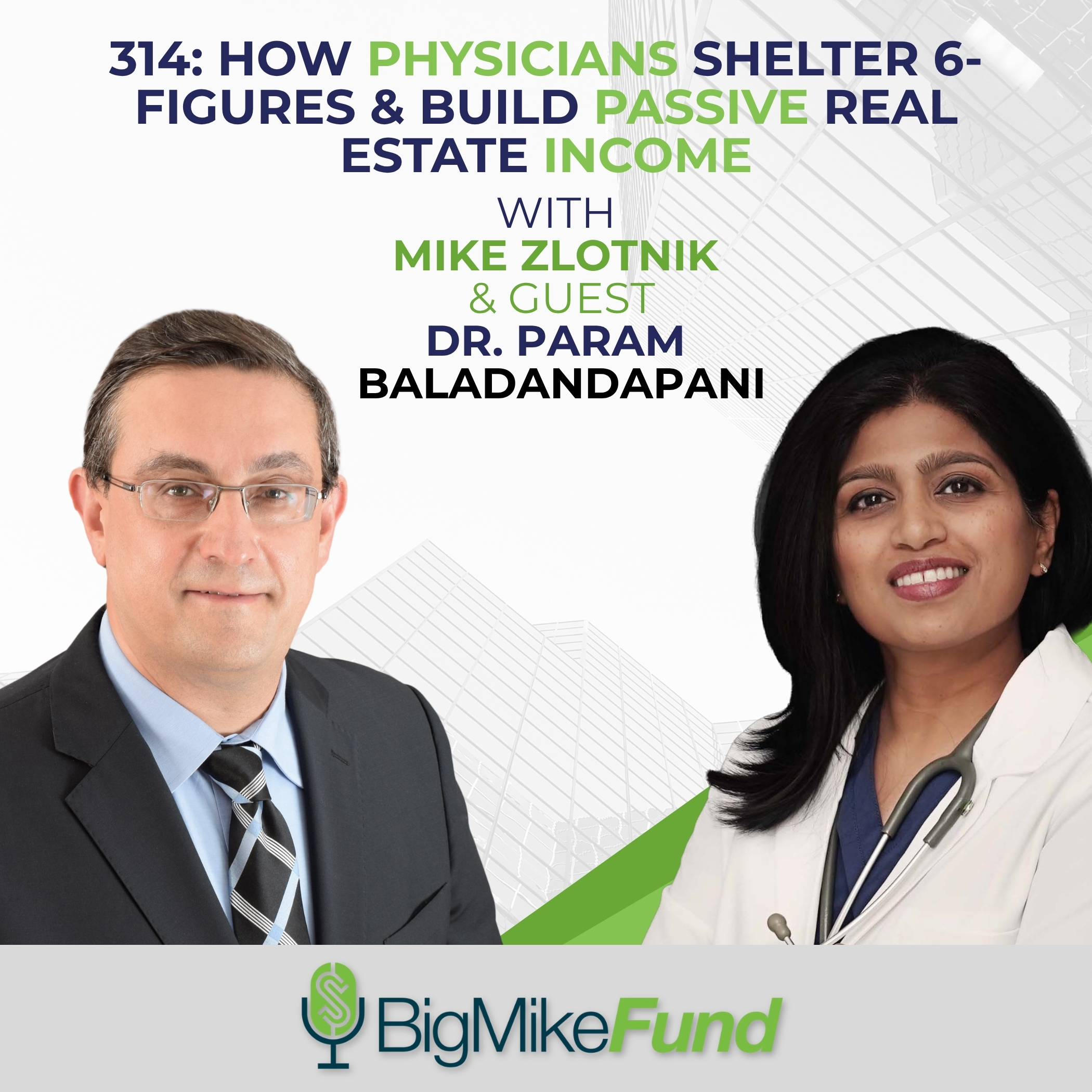
TF Management Group LLC: Welcome to the Big Mike Fun Podcast. I'm the big Mike, Mike Zlatnik. And today it is my pleasure and a privilege to welcome Param Bala. Hi, Param. Pleasure to be on here, Mike. Thank you so much for coming on a podcast. And I know you're traveling the world, but let me give you a quick intro. Param is a radiologist in Southern California. While working full-time and raising two young kids, built a multi-million dollar real estate portfolio and help. her become financially independent ⁓ at forty one. She's the founder and CEO of Generational Wealth MD and GW Capital, where she has helped over two thousand twenty thousand physicians and professionals. That's so impressive to achieve financial freedom and and ⁓ discover ⁓ real estate and and and other opportunities. So thank you so much for coming on a podcast. Absolutely. Would you be so kind as to tell the audience a little bit more about you. Southern California is wonderful, perfect weather. But tell about you, your family and kind of your your journey. Yeah, absolutely. So I would say like most of ⁓ your listeners, I follow the traditional path for professionals that which is laid out. So ⁓ high income specialty. ⁓ my husband and I were both radiologists, ⁓ lived in Southern California and ⁓ worked for about ten years out of practice, out of fellowship and ⁓ Yeah, did what most people do, invested in the stock market. And then I I'd say twenty nineteen, twenty twenty were huge transitions for us professionally. We both worked for the same firm. There was a there was a merger, a lot of transition over there. And that's when I actually started taking a look at my numbers. And I realized that ⁓ even though we'd been working for ten years and saving and investing in the stock market, ⁓ I think at that point my I I needed about ten thousand a month in post tax dollars, you know, for us to live comfortably. And we were close to two thousand, which was very far away from my goals. And ⁓ that's because of the two to, you three to four percent safe withdrawal rate, which again was was ⁓ something I learned at that time. And that's when I started exploring other sources of passive income because, you know, I wanted us to get to financial freedom much faster. I felt like there has to be a faster path. And ⁓ what I had done in the meantime is that I'd also invested in real estate, passively, purchased some rentals and just let that stay on the side. And when I took a look at the numbers, I realized that My returns from real estate was about six times what I was making compared to the stock market. Once you factor in cash flow, ⁓ you know, appreciation over time, ⁓ debt pay down, and the tax savings, right? All your cash flow from real estate, if structured correctly, is tax efficient. And so that's when I realized that something had to shift and ⁓ never wanted our family to be in the same position again. And so I accelerated, I said, Okay, I'm gonna start, you know, scaling my portfolio on the real estate side and within It was between twelve to eighteen months we hit that ten thousand dollar mark, right? Which was a a a rapid path. A lot of that had to do with the acquiring strategically, you know, value add and then also using tax strategies. I was able to shelter like in one year multiple six figures of income from taxes because of the real estate piece and and so I got a financial freedom and ⁓ I, you know, would ⁓ keep talking about it. So I decided I wanted to build a a platform and allow more professionals to learn about this. And that's how Generational Wealth MD started. And then as we started scaling and growing, I've had students who've done the same thing. They pay zero dollars in taxes, shelter, close to a million dollars ⁓ of active income from taxes in one year, generate on the side in addition to their medical practice, ⁓ you know, some of them generate a million dollars in gross revenue from short term rental portfolios or multifamily and so a lot of impact. And then ⁓ at some point I realized that the majority of our investors wanted to be on the passive side. They didn't want to build their own portfolio and that's how GW capital came into play. That's when ⁓ we started ⁓ the fund, GW Capital Fund. And that allows our investors who don't want to be on the active side but want to be on the passive side to come join us and still get the benefit of the tax efficiencies of real estate and the diversification and ⁓ obviously the passive income piece. And so ⁓ so the here we are at this point. It's a wonderful story. Certainly ⁓ music to my years, I followed a similar path and not only I greatly respect it, And I I admire it. And it it is the most fascinating fact most people don't realize that the yield on on stock market where most people invest twenty five hundred dividend yield is like a one point two percent. And it's been getting worse as as ⁓ a lot of the stock prices continu have have been going higher, but the yields, you know, have not distribution yields have not been there. Well real estate today, the opportunities for certain strategies have actually been better to buy, buy better. And you can get you know, easily seven, eight percent. I didn't say higher number, ⁓ dis distributable yield completely tax deferred, or you can go into double digits with debt and and there are all kinds of strategies where ⁓ you don't need a massive, massive NASDAQ to get a pretty decent passive income. So I'm just curious, have you helped people 'cause the the questions I I like to ask is ⁓ three questions, right? How safe? How much risk you are you taking, right? This is a big fundamental question. Yeah. It's everything makes sense only in the context of risk. Right? You can get earn, but if you don't get the risk right, you things could go wrong. So how much risk ⁓ versus reward? And typically how big is a Nasdaq needed? And then what passive cash flow actually is needed and what NASDAQ matching Nasdaq. Yeah. So I'm just curious, what are your thoughts on this and just kind of w how do you help folks ⁓ think about these three questions? So I got two of them and say ⁓ how do you adjust risk, right? And then ⁓ what is the Nestag require? What was the third part of that question, Mike? So first question is obviously safety risk. The second question is how much passive cash flow you need and then what kind of portfolio you need to have to be able to hit the cash flow goal. Okay, perfect. Yeah. And so ⁓ so there's a spectrum, right, Mike? And so you and I know this. And like I I mentioned, I started off with direct active investing and then ⁓ now we've GW is for their passive side. And I say, you're absolutely right. It's always about risk adjusted returns, right? And real estate is a spectrum. I ⁓ look at it, I mean, ⁓ don't really include REITs necessarily because they're really not very tax efficient. So in my opinion, they don't really meet one of the mandates. And so if we start from passive syndications going all the way to active investing in short term rentals. I'd say that's a whole spectrum. And I really like to divide that into, just to make it simple for your listeners, three buckets, right? So you have the passive investor, right, who invests either in syndications or invests passively in long-term rentals. You can have a property manager oversee that and that's pretty passive. And then on the opposite end of the spectrum, you have who I call the entrepreneurs. This could be people who are developing, people who are investing in short-term rentals, or people who are syndicating. ⁓ right. And so ⁓ that is more ⁓ active and it's also more of a job. And I would say there's more risk involved in some of those strategies, right? Development, a lot of variables over there. Short-term rentals, again, macroeconomic trends, there's more volatility in the revenue over there, right? And so I always tell people, ⁓ and then in the middle you have people who do, you know, more traditional value add, midterm rentals, some strategies where you're really boosting returns and your tax efficiencies, but the risk isn't necessarily, you know, all the way on the opposite end of the spectrum. And so it's really important for people going in to know where they what their aptitude is, you know, where they want to sit. Someone two income family younger, they may be willing to take on more risk early on. Someone who is later stage, all right, looking really for more passive income and looking more for downside protection, you want to be on the opposite end of the spectrum. And so I would say it's really important to be intentional as you're building your portfolio ⁓ from a risk perspective. Now, the other thing also is especially ⁓ in the syndication space, you could be passive and still, you know, ⁓ There's a there's a spectrum over there also, right, in terms of risk. So development, min multiple variables, ⁓ where you are, you know, the where how you're placing yourself in the capital stack, how much cash flow you have, a lot of those things also determine your level of risk. And I actually created a a guide, a free, ⁓ a free guide just to help our investors really understand how to think about, you know, ⁓ sponsor, vetting your sponsor, vetting your your your buy box necessarily, right? Where do you want to be in that risk return spectrum? How do you vet? deals and if you go to gwcapital.com there's a free guide that you can download. But it's really important for people going in to know where they want to be in that spectrum and you know and and make sure they know what their buy box is before they invest. And multiple things over there like are you buying the right kind of assets? How conservative you want to be ⁓ do you have the ability to hold onto it? This is where your position in the capital stack, the kind of debt you're taking, how long long term is your debt? You know, is it a three year bridge debt? Is it 10 years of more stable financing? Right. And then What are the strategies that you're using to drive up returns? You and I know this, Mike. I think this is not the environment where people have been going ⁓ been able to go in and execute a traditional value add model where they're saying, I'm gonna dump dump a ton of capital into this deal and boost ⁓ rent and you know, increase rents. That's not the the market cycle we're in. We've been doing more creative value add. And so across the the spectrum, right? There your strategy really defines your risk. The markets you go into can also define your risk. And then kind of assets you buy, ⁓ the kind of debt you put on there and what your actual business plan is really defines risk. And so very important for people going in to know where they want to be and what returns make sense for them. Right. And so again, ⁓ lower risk strategies, core plus value add, you're taking less risk. Your returns aren't going to be as outsized, maybe, but that's a trade off. And I think it's very important for people to identify where they are in that spectrum, where they are in their journey. And you know, you can you can shift over time, but ⁓ intentional choices to make. And I think that's where podcasts like yours, where people listen to operators talk about risk, talk about the challenges they've gone through, being very intentional is is super important. So that's my take on the on the risk piece, right? And so know what your buy box is. It's gonna be very different for you in different stages. It's gonna be very different for you versus someone who is Single income really are very security driven, right? ⁓ investing is going to look very different for those people. So that's the risk piece. ⁓ I think ⁓ the first thing you want to identify is what is your risk aptitude? And then if you're co-investing with sponsors or with partners, do you know, do you guys have the same way of assessing risk? Are you, you ⁓ is your buy box matched? So ⁓ so that's the first part of the question. And then in terms of Nestec, Mike, again, this is like this is an interesting question because We have investors, students, right, in our community who are investing in short-term rentals. ⁓ if you could buy one short term rental that could generate two hundred thousand or more in gross revenue, that is one point five million, and you could put as little as a hundred and fifty thousand down, doing a 10% down second home loan strategy. Right. ⁓ and so very different Nestec requirements depending on strategy again. I guess that's what I'm trying to say, right? So it's all real estate, but if you Invested in a short-term rental, you're putting in 150K, buying a 1.5 million dollar property, generating 200K in gross revenue. If you use the right strategies, come, you know, a few months later, you may be able to pull all of that out, right? Using the short-term rental strategy with material participation. There are ways where we have physicians who work full-time who are able to manage that property, put in 100 hours. ⁓ when tax time comes, they get the entire ⁓ down payment back as a refund. Just because they've, you know, they've used 10% down, ⁓ they get depreciation losses, which they can use against their active income, right? So now you're essentially left with a property where you've pulled your money out, ⁓ you get infinite returns, you already have nothing left. You take the same part of money over and over again and you can reinvest, right? And so ⁓ that's a very creative way of going in with a small amount of capital and build building a large portfolio that's generated generating outsized returns. Meanwhile, you may have someone else who says, I don't have the time or the bandwidth to do that. I wanna be more passive. I'm willing to put in half a million or a million dollars into ⁓ a syndication where I I'm, you know, ⁓ my target is higher cash flow and I wanna get about, you know, seven to ten percent cash flow and they could be generating significant passive income that way. But I would say it's more a trade off of time versus ⁓ effort, right? And you can again, it's a spectrum. You get to decide where you wanna be initially. I was more on the active side and I was recycling the same part of money over and over again. This is what you also typically do with the birth strategy, right? You could re-rehab a property, add value, pull out that entire ⁓ capital down payment you put in there, go keep reinvesting that and build a sizable portfolio. Or you can stay on the passive side and have a larger initial down payment to get the same cash flow, right? Different strategies. Again, pick where you want to be on that spectrum. And I think I the the the first question is always For me, that I ask people is, okay, where do you want to be on this picture spectrum, right? Do you want to be passive? Do you want to be active? And that kind of determines the nest egg that you need to go in. But I think a more fundamental question often is like, what is my my ⁓ my ultimate goal, right? ⁓ how much cash flow do I need? And ⁓ and and that's the passive income number that you were talking about. There are a lot of calculators. What I typically do is ⁓ and I think there's even one on our website that, but I think ⁓ trying to remember the names of the the ones that are available online, but you can actually go in. plug in your numbers. And I think that's a that's a key piece. For me, the when I realized that, okay, this is my financial freedom number. It was $10,000 post tax, right? And then ⁓ I plugged my numbers into a retirement calculator. I realized that it was take it would take me 20 years to get to that using the stock market if I went down the path I was on. And it I thought it was going to take me three years or less with real estate, right? Which is why I made the pivot. But really understanding those numbers is critical. And there are there are a lot of ⁓ retirement calculators out there. ⁓ There's one on Generational Wealth MD's website, generationalwealthmd.com slash I believe it's retirement, and you have access to the calculator. But running those numbers and knowing what your ultimate goal is, ⁓ helps you define your strategy. And ⁓ that's a good place to get started. Yeah, thank you, Param. That's a lot of great nuggets. So it it's funny, I'm reflecting, I'm I'm I'm listening and I I ⁓ I'm working on a book that's hopefully will come out. It's been many years in working now and the the last kind of leg of it. But it's funny that you mention all these things and the whole conversation on on a first piece, right? The risk. Yeah, all that I have a concept called investment quadrants defined. That's exactly it it's the safety and then the cash flow versus growth. Yeah. All that that you mentioned follows a little different methodology, but it's the concept is similar. It's it's how much you're taking. And the biggest question that I've going to the book, it has come to my thinking is one is the theory of risk. The second was a practical implication. The most difficult piece is practically assessing opportunities that come across. Obviously, sponsor risk assessment, individual deal risk assessments versus what you want. Right. And most people, when you ask them the risk questions, they'll assess on a lower level of risk. Right? But practically speaking, they either take too much risk or on the other side, they say, Yeah, I'm I I'm willing to take all the risk, but I'm not willing to take the lowest. It's kind of funny. Wanted to add that common. So th the risk the risk conversation is is an incredibly important and it's not trivial and risk in its most basic definition is the possibility of a loss. And that self assessment of how much risk ⁓ tolerance you have both physically and emotionally is actually a very important conversation. It all starts with both building and actually being very truthful and being able to not only assess yourself but also have the skills to assess opportunities. That's my first comment. The second comment I wanted to make on the ⁓ short term rentals, it's an active business. As much as as much as you can make it close to passive through third party property management, there's still an active element. And anytime you go active, your return on your effort ⁓ adds to the return on your money. So return on your effort could be actually so significant if you do well, right? That you can't compute it as a passive ROI. You really it's another business. And and if you're making this An REP, you you're becoming an REP status. That's a wonderful thing. If you can do that, I have it in the book and I have just been talking about this. This is this is like a blessing that the IRS and the rules allow us if we can do it well. And ⁓ the classic example, if you have a practicing physician, spouse. Spouse can be an REP. It's very difficult. IRS rules generally don't allow. It has to be a primary. So if you are if you are doing this on a part-time basis, can be. But if your spouse is doing it, That's a different story. Absolutely. I mean, the interesting thing with short term rentals though is that you could materially participate with just a hundred hours ⁓ in a calendar year and more than anybody else. So it's a much easier barrier to meet than reps, right? Real estate professional side, it's much harder barrier to meet unless you or your spouse work part time. So that's a very, very valid point. But with short term rentals, it's interesting. I mean, ⁓ but I I again, like you said, the risk and the effort that you're putting in are things you absolutely need to factor in. Yeah, and I appreciate you sharing. I actually didn't know it was a hundred I I know it's material participation to five hundred hours on a passive rentals, but it maybe it's a hundred on active. That this could be one. It's ⁓ there's seven criteria for material participation. You just need to meet one. And the the the easiest way for someone who is working full time as a physician, attorney, whatever, right? You can be continue to do that and all you need to do is meet a hundred hours ⁓ in a given calendar year and more than anybody else, right? So year of acquisition typically you know, you're spending more time on the property than anyone else, especially if you're kind of hands on. And then next year, next calendar year, right? And next calendar if you hire a property manager or you hire a virtual assistant, which a lot of our students do, hand it off. You can be completely hands off. It still works. And so that's I think a piece of the puzzle which makes it very attractive for people who are working full time. But one quick question on this ⁓ and you you know short term rentals better than I do. A a full time physician spending a hundred hours on the property. It's a material participation, no argument. We can meet that test. Yeah. But the REP test they can't meet because it has to be the primary. Yeah. They and they don't need to for short term rentals because in the eyes of the the in the in the tax code, a short term rental is considered a business activity. Right. And you need to meet ⁓ so a passive rental, long term rental is considered rental activity. And so you need to meet two tests. You need to meet criteria for real estate professional status to convert that to a business activity in the eyes of the IRS. And then you need to meet material participation to move it into the active bucket. Short-from rentals in the eyes of the IRS are already a business activity. They're not considered rental activities. Yeah. So you're skipping the Reps test. All you need to do is hit material participation, which makes it easier. Thank you for the wonderful education. I didn't know this, live and learn every day. Actually learn so much by talking to folks like you on the on the podcast. So thank you for sharing. Exactly. Yeah. So let's continue. Just go to the current Kind of, you know, we're recording this summer 2026. What type of opportunities work really well for the passive side? So active side. Yeah. We we talked about this a little bit. On a passive side, what are you finding today for folks who are near their retirement, approaching retirement? They want to diversify out of a stock market that where they've done really well recently, and they're looking for good cash flow, passive income. And, you know, relative good downside protection or safety. What are you thinking? What's what's interesting to in your eyes? What kind of opportunities, what kind of asset classes in real estate? Yeah, so Mike, this is a great time, right? You and I both know this. It's a great time ⁓ to be opportunistic because we're at the bottom of the market cycle, right? ⁓ the basis we're acquiring assets at is very, very attractive compared to the last few years. And so as much as there is uncertainty in the economy, is one of the greatest times to be investing. I would I would say most of us would even go as far as to say this is our ⁓ nine two thousand ten equivalent, right? Where we're able to acquire great assets. And so ⁓ if you can do the due diligence piece, keep your emotions out of the equation and just look at assets for where they are. And again, going back to the basics, right? Buy right great quality assets that you'd be willing to hold long term that are at a great that you're acquiring at a great basis in great markets with with great fundamentals. I think the biggest thing as far as buying is taking a look at the supply chain right now. I think that's what's been affecting submar some submarkets more than others. And so as long as you're able to do your due diligence, this is great time to be buying, buy the right assets. I would say again, it's a time where we want to be very intentional about ⁓ two other pieces, right? It's it's about the debt piece again, interest rate environment. ⁓ I I think we're shifting from the perspective where everyone thought the rates were going to get lower. I think we have to plan for an environment where inflation is trending upwards and rates don't come down. And so again, being very intentional about the kind of debt and the position in the capital stack is is going to be really relevant. So having really good leverage and ⁓ buying ⁓ assets that have a DSCR is a number we like to look at. Most of our assets we want them ⁓ the D S Cr to be as high cash flow to be It's a it's a metric in terms of what is day one cash flow looking like for those assets. And I think it's a good time to be buying assets where ⁓ the assets we're looking at in this marketplace, multifamily manufactured housing, ⁓ self-storage, we're looking at assets which are cash flowing five to seven percent day one, right? And so there's safety in that, right? That itself is a buffer. So if you can find those assets that you can hold. in the long term then ⁓ but cap rate compression with inflation going upwards, I think the fundamentals are pretty strong ⁓ right now. ⁓ the the the third piece, I think, the pivot that we've done and I think would be I I think most of us are are seeing this and it'd be valuable for your ⁓ audience is ⁓ really not looking for assets that are your traditional value add, which is what We were looking at maybe for the last few years, but creative value at, right? This is a time where just with the way the economy is, you know, boosting up rents and bump ⁓ with with rehabs, renovations may not be the best strategy. We've pivoted from that to more of a creative value add. So we're looking at assets where we are either reducing operational expenses day one significantly, right? Taking it over from operators who probably haven't done the best job. So streamlining operations is one of the fastest ways to add value in this environment. And if you can do that, if you can buy assets, we've done a lot of property tax exemptions where day one, again, your NOI is is boosting, ⁓ you is bumping up significantly. That's something where you have control over these elements, right? Even in an uncertain economy. And so ⁓ with those bumps, we're adding value creatively. Very rapidly, right? I think ⁓ we're still getting some assets where we can do loan assumptions. And so as long as you have a longer runway over there. So finding deals, great. This is a great time to be finding deals at a good basis. Creative value add has been our strategy. But again, being very, very intentional about the kind of ⁓ the debt that we're acquiring in this market. ⁓ just not planning for a lower interest rate environment and finding great assets we can hold for the long term, I think, ⁓ is going to be key. But overall, we s ⁓ are in an environment where we have a shortage of ⁓ you know. four to five million housing units. Renting is ⁓ is again definitely more affordable than actually buying given where home prices are and interest rates are. So strong fundamentals, just buying good assets, taking a really deep look at what supply looks like, creative value add, I think are are are gonna be key ⁓ pointers. But it's a great time to be acquiring, ⁓ and it's ⁓ actually a time to be very opportunistic and ⁓ and and that's that's been our position. I think ⁓ it's a good position to take. Yeah, I think that was wonderful. I really appreciate The clarity that it's a great time to buy, number one. Number two, you have your buy box. We we have a buy box too. And I I I like to put a little bit more criteria to the five to seven percent yield. We actually that that is a reasonable range. But the key in my view, and it depends on the market, of course. The this is very much varies in Southern California, it's impossible. But if you if you look in Midwest, it's to have a positive spread, decent positive spread between the cap rate and the interest rate. If you could fix the interest rate, That creates a margin of safety, obviously, debt service coverage ratio, conservative leverage, all those things that you mentioned, they're all part of the safety underwriting. It's kind of the best way to think about this. I'm complete I'm I'm acknowledging your your thought process is exactly the right one. It's it's a good way to think about this. Development, ground up, and all that stuff is highly speculative, and you don't know where you're gonna wind up. But at least you can control what you can control. And I do agree. It's funny, I've had this discussion with other fund managers as early as this morning on where the interest rates are going and we can't control it. And the fear is exactly that, you know, th that thing is outside of the Revit has escaped. They and basically the debt will continue ⁓ to grow and then the interest rates will continue to be at elevated because inflation you can't get that inflation beast back under control. And if you can't get inflation under control then the interest rates will stay at the elevated level for a long time. And that's the norm. If that's the norm, then you can operate with downside protection of fixed rate debt and conservative de debt service coverage ratio and all the things we did you discussed. So I certainly love that that point of view. And you know, even in the Sunbelt, ⁓ Mike, we are seeing ⁓ so this is Texas and ⁓ you know, Georgia, other markets, that traditionally it's hard to find that that cash flow of five to seven percent. With the creative value add strategies I just mentioned, there are still ways where without par ⁓ without really counting on you know rents going up or bumping up rents. We're still able to get that five to seven percent cash flow even in the Sunbelt, right? And and I think another piece, which I think is relevant, it's a pivot we've made is looking at longer-term hold funds with diversification where we have assets, you know, across the country, right? That's another way to reduce risk. And we've been talking a lot about risk ⁓ mitigation. So ⁓ we are now in a fund where we're acquiring manufactured housing. Again, we're diversifying across act asset classes, but we will also be owning assets across ⁓ you know, more than 30 states, right? And another piece of diversification and When we think about risk mitigation, ⁓ and I should have highlighted this ⁓ h more at that point, if you can diversify across asset classes as long as they're recession resilient and across ⁓ and geographically, right, and and even temporally, right? The points where you're entering the market, that's a big piece. And this is what Ray Dalio says, right? That the you know, one of the biggest things you can do for risk mitigation is diversification. And if you can think about that. or holistically, right? You're diversifying out of the stock market into real estate. But even within that, you know, diversifying across asset classes, divers diversifying geographically, that's a big piece of that risk mitigation ⁓ you know, ⁓ point that we were talking about. Yeah, it's funny you mentioned Ray Daly. I'm a big fan of ⁓ Ray and yes, ten to twelve noncorrelated. He's even increased his theory to fifteen, but non correlated strategy. So it it does make sense. All that makes sense. Broad diversification is wonderful. The only comment that I'll have on broad diversified funds, this complexity related to so many assets and all that stuff, right? But you could do your own diversification by selecting which specific projects, or you could try to go into a broadly diversified fund. That's a great, you know, that's a great point. And then the other quick point on the creative value ad, it's funny you mentioned Texas and we're working right now on medical office portfolio deal, which actually sent you. And the hilarious part is The yield is actually pretty decent there. You can you can get a pretty decent yield meeting your requirements as an example. And the value at in essentially classic CRE commercial real estate versus multifamily. Multifamily is a CRE, but multifamily you're dealing with tenants and you're dealing with a non ⁓ you know guaranteed programmatically rents. You basically supply demand. Sunbelt is still suffering from high supply and negative rent growth. But if you go into medical office and you have triple net. ⁓ rent escalation clauses with whatever two and a half, three percent rent growth, you're growing NOI programmatic. Of course, credit quality and all that stuff. It's just an example. So you could do value add, that just like you said, without heavier innovation, without risk related to some of these traditional value add strategies. So I will absolutely agree with that, that creative value add related to much easier lifts, dealing with more sophisticated commercial tenants is is wonderful. And You also mentioned manufactured housing communities. All that is absolutely wonderful, especially if you're looking for high depreciation. That's one asset class where you get a ton of that. So thank you for that wisdom. It's kind of the the the the statement is great minds think alike. And I I really love how you think because ⁓ it's aligning with what I'm thinking and I'm just acknowledging how how great your thinking process is. Mike, I also want to acknowledge the fact that I think for all of us in ⁓ you know, ⁓ just generally speaking, right, the last year or two has been a great learning experience because many of us have had acquisitions that we acquired in two thousand twenty two, twenty three when the market was at its peak for commercial real estate. We didn't really see that market cycle in the residential space. And a lot of this comes from pain and and navigating a lot of struggles and And so, you know, the the pivot is almost necessary from the experience we've had. And I I also want to acknowledge that, right? So it has a we've had we've had our share of struggles with assets and and you know, really having to streamline operations as the only way to, you know, make these deals work. And so it and a lot of the pivots ⁓ and the the wisdom comes from having navigated that part of the market cycle, which again highlights the fact that this is a great part of the market cycle to be acquiring with all the uncertainty as long as, you know, we're we're pivoting. Thank you for sharing that because that is a great wisdom and it is a statement of strength. Acknowledging I don't want to call them mistakes, but maybe market mistiming. All of us kind of have that pain. It's scars, battle scars. ⁓ it was twenty twenty two especially, twenty one, twenty two, and maybe some twenty three acquisitions unfortunately we're sort of at the peak of the market. And ⁓ if people didn't see it then, obviously they're seeing it now. And those battle scars and the fight to survive that capital if if it's possible, they're still there. And the courage is is it by definition is acting despite fear. And a lot of people have that fear. And and all of that happened while the stock market had a massive bull run. But now if you if you are a contrarian, and Ray Dalia, by the way, recently he has brought up, he has elevated very, very recently the risks of a massive AI bubble. forming ⁓ similar to two nineteen twenty nine ⁓ or the the dot com boom and ⁓ it's more reason to take some chips off a table to diversify and you mentioned this I really like this right now it feels like GFC a few years later. So I remember GFC 2008, 2009. It wasn't the bottom of the market. It took a couple of years for the market to bottom out. But at some point the market found the bottom. And it feels like it's really close to finding a bottom And then because of the cost basis now, these acquisitions are much are much better investments on a relative basis. So I just wanted to acknowledge, that's that's that's a great, great point, that we all have to acknowledge the challenges and another great offer, ⁓ John Maxwell, sometimes you win, sometimes you learn. And we all learn from that two thousand twenty two market peak. And having the courage to acknowledge it and move forward. is is my view will separate kind of the the success stories versus those who who will not. So any final comments? ⁓ how would folks reach out? You mentioned your website a couple of times. Would you be so kind to mention it again? And any other final thoughts that you have? Yeah, thank you for the opportunity, Mike. ⁓ I think like I mentioned for anyone looking to invest on the passive side, the guide that we have is a it was a labor of love, you know, ⁓ same things we talked about all those concepts. put in a simple way like a checklist for if you're trying to invest, make sure you know what you buy boxes and you're doing your due diligence. That would be gwcapital.com slash guide in lowercase. And I think it's a great resource for anyone thinking about investing passively. And for anyone who listened to me talk about active investments and is curious to understand those numbers. If you go to generational wealthmd.com, I have a free ebook where I talk about these strategies, the tax savings, the using the same pot of money, recycling it over and over again to scale. ⁓ I think that'll be ⁓ it's just a good learning experience. ⁓ but I want to bring it back to, you know, I think it's great investing in the stock market traditional methods, but in my opinion, diversification is key, both from a risk mitigation standpoint and from the perspective of, you know, being tax efficient and really increasing your cash flow. And so I think most of us ⁓ need to have at least 25 ⁓ percent of our portfolio in alternative assets, which includes real estate. And so Making the switch is hard, but listening and learning and absorbing ⁓ from people like you, Mike, and and your the you know your speakers, I think is a great way for people to, you know, k take that leap of faith and then ⁓ and diversification is key in temporal diversification. Yeah, diversification into real estate, but having the courage and wisdom to keep investing across market cycles is another great way to make sure you're coming out ⁓ positive, you know, on the back end. So yeah, you it's ⁓ it's ⁓ You know, you have to start before you're ready. And so I'm hoping that the wisdom that you're sharing on this podcast gives people the courage to do that. Ron, thank you so much. What you mentioned, I I call it this many way waste term. Some people go call it on on the stock market called dollar cost average. I call it diversification in time. It's another dimension that most people forget. And it's a critical dimension. You just never know. Sometimes all assets go up and all assets go down, and you gotta diversify over time because you never know. So and 25% rule. It's funny. I actually asked some of the top AI tools what percentage of, you know, one's portfolio should be in real estate. And it gave me between like twenty-five and forty percent. If you include your primary residence, right? The primary residence, if you are in Southern California in a highly appreciating market, the primary residence could be a lot of net worth ⁓ tight that if you bought well, you know, y years back. So thank you for coming on a podcast. Thank you for sharing. Really appreciate your wisdom. And wishing you a wonderful journey for forward. Thank you, Mike. This was a such a pleasure.