
Big City Catholics Podcast · Bishop Brennan Podcast
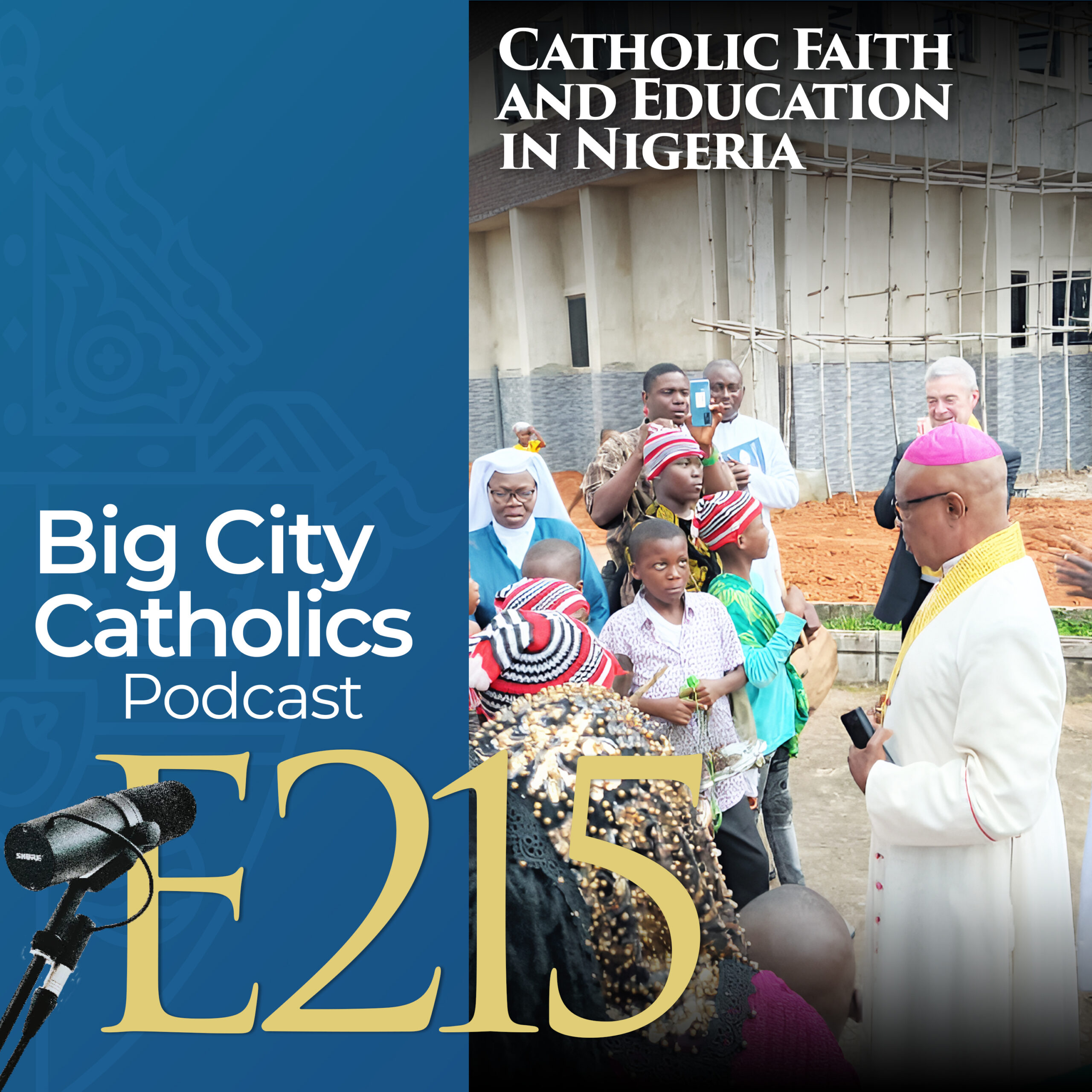
This week on Big City Catholics, Bishop Robert Brennan and Father Cosmas Nzeabalu, the Coordinator of the Nigerian Apostolate for the Diocese of Brooklyn, discuss their recent visit to the Archdiocese of Onitsha in Nigeria. They highlight the growth of Catholic education in Nigeria, including the new Catholic university, and reflect on Blessed Cyprian Michael Iwene Tansi, known to many as Father Tansi, the first Nigerian to be beatified by the Catholic Church. They also discuss the significance of the annual Flight to Egypt Mass held in the Diocese.
0:00Speaker AForeign.
0:10Speaker BWelcome to this week's edition of Big City Catholics. I'm your host, Bishop Robert Brennan, Bishop of Brooklyn, serving in Brooklyn and Queens. And this week I am joined by Father Cosmas, who is one of the priests at the parish of Christ the King, St. Mary Magdalene in. In Queens. Father Cosmos is also the director of the Nigerian Apostolate here in Brooklyn and Queens. Very important group bringing together both the Nigerian community of priests and of the faithful in praise of God and in apostolic works. I had the chance to visit, along with Father Cosmas, his home diocese of Honicha in Nigeria. And we'll have a chance to. To talk about that visit and some of the work that the Church is doing right there in Nigeria. We begin with prayer. In the name of the Father and of the Son and of the Holy Spirit. Amen. Lord God, you call us to be one church, Holy, Catholic, apostolic. To proclaim your works in every corner of the earth, to share our gifts, send out talents, to bring the good news of the Gospel to all, all of those we pray. Lord, increase our unity, strengthen our communion amongst one another. Help us to recognize in our diversity the universality of the Church and make us one in faith, hope and love through Jesus Christ our Lord. Amen. In the name of the Father and of the Son and of the Holy Spirit. Amen. Welcome, Father Cosmas.
1:44Speaker AYeah, thank you, Bishop. Thank you so much for inviting me.
1:47Speaker BI'm glad you did. In fact, you're making a great sacrifice here. And this is the wonder of computer technology. We're actually speaking across the continent. You're still in Nigeria, in Lagos, getting ready to travel tomorrow back to the United States. And I'm back in Brooklyn. And here we are having our conversation. Father Cosmos, you invited me on behalf of Bishop Valerian Okeke to visit N Nigeria, particularly to visit the Archdiocese of Onitra, a place that I visited 24 years ago with Bishop Murphy. And what a great occasion it was to go back 24 years later and to see the work of the Church. Thank you for that invitation.
2:31Speaker AThank you, Bishop. I'm so appreciative of your coming, you know, making out the time to make this pastoral visit. It was a huge thing for us in our nature as diocese, A huge deal for the Bishop Valerian, and for the colleagues there to see you participate in our activities, your donation and everything we did. So we appreciate your visit. Thank you, Bishop.
2:57Speaker BThank you. You treated me so, so very well and I'm grateful for that. It really was beautiful. The Archbishop was a very gracious host. But you. You kind of really helped make it happen. It was one of those things that I said I'd be open to doing. And you persevered to actually set a date and to get the whole visit coordinated. And, boy, was it ever coordinated. So thank you for that. Archbishop Valerian celebrated while I was there, his 45th anniversary as a priest, but he'll be celebrating very early next year, 25 years as a bishop. When I went with Bishop Murphy, he was the coadjutor to the archbishop. In other words, like an auxiliary bishop, but ready to take over. And in these 24 years, he did a great, great deal of work within the church. What an impressive visit. Well, you and I, we went to one of. To two of the schools, right?
3:53Speaker AYes. We went to ckc. We went to the seminary, the ckc, Christ the King College.
3:59Speaker BChrist the King, Yes. Both of those are really kind of like boarding schools. The students there live most of the year, and that gives them a certain structure and a certain stability, Correct?
4:12Speaker AYes. Yes. Because the. The kids come in from the age of 10, 11, or 12, and then they get the formation that they needed to grow until they get to the age of 18, and that preps them for college. And those of them in the seminary, that also prepares them to head into the apostolic work and then senior seminary for philosophy and theology and then becoming priests. Yeah. So it's a total and wholesome formation for them.
4:42Speaker BThat would be for the prep, seminary and the school, too, also prepares them for. For all kinds of possibilities. Archbishop Valerian and I agree with this, is very committed to education as the key to development.
4:56Speaker AYes. And I think looking at Nigerian society, the only thing that can salvage that country is knowledge, because the government enjoys people not having the best of knowledge, and so they could not be questioned. So now building up youths who are knowledgeable, who are sound, who could question the system, who could change things, is a huge tool for the church, for the community, and for the system overall, for the growth of. Of the. Of the country, Nigeria, and for the building of the best church that could be welcoming to every other person and for the society. So injecting a lot of energy on the young ones and then bringing them up in the word of God and then understanding the society and then nurturing them to become the best men or women that they can be you, is a huge asset for Nigerian improvement. Yes.
5:55Speaker BOh, so impressive. And it's in everything. The development in sport, there's development in music, there's development in making presentations and speaking articulately. Wow, that was so, so impressive.
6:07Speaker AYes. Even the kids. I was, yeah. Like, the knowledge they get there is very holistic. Like, we saw the saxophone, those kids playing my piano and all that. So it's not just the academic knowledge is also artistry, the art part of it, the music part of it. And I was also thrilled that the young man who made some presentations to you when we were in Christ the King, very, very articulate, I was sure at that age, could make such beautiful presentation, you know. So I think that's part of the training that Bishop Valerian was trying to imbibe on the. On the society and in the system in Nigeria. Yes.
6:49Speaker BWe'll talk a little bit about the history later on in the podcast, but of. But just maybe it's worth mentioning that sense of history in the field of education. So the missionaries developed schools when they brought Catholic Christianity to Nigeria. But after the Biafra was. The government expelled the missionaries and seized all the schools, Correct?
7:12Speaker AYes. After the war, the government felt that the missionaries helped the church and the Ebos to sustain the war for three years. So the government had to kick out the missionaries and took over the schools as. Which was the avenue through which the missionaries were able to put across the Christianity and also imbibing knowledge on the people. Yeah. So the government sees the top. So that he makes sure that the good side of the training and then the means to which the people improved their lives and built up their faith and resilience was destroyed. Yes. That's what the government did after the war. Yes.