
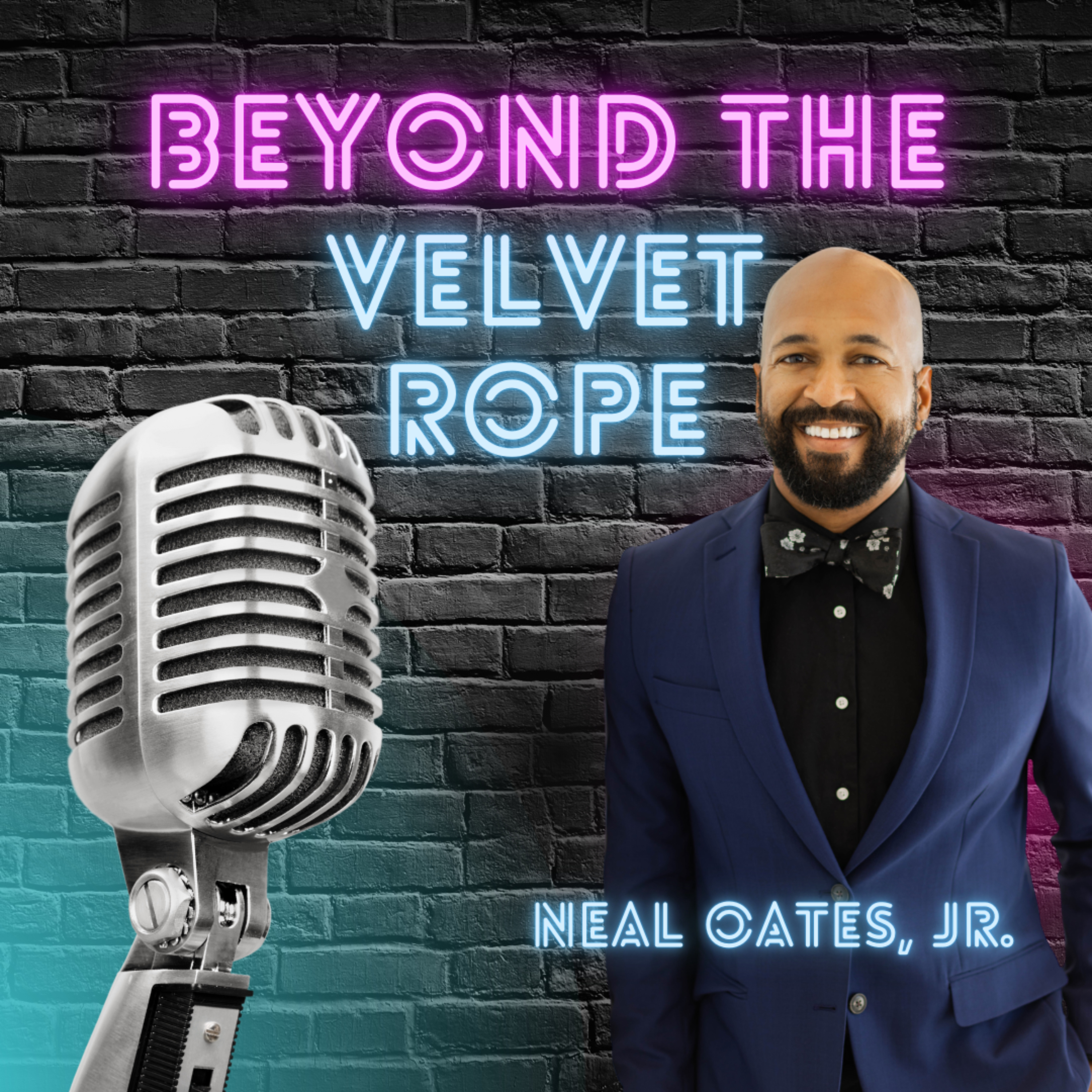
Beyond the Velvet Rope · Neal Oates, Jr.
Most high-ticket sales aren’t lost over price; they’re lost because prospects don’t see me as belonging at the level I’m asking for. When my $50,000 offer isn’t closing, the invisible barrier is often my own identity and the experience I project. Elite clients don’t just buy solutions; they buy confidence that I belong in the room, and that starts long before the call. In this episode, I uncover the hidden signals that make or break my ability to command premium prices. You’ll discover why competence isn’t enough; mastering my internal systems, my positioning, and my presence is what turns prospects into clients willing to invest at the highest levels. I reveal how to shift from being perceived as a vendor to becoming a strategic, irreplaceable authority. We break down key pain points: the high-ticket identity trap, how to craft an architecture of perceived authority across all touchpoints, and the importance of psychological resonance. I emphasize that aligning my systems, language, and standards ensures my business radiates confidence—making my offer feel like a logical next step, not a stretch. You’ll learn how to transform every interaction into a trust-building asset, eliminating doubt long before the sales conversation begins. This isn't just about closing deals; it’s about elevating my entire business to serve elite clients with clarity, consistency, and authority. If I’m ready to shed the struggle and start becoming an essential, confidence-inspiring leader in my space, this episode is my blueprint for turning competence into irreplaceability and closing high-level deals with ease. I am Neal Oates, Jr., a business strategist and authority architect, known for helping high achievers step into their next level. My insights will challenge you to elevate your standard, systematize your excellence, and position yourself as the obvious choice for premium clients. Whether I’m an entrepreneur, coach, or consultant aiming to hit $50K+ offers consistently, this episode will ignite my path to strategic mastery. Ready to stop chasing and start becoming? Hit play and start building the standard that makes my highest offer a no-brainer.
Neal Oates, Jr.: Your $50,000 offer may not be the problem. The problem may be the person your prospect experiences before they ever hear the offer. is a difficult truth, but it is a necessary one. When you are trying to work with elite clients, high net worth individuals, executives, founders, sophisticated business owners, or high value decision makers, the offer is only part of the equation. They are not just evaluating the service. They are evaluating the standard. They are evaluating the signal. They are evaluating the room you appear to belong in. They are evaluating whether your presence, your process, your language, your systems, your confidence, your digital footprint, and your overall experience match the level of investment you are asking them to make. That is where many high-ticket offers break down. It is not always the price. It is not always the prospect. It is not always the economy. is not always the sales script. Sometimes the invisible barrier is that the prospect likes what you do, but does not yet believe you belong at the level you are pricing. They may respect your skill. They may appreciate your knowledge. They may even agree that they need help. But somewhere in the interaction, there is a mismatch. A mismatch between your price and your presence. A mismatch between your expertise your environment. A mismatch between your offer and your operational maturity. A mismatch between what you say you can do and how they experience you. And when that mismatch is present, elite prospects hesitate. They may not say it out loud. They may not tell you directly. They may simply delay. They may say, ⁓ me think about it. They may tell you they need to talk to their spouse, their partner, their board, their team, or their advisor. They may disappear after what felt like a good conversation. They may compliment you and still not buy. This is what makes this so frustrating. Because to you, the value is obvious. You know you can help. You know you are good at what you do. You know your offer can create real results. You know the investment makes sense when compared to the transformation, the revenue, the clarity, the access, the time saved, or the opportunity created. But elite clients do not only buy because you are competent. Competence gets you considered. Authority gets you chosen. And at the $50,000 level and above, your authority must be experienced before it is explained. That is where the shift begins. You have to stop defending the price and start embodying the standard. Because when the standard is clear, the price starts to make sense. When the positioning is clear, the investment feels aligned. When the experience is elevated, the offer does not feel like a stretch. It feels like a logical next step. This is the invisible barrier. It is the space between what you know you can deliver and what your prospect is actually experiencing. So let's talk about how to close that gap. The first issue is what I call the high-ticket identity trap. This is what happens when a person has technical mastery but still presents as a commodity. They know the work, they can do the work, they have experience, they have results. They may even have the certifications, the testimonials, the years in business, the client wins, the case studies, the intelligence. But they are still being perceived as a service provider instead of a strategic asset. That is a problem. Because elite prospects are not simply buying a solution. They are buying alignment. They are asking questions that are often never spoken out loud. Does this person understand my world? Can this person operate at my level? Will this person save me time or require more management? Do they think strategically or tactically? Can they hold the room? Can they challenge me respectfully? Can I trust them around serious decisions? Will this relationship make me feel more confident or will I have to carry the weight of the engagement? That is what's happening beneath the surface. And if you are still showing up like someone who is hoping to be picked, you create hesitation. Elite prospects do not want to feel like they are rescuing you or your business. They do not want to feel like they are validating your worth. They do not want to feel like they are being convinced by someone who is emotionally attached to the sale. They want to feel like they are entering a serious partnership. With someone who already knows the value of the work. That requires a different identity. Not arrogance, not ego, not pretending, but alignment. You must become internally aligned with the level of client you say you want to serve. That means you cannot carry a $50,000 offer with a $5,000 identity. You cannot carry a premium offer while secretly. Hoping people do not question the price. You cannot serve elite clients while communicating like a desperate vendor. You cannot build high trust relationships while operating with scattered systems. You cannot ask people to make serious financial commitments while presenting an experience that feels casual, improvised, or unclear. Your identity has to mature. Your standard has to mature. Your presence, your language, they must mature. Your process has to mature. Because elite clients are not only buying what you can do. They are buying who they believe you are in relation to the problem they are trying to solve. That does not mean you need to act superior. It means you need to stop acting subordinate. There is a difference. A subordinate chases, a peer diagnoses, a subordinate explains too much. A peer better questions. A subordinate tries to prove they belong. A peer demonstrates value through perspective, process, and presence. A subordinate talks mostly about tasks. A peer talks about outcomes, risk, opportunity, strategy, and decision making. If you want elite clients to see you differently, you have to stop communicating from beneath them. You have to meet them at the level of the decision they are trying to make. That brings us to the second issue, the architecture of perceived authority. Your authority is not only built in the sales conversation, it is built through every touch point. Before someone invests $50,000 with you, they're likely going to look around. They will search your name. They will review your website. They will read your bio. They will look at your content. They're going to study your social media. They will look at your calendar link, your email communication, your booking process, your proposal, your payment process, your onboarding, your language, your consistency, your design, and your overall environment. They may not examine all of it consciously, but they are forming a picture. That picture either says this person is operating at a high level, or it says, this person might be good, but something feels underdeveloped that something is dangerous because elite prospects often do not need a huge reason to hesitate. A little friction can cause doubt. Outdated language can create doubt. A confusing website or an unclear offer can create doubt. A weak intake process creates doubt. A sloppy follow-up routine can create doubt. A proposal that looks thrown together can create doubt. A calendar link with no context can create doubt. As well as a sales call that feels like a pitch instead of a diagnostic can create doubt. A lack of visible proof creates doubt. A brand that feels inconsistent creates doubt. Now. Does everything have to be perfect? No. But it does need to be intentional. There's a difference between simple and sloppy. There's a difference between lean low level. There's a difference between direct and underdeveloped, between personal and unprofessional. Premium buyers can feel the difference. So you have to audit the entire experience, not your offer, the entire experience. When someone lands on your website, does it immediately communicate who you serve, what problem you solve, and why you are qualified to solve it? When someone reads your bio, does it position you as a strategic authority or just list your titles? When someone watches your content, do they hear a mature point of view or generic motivational language? When someone receives an email from you, does it feel organized? Clear and professional. When someone books a call, does the process feel intentional or casual? When someone speaks with you, do they feel like they are being diagnosed or sold? When someone receives your proposal, does it reinforce the value of the investment or simply summarize what you do? is the architecture of perceived authority. And if you want to close high-ticket offers. You have to stop relying only on your ability to explain yourself live. Your business should be positioning you before you enter the conversation. Your website should position you. Your content should position you. Your systems, your language, your client exist. Your client experience should position you. Your process, your proof should position you. When all of those things are aligned, the sales conversation becomes easier because the prospect has already been prepared to trust you. When those things are not aligned, the sales conversation becomes heavier because you are trying to overcome every weak signal they experience before the call. That is why scrappy entrepreneurial hustle can become a liability at higher levels. In the beginning, hustle helps you survive, but at the premium level, hustle is not enough. Elite clients do not want to feel your hustle. They want to feel your standard. They want to know that you are thoughtful, organized, prepared, selective, clear, structured, responsive, professional, strategic. They want to feel that you have done this before, even if their situation is unique. That does not come from hype. That comes from architecture. The third issue is psychological resonance and identity mismatch. This is where many sales conversations fall apart. People try to use common sales tactics with uncommon buyers. They bring pressure to people who value precision. They bring persuasion to people who value discernment. They bring urgency tricks to people who value timing and intentionality. They bring long explanations to people who value concise thinking. They bring neediness to people who are looking for confidence. That is why typical sales tactics can fail with high-value decision makers. Elite prospects are not allergic to buying, they buy all the time. They invest in advisors. They invest in access. They invest in expertise, in convenience, and speed. They invest in risk reduction and relationships. They invest in positioning and outcomes. So the issue is not that they will not spend the money. The issue is whether they believe you are the right investment. That belief is not created by pushing harder, it is created by resonance. Resonance happens when prospects feel understood at their level. Not just understood emotionally, understood strategically. They feel like you understand the complexity of the decision. They feel like you understand the stakes. They feel like you understand the risk. And they feel like you understand what they are protecting. They feel like you understand what they are trying to achieve. They feel like you understand why generic solutions will not work for them. That is why the sales conversation has to become a collaborative diagnostic process, a pitch. Not a performance, not a desperate attempt to say everything you know before time runs out. A diagnostic. That means your job is to uncover the truth. Where are they now? What are they trying to accomplish? What is currently creating drag? What has already been tried? What is the cost of not solving this? What does success need to look like? What is the decision really about? Who else is involved? What standard does this solution need to meet? What would make this investment feel obvious? Those are better questions. Because elite prospects do not want to be manipulated. They want to be helped in making a smart decision. If you approach the conversation like a peer, the energy changes. You are not begging for the business. You are determining fit. You are not trying to impress them. You are trying to understand the real issue. You are not pitching every feature. You are connecting the right solution to the right problem. You are not chasing approval. You are leading the conversation with calm authority. That calm authority really matters. Because the person who panics around the price often creates concern around the delivery. If you are nervous saying the number, why should they be confident paying it? If you overexplain the investment, why should they believe it is a standard? If you become emotionally attached to the yes, why should they trust your discernment? This is not about being cold. It is about being anchored. At the premium level, confidence is part of the service. Not loud confidence, not artificial confidence, grounded confidence. The kind of confidence that says, I know who this is for. I know what problem this solves. know what this work requires. I know what the standard is. And I'm not trying to force a fit. Word one does not belong. That is attractive to elite clients Because they are used to being sold. They're not always used to being properly diagnosed. Now, the fourth issue is internal frameworks for sophisticated systems. This part is not as glamorous, but it may be the most important. Your external promise cannot exceed your internal capacity for loan. If you promise premium transformation, but your internal systems are fragmented, the client will eventually fill the gap. If your onboarding is unclear, they will feel it. If your communication is inconsistent, they will feel it. If your deliverables are disorganized, they will feel it. If your schedule is chaotic, they will feel it. If every engagement has to be reinvented from scratch, they will feel it. Premium clients are not only paying for your brilliance, they are paying for reduced friction. They are paying for confidence. They are paying for a clean experience for the ability to trust that the process is being handled. They are paying for your leadership. That means operational excellence is not separate from sales. Operational excellence supports sales. Because when your systems are strong, your confidence is stronger. When your process is clear, your offer is stronger. When your onboarding is intentional, Your client trust increases. When your internal workflow is clean, your delivery becomes more consistent. When your delivery is consistent, your proof becomes stronger. When your proof becomes stronger, your authority increases. This is why I say business owners have to become leaders, not just operators. An operator does the work. A leader builds the standard. An operator reacts to what is in front of them. A leader creates the system that makes excellence repeatable. An operator depends on talent. A leader builds processes around the talent. An operator says, I know what I'm doing. A leader asks, can my client feel that in every interaction? That is the question. Can your client feel your standard before they ever get the result? Can they feel it in the first email? Can they feel it in the intake form, in the calendar experience? Can they feel it in the questions you ask? Can they feel it in your proposal? Can they feel it in the first session or in the follow-up? Can your elite client feel it in the way you remember details, in the way you guide the engagement? Because elite clients are often evaluating the intangible. They are listening for precision. They are watching for organization. They are noticing whether they have to lead you. They are paying attention to how much confidence the process creates. This is where many talented people lose premium opportunities. They have the skill, but not the system. They have the experience, but not the executive presence. They have the offer, but not the operational maturity. They have the desire, but not the discipline. And at a lower level, you may be able to get away with that. At a higher level, it becomes expensive. So if you want to close $50,000 offers, do not only work on the sales page, work on the standard, the intake, the follow-up, work on the proposal, the onboarding, the client journey. Work on the content. Work on the language and on the systems. Work on the way you make decisions. Work on the way you manage the relationship. Because every interaction is either increasing trust or introducing doubt. There is very little neutral at the premium level. That brings us to the fifth issue the shift from competence to irreplaceability. Competence means you are good. Irreplaceability means you are strategically necessary. Those are not the same thing. There are plenty of competent people. Competent coaches, competent consultants, agents, advisors, competent speakers or service providers. But competence alone does not command premium partnership. Competence gets compared. Irreplaceability gets protected. Competence gets shopped. Irreplaceability gets referred. Competence gets considered. Irreplaceability gets prioritized. If you want elite clients to invest at a higher level, you cannot only be good at your craft. You have to become essential to the outcome they care about. That means you need to move from task provider to strategic asset, from vendor to advisor, from option to authority, from being helpful to being hard, if not impossible, to replace. How do you do that? specialize, you develop a point of view. You build frameworks. You create language for problems your clients cannot clearly explain. You bring insight they cannot easily get elsewhere. You understand their world deeply. You help them make better decisions. You reduce risk. You save time, create clarity, improve outcomes. You bring structure to complexity. You become associated with a specific result, a specific audience, or a specific transformation. Generalists are easy to compare. Specialized authorities are harder to replace. That is why the market continues to reward people who can communicate deep specific value. Not people who say, I can help everybody with everything. That may feel expansive, but it weakens your position. Premium buyers do not want general help, they want relevant help. They want specific insight. They want someone who understands their situation. They want someone whose process feels built for the kind of problem they are facing. That is why your positioning has to be sharp. If you are a coach, what kind of coach? For who? To achieve what? Through what framework? If you are a consultant, what kind of consultant? For what kind of client? Around what kind of problem? What kind of measurable impact if you are a real estate professional? What kind of real estate professional? For what kind of buyer or seller in what kind of market? What kind of advisory advantage? you are a speaker, what do you speak about? For what audience? To create what shift? With what authority? Specificity creates premium. Precision builds trust. Frameworks create confidence. Proof reduces hesitation. Standards close gaps. That is the path from competence to irreplaceability. Now let me make this practical. If your $50,000 offer is not closing with elite leads, I want you to audit five areas. Number one, your identity. Are you showing up as a peer, a strategic advisor, and a trusted authority, are you showing up as someone hoping to be selected? Number two, your touch points. Does your website, content, communication, scheduling, proposal, and onboarding experience reflect the level of investment you are asking someone to make? Number three, your sales conversation. Are you pitching and persuading or are you? Are you leading a collaborative diagnostic conversation that helps the prospect feel understood at their level? Number four, your internal systems. Can your operational structure support a premium client experience? are you relying on talent and memory instead of repeatable excellence? And number five, your market position. Are you merely competent ⁓ are you becoming difficult to replace? Because of your specificity, framework, perspective, and proof. Those five areas reveal the invisible barrier touch points, conversation, systems, position. When those are out of alignment, the offer feels expensive. When those are aligned, the offer feels logical. That is the difference. Price resistance is not always about the price. Sometimes price resistance is really trust resistance. Sometimes it is positioning resistance. Sometimes it is authority resistance or experience resistance. Sometimes it is identity resistance. The prospect is not always saying, I cannot afford this. Sometimes what they are really saying is, am not yet convinced that this belongs at that level. Your job is not to argue. Your job is to align the standard because the right people will pay premium fees when the value, trust, authority, and experience are strong enough to support the decision. And that is where your work begins. Not with another script or another discount. Not with another desperate follow up. Not with another attempt to prove your worth. The work begins by becoming the person. Building the system and creating the experience that makes the investment feel aligned. That is how you close the invisible barrier. You do not simply sell the $50,000 offer. You become the standard that makes the $50,000 offer make sense. And I want to be very clear: this is not about pretending to be something you are not. It is about becoming who your next level requires, it is about letting your business mature. It's about letting your systems mature, your language mature. It about letting your leadership mature. It is about no longer asking premium clients to trust a version of your business that you have not fully elevated. Because elite clients are not just buying access to your skill, they're buying confidence in your standard. So here is the challenge. Look at your business through the eyes of the person you say you want to attract, not through your intentions, not through your effort or your behind-the-scenes struggle, through their experience. What do they see? What do they feel? What do they trust? What creates hesitation? What feels premium? What feels unclear? What feels aligned? And what feels inconsistent? What would make them say? This person understands my world. And what would make them quietly think, I'm not sure they are ready for this level of engagement. That is the honest audit. And if you do it well, you will find the barrier. Then you can remove it. Now, if this message is hitting home and you know you are capable of serving at a higher level, but your positioning, systems, message, or experience are not yet matching the level of client you want to attract, I want to invite you to take the next step. Schedule a strategy discovery call with me at worldrenowned coaching.com. This is not a casual chat. This is a focused strategy conversation where we look at where you are, what you are trying to build, what invisible barriers may be slowing down your premium opportunities, and what needs to change so you can move with greater clarity and authority. And if you know you need support. Becoming the clear choice for better clients. Enroll in the Elite Client Attractor Virtual Course at worldrenowned coaching.com. That training is designed to help you sharpen your positioning, clarify your message, build authority, and create a stronger path for the right people to move from discovering you to trusting you to choosing you. Do not keep blaming elite leads if your experience is not yet built. For elite decisions. Do not keep defending your price if your standard has not caught up to your offer. Do not keep trying to persuade people into a premium investment when your positioning should be doing more of the work before the conversation ever starts. Raise the standard, refine the message, strengthen the system, lead the conversation, become the obvious choice. Because the goal is not just to close a $50,000 offer. The goal is to become the kind of authority for whom a fifty thousand dollar offer makes sense. Remember, I love you. God loves you, and there's nothing you can do about it. And until the next time I see you or you see me, don't be average, be world renowned. Peace.