
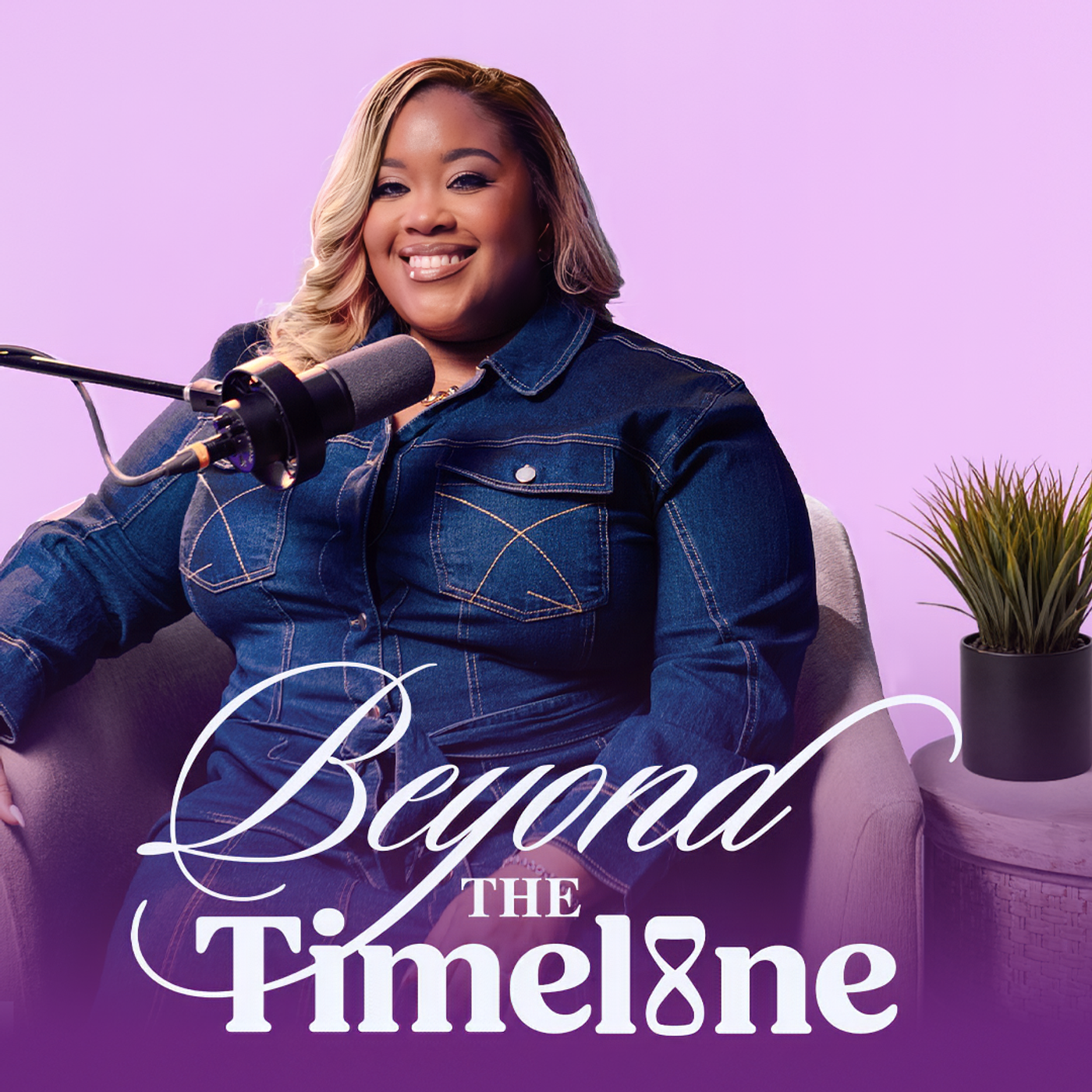
Beyond The Timeline · Beyond The Timeline
Cody D. talks with Dr. Zachary White, an oncologist, about what people need to know about cancer prevention and early detection. The conversation focuses on the rise of colon cancer in younger adults, breast cancer screening, and why Black communities are disproportionately affected by late diagnosis and worse outcomes.They also get into the bigger system around care access, including rural hospital closures, Medicaid, mistrust in medicine, and what families can do to push loved ones to get screened sooner. 00:00 - Why this conversation matters now 01:20 - How Dr. White’s mother’s breast cancer shaped his career 02:45 - Breast cancer survival rates and why early detection changes outcomes 04:08 - Mammograms, screening age, and family history questions 06:26 - Why breast cancer awareness still needs stronger screening 07:16 - Why Black women face higher breast cancer risk and more aggressive disease 08:38 - Social determinants of health and why zip code can affect survival 10:05 - Why prostate cancer is such a major issue for Black men 11:28 - Biology versus access in prostate cancer outcomes 12:49 - When men should start PSA screening 13:40 - Why PSA blood tests have replaced routine rectal exams for many patients 15:22 - What actually helps prevent cancer in everyday life 16:46 - Smoking, hookah, e-cigarettes, and cancer risk 18:14 - Exercise as a practical prevention tool 18:39 - HPV vaccination and cervical cancer prevention 20:36 - How to help men in your family take screening seriously 22:31 - The Tuskegee study and why medical mistrust still lingers 23:58 - Frustration with the healthcare system and wasted time in appointments 25:39 - What doctors are seeing around rising premiums and Medicaid cuts 27:54 - Why people are forced to choose between food, insulin, and care 29:38 - Possible fixes: advocacy, recruiting providers, and rural access 30:58 - Telemedicine limits in rural areas and the danger of long travel times 33:17 - Why rural emergency care gaps can turn deadly 33:46 - Why healthy habits still matter even if you prefer a holistic approach 34:16 - What colorectal cancer is and how colonoscopy finds it early 35:34 - Why processed food and food quality are part of the concern 36:23 - Fiber, fruits, vegetables, and the microbiome 37:20 - Chadwick Boseman and the reminder that fitness does not eliminate risk 38:38 - Colon cancer versus rectal cancer 39:13 - Where the prostate sits and what it does 40:12 - Dr. White’s final advice on prevention and staying educated 40:41 - Where to find Dr. White and how to reach him
CoCos Tea: Hey y'all, it's your girl Cody D. Welcome to another episode of Beyond the Timeline. This episode, I had Dr. Zachary White, the second, on the show, to talk about cancer. So a lot of times I told you guys that I like to go beyond the surface and go deeper. And so with my conversation with Dr. White, we talked about how colon cancer is on the rise for younger people. Like it used to be that you Would it typically get screened for colon cancer until you were at least 50 years old? But colon cancer is on the rise for people who are even younger than 40. We're talking about people who are in their 20s and their 30s. So Dr. White, who is an oncologist, really broke down the science as to what is happening, what is some preventable measures, and the things that we can be looking for to make sure that we protect ourselves from potentially having cancer one day. You know, the goal of my show was for people to be able to take away some gems, being able to learn something, but really. I also want to use my platform to inform people of ways in which we can better ourselves, whether it's through fed education, finances, but especially our health. So I hope you all are able to gain something from this episode and maybe give some tips and pointers to other people in your circle. Thank you all for checking out this episode. Welcome to the show, Dr. White. Thank you so much, Cody. It's a pleasure to be here. Thanks for having me. Yeah. Of course. Coming all the way from California. That's right. Yeah. Flew in a couple of days ago, and it's good to be back in the home city of Birmingham, Alabama right now. Absolutely. Yeah. So ⁓ I didn't mention a lot of this in the intro of your show, but the work that you do as an oncologist was inspired by your mom's own journey with breast cancer. Yeah. Yeah. So talk about that a little bit. Yeah. ⁓ you know, going back to the age of nine years old, ⁓ you know, I remember I was in the second grade and my mom was thirty-nine years old at that point. And she came home and said that the doctor said that ⁓ the lump that she had felt, ⁓ was di was biopsied and they diagnosed her with breast cancer. And it was really tough to hear that news. You know, I didn't really understand what was going on, ⁓ what was breast cancer. All I remember hearing was that she had a lump in her breast. And ⁓ soon thereafter they started her own chemotherapy, she underwent a a surgery as well as, you know, being me being kind of in the waiting room as she got the radiation ⁓ after the surgery. ⁓ and I really didn't know what was gonna happen during that. But she said, Zach, I want you to do the best that you can in school. I want you to make me proud. And that was my mission that I wanted to make her proud. And today she stands as a 23 year breast cancer survivor. And I'm so honored to have her in my life. And ⁓ it you know, it it's really remarkable that I can kind of look back at that situation and see what it felt like to be kind of a a patient's family member, not knowing what was going to happen. ⁓ but you know, today serving as a radiation oncologist, you know, to have that opportunity to hopefully transition my patients from cancer patients to cancer survivor, just like my mom, is such a, you know, incredible opportunity that I have. Yeah. So what are the survival rates with breast cancer? Yeah, so breast cancer is a very survivable ⁓ disease if caught in the early stages. So ⁓ you know, we look at greater than about 90% of the patients that are diagnosed with early stage breast cancer ⁓ are able to survive ⁓ well over the five, 10 year mark after their diagnosis. We've seen so many advances as it relates to breast cancer care, ⁓ so many research studies that have been done to one, make sure that we're taking care of the breast cancer, and two, to reduce the amount of toxicities involved with the treatment that we give for breast cancer. Mm-hmm. ⁓ so you know, one of the things that I definitely want to leave for the audience is making sure that we catch cancers at a earlier point. Particularly with breast cancer, we have mammography. ⁓ that is a you know, a really great tool that allows us to, you know, find the breast cancer tool. The mammogram tool. That's the best. That's the mammogram. Exactly. That's the mammogram. Simply lying, ⁓ you you sit in a on on a chair and ⁓ the machine itself. heard it squishes the boobs. It does. It does. That's what I heard. That gives us the images that we need and we take multiple views. So there's a screaming screening mammography that takes a couple of views, but then if we see something suspicious, we'll get another mammography, ⁓ mammogram and do some more views to get more ⁓ appreciation of what's going on. The screening guidelines have changed over the years. Yeah, I was gonna say I I heard that now they're saying women should get Their first mammogram at a younger age at 35 instead of 40? Yeah, so most of the guidelines have put the age at about 40 years old at this point. But the conversation definitely should be had if you ⁓ are younger than that, if you have a strong family history of breast cancer. ⁓ that is something that you know would warrant us to, you know, look a little bit earlier if need be. But ⁓ Well, let me ask you this. What is considered a strong family history? Because Somebody will be like, ⁓ does you know, does breast cancer run in your family? And for me, my answer is, well, my grandmother's sister had it. Is you know, if that's the only person I can point to, like you know, that's family history, right? But I mean, does it need to be a closer relative? Yeah, it should be a closer relative. ⁓ you know, you look at your mom, your grandmother, ⁓ even aunts ⁓ could be someone ⁓ that, you know, put you on that radar to say, Hey, let me be more villigent in making sure that I get this screening early. And oftentimes the screening mammograms can be done yearly or on a bi ⁓ annual basis every two years. So it's best to get that done. My mom, as you saw, she was, you know, before that guidance, ⁓ before that screening age. ⁓ she was diagnosed at the age of 39. ⁓ you know, many years ago we saw a lot of the guidelines were saying the age of fifty was the age ⁓ that women should start getting their mammograms. But research has shown that You know, a lot of younger patients are getting this, and so we need to be able to catch this at an earlier point so that we can get for that cu f get toward that cure. Right. I don't know if it's because I've been like desensitized by the amount of information that I have received over the years. Yeah. But I feel like breast cancer was maybe a bigger deal years ago than it is now, or is it that it I'm just realizing that it's more of a common conversation? Yeah, you know, I think most of the time we've Had so much, you know, marketing around this. A lot of the cancer societies, you know, are doing a great job of making sure that ⁓ women know that this is something that should be managed and managed at an earlier point if possible. So if you're palpating your breast and you feel some type of lump, talk to your doctor to get that checked out because you know we want to make sure it doesn't grow, because once it becomes stage four. ⁓ where stage four meaning it metastasized to other areas of the body, such as the brain, such as the bones, that makes it much harder to get toward a cure. There are a lot of treatments that have advanced to help out, you know, patients that have made it to stage four ⁓ breast cancer. But ⁓ let's get it at a earlier point here. Yeah. Where are we today with breast cancer rates amongst black women specifically today? Yeah. So we see that, you know, unfortunately black women are continuing to be at one of the top ⁓ in the gr in terms of groups that are being diagnosed with breast cancer. Why is that? And it sometimes we see that it there can be a genetic component. You know, we see that black women are more likely to be diagnosed with the more aggressive form. That's called a triple negative breast cancer. ⁓ triple negative, we look at different ⁓ kind of hormone markers. You look at Estrogen levels, progesterone, as well as a marker called HER2. And if those are all three are negative, that makes the cancer really much harder to treat and it is typically more aggressive. ⁓ So there's the biology side of it, but then there are other factors as well, ⁓ such as ⁓ you know, kind of social determinants of health. ⁓ many people have heard that word before ⁓ because ⁓ there are certain things in place where unfortunately where you live, access to hospitals, ⁓ environmental factors. Exactly. Those are all can put you at a a a the kind of work that you have, your education level. Yeah, yeah. All of those could put you, you know, unfortunately it w the way it's set up, ⁓ your zip code could determine whether you survive a treatment. Is your life expectancy too? Exactly. Exactly. So You know, w there's a lot of work that we have to do on a policy front. You know, as you've mentioned, you know, me serving as a White House fellow, that got my attention to how much work we can continue to do to help address these needs ⁓ for women that are diagnosed with breast cancer, men that are diagnosed with prostate cancer, and so many other health issues that we see across the state of Alabama and across the nation. ⁓ you look at ⁓ policies that need to be in place that make sure that You know, women that are living in rural communities have access to mammograms. We've seen so many hospital closures across the state of Alabama. Definitely. ⁓ and so this leaves, you know, folks that are living in rural communities ⁓ at at risk of, you know, not getting the screening that they need and ⁓ that can result in the them waiting and then because they don't want to have to travel forty five minutes to their closest hospital to go get that screening. Exactly. Yeah. Yeah, yeah. And Unfortunately, that delay could result into them being able to not get, you know, we could catch it at a a stage one versus, you know, them waiting, and that could result in the it being metastasized at that point. So ⁓ we have to make sure that we're continually, you know, funding these initiatives to have adequate screening for breast cancer, adequate screening for colorectal cancer, adequate screening for prostate cancer. You know, the ones that are in I'm naming right now are the top cancers that we're seeing in this nation right now. And so they're directly affecting, you know, our black ⁓ communities. They're affecting our rural communities really hard. And so ⁓ we have to be, you know, continue to raise our voice to make sure that, you know, we're representing them f ⁓ those people as well in DC and around this country as well. Right. So I do want to talk about prostate cancer a little bit because I feel like that is the cancer that I have heard black men get the most. Yeah. I feel like myself and a lot of people in my own circle of friends all know somebody who has been diagnosed with prostate cancer. What is it about that specific type of cancer that seems to be so common amongst black men? Well, the statistics are kind of speaking really loudly in terms of prostate cancer. We see that black men are at a 70% more likelihood of getting diagnosed with prostate cancer. Overall there the estimate is that one in eight men across the nation In general, will be diagnosed with prostate cancer. No matter the race. No matter the race. For black men specifically, one in six black men will be diagnosed with prostate cancer. And then on top of that, we look at the outcomes of those that are treated with prostate cancer. Black men are two times more likely to die from their prostate cancer compared to their white ⁓ compared to white men. So why why are they getting prostate cancer at higher rates and why is the mortal the mortality rate higher for them? Yeah. So we've seen that, you know, there's some there's many considerations and possibilities it is. You know, an one point is the biology. There, you know, people are you know, studies are showing that potentially, you know, prostate cancer in black men can act more aggressive, but again I see that there are other studies that have demonstrated you look at the study that was performed at the VA that was released a few years ago ⁓ with ⁓ men that were diagnosed with prostate cancer. And at the VA there's equal access to care. So everybody gets high quality care at the VA. ⁓ and we saw no difference in survival outcomes for black versus white men. Okay. ⁓ so you can't blame biology on that, that notion there. Right. ⁓ because, you know. There was equal access to care. Potentially, the lack of healthcare access in this country that we ⁓ that we're seeing could be the result of why black men are dying at a higher rate. Okay. ⁓ you know, so is access. Access is ⁓ definitely a big component as well. ⁓ you know, how can we make sure that, you know, the PSA screening is available for, you know, all men. when they meet that age of, you know, screenings. That they what what age should men start getting screenings? So fifty? In ⁓ in general, we say about forty five to fifty, ⁓ the guidelines, but if you're at a high classified as kind of a high risk, ⁓ such as black men, you should start at the age about forty five and maybe sooner. ⁓ So black men should just go ahead and get screenings at earlier ages just because of the determinants that you mentioned earlier. That's correct. We should the black men should be definitely be, you know, making sure that get a simple blood test. The PSA stands for prostate sensitive antigen. And so it's a simple blood test. I know there was a lot of ⁓ you know, confusion from, you know, gentlemen in in in general that, you know, the digital rectal exam is one of the things that scares I gonna say I think a lot of people assume that the only way to get screened is to get a physical exam from the behind. Yes, yes, yeah. So that is that used to be the case where we did that on almost every gentleman. Now with the PSAs, we can look at that PSA and if there's, you know, no abnormalities there, there's no need for a digital erectile exam. Okay. And so it's really important that, you know, men get at least get that baseline so that we know. ⁓ if there's any elevations, we wanna monitor that every about year to every two years to see if there's any elevations in that PSA that may warrant a biopsy or an MRI scan to try to see what's going on there. So even as they as as black men tend to age, they there's never a point in which they have to do both of their blood tests. shows that their nor their numbers are normal and there's never a need for them to have to get that physical exam. Usually not. Usually not. But if that PSA is continuing to rise, it's definitely, you know, a good sign for us to do a a simple digital erectile exam. It doesn't hurt. We you know, it takes about two seconds and ⁓ it allows us, you you think about the prostate itself, and the prostate is kind of a wall shaped ⁓ gland. And so ⁓ typically the cancer for prostate cancer arises in that peripheral zone and that is in that area right inside of the rectum there. So we as the clinicians can simply go in and kind of palpate if there's any nodules on ⁓ on top of that prostate gland and simply remove our hand if we don't feel anything and that's it. That's the simple ⁓ digital retur exam there. Gotcha. Okay. I didn't know it was digitized. Well, that's the kind of digital in your fingers. The digital. Yeah, yeah, yeah. Gotcha. Okay, yeah. Teach me something. Okay, y'all have them digitized directly. We have we just use our digits on our fingers to just palpate that. Gotcha. That makes sense. Okay. Yeah. What are some measures in general that people can take to prevent cancer? Because I have seen some people who have been diagnosed with cancer and they're like, ⁓ I'm going to change my complete lifestyle and make it holistic. I'm going to become vegan. I'm going to insert plants into my home. I'm gonna enter air filters and you know, and not to say that stuff doesn't work. Right. I'm just wondering how effective it is. Yeah. And then I'm wondering just in general what people can do before it gets to that point to prevent cancer altogether. Right. So as we've already talked about, screening is really important. So once you do meet those age ranges, ⁓ and like we talked about, getting those screenings as soon as you meet them. ⁓ can really catch it at a earlier point. But then what can you do to try to prevent this from happening? You think about kind of diet wise. How can we change our diets ⁓ you know so that we can prevent cancer, ⁓ less processed foods, you know, not having a lot of red meat in our diet. ⁓ obesity is a is a risk factor ⁓ for developing ⁓ cancers. ⁓ also, you know, we've seen a lot of studies that have proven that increased alcohol use, overuse of alcohol, can lead to a lot of cancers that we're seeing with cold colorectal cancer, breast cancer, even prostate cancer. limiting, you know, abstaining from smoking altogether. We've already established with many studies that smoking can lead to ⁓ a lot of cancers, particularly number one, lung cancer. ⁓ what about hookah? Because hookah's gotten really popular. Yeah. And I think there's a lot of misinformation out there around ⁓ the different types of effects that hookah has. But I think overall we can all agree that it's not the healthiest. No, it's not. But is hookah can that form I mean, can that create lung cancer too? You know, there have been yeah, I I'm not aware of any studies that definitively c link hookah to lung cancer, but you know, there could be some potential. ⁓ nicotine inside of the hookah. Right. So I would just say ⁓ stay away from the tobacco altogether. definitely not a fan of hookah. So let's just limit that. Even the e cigarettes as well. ⁓ I've seen that, you know, the use of that go up over the past few years. You know, there's a lot of things that are mixed into these in ⁓ these devices that we may not know about that can eventually lead to cancer in the future. So I would say kind of steer clear if you can. ex regular exercise is really important. You know, we have to stay healthy. ⁓ 30 minutes a day. ⁓ you know, one of the things that I've been kind of doing more most recently is, you know, using a treadmill and doing an incline ⁓ at three speed, do maybe about a 12 to 14 incline. And that burns a lot of calories and keeps you active. And I feel like I when I do that in the morning, My entire day is just energized after that. Yeah. Yeah. So would you say that for the most part it's just lifestyle in terms of cancer prevention? Yeah. Okay. Well, you do have other things as well. We let's talk about cervical cancer because cervical cancer affects a lot of young females. ⁓ and so ⁓ one of the ways that we can prevent cervical cancer is HPV vaccination. Okay. ⁓ there's the guidelines that show that ⁓ w if you take that HPV vaccination. We can prevent ⁓ development of cervical cancer. ⁓ because cervical cancer is usually ⁓ caused by an HPV virus, which is a sexually transmitted virus that almost about 90% of the world population has. So if we could do what we can to make sure our teenagers are getting that HPV vaccination, ⁓ that can be a way to prevent cancer. And lower that risk altogether there. How common is it for people to get that kind of cancer? Because I'm I'm gonna be honest with you. Yeah. I think that vaccination became available when we were teenagers. And my mom was like, I'm not letting you get that. Just don't have sex. And I was like, girl, ⁓ okay. But like eventually I'm gonna be having sex. So ⁓ you know, that was one of those things I was kind of like afraid of getting, but I wasn't really sure like how common it was. Yeah, well, we have to make sure that we get rid of that taboo. ⁓ because eventually, you know, that individual and we offer the HPV vaccinations to males and females. Right. So to prevent it altogether, ⁓ you know, the HPV vaccination has really shown that it has that ability to reduce ⁓ you know, the cervical cancer at a really, really high rate. And HPV can be found inside of the oral cavity. It can be found on the genitalia as well. And so when we give that vaccination, we're doing what we can to ⁓ you know, make sure that, you know, we prevent the cancer there. Okay. Now, I know that there have been reports out there about how, particularly with black men, they tend to get diagnosed with cancer in those later stages, like you mentioned. And I think a lot of it is because it's hard to get Uncle Paul to go down to the doctor regularly for his checkups, et cetera, et cetera. Yeah. What can people be doing to help get their family members engaged in making sure that they're going to the doctor regularly so that they can get a full panel screening just to make sure that everything is what it needs to be? Mm-hmm. And I think it's all about education and empowering the men. We have to talk to our uncles, we have to talk to our fathers, we have to talk to our brothers. And in the same way, when we were talking about breast cancer, talking to our sisters, daughters, mothers, our family, friends, letting them know this is important. This is something that is life and death. And we have to make sure that we catch these things at an earlier point. And so, you know, kind of releasing the taboo. A lot of times, ⁓ you know, I I've gone to different churches and talked about prostate cancer. And a lot of times the information that I'm giving to a lot of gentlemen, this is the first time that they've heard of, you know, potential treatment options for prostate cancer, whether that be surgery versus radiation. ⁓ a lot of times they're, you know, may not be monitoring that PSA is needs to be checked on a regular basis. And so when we can do our part and share this, you know, really valuable information with our family and friends. You know, that can really go a long way as to saving lives all together in our communities. ⁓ so we have to kind of break down that, you know, that narrative. But then also there's a part that the medical community needs to do as well. There's a large mistrust in the medical community, and we've seen that for many years. You know, we both went to Tuskey University, ⁓ the site of, you know, ⁓ in Tuskey, Alabama, where the Tuskegee syphilis study occurred. And You know, that happened in nineteen seventies, nineteen thirties and nineteen seventies. Forty years where black men were ⁓ studied to see the effects of syphilis and not giving the proper treatment the proper treatment that they that they needed. And so ⁓ years after that, ⁓ you know, that's fifty years now, there's still a large mistrust just off of that alone. Just off of that alone. I mean we talked about that during COVID. Everybody talked about they didn't want to get the vaccine because And they reference the Tuskegee syphilis study as their reason as to not getting the vac ⁓ the vaccine for COVID. That's right, that's right. So I think it's important ⁓ for the medical community as well that we kind of, you know, find ourselves go into the community, you know, be on platforms such as yours to be able to talk about the importance of, you know, making sure that these screenings are done, you know, the different treatment options that are available so that we can continue to build that bridge ⁓ between the patient and the provider. So that bridge doesn't have to be, you know, really established and try to be, you know, built for the first time when the patient walks in the room. No, the patient already knows ⁓ the care that they're getting because they see trusted individuals in the community. Can we pull to the side real quick and just have a side conversation about the healthcare system? Sure. Because one, let's just be clear, going to the doctor's not fun. Yeah. Like, Right. Regardless of how healthy or not healthy you are. It's not fun. Yes. Because you're gonna be sitting and waiting in the pa in the waiting room. Right. Then you get from the waiting room to the actual doctor's room. Then you gotta wait like another thirty minutes, forty-five minutes for a doctor, w and repeating everything you probably just told to the nurse. Yeah. And then they come in there asking the same question. And it's just like, didn't I just tell the nurse, X, Y, and Z, did you not read the notes? Why'd you go to school for 15 years if you're not gonna read the notes? You know what I'm saying? Like I'm just always trying to figure out Why is my time being wasted on top of the co-pays that I have to pay? Okay. On top of any labs, you know, I'm kind it's a wait now, I'm gonna say waste, but sometimes it feels like a waste of money and time when you are dealing with the healthcare system on top of, you know, the Trump administration just pe just passed the big beautiful bill where a lot of people's premiums are increasing. And we're we're not gonna know the full effects of that until ne well, this episode's coming out in 2026. But we're not gonna know the full effects of it until probably at least halfway through the year. It's gonna make some take some time to see the effects there. I just feel like it's gonna create create a a larger disparity in people going to the doctor. Yeah. Medicaid is is is going to be I I think slashed even more under this bill. That's where the some some of the projections are seeing. Yeah. Right. So I'm I'm just curious. So I mean in in Alabama, we already, like you mentioned, we already have an issue with the healthcare system having a a lot of pressure on it because there aren't a lot of hospitals here. Yeah. And I think a lot of other states are gonna start feeling the effects of it. So I'm just curious, like what are some of the conversations that ⁓ your community or your peers of other doctors are having about what's to come because I just think that things are going to get worse unfortunately. Yeah. There's, you know, we have seen in our yeah, the patients that come in and they've talked to us and they're really concerned that the r kind of changes that we're seeing with the big beautiful bill and you know, other changes ⁓ are gonna have their premium skyrocket. And I I I did kind of look in the Big Beautiful bill myself and I saw that there's provisions to cut a lot of ⁓ people that are on Medicaid. And I have huge concerns there because ⁓ you look at the state of Alabama and you know, Alabama was one of ten states that chose not to expand Medicaid. That left Well haven't been expanding Medicaid for a long time. Yeah, yeah. And so that left a hundred and seventy Alabamians ⁓ from being able to have the health care that they need. 170,000. 170,000. Yeah. Yes. Exactly. And so you know, that puts them at risk. And we've talked about, you know, as it relates to cancer specifically, ⁓ you know, these patients may not be able to get the screenings that they need, may not be able to come into the doctor and have that regular checkup and be lead the healthy lives that they deserve because they don't have the coverage. And this may lead to them coming in when things are at those stage fours when they start noticing things are really bad. And then on top of that, we've seen so many hospital closures as well, ⁓ as it relates to the kind of reduction in ⁓ Medicaid expansion in our state. ⁓ you look at it was we might talk about later the kind of ⁓ maternal mortality rates that we've seen continue to increase. there are a lot of maternal hospitals that are closing in the state right now. And that leaves about one third of Alabamians that are in what's known as maternal care deserts that have no opportunity in within mount 30 minutes ⁓ to get the the care that they need. And so ⁓ when I think about the potential risk of having, you know, so many people cut off from Medicaid, I I I think about the people that some of my patients that come in and say, Doc, you know, I I don't have a lot, but I want to make sure that I'm here to take care of my family. I, you know, I even serving ⁓ I previously worked at CVS pharmacy and I was a a pharmacy technician before I ⁓ went into medical school. And seeing some of the patients that come in and had to make the tough choice ⁓ between putting food on the table and paying for their insulin. That's no choice no one in America should make. And so we have to make things affordable for people. We have to make sure that we're creating policies that my patients are able to, you know, lead and live ha healthy lives and be able to take care ⁓ of their families at home. But what do you guys think the solutions are? I mean, like what are some of the things that the healthcare industry is talking about doing to help alleviate some of these issues? Because I think a lot of people right now are frustrated because they feel like Okay, things are get becoming more and more expensive. Yeah. Things are becoming more and more inaccessible. There seems to be a a larger gap between like the haves and the have nots in terms of just access in general. And so I think some people are just like, okay, is there somebody out there who is going to advocate for the average person? Somebody who is going to say, Okay, this person does not have the adequate health care or maybe they do have a diagnosis of of cancer for the first time and maybe their health care is not covering that now because it's too expensive for their health or their health insurance is choosing not to cover it because it's costing so much. Because everything's just going up and up so I guess I'm just wondering like, is there anybody or do you know of anybody who is saying, Okay, we're going to try to fill in the gaps. Yeah. I mean there the the medical societies across this country are continuing to raise their voices on Capitol Hill, you know, at the White House as well, to try to really advocate for our patients. ⁓ you know, I I wanna continue to be an advocate for the patients that I'm treating as well. ⁓ but you know, I in you talk in terms of solutions, you know, I think about ⁓ a lot of the closures that we've seen in terms of the hospitals. ⁓ what happens to those folks? They may have to travel sixty, a hundred miles. And I think a lot of I'm sorry, not to cut you off, but I just also think that a lot of people don't understand As someone who is from and currently lives in the Birmingham metro area, I've had to check my own privilege and realize like, okay, yes, I have close access to UAB and a lot of other hospitals that are in the area. However, if I'm talking about having a baby anytime soon, that's gonna probably make it a little bit more difficult for me to see my provider because there are an extra surplus of I don't know twenty, thirty thousand other people who are coming to the same hospital now because they don't have access in their local areas. Right. And so it's going to become a drain or or really just become a little bit more difficult for us to get. It's gonna strain the system. Exactly. Yeah. Yeah. Well I mean and then you look at ⁓ those, you know, persons people that citizens that live in those rural areas, maybe we can, you know, try to expand telemedicine out there. But telemedicine only goes a long way if you don't have the broadband to connect to talk to the doctors when you need to. Right. ⁓ and that may not help when you need to deliver ⁓ you know, a baby. ⁓ when a person has to drive, you know, a hundred miles to get their ⁓ baby delivered, you can think about the risks that continue to rise each and every mile that they drive to the closest hospital. Right. And it makes it tough. ⁓ even You know, i our experience being at Tuskegee. We lived in a rural area right in Tuskegee, Alabama, and unfortunately saw some of the ramifications of that. ⁓ back in ⁓ twenty twenty-three. Unfortunately, ⁓ Bob Bobby BJ Smith. No, it's twenty thirteen. Twenty thirteen. Twenty twenty thirteen. September twenty thirteen. ⁓ and un ⁓ Bobby BJ was at a off campus event and we were A lot of us were there. ⁓ I'm not sure if you were I wasn't there. Okay, yeah. I was outside there and gunshots rang and Bobby was shot in the back. And it took the ambulance nearly twenty to thirty minutes, maybe even more, yeah to get to Bobby to give him the health care that he needed. And then think about the the They still had to drive him to the hospital too. So that was a hour at least round trip, yeah. Exactly. And unfortunately BJ passed away and ⁓ This is the things that we're seeing even in twenty twenty five. And we protested after that. We we protested the university and said we need better emergency adequate health adequate emergency health care available for students. Exactly. Because what if this were to happen again? Yeah. And we went to We went to the city hall and asked for more and you know, they told us we don't have the funds. We don't have the funds. And this is not something that No parents should hear, no students should hear, no one in the United States should hear that they don't have access to the healthcare that they deserve. so you know, whether it's, you know, trying to create opportunities to really recruit more folks to work in those rural areas, how about student loan forgiveness ⁓ for doctors, ⁓ OBGYNs to go into those rural areas and give them the care that they need, primary care. We see a shortage there. but you know, and I look at my field of radiation oncology, I need a a linear accelerator, which is a machine that delivers the radiation to the the cancer to in order to do my job. I can't carry that everywhere with me. And so that that you know, we're in a situation in this country where people are raising their voices, but ⁓ we have to continue to raise our voice because ⁓ this is life and death in this country and we have to do what we can to make sure we save our ⁓ people's lives here. Anything else you want to ask specifically about ⁓ cancer treatments or what people can be doing to ⁓ well, did you ever talk I asked you earlier about people who choose to kind of adopt that holistic lifestyle and and if it is something that actually kind of helps or works with cancer treatment? Yeah. I think it's important that you have a healthy lifestyle overall. Okay. you know, unfortunately as it came to colorectal cancer, we see a lot of younger patients being diagnosed with this. Wait, explain exactly what that is. Yeah, colorectal cancer. cancer that is within the rectum or the colon. ⁓ and so typically ⁓ this is found with a screening ⁓ tool such as a colonoscopy, which is a camera that is used ⁓ you typically lightly sed sedate the patient and we ⁓ got the scope through the kind of rectum ⁓ and scope and go all the way up throughout the colon to see. if there are any polyps or if there are any cancer. The polyps can sometimes be precancerous. And so with the colonoscopy, we're able to snip and take away those polyps and kind of prevent the cancer in essence when we ⁓ do see them. So it's really important that ⁓ you know we ⁓ educate folks that the screening age is 45 for regular ⁓ risk individuals that number was decreased as well ⁓ because we saw that a lot of younger patients are being diagnosed with colorectal cancer. But why is that? Why Yeah, yeah. I feel like I'm gonna be honest with you, I feel like so many of the cancers and just health issues that we have in this country that are becoming more prominent is because our food system is terrible. I feel like There's a lot of processed foods. A lot of processed foods. I mean, I I think that even when you are trying your best to be healthy, you know, I was watching a video today on TikTok of this guy who said he was a I think a a fish farmer. Or I forgot exactly what he did. He did something with catching fish. But he was just saying, hey, when you go to the store, please look to see where the food comes from and if it's wild cotton. versus farm raise. Which I had heard before, but I didn't know like the place in which the fish came from was just as important as understanding like wild cot versus farm race. But I say all that to say, even when you are trying your best to be healthy, there's still so many layers to tr ⁓ of of food being potentially hazardous that we're not even aware of. Right, right. Because America just be letting us eat whatever. Yeah, yeah. We gotta change that. We gotta change that. You know, we gotta you know, just making sure that you're eating a lot of more fruits and vegetables, increasing your fiber is really good. Yes. ⁓ you know, and we've s also seen a lot of studies that show that ⁓ kind of changes to the microbiome can ⁓ lead to that. And that could be changes in your diet or ⁓ individual that may take a lot of antibiotics early on and that can change the microbiome a bit. People don't know what microbiome means, Dr. White. Yes. What does that mean exactly? It's kind of the microorganisms that are inside of your colon that do kind of the job to make sure your colon stays healthy. So like a healthy gut. That we've heard okay exactly, exactly. So ⁓ you know, we want to make sure that ⁓ we can do what we can to prevent these cancers from happening. We saw, unfortunately, a few years ago, ⁓ the Black Panther, ⁓ Chadwick Bozeman. Yeah, Chadwick Bozeman. ⁓ unfortunately ⁓ passed away at the age of 43 from colon cancer. And you know, you can be super fit and unfortunately be diagnosed with this crazy disease. And so ⁓ that's why it's important that we, you know, educate people about the screenings involved. ⁓ and when it is cult, you know, they're kind of a multi-treatment options. you know, having surgery if it's inside of the colon to take that ⁓ section of the colon that has the cancer out. I feel like that's gonna mess you up for the rest of your life, though. Well, they're able to kind of connect ⁓ you know, the colon back together. It does have some side effects. ⁓ I feel like you'll never be able to go to the bathroom the same after that. There are some, you know, looser stools that we might see ⁓ after the after the surgery. I'm no surgeon, but ⁓ I know when we do ⁓ for rectal cancer, when we do give the radiation, there can be ⁓ kind of loose stools that we notice after the treatment. So what's the difference between rectal cancer and colon cancer? Because it all is the same system, right? Yep, it's all in a digestive tract. It's just kind of where along that tract it is. ⁓ so if you think about ⁓ once you eat a food, it kind of goes inside of your mouth into the esophagus to your stomach. Once it leaves the stomach, it goes into your small intestines. After it leaves the small intestines, that's when you get to your large intestines, also known as the colon. And so it kind of moves along that tract, and a lot of the nutrients are being pulled up out along the way. Once it leaves the sigmoid colon, that's where you have kind of your rectum. ⁓ and that is ⁓ the location ⁓ where ⁓ kind of then you have your anus and release your fecal matter there. But ⁓ it's just the kind of location along that track. Okay. Yeah. I feel like prostate is kind of in there too. No. So yeah, the prostate gland is. That's at the very end. Well, the prostate gland is not part of the digestive tract. It is ⁓ it's part of the it's like sitted situated below the bladder itself. ⁓ so it's that small gland, and you have your urethra, which is the channel that allows the urine to flow through. and so the prostate gland is kind of a small gland that Its job is to produce ⁓ fluid for the semen. So ⁓ it does have its utility there. Interesting. Yeah, yeah. Dr. White, ultimately, what is it that you want people to know about cancer prevention altogether and also tell people where they can find you so that they can maybe ask ask you questions directly. So overall I want people to know that, you know, I want you to stay educated about your health and be aware of what's going on in your body. So staying active and having those regular checkups, having that conversation with your doctor to make sure that you're undergoing all the screening that you need. And then also living a ⁓ a very kind of healthy lifestyle, you know, working out, eating healthy foods, lots of fruits and vegetables, reducing the amount of fried foods, reducing ⁓ the amount of red meats and processed foods in your diet. and you know, overall, just be educated and share that information with your friends. We can all help our communities out by making sure that we are aware of the different guidelines and screenings. And so when we do that, we can make a really big difference ⁓ in our communities and and and and live much longer and lead ⁓ healthy lives. ⁓ so I want folks to check me out. ⁓ they can ⁓ check me out on LinkedIn at Zachary B. White the second. ⁓ also can follow me on Instagram at underscore zak dot white. ⁓ and also follow me on Twitter at ⁓ or also known, formerly known as Twitter. ⁓ now you still on Twitter? I'm not really using it that much. So ⁓ but you might can message me on there at Zachary B WhiteThesecond. ⁓ and feel free to email me ⁓ ZBW205-250. At gmail.com. Happy to answer any questions that you might have. 205. Always repping for the 205. That's right. Well, thank guys so much for listening to this show. Make sure that you subscribe, rate, rate, review. Make sure you tell everybody about this show. And also make sure you hit up the Patreon. Remember, patreon.com slash Cody D on Air. Thank you so much for checking out the show. Thank you, Cody. Thank you, Zach. Yes.