
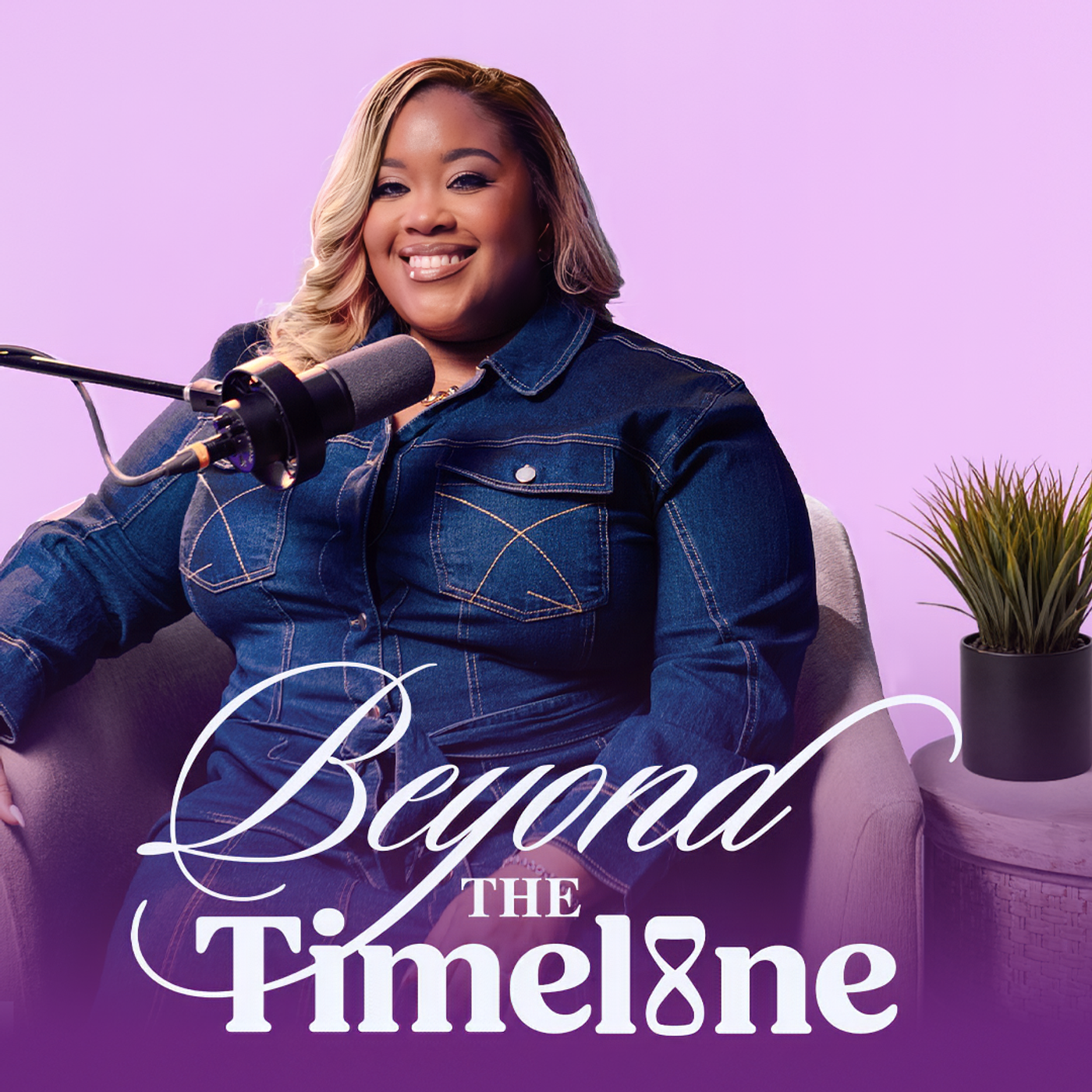
Beyond The Timeline · Beyond The Timeline
In this episode, Cody D. sits down with Jessica Norwood, financial innovator, entrepreneur, and founder of Runway Roots, for a powerful conversation about economic justice, reparative capital, and the future of Black wealth. Jessica explains why closing the racial wealth gap requires more than individual success—it demands systemic solutions, intentional investment, and communities willing to build together. Drawing from her journey from politics to financial innovation, Jessica shares how she developed Runway Roots to rethink access to capital for Black entrepreneurs and historically underserved communities. Together, they explore the long-term effects of systemic barriers like redlining, the importance of self-belief, and why creating generational wealth requires both personal responsibility and structural change. Whether you're an entrepreneur, investor, or someone passionate about economic empowerment, this conversation offers practical insights into creating sustainable wealth and stronger communities. Jessica Norwood's journey from politics to entrepreneurship and finance Why she founded Runway Roots What reparative capital is and why it matters The lasting economic effects of redlining and systemic discrimination Why traditional funding models often fail Black entrepreneurs Building wealth through community investment instead of competition The relationship between entrepreneurship and economic justice The importance of confidence, ownership, and self-belief in wealth creation Strategies for creating and sustaining generational wealth How technology and the global economy create new opportunities for Black-owned businesses Why collaboration is essential for long-term economic success What individuals and communities can do to strengthen financial futures Key Takeaways Reparative capital prioritizes communities that have been historically excluded from wealth-building opportunities. Generational wealth is built through intentional investment, ownership, and assets that can be passed to future generations. Community collaboration is one of the strongest drivers of sustainable economic growth. Entrepreneurship alone cannot solve systemic inequality without broader structural change. Economic empowerment begins with believing in your own value while investing in the success of others. Long-term wealth requires both individual action and policies that address historic inequities.
CoCos Tea: Our guest today is a financial innovator, entrepreneur, investor, and philanthropist. She is the founder of Runway Roots, an organization that provides startup capital for black founders. She's also written a book called Believe in You Money, posing the question: what would it look like if the economy loved black people? She was also listed on Essence Magazine's 50 Entrepreneurs to Watch. And now she's sitting here with me in the studio. Welcome, Jessica Norwood. Thank you so much, Cody. Okay, so I don't know if you remember, it's been a little over a year since we last met in person for the first time. Right. Okay. And in the hotel, I was like, Can I give you my pitch for my show? Do you remember that? I do. Okay. I was trying to get some money. How did you work? Yeah, well, we're still working on it, right? Okay. And so now we're actually here in the studio. We are here. I'm actually doing the show now. I am. This is exciting. Really? Yeah. I mean, from a year ago to now, and it's like come to fruition. That's really incredible. So congratulations, congratulations. Thank you. Congratulations to you on all of your success. Thank you. As I mentioned in the intro, you are a financial investor. You've written books about money, but specifically in the context of the black experience. How did you become an expert in that? Mm, such a great question. How did I become an expert in that? I I think growing up in Alabama, so I'm from ⁓ Pritchard, Alabama. So I used to always say mobile, but I like for people to know Pritchard because it's it has a really specific reference point. Yep. ⁓ it's a majority black city and my father was the mayor there. So growing up, I really had a lot of sense that ⁓ there was an enormous amount of talent in the community. But I also saw, like everybody else, like that brain drain, if you will, where a lot of talent was leaving the area. And I understood that our communities had poured so much into us. In fact, I would consider our communities to be our first investors, really. Whether you're going to church or you've got, you know, a praying aunt or grandmother, whatever it is, people are giving you their best. And the expectation is they want a return on that investment. They want good citizens. They want a great community. And so I have always been thinking about, well, why is it that communities like a Pritcher, and there are many other communities that same size, this type of makeup, why don't we get a fair shake? They're talented people. People have poured into us, but yet we don't see the real development happening. We don't see the ⁓ talent really blossoming the way we would expect. And so I was always really curious about how do you solve for that problem. Just growing up and looking at an enormous amount of talent in the people, but not having the infrastructure or systems that really poured into them. And so I started thinking about what it means to believe in the people around you and It turns into a philosophy of my investment, believe in you money. Yeah. And you mentioned that you're from Pritchard, but you also have been shaped a lot by your time in Chicago, Boston, Oakland. And so you saw some of those same themes in the black communities of those cities. Absolutely. It doesn't really matter if it's a large city or a smaller city. I think when you start to look at some of the systemic challenges. That can happen in a big city like Chicago or can happen in a small city like Pritchard, where you've got an enormous amount of talent, but they don't get the level of support and investment by the entire structures around them. And it reminds me a little bit of this ⁓ poem that I used to really love as a little kid. ⁓ and I would I would recite it, and it was from Langston Hughes called Harlem. And there's a part in the poem where he talks about. What happens when a dream is deferred, right? Does it shrivel up in the sun like a like a raisin in the sun? And it would always play in my head about what the impacts are to our communities and to the people when your dreams are deferred, when they've been left aside. And we have a history in this country of making black and brown bodies disposable. And so in that disposability, we are saying, well, you don't really matter. You don't have anything to contribute. And what does that do for the psyche of a person? And what does that do for our communities? And that can happen, as you said, in Oakland, Chicago, Boston, where I've been really honored to be able to work with a lot of folks in those communities to solve these kinds of problems. That same question that Langston Hughes posed in that poem and you mentioning people feeling disposed of. I feel like a lot of people are probably feeling that right now. Yeah. Because of the things that are happening with the Trump administration and everything that he's dismantling, but also because he is directly responsible for the current job market and for hundreds of thousands of black women being without jobs right now. And so I'm wondering from you, what do you think people should be doing right now? I mean, there's a lot of people that I'm hearing, including myself saying I want to be an entrepreneur because getting a job in corporate or really anywhere just doesn't feel safe or sustainable. I want to leap out and and do my own thing. Does that feel like the smart thing to be doing in this moment? You know, it's a it's an incredibly challenging time as you've mentioned. I mean, we've gotten data reports and I think the numbers are even ⁓ grossly understated where three hundred thousand black women have been pushed ⁓ ⁓ out of their jobs and particularly when you look at the government jobs which I would say the president has the most management over. ⁓ we see a lot of you know black and brown people particularly women who held those jobs and they were s they were jobs that ⁓ created sustainability for themselves and their families and so those things have been completely washed away ⁓ and I think about this question that comes up often for me about generational wealth, right? People often ask me, how do we build generational wealth? Maybe it's entrepreneurship, maybe it is all these different things, real estate. But the only significant way that you can build generational wealth is that you had wealth to begin with, because it's called generations, meaning it passed forward to you. And then you build on it and build on it more. So the idea that you're starting right now with the idea of building generational wealth isn't actually what generational wealth is. Generational wealth means that these things would have been passed to you. So the only ⁓ indicator of being had getting generational wealth is wealth already. When we compound this with the fact that so many people have been again, ⁓ you know, disposed of in a lot of ways, have have, you know, have been rendered as if they don't have anything to produce. And so they've lost jobs and employments. Then the question really becomes for them, like how do they really build that wealth if this is what they're after? And I think the answer is always bet on yourself. Always believe in yourself and look to your community. And I think that's something that's starting to change right now. And I hope for the better, where we stop thinking of ourselves in isolation. And we start recognizing that our power is in each other and community, whether that is organizing together to stop folks from firing you if you're gonna be, you know, do some labor organizing. or it might be deciding to go into business together, maybe you do a consultancy and one person does this and one person does that, but putting your skills together and using that to fight against these big moving systems or ideas that would say you don't matter. you're not valuable. It's not, you're not necessary. You shouldn't contribute to this community and to this world. Those are the things that we have to absolutely push against. And the best way to do it is believe in yourself, bet on yourself, and work together. I want to take a step back a little bit because you've told me to bet on myself. Yes. And I know that that is something that you preach to your runway ⁓ your runway community and Maybe you could give me a little bit of insight with what led you to even start Runway Roots because you have a team that is full of women of color who are actively working to help the mission that you have created around helping black people h find that capital so that they can fulfill their dreams. So what inspired you to start Runway Roots and what where do you see it going in the era of Trump? And I keep mentioning Trump because I really do feel like this conversation is important as I feel like a lot of black people are trying to find their footing in this unstable economy. So I'm not trying to give Trump a whole bunch of, you know, a whole bunch of credit here, but I just think that the the conversation is important in the context of that. Yeah, yeah. Well, I think the first thing to land is that we might want to attribute it to this particular presidency, but I think you've gotta also put into the mix the growing changes in ⁓ in general in demographics technology. There's so many other things that are moving climate change. There's so many things that are changing the way that we do our work, the way that we think about how we organize ourselves. And so it might be the easiest thing to really say it's this administration, but a lot of these things were already moving along before this happened. And so I mentioned that because I would say for anybody who's listening, To not treat this episodically, to not treat this as if, ⁓ when this administration is over, then it'll go back to where it was. We're not going back. And so it this is a season where everybody has to reinvent themselves. And some people are better at it than others, right? The folks who are going to be good at reinventing themselves are going to be able to recognize again that they're going to bet on themselves, they're going to work with others, and they are going to do it even when they're scared. Right. Do make the move, take the plunge, take the risk, because I bet on myself. And I'm, yeah, I'm nervous. Yeah, I'm scared. Do it anyway. So it's important to know it's not changing. This is the future. Business is going to be happening in in the social media streets, if you will. Technology is going to continue to advance, where it's going to change the way that we work and how we think about our work. And so everybody has to really be prepared for that. There are going to be more and more cuts going on as time goes on. And so, what do we do? And how do we find ourselves to be really, you know, really useful? Runway started 10 years ago. ⁓ I I started it 10 years ago. As you mentioned, we have an incredibly talented group of women and a guy on our team. And ⁓ they're some of the best in the business and we focus on something called reparative capital. And reparative capital is a little bit different because people may have heard of venture capital before, or you might have heard of impact investment capital. But the difference between venture capital and reparative capital is that reparative capital does three things. First, it centers the people who have been harmed and marginalized by financial malpractice. And what we know is that a lot of our entrepreneurs and community that we support, they don't get access to the kind of money that they need, not because the business is bad, not because they're, but because there has been systemic malpractices going on where we talk about red line, we talk about all the things that banks have done. Those things have compounding effects on why it is you don't have the wealth right now and the wealth to get your business going. So we start from centering those who have been harmed. And the difference is that in investment, what people mostly talk about centering is the capital itself. Like I can't afford to lose that money. Or or we center the capital holder, you know, such and such bank can't afford to take this risk. But my question always is, back to this, you know, what happens when a dream is deferred? Can we afford to to take the risk of not making the investment? Because we look at our communities and we see things falling apart. We see buildings in disrepair. We see people who are lethargic. They don't even feel like they are even a part of anything. I think we have to make the investment. I think it matters. So we center the people. The second thing is that we often say this does not work unless you are personally, whoever's the investor and the entrepreneur, each on each side of the coin, has to be doing their work to undo. The racism, the shame and blame around money. Everybody, no matter if you got a lot of money or you got a little bit of money, everybody is carrying some shame or some blame or something about the money. And you've got to be constantly doing your work to unravel that. Because how can I bless you with some resources if you don't believe that you deserve to be blessed with those resources? So you've got to do that work. So that's the second part. Doing that self-work on the investor side and the entrepreneur side. And then the third thing is doing the systemic change, making sure that it never happens again. And so portfolios like mine at Runway Rooted, where we have the rooted fund, it's a $50 million reparative capital fund. It's non-extractive, it's long-term, it's patient capital. It does all the things that I've said. And it is moving in a way to systematically challenge how things are done. So we do underwriting differently, we do policies and procedures differently. That's together at the basis what makes up reparative capital. By contrast, venture capital is a zero-sum kind of game. It's it's meant to, it's like a gamble. I'm gonna take on 10 businesses, I'm gonna put a little bit of money into those businesses. And if one wins and the other nine fail, so what? I got I got my, you know, my my zebra unicorn, whatever, got my return to the portfolio because the one thing shot off, but I've killed nine businesses along the way. And everybody is scrambling to try to get in on venture money. Well, venture is also going to usually position you to grow in a pace that you might not want to grow. Because they're not prepared. Is that why you're saying that? Well, they the the when they want the return on the money, if I put ⁓ if I put a million dollars in, I want you to give me that million dollars back fast. So you don't get to grow at your pace anymore. Now you grow at the pace that I want as the investor. I also take a board seat. So I am going to make sure you're going to do it the way I want. And if you don't do it the way that I want, I will put you out of your own company. That's the difference. And so we're saying we cannot afford to have that kind of predatory action in our communities. We need reparative money. And so Runway has ⁓ made ⁓ investments in 102 businesses all around the country. It doesn't matter what kind of business, if the numbers look good and the person is doing their work to be able to handle taking on this money, then we want to make those deals and we're not. We're not venture, we're not trying to take over a company. Again, we believe in repairing the damage that has been done. We believe that communities like ours deserve investment and people should feel like we believe in them. Mm-hmm. And so I'm sure you get pitches all the time from people. I do. So how do you decide who you choose to invest in? Like is if there is a I don't know, a perfect scenario. I mean, no business is perfect and no person is perfect. So But I mean the most ideal potential business that you would wanna invest in. You know, I don't have an ideal potential business. I I'm I'm learning every day and because I am industry agnostic, I'm learning about all kinds of deals. ⁓ you know, I've done vegan company ⁓ vegan food companies, I've done ⁓ apparel, I've done cosmetics, I've learned I've done Food and agriculture. So and each one has a different complexity. ⁓ each one has different seasons, different buyers, different different things going on. So I have to learn every time we do one of those deals. But what I will say that is consistent across the board. The first thing, ⁓ and there would be three things, you're going your team Whatever business that you're doing, whether you're the person who does all three things that I'm going to mention, or you've got these folks as partners or collaborators, I am going to be keen, you know, listening in for these things. One is does the person have a technical expertise in what they're talking about? So if you decided that you wanted to do a cosmetics line, but you never be the face before you don't know you don't know anything about cosmetics or you're not a chemist or there's nothing that technically would signal why you're doing this business. I would I'm gonna raise a little like, hmm, how did you arrive at cosmetics then? Doing this business. Right. So a technical expertise ⁓ is going to matter to me. The ability to sale. Now s people think you can just phone it in. This is not one of those if you build it, they will come kind of things. You've got to know your market. You've got to know how to sell your product and you've got to be good at it. And I want to see because you're pitching to me if you're good, if you can sell, then you're pitching it to me and selling it to me. I want to know: can you do this? Can you get me excited? But also, do you understand your market and can you speak to that market very well? So technical expertise, sales, and then the third is. Back office general operations, the nasty grinding work of do you know your numbers? Do you know the cost of goods and services? Do you know what this, you know, numbers? Do you have a strategy for how you're going to manage your money? What happens when this comes in? Just the overall operational pieces. So you might say, okay, I have a CFO or I have an operations, but often I find the person who's great at sales might be charismatic. terrible in operations or could be technically great, terrified to speak. So I'm looking for at least those three things. And sometimes I get a person who has it all. Mostly no. Everybody doesn't have it all. And a lot of business owners are if and and the ones that I really the business owners that I really love are the ones who are good listeners. Because here it is, I listen to pitches every day. I move money and invest every single day for years, decades at this point. I have over a hundred or something companies. I think I know what I'm talking about. But you'll have that business owner swear up and down to you, Well, you don't know me and you don't know my business or and I'm just like, ⁓ okay. You don't know how to take direction very well. And that is also going to It's a red flag. ⁓ it's a huge red flag. It's a huge red flag. Yeah. So that's what I look for. No perfect business, but those are the kind of qualities that I'm looking for. Mm-hmm. Yeah. You often pose the question what would the economy be like if it loved black people? What's the answer to that question? It's a great question. I think I would say the answer to it is runway roots. So I'm living my answer. But I like to pose the question to other people. And particularly I I you know the the book is called Believe in You Money, What Would It Look Like If the Economy Loved Black People? And I like to, when I do book talks or whatever, ask people to consider what would it look like if the economy loved black people? And the answers are wildly diverse. ⁓ folks talk about free lunches would be available for everybody. People talk about things like ⁓ the capital for these businesses. I'm the the answers are all are, you know, varying. But what I love about it is everybody has an answer. And it tells me two things. One, you know how bad it really is. You know we have not been loved, right? It tells us that. And two, we have the solutions that we need. All of those things that people mention would be great. It would be great, and our communities will be blessed, not just black folk, right? Black people are like what they call the canary in the mind. Like if you see something struggling and harmful happening to black communities, if you fix it for them, you fix it for everybody. Right. Right? Right. So it's not just about black people. I think everybody would enjoy that children have, you know, free food and lunch and that they're not going hungry. That would be amazing. What we do know in this country is that our government literally has decided to not give access to certain things because they don't want black people to have it. Right, right. So if we were to have it, that means it's access for everybody else. It would be access for everybody. And I think it's important. Something I was talking to a friend of mine about earlier today was when we think about building black wealth in particular. I often say, you know, people say, well, Should I start my business? Or you know, we have to save more than what we spend. And I say, yes, all of those things are true. And you can do real estate, you can do multiple different things you want to do, but you can't underestimate sabotage. Sabotage from who? From the government. Sabotage from other actors who see what you have and coveted. You can't underestimate. And as black folk in this country who've been trying to build wealth. We have been victims of a lot of sabotage. If you have been enjoying this show, the guests, the quality of the audio and visuals, please support me on Patreon.com. The five dollar tier will help support the ongoing production of this show. There will also be other membership tiers available. So you can find all of that on Patreon dot com slash Cody D on air. Absolutely, just when you think you get ahead, the government decides we're gonna put a whole new interstate right through your Black enclave of businesses. Just when you get ahead, such and such happens, or they change the rules for a thing. And just when you get ahead, you cannot underestimate how frequently sabotage is really happening. And there isn't a lot that you are going to be able to prepare or walk your way out of. If somebody has a target and just decides they don't want you, they don't like you, you're not going to catch all of those things. The best defense is your community. People who have your back, people who can guard you and protect you from those things. So community isn't just a nice to have. When I say do business together, work together. It is also about defense against saboteurs, right? And it's important for me to explain that to people because we have bought into the idea that this is a go-it-alone. Kind of thing that to start a business or to make it in ⁓ the United States, that it's on an individual basis and it's on your own individual merit. That will never protect you, and that actually has never been true for our communities. We didn't make it alone. Nobody survives slavery and middle passage by themselves, right? But we've been taught to put those things aside in preference for. presenting ourselves as these individual, rugged individualism, I can do it myself. Right. But no, that's not true at all. And that's not how business really works. And that is not how you safeguard your community or your wealth building. You safeguard it with community. I've I've talked to you before about trying to understand where as black folk, where we are in terms of understanding the value of community. Because we had, you know, slavery. There was a little bit of community gathering during Reconstruction. And then there was Jim Crow Law, the Civil Rights Movement. And then I I I remember I asked you, I said, what would you have called The time like right after the Civil Rights Act was passed, up until I guess now, right? And we're we're seeing everything that's being dismantled. And I guess the we we kind of concluded that it was called the the post-racial era. And so part of me bringing that up to you was because I was saying that I feel like black people are not conditioned or understand what it means to be in community with each other because we have we haven't had to because after the Civil Rights Act passed, everybody went to get the white man's ice because they thought it was cooler, right? And obviously that's that's you know I'm generalizing here. But some of my own concerns has been, you know, even somebody who was, you know, born i in the nineties and you know that post racial era, apparently post-racial era. But Some of my concerns have been okay, how do we know how to come back together to be able to support each other and to understand that value of community? And so I'm wondering from you, what are your thoughts about where we are right now to where we can effectively be able to support each other and then just understand the the basic values of being able to uplift one another. Yeah. Yeah. I think ⁓ timing and the necessity of community is the way you're gonna learn it. ⁓ and I conversations like these certainly help, but it feels to some degree theoretical because people don't have to live into it right now. And and we're talking about period of time ⁓ before where it was important things were segregated so you had to be together in community and now you've don't have that same thing and people are kind of scattered to the wind. Transportation is much more effective right now. So people don't live in the same city. So again proximity ⁓ all of these things have changed as technologies have changed as laws have changed and so forth. And I think again, we're in the moment where another set of changes are happening. What I ex what I would encourage people to do in this moment is to hold the value of community, practice community, whether it's something as simple as again, I'm going to co-work, maybe I'm going to share my office space. That's community. Maybe I'm going to share my food. is community. I've got a community garden and I'm going to start growing a little more for myself and I'm going to grow for two other families. I don't even know who these two families are, but I'm going to grow enough for me and two other families. So practice and lean into the possibility of shared relationship and responsibility amongst one another and see how far it gets you. I think it's a muscle that you have to practice and I think necessity will require it because Listen, if folks run out of food, I bet you you'll be best friends then, right? You know, and so we will we will lean into it as the time and season requires it, but I also think that we can be very intentional and hold that as an Afro-indigenous principle that we believe in. Like, okay, if Kendrick Lamar says they not like us, then what is the difference? If you're not like them, whoever the thems are. Then what are you like? And I would set submit that I am for the people, I'm for community, I'm for right relationship, I'm for repair, and I have a set of values and I practice those values. I live into those things every day. And so be very, I think for folks right now, as things are changing and we look at this landscape and we're thinking, what is this world becoming and how will I fit into it? This is the time right now for everybody to be very clear that you are designing the future right now. Maybe the it'll be the one you live into, but it'll be the one that children's children live into. And what you say matters today will be what matters then. Things are being dismantled left and right right now. And so plugging in the good values, the things that you know really matter now, is gonna make the difference. I'm glad you gave those examples of community because even for myself, I'm always questioning if I'm doing enough for the people and one in my physical proximity, but also in the people that I know personally, because we know that American society really pushes individualism. And even just outside of the black community, I do see more conversations online about people seeking community just in general because they feel so disconnected from people in general, I I think the the pandemic like really exacerbated that. And so, you know, now we're a few years out where people are really suffering. And so I think those examples are are good and and I think that's something that we should all keep in mind. Yeah. Yeah. So I I want to go back just a little bit as well because you did have a bottled water business as well. And I know that we we talked before about how you decided to leave corporate and start working for yourself. What even led you to that point where you were just like, you know what? I'm gonna do my own thing. I'm gonna be my own boss. Nobody can tell me what to do. I haven't worked for anybody of t over 20 years. So I don't I that's what I'm asking. So I I can only work for myself. and there have been highs and there have been lows. Okay. And ⁓ but I did start off So my career actually began in politics. I was, ⁓ I ran public ⁓ political campaigns around the country and then I moved into fundraising. So I was doing a lot of progressive candidate fundraising in Washington DC. And once I kind of got into development and fundraising and just moving money, I pretty much stayed in that area. I think I started maybe at twenty six, twenty eight, somewhere in there. And then kinda just stayed with it ⁓ with money moving. So I've been an investor either or or moving money ⁓ politically. I moved money ⁓ and then philanthropy and then ⁓ regular and and general investment capital. And ⁓ but I I got the idea or really felt more comfortable with this as you mentioned because I had a bottled water company. And I had this bottled water company and it was in between I started the company in between the times where I was working on political campaigns. So if you know, it's very cyclical. And so when I was off work, ⁓ I was doing this bottled water company and I really loved the company. It was a lot of fun and I ended up ⁓ I got it was growing nicely. I was in a couple of different states and ⁓ this guy, still a friend of mine, came to me and said, you know, we'd like to do a venture capital deal and I'm in my twenties. And listen, I was terrified. I did not want anybody to lift up the hood of that business. Like it might look good out, but inside it was, you know, given hot mess. And I was really nervous that I have to ask, what does it mean for a business to look like a hot mess? Because I've heard you reference this before, like the idea of lifting the hood of your business and people being afraid to expose. Like what what were you afraid of showing them at the time? I think that I wasn't very confident in One, I didn't have a bookkeeper, so I was doing all of the finances myself. And you were managing this while working full time? I I well I was working kind of part time, half time in the sense that I ran political campaigns. So a campaign would go and maybe I would start with a campaign in June and go all the way to November. Okay. You know, I you j you've done a campaign. So it's sort of cyclical in that way. And then when I was off from those campaigns, the rest of the year I was working on this bottled water business. And then when I was gone on another campaign. We still had contracts coming in that just needed to be filled. So I was getting a little bit of revenue from that. And then when I was doing my job job, career job in ⁓ working in politics. And so, yeah, I was doing my own bookkeeping. So I was afraid that it wasn't polished enough. You know, these were I I I don't even think maybe it was quick books, you know, and I'm typing it in to do with this. And ⁓ I felt like I didn't have a lot of you know, ⁓ standard operating procedures. I was just kind of, you know, there weren't a lot of documented things. I was just making it happen. Those are the things that I thought would really make it that somebody did not take my business seriously. In hindsight though, the reality is is that when people want you, they will make it work. So for everybody who it feels as if they don't have it together, you probably have more together than not. And then I always just think like just think like a man. Cause a man'll go in there and just say, ⁓ I'm, you know, you know, if it's up the wall. Off the wall, particularly one with like the big bravado kind of thing. And so I was ⁓ so I wasn't sure about the business. So when he asked, you know, like wanted to do this investment with me, I was very shy. And So send me these documents and send me this. And I drug my feet and hemmed and hawed. And I just was like, no. So I didn't end up going with them at all. And then later on, one of the vendors that I worked with knew that I my career was also growing elsewhere and I wanted to let the company go. And I ended up selling to one of my vendors. So I did get the experience of going through venture. And I did get the experience of selling my business and I can explain to folks what that feels like and what those some of those questions were. ⁓ and I I had that understanding pretty early on. Like I said, I was in my twenties when that happened. So when I got into investing, I had enough experience where I've been a business owner. I I mean I own a business today, but I had a you know, a traditional kind of business that was seeking investment. A product business. A product business, yeah. I had gone to ⁓ CDFIs, which are ⁓ community development financial institutions. I had gone to them, I had been denied, ⁓ where I thought they should have seen, you know, look at how much I'm bringing in in these contracts and what's up? You don't, you know. I remember I had this is not in my twenties, but later on, the first time I ha I made a million dollars and I had a million dollars and it was sitting in the bank. Now th the funny part about this is is that it's It needed to go and be paid everywhere. So it was like a million dollars that came in, but then like twenty four hours later it was back out again. But I swore up and down, like, why didn't the bank call me and say, You did it, girl? You know, you got a million dollars. ⁓ but I really wanted to have folks who were who had my back and were rooting for me. This ends up being a part of how I end up creating runway and runway rooted fun because I wanted those experiences where You could sell your business, you could get advice, you could get ⁓ somebody to say, you did it, girl, you know, and so that's what I wanted. That community. Yeah, that community, absolutely. Yeah. That makes sense. Yeah. That makes sense. Yeah. and so after you sold the bottled water company, what was after that? ⁓ I what did I do after I sold the bottled water company? I don't really remember twenty eight twenty I think at this point I was I I started working and then at some point in time I don't remember exactly what year Hurricane Katrina happens. No, I think that happened first. So Katrina bottled water that all kind of happens at the same time. My career does end up blooming on ⁓ in the financing part and I won this ⁓ I got a very big grant From the Ford Foundation. And that really put me on the map as far as I was working with black farmers at the time and helping them to think about how they ⁓ made more money and preserve that land. Cause the we were talking about at Ford Foundation, we were talking about the asset of land and how rapidly the farmers were losing their land. And so could we put the land into different production? And I was a part of a team. That started thinking about well, what could the farmers do? With the added, you know, added value products. could they sell in secondary markets? Could they leverage the land with ecotourism? All kinds of different things I was thinking about. So my profile in that world started growing and it kind of just kept going from there. I ended up at some point, ⁓ I won a lot of fellowships. And and then the one fellowship that I won, ⁓ which was the Nathan Cummings Fellowship for economic disruption, I used my prize money to create runway. And so so my first investment was I won an event, and I use the money to invest it into what is now runway. Mm-hmm. Yeah. You and I have talked several times about different business ideas and you often talk about different things that you want to get into. Yeah. How do you decide, okay, I'm ready to go and press the button go. ⁓ Cody, that's a great question. I you know, timing, it's just timing really. ⁓ sometimes I'll have an idea and I'll put it on the shelf and it won't be ready yet. Maybe I haven't found the right operators or I'm still noodling on a strategy. Like I can't quite figure out how I'm gonna get this part done. ⁓ and so I'm really good about not letting things go. You might not think I'm working on it actively, but I'm still working on it. And when the opportunity and the moment hits, then I press the gas. And then I'm like very confident. I remember I had a coach at one time. I would highly recommend for anybody who was doing anything out in the world and you're trying to grow your businesses and things like that to get a coach. I recommend that if you're going to be doing pitches or things to get a speech writer, somebody to help you to s talk about your business. I recommend getting things edited. Do not send things out that have not been properly edited because you will look like a fool. So I made investments in myself all the time. I paid for these kinds of things before anybody ever knew my name. I always had somebody to edit my work. I always had a coach. ⁓ and I always had somebody to help me with my talks and my writing so that I could present well. And but I forgot where I was going with that point. 'Cause ⁓ I was asking you about when do you press go? ⁓ yeah. Yeah. So I think we have deciding to press go really is ⁓ as I was saying, one of my coaches was telling me that she felt like when I got really clear on an idea, it was like a light bulb went off. And then everything just was like, you know, I I could marshal all this energy and push towards it. But if I wasn't fully invested in it or I wasn't really clear yet, it would just sort of peter around a little. So she could always tell when it was time for go. And that's been pretty much true. I don't really always know, but I am waiting for a sequence of things to happen. And I'm also a deeply spiritual person. I mean, you know, so I am also communing and talking to God about what do you want to see happen? How can I be in best service in this moment? And sometimes it means wait. Mm-hmm. What is for somebody who is wanting to start a business right now, what is your first piece of advice? What would you tell them? Starting a business right is Be be kind to yourself. Lean more in on giving people a good and thoughtful experience. People won't forget you if you make them feel special. And so, whatever that business is, be try find those thoughtful ways to include your customers ⁓ in that joy of what you're doing. It could be something as simple as Holiday cards, acute note, thinking about you, remembering your kid's name, whatever the thing is, good service is always going to win out over everything. I would also just say that again to that kindness to yourself. You won't get everything a hundred percent right, but you've gotta be patient with yourself and be gracious. No business just takes off overnight. You might notice the business now, but usually that person has been In the lab, grinding, if you will. And so definitely recognize that give yourself some some some grace. You know, be kind to yourself and take good care of the people who are taking good care of you. If these are the customers, make sure that they are repeat. Don't lose any business. Okay, ever, ever. You can gain, but But keeping a good customer will pay dividends forever versus the amount of money and time it takes to recruit and, you know, retain another customer when you've got the the A plus ones right there. So don't lose ground. Take good care of the people who are taking care of you. That's good advice. Thank you. I like that one. You're welcome. Okay, last question. What or how do you envision How do you envision the wealth of black America in the future? The wealth of black Americ first of all, black people are so wealthy, I think we are going to have to reframe for ourselves where we stop comparing our our wealth in ⁓ in terms and in ways that don't see us and don't love us. Right? Okay. So I would say that black people's imagination and creativity will make them always wealthy. They're never gonna run out of resource. They're never gonna run out there's Black people have the have tapped in and have the line to wealth. Like it's just inherited. They're just gonna always always work. whether or not somebody is sabotaging or predatory around you is the other part of it. But black people's ability to just create and imagine a new world and make things possible in the world. Doing it forever. Never gonna stop. Right. Never going to stop. So I would say in the future that that continues. ⁓ again, I keep harping on community. I also think diasporic community is important. You've got to see that we are in a global economy. And even though I love Pritchard, Alabama, Pritchard, Alabama does not exist in a vacuum. Pritchard, Alabama also Has municipal bonds that are traded in financial systems that are traded all over the globe. And this is a global economy. The goods and services that we are purchasing are coming from global conglomerates of companies. So you're in a global economy, whether you choose to witness it and participate or not, it's happening. And I would say for black folks, if we want to ensure our wealth that we see it wrapped in each other locally. And we see it diasporically as well. And those that and always bet on black, always bet on our ingenuity, imagination, and creativity will will trump everything. Pun intended. Pun intended. Okay, actually, this is gonna be the last question. What's next for Jessica Norwood? What's the next business? What's the next thing we doing? you know, I am ⁓ I've just joined ⁓ a new company. Called the bench strategy. ⁓ okay. B E N C H, in case people thought I cursed, because I have a southern drawl. and it is all about investing in women's sports, but bringing that reparative nature to it. I think that ⁓ the sports ⁓ field and particularly the women are just ⁓ they're incredible. And they're trailblazers already. And so I think it makes the idea of merging. what we're doing with reparative capital with the way that these women show up in this industry. is this pro sports? Pro sports. And but also up and down. We the premise of the the investment ⁓ thesis is about what it means to return ⁓ capital to the communities that have invested in you. So while we're thinking about the athletes themselves and you know, name, image, likeness, and we think about professional leagues. I'm thinking also about the technology that surrounds those things. I'm also thinking about ⁓ youth centers and how they prepare ⁓ folks ⁓ to participate ⁓ in sports. So maybe there's a youth soccer's ⁓ you know league or something that we invest in or I'm looking at all of those kinds of things right now and thinking about how do we return more to the people and places that actually give and invest so much into us. And I think the community. The community. I'm I'm about the community. I'm a community girly. Mm-hmm. Yes. Yeah. Okay, very good. Is there anything else that you want to tell the people or let them know where to follow you on social media or anything? Yeah, Jessica Norwood ⁓ on all the platforms. And ⁓ definitely you can always give them a book. And you can always Invite me to come and talk to your team or folks or community or other businesses about the book because I really want people to love reparative capital as much as they think they love venture capital. So it's just that education and knowledge. Yeah, yeah. I really want people to like get in on this and start having the conversations in their communities and particularly with other investors and say, I really love what you're doing. Do you invest using reparative capital? And let's just see what they say. Yeah. Yeah. Because the answer's probably no. Yeah, and they can learn. Yeah. And they can do better. And I think the more that we have an expectation that you don't just come in and get your way with us, the better we'll be. Well, you thought about teaching a course on that? I have. ⁓ okay. Yes. I'm sorry. Okay. Yes. Teach the people on Periodic Capital. So they can actually go to your website, Jessica Norwood.com. Yes. To reach out to you for speaking engagement. Of course. To learn more about reparative capital. Yes. To buy your book. Yes. And to find all your social media. All of it. Okay. Perfect. Thank you guys so much for listening and tuning in. Make sure that you are subscribed. Make sure that you tell your friends and family about this show. Rate, review this podcast. And I appreciate you for tuning in.