
Beyond the Garden Basics · Farmer Fred
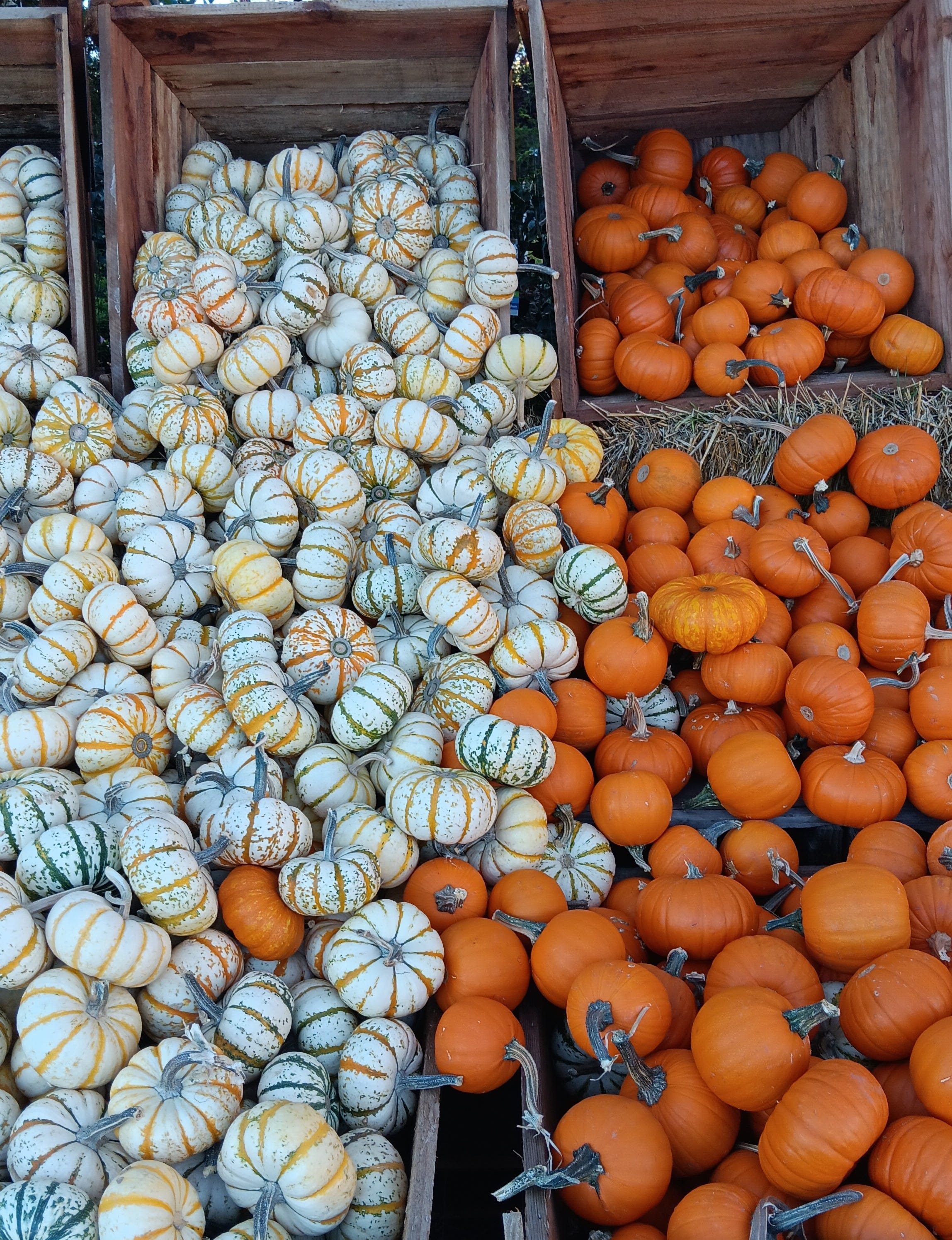
The discussion in today’s podcast focuses on pumpkins. Warren Roberts, Superintendent Emeritus of the UC Davis Arboretum, explains that the pumpkin is botanically a fruit, though it is usually eaten as a vegetable. He says the plant belongs to the genus Cucurbita, which is native to the Americas, especially Mexico and the Andes. He describes pumpkin types and notes that many large pumpkins are hybrids, often involving Cucurbita maxima. He contrasts these with the smaller typical pumpkin species, Cucurbita pepo. The conversation also covers the origin of jack-o’-lanterns, whose purpose, Roberts says, came from hollowed-out turnips or rutabagas used to carry coals before matches were available (a handy skill to remember when AI takes over). Short of Garden Room? Grow Mini-Pumpkins! Admittedly, I got a late start on planting pumpkins this year: in early summer (the 4th of July weekend), and I had only one raised garden bed, 4 feet by 8 feet, still available. So, I planted three pumpkin seeds that would eventually produce medium sized pumpkins, the “Jack O’ Lantern” variety, a fruit that gets about 15 pounds. I won’t make that mistake again. Fast-forward three months, and I have a jungle of green vines from those three seeds that have escaped the confines of the raised bed and are now proceeding to swallow the trunks of my adjacent fruit trees. And it looks like the end-result for Halloween decorations will be only four or five medium sized pumpkins. Not much production, considering the sprawl of the vines. And three of them are still green, making me wonder if they will be nice orange orbs ready for carving at the end of the month. Fortunately for gardeners, many seed catalogs and nursery seed racks feature pumpkin varieties that mature in about 90 days and don’t do much sprawling: the miniature pumpkins. There are several advantages to growing pumpkins that weigh less than a pound: quicker maturity, a smaller footprint, and versatility in shapes, color, and uses. This is a public episode. If you'd like to discuss this with other subscribers or get access to bonus episodes, visit gardenbasics.substack.com/subscribe
0:00SPEAKER_00Thanks for tuning in the Beyond The Garden Basics podcast.
0:02SPEAKER_00Today we're talking with Warren Roberts,
0:05SPEAKER_00the superintendent emeritus of the UC Davis Arboretum,
0:08SPEAKER_00and we're talking about those very popular big orange fruits that inhabit just about
0:19SPEAKER_00And in the newsletter,
0:20SPEAKER_00we devote that to something that fits a little bit better into a suburban backyard,
0:25SPEAKER_00mini pumpkins, the small ones, and you get a lot more of them as well.
0:29SPEAKER_00So we'll be talking about that in the newsletter.
0:32SPEAKER_00But right now in the podcast, let's talk with Warren Roberts about pumpkins.
0:39SPEAKER_01Today's plant is one that you may still have sitting on your front porch
0:43SPEAKER_01or even growing in your backyard or it's smashed up against a window.
0:48SPEAKER_01It would be the pumpkin.
0:49SPEAKER_01And Warren, the pumpkin is a very interesting plant.
0:53SPEAKER_01Is it a vegetable?
0:53SPEAKER_01Is it a fruit?