
Bee Formless™ Flow Driven CEO · Belinda (Bee) Murray
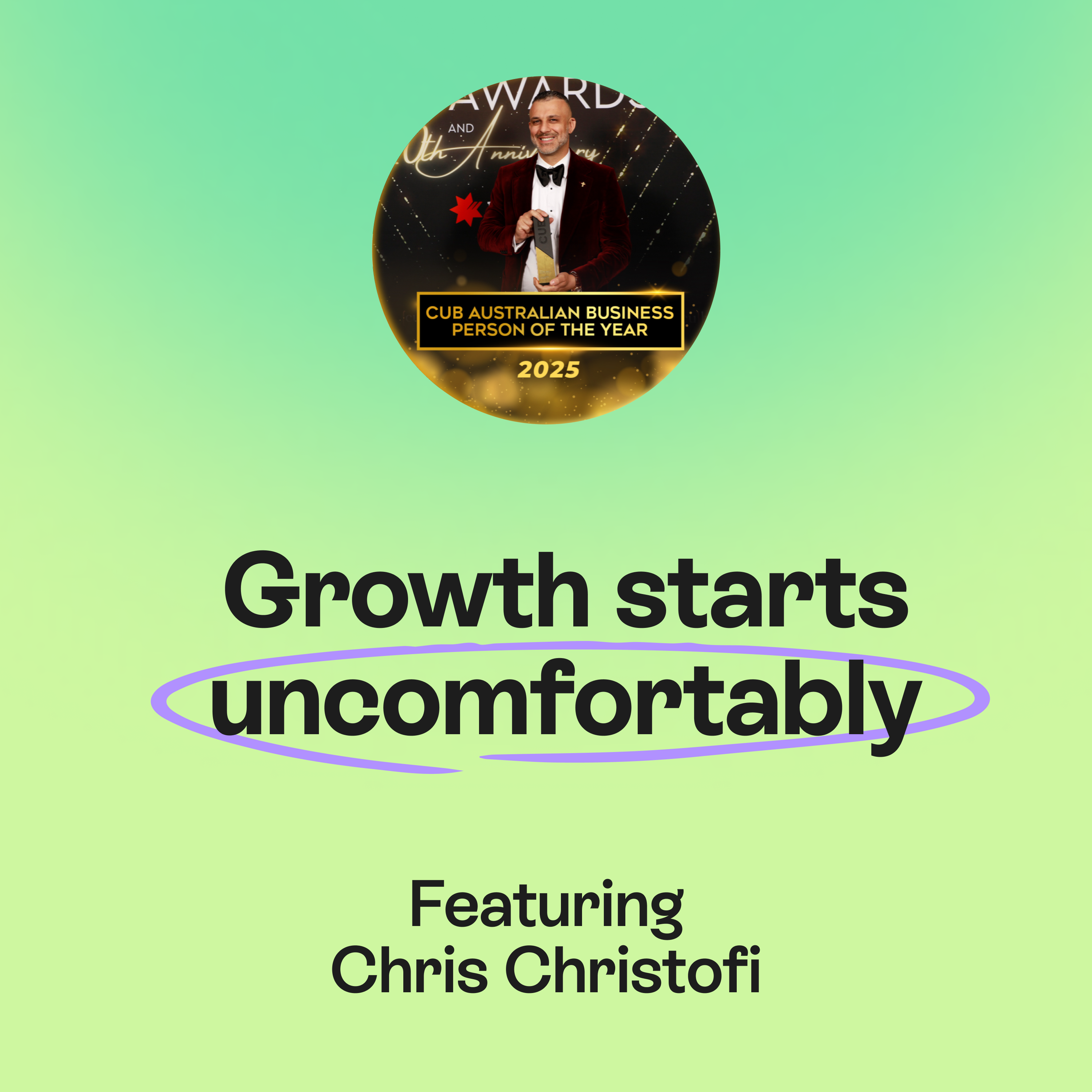
In this episode of the Bee Formless™ Flow Driven CEO Podcast, I connected with Chris Christofi, Founder and CEO of Reventon, entrepreneur, property investor, philanthropist and host of RELENTLESS: Life On Your Terms, for a conversation about adversity, ambition and the person we become through both. Chris became a multimillionaire in his early twenties, then lost everything at 24. Carrying $348,000 in debt and back living with his parents, bankruptcy was an option, but Chris saw debt as a promise to repay and wanted to show his son that quitting wasn’t. More than two decades later, the business he began from his parents’ home has become something much bigger. What interested me was Chris’s willingness to talk about the cost as well as the success. He describes himself as relentless, yet doesn’t believe more hours should automatically be the goal. His distinction between work-life balance and “work-life choices” raised a much more interesting question: what are we consciously choosing to give our energy to, and why? We explored how Chris leads through empathy and intuition, his commitment to getting 1% better every day, and why uncomfortable feedback is often where he finds the greatest opportunity to evolve. At 46, he expects the version of himself at 50 to be better again. Spiritual growth is part of that evolution too. Chris shared how returning to church during one of his hardest periods gave him somewhere to ask for patience, initially one week at a time, and how that inner work began flowing into the way he showed up as a father, CEO and human being. Underneath the awards, property, business growth and philanthropy was a philosophy I loved: “earn more to give more.” For Chris, success and contribution are not separate, and neither are adversity and growth. THE SHAPE SHIFT IN MOTION This conversation was a reminder that growth is not about avoiding adversity. It is about what we choose to build from it. This is how it unfolded through the formless™ methodology: LEARN (LETTING GO) ✨ Working harder is not the same as working more effectively. ✨ Everything we build comes with choices about where our energy goes. ✨ Adversity can reveal a version of us we have not met yet. UNLEARN (CREATE, REIMAGINE & RESHAPE) ✨ Replace work-life balance with conscious work-life choices. ✨ Seek the uncomfortable feedback rather than avoiding it. ✨ Let success become a vehicle for contribution, not simply accumulation. RELEARN (TEST & IMPLEMENT) ✨ Look for the 1% improvement available today. ✨ Understand when and how your people perform at their best. ✨ Keep evolving the person behind the business. ACTIVE RECOVERY (REFLECT & RESET) ✨ Where are you being asked to become uncomfortable? ✨ What deserves more of your energy right now? ✨ What could the next version of you do differently? Where to find more: 🔗 https://www.linkedin.com/in/chris-christofi/ 🌐 https://chrischristofi.com.au 🏢 https://www.reventon.com.au 💭 What has adversity taught you that...
bd491c8d 7d4d 4eaf 9ee0 6b6a0f8af3cb: Hello and welcome to the Bee Formless Flow Driven CEO podcast, where we are reshaping life, leadership, business and I will say investing today from the inside out. Today I'm welcoming to the show Chris Christoffy. Welcome to the show, Chris. Thank you so much for having me. Thank you. How's your Monday going? Amazing, always great. One of my favorite days of the week. Amazing too. So Chris, you are the founder and CEO of Reventin, an entrepreneur, a property investor, philanthropist, best selling author and host of Relentless Podcast, Life on Your Term terms, whose journey has taken you from extraordinary early financial success through losing everything and rebuilding with a very different understanding of wealth, purpose and impact. Incredible. Yes, quite a quite a a lot to hear at once. You had an important inflection point and it emerged after becoming a multimillionaire in your early twenties, which is incredible, and then losing it all at the young age of 24. You start a revent on from your parents' home carrying three hundred and forty-eight thousand in debt, beginning a rebuilding journey that would reshape not only your financial future, but what success means to you. Which is in quite incredible. And I'm gonna get right on into that. Today, alongside leading businesses across property, finance, and wealth creation, Chris, you've channeled your success into philanthropy, raising more than 1.2 million to support people experiencing homelessness and using the platform to create impact beyond business. Yes. And at the heart and soul of your work is a belief that adversity doesn't have to define our future. What was built from it can become a vehicle not only for creating wealth built but for also creating a legacy that changes other people's lives. I'm gonna hand it over to you to tell us a bit about your story. I think I paused a bit also because there was a lot to take in just then in terms of like I said, you lost everything. You were a multimillionaire at 24. Then you start a business again with 348,000 in debt. It's quite the journey to go through. Can you tell us a little bit about Yeah, sure. Look, I first of all I feel very privileged that I had the opportunity to start a journey again. I'm very, very lucky. So I had an amazing upbringing, great family. So when I lost it all at a young age, I could always turn back into an amazing support network being my family. Now it was hard because I had a lot of properties, millions of dollars worth of assets. I was making three fifty, four hundred grand a year as in my early twenties in sales and real estate, which is something that I'm very passionate about. Subsequently is what I still do for a living. And I was working with a company, started a franchise and the company went to receivership and owned me seven hundred and eighty thousand. So amongst all that chaos, you know, I've got all this property, making great money. I'm losing everything quick smart, put a deposit 106,000 on an apartment just up the road here, actually. Funny enough, 1 million and 60 it was. Lost that. Now the hardest part of that story is I had to move back into my parents' house. So people say they eat humble pie. I was eating it for breakfast, lunch, and dinner. And by far, without a shadow of a doubt, I almost lost my son at that time. He became deaf. So had bacterial meningitis. He was hospitalized for two and a half weeks and almost lost him. Got two bonic implants. Now he's doing very well. He's twenty three years old. But at the time it felt like all the walls were crumbling in on me. And, you know, I got into I was gambling a lot, I was partying a lot, I was doing everything that I shouldn't do. That I felt was the solution. And it definitely taught me a hard lesson. But one thing that I was determined to do is show my son quitting's not an option. Through adversity is when you see who really shows up. Yeah. And diamonds are formed through extreme pressure. So for me, look, the option was go bankrupt, start again, not pay all this debt back. But a debt I see is a promise to repay someone. Now, if I owe anyone money, I'm gonna work relentlessly. until I can't work anymore, can't breathe to pay that debt back. So I knew that step one, I had to pay that 348 grand debt back. Step two, I need to show my son quitting is not an option. Step three, I want to build something special that can outlast me through helping Australians get into the property market. Now when I started that journey my parents home, my goal was to become a fully integrated financial services company. Now fast forwarding 21 years, March of this year we celebrate our golden birthday, 21 on the 21st. I love that. we've achieved some great things. Namingly, we've helped over twelve thousand clients, close to four thousand properties sold across the country, three point seven billion dollars in sales, over a billion dollars of assets under management. We've got over eight hundred and fifty five star reviews with a five out of five star rating, which is something I'm very proud of. And I can see all these awards if I I should have said a big hi and hello to the audience, by the way, the listeners. There's you should see this incredible Lee walk in here and the energy and the vibe is So high. And then looking around, there's all these amazing war awards, best places to work also. Chris, I'm sorry I interrupted you. You did you didn't. That's fine. look, I'm very proud of the best place to work because I wanted to see if we could Bee certified on what rating three and a half years ago. And my HR company said, Well, take about 18 months to get you in shape. We did it in six months. We got 81% in the first year, 96% year two, 96% year three. The average rating for financial services in real estate is 60%. So I was very, very proud of that fact. Now, we've won, we're featuring over 180 publications. We run two podcasts, Relentless Life on Your Term, which is in season seven. It's filmed around the country, it's filmed in America, London, Cyprus, which was a great podcast. We do the Revent on Property Podcast. We're about to launch our third. We're in an Amazon best selling book, Your Path to Wealth Brick by Brick, which 100% of the money goes to charity. But amongst all the awards that we've won, which is 107 at the moment. 17 was last year. The proudest achievements by far. I was very proud when I won the Australian Businessman of the Year. I won a massive award in Cyprus for philanthropy in May of this year. three time great place to work. We've mentioned. I won my favorite by far outside my work ones. Got awarded the gold cross from the Cyprus, from the Greek community. front of a thousand Greek parishioners for my go for my services to my community on Sunday and l and as that was a very, very big honor. But all of them are very, very important in the sense that we're doing great things in our community. Yeah. We're getting great results for our clients. And when you mention you come in here and it's great energy, I love coming to work because everyone in here loves being here. They love serving their clients. They love improving. We always try to push our limits of getting better. getting our clients better results and our results speak for themselves being in the industry for a long time. We've outperformed the market three and a half X to one for many, many years because we're so data researched. Yeah. And we truly care and love what we do. So one of our values is we care. We care about our team, we care about our clients and we care about our community. But all of our results show that we lead by example in all of these areas. So you mentioned Vinny's as well. We did raise another 200s 1.4 currently, and we've raised 2.5 million in charitable things. That's a very, very big cornerstone to what we do. It's not in addition to what we do. It's part of absolutely our DNA. It's how we lead. It's how I lead as an individual. It's how I lead as a father. It's how I lead as a CEO. But I wouldn't say that I'm a leader here because we're all leaders here. Yeah, I like that. We it's important to lead from the front absolutely, but everyone is treated 100% the same here. They're all leaders in their own rights and they're all pushing to strive for their clients and for themselves. So There's quite a few questions I have for a second here in terms of just with like this this pursuit of relentlessness in terms of and being one of your c core values, but also I think you said we care. There's so many things out there at the moment when you think about hustle culture and push, push, push, and performance, Chris. And I'm I'd love to get your thoughts on this because you talked to me before pre-show around we work hard. What's your view on hustle versus working hard versus this relentlessness? Because I'm I'm with you in terms of from adversity comes post pr post traumatic growth. This is where we get better and we become better, right? Of course. And yet there's a big conversation at the moment and I'd love your thoughts on that. Do you believe in the hustle culture or do you think it's do you think it's more around how you how you I guess perform in a way that is purposeful, you know, is conscious and and all of that. Like what's your view on that? Look, I'm I'm a little bit crazy and gone when it comes to hard work because I see it as a privilege. Mm-hmm. And the hours that I work were obscene. Only because I love it. And I do also have four kids. Twenty-three is my son. He's good now and three daughters. Giselle Penelope Miller, thirteen, ten and nine. But for me, I think it's how you lead. Is it with intention or is it with purpose? I want to lead to create long lasting impact. So when I started the company twenty one years ago to become a fully great financial services company, we achieved everything I set out from on day one because it was very intentional. In my mind, I always knew we're going to get here. We built a finance arm, then we did property management, accounting, financial planning, and we're looking at new services now to make sure that we're giving our clients the right information. We're buying our products. We use our products. We invest what we tell our clients to invest. But I think The answer to your question is how you lead with intention. What does hustle hustle mean? Because that might mean different things to different people. Now, hard work, I don't think you can build anything special, anything long lasting or anything impactful without putting in the hours. And God knows I've put in a lot of hours here, and so has my team. They are the most amazing team humans when it comes to pulling together to achieve something. But I think it should Bee deeper than that. It should what does that mean to you? Yeah, absolutely. So for me. Last year we became the highest fundraiser of all time for Vinny's when we raised that one point two and four hundred in one campaign. We built a house for homeless and sold it eight hundred and forty and we paid it off. Those things for me were the feather in our cap because it's how we lead. Mm. Hustle hustle's important, but what's the intention behind it? Well I agree because hustle hustle can just say called busy busy, right? You can Bee busy, busy, hustle. You're busy being busy or you're busy with being effective. That's my but more importantly, people that are busy, I wanna, you know post online that I'm working 700,000 hours a week. Cool. and I was doing 100 for many hours. But how how purposeful? How impactful are they? And how effective are you? So I tell my team I want you guys to pick it up. I want you to Bee more effective. Just to Bee clear, I don't want more hours. I want us to focus on the things that are going to move the needle. So when I walk into this business January every year, I want to not recognize it. They go, what do you mean? I want us to Bee better than we were last year. I want us to provide better service. And I want us to professionally Bee so much better than where we were. I don't necessarily want more hours. Now, if you're crazy and a little bit gone like I am, and you want to do more hours, sure. But that shouldn't Bee the expectation. If you want to do it, that's fine. But whoever does those crazy hours, the hustle hustle, now I was one of them. And I'm divorced as well. So I think everything comes from somewhere else. So the sacrifice that I made to build a business or to build an empire or to help all my clients came at a cost. In hindsight, would I have done it again? Probably yes. It's who I am as a person. But everything comes at a cost. And I don't believe in work life balance. No, neither. I believe in work life choices. So you make the choice based on what's gonna consciously move the needle from A to B. Is it for your clients? Is it for your family? Is it for awards and recognition? Whatever that may Bee. But you must identify what that is first. I think it's also what's in it for you in terms of what what is your soul calling out for you without getting all spiritual or woo-woo, right? I love spiritual woo-woo, by the So do I. But you've just talked about like all the external and I also think there's a big part here around well, hang on a sec, what what is in here want and how is that going to then from an inside out perspective, what am I leading from the inside out versus chasing all this external Stuff if you like, that not necessarily, like you say, has an intention behind it. And I think that's what we're we're needing more when it comes to leadership and businesses. And what is the intention and why are people leading? So it's got to Bee you've got to ask three, four questions about the purpose of something to understand it. And yeah, you made a great point. And for me, how you lead is everything, how you lead your team. But I'm not a kind of do as I say kind of leader. I'm a do as I do kind of person. I think that creates a different impact. It creates level of trust and it creates a level of synergy. So when you walked in here and you said you felt a vibe, the amount of people that have walked into this office said, everyone seems so happy. And the compliment that I get all the time is when people are sitting in my reception and one walks out, Hey, how are you? Can I get you anything? Everyone that walks past, well, I grew up someone and I've had podcast guests and they said, You know, when we're sitting there, four or five people walked past, six people, and they all said, boom, boom, and I said, That makes me very happy to hear. Well, yeah, I think it I I think like you say, vibe attracts your tribe ride. And I think it's really important, environment and when you walk into a place that you feel the energy. Like I you know, energy attitude and behavior is one of my biggest things when it comes to business. You need the energy, you need a great attitude, and you need a behavior that is a collective behavior that's going to get get you the results you're looking for. And I think quite often you go into organizations and I'd love your thoughts on this in terms of The world is quite is quite crazy right now. And there's a lot of, you know, you talked about love loving being in the office. And there's even here in Victoria, there's this whole working from home mentality. And so we we get all insula, right? And versus, what are we look what are we looking for as a collective? What are we aiming for? And I think we've got to get back to more of that versus this Intula kind of me, me, me, I, I, I. And I think that's the only way to do it when you bring everyone together. to really drive a culture that is high performing, has a purpose, has the people around it. And so that's why I always talk about energy, attitude, and behavior. Of course. If you want to go fast, go alone. If you want to create impact and really do something special, work together with a team because that's going to create a different level of impact. And light tracks like as well. And I think all of us as human beings will rise the level of consciousness we have at the time. So when you mentioned about The conversation being insilla, I think every conversation should Bee had respectfully, with kindness, and with as much maturity as possible. The hard conversations for me are the best and the easiest and the ones that I love the most because I know that's where the gold is. I know that's where the true impact of my team is for my clients and for myself. So when I'm put in a really tough position or I'm dealing with a mentor or someone who's telling me something very uncomfortable, you'll never see me listen more carefully or more intuitively because I think. This is where I can really improve. This is what's really going to make me step up. And I think, I guess as a business owner, I always think I'm at level one out of ten and I'm always learning. I'm always a student of business or in life or in spiritual growth. And I always want to learn more because I want to have that growth mindset. I want my team to have that growth mindset. Not this is how we've always done it. I say, if you can show me to do it a little bit better. Now we adopt a methodology here called Kaiser and Everyone. Yeah, that's I just want 1% in gains every day. Little things, because how you do something is how you do everything. So when I come into the office and I perform certain tasks, people would know that if it was me, it's done in a certain way. It's very meticulous. And everything I do, I put my best foot forward in anything that I do. That's in my personal life, that's in my company life. Now anyone that knows me for my right period of time will tell you we know if Chris has done that in any part of work. And that could Bee cleaning the boardroom table. washing the dishes, preparing something, how I present, because I do my best to try to to Bee better and better. And I welcome open feedback. And I don't ask for feedback so I can respond. I ask for feed because I want to understand, I want to improve. I want to level up. And I feel it's our obligation as leaders to our team and our community to do these things. And I know you mentioned it at the start about how you lead with all the philanthropy that we do. It's not one with the without the other. It's that is who we are as a company. And for me, we just want to keep pushing the limits. And I've got my own personal logo. Back yourself is one. And number two is earn more to give more. I want to do so much. More and I know that I can, but I need to Bee more laser focused to get better results. I need to perform better. I need to keep up skilling myself. Absolutely. You said Monday's your favorite day of the week. Why is Monday your favorite? day of the week. Is it because it's the start of a new week, start of a new day, like one percent getting better every day? Like what is it that you love about a Monday? Well for the older listeners like me, probably I'm like Garfield, I guess. He l his favorite day was Monday. But I love Monday because I love work. So I'm very, very fortunate because I love work. I love spending time with my kids. I love reading. Love going to church on Sundays. Wherever I am, I'm trying my best to become present and enjoy it. But at the start of my week, it's a little bit, you know, I I know that I've got at least five, six days in front of me of work. I love it. I'm going to see my team. I get an opportunity to come to the office. So if I'm not here for whatever reason, people are going must Bee very, very unwell or something's wrong. Because I love being here. So I'm I'm in a good position where I'm not waiting to Friday and it's Friday. I'm like, okay. I used to get calls all the time. Are you coming home today? I'll Bee home soon. I've just losed track of time because I'm caught into something or You know, back in the earlier days when I was getting here at two forty five in the morning and just sitting here by myself in the office reading, visualizing stuff. I loved that time because I was on my own. Till seven thirty, eight o'clock, people start to come in and I'd Bee like an energizer bunny when people rock in because I've done all this work already. So then I realized quickly that some people wake up a little slower. So I'd I won't talk to people till nine, nine thirty, give them a chance to wake up. So I'm so excited when people rock up. So I go, I need to Bee a little bit more aware that People might wake up, grab their coffee. That's okay. So I'll give everyone an hour before it's Well, we've all got different circadia rhythms, right? So it's how do you like I talk a lot about and I I'm interested to know if you know if you're like this is what you think about as well. There's clock time. So clocking on at like what whatever time you start your day versus subjective time. And clock time is like eight, you could come into the office at eight AM and you could leave at like five thirty PM clocking on, clocking off. It's it's not about that anymore. It's subjective time. So blocking your Times. Yeah. So that you are using your own energy and your own circadian rhythm to when you can perform at your best. And then I think it's also how you look at it from a business perspective, knowing you've got different team members, understanding their individualistic ways of operating. Of course. And then also tailoring it so you can get every study of everyone. Yeah. I share something that I've never shared before. So two great books for our listeners, if people want to listen to them. Deep work in one thing that talks about this thing, talks about tone boxing and all that. But I know when my team is at their best. So my crazy mind knows Nathan performs better late. Some perform better in the morning. So I know when they're gonna that's when I talk to them. So I've got different people that perform different times. My personal team and that's when I'll give them most of my opportunity or time or task. I don't think Nathan's ever even heard that before, but I look at when people are When they like being talked to when I can perform and I work my calendar around their best times because I'm available all the time. I need four or five people different times, so I can keep myself busy. Do you think that's intuitive, Chris? Or do you like to I mean, as a leader, like you mentioned before, intuitive, you've mentioned kindness. And I'm not being biased here when I call out male leaders. You don't often hear I haven't spoken to a lot of male leaders around intuition and kindness. And here you are completely in sync with your team, right? And understanding when they're at their best and when to actually communicate or access them. The answer's yes, but it's emotional intelligence is one of the most important skills in business or in life in my opinion. And I studied extensively, it's one of my favorite topics alongside Stoism and Spiritualism. And I read a lot of books about this. Last year I completed 137 books, a lot of them were on this topic. And I got commonly get asked, how did you do so many books? I buy the audio version of the book and I buy the hard copy and I get it read to me while I'm reading the book as well. So I can absorb content a lot quicker. So on the weekends when I've got nothing on, I don't have my kids. I have them one week on, one week off my daughters. I might do four to eight hours worth of studying and I'll immerse myself in emotional intelligence, in sales, in Stoism. And I four or five books of that topic and off I go. But going back to your question, for me it's very, very easy because I love people so much. I want to see them perform I lead with empathy because it's easy for me. It's so natural because seeing people thrive is what really excites me. Seeing people grow is what excites me. Understanding different idiosyncrasies about people excites me because I want to learn how to become a better leader. It's like having four kids. They're very, very different. I have to father them differently, which is very challenging. But it's also running a team. When you enter a team and I used to play sports in a team and individual sports, you need to Bee aware of where people are at their best and you need to make sure that they're aware so you can give them the confidence where they need. And also where their blind spots are, you you feel for them and vice versa. I know what I'm good at and I know the things I need help in. So I'll try to put my team around me to make me look better in that area. But subsequently, emotional intelligence and understanding your team, it's it's a very, very easy thing for me because I love people so much. I love seeing people thrive. If a conversation doesn't go well, I want to know why. I wanna know how you felt, what I said, how I said it, how could I have done it better? These things are important. I've had people leave, resign, or I've let people go that have been with me for ages. People really nervous about the conversation and they've given me a massive hug and I've given them a hug and they've left. They go, How did you do that? I said, I was just very, very honest. I was respectful. no one's gonna want to work in a business where they're not performing the best. Well, I think it's also gifting them, right? You're gifting them to move on and and do what they they need to Bee doing. I have I've always looked at it that way as if you've got underperformers and you you're if you've good performers also, yes. So too. But now as I've become a little bit more older and more mature, I see it as a gift that I was able to play a small part in your amazing journey. I had the privilege to work alongside you. Go out there and kick us and I hope you do well. And I always say in the bottom of their email, it's not good bites until next time. Yeah, I say that too. It's chow for now, I say it's not goodbyes, chow for now. I'm I'm not a I'm not a fan of the goodbye word. No, no, it's no goodbyes. Said no one's touch wood, no one's passed away, no one's gone. We've worked together, you mean a lot to me. I want you to do well. You know I'm always gonna Bee here if you need me. And it took me a long time to have that methodology, that understanding. And I guess, like with anything special, and I look at the Reverenton journey, everything is a process. I was nowhere near as good as I am. At forty six, I'm almost forty seven. At forty, I wasn't as good as I am now. At thirty five, I wasn't. And I can assure you at fifty, I'm gonna Bee much better than I am at forty six. Fifty five, I'm gonna Bee even better than that. Because with people that know me every six months, you haven't spoken to me, you're gonna see a much different version of me. Same traits as a human being, which I'd like most of the people that name me will use certain words to describe me. I don't think they're ever gonna change. It's I was as a kid, to I'm gonna hopefully die as the same person. But I'm gonna Bee a more evolved version of that. I'm gonna Bee a better version of that, a kinder version of that. How important do you see as spiritual growth in as a leader? Because again, like, you know, I said it was a bit weary because I was almost wanting to apologize for saying spiritual growth when actually spiritual growth for me is so important because it's part of us as and and how we evolve. And what you're talking about here is every six months you're a better leader, you're a better person. Spirituality plays a big role in that. It's not just, yeah, sure, you've got your mentors, you're upskilling when it comes to you might Bee doing some training, you might Bee reading, etc. But coming right back to inside, all the answers come from within. And so the growth That's that's a connection for me from mind, body and soul. And it's something that I'm having more and more conversations on this podcast about because in terms of how we live, how we lead and how we do business, it's how you do everything. So for the answer to your question, spiritual growth saved my life. It was a very important part of my growth as a human being to become more patient. was that was that through the adversity and everything that you faced w in your early twenties? look, I've had four or five key punches, good punches. One was the one we mentioned. I was in court for a couple of years with a couple of people that Did not uphold an agreement, didn't do the right thing by me or my business. I was in court, I won, spent hundreds of thousands. I can't call it a win. technically it was a win, but it was not good, set me back. I've been separated now for four years, divorced for three, was in court for two years there. So that was very, very tough. But going to church and finding myself spiritually was by far the most important decision I've ever made. So today's a very special day for me. It's the 10th of August. So for the last two years, every Two, three years every Sunday go to church from four hours. And the last year I became a sacrilist, which means I help my local priest, my local father, every week for four hours at the back of the church. And that's with everything, preparing, you know, for holy communion, changing the candles, vacuuming, you name it, I do it. And I was laughing one day and then my my father goes to me, my spiritual father goes, Why are you laughing, Chris? I said, 'cause I'm vacuuming the floor, father goes, Yeah. I've got a cleaner coming to my house tomorrow to do all this. So he g he started pissing himself laughing. But there's nothing I won't do, guys. Can you hang this clock up now? You've never f you've never found a more challenging human when comes to technical things, as in with your hands. So I'm hanging this clock up. I'm thinking, I hope it doesn't fall on someone's head. Something I'll never ever do. No. But I find myself doing all these things and it's very, very good because it keeps me humble. My father is a humble man. And I think spiritual growth is important because it puts things into real content context, sorry. And yeah, for me, going to church every Sunday. Is a non negotiable because it keeps me on the right path, keeps me where I need to Bee. Now, whether it's I'm a Christian, whether you're a Christian, whether you're another faith, whether you just believe in even Buddha, I know I've got people here that are I don't mind what it is. As long as you believe in something bigger and you believe in doing good by people and trying to improve, I'm all for that. I'm not a kind of individual that pushes you need to Bee a Christian because I'm a no. I think there's beauty in all faiths. Yeah. And there's beauty in understanding all religions. And I think you make a decision and you try your best to lead by example. Now I had the best example, we all did Jesus, but there's so many great examples out there. And I'm not a forceful person because I think when someone makes the conscious decision to do it, they're gonna do it at a different level. So all you can do is your best to help educate or push them along a certain line. For me, I just fell into wanting to go back. My father was very religious and it helped me immensely. But it's also given me peace in a lot of ways. So every week when I was going through the toughest time, I used to walk in and pray for, I just want patience for one more week. And I shared that with someone and they go, is that all you asked for? I go, Yeah. They go, why one week? I go, because I'm going to come next week and ask for the same thing. So for the first six to twelve months, that's all I asked for. Then after six to twelve months, I didn't need it every week, it was every month. So I was building resilience, I was building strength, I was being more familiar with who I was as a person. So all of these things played a key role. And the funny thing was they overflew, they over they they spilt over into my CO life, into my father life, into everything of who I was as a human being. Because I focused on, as you mentioned, that spiritual side. And look, you mentioned woo woo. I think we're a little bit woo deep deep down. Are you comfortable enough to have that conversation with someone? Sure I am. I don't mind what people think of me. I prefer people to dislike the true version of me, the like a version that I choose to show you. Yeah. I prefer to give you the true version of me. Yeah, he's funny. He's a bit of an idiot, whatever. I don't care. That's me. Take it all in. So Bee your most authentic self. Tell us a little bit about client relationships saying. Because you said you've got like you've had over twelve thousand did you say twelve thousand clients that you've serviced over the years? Yes. In terms of the way we've been talking around your form of leadership and your people. Is that do you apply the same approach to your clients as well? Yeah, 'cause yeah. Every company that I open or service within six months it became profitable because I had such a big database. Mm. Now for me, being accountable to my clients is everything. Don't make excuses, fix it. We make mistakes, we all do. But one thing I won't accept is people not taking accountability. So when people don't forget if they rem they they remember if you make a mistake, but what they never forget is how you fix them. Yeah, I agree. By taking accountability. Now I say to my my team, if someone's calling up complaining, you better pick up that phone and fix it straight away. If you're a man enough or woman enough to convert that client or to take their money or to sell it, you better Bee there if they need you. You treat a complaint like it's a brand new lead. You get on top of it now and fix it. Usually something small becomes something big. And if you were there when you wanted to get the sale, why aren't you there now? So for me, I judge a company. I shouldn't use the word judge because I don't like the word judge and I don't, but I I was gonna ask you about judgment though, actually before because y yeah, and I'm glad you said that you don't like judge. I don't like judge and I don't judge, but I I should say I I analyse a company based on how you are when things are bad. I analyse a team on how you are when things are bad. So if if something escalates, I'm always gonna Bee there for my clients and I will fight tooth and nail for my clients for the good, the bad and the ugly. So we're very successful in repeat clients and referrals. Very successful in that regard. And I think it's because we just have a team of amazing professionals that care about our clients. We put our clients first, second, and third. And subsequently that helps us grow as a business. And we put our community in that regard as well. So as I mentioned, it's very, very great being here on a Monday. Every day is the same. I'm very fortunate in that regard. and my team is very, very similar to myself. And sometimes I interview people and I think they won't fit in and I say, look, I don't think we're gonna f This will Bee the right company for you. Cause I can tell. So I'm the last interview at Reventon. And for me, you know what I'm looking for? Attitude. And if you're a cultural fit. Yeah, I could have been. That's fine. And, you know, people are nervous. I go, hey, this just so you know, this is an open interview. You can ask me any questions, personal or company. My goal here is to see if I think you'll thrive here, you'll fit, and you'll Bee happy here. And I want you to also Bee asking yourself the same three questions. I agree. I think it's just as much about the person interviewing you who's being interviewed. I've got a final cup a couple of final questions for you, Chris. Yes. I had an interesting conversation with someone on the podcast the other day and they were talking about with given AI and the world we're in right now and it's here when it's not a new world, it's it's happening. And they were like, We're in everyone is in a form of ad adversity right now with the rapid amount of change in terms of there is just so much change. You can either embrace it or you can fear it, right? And when I first came in here to your office and you was you mentioned that you don't I'll just say you don't get concerned about things you're always asking. It's like what you what is what's the saying? if you don't ask, you don't get is what I say, right? What's your view? Do you think that the w that we're all in a form of adversity at the moment with the amount of change happening? Definitely. But through chaos is opportunity. if you're scared of it, you're gonna when you say this is how it's always been done, or you don't lean into things like this, all you've done is put an expiry on your career. And expiry on your business. Now other people are going to lean in now. It doesn't mean go crazy. Ask questions. Trust but analyze information. So for me, I don't worry about things I can't control. The Stoics were very like that. You can't control the cards you've been dealt, only how you play them. So you gotta love the fate, good, bad, and ugly, because it's whatever it is. How do I control this and how do I learn? You gotta remember through the biggest adversities in anyone's career or life, If they remained positive and did the work, I guarantee they came out better people. So through all my challenging times, a new version of me came out every time. And for me that was very, very exciting. Because it also gave me that little kick to say, let's see who shows up now. Yeah. Let's see if you're gonna step up. Let's see if you're up for and for me, that's what really gets me out of bed. Because if I don't have that level of push or that level of excitement, I get bored. My My brain's doing a thousand things. So the crazier it is, the more unknown I'm in territory, the happier I'll Bee because I'm gonna figure things out. And always I you know the way I see things is if you've got a challenge, stop, smile. If you smile, you release endorphins to your brain and you're gonna tackle the the problem with a different level of consciousness. Einstein said it, definition of insanity is doing the same thing every day and expecting a different result. So you need to change your mindset to get out of that challenge. I agree. And he says, I'm not smarter than everyone else. I just stick with problems longer. So if you understand all these methodologies and these techniques and these strategies, we can employ them as well. Now I'm not saying we're going to Bee as effective as Einstein, but what I am saying is there's proven frameworks from very, very smart people that live before us that are currently living that we can pull from. So I lean into all these things and I I get excited because I know that two things. My clients deserve a better version of me. My clients deserve the best information possible. And so does my team, which means I need to level up at every time. If I'm asking you to level up, I'd Bee doing it too. Yeah. And your next question. And my last question was, do you ever switch off? You seem like someone like me who's got that much energy and you could Bee like going a hundred miles an hour all the time. I know that you talk about patience and presence. What do you do for your own downtime, like for your own active recovery? How do you completely switch off? And Bee truly present in the moment. That's the hardest thing I've ever learned in my life, what you're asking me. And it's something that I struggled with for all my life. But I'm trying to understand and convince myself that by going slower and being more present, I can create more impact and go further. So it's something that I've had to condition myself. Some of the things I do, non negotiable. So I go to my church on Sundays, I train, I try to read books, I try to Bee present with my kids. I try to Bee present when they're at their worst. So when they're at their worst, you need to Bee at your best. Yeah, absolutely. Very hard to do. But I focus on trying to learn. And I don't ask anyone for their opinion. I ask my kids. Was daddy a more patient father? Was daddy better? Now I always prayed for more patience and God sent me Miller, who's my baby, and he's teaching me patience through my little kid, who was effectively me as a kid who I used to torture my dad. Now Miller tortures me. So she's teaching patience. Sounds like Mallie Bow. So I say, I I say to her, I go, you know, I pray for patience and God sent me you, sweetheart. And she laughs. Yeah, it's so important. But it's but look, everyone, you can do meditation, you can do yoga, you can do gym. Find something. You can walk in nature, you can do trek, you know, you can you can swim. You need to find something. You can, you know, do hydrobaric chambers, something that you love that's easier for you to do. that you can lean into to find the answer to that question. I found my answer through many, many mistakes, through meditation, through whatever. Then you need to find what that is because it's essential to your well being. And for me, you know the analogy when a light is much brighter, but it lasts a lot shorter period of time. I never wanted that to Bee me. And my brain was a mi I never stop, I never sleep, I never rest. And I've been insomniac for most of my life. But now as I'm getting older and I'm learning a little bit more, I'm trying to get on top of it. I'm nowhere near where I need to Bee. But I'm awareness is the first step. You're practicing, which is what I do. I'm trying my best. Yeah. And awareness is the first step. I think I have full awareness of my situation and my strengths and what I need to work on. And I'm going through that process. So I hope for everyone listening that they find a couple of things that work for them. that was, yeah. And you stick to it. Now, habit loop. And s and Atomic Habits are two very, very good books that talk about breaking habits. James Clear with Atomic Habits and Habit Loop, which gets your mind into really putting good habits in place. I've learned through I've learned the hard way and I'm very grateful that I did learn the hard way because I need to burn myself on that stove to learn. I I like hearing things, but for me I need to touch that stove as well. I know that that's the person I am. And for everyone out there, incredible conversation. Thank you. Thanks for having me. And I just interrupted you. Sorry for everyone out there. You were going to say, slow down, pause, Bee patient. I think what you've just articulated really well is that we're constantly working on ourselves, right? And it's a continuous evolution, it's a continuous growth in life leadership and in business. And so the ability to sit with oneself through the truly uncomfortable and and explore the unknown is where you get your most Well, you alu you're illuminated. That's where you become your brightest self. You shared something before and it just came back to me. One of my ex mentors and bosses said to me, There's only one radio station people listen to. Said, What is it? Goes, W I I F What's in it for me? So people need to understand or find what's in it for them. So what is the recovery look like for them? And when he said, What the hell's W I F I F He goes, That's all people care about, Chris. Because he was teaching me sales. But that's actually applicable to life. Yeah. What's in it for me? Hundred percent. And you need to understand. So when it comes to your team members, you need to intrinsically understand what's in it for them. You might Bee motivated by money, you're motivated by holidays, you might Bee motivated by promotions. It's my job to uncover that. Yeah, I love it. Chris, how do we find out more about you and all your wise words of wisdom and how do we fall find out more about I'm very, very active on socials. So if anyone wants to know more about me, follow me on LinkedIn, follow me on Instagram. I'm an open book. So if you want to email me or contact me. Or Google me, all my information comes up. It's Chris at Reventon.com. I use my email. Reventon's is is one of my main companies which I work at, but I do a lot of social media stuff. I have an amazing team. So I just want to share as much knowledge as possible. Thanks again for being on the podcast. Okay, thank you. And a big shout out to Nathan as well. Thank you, Nathan. So thank you. Have a great afternoon. Thank you.