
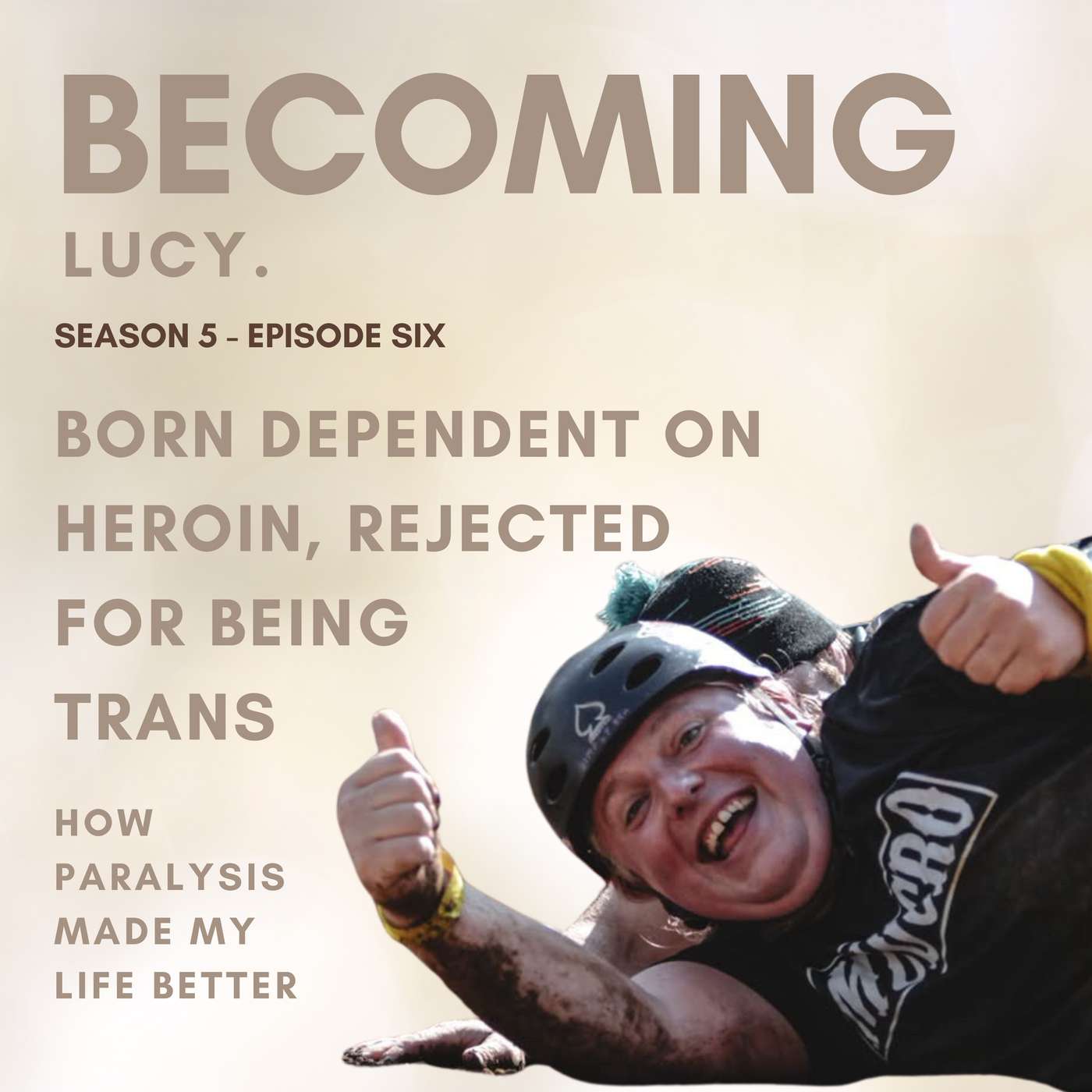
Becoming Lucy · Lucy Hodgkinson
Her father introduced her to heroin. Her family rejected her for being transgender. And becoming paralysed actually made her life better. Sounds unbelievable? That’s just the beginning of Bea’s story. Born dependent on heroin and spending the first nine years of her life in the care system, Bea’s childhood was anything but ordinary. From abuse and addiction to family secrets and the struggle to understand her own identity, her early years were shaped by experiences no child should have to face. But growing up was only the beginning. When Bea finally found the courage to live authentically as a transgender woman, it came at an enormous cost. Family rejection, homelessness and losing her job were just some of the consequences of choosing to be herself. And life wasn’t about to get any less complicated. ━━━━━━━━━━━━━━━━━━━━ 🎙️ IN THIS CONVERSATION, BEA OPENS UP ABOUT: • Being born dependent on heroin and growing up in the care system. • Childhood trauma, family secrets and the complicated relationship with her biological parents. • Discovering her gender identity, coming out as transgender and facing rejection. • Addiction, sex work, homelessness and the darkest periods of her life. • Living with Tourette’s syndrome and autism, including the unexpected realities of both. • Being crowned Miss Transgender UK and what that achievement meant to her. • The seizure that left her paralysed and why she believes it changed her life for the better. • Finding freedom through adaptive sports, Tough Mudder and a community that helped her embrace a completely different future. ━━━━━━━━━━━━━━━━━━━━ From being told she was dead to her family to being crowned Miss Transgender UK, Bea’s life is full of twists you genuinely couldn’t make up. But perhaps the biggest surprise came after she became paralysed. Despite the challenges and restrictions of living with a disability, Bea discovered a whole new world through adaptive sports, Tough Mudder and an incredible community. Now an ambassador and charity trustee, she’s using her experiences to challenge perceptions of disability while embracing opportunities she never imagined possible. So how did something that placed so many restrictions on her life also open up a world she never knew existed? And trust us, Bea doesn’t hold back. ━━━━━━━━━━━━━━━━━━━━ ⚠️ A NOTE FOR LISTENERS This episode contains discussions of childhood abuse, addiction, sexual exploitation, sex work and suicide. Bea also lives with Tourette’s syndrome, which can cause involuntary movements and vocal tics, including swearing. These moments are part of Bea’s everyday experience and are shared openly throughout our conversation. ━━━━━━━━━━━━━━━━━━━━ 🔗 CONNECT WITH BEA 📸 Instagram: https://www.instagram.com/simplybea_adaptive_athlete/ 🌿 EXPERIENCE COMMUNITY Discover the charity supporting disabled people to enjoy the outdoors, adventure and accessible activities. Website:...
Hana (00:16) Hello and welcome to Becoming Lucy with me, Hannah. Lucy (00:21) me Lucy. So what if being completely honest about who you are cost you your family, your home and even your job because for today's guest that's exactly what happened. Hana (00:35) Yes, she spent the first nine years of her life in the care system and at just eight years old, a seemingly ordinary conversation at school made her realise something about herself that she would go on to hide for years. And when she eventually stopped hiding, her life as she knew it fell apart. Lucy (00:52) She lost her family, she lost her home, and she even lost her job. But that's only one part of this story because there was also years of addiction and a relationship with drugs that began in circumstances that involved her biological father. Hana (01:07) And just when you think you know where B's story is going, five years ago, her life changed again. She became paralysed. Lucy (01:15) Now, if we stop the introduction there, you probably think you knew what sort of conversation we were about to have. You don't. Because Bea told us something before coming on today that completely changed the way we looked at her story. And that's because becoming paralysed made her life better. And today we want to understand how someone can go through everything Bea has and generally mean that. Hana (01:40) because the woman sitting with us today is eight years clean, throwing herself into adaptive sport, climbing mountains, dancing, performing balesque, and doing things she says she probably never would have done before becoming disabled. We're talking wheelchair basketball, pan archery, adaptive line dancing, mountain hiking. Lucy (02:01) and also plenty of mud, which is actually where our connection, well my connection to bee comes into this story, but we'll get to that later. Hana (02:10) And before we do start, there is one thing that Bea wants listeners to know. Bea has Tourette's syndrome, which you may hear throughout our conversation today. And Bea, rather than us trying to explain what that means for you, I think it's probably better to first introduce you to becoming Lucy, so welcome. And now throw to you to tell us and our listeners what Tourette's syndrome is and what we might hear through this conversation and what it means for you. Bea (02:29) Thank you. So Tourette's syndrome is a neurological development disorder. It's where misfiring signals and the basal ganglia in your brain create tics. Tics can be physical or vocal and they never represent my true feelings or thoughts. So if I have a shoulder switch, if I stick my middle finger up, if I blink, wink, or if I have something called coprolalia, which is where I shout explicit words. I'm not thinking about those words at the time, it's just something that comes out. So I've always said to people, if something's funny, feel free to laugh. As long as you're laughing with me and not at me, I'm okay with it. Hana (03:22) thank you, Bea. That's really lovely to hear and that's a really perfect explanation. obviously before we pressed record, we did have a little bit of a kind of, what's the word, honest chat about maybe what we could react like throughout the conversation. And you were really kind and really, ⁓ you know, pleasant with us. And thank you so much for explaining that to the listeners as well. So, yeah, thank you. Lucy (03:22) Good. Bea (03:34) Bukkake! Lucy (03:35) Hehehehe Yes, and obviously now everyone knows we're just going to let you be you. And obviously welcome to Becoming Lucy. And we've already hinted how we kind of know each other. And it's very briefly from our OCR days, isn't it? So, well, my OCR days, which are no longer at the moment. ⁓ So I think I mean, mentioned it briefly, didn't we before I put a post out. Hana (04:09) No. Lucy (04:15) before I did the Spartan asking for advice, I think it was. And then for the power of Instagram, we got chatting from there, didn't we? So, and then since then, we've talked about a dub adapted sports, like you said, deadly dozen, and then just kept in contact. Because I think what we're going to cover a lot in this episode later on is I definitely didn't realize until I became disabled myself what challenges that there are out there. And I know I... Bea (04:24) Yeah, yeah. Lucy (04:43) watched you before I even came to say well just doing videos and try to get down an alleyway where it's a park where they've got those stupid like barriers where you know you get like a bicycle through so a horse can't go down but no one thinks about obviously the wheelchair user and obviously being a massive advocate for that so yeah that's me going off in a tangent already but it's just how memories come back into your head isn't it and I was thinking such a great video and I can remember that it's just things that go on from there but Hana (05:01) Yeah. Yeah. Lucy (05:12) Like I say, we've gone from crawling through mud and now obviously gonna talk about your entire life on the podcast. So I think it's nice to understand how we got to the woman sitting in front of us now. So we're gonna go right back because there's so much of your life we want to talk about today and understand who you are and like I say, you described yourself to us in quite an extraordinary way. And in your notes, you started off, you said, well, your life started off, you said you were born as a rattling baby. So what does that mean? Bea (05:45) ⁓ so my mum was in a relationship, well, situationship, ⁓ with my natural father and they were both heroin addicts and she became pregnant. He ended up in prison while she was carrying me and she continued to use heroin while she was carrying me, even after she was aware she was pregnant. So I was literally a newborn baby that was a heroin addict. Hana (06:19) God, like when we read your notes and I read this phrase, you me and Lucy sort of messaged behind the scenes when we're planning all these episodes and I literally said to Lucy like I feel like as soon as you start speaking I'm gonna be out it's gonna be really hard to contain the emotions and I told you that as well because I just cannot imagine like starting your life like that and being then what transitioned onto morphine straight away. mean, what, do you know what happened? mean, obviously you're a baby. Do you have any, does anyone tell you what that means like medically and how you reacted and what rattle in baby kind of how they would start the journey of their life? Bea (07:03) All I know is that the cry of a withdrawing baby is like a scream like you've never heard. Because I've asked about it to people that know, i.e. medical professionals. When I've had the opportunity to ask, I've asked and they say that the cry of rattling baby is like no other you'd ever hear. It's painful to hear. it puts babies through a lot of intense stress and pressure and back then like survival rates for rattling babies was quite low because unless you control that addiction in a very careful way it can kill a baby so i was very lucky to live through it at the time now they've got things managed a lot better and survival rates are way better but for the time i was born in the late 80s that was a tough time still because it's controlled opioid dosage so you're not withdrawing as harshly but at the same time they're not feeding the addiction and in a newborn baby that's really really difficult to do because you're so fragile Lucy (08:12) Bye. Hana (08:18) What about like your parents then? Did they just, did you get taken off them straight away, put in an incubator, know, controlled medication like you've just talked about, being obviously bottle-fed by nurses? Or were you still with your biological mum? Was she still able to care for you in those early days? Bea (08:41) ⁓ unfortunately, my mum gave up on me before I was born. She had already planned to put me in the care system and put me up for adoption. So the moment I was born, I was taken from her, but then I was literally a baby on my own after that, because I had no mum or dad. And on my, I was only looking a few weeks ago through my paperwork when I was in the care system and it says home address. not applicable care of address and the address I was under the care of so until I was eight and a half nearly nine I had no legal home address so I was literally a baby with no home and no mum or dad Lucy (09:27) Jesus. And when you look back at those first nine years of your life now, what does that childhood look like for you, like in your memory? Bea (09:39) There's a lot of pain comes with it because I had the most loving foster mum and dad in the world. I'm still in touch with them. I still ring them every few weeks. They are my absolute world. They took care of me when no one else would and I own the world for that. But it was also really hard because the rejection I faced at school when all the... was on a child protection order. And what that meant at the time was all the other kids would run out into the playground to meet their mum and dads. I would have to wait on my own in the classroom with the teacher for a social worker or my foster mum or dad to pick me up. So I was always isolated as a different child. And I never understood that until I asked my foster mum the question, why was my life like that? But it took me years in adulthood to ask the question because the pain that caused me Lucy (10:23) Mm. Bea (10:37) not only being different from the one being in the care system but also the one that was separated at school. Rest-Bite care wasn't good either. I was off the rails when I was a kid. I don't know how my foster parents took care of me. I was undiagnosed ADHD, undiagnosed autistic. I was misdiagnosed with Tourette's. They said that I had a movement disorder. It never was, it was Tourette's and it took me years as an adult to fight for that diagnosis and get properly diagnosed. Like, it's pretty obvious to anyone who knows Tourette's that I've got Tourette's Syndrome. But I was clearly written off and it was openly, I've got all my notes from the care system. I'm one of the lucky ones that got their notes. I was in respite care and I was being abused in respite care. Lucy (11:17) Mm. Bea (11:35) and couldn't voice it to anybody because if I said There's no... the only way can word it which makes sense in my head is kind abuse. There's nothing kind about it, it's cruel. But they present it in a kind way. It's our secret. I only do this with you, it's our special bond. And when you're a child going through that, you feel this security even though you don't want touching, even though it feels wrong. But when you come away from that situation and you're back in your regular placement... Lucy (11:52) Okay. Bea (12:13) How can you tell anybody that a foster carer had been kind to you? Hana (12:18) Mm. Bea (12:20) I didn't want to go back there but it really messed with my head so badly that I couldn't ever tell anybody that I was being abused because I didn't really understand what was happening to me. Lucy (12:31) Hmm Hana (12:32) And on that bit, like a couple of things have just like come into my head, but just on what you've just said then, the respite was respite from your foster parents who obviously, like you said, I started crying when you said how much you love them and you're still in contact with them because that's probably a real small amount of people that can say that, right? And I'm so pleased that your foster parents have... been such a special, you've had such a special relationship with them. Was that to give them a break then because they had other foster kids? Were you the only foster kid they had and it was just what the social services offered and of course they're going to you know maybe take it up. Why was there respite when you had foster parents? Bea (13:12) ⁓ a lot of respite came from my, there was other kids in the same house as me. It wasn't just me, but a lot of the respite I think came from how disruptive I was. How no one understood my brain. A lot of them put it down to trauma and being a rattling baby in my development and stuff. there may have been a little bit of something to do with it when I tried to stab a social worker, ⁓ out of fear cause she was. ⁓ Hana (13:37) Right, let's put a pin in that a second. Carry on and we'll go back to that bit. Lucy (13:41) Yeah. Bea (13:44) ⁓ yeah, I was just too, I think looking back, I think I was too much for him, but also they needed their time as well. Like they couldn't care for one, two, three, four, five of us, 24 seven. That's a lot for them. ⁓ Lucy (14:04) Yeah, I think a lot of them do get it, don't they? Because I remember kids at school who were fostered and everyone seemed to have that respite. You know, like one weekend they weren't there, do you know what mean? Because they were in their respite and then the next weekend we knew they could play out there. Do you know what mean? Like that's just my memory of putting it together, yeah. Hana (14:16) No, it's good to know, yeah. Yeah, but that's good to know, because obviously, to be fair, I used to live next door to foster parents, but you don't know the ins and outs, do you? And on that B as well, I'm just going to circle back to when you was a baby, just because I had some questions around that. So obviously, so sorry to hear, obviously, that your biological mum had given up on you. And obviously, the life that you... may have had, had she not, you might not be sitting here now with us. You know, if she had gone back to heroin or taken you back to an environment that wasn't safe, you know, like you said, if they were using or through the pregnancy, you can only imagine what kind of mental and physical state she was going to be in. But that still is always going to hurt you to the day you die, right? That you were not wanted. So I can only imagine how you feel. When you talk about being in foster care then, were you in hospital for a certain amount of time and then you were placed with your foster parents straight away as a baby or were you moved? Okay, so they came and kind of rescued you so to speak from two, three, four weeks old once the doctors were satisfied that you were over the heroin addiction, which just makes me so sad to even say, ⁓ is that kind of how it works then? And then they brought you up. Bea (15:30) Yeah. Hana (15:44) ⁓ as a baby and then just on that, I'm so sorry, I told you I'm gonna have a million questions. Why weren't they the ones that maybe ⁓ went on to adopt you? Was that something that you're gonna explain to us in a bit? Bea (15:57) If they did adopt two others, they were twins, people would either adopt one or the other but she didn't believe they should be separated. So she adopted them but she also had kids of her own. ⁓ I think if I'd have stayed there much longer she probably would have adopted me. But ⁓ I did get adopted in the end so I did get taken away. Hana (16:09) Right. Right. Yeah, which we're so excited to delve into because that's another piece of your journey. I hopefully, you we'll talk about that and that'll be fond memories for you as well. So yeah, they took you as a baby, you'd healed from the doctors and they brought you up as a baby and in this foster house that you obviously were really, had happy memories from. And obviously you went to respite and that image again of you being abused whilst you were in respite and not being able to tell your foster parents, now I presume. They're probably like, why the hell didn't you tell us? Bea (16:55) Well, I had the conversation with them about a year ago after I'd had a lot of therapy. ⁓ I said, I'm sorry for the day I tried to stab that social worker because the grief I caused them was immense and I feel so guilty looking back. A social worker came to take me away to respite and I wouldn't go. So I went to grab a kitchen knife and I was willing to do anything it would take to not go back to the abuse. So I got a kitchen knife and I went for it and my foster dad grabbed me and stopped any damage being done. Subsequently, half an hour later, the police were there and I ran to the kitchen to escape them, found the back door was locked. I was actually trying to escape. I think they thought I was probably going for another knife. I was off the rails. I was eight years old going for knives. That was like, that's how desperate and scared I was. ⁓ and the police grabbed me and they put me in cuffs at that age and locked me in the back of the car and left me ⁓ and I really hurt myself fighting and kicking ⁓ I basically got given the choice to go quietly because I'm going to respite whether I like it or not go quietly or be taken by the police with force Lucy (18:21) Jesus. And then just to clarify because I you said it was kind abuse and what you obviously mentioned touching. I presume, this is just me presuming so correct me for our listeners as well, was this sexual abuse then or yeah? And this was the respite people they were gonna take you to to that day. Christ. Did you... Yeah, that's what I was just about to say. Bea (18:40) Which I ended up on. Hana (18:42) And so it happened again then, you were there back in that space. And like you've mentioned, that is desperate, sad, horrific times that you were going through to grab a knife. And when you spoke to your foster parents, and you mentioned you spoke to them last year. What did they say when they were piecing this all together? Because you said that you felt guilty. I mean, not that they would have known because you didn't tell them. How did that conversation happen? What was getting said? Were there a lot of emotions in it? Bea (19:14) I cried and they cried. I told them why I went for that social worker that day and they had no idea and they felt like they'd failed me because they allowed me to go back to a place of abuse. And I said, you didn't fail me. I didn't speak out. I said, I should have, they said, we should have realised something was wrong with the way you were behaving with such extreme measures, but we couldn't put our finger on it. And I said, well, if I couldn't find my voice, then... how is it your fault? But I was eight. Whank! I was eight. I didn't have a voice. I was a little autistic eight year old that didn't have any understanding. Lucy (19:58) Also, what's striking as well, while all this is obviously going on in the background and happening, you said something as well when you were eight years old, this is when you knew that you were trans as well. Can you take us back to this moment? Because how the hell do you contemplate everything and then even know if that makes sense? Bea (20:13) Yeah. I was at school and we had a talk and it wasn't sex ed, it was kind of like girls you're going to have periods and you're going to grow boobs, boys this is going to happen, know. We had that talk and I went home that night, I got in the bath, I looked downstairs and I was scared, I was petrified because I didn't have the right hole for my period to escape, so what if my period was stuck in me forever? I was genuinely petrified. And I was going to school looking at girls thinking, why can't I wear a skirt? Why can't I have long hair? Why can't I play netball? Why do I have to play, you know? And when I got a little bit older, when I started becoming like more sexually aware, if you like, as a teenager, I was looking at boys thinking, you're hot. And I was looking at girls thinking, you're hot too, but I wish I was you. And I genuinely believed one day, like Santa Claus turns up, like the tooth fairy always turned up, one day I'll wake up and there'll be a fairy come along and I'll be a girl. And I kept holding my breath for that day to happen and it just never did. Hana (21:32) Mm. Lucy (21:32) Hmm. Hana (21:39) Mm. Hmm. And when you was at school then, you've already talked about feeling isolated because you were waiting for your foster parents to come and collect you. And you, you know, you always felt that. that bit different. Did you have a group of friends at school? Did you have a happy school life or was it just one thing after another and the realisation that you were trans, was this just another thing that you were thinking, ugh, and you know, why me almost? Or did it make you feel like you belonged? Bea (22:21) No, never... school even up until being 16 and leaving I hated every day. I couldn't wait and the biggest celebration wasn't getting my results or looking forward to my future, it was just being out because I couldn't stand school. Partly because I was trapped in the wrong body, partly because I was diagnosed with dyspraxia and dyslexia in school but never autism or ADHD, they weren't considered. I was just written off as a problem child, because I was in the care system and been through the care system. That happens a lot. You're misbehaving because you're a kid in care. You're misbehaving because you were a kid in care. They don't consider that you might be neurodiverse. Hana (23:07) And even on that be, surely you'd think that they would be giving extra care and attention to kids that are like in care because of the trauma that they've obviously suffered. Or do you think that's changed over the years? Do you think maybe it was because it was in the 80s and things like that, that there was still lots of learnings to be done? Bea (23:29) genuinely don't know because I don't have much to do with any schools now. I go in to do threats awareness training in schools but that's me going in for an hour delivering training and coming out as a volunteer. That's not nothing to do with kids in care. I was in school in the night. I was born in the late 80s so I was going through school in the 90s and the 2000s. Lucy (23:54) Same as us. Bea (23:57) I don't, I honestly don't know. I never really noticed there was much difference. I was treated identical to every other kid in that there wasn't any more care taken unless it was behind the scenes and I didn't realise. ⁓ I was often in more trouble than any of the others though. I was always the problem. The problem because I couldn't sit and concentrate. The problem because I didn't understand. Lucy (24:07) Hmm. Bea (24:26) the problem because someone had just thrown a rubber at me so I retaliated by picking a chair up and throwing it at him. You know, it was always big reactions. I was, so I was always the one that was dragged off to the head teacher's office and why have you done this, why have you done that? And I'm like, I don't know why I did it, I just did. Lucy (24:48) think it's a bit different now. I hope that people will pick up on it more, but even me listening to you, who's someone who doesn't have children, and I mean, talking for all the trauma you go through as a young child, you think, well, it could be, I'm not saying it was a tension, but that as well, you want someone to love you, you want someone to take care. And then also if someone has treated you so badly and you're getting this abuse, someone throwing a rubber at you, no worry. wonder your like, retaliation is that extreme because all this anger that's in you already and someone also, mind my language, is just trying to take the fucking piss out of you. So as a child you react, don't you? And this is how you learn. But also one thing just going off again, going back to obviously like the trans and you sitting in the bath and wondering, you know, where your period. Hana (25:14) Yeah. Yeah. Lucy (25:38) What made you realise in that moment that you're going to keep that to yourself as well because you said you didn't tell anyone until like, was it your 20s or like, do you know what I mean? So I get it's just understanding, keeping that to yourself as well. Did you not even tell one friend and not, you know, or talk like, I don't understand this or do you just talk to yourself? Bea (26:01) I kept it secret and didn't tell a soul mainly because Pre-equality Act, I'm not saying it doesn't happen now because it still does, but Pre-equality Act, it was normal for homophobia in the playground. It was normal for gay people to be freaks, faggots, dirty, whatever. It was normal for parents to be, remember parents living through the AIDS crisis, them having the the TV ads on that were so anti LGBTQ plus. So I kind of grew up in this thing where I don't want to be one of them. I can't be one of them because I'd be seen to be wrong or whatever. So I kept it to myself because I was scared. I was so scared of being one of those people subjected to that. The only person I ever told was my best friend Louise and I was 18 when I told her. Lucy (26:33) you It's a long time still, yeah. Bea (27:02) and she kept it secret for me till I came out and then a couple years after I'd come out she passed away and she is the closest person I've ever had to me in my life but she's the only person I ever told Lucy (27:09) ⁓ bless. Hana (27:09) Aww. I mean, and I think that from everything you're talking about and how you probably were not kind of recognized for all the needs that you had and these reactions that you had probably weren't. taken seriously enough probably maybe by the school that you were in. And I know in terms of wanting to treat everyone the same, it's in that inclusive area, but also your reactions. I also understand why they need to obviously remove that if that was obviously gonna be a threat to the other kids and things like that. And obviously now you can explain why you reacted that way. What would you say or what would you... advise maybe any child, not that they're probably listening to this episode, but if they came across anything that they were struggling with that you went through, so you know, not feeling like they belonged, feeling rejected, maybe being in the care system and being, you know, treated in a certain way, what advice would you give them? Because you kept that in for a long time. And we've just talked about how you've been trans, you kept that into you at 18. I assume you wouldn't want anyone to go through what you did. So what advice would you give now to someone who might be struggling with all of that? Bea (28:39) say speak out don't do what I did find a trusted person like a teacher a carer if you've got foster carers if you've got any safe responsible adult that you can confide in talk to them don't feel scared to speak out like you're struggling tell them you feel abandoned tell them you feel worthless tell them you feel unloved If you're being abused, try and voice it the best you can, even if it's in cryptic language. Adults can often understand cryptic language from kids. They know the red flags to look out for. So do it and don't be scared like I was because that foster carer has got away with it as far as I'm concerned, because I never reported him. I never went back and found his full name and I can't remember where he lives. So I'd be... Hana (29:28) Yeah. Bea (29:34) I'll be pissing in the wind as far as I'm concerned trying to find him so... don't. Lucy (29:37) Hmm. Hana (29:39) And they're given this responsibility, which is just so frustrating, because to be a foster carer, you must have to go through very strict processes to then completely manipulate that responsibility. And you wouldn't have been the only one. Yeah. Lucy (29:55) That's a true predator though. Look at Jimmy Savile. Do you know what mean? They hit on charities and kid programs in plain sight. Do you know what I mean? it's a true... I'm sorry. Hana (30:03) Yeah, yeah, yeah, yeah. And talking of safe environments then, we did talk about it briefly before. We wanna dig a little bit deeper. You're adoptive parents then, so you're eight years old. Bea (30:05) Jim will fix this. ⁓ Hana (30:18) You have your brilliant foster carers who you've really built a lovely picture around them and then they come and tell you that you've got a family that want to take you home forever. What was that like? How did it happen? And can you remember some great things about it or was it still a scary time for you? Bea (30:18) Yeah. It was scary, but it was transitioned. So one weekend they'd come round for tea and I'd think, who are you coming round for tea? A few weeks later it'd be, these people are taking you out for the day. A few weeks later, you're going to stay at these people's houses. And I thought it was just another couple of carers. I didn't realize, you know, so it's a transitional process. It's not just, it's not just you get picked up and off you go. It's... steadily done over a few months so I knew them before I moved away but it still moving away was hard moving from Southampton and Winchester area filled with everything I know when all I know to having a full name change because of child protection reasons full name change nearly nine years old was messes with your head to be an only child living in Leeds with two new parents was tough They loved me, but it was tough. ⁓ and it never took away, even though I should have felt all the love in the world, it never took away that those feelings of rejection and abandonment, because they'd already been sort of programmed into me because of my starting life. ⁓ I still feel them now, any slight rejection and it floods all those feelings back still. It's made me very sensitive to rejection. ⁓ and Hana (31:59) Hmm. Bea (32:14) But they did their damn best for me and I can't thank them enough for that. Hana (32:20) That's amazing. obviously through then you've had your adoptive family. You then got obviously into a sticky spot in secondary school then. Do you want to walk us through kind of what secondary school looked like for you? Lucy (32:21) Yeah. Bea (32:37) Secondary school, I was moved schools because I was kicked out of my current school for disruption sent to a school that would better understand me. I actually really got on there as well as far as school life went, but also in my home life. I got involved with some older kids that introduced me to weed. They then introduced me to crack by accident or say it was by accident. I smoked and I felt really good and they said that's because there's crack in there so I took crack without knowing it. 14 Lucy (33:09) Jesus fuck. How old were you? Jesus. Hana (33:10) Wow. And obviously this is very then full circle back to your biological parents. And obviously you knew where you would come from at that point. You'd been explained about it. What did that make you feel like smoking crack? I know obviously it's not heroin, is it crack? Or is crack heroin? No, but it's obviously a very hard drug, isn't it? Yeah, yeah, yeah, yeah. Did you think about that or was it not connected at all? You were just trying to escape. Bea (33:34) No, no, Yes, cross-eyed rogue, yeah. Hana (33:45) reality. Bea (33:47) At the time I still wasn't aware till I became an adult of my past. Though I didn't really know what my biological family were like. So all I felt was this substance takes away all the pain of being trans, takes away all the pain of overwhelm, all the pain I was feeling from being undiagnosed autistic in ADHD. I didn't know my brain was different. Hana (33:54) ⁓ okay. Bea (34:15) I just thought everyone's brain was like mine, it's just they cope better. So not understanding my own brain and living in all this pain, it took all that pain away. So it became moreish. It became something I wanted to chase all the time. Hana (34:33) And obviously you're around a bad crowd, I take it, that you were just hanging with and taking drugs. Bea (34:42) Not, yeah, some of the time, not all the time. I had a really good, a good set of friends when I was a teenager, where I lived. A really good set of friends that I got on with. We used to do really innocent and good stuff like play guitar, sing, go to the pub. If we'd get away with it, that was. I had a really good solid set of friends growing up that I owe the world to. It's just a few other people that I would associate with every now and again that I'd go to for that escape. So I wasn't like a hardcore addict or anything as a teenager, but I was a recreational user and being 14 using Class A drugs is not the ideal. Hana (35:07) good. Mm. No. And do you think that sort of made some of your conditions, did they heighten it? like Tourette's, that heighten, taking drugs, did it heighten it or not? Bea (35:40) So I was ticking from when I was, I started ticking at seven years old. By my mid teens, my ticks had really calmed down and no one really noticed them. I had the odd wink and shoulder shrug, but it pretty much calmed down and my Tourette's only flared up again about six, seven years ago where it went boom again. So although I've had little ticks all my life, I've got away with it quite well. So... I don't feel like taking drugs made much difference to me. ⁓ The only thing it did was mess my health up badly and... temporarily fixed paint. Lucy (36:25) And then going back to the Tourette's then, because obviously it started off, like you said, it was just the odd like, you know, movement. That's what they thought it was. And then it settled down and it's, like you said, come back in the last six years. What does Tourette's look and feel like for you? Because I think my earliest memory of seeing someone with Tourette's was watching Shameless years ago. Do you know what I mean? And you associate it again with like swearing and things like that. But what is it like for you? Bea (36:49) Yeah, yeah. Lucy (36:55) And obviously you can't suppress it, can you? Do you know what mean? I presume it's like trying to hold in like a sneeze or something that can make you go blind. Do you know what I mean? So what's it feel like for you? Do you know one's coming? you know what I mean? Bea (37:08) Yeah, wanking. I get like a burst of energy through my body. It's almost like electric signals running through my body. And it's like... But this takes a millisecond. get the preliminary urge, which is like, it's not even the build up, it's like a build to a sneeze, but in a split second. I get that and I don't know what's gonna happen. I don't know if I'm gonna head jerk. I don't know if I'm gonna shout something, say something, do something. I get the energy and then it releases. And as the tick happens, it releases and I get that feeling of relief, it's out. But at the same time, when I'm out, My anxiety levels are through the roof, that makes ticks worse. And then I'm like, if I tick something, I'm then on edge straight away thinking, who's looking at me, who's offended by it, who's laughing at me. Hana (38:00) Hmm. Lucy (38:01) I know you said you have to work your life around Tourette's day to day. So tell us about like, is that something you have to think about before going through the door? Like you've mentioned you've gone into schools to obviously learn, like teach them about Tourette's, but then obviously you're in a supermarket. Like what's going through your head? Like. Bea (38:06) Yeah. Well, I avoid supermarkets at all costs. I let my other half do it. I'll drive her there and she'll go in, which is great. ⁓ but going out for a meal, ⁓ sitting in a restaurant, sitting in Miller and Carter, we've got a few problems. We've got the people around me. We've got the staff. Are they going to be okay with me? Which they always are. They're great. But then we've got a problem of the state knife and the tick where I'm holding a state knife and it goes up to my neck. Lucy (38:23) Bye. Hana (38:46) Right. wow. Lucy (38:51) Ooh. Bea (38:52) and Donna has to grab my hand. So yeah, Tourette's can be dangerous. Tourette's isn't just all funny, this, that, the other, like people think. It's exhausting and it can be really dangerous as well. Hana (39:04) Yeah, I mean, I remember my first sort of introduction to it was Pete from Big Brother. ⁓ Lucy (39:13) How are you? Hana (39:14) And I remember thinking it was great to get to know someone and he was a great person, what we could see on the TV. I don't know him and obviously how he lived with Tourette's and he was on TV. Do you remember that, B? How did that you feel watching someone on TV that suffers with Tourette's as well? Bea (39:38) Like amazing. A lot of the media that we get on Tourette's is often quite damaging. Like we have one amazing thing and then negative things happen. So like my good friend Johnny, Johnny Davison, had a film made about him called I Swear. Hana (39:58) Yes, I saw that was, that was recently, right? Yes. Bea (40:00) And yeah, on Netflix, great, it's an amazing film. It's about his life. And it ended up getting three BAFTAs. But because Johnny was in the audience, the BBC edited out most of his ticks, but left one or two in, which then caused controversy and it hit the press and all the negative stuff comes out. And Tourette's is often glamorized by the media. Hana (40:20) Mm-hmm. Bea (40:27) Like a lot of the things that I've been out about Tourette's have been glamorising it for... erm... for all sorts of reasons. It just seems to be a condition that a lot of people as well like wank. Erm, a lot of people want to be your best friend as soon as they learn you've got Tourette's. They're either embarrassed about you or they want to be your best friend. The number of times I've been out in town with my friend Katie and I ticket someone... and they'll go, ⁓ my God, have you got Tourette's? And I'm like, yeah, I have, yeah. that's so cool. That is amazing. And I'm like, why is it? It's exhausting. It is absolutely exhausting. Why is it amazing? Yeah, but it's so funny. I'm like, you don't have to live with it. You might think it's funny, but you're not having to live with this day in and day out. Hana (41:15) Yeah. I find that pretty hard to listen to actually because you've got a condition that like you rightly say, it's hard to live with, it's exhausting, it's something that obviously gives you trauma in various ways and people are just sort of like, it's cool, it's funny, I wanna be like, I just can't fathom that, do you know what I mean? And again, not that... You want people to almost feel sorry for you. This is you, this is you as you are, and you're a fantastic person. We're getting to know you right now. And I think you've handled it so far during this conversation brilliantly. But it's mad that people just feel like they can say that to you, and they don't even know you. Bea (42:06) Yeah, yeah it happens a lot. Lucy (42:10) God. And then obviously, we've got obviously so much to cover, but I want to go back because we spoke about it when you came out eventually at 24. So you've hid yourself for years. Unfortunately, one of your best friends obviously passed away. What made you finally say, I can't hide this anymore and just bite the bullet and do it? Bea (42:37) It was just years of suppressing it and something overrode me where it was I would rather die than carry on living hidden. and I made an attempt on my life. and then thought to myself I might as well try coming out because I can always kill myself later anyway. And that was my thought process. Like, complete... just no self-preservation at all behind me. So I went out on a night out, found some new friends and told them and they doled me up. We went and got me a wig and makeup and a dress and we went out into town and I felt the best, most alive version of me I'd ever felt. I felt a million dollars. I felt complete. I felt whole. I thought this is who I am. So we had a night out and it was amazing but then I thought how do I tell the world because this is going to be a process. When I did eventually start coming out I told a few workmates that I trusted they were great with it so I started wearing mascara at work and wearing bits and pieces and my boss at the time found out and he came down to have a word with me and he said you've got two choices you stop putting all this crap on your face and you carry on as a man when you're here because i'm not having it upset my clients or you get out of this job because i'm not putting up with it Hana (44:32) God. Lucy (44:33) God, that's not like you think 24, what's not even, what? I tried to do the maths, I can't even do the maths, but do know what mean? Yeah, so it's not even that long ago for like that kind of discrimination you think to be. Hana (44:39) About 15 years ago, maybe? Yeah. Bea (44:47) I'm 37 now, so it's like 13 years ago. Hana (44:49) Yeah, yeah. Lucy (44:50) Yeah, but it's not that like, because with, I say I'm 38, Hannah's a year above me. I'm 39, this is why my maths is so terrible. But you think like, because I remember like Benidorm back then, that's what came into me, like Leslie, you know what mean? And then, you know, we switched characters, not characters, but that's the character we played, wasn't it? But you know what I mean? And it was accepted, your boss to be so like, that's not happening. I mean, was that something you talked to like? Bea (44:59) You Lucy (45:18) HR then or was that something that I knew? I mean there's so much to go but it blew your life apart when you came out as well didn't it? Bea (45:25) Yeah, yeah. Well, it started with my job and he was the boss. He was. It was a small company. He was the boss. There was no one above him. So it started with that. Then I went home and eventually I told my mum, my adoptive mum. She was like, my God, I don't know how your dad's going to take it. I don't know how we can cope. Blah, blah, blah, blah, blah. You can't tell him. You've got to hide it from him. Actually, it was her that was struggling with it as well. Lucy (45:29) Yeah. Right. Bea (45:55) I was going to a friend's house, going out as me, staying over the weekend and coming back to their house after, because I was living back with my parents because I'd had a really nasty break up with my ex. one day I had nail varnish on and I woke up to go out to the pub and my dad caught me and he looked at my nails and said, what's that crap on your nails? I broke I said do you know what I'm just going to tell you how it is this is who I am and I told him and he said well you've got two choices you get that off your nails and you never speak of this again and you carry on how we have been carrying on or if you're going to carry on this nonsense you can pack your bags and get out and you're dead to Hana (46:46) my God. Was it the latter then that you did? Bea (46:51) Yeah, I packed my bags and I left and I ended up homeless. Hana (46:56) My God, so, right, you've gone through your teenage years, you're in school, you're in jobs, you've found friendship circles, you've suppressed everything, you've decided after an attempt at your life, you're gonna come out like you said and just see what happens. Job's gone, adoptive parents, you are now dead to them, right? And still are? Bea (47:18) Yeah. No. Hana (47:22) okay, okay, right. Let's get to the good stuff in a bit then. Right, perfect. Okay, so that happens next up. Bea (47:23) Yeah So I went back to the friends I grew up with, the good friends I grew up with, Bobby and Kate. And I was scared because our Bob was in the military for a lot of years. And I thought, military man, is he going to accept me? I went to their house. There's a lot I need somewhere to stay. And I said, I've got a problem. And they said, what? said, I'm not who I say I am. I told them. And he just looked at me. He said, do you really think that surprises? I said what do you mean? said growing up we all thought you were going to be gay. It's not that far off is it? And I was like really? He said yeah really. He says just be you. And Kate, his wife said, Bea come upstairs with me. I said why? She said just come upstairs with me. Half an hour later she'd done my make up, done my nails. Hana (48:05) Yeah Lucy (48:05) Ugh. Bea (48:25) And she said, right, I'm just going to see what I've got in my wardrobe. The only thing I think that's going to fit you is this bridesmaid dress that I had years ago. Try it on. I said, what? So I put this dress on. She said, right, great. You look amazing. Now let's go show Bob. I was shaking like a leaf. And I went downstairs and he looked at me and he says, and how do you feel? said, petrified. He said, but how do you feel inside? I said, complete. And he said, good. Hana (48:43) Hehehe. Bea (48:55) Do a cuppa? Hana (48:56) ⁓ I love that. What amazing friends. Lucy (48:57) Hmm. Bea (48:59) That was like how my trans life started in finding acceptance knowing that there was people out there so I put it on Facebook I put it out there and I the hate of people I thought liked me the number of people that deleted me blocked me Hana (49:07) Yeah. Bea (49:26) Yeah, was soul destroying coming out. As much for every person that accepted me and loved me, there was two or three that didn't want to know me. Hana (49:35) Yeah, and that's, no, but I totally would be like this, me and Lucy always have a million questions. Lucy (49:35) Yeah, I was, sorry. I was gonna say like, it probably would have been easier, like you hid it for so many years. I was gonna ask, say maybe it would have been easy if you just carried on hiding. But I think how you explained that moment with your friends, you know, the dad from the military, that was like your acceptance moment. And no matter who you are and what you're going through, might just be... Hana (49:54) Yeah. Lucy (50:01) Sometimes you just need a rid out of toxic people anyway. So you kind of did yourself a favour with that, didn't you? In that essence. Because I think because you were talking about suicide before that and I think if it wasn't for your great friends and that moment of getting dressed up, walking down those stairs, you probably would have been back to that. I mean, that sense of rejection from unfortunately, like you say, adopted parents or I've got shivers then. And I'm just going back to you. Hana (50:04) Mm-hmm. Lucy (50:30) in the primary school again sat there on the chair. I give it to you. I really give it to those friends. I don't know how you feel about that. you say they saved you? Yeah, I literally thought that. Sorry, I got so, yeah, the goosey's on that. Hana (50:37) Yeah, they're amazing. Bea (50:41) I owe them a life. Yeah. Hana (50:43) Yeah. You know, you're right. You're right. They were everything you needed for the whole of your 24 years right up until that moment. They were everything you were looking for, all of those emotions and acceptance and that you being you and being loved for who you are, not being parsed from pillar to post, not going for any kind of system. Those two people, I think everyone could agree are just superheroes. Bea (51:14) Yeah, yeah. I own the world. And they've brought their kids up with me being normal to them as well. So their kids don't know anybody but B. They don't know my dead names because we don't talk about them. That's dead me. That's old me. They just take me as Auntie B. That's it. That's all I am to them. And they don't know any different. And they wouldn't change that. They're absolute heroes. Hana (51:22) Mm. Bea (51:43) ⁓ And they were there for me as well when I got the phone call off my dad Hana (51:43) Yeah. Yeah, talk to us about that then. I was just gonna ask about your dad. This is your biological dad, right? Right, your doctor's dad. before that though, there was your biological dad. Something happened with him, didn't it, with the drug usage. And that was before 24. Bea (51:56) Now this is my adoptive dad who wrote me up. Lucy (51:58) Ha ha. Bea (52:07) Yeah, no that's when I was 18. Hana (52:10) Right, yeah, so before you turned 24, the 18-year-old you got back in contact with your biological dad and used with him, right? Lucy (52:11) Bye. Bea (52:19) Yeah, I was sat with him and I said, what's it like? And he said, well, it's hard to explain. I said, I want to know what it's like. He sat there using in front of me. I want to know what it's like. He said, try it then. And I said, serious, you let me. He said, yeah, I'd rather do it me here safe than do it on the streets where it's unsafe. Looking back, That's pretty horrific. Your dad allowing you to take heroin, in fact teaching you how to do it, teaching us to chase a dragon and providing you with it. That's pretty horrific and it's probably a good job I didn't grow up with him. Hana (52:52) Yeah. Lucy (53:00) Yeah, how did you...yeah. Hana (53:00) Yeah, and that's kind of what I was alluding to before when it was like, I'm so sorry that you didn't have your biological parents to look after you, but in the same breath, it's like having, obviously, heroin addicts as parents in this particular case, so you know, I can't speak for anyone else, we're only talking about your story, and then reconnecting with your biological dad and having him do exactly what you've just said then, yeah, I agree, it probably is. Was that just a quick flash in the pan, you reconnecting, using heroin with him and then you kind of cut him off again? Like how did that happen? How did it finish? Bea (53:38) No. I wanted to get to know him. I wanted to know where I'd come from. I wanted to know what made me me. So I met my natural mum at 16. I met my natural dad at 18. I learned that my life had been based on lies because my natural mum sent me with a saying that she couldn't keep me because the sex was unconsensual. and I was a product of something that she couldn't have a constant reminder of basically alluding to the fact that I was a product of rape I grew up believing I was a product of rape and hating who I was turns out after speaking to him it was consensual and she admitted to lying to me Lucy (54:25) Wow, okay. Hana (54:28) and that was at 16, at 18. Bea (54:30) That was at 18. Yeah, 18 I found out that I've been living thinking I was... Yeah, it was tough. That was tough finding that out. Lucy (54:31) when you found that. Hana (54:41) another layer to your ever existing trauma, know? Not that you've gone for enough and then you find out actually it was because they were heroin. Lucy (54:49) Yeah. Why did your mum do that, did she say? Bea (54:54) I think it was to justify giving me away. think Younger herself did anything she could to justify it to me, but she didn't have to justify anything to me because she didn't owe me anything. Hana (54:57) Mm-hmm. Get hit. Lucy (55:03) Yeah, just that much of a... Yeah. But that much of a state of self being on drugs, was like she was lying. If she did it, she probably believed her own lies, maybe, even like... Hana (55:10) Yeah. Yeah. And was she clean when you met her at 16? Obviously your dad wasn't when you met him at 18, but your mum was clean. wow. Bea (55:15) Yeah. Yeah. Yeah, here's the painful bit. She got clean and got married, had another child and kept hold of that child and brought that child up herself. And I love my little sister to bits, but it does hurt that I wasn't good enough for her because she's clearly proven that she could do it. Why can she do it for another child, but not for me? I'm a first born, she should have thought for me. It's a tough thing to get your head round. Lucy (55:57) And what was the age difference there then between you and your sister? Bea (56:01) Uhhhh face. 19 years. Lucy (56:08) 19 years. So, just to...I don't know if it was like two years later, but obviously, she's gone through that. I know understandably where you're coming from, but it was just trying to get that. So, it took her a long time to get clean. Hana (56:08) and Yeah. And what's your relationship, have you gotten a relationship with your biological mum and dad still? Bea (56:27) Now, here's the ironic bit, it's okay for my natural dad to get me on heroin, but it's not okay for me to be clean and be trans and live authentically. Lucy (56:40) you Hana (56:40) Yeah, so he just wanted you to be there and be on heroin because that's the life that he lives and anything else he's basically wiped his hands of you. My God. Lucy (56:51) I mean to be sat there as a far anyway doing how we were in front of you at 18 still and then you asking. That's obviously what triggered you to ask what it's like. Do you know what mean? So... Hana (57:01) Yeah. Bea (57:02) It was my norm, it was normal to me to see it, like, particularly when your dad does something, when your mum or dad does something, it's okay for you to do, right? Hana (57:04) Yeah. And it's crazy because you didn't even grow up with your dad yet. That biological connection that you had, it proves that that DNA was still so strong that you were like, show me what it's like. You still wanted to almost feel wanted and loved by your biological dad, so much so that you took heroin. Like that just, it's mad, isn't it? But I can, with everything you've gone through, and even though you've had... an incredible foster family and adoptive parents, that bit was still missing and it was almost like that was how you were gonna bond. Bea (57:47) Yeah. Yeah. Hana (57:49) And what was it like then taking heroin? Bea (57:54) euphoric, amazing. I don't want to glamourise drugs, I don't want to run the risk of glamourising drugs, but it was incredible. But that's why it's so dangerous, because it's so incredible, that's why people take it and get addicted. If it wasn't a good drug, people wouldn't use it, you know. That's why people get hooked on drugs. Lucy (58:15) How long were you on it for then? Bea (58:17) I was on it for about a year. Hana (58:19) Yeah. And did your life fall apart at this point or were you sort of functioning and taking heroin? Lucy (58:19) Yeah. Bea (58:25) No, unfortunately I was a functioning addict just like him. Hana (58:29) Right. Lucy (58:29) Isn't it mad how you can be a functioning drug addict and then your life fall apart like you've just said just being who you are and that's when people say like you say you lost your job your family people have more an opinion or a problem with that then You know, I mean, it's just It's mad But going back sorry easy to that. I was gonna say like when did your because obviously you Hana (58:37) Yeah. Yeah. Yeah. Crazy, it? And now that we're going to be on the same train of thought. Lucy (58:57) Like we said, you put the outfit on. When did your transitioning actually begin for you? Was it that day when you walked down the stairs and you were like, well, I'm just gonna live my life like this or was it that casual putting the mascara back on, dressing, do you know what mean? Or was it a gradual or was it, bam, here's B. Do you know what I mean? When did you start? B and B. Bea (59:15) They put Kinda gradual because my dad phoned me up. Lucy (59:20) Mm. Hana (59:22) Yes, let's go back to this. This is what I was, yes. Lucy (59:23) Hahaha Bea (59:25) And said, I want you to come home. I said, I haven't got a home. He said, you have, it's here. I want you to come home. I said, fine. So I drove home and I went in pretty guarded, if I'm honest. I wouldn't go in the front room. We sat, we stood in the hallway. I said, I'm not sitting in the front room to do niceties the way you've trapped me. So just, you've got something to say, say it. And he said, well, me and your mum went counselling. And after half an hour I got up and left because I realised that I didn't need to pay someone to tell me that I love you. He said I've been very very cruel to you going on very old fashioned values and what I really should have done is said it's going to take me a little bit of time to get my head around this but it doesn't make me love you any less. He said we adopted you for a reason that was to care for you and I haven't been caring towards you. So can we start again? And he took me back. Hana (1:00:27) love that. That's got me blimmin' emotional as well. But I love that your dad took accountability and that they tried and went counselling. That's amazing that he really wanted to try and understand. And there and then he told you he's vulnerable. He opened himself up from, like you said, those old fashioned values. And was your mum... Lucy (1:00:29) Hahaha Bea (1:00:30) Yeah Yay, bitch. Hana (1:00:52) the same or you mentioned earlier, she was struggling with it. Does she take a little bit longer? Does she say the same sort of things to you? Bea (1:00:59) ⁓ she stayed quiet, but she did give me a hug. And I think the hardest thing was moving back in with them because I felt like I was treading on eggshells because I knew they were taking the time to get used to it. And I was feeling so much rejection. And I think from being on that path, from losing my birth parents, to being in the care system, to being abused, to losing my foster carers. to that I did love to being adopted, to being adopted, to them being made homeless by the people that adopted me is literally a life just full of rejection all the time. It's just every time you feel secure, you get pushed away again. And it took me a while to get used to being me at their house. Took them a while too, but we got there. That's the main thing, we got there. I went for a job and I did an interview and I was open about who I was in the interview and I finally got another job. That led years later to me being an LGBTQ plus crisis worker, which completed me because I was helping others going through crisis because I knew what they were experiencing. So becoming B was a gradual process over a job. building new friends up again that actually wanted to be friends for me and not nothing else excepting me as me. I lost a lot of my other family still they've never come back. I have chosen family now so I have a Scottish mum, I have a mother mum who I met through Tough Mudder but she's my mother mum and she comes to hospital appointments with me, she takes me out on my trike which we'll talk about later. she leads my Tough Mudder team, she is my everything. I have an Auntie Victoria and I have an Auntie Charlie and between those people they're my chosen family who are my world. Rebuilding life for me has been more just than about being authentically trans. It's about having people in my life that I know will never leave me through the rough and the smooth. They supported me through a psychotic episode. They've supported me through really big hospital appointments. They've supported me through more drug addiction since I've been clean, but that was from prescribed meds like morphine and diazepam. I got hooked on them accidentally. They've got me through so much. Becoming B has been about becoming me authentically as transgender. being diagnosed with ADHD and autism, being open about who I am, this is the way I am, why I am. Getting my Tourette's diagnosis and people just seeing me and not the tics and having chosen family that understand how sensitive I am to rejection and how insecure I am as a person, but they embrace it and they give me the love and the nourishment that I've craved my whole life. Hana (1:04:24) Yeah, that's amazing. And like you said, the chosen family and you finally feel secure, which is something that probably a lot of us take for granted. You know, growing up in, you know, seemingly a normal family and it never is normal. Every family has got their quirks. Everyone obviously feels certain emotions and whatnot. But hearing you obviously say that after a very, very long period and years of various different trauma, it does it. I think it's... I can speak on behalf of me and Lucy. It's very warming and it feels very lovely to hear you say that after getting to know you throughout this episode. And you did mention about being clean and obviously having various sort of, what was I going to say, drug addictions, yes. So. Lucy (1:05:09) drug addictions. Yeah. Hana (1:05:13) When you came out at 24 and you became comfortable, you're living back with your adoptive parents, you found your people and everything like that, why were you still using drugs if you were starting to become you? Bea (1:05:27) So I was pretty much clean at that point. What did me was 2017, I won the pageant Miss Transgender UK. Lucy (1:05:37) Congratulations. Hana (1:05:38) Yes, well done. Bea (1:05:39) it. There is actually, there's links there. Lucy (1:05:44) Go on! Hana (1:05:44) We can use it as part of your promo stuff, definitely. I it's getting up now actually. ⁓ excellent. Lucy (1:05:49) Yeah, definitely. Yeah, that's what I mean. You look to the side then. Bea (1:05:56) You're on one of my Instagrams, but not the other. I've got two Instagrams. ⁓ Lucy (1:05:59) Uhhhh Hana (1:06:00) Well, anyone that's listening and not watching, this is your cue to jump on YouTube so you can see this picture of Bea. Lucy (1:06:04) Yeah Bea (1:06:06) Go watch my TED talk. Let's see. So. That's me being crowned. Lucy (1:06:18) ⁓ wow! Look at you! Hana (1:06:19) wow! Look amazing! Love that! that's so good! So you're... Yeah, we still got the crown! Lucy (1:06:23) Donner. love the crown. It's like proper drop dead gorgeous stuff, isn't it? Like the American TV programmes. On what year was this then? 2017? Yeah. Bea (1:06:32) was from one the most popular books. Hana (1:06:34) Wow. Bea (1:06:38) 2017. I was clean. I didn't realise the director, I'm not gonna name her, but the director was a sex worker and a cocaine user. Hana (1:06:40) so you were clean. Bea (1:07:01) and it became my norm to do cocaine and then get into sex work as well. Lucy (1:07:06) Jesus. Hana (1:07:06) ⁓ really? Bea (1:07:08) Yeah. ⁓ Hana (1:07:10) This was, ⁓ yeah, 25, 26-ish. Okay, right, okay. Lucy (1:07:12) Not even 10 years ago, yeah. Bea (1:07:15) Yeah. Yeah. So I did a good six, eight months of very, very, very heavy cocaine and MDMA use to mask the pain of sex working. Hana (1:07:33) ⁓ I hope I'm gonna say this right. When you were doing the sex work in, you were doing that as trans? Yeah, okay. Okay. Bea (1:07:41) Yeah, yeah people pay a premium for it. That was the desirability i guess for me the money and the drugs that came with it because drugs mask the pain of being autistic and adhd and being undiagnosed still because my brain was still a very messed up place to be ⁓ and the trauma of what had happened in my life i've never had any therapy for it any any counseling for it never spoken to anyone about it it's only in last few years i've been open about it all this is all new as in new for me to talk about. It's all stuff that I've buried for years. Hana (1:08:24) Yeah, well, I mean, that's just sort of something that's, yeah, blown us out because, you know, did not know that that was an area that you got into. yeah. Lucy (1:08:35) Yeah, how did you get out of it then? Bea (1:08:39) ⁓ how I got out of was someone I was working with alongside. I'd just done, ⁓ a bit of a cocaine run. and I got back to the hotel and outside the hotel was police. And I made a very swift turnaround and went back to my place down in Brighton. ⁓ and didn't know what had gone, couldn't get hold of her. She rang me the next morning and said I got nicked, ⁓ for assaulting a copper. and I got caught with got caught sex working and then I assaulted a copper when they tried to arrest me so I got done for for assaulting a cop. So I went to meet with the police station when she came out and that just was a wake-up call to me to say I am running a really risky life here. Literally or three nights later I'd had a heavy night on the MDMA I woke up with a cracking come down and I opened my phone there's a message off an old flame that I really like like the one that got away and she messaged me saying I've been following your story in the papers and on the TV and I think you're incredible. I'm sorry I couldn't love you as a girl but actually I've realised now that I can. One of my kids has come out as trans and I love them no less for it. I can love you as well and I shouldn't have let you get away when you did. And I was like, my god and from that moment I vowed never to touch drugs again because I wanted to be with her so badly. I flew to Lanzarote a couple of days later to do modelling for a week because I was getting paid to model. When I came back, I flew back to the UK, got on the train from Manchester Airport to come back to Doncaster and as the train doors opened she was stood there on the platform waiting for me. Hana (1:10:44) Wow, romantic. ⁓ I was gonna ask you about that. I was really hoping. you did. Love that. Lucy (1:10:45) Is that your partner now? Yes! Bea (1:10:47) Yeah. Lucy (1:10:54) Who proposed? Bea (1:10:58) Well, it's very unromantic. We're laid in bed and I said, shall we get married? She said, get married. And that was it. Lucy (1:11:00) Go on! Hana (1:11:01) Hahaha! Lucy (1:11:04) Yeah Hana (1:11:07) ⁓ do you know what? I was really hoping, because obviously you mentioned your partner earlier. I was like, I really hope this is her current partner. I mean, I'm sure they've spoken about this if not, but that is amazing to know that she again was someone else that saved your life, right? Lucy (1:11:21) Yeah, so romantic too. Bea (1:11:22) Yeah, she gave me the reason to be clean because she gave me love, security. I came to spend the night here a day after she met me off the train. I spent one night here and never left. I never said, can I move in? She never offered for me to move in. I just stayed a night, stayed another night. Hana (1:11:40) Hehehehe Lucy (1:11:42) They do say that about gay relationships though, lesbians. Straight in. Hana (1:11:45) ⁓ I love that. And also that like her child is trans. So what a lovely bond I assume you've got with your stepchild. Bea (1:11:46) hahaha Yeah, it's incredible. Absolutely incredible. Hana (1:12:00) Amazing. that's so lovely. That's just, yeah, made us all feel warm inside. And obviously, congratulations on being clean for eight years. Bar obviously your prescription medication that you alluded to, but let's just focus on the positives. She gave you a reason to be clean. And that was just pure fate that you got that message. ⁓ And obviously you're sat together, engaged, loving life. ⁓ And then, yeah, bam. Lucy (1:12:08) Yeah. Bea (1:12:09) Thank you. Hana (1:12:27) We've got something else that happened to you now. We've gone through some horrific things that you've ⁓ had happen to you in your life. And then like we said in the intro, you think, right, we know where that story's going, but no, you got paralysed. Talk to us about how that happened. Lucy (1:12:33) Ugh. Yeah. Bea (1:12:42) Yeah. Lucy (1:12:43) Fuck yeah. Bea (1:12:46) I was walking around the side of the house to get to the front door, ticking away, beautifully, gloriously ticking away at the neighbours and I had a seizure out of nowhere. As I had a seizure, I hit the floor and cracked my head and my back against the curb. And the long and short of it is I did damage to my brain. Lucy (1:13:02) gosh. Bea (1:13:15) and the signals aren't sending from my brain to my legs anymore. They diagnosed me with functional neurological disorder but normally that's from like emotional trauma. This I got from physical trauma and I ended up with paraplegia. Lucy (1:13:34) So when you say physical trauma, what was that? ⁓ right, right, I'm getting it. was like, God, what else has she done? Bea (1:13:38) blow to the head. ⁓ Hana (1:13:42) I mean this is a blow to the head is quite a lot to be to be fair Lucy (1:13:48) think because you said it's normally done by, you know, like emotional trauma. I was like, well, she'd had enough of that. So what else has she done physically? I think I was going too much into the Tough Mudder and stuff. I was like, she started this already and she had an accident there and then the seizure happened because of that. No, it's because of the blood to the head with the seizure. So what caused the seizure? Was it something you've had before or? Hana (1:13:50) Yeah. you Bea (1:13:57) Ehehehehe Hana (1:14:02) Yeah. Bea (1:14:08) Now it just came out of nowhere. Just came out of nowhere. They say it was a non-epileptic seizure. I'm medicated for them now. So I'm on a very addictive seizure meds, which I'm managing really carefully and really well. But I'm on them few years now. Well, five years to be exact. Lucy (1:14:14) If that's how you do it, you don't have them then. Hana (1:14:25) And I'm just like perplexed at what more can happen. And I know we're gonna go into how you've actually made this your new life, it's given you that perspective. And I can't wait to hear that from you because you really have been through so much. But did you ever think like, seriously, me, why has this happened? A non-epileptic seizure randomly happening to you? Lucy (1:14:38) Hmm. Hana (1:14:55) Or did you just take it in your stride and decide that this is gonna be the start of a new life for you? Bea (1:15:00) No, I can honestly say I hated the world for three months. I absolutely hated the world. I couldn't cope having to, you know, get my partner to bring things so I could go to toilet from bed because I couldn't get to the bathroom. You lose all your dignity and your world flips upside down. waiting for wheelchairs because custom-made wheelchairs take time to be made and they're very expensive. You know, like there's a whole world's disability getting your car adapted because I couldn't drive on my feet anymore so I had to get my hot car converted to hand controls that cost two and a half grand. I had to sell my prized possessions, my bikes, my road bike and my mountain bike which were worth thousands to pay for disability equipment. My life flipped. And I hated the world. And then don't really know. There wasn't like a defining moment. I wish there was, because it would make this story so much better. But there wasn't wanking. There was wanking, wanking. ⁓ Fuck off. There wasn't like a defining moment. It was gradually. I picked myself up to say, what if I go bowling and do it from a wheelchair? what if I go to cinema? What if I do this? What if I do that? And gradually I picked my life back up and then one day a group of friends says we're going to do Tough Mudder and I said you can't, you'll die. That's dangerous and they're like do it with us. I'm like no it's not my thing. I have sensory issues, I don't like mud, I'm autistic. Like, no. They're like, well don't do it with us then, but we're doing it. And I'm gonna have to do it with you so I can see you don't die. So like four years ago, I Tough Mudder Northwest when it existed. Did all 15K in my wheelchair and did about four obstacles out of a 30 odd available, but saw that they survived and didn't die. Hana (1:16:56) you You Lucy (1:17:22) Mmm. Bea (1:17:23) And I got a cracking finish being carried over the finish line by paramedics because there was no one else to carry me. And I was like, I love this. And so I met Shell, my mother and mum, in a local meeting. And one of her friends said, this lady does Tough Mudder. You need to meet her. And I said, met her. She says, we'll get you a team. We'll get you in a harness. We'll get ropes. We'll get... you know, whatever will get you through a proper Tough Mudder. So this is where it all kicked off really. Tough Mudder ignited my life. We did Tough Mudder Yorkshire. We did, I got a massive team together pulling me around with the front wheel on my wheelchair, off-road wheels on it. Wasn't suitable at all, but we did it. We got to Mudderhorn, which is a 40 foot high obstacle, 40 foot A-frame. Hana (1:18:15) Hehehe. Bea (1:18:21) we looked at it and I'm looking up at Mudderhorn thinking my god look at that and Muddermum just said do you want to do it and I said I trust you if you think you can get me over it we'll do it. At that one of my team ran to Dave the MC and said do us a favour because we're the last in the village we're the last on course shout out in the village we're going to get a wheelchair user over Mudderhorn can we have help? at that the village emptied, including the army recruitment people on a stand, you name it, they came. Next thing you know there was a climbing rope going up this obstacle and I was attached to it. And this mass effort of everyone getting me over it took about 20 minutes, but I became the first paraplegic in Europe ever to get over Motherh... Hana (1:18:51) you Lucy (1:18:55) Mm. Hana (1:18:56) Hahaha ⁓ I love it. amazing. Lucy (1:19:13) And. Bea (1:19:14) And it ignited me, so I had to do it again. And again, and again, and I'm now on 10 Tough Mudders later, including World's Toughest Mudder, which is 24 hours long. We've got 25 miles. I did a marathon last year. My first marathon was Manchester Marathon. We attempted to go up Ben Nevis, but we snapped the chair in half, halfway up. So I had to be carried down by my team. I said I've started doing adaptive line dancing. started well finishing doing balesque now because of inaccessible venues but I've been adaptive balesque dancing for last year started doing adaptive line dancing I've started doing wheelchair basketball started doing para archery and I'm being coached one-on-one by a Paralympic bronze medalist so I couldn't be prouder to have her as my coach and I go out with a charity that I'm a trustee for called Experience Community We go on residential with our mountain trikes. We've just done part of the Pembrokeshire Coastal Trail the other week. We go around reservoirs, we go all sorts of places in our mountain trikes. The Tough Mudder Community fundraised for me, did a GoFundMe. They raised the money to have a special made race chair made for me from America. When I look back at my able-bodied life, I think what did I do? Well... I got clean eventually and I got into mountain biking and triathlon but that was it. That was all I ever really did. I didn't do any thrill seeking, didn't do any dancing, didn't do any exploring the great outdoors, didn't do anything. But now I'm paralysed, it's made me have this drive to do more and more. It's given me new perspective on life, not to waste my life, to make it the best it can possibly be. Lucy (1:21:04) Hmm. Bea (1:21:14) And it's made me appreciate life so much more because the first time I got on a beach in my mountain trike I cried. I was like I'm on the beach and I never thought I'd be on a beach again because I'm paralysed how am going to get on a beach? But my Auntie Charlie bought me my mountain trike and that's what Chosen Family, that's how close we are. She literally found me a secondhand e-trike worth eight and a half grand with four miles on the clock. Lucy (1:21:17) Yeah. Hana (1:21:33) Hmm. Bea (1:21:44) She found it with three grand and said, I'll get it, you're here and now. And she did. Like that's more than any family has ever done for me in my life. She gave me freedom. She bought me freedom, which was something, there's no greater gift. ⁓ I go on nights out into town with my friend Katie and my auntie Victoria and my friend Shannon. They'll take me on nights out sometimes. So I'm still. I'm 37 going on nights out into town. Probably too old to be doing it, but I don't care because we go out, we dance to our hearts content, we ignore the idiots that are trying to push me in my wheelchair or grab me or even have one try and sit on me before. There's a lot of idiots that get drunk in town that just don't deserve to be near me or any disabled person. But aside from that, we just forget Lucy (1:22:37) Hmm. Bea (1:22:42) the world exists and dance our heart out. I'd never done that able-bodied. If I was able-bodied now I wouldn't even think about going into town. But because I'm paralysed I do and I take in everything it means. And it's made me appreciate life like I've never appreciated it before. Lucy (1:23:01) I think you've explained that so beautifully. And I know we spoke about it separately, Bea. And I know what always stands out to me when you explain it is how it makes you feel like you're seeing the water, you're appreciating everything around you because you're not taking it for granted anymore. And we spoke a lot about that on the podcast a lot, especially with like our spirituality kind of episodes like crystals, it's the energy, it's how it makes you feel. And you really took... Hana (1:23:04) Mm-hmm. Lucy (1:23:28) And I think that's what a lot of able-bodied people need to kind of realise at the moment if they're having a bit of a down day or whatever it is, if you're like, it's a bit woo woo or whatever, just go out and feel it and appreciate it and have some gratitude for it. Because if it gets taken away from you and like you said, you never thought you'd go on a beach again and now look at you doing all these fantastic things. You're dancing, you're doing burlesque, you're doing archery, you do anything that's thrown at you and nothing's... Holding you back and you've got all this freedom and I need to speak to you on even a separate level because I really have my ankle Do you know I mean, but I felt like that I felt like I can't go out and be out around not saying even the drunk people aren't even that bad But I'm scared if they're gonna hurt me or I get frustrated like I went to a farmers market every day and just so low down it's just I Think I need to be more grateful. I don't know. It's just weird isn't it? I think What's something able-bodied don't even think twice about that would, I don't know, what would you want to say to them? Bea (1:24:40) ⁓ someone's able, if someone, well, like there's two things I'd like to say. One is if you're disabled, don't let life be a limit on you because there's some fantastic products out there. You might look at a mountain trike and think, ⁓ my God, it's eight and a half grand. haven't got that money, but there's a second hand market and there's amazing people that will support you do go from these. There's charity grants out there. Use. mobility aids out there to your advantage and go and explore life, explore charities that are local to you like Experience Community. We've got a fleet of double figures of mountain trikes that we let people borrow to get in the great outdoors so don't let not having one be a barrier. If you want a bike and you're disabled we've got a fleet of adaptive mountain bikes that we take around Leeds Urban Bike Park. They're amazing. Lucy (1:25:37) And does that work? Sorry to interrupt. Do you have to be paralysed? And I'm really asking this because when I looked into it, they weren't like for myself for doing like deadly dozen, I just got mine from a charity shop, but no one got back to me. And the only feedback I got is like, you can get help if it's been like paralysed, but not for. Bea (1:25:42) No. Lucy (1:25:56) an injury and then I felt bad saying well I'm gonna get better anyway so I don't want people like saying go do go from me and things like that when I was like I feel like I'm taking a piss and then people go well you can do it get one then you can give it to somebody else afterwards but it really I think would be handy if we can grab those I don't know links yeah contacts to put in the summary so if people are listening today and even myself I mean hoping I will get better but I will never run again do you know what I mean so it's just so nowhere to go because Hana (1:26:13) Contacts. Yeah. Bea (1:26:16) Yeah, yeah. Lucy (1:26:26) One, I feel like I'm taking the piss, but where do you go? Do you know what mean? To get that advice that what can you do? Because I'm still limited even though I'm not paralysed. Do you know what mean? Do you agree? Because this is where I feel bad because, do know what mean? But I do because I feel like I will, well, hopefully we'll be able to stand, but you know you think there's people who are worse off, don't you? Like they should have them. But like who do you go for that advice? What to get? Bea (1:26:37) Absolutely. Yeah, yeah. Hana (1:26:41) No, you shouldn't. Bea (1:26:42) I don't even feel bad. So, there's places, I'll talk to you separately about it, because I could speak for an hour about it. But yeah, if you're disabled, just realise that there's places, there's people out there that believe in you as well. Mother mum has changed my life in that. She takes me out in my mountain trike, places we shouldn't go. We should not be able to get the trike, but we get it there. She's had me round all sort of uphills that it shouldn't go up or down. Lucy (1:26:57) yeah, yeah. Bea (1:27:24) clinging onto it for dear life while I'm breaking so I don't tip. We have the best experiences and just allow people to help you because that's not showing weakness, it's showing strength. And it took me a long time to realise that, that the word help is actually a very strong word to say, it's not a weak word. And for able-bodied people, I never thought it would be me. Hana (1:27:26) Thank Bea (1:27:51) in wheelchair. I never thought it would be me that has to drag my legs everywhere and has no feeling in them. But it was me. You never know what's going to happen tomorrow, the next day, next week, next year. You could lose everything. It doesn't have to be a car crash. It can be a seizure that takes you down to a curb. It can be something so stupid. So while you've got it, treat every day like it's your last and live to the Lucy (1:28:03) Hmm. Yeah. Hana (1:28:11) Yeah. Bea (1:28:21) because it might mean going to Starbucks after work and enjoying it. might be going to the gym and having some headspace with your headphones on. Just appreciate what you've got so much when you go to the beach take it in. Don't just walk down the beach and think this is nice. Concentrate on the waves crashing. Concentrate on the natural sand. Concentrate on how nature is at its best. Go for a walk in the woods and appreciate the twigs snapping under your feet because I hear them snapping under my wheels but I'll never feel that feeling ever again so appreciate that nature and live life while you can because you never know when it's going to change Lucy (1:28:53) Hmm. Hana (1:28:58) Mm. Lucy (1:29:07) No, that's beautiful. And one question I do want to ask, when you take yourself back to that hospital bed, the day you had that seizure and they told you you were paralysed, what was the first thought that went through your head then? Bea (1:29:21) Disbelief I didn't believe him. They I genuinely thought you don't know what you're talking about Hana (1:29:23) Mm. Lucy (1:29:23) Mm. and then was the fear after that when it actually became apparent? ⁓ Bea (1:29:32) The fear kicked in when I got home. That's when the fear kicked in because how do I do this? How do I do that? How do I do the other? And I still get that fear now. It was only today I've been crying my heart out over my legs, resenting them. Literally five, six hours ago, I was sat where I'm sat now, crying my heart out. Lucy (1:29:36) Right. So. Hana (1:29:37) Mm. Lucy (1:29:53) Really? Yeah. Hana (1:30:00) So although you have this really great perspective shift and how you've explained it, like Luce was saying, is so beautiful and it's, know, I wasn't thinking about anything apart from like listening to you when you were talking about all of that. It's great that you're sat here so vulnerable and honest to say, yeah, I can say that now and I mostly do believe that. However, I've just had today where I've been resentful and upset and I think that's really good to share as well because Lucy (1:30:28) Hmm. Hana (1:30:29) the perspective shift and always thinking in a positive light and always being grateful. And that is something that we always try and encourage. And we have amazing people like yourselves come on and kick us up the ass and be like, wow, okay, yeah, life is good. But sometimes you have to just sit in those emotions that don't feel nice. And that's okay because again, every emotion, every situation is all relative. And I think it's great that you said, you know what, but today. Lucy (1:30:48) Yeah. Hana (1:30:58) I sat there and I felt resentful. What made you feel that? Was there a particular reason? Lucy (1:30:59) Yeah, it's funny, yeah. Bea (1:31:04) Yeah, my car has broke down. Lucy (1:31:08) So it's a freedom again, isn't it? Bea (1:31:09) and I've got an adaptive courtesy car through Motability and the car they've given me isn't big enough to fit my mountain trike or my race chair in. So Tough Mudder Manchester is this weekend and I'm an ambassador for Tough Mudder. I hold four ambassador titles and most of them revolve around OCR. OCR buddy, I'm an ambassador for... Tough Mudder I'm an ambassador for, Active Humber I've got an ambassadorship with and Spinagy Wheels, Spinagy Wheelchair Wheels, I'm a global ambassador for them. So I'm really proud of where I've got to with my disability and being recognized to represent brands. So when I do a Tough Mudder, I take it real serious, whether I'm running it or I'm volunteering it, it's dead serious to me, but it's also an amazing community. It's the last Tough Mudder of the season and I haven't missed a Tough Mudder in three years. I go wherever Tough Mudder goes. Scotland, London, you name it, I am there. And because I can't fit my mountain trike in the back and I can't fit my race chair in the back, I can't run as planned. But also I can't volunteer because I need my mountain trike to get around the village and the course to volunteer. So I can't go to Tough Mudder, Manchester. And it's all because I've got a small courtesy car as opposed to my big Volvo and I just thought if I wasn't paralysed I could just go. I could just run with mother mum. If I wasn't paralysed I could just drive there and volunteer. Because I'm paralysed I have to take big pieces of kit and big wheelchairs therefore I can't go. And it just broke me that I'm missing the last Tough Mudder of the season and it's because I'm paralysed. Lucy (1:32:59) Yeah, no, I can totally get that. I wanted to explain why I asked that in case all listeners like, you went a bit harsh on me then straight away, like going back into what does she feel like? But I was trying to get because you were so positive and like Hannah said, like, and to compare those two feelings where obviously you were totally honest and actually taking it to a better place where I think is more real. Do you know what I mean? To understand that. And obviously becoming paralyzed, we've just spoke about. Bea (1:33:06) hahahaha Lucy (1:33:27) just now and the freedom aspect of it. But did it change the relationship with your body as well? Because we spoke about Blesk and I think what I want you to touch on a lot of it is obviously with the trans, being paralysed. I I felt it personally, even with my ankle. My body's not the same it is. My leg shapes have changed. I can't stand, I can't strut. I miss dancing. Like, did that change the relationship with your body and is that why you went? to balesque or was balesque just something like that's a new hobby let's go or was it something to appreciate your body a little bit more to be more feminine to not be looked at as disabled and you can still be sexy? ⁓ Bea (1:34:07) no, my friend, I just put on Facebook, I want to dance, but where does adaptive dancing? And my friend dragged me along saying, come to Bolesk, we'll adapt it for you. So I got dragged along and just because it was dancing in local area, I went. When, ⁓ Annie Victoria and Shannon are line dancers and, ⁓ Annie Victoria found adaptive line dancing for me just recently. So I went. with her, she took me to adaptive line dancing. I've now got into adaptive line dancing. I actually find I get more from that than I do Belesk. It's a lot more high energy. It's a lot faster paced. So I'm stopping Belesk anyway because they're moving studio to an inaccessible one and I'm not being expected to climb stairs on my bum where there's no way I can have my chair carried up for me. have no accessible toilet for three hours while I dance. I'm not I'm not being put through that so I'm packing in balesque but I am carrying on and thriving at adaptive line dancing but it's all been all of the things I've done really. This is on let's try it archery started as the do disability archery at the pods. Mother mum found it at pods our local leisure centre. My mother-in-law found it and said why don't you try it? I was like yeah whatever so I did. I booked on. I went. Quite enjoyed it. So then I started looking at archery clubs like proper archery clubs and I found one and I went and they said we've got a course and you can do it and so I started the course. Ended up being coached one-on-one by a Paralympian. And it's got me right into it. know, Tough Mudder started with an accident because of my OCD, obsessing over my friends dying. My marathon, I think, is the only thing that wasn't an accident because I said to Auntie Charlie, I want to do a marathon to prove to my legs that I can still achieve. And she just said, if you want to do a marathon, I'll do one with you. I said, are you serious? She said, yeah. So the next time Manchester Marathon came about, Hana (1:36:19) Mm-hmm. you Bea (1:36:28) because it's the flattest so naturally I went for the flattest. I bought a ticket and she got a free ticket to run with me as my guide runner. I said are you sure you're up for this? She said yeah I'm up for it. So mother mum came with us and she was getting from tram to tram to keep catching us at points and feeding me food and ice lollies because it a heat wave so she brought us ice lollies and she kept us going and between mother mum and Auntie Charlie they got me through a marathon. Hana (1:36:31) the Bea (1:36:58) And everything else has been by accident. Lucy (1:37:00) Giggle Hana (1:37:01) mean, takeaway here is literally try anything. And also you can literally find something that you're gonna love, enjoy either by accident or just by giving it a go and by surrounding yourself obviously by the right people. And if you haven't got the right people, by going to these sorts of hobbies and trying them, you'll end up finding your people. Lucy (1:37:20) Yeah. Hana (1:37:28) And it literally is about just trying it, giving it a go. And obviously the way you've described that you're becoming paralysed has changed your life for the better. mean, if you had told yourself that you'd be saying that six years ago, you'd probably say yourself, absolutely not. Why would I say that? And I think sitting here talking to you and kind of going through everything that you've been through to still come out the other side. not be able to walk and say, is the best I've ever felt. You are a true inspiration. I don't even know what more I can say. you're, yeah, it's just incredible talking to you. And obviously you've got your partner that you have praised. How has she dealt with this? know, how has that dynamic changed? What's the relationship like now? Are you stronger? You know, tell us because, Lucy (1:38:04) Mm. Mmm. Hana (1:38:27) That must have been hard, right? Bea (1:38:29) Yeah, yeah, and then some. lives with chronic illness herself. She's got rheumatoid arthritis and fibromyalgia. And she struggles some days. She'll be flaring and trying to lift my legs at the same time or I'll get out to the car and she'll she'll lift my chair into the back of the car so she can sit in the front and it's hard on her to do it. But Hana (1:38:32) Yeah Bea (1:38:58) We were always strong, we've always been solid, really solid. ⁓ She said to me a few months ago, was literally a few months ago, we're in the bedroom, I said, things seem different and I don't know how. I don't know why, but things seem different, tell me, talk to me. She said, I think I've finally come to terms with it and accepted the fact that you're paralysed. I said, what? She said, as much as you haven't accepted it still, and you still cry over it and you still crave your legs back, even though you're thriving in life. you're happy she said because I always say to myself if I can do all this paralyzed just imagine what I could do able-bodied now and that's why I crazed my legs back but she said I think I've accepted it that this is life this is you and it's okay and it's taken me four years to get my head round but I've accepted it now and it's made my life ten times easier for accepting it Lucy (1:39:46) Mm. Bea (1:40:05) So it's taken her a lot, I didn't realise though, she's been masking it for so long bless her being strong for me. Hana (1:40:12) And I suppose you know, hiding things is the complete worst thing to do. So you must have again, probably been triggered a little bit by her sort of saying that she's been keeping it in, but how great that she's told you now, how great that you're both completely on the same page. And obviously that she feels much better for kind of coming to terms with it. And obviously looking after you and you looking after her. And it sounds like you've got an amazing relationship and thank God. Lucy (1:40:12) There we go. Bea (1:40:32) Fuck off. Hana (1:40:41) She sent you that message all those years ago and you are thriving and living life together for now and the rest is history. And I think that, yes, and I think that brings us perfectly to the end of our conversation with you, Bea. But before we let you go, we have to know this answer to this question. Who is Bea becoming now? Lucy (1:40:51) you Bea (1:40:51) Absolutely. Lucy (1:41:05) Yeah. Bea (1:41:10) B is becoming a... well can't love Tough Mudder anymore so... carrying on doing Tough Mudder, B is doing the Dirty Reaver next year 65km mountain bike race in an adaptive mountain bike that I pedal with my hands so that's a challenge that I can't wait for, I'm going have to train like hell for it one day B is going to be skinnier Lucy (1:41:17) Mm-hmm. Hana (1:41:17) Ha ha. Bea (1:41:39) and B is going to jump out of a perfectly good aeroplane for fun. Lucy (1:41:43) Where are the pedals? Sorry. Hana (1:41:43) Wow. Lucy (1:41:49) Bye. Hana (1:41:51) Ha ha. Bea (1:41:52) If you go on my Instagram and look down a couple of videos you will see me in and out of my bowhead rogue. I say mine it's the charities but it's the one I ride a lot. Lucy (1:41:59) All right. Hana (1:42:00) Hi. And we can link to your Instagram in all of this. And like we've said before, send anything over, the contacts for people who might be in a situation where they wanna get out and about and they're not too sure where to go. Anything that you want us to link to. there's been certain charities that you've really kind of found helpful, we'll make sure that we share all of this. And I think what you've just answered there is great. It's more challenges, more achievements, and more going out. Lucy (1:42:06) Yeah, so. Yeah, there wasn't anything else to add, was there, before I interrupted with the pedals? I felt like I interrupted and I was, God. Hana (1:42:32) We've just got up. Bea (1:42:38) I know, I can't remember what I saying. Hana (1:42:40) Well, I mean, I think whatever you go on to achieve, it was the plane. Yeah, I mean, absolutely. We will follow that. Make sure you share all of that with us because we cannot wait to see you jump out of that plane. And judging by what you've told us, judging by what you've gone through, judging by what kind of life you live now, there is no way that that's not going to happen. You are definitely going to be getting yourself out of a plane and we are so here for it. And B, thank you so much for Lucy (1:42:40) Sorry. It was the plane, wasn't it? You know, without the plane. Yeah. Hana (1:43:09) coming on, sharing your incredible story, being so honest and vulnerable and educational, explaining to us from Tourette's Syndrome to everything that you've gone through with drugs to the achievements that you're doing now. We are truly grateful that you shared this on the Becoming Lucy podcast, so thank you. Bea (1:43:27) Thank you for having me, it's been right good. Lucy (1:43:29) No, No, and thank you for reaching out and it's been so good to actually speak to you. I know one day it will be in person and it was supposed to be in person but unfortunately my first Tough Mudder, well my first Spartan, didn't really, I didn't finish it did I? So I didn't go to another one. So I never got to see you at OCR after that but there will be, there will be a day and like I say we'll catch up over like deadly dozen and stuff as well and hopefully we will cross paths one day. Hana (1:43:35) Ha Yeah. Lucy (1:43:59) there too. So, on that note, I will say a very goodbye from me. Hana (1:44:05) So goodbye from me and... Right, B, don't hang up, don't hang up, don't hang up. Bea (1:44:08) It's a goodbye from me! Lucy (1:44:09) Goodbye from me!