
Badass Leaders Podcast: Leadership, Career Growth, and Company Culture · Angela Gill Nelms
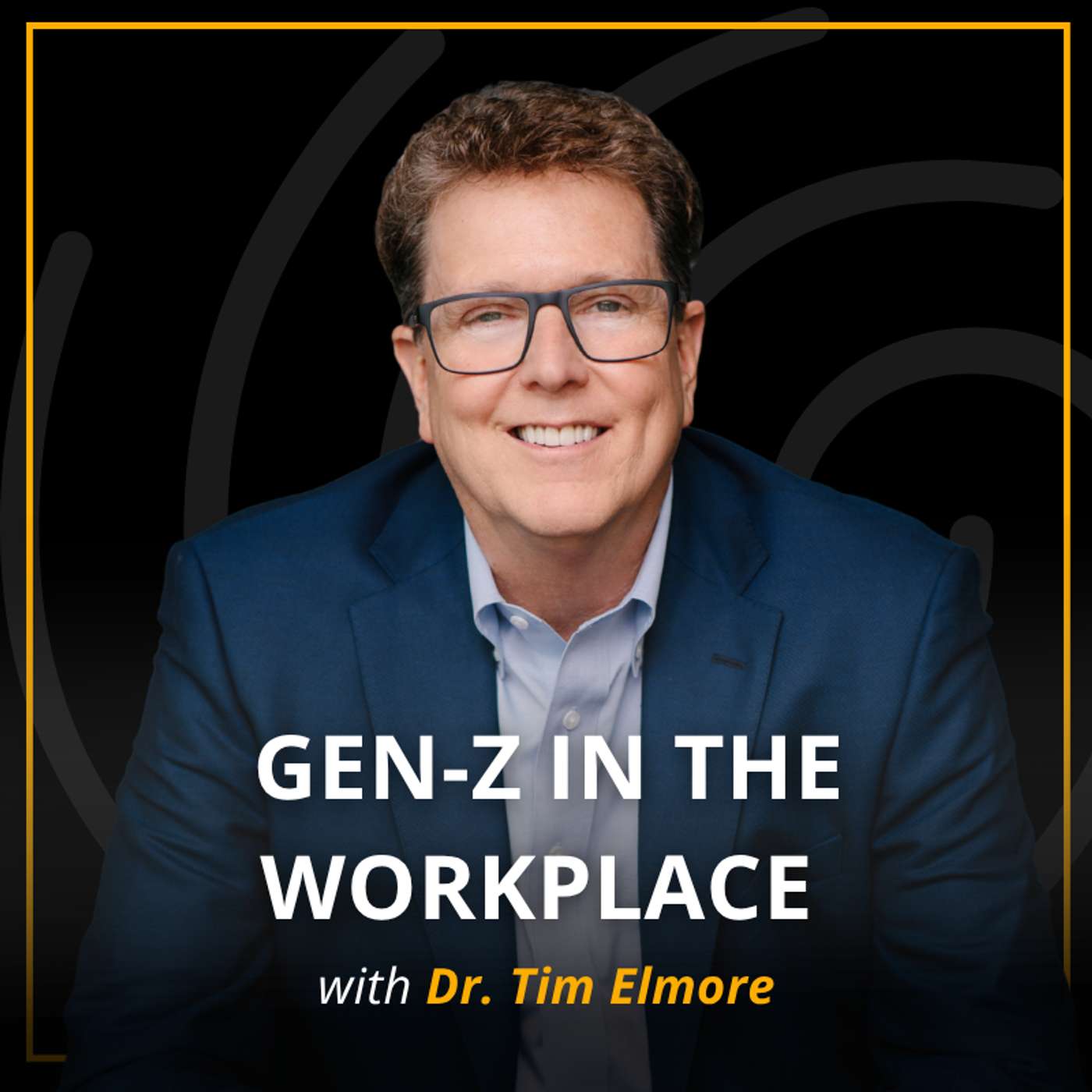
What if the biggest challenge with Gen Z isn't the generation itself, but the way we've been taught to lead? In this episode of the Badass Leaders Podcast, Angela Gill Nelms sits down with leadership expert and bestselling author Dr. Tim Elmore to unpack one of today's biggest workplace challenges: leading across generations. After spending more than four decades developing emerging leaders and working alongside leadership icon John Maxwell, Tim believes the future of leadership depends less on changing Gen Z and more on changing how leaders communicate, coach, and build trust. Together, they explore why so many organizations struggle to attract and retain younger employees, the myths leaders continue to believe about Gen Z, and how emotional intelligence has become one of the most critical leadership skills in today's workplace. Tim also shares lessons from his own leadership journey, including what he learned working under John Maxwell, how great mentors develop confidence without lowering expectations, and why leaders must shift from leading through authority to leading through connection. Learn more about Dr. Tim Elmore: Facebook: https://www.facebook.com/drtimelmore Instagram: https://www.instagram.com/tim_elmore/ LinkedIn: https://www.linkedin.com/in/timothyelmore/ Website: https://www.timelmore.com/ Twitter / X: https://x.com/TimElmore?lang=en Podcast: https://www.maxwellleadership.com/generationsatwork/ Book: https://store.maxwellleadership.com/products/tim-elmore-the-future-begins-with-z-nine-strategies-to-lead-generation-z-as-they-disrupt-the-workplace Mentioned in this episode: From Strength to Strength — Arthur Brooks Tribe — Sebastian Junger Timestamps: 00:00 Why Gen Z Isn't the Real Leadership Problem 01:58 Tim Elmore's Leadership Journey & John Maxwell's Influence 10:47 Overcoming Insecurity and Learning to Lead with Confidence 16:52 Why Every Generation Complains About the Next One 21:35 The Hidden Strengths Every Generation Brings to the Workplace 29:43 Why Young Professionals Shouldn't Skip the "Small" Jobs 36:34 The Biggest Myths About Gen Z Employees 44:20 How Companies Lose Their Best Young Talent 49:18 The Peter Pan Paradox Explained 53:30 Bridge Leadership vs. Badge Leadership 58:05 The A.L.E.G. Framework for Better Leadership Conversations 1:01:01 Why Leaders Feel Threatened by Younger Employees 1:06:29 The PERKS Framework for Hiring and Retaining Gen Z 1:11:11 Balancing Empathy with Accountability 1:14:40 What Older Leaders Need to Learn from Gen Z 1:19:47 Tim's Advice for Gen Z Professionals 1:22:52 Rapid Fire Questions 1:24:02 The Business Leaders Tim Most Admires 1:26:01 One Leadership Belief Tim Changed His Mind About 1:28:13 Books Every Leader Should Read 1:29:13 A Leadership Quote Every Manager Needs to Hear The discussion also tackles questions… Why do so many managers struggle to lead Gen Z employees? What are the biggest myths about Gen Z in the workplace? Is Gen Z really harder to manage, or do leaders need...
speaker-0 (00:00.226) Would love to see that again today. What if we said, let's pull out of a high-stakes goal and let's ask these Gen Zers to step up and we actually ask them to do something great and we're gonna coach them so they don't dramatically make a mistake here. But my gosh, I think this is the path forward. speaker-1 (00:17.838) According to research Three out of four managers say Gen Z is the hardest generation to manage. But today's guest says the real problem might not be Gen Z at all. It might be the way we've been taught to lead. After decades of mentoring, emerging leaders, and working alongside leadership legend John Maxwell, Dr. Tim Elmore began noticing a pattern. Every generation complains about the one coming behind them. But very few leaders stop to ask whether leadership itself needs to evolve. Today, Tim is the founder of Growing Leaders, an expert on generational dynamics and emotional intelligence, and the author of more than 40 books, including his newest, The Future Begins with Z. His work has impacted leaders everywhere from Chick-fil-A and Coca-Cola to NFL teams and major universities. In this conversation, we unpack what leaders consistently. Misunderstand about Gen Z, why emotional intelligence matters more than ever, how to lead younger employees without losing accountability, and what the future of leadership is really going to demand from all of us. Okay, welcome to the Badass Leaders Podcast. I'm your host, Angela Gil Nelms, and each week I sit down with badass humans who are pushing the limits in their careers, companies, and lives. So if you are ready to talk leadership without the corporate BS, then let's do it. speaker-1 (01:57.79) Leaders community. I am super excited today to have Dr. Tim Elmore with me. So I know that you spent decades helping leaders understand and develop the next generation, but before all of the books, which are the photos in your background, the research, and your keynote stages, you yourself were a young college grad trying your best to figure things out. So one of your first big opportunities was working alongside the great Don Maxwell. He recently joked on a podcast that when he met you, you had, and I quote, great creativity and great enthusiasm. And that's all. So take us back to that version of Tim Elmore. Who were you like in your twenties? And how did that young guy eventually become someone who's now spent a lifetime helping leaders become better, working with younger generation? speaker-0 (02:48.748) Well, thanks, Angela. Great to be with you. This is gonna be fun. Yes, if I was a diamond, it was certainly a diamond in the rough. That's what I national. It was nineteen eighty-two. So I I have a heart now to develop the next generation of leaders. And one of the reasons why is my first two bosses were a study and contrast. So the very first boss I had in the career in which I am in now. was a a nice enough guy, very kind, very gracious, but his emotional intelligence was very low and his insecurities were just evident. In fact, two weeks into my stint there under him, he sat me down to kinda onboard me and he said, Tim, I you need to know three things. Well I'm I'm ready to take notes. speaker-1 (03:37.772) Right, right. I am too. speaker-0 (03:39.564) Yeah. He said, number one, the volunteers at this nonprofit really intimidate me. I said, really? I I think they have a pretty positive view of you. I just I just feel threatened. They just seem so together and I I just don't feel together. And then he said, number two, the board here at this organization intimidates me. I said, Really? The guys that you do business with all the time, you know, you meet once a quarter. He goes, Yeah, I they all own their own businesses and I just feel I just feel intimidated. And then he dropped the bomb on me, Angela. He said, Thirdly, Tim, you intimidate me. No, I'm like twenty years old. I'm not even twenty years old. And I go, What I I I did not compute it because I I don't see myself as an intimidating person. But what he began to unveil was his self-awareness was clearly high. He was very aware of how he was feeling, but he was not able to manage. speaker-1 (04:15.214) What? speaker-0 (04:35.118) the people that he had around him. And I watched that organization just unravel over the next year or two years. And he was eventually fired. And they put me in charge for for an interim period of time. And I remember thinking, my gosh, I don't think he lacked strategy or vision. It was just the emotional deficits inside that did not allow him to stand tall and do what a leaner needs to do. Fast forward. In nineteen eighty-three, I'm done with college. John Maxwell hires me. And by the way, nineteen eighty-three, he really wasn't famous yet. So he had time to invest in me and maybe a couple of others. And I remember working under this man that was so secure. Just so I mean, you can like him or hate him, but he is so secure in who he is. And I don't know that it was his strategy or vision. I think it was his just his some emotional intelligence that made him so good. He could surround himself with strong people. And not feel threatened, you know. my gosh, absolutely. Don't you want better people around you in certain categories? Yes. So there were times we're at the table, the staff is at the table, the leaders. And there were times when John wasn't in a strong air, he was in a weak air. He looked down at the table and said, Tim, what do think we should do? Because that was a category that was a strength of mine. And I thought, I have not yet met a leader this secure. So speaker-1 (05:32.876) Which is the best way to be? speaker-0 (05:58.602) I'm after building leaders that are strong. Of course I want them to have good strategy and great vision and good people skills. All important. But at once it begins with self-leadership and just building the emotional strength to get rid of the emotional deficits that we often have that keep us that sabotage our leadership. So that's that's my early story with John. speaker-1 (06:22.194) I love this story. So, my my John Maxwell story is this. So, and and I'm sure hundreds of thousands of people have heard it, but at one point he was traveling and he for some reason, I can't remember why, but he had to return back on a commercial flight and he'd flown over on a private flight, and someone had gifted him a gun. Yeah. And which is fine on a private flight. Not so cool when you're going through TSA. At the airport. He forgot that he had it, right? And so he showed to all of us his mug picture. And he he preached that day about stupid hurts and about how that and the thing I loved about that as a takeaway and how you can tell by someone who would share that story, and including the mug photo, because it wasn't a great photo of him. I mean it was awful. But the thing is, is that you can tell. speaker-0 (06:53.501) Yep he forgot. speaker-0 (07:12.524) Yeah. no, it's awful. speaker-1 (07:18.242) He's a very confident and strong leader because he was willing to show his own mistakes and his own weaknesses. And he was willing to share with us the lessons he learned from them so that we wouldn't make the same mistakes. And I think that is really powerful. speaker-0 (07:33.908) It it is. And that's what I s I mean, I sp spent twenty years with John before I started growing leaders. And I'm telling ya, there were there were two or three big lessons. That was one of them. Just make sure you're leading yourself well. If somebody asks me, where should I begin? I always say that. And it's so cliche and yet it's so profound. Cause isn't it true? We are so result oriented in America. We run right to the what's the objective? What's the result? What's the product? Well, you get a better product if you make sure it's coming from A strong infrastructure of emotional stability. So I I just keep going back to that same song, but that was it. And I think I grew in that under John. he sat me down. I mean, early on, I remember my very first evaluation, Angela. he sat yeah. Well, you know, because John's bigger than like Yeah, even back then. But I was, I don't know, twenty three at the time. speaker-1 (08:21.229) Yeah. speaker-1 (08:27.085) He is. speaker-0 (08:31.926) So I got my pad of paper. We didn't have computers back in eighty three. My pad of paper and John says, my gosh, Tim, you've been great. So glad I hired you. Hiring you was the best decision I've made yet. I mean he said, I'm writing it down. I'm writing it down. And then he gave me seven things he loves about what I was doing. And I'm writing it all down. Felt like I was with my mother at the time, you know. speaker-1 (08:53.59) Right, right. My baby cannot be ugly. My baby is perfect, right? No, but speaker-0 (08:58.03) Exactly. Yeah. So in fact I could hardly wait to tell my mother about this great report I had. When he got done with the seven, he said, Now, there's a few things you're gonna want to work on. And Angela, I had never ever been evaluated before where somebody told me I needed to work on something. So I think I said, I beg your pardon, you know. And and he came back with with three specific things, but I could take it because he just told me how much he believed in me. speaker-1 (09:03.575) Right. speaker-0 (09:27.49) But he wanted me to work on seeing the big picture. I was seeing my department way better than I was, you know, the big picture. I saw my puzzle piece, but not the box top. and then he he told me to work on off-the-platform charisma. I said, John, what do you mean? I'd never heard that term before. He said, Well, I made it up. Yeah. So what he meant was he said, Tim, when you're up speaking, people just love you. You're amazing. You're great. When you walk off the stage, it's like you want to. Curl up with a book and be alone. And I said, John, there's a reason for that. It's because when I walk off the stage, I want to curl up with a book and be alone. And he said, You need to be as good off the stage as you are on the stage. And I said, How do I do that? And John, as only John can, he said, watch me. And sure enough, I watched him just walk through the crowd, shaking hands, hugging people, asking about their pet dog and their daughter or their son. And I saw this guy loves people. Not just the 30 minutes he's talking. So all of those were great fundamentals. It was the past dribble shoot of leadership that I just picked up quickly in my twenties. And I today, even what we vacation together now, I'll say, John, you have stock in all the good things I do because you groomed me and cultivated me as a leader way back in my twenties. speaker-1 (10:46.926) So that that is amazing. Okay. I wanna I don't want to get you out of your twenties yet. Okay. So we're going back to your twenties because I want to talk because I know at some point you also because you know, I will tell you this, Tim. I had someone tell me about a year and a half ago, she said she'd never experienced imposter syndrome. And you know what? Maybe she d hasn't, but I call BS on that. Because I'm like I even the most confident people, I I I am willing to bet, even John Maxwell would say at some point in his life. He experienced imposter syndrome. Okay, so I want to talk about insecurities. And I wanna know, going back to those days, what were some of your biggest insecurities or growing pains that you had when you were a l young professional that people looking at your career today would never guess? speaker-0 (11:34.156) Yeah. Wow, that's a great question. I would say I entered my career like many do as a people pleaser, you know? I I wanted everybody to like me. Who who does what leader doesn't want to be like by the people? But you know, that's a little bit like a politician, you know? And I thought I can't lead well if I need people to like me all the time because you'll never win a popularity contest with everybody. I watch John. Of course he wants to be like. He's human, but I'm telling I watched him make the tough call and make very unpopular decisions where I mean there were up and up people had petitions going around we need to fire this guy and I watched him just stand strong and he didn't throw anybody under the bus for the decision he just made. In other words, Angela, I watched him fire somebody on staff that was a very beloved team member. That he was loved and John let him go. And of course it looked like a really bad decision. Well, I mean People under this other leader that he let go just were up in arms. John never let anybody know that there was a really bad moral failure in his life. He wanted to spare his dignity and try to save that marriage. Only later did it come out and everybody went, wow. He took the high road, didn't he? And that's what I watched. Now again, not perfect. But I watch somebody strong enough to make tough calls. So I think the biggest lesson I learned in my 20 was was make the tough call, the unpopular call, to, to confront people. You have that hard conversation. This is the number one thing I hear young leaders say. I it's hard for me to have that, you know, that hard confrontation. So John taught me how to do that. He sat me down. I watched him do it. He was mentoring me. So I I always tell people if I don't do a good job, it's my own fault because I had great, great models. So, but I need to tell you one more fun story, Angela, before we move on. John, John is a fun person. So he he just believed, let's get stuff done and let's have some fun. So one he took me around with him and I traveled with him. And one one day we're in Dallas. He's speaking on the stage, and I was speaking a little bit that day, but he was speaking a bunch. speaker-0 (13:49.836) So I was in the front row just helping him get water and you know things he needed. And John's about to go on and and talk. And John looked at me and motioned me to come forward. And of course I'm in the front row. I thought I thought he needed something. I walk up and he whispers in my ear, he goes, You want to see Michael Jordan play basketball tonight? I said, No. Well the Bulls were in town. This is the early nineties. The Bulls were in town. They were playing Dallas. speaker-1 (14:11.534) Who doesn't? speaker-0 (14:17.226) And John goes, watch this. I'm gonna get done early, get off the stage, we're gonna go down, get some scalp tickets, and we're gonna watch my and we did. We did. So I'm thinking that that that was the playbook that I had to follow. And I have been the same way. I I hope I've led well. I think I've led well, but I thought you need to be laughing and smiling along the way, even through the hard times, maybe especially in the hard times. Yeah. speaker-1 (14:43.71) I love that. Well, you know, I think the people that I work with who truly love humans also have this zest for life. Yes. And this zest for living experiences and wanting to make memories and that kind of piece. And I think those stories that you tell about in my experience observing him for many years has been that. So okay, I love that. Now One of the things and I did not share why I'm extra, extra excited about this. And it is because in my my day-to-day role And I'm like, what is that? Because I really have like four jobs. Okay. So the one that pays me the most money is Via Locity that I run that split between Georgia Tech and Emory, advancing medical technologies out of them. And in that role, and I'm also a professor at Emory University in their master's program. So in both of those roles, I get to experience working with students who are undergrads, but mostly graduate students and PhD. So very much in that Zen Gen Z category. Okay. And they're going out looking for their first job or they're graduating with experience. Like for example, I had a a conversation with this amazing, this, this brilliant person. And unfortunately right now they're tied to an older leader who's just a jerk. And is j and and so my I like reached out to this individual and said, hey, can I talk to you? We talked yesterday and I was like, look, you need to get out of that. I know you want to be involved in this type of project, but trust me, it is a slow fade degree. And I do not want to see you pick up those traits. Yeah. And and hence like the work that you do and why we're having this conversation is exactly that. We want those generations to pick out and really to believe that they have the ability to pick up these amazing traits. Yeah. speaker-0 (16:47.916) Yeah, I agree so so much. Yeah. speaker-1 (16:51.778) Okay, so what I want to dig into is this, and and Katie prepared this this section of the questions. And I I was like, I wonder if she's heard me say this a gazillion times. Because I also am very sick and tired of each generation trashing on the next generation and each generation kind of thinking like, We were doing it great until the Next generation, or you know, until the millennials who want to do this, or the Gen Xers who only want to work a year and then move to something else, or they don't really care about pay. Like all the complaints. And I'm constantly like, okay, you realize, as far as I know, for as long as I've been alive on these 51 years, I've heard a gazillion generations all complain about the next generation. And I know you have worked through that in your research and the books that you've done. So can you kind of peel the onion on maybe how you observe that? And what made you so passionate to dig into that area and specialize and become an expert in that area? speaker-0 (17:49.106) well, I'll try to give you the reader's digest version here. I began to study the differences in generations dating way back to nineteen eighty-eight with your generation, Angela. As Gen X became, you know, the new kids on the block, I was seeing a difference between the boomers, which I'm a part of, and the and the Xers. And then of course, as you just said, the Millennials came along, Gen Z came along. But it was helpful for me because I was starting to get a little bit of a judgmental, stereotypical kids today. Kids today, you know. speaker-1 (18:21.422) I mean my gen X was the best. I don't I don't know. speaker-0 (18:25.244) yeah, of course. That's right. Well, what I discovered was Socrates, way back millenniums ago, said the kids in my day are disrespectful to elders and they're not listening well. And I thought this could have been written last week. But Socrates did so every generation dating back thousands of years, we've always felt like the next generation's going to pot. They're not gonna make it, they're gonna drag us all down, and then of course Yeah, yeah. And they do bring some new things. speaker-1 (18:49.42) Coming to speaker-0 (18:54.286) Yes. Now I will say this. Let me just point this out just for the listener's sake. I think we should always adapt, but not always adopt. Sometimes the new things that come along aren't good and we need to call them out, whatever they are. In other words, the boomers have a few things that didn't that we didn't do so well. We we incurred a lot of debt along the way. That wasn't helpful. So I think we need to adapt to all new generations, but not always adopt everything that they bring and hold on to the timeless. So here's Maybe a helpful nugget. This generation gap continues to get bigger, not just stay the same, but get bigger. And my belief is it it began when the screens that we have in our life went from public to private. So when I was growing up back in the sixties and seventies, a long time ago, we all had one screen in our house. It was a box that sat in the family room and it was called a tell. That's right, exactly. speaker-1 (19:50.472) Up and change the channel. speaker-0 (19:53.656) But listen, you'd watch a we called it a program. Watch the program on television. We all gathered around as a family and we watched I Love Lucy or the Dick Van Dyke show. Andy Griffith, the Brady Bunch, and we'd watch together, laugh together, talk together. We were together. Fast forward to today, we've all got our own little screens in our hands. And now we're in echo chambers. So parents might know their seventeen year old daughter has a an Instagram account. They have no idea she has five Finsta accounts. Fake Instagram. Yeah, it's fake developed personas and God knows who she is now and who she's interacting with. But we're just in echo chambers where we can be fundamentally different. So in your work if you're in a workplace and you have four generations, Gen Z all the way to boomers, you might have four completely different paradigms in the brains of your people. And what we do at best is speaker-1 (20:26.446) Yeah. speaker-0 (20:50.486) begin to tolerate. We think we have to tolerate each other. I'm saying let's leverage what each generation brings to the workplace because we need that perspective, I believe. In fact, I did a book before the one we're going to talk about, Gen Z. I did a book called A New Kind of Diversity. And it's on generational diversity. So just as real as ethnic diversity, gender diversity, income diversity, is this thing that that that is a generational diversity And it's just as tangible as a a different ethnicity. But but I think sometimes we gather together with the water cooler with people like us who talk like us, think like us, vote like us, and it's not it's not helpful. So I'll stop. speaker-1 (21:34.508) Yes, I agree. I agree with that. In the in thinking about all these different generations and thinking about the diversity, okay, if you had to pick out maybe just a couple amazing I want to focus on the amazing traits. Amazing traits from the boomers all the way to Gen Z. Can you list a couple of amazing traits for each generation that you've seen? speaker-0 (21:55.252) Absolutely. So you're right. Without stereotyping, I always say my goal is not to stereotype, but to understand. There are generational gifts that each generation brings because they were shaped like wet cement in those first twenty to twenty five years of their life. Perspectives. So boomers broom boomers bring lots of stories. my gosh, do we have stories? And and by the way, stories from similar times economically, for instance, where we can say, here's what we learned back in the economic downturn of the seventies or the eighties. We bring we bring life coaching at this point, because we've been in the career forty-five, fifty, fifty-five years now. And so I think boomers ought to be utilized as coaches. We like to talk. You may have to tell us to learn to listen, but boomers do bring that. Xers, I love the pragmatism that your generation brings, Angela. Often Xers grew up self sufficient because you had to figure it out. Both parents were working, maybe when you got home from school, you found the key under the doormat, let yourself in and you did. speaker-0 (23:02.91) Before you watch TV, you gotta do this. Yeah, that's right. Yeah. So Gen X often brings a real realistic pragmatism. They bring contrarian insights, like here's another way to look at that, or let's be sure and do this before we try the project. Melissa, my assistant, is so good at this. She's a Gen Xer, and she'll say, now wait, before we launch this, we ought to make sure we do this, this, and that. yeah, that's right. So anyway, that's that would be some gifts that Gen X very often brings. Millennials, they often bring hope and energy and creativity. I know the oldest millennials are now in midlife, but there's still a sense of idealism, even though they're more pragmatic now now, to to the workplace. They want to do things that change the world, that have meaning. They want to make a difference, not just a dollar. at work and I love that I need that. It would be easy for me to get jaded at my age now. And the millennials I have around me just keep me hopeful. And I still have some ideals thanks to them. and then Gen Z, my goodness. There is an entrepreneurial spirit in Gen Z. I don't know if you Angela, did you know that 70% of public high school students in America, 70%, want to be an entrepreneur. speaker-1 (24:26.04) That I I'm not surprised about that. And it's funny to hear you say that, especially in the work that I do, which is all commercialization, entrepreneurship, and all that, especially tied to the work we're doing in Atlanta to try and get Atlanta to be a top five hub and the work we're doing at Georgia Tech to have a certain number of startups. And actually Georgia Tech has a goal that they want a hundred percent of the students during their time at Georgia Tech to have some involvement with entrepreneurial activities. I love 100% of the students. So it's either attending a webinar or participating in a startup or something they want 100% of the students. And I did not realize that that is actually a trait of that generation and then we're feeding into that. speaker-0 (25:09.336) Well, so my my data is both quantitative and qualitative. I surveyed over two thousand individuals from all four generations, but then I did twenty-one focus groups from California to Georgia. And when I asked the Gen Z why are they so entrepreneurial, two reasons came up. Reason number one, they often feel like if they're joining a company or an organization, it's old school. You know, it was started back in the day. And it's not upgrading and updating like they would do it if they were in charge. So they feel like, gosh, it's gonna take so long to get this where it could be. So in other words, they look out and they I think I'd rather start something than join something when they see that. But the other reason is One out of eight Gen Zers has already learned to monetize social media and TikTok. And twenty percent of those who have, it's a full-time job. So there they are. I mean, I'm stereotyping now, but there they are sitting on their sofa with their phone, making money, eating a bag of Cheetos. And they're making six digits. So they hear enough stories about their peers like this and they go, Yes. I could do this. So my hat's off to them. That's why I think companies that do that have been around a while. speaker-1 (25:57.922) Yes. speaker-0 (26:21.75) Need to start internal gig economies where it's attractive to a Gen Z or to bring them on and there's a speaker-1 (26:28.142) Internal what economies? What was that again? Internal what? speaker-0 (26:31.34) gig economies. So you know we're in well, you know, we're in the gig economy where they're they got side hustles and gigs going on all the time. Yeah. Well good. I'm really glad all that. So when a company starts an internal gig, it's like an intra intrapreneurial zone. Right. And maybe they have a a cluster of people that meet once a month or maybe twice a month. There's some Gen Z on it. speaker-1 (26:39.406) I've never heard it called that. speaker-1 (26:51.404) Yeah, yeah, yeah. speaker-0 (26:59.586) But just maybe a group of creatives and they're all entrepreneurial in their vibe, but this company keeps them around because they give them some problems to solve. They have some funding and some budget because they've been around a while, this company that is. And so they set aside money for the untold fruits of their labor. And this group feels like they're in a startup and they're gonna solve a problem that's been around for five years, but it feels like a startup. I'm telling ya, this is the way forward, at least one of the solutions to keep those Gen Zers that are fired up to do something new at a at an already established organization. Yeah. speaker-1 (27:36.962) And you know, I'm seeing this. I can think of I I won't name the companies, but I can think of a couple of companies that some of the people I coach for or coach with work at and they're doing a lot of these hackathons that they're then giving prize awards and they're like they're making fun of yet and the employees and that kind of piece. So w while you were talking, I was thinking about I've had a lot of people because I do a lot of mentoring and a lot of keynotes for students when they're graduating from the universities. Okay. And then they're always asking me, first off, almost all of them think that the very first job they get out of university is going to set the strategy and the rest of their lives. So they're super stressed about this first job. And So I try and I try and dispel that myth and say, look, if you don't love your first job, stay there a couple of years and instead go in with the mindset of what can I learn to put in my toolbox that I'm gonna have to use in the future. Now, one of the things that I struggled with when I was building my first startup, Florence Healthcare, is I You know, when I came through as a gen XR, I I graduated from college late because I went back to school when I was twenty nine. So I was in my thirties when I graduated and actually went into this type of work. And I went to Medtronic, which was the largest medical device company in the world at the time. And I had an experience where I was there seven years. I basically learned from all these mentors. And then as soon as I just got tired of the fact that I couldn't make a change in something. Is when I left and I started becoming entrepreneur. And so my experience as a Gen Xer in that was that I I learned from some of the best. And then I grew this passion to be able to want to make a difference. And so then when I was able to make the difference, I had so much gratitude for the fact I was able to make the difference. Okay. Fast forward when I was building my first company and I was working with some young millennials, one of the struggles I had. speaker-0 (29:24.332) Yeah. speaker-1 (29:42.988) With some of them that came into entrepreneur directly from college, is that I, and I'm I know you're gonna tell me the errors of my ways, because as soon as I say this, I know people are gonna be like, Angela, how could you say that online? But I was just like frustrated with some of some of them because they just kept wanting promotions and it they came across to me in my filter as being entitled. And so I I went, I go back and forth with people asking me, should I go to a big company or should I not? And I often tell people, you know, if you can go to a big company for a couple of years, learn from some great people, and then take that and do something else. But then other people go straight, right? So, so now that I've released my my burden of the fact that I like stereotype them as being ungrateful. And I know some of them listen to this podcast, I'll probably get a text message from them. How could you say that? But tell me. Tell me what your thoughts are on that different perspective. speaker-0 (30:38.508) Yeah. Well, first of all, I should tell you, I agree with you. I spend loads of time with young professionals and I love it. And I love the entrepreneurial spirit. I love the out-of-the-box thinking. I I I I would say the complimentary thought I would add to yours is I agree with you. And here it is, I use the term coffee step because I I often find that a that a young professional Don't want to do those small things. I want to do right. You know, here's my talent. You don't know what I bring to this company. You should know I'm very talented. And I want to say, you know what? Just get the coffee, or whatever that small task is. this was inspired by an intern of mine years ago. Her name was Carrie, and she was a part of eight interns, and she was the only female at the time. And she was asked to get the coffee for the executives. speaker-1 (31:33.422) Imagine that. speaker-0 (31:34.966) Yes, imagine that. So she told me later, she's now a prof at a at a ma at Kansas State University. But she said, Tim, I'll be honest with you, I was a little offended because I thought, are you asking me? Because I'm a female and none of the males would do this, or the boys know how to do this, you know. But then she said, Do you not realize I got a degree? You know, what why you asked me to get the coffee? And she said, Tim, at this point, I am so glad I swallowed my pride and I got the stupid coffee. Because getting that coffee got me in the room. Pretty soon I'm meeting these executives, these che C level suite, you know, C suite level, and they ask me who I am. And and next thing I know, we're chit-chatting. Next thing I know, they asked me to sit down. Next thing I know, I'm attending one of the meetings because they want my perspective. She said, doing that small thing got me into the very path I wanted to get to. I'm so glad I swallowed my pride. So listeners, if I can just be your coach for one minute. Don't worry about the this this isn't your dream job or this is not what you want to do or they're not really utilize your full talents. Early jobs are less about talent and more about trust. Show that you can be trusted to execute. And then some, I'm telling you, you'll move forward. I really believe that. speaker-1 (32:53.536) You you're a thousand p percent correct. When I when I graduated from Georgia Tech as a female engineer and I took over a role, so we were talking about Emory Healthcare, I took over a role at Medtronic running phase three clinical trials and I my my area my territory was Atlanta. So I did a lot of work at Emory University, Emory Healthcare, Piedmont, Saint Joe's, all those hospitals in our area, Well Star. And I remember When my manager came, he came to introduce me to these electrophysiologists who are brilliant human beings. And if you're an electrophysiologist listening to this, you probably know many of you have very big egos about how brilliant you are. They can be a challenge to work with. Yeah. And I had like they all loved my predecessor, who was a brilliant male engineer, right? Who took another job. Okay. speaker-0 (33:37.197) Wow. speaker-1 (33:46.19) Okay. And this one doctor said he looked at my boss and he was like, Why did you hire her? Because she's a cute female. And I remember where I was standing on that day. Wow. And you know what? I didn't say anything. I just I what I used to do is I would joke in some instances because we had to proctor surgeons. So do you know how hard it is to tell a brilliant surgeon how to do a new surgery they haven't done with their staff right there? And you cannot make them look bad in front of their staff. Like you cannot, right? It takes. It was the greatest lessons I learned my life. But I remember I used to joke like with a couple of them at some point and say, Well, I don't know, I'm I'm just a girl. And I remember one time I was at UAB and Tom McEldrey looked at me and he goes, Angela, you are not just a girl. And that was the moment where I was like, Really? All I had been doing is building all of their confidence. Not by the the the comment was really tongue in cheek. Right. Yeah. But by just digging in and working hard and being trustworthy. They they just suddenly I became a part of their ecosystem and they trusted me. And then the sky was a limit after that. speaker-0 (34:51.383) Wow, that's so cool. Well, I'm glad that you handled it delicately like that because it's seems like it's paid off in the long run. speaker-1 (35:00.366) It has. It has. But I'm a big believer Also having you know run several companies, I'm usually the one who unloads a dishwasher and stuff because I just right. And I'm also a believer, like if I see someone and they're not willing to do something like that or they're not willing to be friends with the janitor or something like that, I'm like, I don't need you on my team. so I think learning those skills early on, right? And the coffee thing, like you said, what a valuable thing. I really hope the listeners pause for a moment. And think about this is instead of looking at some of these tasks as trivial and meaningless. And we talked about this on the episode with the host of the podcast Make Work Not Suck. And we were talking about how some people think certain jobs are kind of BS jobs. And really, when you think about it, any job is somehow making someone's life better and improving the world at some point. And if you look at that. speaker-0 (35:58.157) Yep. Yep. speaker-1 (36:00.332) And instead, you know, I yesterday just had this conversation with this individual and and he has two job opportunities. So he's talking to me about the two of them. And he's like, Well, this one, I don't really know because I don't really want to be in that long term. And I was like, look, you just told me about that job and and the the high net worth individuals who are from all walks of life that you would be serving. Do you make connections you can make in that? Like even if you just put a list of this is all I want to put in my toolbox over the next two years, you're winning. speaker-0 (36:30.136) True. That's so true. Absolutely. speaker-1 (36:33.418) my gosh, we could get on save boxes about this. And okay, but I want to talk more about your your Gen Z work. Okay. So when you do research and you speak to other leaders kind of anecdotally, yeah. What do you think now, since we're talking about some of these things, what do you think some of the biggest myths that you currently hear about Gen Z employees? speaker-0 (36:53.59) Yeah. Well, let me begin by saying when I when I scoured and and kind of did a meta analysis on the data of management and Gen Z entering the workplace, I discovered three out of four managers say that Gen Z is the toughest generation to manage. 30% say they fire them within the first month. And another 30%, Angela, say they avoid hiring them altogether. So I Again with this challenge. We're finding it hard to connect with these twenty two year olds. My premise is, and I kind of take the challenger voice, Angela, I say, what if your biggest challenge, which might be these Gen Zers, could become your greatest solution to future challenges? Meaning they're gonna bring visibility on the future. They're gonna understand tomorrow's consumer more quickly than I can. They're gonna bring they they know they're way more intuitive about AI. In fact, 42% of companies say we're leveraging our young team members from Gen Z to do the AI thing at our work because we don't know how to do it. We're 60 years old. Right. So that's my premise. If we can hang on. So let's get back to your your question about myths. Yes. The myths, I think, emerge because we've heard a story or maybe we've experienced one. young team member that didn't get it or was a little entitled or they didn't seem like they wanted to work or something. And we pretty much lumped them all together. Not all the time, but we're very guilty of saying, kids today. You know, they're all like that. Right. So I have an entire chapter on the most common myths. Let me just give you a couple of them real quick. One of the big myths that I heard from managers is they don't want to work. These members of Generation Z. speaker-1 (38:35.832) Yes. speaker-0 (38:44.002) They don't want to work. I I I see them on their phones. You know, they leave right at five, not a minute later. They don't even finish the project they're working on. They just dart out the door. It seems like they don't want to work. So I took these statements that I heard from managers to my focus groups. I'll never forget talking to a young lady 21 years old in LA, and I said, I heard from your supervisor. He didn't he didn't think you want to work, like you read leave right at five and it feels like you don't want to work. She looked at me and very genuinely said, Doctor Tim, can I tell you why I leave right at five? I said, sure. She said, I dart out at five because I've got to rush over to another job. I don't make enough money here to pay the bills here in LA. And when I'm done with my second job there, I rush over to take care of my mother, who has stage four cancer. Suddenly I realized her work ethic might be better than her boss's. But he didn't know that. He's assuming the worst. That's what stereotypes do. They are assumptions, they are mental shortcuts. We don't like to be stereotyped. Listeners, am I right? You don't like to be stereotyped. Why do we do it to other people? So here's another myth, Angela. This I heard this all the time. Well speaker-1 (40:01.534) Can I before you get to your second myth? Go for it. Yeah. I have a hypothesis about why the stereotype and why we do it. And so I want listeners when you're hearing this and you're like, you know what? I stereotype. I don't want to let you off the hook because what we want to do is pause and stop stereotyping. But I do believe stereotyping is a survival mechanism that was very helpful when, you know, if you're thinking about you're in the forest or something like that and you see one instance and you need to learn from that. But we know As humans, we have these survival innate things that we fall to, but it does not mean that we can't realize we're doing it and realize it's not beneficial and it's not applicable to today and find other ways to work through it. speaker-0 (40:47.574) No doubt. In fact, you're bringing up a great illustration. That saber toothed tiger tiger tens of thousands of years ago, we need to learn from the last time somebody got eaten by a saber-toothed tiger. But here's what's crazy, and I think you're alluding to this. Our amygdala in our brains inspires this fight or flight thing as if it's a saber-toothed tiber. And it's not. It's it's a post on social media for Pete's sake. And we don't need to get anxious. We don't need to get alarmed or outraged like we always are. So you're right. We need to here's what I tell boss. I say if you feel outraged by Gen Z, go talk to Ask They'll tell you if they if they don't like work there or whatever. So I I think what we need to do, and we have the advantage of that as humans, we can actually go talk to the source and find out what's going on. And that's we need to stop talking about each other and start talking to each other. speaker-1 (41:38.51) Absolutely. Absolutely. Okay, back to the myths. speaker-0 (41:40.908) Here's another myth. and by the way, this myth is actually based on reality, but the way we respond isn't helpful. So managers and supervisors have said they seem disrespectful to authority. they they you know, they don't listen, they they do it their own way, they're they're not using the system we have here, they're disrespectful to authority. the the truth of the matter is, Gen Z admitted right out. Yeah, we don't really respect authority. You look at government, you look at corporate America sometimes and the scandals and you know, whatever. You you education there is a dis a general distrust in our world right now, and Gen Z leads the way. And it's because we leaders have not given sometimes really good reasons to follow us. We have dropped the ball speaker-1 (42:29.186) Reason for this podcast. Yes. I was observing that, and I was just like, whoa, wait. We have to give better examples. speaker-0 (42:38.036) I'll get in front of Gen Zers. In fact, I was in front of Georgia Tech students. And I said this recently. It was last year. I said, may I just apologize on behalf of the older generations for the mistakes we made where we did not model for you what healthy, effective leadership looks like. And they applauded. Yeah. So anyway, so let me talk about this disrespect for authority. Sometimes it's based on the fact that we have not given them a good model. We need to do better. But sometimes it's because They may have a better idea. So let me tell you the story of Colin, Colin Webb. I met Colin when he was in high school a number of years ago. Smart kid, went to a Gwinnett County school. He was so smart that when he graduated, he had he got an invitation to go to MIT. Okay? He goes up to MIT, he's a student leader up there, makes good grades. When he graduates, you can imagine he had a number of job offers. Well, Colin decides to move from MIT to To Detroit, Michigan to go to work for one of the big three automakers. He goes to General Motors, they put him in the smart car division. And Colin is a sharp young man, obviously. He's start starting to look around and he sees they're not doing any professional development. Or this system they have is pretty archaic. It can be approved, or this process needs to be upgraded. So he writes the ideas down, takes them to his direct supervisor. Well, you can imagine this goes over like a lead balloon. You know, he's some improvements. He's twenty two years old. His supervisor said, Hey buddy, we didn't pay you to bring in ideas. I hired you to do this job, keep your head down, keep your nose to the grindstone, do your work. Well, Colin, I'm sure, said yes, sir. He's he's a very polite young man. But Colin goes back to his workstation and and he's a Gen Z. He's not done yet. He emails Mary Barra, the CEO of General Motors. He says, Mary, it's Colin. We've not met yet. But I've got some ideas that I think may make our company better. And he lists the ideas to her in the email. Get this. She emails back the same day. And she says, Colin, Colin, these are good ideas. Let me take them to my executive team. We may want to implement some of these ideas. So she takes them to the exec team. They like them. And they say we speaker-1 (45:00.47) Because they came from her and not. speaker-0 (45:02.518) Yeah. Well no, she's saying we've we have a twenty something here that's okay. And they hired a number of MIT grads. In fact, Colin was there with some comrades from MIT. But here's the deal. As those ideas come down from the executive team and they go down the organizational flow chart and they get down to the middle managers and supervisors, they die on the vine. Cause those are the guys whose jobs feel threatened if these ideas came from this young whippersnapper. And so Colin is told, Hey buddy, I told you, just do your work. And then he was told this, you need to be around here eight years before you get to lead anything. speaker-1 (45:42.743) my gosh. speaker-0 (45:43.896) Well, Angela, you might as well have told him to leave. Yep. He he leaves GM within a year and he's not a quitter. I know this guy well. In fact, I thought I I kind of helped him on his grad speech. He has since then started two companies, just sold one of them. He's doing quite well. He just started a company called Avatar Robotics, where you can be in Florida, pick up something, and something moves in San Francisco. It's crazy. It's AI. speaker-1 (46:12.022) Yeah, so cool. Yeah. speaker-0 (46:13.19) It really is. But I'm thinking minimally, GM missed out. They could have this guy had they l but see they assume he's being disrespectful, he's not listening. He's who was so far capable of taking on an extra project and still doing his work, but starting some professional development. So I'll just stop there, but we need to be careful with these myths we bought into, and we need to maybe stop and listen a little bit more than we have listened before. speaker-1 (46:42.446) I love that. I love that story. You know, one of the things I'm thinking about, so I'm teaching a workshop in Houston in August for young professionals in the public work sector. Okay. And one of the things they've identified as a challenge for their young professionals. So you're commenting about the middle managers and their fear. Yeah. Shout out to me. Because one of the challenges that they're seeing in their young professionals is that the the older gener people aren't as retiring as early and people are staying in their jobs longer. And so you have this instance where people aren't retiring as early, they're staying in their jobs longer. So then the middle managers aren't necessarily getting their promotions and so hence they're then even more afraid of the younger generation and you cr it creates this conflict kind of paradigm piece of this. speaker-0 (47:39.404) Yeah. All behavior has a reason. Gen Z has reasons for that. We have reasons as we age and we're not getting moved up. And now now we're a little bit afraid that am I become gonna become a dinosaur before I get moved up to this next, you know, part of the the the organizational chart. So you're absolutely right. We all I just did a podcast, I do a podcast called Generations at Work, and I talked about the vulnerabilities of every generation. We all feel a little vulnerable to the current state of affairs that we're in. Yeah. speaker-1 (48:10.296) So the reason I was commenting on that was I was wondering what advice or what thoughts or what skills do you think those middle level managers right now that are in that generation would help them be more successful with where they're at, right? To fit in instead of having to because I can tell you this, I can think of a certain interaction, a conflict I'm dealing with right now and and Frankly, I love conflict because I think conflict handled well can lead to stronger relationships. And but it is an instance of someone I I work with who it's very clear this individual Is very fearful of losing their place or losing their, you know, level of expertise to some others, right? And I don't blame this individual for feeling that because I think it's a natural place that they're in. So what advice would you give to people who they might be listening to this and maybe they don't want to admit it, but they're probably thinking, wait, that's me. What advice would you give them? speaker-0 (49:17.184) Absolutely. I think I would say you've got to be aware of the Peter Pan paradox. So in the very first chapter of the book, I talk about this Peter Pan paradox, which really is, I think, the chief reason we feel challenged and that Gen Z is not fun to lead. So I'm sure everybody listening remembers the character and the show Peter Pan, right? He was this winsome character. Disney made an animated movie back in the nineteen fifties. Peter Pan is this winsome character that can fly over the city of London, sprinkle pixie dust everywhere, and magical things happen. The other side of the same coin is, however, Peter Pan wanted to live in Neverland where you don't have to grow up. I think something magic and tragic is happening in our culture right now. I believe the age of authority is going down. Meaning Coming in with authority that doesn't come from a position or a title. They know stuff. As I mentioned before, they seem to have visibility on the future. They seem to know a a better way to do things based on the technology that's available. So they come in. You can imagine how it's frustrating to a manager. They come in with some authority. They know some stuff that manager, who's 48, doesn't know. But watch this. That's only part of the dilemma we have. At the same time that the age of authority is going down. The age of maturity is going up. So I have lost count of the number of employers I've talked to that have said to me, twenty six is the new eighteen. Meaning what we once expected eighteen. You're a man now, you're a woman now. Let's take responsibility, let's take initiative. speaker-1 (50:59.774) Yeah. speaker-0 (51:01.718) It's happening later emotionally. Now, cognitively, they may be smart as a whip, but you look for social emotional skills who look me in the eye and shake my hand and actually talk to me. I'm being silly now, but you know this is true. So you can imagine if you're managing this 22-year-old who has some authority, darn it, but he doesn't seem to have maturity, darn it. So here's my simple marching orders, listeners. You're gonna have to listen more than you ever used to listen to them, and you're gonna have to coach more. Than you ever used to coach. That's going to be required going forward, I think, at this point. So if you don't mind, I want to tell you a quick story. Let's do it. That that illustrates the Peter Penn paradox. So Matt manages a team of of about 25 people. He's got 25 direct reports, so it's a bunch. And they just hired Ashley right out of college. So she's a Gen Zer. And everybody, including Matt, noticed that when they had a team meeting and they were working on a problem that needed to be solved in their department. Ashley was she looked totally disengaged. But everybody's noticing and they're kind of jabbing each other and saying, is she with us? Was she not? And Matt could tell, I'm going to have to talk to Ashley because it looks like she's not even engaged. She's not with us. She's not, she's not participating. She's she was quiet. So Matt says, Ashley, would you mind when Monday rolls around? Could we meet first thing before we have our our team meeting? Monday morning rolls around. Ashley burst into his office and says, I think I've got it. And Matt goes, You've you've got what? She was not disengaged. She was fully engaged. She was on Chat GPT. She was attempting to go after the solutions to the very problem they were discussing. So now, was it wrong to look down and not look up? Yeah, it was. But she worked after hours even on this. And when she came in, she came in with such a solution. Matt looked at it and said, I think you may have done it. And he went back to the team and said, You may have thought Ashley wasn't with us. She was not only with us, she was ahead of us. So call it a parable, call it a, I don't know, an anecdote. But maybe, maybe, maybe you have an Ashley working for you right now. And maybe she isn't disengaged. She might be engaging differently. Teach her the teach coach more than you ever used to coach. But listen, she may have an answer to a problem that you need to solve. speaker-1 (53:29.688) Okay. Well, you served up purposely or like perfectly what I wanted to talk about next, which was what I believe, and I'm gonna I'm gonna I think you're gonna agree with me, but I also think if you disagree, you'll tell me you disagree. Okay. Yes. Is that in order to coach, in order to do this, we have to figure out how to connect this this. And I know you talk about about bridges and to shift from badge leadership to bridge leadership. So tell us. First off, what does that mean in your words? And can you give us some examples of what that looks like in practice? speaker-0 (54:05.278) Absolutely. Yeah. So I do talk about leading from a bridge you build rather than a badge you wear. It's kind of cliche, but boy, I remember it and I need it. So as I have done my work with our team, I started noticing I was quick to judge when a mistake was made. And I would go in and like all bosses or most bosses, I told them what they did was wrong. I have a whole new way of doing it, and I'm going to answer your question with an acronym. So it's four, it's it's four words that spell a leg, A-L-E-G. Okay. So you know how forever, never, never we've been saying this is the leg you got to stand on. So I'm about to give you a leg you have to stand on if you want to lead well, these young team members. So the letter A in a leg is this. I need to start not by telling them what they did was wrong, but by asking them. When I come in with questions, I mean legitimate questions, not what were you doing, but legitimate questions like, can you tell me the thought process you were using? Yes. I would not have thought of that. Or tell me what, you know, what was happening when you when you did that. Isn't it true? When you ask people questions about themselves, they feel valued. You can make them feel valued before you have this corrective conversation. So ask go in with questions, not not judgments. The letter L, listen. I think it does very little good to ask any questions if we're not willing to pay the price of active listening. And I mean listen to them, look them in the eye and hear what they're saying. You know what I do in meetings now? I'm getting off script, but this is so this has been a game changer for me. When I'm in a meeting, I speak as if I believe I'm right, but I listen if I as if I believe I'm wrong. It's been a game changer. speaker-1 (55:54.018) I love that. speaker-0 (55:57.592) For me to even my own adult children for me to listen to them like I could be wrong. If they're going, What? Dr. Elmore is listening to me. You know, this is my debt. So please, please, please, listeners, learn to listen. I love what David Augsbur He's a therapist. He said, being heard is so close to being loved that for the average person it's indistinguishable. Isn't that powerful? speaker-1 (56:24.558) That's so powerful. And it is so true. speaker-0 (56:27.18) Yes, if I listen, they're gonna feel appropriately loved by me as their leader. Okay, so so ask, they feel valued. speaker-1 (56:36.244) Ask listen. speaker-0 (56:38.314) Listen, they feel heard. Ask they feel valued. The letter E is empathize. And this is an earned ability that I have had to learn. I I just want to confess on on the air here, I had to learn to empathize. I thought I was empathetic because I would feel with people, but I didn't know how to show it. So I found myself, as I'm listening, finding ways to volley back with something like, my gosh, I had no idea that happened last year. Or I bet that made you feel horrible when that happened. Find ways to to to that fit you and your personality, listeners, but find a way to volley back where they feel like he gets me or she gets me. So ask they feel valued, listen, they feel heard, empathize, they feel understood. Now I've earned my right to practice a letter G, which is to guide them, but I've earned my right to do it through a bridge, not a badge. This is the key. I'm telling you. To leading Gen Z. I spent time with thousands of them. And every time I bring this up, they go, bingo, that's it, please. Because they don't feel like at least my generation listens very well. We got all the answers. We'd rather lecture than listen. And I'm learning, I'm learning, learning. Even though I've got a little nugget to share, as you can tell, I'm learning to just say, why don't you tell me what you think? my gosh, it's just been a game changer. Yeah. speaker-1 (58:03.33) You know, Tim, what I think is extra powerful about that is I would be willing to bet significant money on the fact that if you roleplayed two scenarios, okay. You role played a manager going in in your original scenario, right? And just guiding them on what they did wrong in their perspective, not not following so ignoring the ALE, right? And just guiding them, right? If you took the solution and the path and whatnot that leader has, and then you compared it to the one that went through a leg, I I guarantee you that the way that they guide the insight they're now using and the overall perspective is gonna be first off probably quite different because now they more fur fully understand. The actual scenario, all the things that are playing into it and all of that. And I mean, I know I t I talk about this. I realized at one point when I was leading, I was COO of Florence, I was managing two-thirds of the company. So I was constantly going from like a meeting with marketing and a meeting with sales and then development and then QA. So all these different things. And I would, if my meetings were back to back, I would walk in and I would walk in with the perspective of I just need to solve the problem. And move to the next meeting. Okay. And I came across as being a royal bitch. And, you know, people were like, you know, and then I realized when I stopped doing that and instead put gaps between my meetings and then walked in following this path of trying to understand and just being on that back end. The end result and the solution we came up with was so much better. speaker-0 (59:53.782) Yeah, no doubt about it. In fact, here's how I would say that. We feel like we don't have time to do a leg asking, listening, empathizing. We don't time for that. I think you get to the goal faster by taking fifteen minutes or whatever it is before you get to the G, rather than starting with a G and guide. So I am learning the it's an investment, not an expense, of time and energy. And to your point you made earlier, you bought you connect with them better now. There's a better relationship. The friction. actually caused forward movement. So it's counterintuitive, all you bosses out there that love to bark out orders, but it's the way forward. I promise you it's the way forward. Yeah. speaker-1 (01:00:33.528) Well, and I guarantee you the percentage of success and the sustainability and the repeatability of that success is gonna be so much higher when you go through that process. Because guess what? Now it goes from being your directive to what you're doing. Now we're all bought in. speaker-0 (01:00:51.394) That's right. It's us, not me. Yeah, you're right. speaker-1 (01:00:53.614) Exactly. It was so powerful. Okay. That is that is really cool. I love that. I've never heard it called with badge versus bridge, but I I absolutely I absolutely love that. Okay. I want to this is a little bit of a repeat question, but I want to be specif specific about parts of it. Okay. Yeah. So tell me, Tim, why do you think some of the leaders feel threatened by the expectations younger employees have today? And by expectations, I mean, for example, Payment expectations, raises, parental involvement in their work, viewing their work as an extension of their hobbies, those types of things. speaker-0 (01:01:30.796) Yeah. Yeah, it's it's huge. And I feel this because I started my career more than forty five years ago. So I t I can always say to people that are older, I get it. I totally get. they're not respecting the badge, you know, or that sort of thing. So I believe we've got to make a switcheroo. And I'll talk about the question you specifically ask in just a second, Angela. Okay. But we might say, who are older than forty five years old, we might say, My position gives me the right to To to to influence, they would say your connection gives you the right to influence. Now, are both right? Yes, that they are. But I think we need to stop leaning on our position, even though we have it, and start saying, I need to speak the language of this next generation, which by the way, is the future, right? We don't know much about the future, but we know one thing: Gen Z is gonna be there, and I'm probably not gonna be there. So I feel like we've got to at least listen to the expectation. and then perhaps have that conversation on the why it may not be realistic or why it might be. So in the book I have a whole chapter on this and I talk about in the interview process, in addition to talking about the job you want them to do, I give another acronym and it's PERKS, P E R K S. But I'm not talking about the PRKS of what are the benefits here. The letter P reminds me during that interview as a hiring manager, Ask them about their preferences on this job. What do you prefer to be true? Now, it may have nothing to do with their exact a task, but they might go, I'd love to work for a place that has a coke machine in the dining hall or whatever. I don't know what it is. But when you listen to preferences, you not only learn about the nuances of their personality, but you might, they might say something, you go, we could do that. We could, we could put a Coke machine in there. So preferences, lightweight, but it's good to know. The letter E is expectations. I believe that conflict expands based on the distance between expectations and reality. And if we don't talk about expectations up front early on, it's gonna haunt us later. You know, six months in, they're they're backbiting and gossiping or whatever they're doing in their little, you know, cubicle with their buddies. And this could have been brought out earlier. So always talk about. speaker-0 (01:03:53.098) Expectation. This may not be a great example, but I often think of it when I talk about expectations. If I tell my wife that I'll be home by seven o'clock for dinner and I get home at 7.10, it's not a big deal. We don't have a big conversation. If I get home at 9.30, we have a big conversation. And it's not because she could not live without me for two and a half hours. It's because I established a misguided or unmet expectation. So always have those hard conversations. And by the way, in the interview, if they share an expectation, you might go, I can just tell you right now, that's never gonna happen here. Can I show you the door? I hope you have a great, great career. It's not gonna happen here. Better now than later. Yeah. So the letter R is requirements. And you alluded to this, I think, just a minute ago, Angela. They're bringing in demands and requirements sometimes that you go, holy smokes, wish I could get that. And I've been here 20 years, you know. speaker-1 (01:04:33.622) Absolutely. speaker-0 (01:04:49.064) So the demand might be, I want us to be for this social cause or we should march, you know, and this date or whatever. I don't know what it is. But you you might be surprised. So again, you better talk about it now before you get too far down the road. And again, you can either say, Let me talk to the powers that be. Maybe we can shift and do that, or I can just tell you right now it's not gonna happen. The letter K is a heart issue. It's It's the word keys. What are the keys to their heart? Now I know it's powerful, but it's usually not done in a job interview. But you want to get past, can you do the spreadsheet? Can you do this? I ask, what are the what makes you tick? What makes you tick? They might say, I love tennis or I love dogs or whatever. Minimally, you learn more about them right then and speaker-1 (01:05:22.434) Yes. speaker-0 (01:05:42.082) You got hallway conversation a month from now when you pass by and you go, hey, how about them Braves? You know, because they told you they love the Atlanta Braves. So I just find this is a great, great connection point. And then last one is the the letter S and its salary. Of course, you're going to talk about that. But let me tell you something. You might go, Well, why do we need to talk about it? We posted it on our website. You'll be surprised what they did not get yet. And it's better to have a face-to-face conversation about all the numbers. And say, just want to make sure we're clear. Is this what you understand? So you can tell I'm a little bit like a school principal right now, but I've had enough war stories behind me to know if I do perks, I tend to have a better, better experience with that young employee who joins the team. Yeah. speaker-1 (01:06:27.608) Yeah, it makes sure that it makes sure that you're both on the same page. It's transparency, it's openness. And what I tell Both sides is that you're both interviewing each other. And I when I interview candidates for jobs, I say to them, Look, you're interviewing me just as much because trust me, I don't want to hire you if you're gonna be gone in like a year because it's a waste of my time and energy to do all of that. So I love that. Okay, since you're throwing out acronyms for your K, your key to your hearts, I'm gonna give you my favorite acronym. For the keys to your heart. And I'm I bet you've heard of this. Have you heard of the Ford method? speaker-0 (01:07:11.81) I don't know that I have. Ford F speaker-1 (01:07:13.784) Well, I mean, we brought up two different car dealers. We've talked about Jim and this is not this is not the Ford though that's that. but Ford, okay, these are the four key things, and I I purposely use the word key, that people really care about. And I use this when I'm coaching people and I'm trying to help them learn how to build stronger relationships. And it's that people care about their family, their occupation. their recreation and their dreams. speaker-0 (01:07:48.206) I love this. I'm writing this down. This is speaker-1 (01:07:50.686) So when you when you really care, if you're in I I say this, like I love people, I'm super curious. So I want to know these things. But when you focus on these things, in fact, one of the companies that I ran, I had them put in HubSpot. We had a category that was called Ford. And when they talked to any of their customers, if the customer happened to mention they were and I was like, you need to put it in there, like their recreation. They love the Atlanta Braves. Put it in there, you know? They're family. They have an eight-year-old son who's playing in. I don't know. I don't know baseball, but little league or whatever it is, right? Yeah. Yeah. Put it in there. And then when we keep talking to them, and I I will tell you this, I did not make up that Ford algorithm. I read it in a book somewhere. I don't remember what book. I apologize for that. But but I experienced it first time when I was much younger. I was shadowing an infertility specialist. Okay. Yeah. And I had been one of his patients, and I remember thinking, he's got like the Best bedside manner. Yeah. He knows me. He truly cares, which you don't often say about your doctor, right? Yeah. Right. So then fast forward when I wasn't his patient and I was shadowing him because I was considering if I wanted to go to medical school, I realized, you know what he did? He wrote down, because it was paper chart days, right? He wrote down little facts about his patients on it on the pay. And before he walked into the room, he opened up the thing, he read the qu and then when he walked in, he was like, Hey Angela. speaker-0 (01:08:53.782) Right. speaker-1 (01:09:17.558) How is your brother doing it? Da da da da? speaker-0 (01:09:20.214) Yeah. I love this. This is this is just good leadership, I think. especially in a world that we live in today where it's numbers and AI and data and inhumane practices and you know, it j I'm telling you, he was human, wasn't he? He was a very good human. speaker-1 (01:09:39.148) Yes, yes. The other thing that I love about the perks and just thinking through that. And actually, Katie, the executive producer of this podcast, she and I just had this conversation last week, right? As we're starting to, you know, grow the AGN group and you know, half the business is hers as well. So I've been talking to her about okay, when we have more business and we have more money. What does that mean for you? Like, are do you want it to come back to you as being a higher salary? Do you want, you know, and so we walked through the different options. And I said, you don't need to answer now. I said, but just think about it. Like, what's next thing? And I think that's really important. I would love for more leaders to do that because I think some of our older generations, we think we'll just give them a pay raise or we'll just give them a bonus and they'll be happy and they will stay. And you and I both know. These younger generations are not motivated by that, right? And Katie responded that she would rather have somebody else on her team to help so that when she wants to take time off, for example, for her wedding, she's not concerned about things falling through the cracks. So she would rather have that backup support than additional salary, right? And I think that's an important conversation to have with your team members because you shouldn't be, we shouldn't be guessing on what the keys to their hearts are. speaker-0 (01:11:02.88) I agree. That was great of you to do and how cool that she shared the revelation. Rather than more money, I'd like more help. That's neat. speaker-1 (01:11:10.818) Yeah, scared. Yeah, yeah. Yeah. Yeah. So how do you believe that great leaders balance empathy with accountability, especially with younger employees who may feel more overwhelmed and anxious at in these times? speaker-0 (01:11:26.86) Yeah. Well, I I always tell myself I gotta show that I care about them first as a person before I care about the mission and the company that I even though I do care about the mission of the company, i i if if they have this a feeling that I care more about just reaching the numbers this month or this quarter than them, i i I I I reach a stalemate very oftentimes. So I believe, especially for Gen Z, leaders need to be responsive and demanding. responsive and demanding. So this is research out of UC Berkeley years ago. But whether it's a parent of a child or a teenager or a boss at work or a an athletic coach, when I'm responsive, I'm communicating I support you, I understand you, I've got your back, I believe in you. That's responsive leader. Who doesn't want that? But demanding says because I believe in you, I'm not going to drop the standard here on Tuesday because it looks hard to do. You're going to do it. So I think responsive and demanding, I use a metaphor for this one, the velvet-covered brick. I think great leaders are velvet-covered bricks. Velvet on the outside, lots of grace, lots of support, you know, all the relational stuff. But the brick inside is, and I'm going to call you out and demand and hold you accountable for. More than you think you could do. Isn't that true? A good leader gets people to do more than they thought they could do on their own. speaker-1 (01:12:58.222) Absolutely. Absolutely. They believe in those individuals more than those individuals often believe in themselves. Cause let's remember we all have these insecurities. speaker-0 (01:13:08.322) That's what John Maxwell did for me. He made me believe in myself because he blew. And I thought, well, I risk I respect him and he thinks I can do it. I must be able to do it. So here's the line that comes from Ivy League School Research. I mean, this is Princeton, Harvard, Yale, Brown. the experiment was done actually with middle school students to find out what got effort from these kids in their assignments. But here was the statement that I think you could apply to anybody, including an employee. It's a feedback statement and here it is. I'm giving you this feedback because I have high expectations of you and I know you can reach them. speaker-1 (01:13:48.759) I love it. speaker-0 (01:13:49.662) Powerful. I'm giving you this feedback because I have high expectations of you. There's the expectation part. And I know you can reach them. That's the belief part. So high belief, high expectation, high belief, high one without the other is incomplete. Think about it. If you have high expectation without high belief, it feels hard. speaker-1 (01:14:06.99) That yes, exactly. And I think if you have high expectation without high belief, then you also internally are expecting those people to fail. So you're almost setting them up for fail, right? Yeah. And it's one of those like yeah. Yeah. speaker-0 (01:14:23.16) True. But think about it, Angela. High belief without high expectation feels hollow. You say you believe in me, but you never expect me to so it's very hard to do. But this is what good leader that's what makes for a good leader. This is what makes for a badass leader, I'm telling you right there. speaker-1 (01:14:38.094) Love it. I love it. And that's we're all about okay. Before we get to rapid fire questions, I want two thoughts from you. One, what do you really hope older generations will take away from our conversation today? And I mean older than Gen Z. speaker-0 (01:14:55.789) Wow. Yes, right, right, right, right. I hope that they take away that I should believe in them even when I don't fully understand them. Now, I have an illustration, because I don't fully understand Gen Z. I can't can I just tell you that right now at at my age. I in the book I talk about this story. It's so powerful. So way back when I was a little boy, the United States pulled something off something off that many Americans thought we could never pull off. We put a man on the moon. It was Apollo eleven. It was July of nineteen sixty nine. And Neil Armstrong and Buzz Aldern were were astronauts that stepped out of a the Apollo eleven capsule and said, one small step for man, one giant leap for mankind. Most people don't know the story behind this story, and I want to tell it real quick right now. So that vision to put a man on the moon started with our president at the time, John F. Kennedy. Twice he made a speech where he said by the end of this decade, we're gonna put a man on the moon. speaker-1 (01:16:01.096) People thought he was crazy. speaker-0 (01:16:02.722) They did, but the people at the n at NASA said it absolutely ignited them. In fact, one person said we felt like a piece of furniture around here in Houston because we didn't, you know, we weren't really doing anything. But once he said, Let's do this, you can imagine how that fired them up. What most people don't know, however, is this. speaker-1 (01:16:21.89) Yes. speaker-0 (01:16:27.342) As they decided they were going to put a man on the moon, they had to get new technology in there. They were using old 1950s technology. And of course, as the new technology came in, some of those 52-year-old, you know, engineers at the control center said, I I don't know how to do this. I'm used to this. But guess who knew? Those young interns from Georgia Tech, MIT, Purdue. And so they started asking these, does this sound familiar? They started asking these 20. How do you how do you do that? And slowly but surely throughout the nineteen sixties, this is not a joke. They started putting these twenty somethings in charge. And slowly but surely the older generations over forty started stepping back and coaching them to do the work. So in nineteen sixty nine, when we put a man on the moon, the average age of the control operators, twenty seven years old. Wow. Twenty seven I would have guessed forty seven, wouldn't you? Or maybe speaker-1 (01:17:25.719) I totally would. Right. speaker-0 (01:17:26.796) Let's have 30 years of experience. Twenty. In fact, the the man that said go, not no, that actually looked at all nine areas and said we're going to do it was a guy named Jack Garmin, 23 years old, one year out of college. But those folks NASA said, guys, we believe in you. Now, the older generations played the role of SimSoup, simulator supervisor. So they were the ones that were mentoring. They didn't step out and drank coffee and smoke. They were right there. Coaching, coaching, coaching. But those young men, you mostly men, were we're doing that job. But Angela, I tell you, I would love to see that again today. What if we said, let's do a high stakes, let's pull out of a high stakes goal and let's ask these Gen Zers to step up and we actually ask them to do something great. And we're gonna coach them so they don't dramatically make a mistake here. But my gosh, I think this is the path forward. So that's what I would say that I would tell current leaders. We've got to somehow find a way to do this. speaker-1 (01:18:29.44) What one thing that I would encourage you know, older generation leaders, the the the ones that struggle to believe the things that we're saying about the sector. What I would encourage them to do, and I say this from experience because I serve on several boards at Georgia Tech, and I also have been coaching senior design capstones for probably like 10 years. And I will tell you, every time I had a board meeting and we have these students come and present these amazing, brilliant leaders who are on the board, we look at each other and many of us our alarm and we're like we couldn't get into Georgia Tech today. Like speaker-0 (01:19:06.936) I'm so smart. Yeah. speaker-1 (01:19:09.122) They are so smart and the things that they're developing, the things that they're building are just mind blowing. And so I think if you're in a situation where you maybe don't trust Dr. Tim and myself, okay, then go to your local university. Find out what their, you know, capstone project for the graduating seniors, what it is. See if you can come and, you know, watch. A lot of times they display them to the public or something like that. And I challenge you to not be inspired by the next generation by doing that activity. Yeah. speaker-0 (01:19:44.396) Yeah. Love it. I love it. speaker-1 (01:19:47.042) Okay, so now of course I wanted the f the flip of that question. The flip of that question is the Gen Zers who are listening to this, what is a key takeaway you want them to take from this? speaker-0 (01:19:57.57) Gen Zers, this may not be true for every older manager over 40 years old, but I think it's true for the vast majority of them. They really do look for respect. So even though you would say, Well, I do respect them, make sure you convey that in what you're doing. You might be sending signals like, I don't really listen to you, buddy, or I don't really think what you're saying is right. Somehow communicate to the older generations. You respect them, even if you have a better idea. sh first. speaker-1 (01:20:23.478) What some phrases that they can use that you would recommend them use? Because I've I've found when I'm coaching, sometimes if I can give them certain safe phrases and they practice saying those phrases, it helps set them up for success. Yeah. speaker-0 (01:20:39.096) Well, I'll tell you what my son says to me. I this is my favorite thing. My son is in his thirties, so he's not in his twenties, but Jonathan and I just have a great relationship. We just we just we're like two peas in a pod. But I'll get with him on the phone and we'll be talking back and forth. I love it when he goes, Wait, wait, Dad, I gotta write this down. And I'm going, What father does not like to hear his son say? I gotta write this down. Now you don't have to say that ends ears, but I I l I I I think when you're Supervisor thinks you're actually taking it in and maybe jotting down some notes on your it just it you won't you won't believe what it will do for you in thrusting you forward on that on that organizational chart. By by f feeling they want to feel like you're soaking it in, even if later you have a different idea. So I'll stop there. Yeah. speaker-1 (01:21:27.512) Love this because I've had that generation do this to me. And you know what my reaction is? My reaction is I actually I can actually in thinking about it feel physiologically in my body to where I become more calm and more relaxed in the conversation, and I also immediately have more buy-in into their success. So it is like it's so like getting me on their side. speaker-0 (01:21:50.498) Yeah, it's so true. Yeah. Yeah. speaker-1 (01:21:56.78) Because I'm absolutely like, okay, I you know what's funny is I have someone I coach and you know, she's having some struggles with her boss. And so she said to me, I threw this out to my boss, I asked him if he'd be willing to talk to you as my executive coach. Would you be willing to do that? And and I said Sure, you know. And I said, but I would when you like when you follow up with him and and whatnot, just say, you know, I really want to absorb everything you're saying. And I want a third party that's really helping coach me understand that. And I said, if you phrase it well, he's I think that he's suddenly gonna be more engaged and a part of your growth. speaker-0 (01:22:40.024) Totally believe it. In fact, you start looking at them and going, You have great taste in people, don't you? speaker-1 (01:22:44.782) Exactly. Okay. Are you ready for some rapid fire questions? speaker-0 (01:22:49.824) I'll I'll let you know in a minute. Go for it. speaker-1 (01:22:52.184) it'll be fun. It'll be fun. Okay. since we're both in Atlanta, what is one Atlanta business or leader that you really admire? speaker-0 (01:23:03.278) Wow. There's a number of them actually. I'll I'll give you two real quick. One, I really do I really do respect the way Chick-fil-A does their business. Yeah. it's it's they they they care about people. I talked to Tim Desapos just the other last last week, actually, and he talked about we don't foresee ever using screens to for people to take orders. We want to be there in person saying it's my pleasure. they're service oriented. I just love the way they are over the top second mile service. But I also have a great respect for Ed Bastion, the CEO of Delta Airline. Yeah. Yeah. Ed is on our board. and he is just he's a good man. Of is he gonna make mistakes? Of course, we all do, but I'm telling you, he does a great job and I fly Delta all the time. I'm telling you, I I feel like I'm treated well as a customer. So I would say, yeah, Delta and Chick-fil-A would be two that I would. speaker-1 (01:23:40.268) Gonna say the same too. speaker-0 (01:24:00.3) I would less there. speaker-1 (01:24:01.622) Okay, I I agree with you. And I know John Lauder, the former that he just retired as COO of Delta. He serves on GTAV with me at Georgia Snacks. An amazing leader. And just being around. And in fact, we just had our College of Engineering board meeting at Delta headquarters about a month ago. So we got to see things behind the scenes and stuff. And I had so much more appreciation for who they are as an organization. Love it. Okay. We're on the same page. Okay. Rapid Fire Two. What's a business belief that you've ch that you've changed your mind about in the last ten years? speaker-0 (01:24:38.574) wow. There's a few of those too. I would say the top one would be this. I used to believe that all you need to lead well is to have a handful of timeless principles. And by the way, I still believe you do need timeless principles. So I think all leaders need to have a compass, you know, that they go, This is how I make decisions. But I don't think it's enough these days. We live in a very, very strange post pandemic world. Where people are more anxious and we're j we just came back different. So I believe today you need timeless principles and timely paradoxes. So the timeless principles guide my decisions each day. The timely paradoxes guide my interactions each day. So I did a book a few years ago that's done quite well, actually. It's called The Eight Paradoxes of Great Leadership. I think great leaders are both and, not either or people. They are confident and humble. They are stubborn and open minded. They you know, you know what I'm saying? I'll stop there. But I really believe as we interact with people, we gotta read before we lead And I think we need that paradoxical leadership to to set us apart. speaker-1 (01:25:50.786) Yeah, yeah. And and maybe we'll say paradox right, they can speak well and listen well. Yeah. speaker-0 (01:25:55.79) Yes, yes, yes. Well, that's one of the true doctors. You were a teacher and a learner. Teacher and learner. Yeah. speaker-1 (01:26:02.562) Yes, yes, yes. Okay. So tell us a Gen Z trait you most admire. speaker-0 (01:26:09.378) Well, there's actually a lot of them. But I think the number one is one we mentioned earlier. They're so entrepreneurial. Seventy percent of high school kids want to be an entrepreneur. They continue in college. In fact, it goes up. s and they've monetized social media. They find ways, new ways to do this. I think we need a fresh wave of entrepreneurs, as you do, Angela. So I love that. Yeah, I love it about speaker-1 (01:26:34.05) Yeah. Love it. Okay. We've talked a lot about John Maxwell. So pick one piece of advice from John Maxwell that has stayed with you. And it can be the one you already listed or something different. Okay. speaker-0 (01:26:42.83) Okay. Well, remember I said the greatest lesson I learned was making the tough call and having that challenging confrontation. But I would say another way to put that is a memorable way. John would always teach me there's three kinds of leaders. There's risks risk takers, caretakers, and undertakers. Yes. And and you know you know what that means. The risk taker is one that's out in front taking the risk, but you know, that's risky. Caretakers, I'm just managing our current reality, but If you just care for the thing and not move it forward, you're eventually gonna be an undertaker. You're gonna it's all gonna die. So John's always helped me take to take risks and I feel like I was a much better risk taker because of my early days under him. Yeah. speaker-1 (01:27:26.914) You know, one thing I can think of for John Maxwell is his ability to be a great storyteller. Yeah. And by being a great storyteller, then he helps you not just like hear what he's saying, but kind of experience it through the journey of it. And so it becomes a part of who you are. speaker-0 (01:27:44.874) No doubt about it. No doubt about it. In fact when I communicate on a stage, same thing. I'm I'm giving a point for their head, a picture for their heart and practice for their hands. So speaker-1 (01:27:54.382) Love it. Okay. A book you've recommended most lately outside of your own, which by the way, listeners, we will include links in the show notes to how you can purchase Dr. Tim's latest book. So know that. But what's another book that's not your own that you've recommended the most? speaker-0 (01:28:13.544) let me give you two real quick. Okay. far and away, the number one book I recommend is a book called From Strength to Strength by Arthur Brooks. Arthur's become a long distance mentor of mine. He's a Harvard psychologist. teaches the most popular class at Harvard University. There's a waiting line of three hundred kids that want to get in. Not kids, students. I'm sorry. But From Strength to Strength. He talks about repurposing your life in the second half. It's brilliant. speaker-1 (01:28:34.648) Yeah. speaker-0 (01:28:40.216) But another book that I've enjoyed is a book called Tribe. and it's really a book about community. It's a it's a leadership book. But yeah, it's in fact I'm holding it right now. It's on Homecoming and Belonging by Sebastian Younger. it's just a powerful book. Both books, when I read them, I thought this book has just changed the way I think. So those are my two. speaker-1 (01:29:02.37) I'm adding those to to my audible list right after this interview. Okay. let's see. Now, what is your favorite motivational quote that inspires you and why? speaker-0 (01:29:15.824) my gosh. I feel like I've got a ton of them. Remember, I work for John Maxwell, so I would have a thousand. But you know the one I keep going back to lately? I spent a line of time with managers who manage young people. I spent a lot of time with parents and talking about parenting their these Gen Z and alpha gen kids. So it's going to be birthed from that. I think when it comes to leading our young, we must prepare the child for the path. Not the path for the child. So many parents are trying to pave the way and prepare that path, make sure you remove all the obstacles and make it easier for your child. That is not going to get them ready for what's coming in their career. So I need to we need to get these young people ready for the tough time, not remove the tough time. removing the hard is not the answer. So again, we got to prepare the child for the path, not the path for the child. But I do have one more, Angela. my friend I put this quote in the beginning of the book. It's a my friend Teresa gave it to me. When we were talking about how challenging it is to banish Shen Z, she said, Tim, Generation Z is the sandpaper on my leadership. I did not know I needed. Isn't that awesome? speaker-1 (01:30:33.046) Yes, I love it. And you know what I love about that is a takeaway I want to have for people to think about about that. Yeah. Is that is a perspective shift that is so healthy. And I think if we more in line in when we experience things instead take a step back and say, what is the lesson here that I can put in my toolbox? speaker-0 (01:30:34.967) Yeah. speaker-0 (01:30:59.96) Yeah. speaker-1 (01:31:00.248) We're happier people. We grow. We become better. We we're lifelong learners. speaker-0 (01:31:04.748) Yeah, I I really believe Gen Zers have made me a better leader. It was hard. The fitness center that I went through was hard, but it's made me a better leader. So I I so believe that now and they are the future. So thank thank you for having me. It's been such a fun conversation with you, Angela. I'm glad we met. speaker-1 (01:31:24.172) Thanks for joining me for today's episode of the Badass Leaders Podcast. To hear more interviews with industry experts and learn how to grow your career and leadership potential, be sure to like, subscribe, and turn on notifications to ensure you do not miss future episodes. This podcast is a production of the AGN Group. To learn more about the AGN Group, visit our website at the AGNgroup.com. There, you can discover More about our services, which include hosting workshops, management consulting, brand strategy, keynote speaking, and more. Follow us on all social media channels shown on the screen and displayed in the show notes. And until next week, be brave and be badass!
More Badass Leaders Podcast: Leadership, Career Growth, and Company Culture episodes →