
Awesomeness Abounds · Michelle Feole
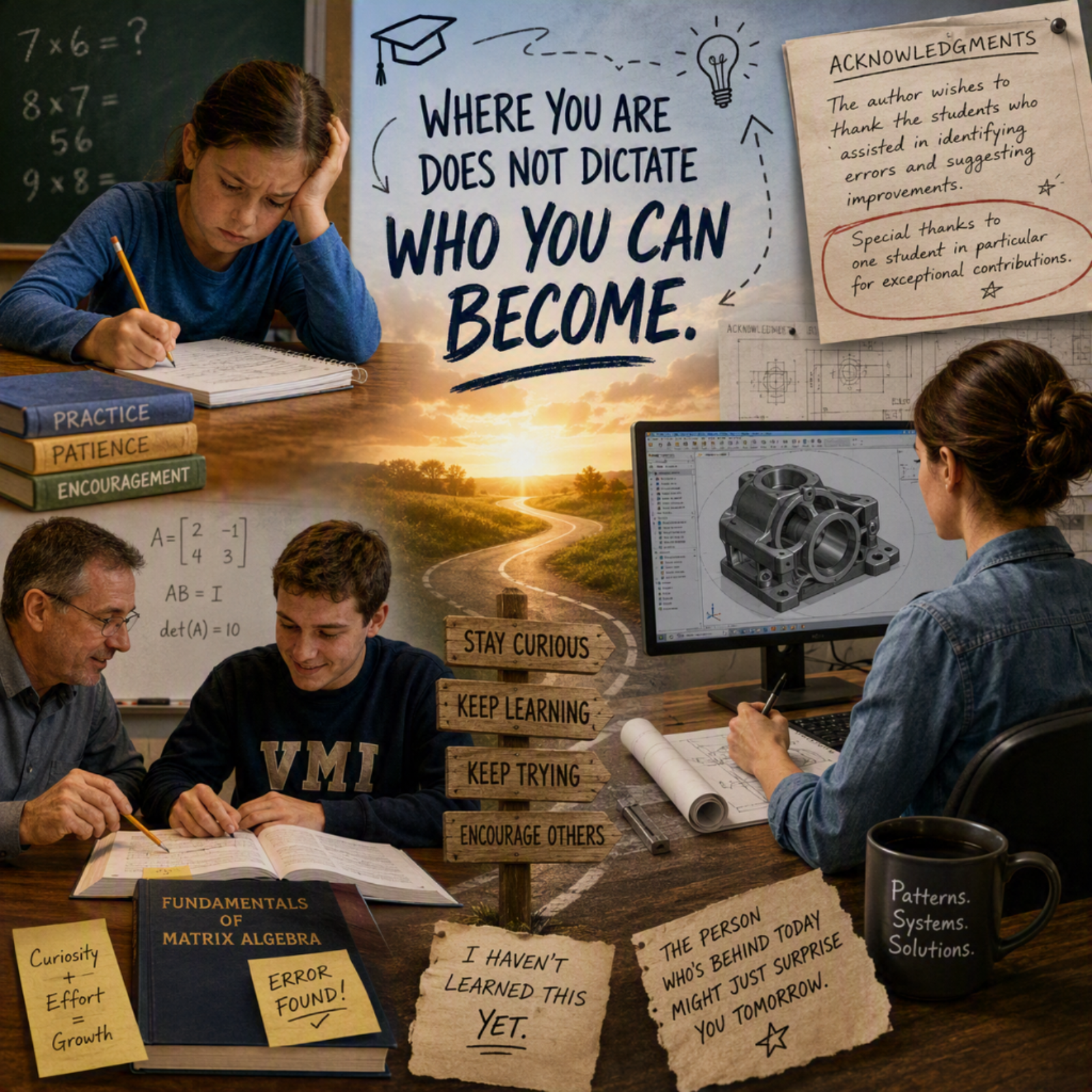
What if the thing you're struggling with today becomes the foundation of your future success? In this episode, we explore a personal story about being behind in math as a fourth grader and how that experience eventually led to studying mechanical engineering, working as a mechanical designer, and even earning recognition in a published mathematics textbook. Many people assume that being behind means they're not capable. But there's a critical difference between not knowing something yet and not being able to learn it. Through stories of family support, great teachers, and the power of curiosity, this episode examines why our current abilities don't define our future potential. Whether you're a student, parent, mentor, leader, or professional learning something new, this conversation serves as a reminder that growth often starts with struggling, and success often begins with persistence. 💡 What You'll Learn: The difference between being behind and being incapable How encouragement can change someone's trajectory Why curiosity is one of the most valuable learning tools The importance of asking questions and seeking help How small moments of mentorship create lasting impact Why your current limitations don't determine your future opportunities 🛠️ Action Step: Think about one skill, subject, or responsibility you've been telling yourself you're "not good at." Replace that thought with: "I haven't learned this yet." Then identify one small step you can take this week to improve, whether that's reading a book, taking a class, watching a tutorial, or asking someone for help. 📌 Perfect For: Students and lifelong learners Parents, teachers, and mentors Engineers and technical professionals Leaders developing new talent Anyone feeling behind or discouraged while learning something new Because today's struggles are not always signs of future failure. Sometimes they're simply the beginning of a journey you can't see yet. Stay curious. Keep learning. And don't confuse where you are with who you can become.
0:01When I was a kid, I was technically behind in
0:04math. And that sentence sounds strange coming
0:07from me today, because I work as a mechanical
0:09designer for an engineering and architectural
0:11design firm. I use math quite regularly. I actually
0:16really like math. But it wasn't always that way.
0:19You see, my family was homeschooled for a couple
0:21years, but we eventually moved to Texas, and
0:23I started public school about halfway through
0:25fourth grade. Because of the way the school years
0:28lined up before where I was homeschooling and
0:30now with public school, I was a little behind
0:33where my classmates were in certain subjects,
0:35especially in math. And when you're 9 or 10 years
0:39old, being behind can feel like you're being