
Avalon Church · Pastor Don Dodge
The resurrection gives us good reason to trust Jesus, not with blind faith, but with a faith grounded in where the evidence points. Speaker: Pastor Don Dodge Scriptures: 1 Corinthians 15:3-8 Watch on YouTube: https://www.youtube.com/watch?v=A-A70XieKwY Transcript: https://avalonchurch.transistor.fm/s2026/1/transcript
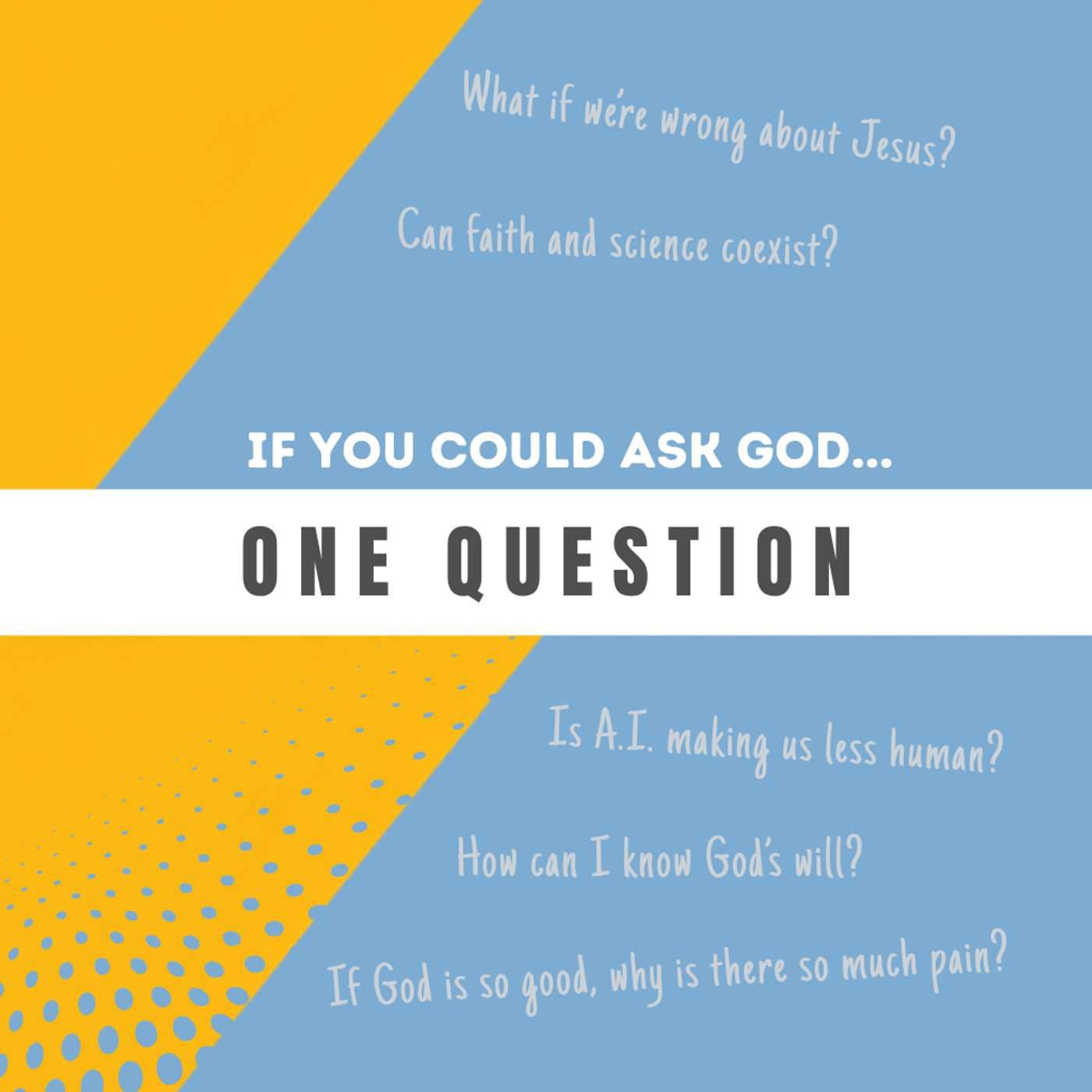
Don Dodge: I've been excited. I, you know, I haven't been up here in four weeks and we're starting a new series and I am loving where we're going just for the next four weeks. You know, school starting and it just felt right to go to the questions that so many people posed over the summer when I asked you to tell, if you could ask God one question, what would it be? And so for the next four weeks, we're gonna explore several of the questions that were asked. That, can you go to the other, is the other slide there? The the series slide? Nope. The it would have been backwards. Nope. I guess not. Okay. So, let me give you the four questions. It is, what if we're wrong? Like about Jesus, about faith? Like what if we're wrong? That's today. What can faith and science coexist? If God is good, why is there so much pain? That is in three weeks. And then the fourth one, only one person asked, but I found it so fascinating. I was like, I want to do that one. So I hope it connects. But is AI making us less human? I love that one. And so I have no idea where we're going to go with it, but I'm really excited about looking into it. And these questions are big, right? I mean, what makes them so difficult is that lots and lots of smart, sincere people can look at all of the same evidence because we all have the same evidence. It's not like there's any secret evidence over here that you just got to know, we all are looking at the same evidence and we're coming to different conclusions. So here's what I want us to do. Okay? For this whole series, as we approach these questions, I wanna ask a couple of things of you. I wanna ask one that you choose to be curious. Choose to be curious. Be teachable. Be humble. Let's be open to the possibility that we don't always see everything clearly. That we actually, like Paul said, we see through a glass darkly. Our perspectives are limited. I mean, if these questions were easy, they wouldn't be so hard. You can quote me on that, right? So if I say something you disagree with, it's okay. I could be wrong. You could be wrong. We're all still learning and growing. Amen? Are we? Okay. We're all still learning and growing. I am and you are. So for this series, I put some note note pages in the lobby. I probably should have said that at the beginning, and I'm sorry. How many of you wish you had the notes that I put in the lobby? Okay, is there anybody who would be willing to go get some notes and just walk around and make sure that people have them? That would be great. I mean, I didn't actually write notes, but I think you'll want a place to take notes. You can use your phone. You can use this. If you don't have a pen, you can use your neighbor's mascara. You can use lip liner. It doesn't really matter. God doesn't care as long as you can read it later. And so so anyway, let's jump in and talk about today's question. What if we're wrong? How do we know that we've chosen the right faith? I mean, is it because we were born into it? I wanna tell you a story about one of my favorite bands to start this message. You can go to the next slide. The band's name is Eleventy seven. And, they started out in the early two thousands as a Christian pop punk band. So if you don't like pop punk music, please don't go listen to them because then you will have a much lower opinion of me and my tastes, but I love them. And so they they they, you know, early two thousands, the lead singer's name is Matt Langston, and he was raised in the Bible Belt, like in North Carolina, Tennessee, somewhere like that. And he came out of a very strict fundamentalist Christianity. And he was still a teenager when he signed with his first label. I... He he was very talented, very young. And so he was surrounded by people in this new endeavor that said they represented Jesus. But instead of protecting him, very often people took advantage of him. Managers, studios, concert venues, and many, many, many churches. And so, in this process, which I remember deeply as I was listening to these albums, Matt started asking questions. Is this faith stuff real? Am I a Christian because I was just raised in it? How do we know all of this stuff is true? And so, as he was writing songs, his songs, songs started reflecting these questions and the more honest Matt became in his music, the less he fit within the contemporary Christian music industry. And his label eventually dropped him. Christian radio stopped playing him. And during this time, it was probably about the time I was coming to Avalon. It was like two thousand eighteen, nineteen. I just reached out and I I I wrote him on Messenger. And I encouraged him and I told a little bit of my story, my questions. I shared some hope about where I had come and Matt, like within just a couple of days, wrote back and he was so so appreciative and he he really, he asked for my permission. He asked for it. He said, I need a little bit of time to figure all of this out. But, you know, he told me how much he deeply appreciated somebody reaching out. Well, just a few weeks ago, so many years later, a few weeks ago, he posted this on Instagram, and I wanted to read it to you. He said, I watched my peers stand up and commodify the beliefs they claimed to be so sacred. Paid to manufacture conversion experiences. I realized the greatest truth I could offer people wasn't a religion or a belief. It was simply being the most honest version of myself I could be in that moment. This is how he finished it. I never imagined I would have to lose my faith to find my voice. Now I already knew this the journey because again, I've been listening to his albums and every album has gotten a little bit more questions and a little bit less faith. And I will tell you that it absolutely breaks my heart to know that this young man who has, I'm telling you, such a tender soul, felt like the only way to live honestly and the only way to ask honest questions was to leave faith. Because I know his story. And hearing his story, I gotta tell you, I'd leave that faith too. I would because what was presented to him as Jesus, it's nothing like Jesus. Nothing. Using people, silencing questions, rewarding dishonesty. I mean, Jesus, he is nothing like that. So maybe this is where we need to begin. Not with what has been said or what has been done in Jesus name and and and let me, if you would like some notes, just raise your hand because we got a couple of people who are awesome. Thank you for handing those out but maybe we need to begin not with what what has been said or done in Jesus name which is all over board, good and bad. But maybe we just need to start with Jesus himself. Is he true? Is he the one to believe? Are there good reasons to believe that Jesus is who he claimed to be. Now, the Apostle Paul, he gives us a really good place to begin. He summarizes the foundation of his faith and our faith in just a couple of verses. And so we're gonna be in first Corinthians 15 for a few minutes. And, I just wanted to to read this for you. He says, I passed on to you, and he's talking to the Corinthian Church. I passed on to you what was most important and what had also been passed on to me. Christ died for our sins just as the scriptures said. Now, you know, Paul's referring to the Hebrew scriptures, the the Old Testament, the the story of Israel and it is a long story of promise and failure and exile and hope. But the Old Testament ends as a story that is still waiting. It is an unfinished story waiting for god to show up, waiting for god to come and save Israel and restore his kingdom on Earth. Restore the world to the way it was supposed to be And for Paul, he believed that story, the Old Testament story, had reached its fulfillment in Jesus. Verse four, he says this, Jesus was buried and he was raised from the dead on the third day just as the scriptures said. See, for for Paul, resurrection was not a random miracle. Resurrection was the beginning of everything Israel had been longing for. God's kingdom on earth as it is in heaven. I mean, Jesus said in Matthew five seventeen, I haven't come to abolish this story. This this Old Testament story from Genesis all the way to Malachi. I haven't come to abolish that story. I came to fulfill it. And Paul believed this. Paul believed Jesus when he said this and not just because of the scriptures. Paul didn't just believe because he knew the Old Testament story. No. Paul and those first Christians, they believed because they were convinced something had happened. I want you to look at verse five. Jesus was seen by Peter and then by the 12. So, after the resurrection, you know, he showed himself to the the disciples. Verse six, after that, Jesus was seen by more than 500 of his followers at one time. Most of whom are still alive. Though some have died, Paul says. Think about this. Paul is writing to a Corinthian audience. This is a remarkable claim, by the way. Saying that there are 500 people, most of which are still alive today that you could ask, that could deny or or to say, yes, this happened or no, it didn't. He's like, 500 people are out there. That you you could go ask them. If they saw the risen Jesus. And some of the authorities, they did. They did ask them. And some of those 500 would be executed for their faith. Paul, Peter, James Steven but then Paul starts naming the most unexpected witness. Verse seven, then, Jesus was seen by James. He's talking about Jesus's brother and later by all the apostles. James was the younger brother of Jesus, a son of Mary and Joseph. And during Jesus' ministry, James did not believe. He didn't believe in Jesus as the Messiah. I mean, what would a brother have to do to convince the younger brother? He's the Messiah, right? Like, stop beating up on him. I don't know if that happened. But I was an older brother, my poor sister. James didn't believe until after Jesus died and he eventually became a key leader in the church in Jerusalem. Paul says that James saw the resurrected Jesus and began believing. And then Paul says, last of all, as though I had been born at the wrong time, I also saw him. Paul had not been looking for Jesus. In fact, you know the story. Paul was persecuting the people who followed Jesus. Until that moment when Paul encountered the risen Jesus and it changed the direction of his entire life. The resurrection is what convinced Paul. That's why he believed. That's why he was willing to die. Resurrection was the foundation of his faith and resurrection is the foundation of our faith. But we're not eyewitnesses. So, how do we know Jesus really rose from the dead? How do we know that the New Testament writings that point to Jesus's resurrection are are true and real and good and not some fabrication of a bunch of people. You know, that lived a long time ago who wanted to create a religion. How do we know? And this is where you might want to take some notes because I have been so excited to share some of this with you but you're going to I think you're going to get some good stuff. If you don't think so, I told you I could be wrong but I think this is some good stuff. Because when it comes to Jesus, scholars are across the spectrum. They are across. Many, many scholars, New Testament scholars follow Jesus. And many, many New Testament scholars do not follow Jesus. True story. Historians, some follow Jesus, some don't follow Jesus. Some really follow Jesus, and some really don't follow Jesus, if you know what I mean. I mean, they're hostile. There are brilliant people on both sides. So, point is, people aren't stupid because they disagree with us. Please hear that. Amen? People are not stupid because they disagree with us and during my doctoral work, I spent a lot of time reading scholars who do not believe the resurrection actually happened. And many of those people are brilliant minds. And they raise really, really good questions. But what I find so compelling, this is what I've been excited to share with you, are the areas where scholars on both sides all agree. And that's what we're going to talk a little bit about today. I'd like to share six basic facts. And I call them facts because scholars on both sides of the argument agree with what I'm about to share with you and and each one of these things require an explanation. And so let's get into it. First, Jesus died by crucifixion. There is no doubt on this one. There is Paul says it, the gospel say it, Roman and Jewish sources outside of the New Testament say it, you would be hard pressed to find any respected scholar who doesn't believe that a man named Jesus lived in the first century, taught, created conflict with powerful leaders, and died by crucifixion under the hand of Pontius Pilate. You're gonna be hard pressed to find anybody, anywhere who is a respected scholar who disagrees with that. It is history, and there is little debate anymore on that fact. Second fact, after Jesus died, number two, Jesus' followers sincerely believed they saw him alive. Now, history is not like science. You can't prove a past event the same way a scientist can go into a lab and reproduce an experiment in a laboratory. That is not how history works. Right? Like if... Yeah. Anyway, I was gonna give you an example, but it's silly. So historians look at writings and archaeology to ask questions like, what did they believe? How early did they believe it? How did it change? How did this new belief change them? And scholars across the spectrum agree that the earliest followers of Jesus had some experience that convinced them Jesus was alive. There is not a lot of doubt on that. That now, Christian scholars would say they they experienced that they had was they saw the risen Jesus. Skeptical scholars are not gonna say that. They're gonna give other explanations. They're gonna, you know, maybe it was a vision. Maybe there was some experience that was brought on by grief or trauma. Maybe we just don't know. But regardless of of which side you're on, scholarship generally agrees that whatever happened, those first disciples went from scared to bold. They they sincerely believed Jesus was alive. Skeptics would say they were wrong but there's no doubt they believed Jesus was alive. So much so that they were willing to face opposition, persecution, suffering, and for some even execution. So as not to deny what they had seen. That requires an explanation. What would cause somebody to go from scared to bold? What kind of experience could it be? It requires an explanation. And then number three, there's Paul. Paul went from persecutor to follower. Paul did not want Christianity to be true. He was a Pharisee. Who convinced Rome to hang Jesus on a cross? It was the religious leaders of the day. Paul was a Pharisee who believed Jesus' followers were wrong, dangerously wrong. And he was committed to stopping the movement. And then suddenly, something happened. Something happened that completely changed the direction of Paul's life. Again, you would be hard pressed to find a scholar who doesn't believe Paul existed and doesn't believe Paul had believed he encountered the risen Jesus. You're gonna be really hard pressed to find anybody who does it. Now again, skeptics would say, of course Paul didn't experience the risen Jesus, resurrection's impossible. Skeptics will say that but nobody's gonna say Paul didn't believe he experienced the risen Jesus because the testimony is too strong. It requires an explanation. And then as Paul mentioned, Jesus's brother, James, went from skeptic to church leader. Kinda think about this. The gospels tell us, Mark and John both tell us that during Jesus's ministry, James did not believe. That is damning evidence. That is not something that raises faith. That causes doubt. I I really think that Mark and John telling us that James didn't believe in Jesus while Jesus was alive is one of the most believable details in the entire Bible. Because why would it be there? Why would anybody say that unless it was true? But the scholarly consensus is that after Jesus' death, James became not only a follower of Messiah Jesus, but he became one of the leaders of the church in Jerusalem and was eventually executed as a leader who said Jesus had risen from the dead. That requires an explanation. And so does the fact that the tomb was found empty. Most scholars are gonna agree on this one. Not everybody, but most. We'll say that the tomb was empty. Now, don't get all excited because that doesn't necessarily mean a resurrection. It could have been other reasons. It could have been that the tomb was empty because somebody stole the body or moved the body or maybe Jesus somehow survived crucifixion which is crazy to me because Romans were really good at execution. But that's out there. That's out there. But if scholars agree that the tomb was empty, it begs several questions. Why did the disciples think he was alive? I mean, if you stole the body or you moved the body, you wouldn't think he was alive but there's no doubt they thought he was alive. Why? And what made Paul change his mind? I mean, like, literally, you're going to persecute people who believe that Jesus rose from the dead and your testimony is, I saw the risen Jesus. He came to me. So, I changed my mind. What other reason could there be? And James, that's just bizarre. What would cause a brother who was saying the whole time, Jesus is not the Messiah and then Jesus dies on a cross which is not very Messiah like. I mean, that's not what they were expecting. What would cause that James to go, no. I am now a follower of the resurrected Jesus. If it wasn't resurrection, what what would cause that? I mean, these questions, they they beg answers and lastly, why was the resurrection at the very center of the Christian message from the earliest beginnings? See, scholarship widely agrees that the the disciples belief in resurrection was very very early. This was not something that was created in the second century or third century after Jesus died. In fact, the words quoted in first Corinthians 15 by Paul, they were not Paul's words. That was a creed that had been passed around for a very long time by this point when Paul wrote the letter. Even skeptical New Testament scholars agree that the belief in the resurrection was very early. Some say as early as one to two years after the resurrection, it was already being written about and sung about and we have some of those songs and writings in the New Testament. Philippians two is one of them. First Corinthians 15 is one of them. These are creeds and songs that the early Christians were singing from the very beginning that were eventually put into writing by people like Paul or Peter or we, you know, other New Testament writers. What is the best explanation for the resurrection being almost at Christianity's inception? What convinced, what could convince so many people who knew Jesus was dead? I mean, they watched it. What could convince them? That he's alive. In such a way that was so strong that they were willing to die, still proclaiming he was alive. You know, I said this before to you and I still it it means so much to me but a lot of people will die for a lie because they don't know it's a lie. You know, people get duped and they will do crazy things following some leader who is lying through their teeth but they don't know it. So, they do crazy stuff but nobody, nobody is willing to die for a lie that they know is a lie Especially if you're not getting anything for it. I mean, if you're going to make a lot of money, sure. If you can get a lot of power, sure. If there's sex or fame or anything like that involved, sure, people will all the time just do crazy things but to suffer persecution and oppression and execution for a lie, nobody's doing that. But they suffered and were persecuted and were executed. Why? I gotta tell you church, this is me. Out of all of the explanations that are out there, the one that makes the most sense is that Jesus really was alive. To me and to many many scholars, that is the explanation that requires the least amount of mental hurdles. Now, you need to hear something. I don't believe in Jesus because I was raised to believe. I wasn't. That's not my story. I believe in Jesus, the resurrected Jesus for the same reason that the early church believed because that's where the evidence points, at least my perspective. Now for them, the evidence was better than mine. For them, they saw it with their own eyes. They talked to Jesus. They ate with Jesus. They felt his scars. They they they they watched the, you know, after Jesus rose from the dead, like even the apostles were healing the sick and raising the dead. I mean, that's pretty good evidence. That's not my evidence but you know, my evidence is, they wrote down what they saw but so did the unbelievers unbelievers of the day, Josephus, one of the historians, Tacitus, who was like the next generation right after Paul and Peter and them. They wrote what everybody was also saying. So, their writings help me but I think it's also the passion to tell everybody what they saw without personal gain. I mean, nobody gained fame or money or anything. All they gained was suffering. And then they many of them were were died and they were willing to do it proclaiming the message that we have seen Jesus alive and he has changed us from the inside out. So, bottom line is we don't need to follow Jesus with blind faith. It is not blind. We can follow Jesus because that's where the evidence points. And and historical evidence is not the only evidence for Jesus. I began telling you about people who have used Christianity to manipulate for personal gain. I mean, we've all experienced that. We all seen that but you know what I've also seen? I've seen love shown when love was impossible. Right now, my cousin is in the hospital up in Alabama. Weeks ago, he and his wife were attacked by their 17 year old son and they were stabbed multiple times. My cousin lost his whole family that day because the mom, my cousin's wife, died at the scene. Their step, his stepson now lives with the father and the the son who did the stabbing is now in prison. So, my cousin is all alone. Three weeks ago, he had a family of four. He is still in critical condition in the hospital. In about a week ago, he received a call from his son from prison. The fact that he took the call astounds me. Weeping, the son said he was so sorry. Now, my cousin, it's really Ray Lynn's cousin, is a follower of Jesus. And on that call, he said, son, I need time, but you are my son. And I don't know how, but with Jesus' help, I forgive you. Dude, I'm just being honest with you. I'm not there. I'm not there at all, at all. How is that kind of love possible? And the only thing I can figure is that my cousin is being shaped by the risen Jesus and he knows what it means to be forgiven and so in that moment, he offered to his son what he himself has received from Jesus. That is the only explanation I got because I cannot imagine it. See, Jesus isn't just something we believe in. He is a person who is alive and he is changing people through the Holy Spirit in us. His spirit living in us at work in us. I've seen marriages come back from places that were beyond repair. I have seen people give when they barely had enough for themselves but they had to because they had to help somebody else who was in need. I've seen people find freedom from addictions and from and healing from trauma and in my own life, god has answered prayers and I have found hope and purpose and healing in places that frankly, I don't think I I I could not. I I can't explain. See, the resurrected Christ is making me new and he is doing the same in many of you. He is making all things new. Now, this isn't proof but it is evidence And when I look at all of the evidence in in history and in the people I know and in my own life, I believe. I believe in Jesus Christ. I believe Jesus Christ died for my sins and that he was buried and that he was raised on the third day and that he is working to make all things new just like it says in scripture. I want to invite the worship team up and I also want to invite our prayer team up. If you are willing to just be available to pray with people, I would I would ask that you come up right now and you know, I I began today's message because it's foundational to the rest of the series because if Jesus is trustworthy, then faith and science don't have to be enemies. If Jesus is trustworthy, we can trust him even when we're confused and don't understand the suffering around us. If Jesus is trustworthy, we don't have to fear AI. But today, I wanna end with a much more personal question. What are you gonna do with Jesus? Because faith is not simply believing that Jesus existed or that he rose from the dead even. You can believe a fact without entrusting your life to it. Even James says, the demons believe. They don't follow. Faith is trust. And following Jesus begins when we decide that if Jesus really is the person he claims to be, then I can trust him with my life. Even if I have unanswered questions, even if the Bible doesn't make sense to me, even if other Christians have betrayed my trust, I can trust Jesus because he is alive and he is good and he wants to bring life to me and he wants to bring life through me. So, maybe that's the decision in front of you today. Maybe you've been around Christianity. Maybe you've grown up in church. Maybe you've walked away and you've had questions and maybe you've been afraid to ask about them. Or maybe you've been burned by people claiming to represent Jesus. And it's made it really difficult for you to trust. God, me, the church. Or maybe you do follow Jesus and you do believe he rose from the dead and that's not really your question. Your question is, can I trust him with what I'm facing right now? My kids, my marriage, my future, my job, my joblessness, the disappointments, the trauma that I've experienced. Can I trust him? I'm praying a prayer, Lord, that you haven't seen to answer. I have questions that still haven't found resolution. I'm not asking you to trust every person who comes in Jesus' name because I don't. And I'm not asking you to resolve every one of your questions because I haven't either. I have a lot of questions still. But I am asking you to look again at Jesus, and if you agree with me, if you agree that the evidence points to him being alive, that changes everything so we can trust him. We can trust him with our questions, with our pain. We can trust him with our life. Let's pray together. Lord, I wanna thank you. I wanna thank you that we don't have to believe blindly. I wanna thank you that in a modern world like we live in, where we're always looking for evidence and we want, we always want, you know, cause and effect and different things that when we look at Jesus, when we look at the first century, when we look at what happened when when you died and you you rose again, that we don't have to just believe blindly, but there's so much evidence. There's so many reasons to believe. In fact, belief seems like the most logical explanation. Thank you. Especially for people like me who really need that. Thank you. Lord, I pray right now. We have people in this room who they have been following you, but frankly it's been dry, and they're just wondering why if it's even worth continuing on being part of a church or being a part of faith, they just don't know. I want to pray that you would reignite a fire in their soul today to say, you know, the work that you did back then, not only in raising, you know, the father raising the son from the dead, but the way you raised up your church from being so scared to being bold ambassadors. Lord, if you, if you did that then, you can do that now. You want to use us despite the suffering, despite the pain. Give us a fire inside that says, if you are alive, that changes everything in my life and in this world. Give us the fire to follow you. But maybe there's people in here who they have not had faith. They've not grown up in faith. They... Maybe they've left faith because of the pain. I I pray. Would your presence be very real to them today? Would you draw them to yourself? Would you make it completely clear to them that there is no way towards life and peace and hope outside of you. So if you're in here, I just want to encourage you. You can follow Jesus by making that choice, drawing that line in the sand and stepping across it and saying, Jesus, I believe you rose from the dead. I'm yours. I wanna follow you. Just make that decision today. Jesus, it's in your name we pray. Amen. What do I like? Man, thank you, Jesus. I'm gonna close with a benediction, but I wanted to let you know if you're a questioner, a doubter, or somebody who is would love to have a further conversation, I would love to I would love to meet you. I'm gonna be at the guest service of guest services, wrong church, welcome desk. I'm be at the welcome desk right when we're done and so I would love to I'd just love to meet you. I wanna close though with this benediction. May the God of peace who raised Jesus from the dead equip you with everything good to do his will. And may he produce in us what is pleasing to him through Jesus Christ, to whom be glory forever and ever and ever and ever. Amen. Be blessed. Have a wonderful day. We'll see you next time.