
Archer's Line Podcast · Rob Archer
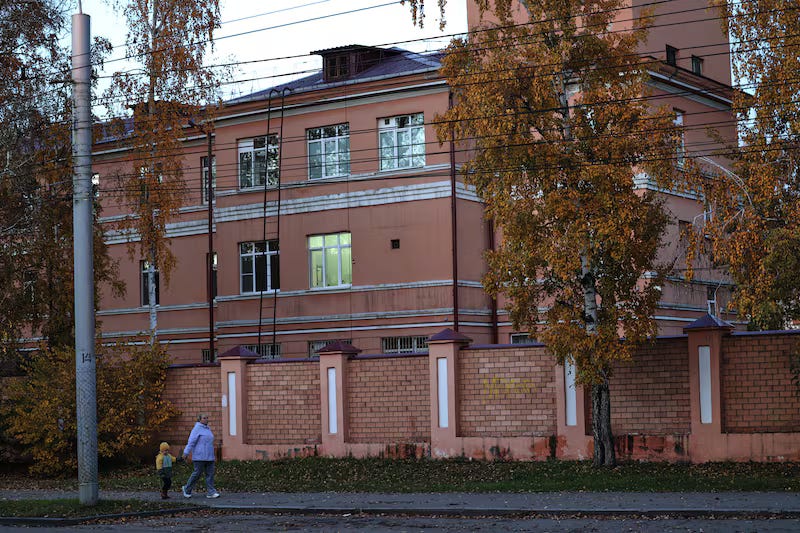
A researcher at a Russian anti-plague laboratory is dead. Russian officials say thousands of tests have found no dangerous pathogen, and there is no evidence of a plague outbreak. But the World Health Organization still doesn't know what killed Darya Shipilova. In this follow-up to my earlier piece about Annie Jacobsen's Biological War: A Scenario, I look at what we know, what remains unconfirmed, and why Russia's history of covering up disasters — including Sverdlovsk and Chernobyl — makes independent verification so important. The evidence is reassuring in some respects. The unanswered questions are still worth asking. This is a public episode. If you'd like to discuss this with other subscribers or get access to bonus episodes, visit www.therobarcher.com/subscribe
0:00SPEAKER_00Russia says it was in plague, so what was it?
0:03SPEAKER_00The worst fears about Siberia are beginning to fade.
0:07SPEAKER_00We still don't know what killed Daria Shapilova.
0:11SPEAKER_00Welcome to Archer's Line, I'm Rob Archer.
0:16SPEAKER_00Last weekend,
0:17SPEAKER_00the story out of Siberia sounded like the first chapter of
0:20SPEAKER_00an end-of-the-world novel.
0:22SPEAKER_00The 28-year-old researcher at Orkutsk Anti-Plague Research Institute was dead
0:28SPEAKER_00after developing severe pneumonia.
0:30SPEAKER_00Russian authorities quarantined people who had been in contact with her.
0:34SPEAKER_00A hospital stopped admitting and discharging patients.
0:37SPEAKER_00There were reports that Darius Shapilova had been exposed to Yersinia pestis,
0:42SPEAKER_00the bacterium that causes plague.
0:44SPEAKER_00And to add a note of unreality,
0:47SPEAKER_00Annie Jacobson had just published Biological War,