
Analyzing Trends · scenarioDNA
Most of what passes as “trend” right now is really about how we route memory. Feeds and platforms teach us to click what we already recognize, so nostalgia quietly becomes a default strategy. It feels safe, but if every brand keeps raiding its own archive, the past stops feeling special and starts feeling like inventory.The next phase of brand work has to focus less on throwbacks and more on continuity: building products, rituals, and experiences people want to return to, not just recognize once. We discuss this needed shift in strategy in our new book Story Systems, which looks at how cultural research can show where people use references for comfort, status, and belonging, and how brands can respond by adding new chapters to culture rather than replaying old scenes.
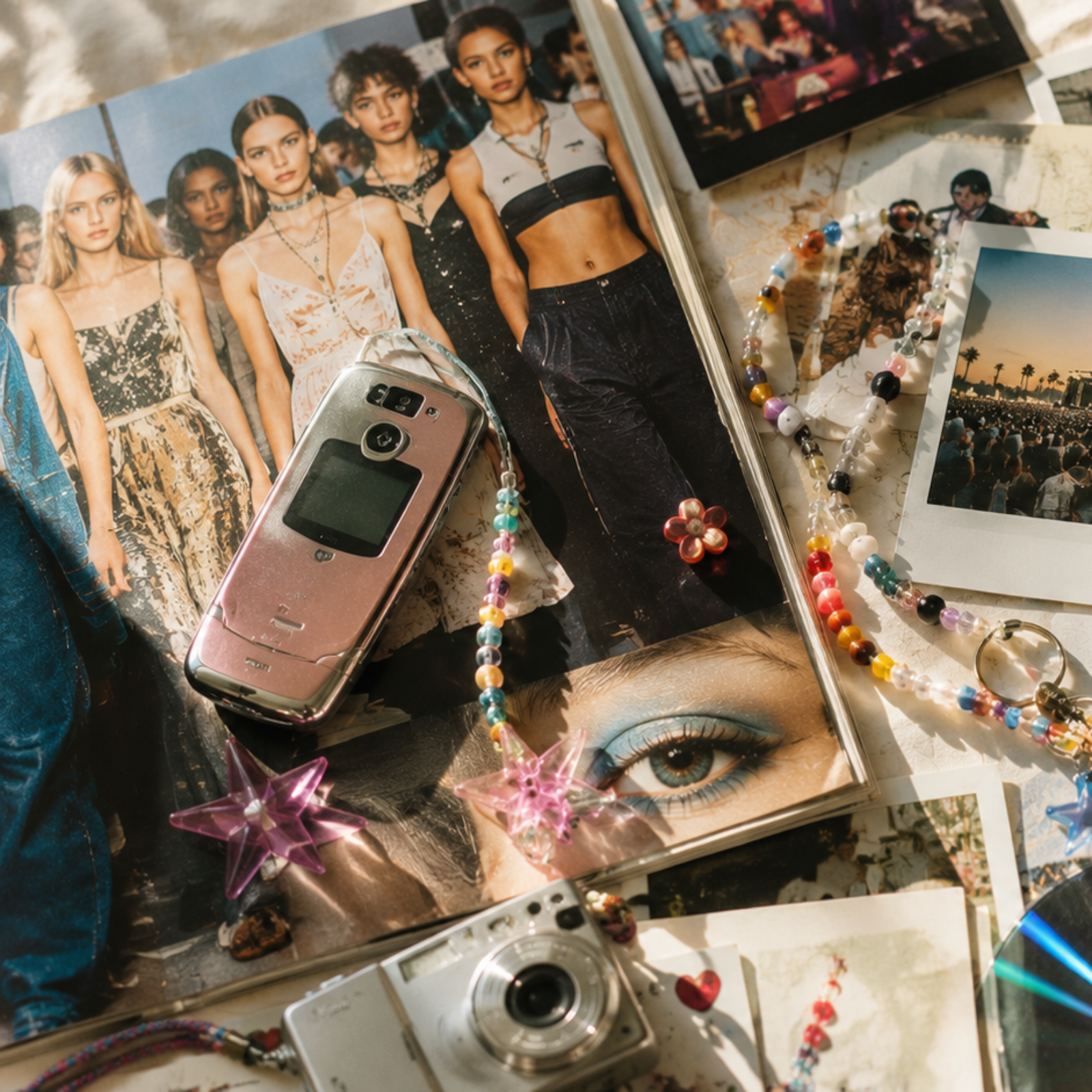
0:09During fashion week, it's possible to move through
0:12three decades in under a minute. Demna's Gucci
0:16debut streams a Tom Ford -era silhouette down
0:19the runway on Kate Moss. A swipe away, a TikTok
0:22creator frames a Y2K leather it bag as both vintage
0:27find and must have. Another swipe opens on Coachella
0:32where Justin Bieber is dwarfed by the grainy
0:35retro footage looping behind him. The feed ends
0:38on a 2016 core festival edit, a recent past already
0:43processed as nostalgia, complete with analogue
0:46filters and sentimental captions. This isn't
0:50simply fashion repeating itself, fashion has
0:53always quoted its own past. What feels different
0:56now is that sequence has collapsed. 1997, 2004,
1:012016 and the present all sit on the same sheet