
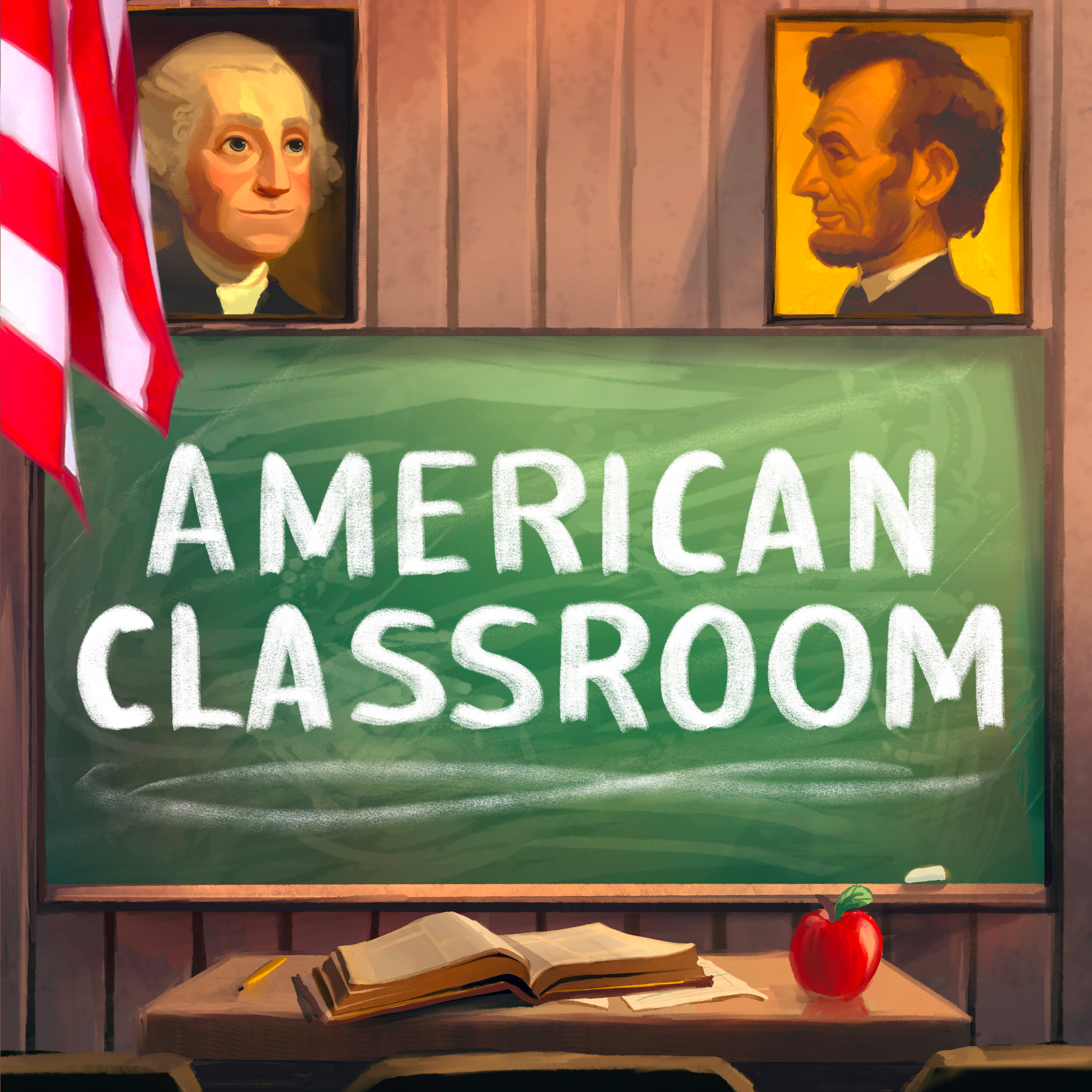
American Classroom · Heritage Academy
Why do the creative arts still matter in K-12 education, especially in an age of artificial intelligence? Illustrator Josh Nelson joins Jared Taylor and Lindsey Crosland to explore how visual art can shape memory, character, curiosity, and civic understanding. Josh shares how motivational artwork influenced him as a child and how that experience eventually led to a collaboration with Heritage Academy, creating portraits of historical figures tied to virtues and citizenship lessons. The conversation also examines the human side of creativity, the ethics of AI-generated art, and why students still need opportunities to draw, sculpt, design, and make things with their own hands. From historical storytelling to scientific discovery, this episode makes the case that art is not an educational extra. It is one of the ways people learn to see, think, remember, and create. Show Notes: If you want to learn more about the American Classroom podcast, please visit AmericanClassroom.Show https://americanclassroom.show/ To learn more about or take a tour of the great schools mentioned in this episode, visit Heritage Academy https://heritageacademyaz.com/ or Paul Revere Academy https://paulrevere.tech/ Learn more about illustrator Josh Nelson and his work at The Art of Josh Nelson https://theartofjoshnelson.com/ Sponsored by: Heritage Academy, downtown Mesa campus- www.hamesa.com
0:08Jared Taylor Welcome to the American Classroom podcast. I'm the host, Jared Taylor, and with my co-host Lindsey Crosland here today. And we are looking forward to having a conversation on the importance of, the creative arts in the K-12 space. It's a topic we covered a little bit, in a couple of other episodes before, but we're going to take a different, angle this time. And we have a special guest, Josh Nelson, who's with us today. Hey, Josh, how's it going?
1:24Josh Nelson I’m doing great. Thank you for having me.
1:26Jared Taylor Well, we're excited to have this conversation with you. We love the visual arts. We love the importance that it has in K-12 education and in building a civil society. One thing that we love to do in our schools is take them on many different tours. And one thing that you can see that really shapes the contours of civilization is the arts. And Jefferson didn't say it exactly, but he did talk a lot about if you want to perpetuate certain cultural ideals and values, you embed those in architecture, in art so people can see them over the generations. So we are going to explore a little bit about that in terms of the impact in the classroom. And of course, the classroom sets the future of the country. So Josh, let's start with a little background because I know that you've done a little bit of work with the Heritage Schools that American Classroom is affiliated with. But maybe tell a little bit of our listeners your background, how you got into this, and a little bit about what you're working on these days.
3:47Josh Nelson Yeah, thank you. So my background comes from digital illustration. I've, you know, when I was growing up, my mom would put pictures in my room and they were motivational pictures. They’re the ones with the big concept on the picture and then there's something explaining the concept, with the black border around it. Don't know if you guys have seen those before. And in my room, they were always there. And I didn't realize the impact they had until I left my house when I got older. And after I left, I realized how much that kind of shaped me and looking at those things on the walls kind of helped me to remember important values, persistence and gratitude and humility and all sorts of things that. And so since I was a little kid, I've always been obsessed with drawing and making pictures and everything. And when I got the opportunity to kind of decide to move that into a business, I went through a lot of thoughts on how to do that and this motivational picture idea kind of came up during that. And I was like, oh, that would be cool if I can make some pictures similar to that, that impacted me when I was a kid. And made some, made some historical figures, it was Ben Franklin, Abraham Lincoln, and Gandhi. And after I made them, I was selling them at shows and different things to my fans and stuff and decided to shoot an email to the Heritage Schools. I was like, hey, I made some pictures, you know, if they could be useful for education in your schools, you know, I would love to know. And Lindsey responded right away and was like, yeah, let's let's talk about it. And since then, we've been able to collaborate in making lots. Ten, 30, I think we're 30, 30-something now of different heroes.
6:53Lindsey Lundeen Crosland Yeah, I think is it 40? I think we commissioned you for 40 people, important women and men from history, like founders. So he’s doing our whole citizenship curriculum for our K-8. And I’m glad you mentioned that because I was trying to remember, I know it’s been four years ago that we started the commission work and I couldn’t remember if we reached out to you or you reached out to us. So that you just jogged my memory that you emailed us. And then I was like, I know just the project.
8:02Josh Nelson It was very exciting to me. Yeah, and being able to collaborate on all these heroes has just been such a joy for me. And the wealth of knowledge that Lindsey and Shelisa have into history and the people that have shaped it is, you know, super cool for me to learn about and be able to do my best to illustrate them. And then outside of helping the Heritage Schools with those posters, I've done some board game illustration. And most recently, I am developing a picture book and have been doing live caricature, which is kind of fun.
11:58Jared Taylor That's fun. Okay, well, when you make it down to Arizona then we'll have to take you on a tour so you can see see what's on the walls because it might look familiar.
12:12Josh Nelson Oh, I would love to. They look great.
12:18Lindsey Lundeen Crosland And just for our listeners who are not familiar with who Shelisa is, we just said Shelisa’s name, but Miss Arnold is the principal of one of our K-8 campuses and she also wrote our entire citizenship curriculum and went through and highlighted all the so when you’re talking about expertise, that was not mine. That was Miss Arnold's. And then really when this collaboration came up, picked, you know, the main focal people in the book to highlight. And so we're going to have some of these images up on the screen for our audience to see here, but yeah, so it's one of our principals through the Heritage Academy network who was the one who commissioned these particular figures. And for anyone listening, we will link to Josh's website and you have free coloring pages that families can download and if they want to purchase this art and have them in their school, it has a quote like you said, it has a virtue that goes with each person and one of their famous quotes that ties that virtue on the back of the artwork. So fun for scholars.
14:04Jared Taylor Yeah, it reminds me of those white books, did you have those white books that has all the has the virtue and then a little story of like Jackie Robinson and courage and I don't know if I had one of those books but I definitely had posters on my wall. The posters, yeah. Remember the 90s posters? Those are great. Yeah, I was thinking about how those impacted me in my development, just from seeing the words like gratitude or whatever they were throughout my childhood. So that's good.
15:15Lindsey Lundeen Crosland Yeah, so what was your background in art education from maybe elementary or college? Can you share that with us?
15:28Josh Nelson Yeah, I'd be happy to. So whenever I'm asked this when I'm at a show, my answer is always I graduated from YouTube University. So largely self-taught, but I've had some wonderful teachers over the years. My high school art teacher was a big impact for me. My mom has always encouraged me to develop my arts through either visual arts or musical. And then in college, I went to BYU for I think three semesters before I dropped out, and during that time, I was able to be in some classes with some of the greats. I was taking prerequisites for the animation program and there are some amazing professors that are involved with that program that I was able to take classes from. And that was just a very helpful for my development.
16:40Lindsey Lundeen Crosland One thing I love about illustrations is the storytelling portion of it. And what I think is really neat is that as we've worked with you on work, we say, here's a person and some background on them and then you form the way that you represent that person and that virtue and that character that they're displaying in an image, right? And so that's quite a talent and I think that so much of what we see in our community and on posters like you said growing up, shape what we believe is possible for ourselves and for what is going on around us. And so that's a big responsibility that an illustrator has or an art teacher or you know, to be able to talk about storytelling and how that comes to life in your work. So do you want to share anything about that responsibility and the work that you're doing or kind of how that feels to you?
17:50Josh Nelson Yeah, that's a great question. And I do definitely see it as a responsibility, the responsibility and privilege of being able to create artwork that kids are going to be able to look to and maybe be introduced to this person for the first time. And, you know, have the inspiration to learn more about their story. What's cool in the Heritage Schools is from what I understand, they see the picture and then that whole month they're kind of learning about the story of the person. And so it's really neat for the kids to be reminded this person encapsulates this virtue. And so thinking about the facial expression and the action that the character's doing that kind of captures their essence, I take that very seriously to to convey it properly because it's almost like I'm imagining that the person from history is sort of looking over my shoulder and like, are you representing me well? And that's kind of daunting when you think about it, these people that have done amazing things, made sacrifices that I can't even imagine, to be able to illustrate them in a way to inspire kids. And so I think that it's it's a cool thing too to know that kids can kind of put a face to the name of somebody from history to sort of get it in their mind a little more because I remember from school when I would learn about people and history and stuff, sometimes it would be kind of arbitrary and sort of abstract because I wouldn't really have a face to put to it. But for them to be able to have that too hopefully adds another layer to their education to remember it a little more deeply.
18:43Jared Taylor You know, at Heritage, they do a lot of archetype work, meaning let's look at an American hero from the past and study their works, their writings, their teachings, how they lived their life. And a lot of that comes from a book, you know, in text. And so to supplement that with illustrations of how did they look or act really helps bring that to life because once they can relate to someone or their trials and struggles, then they it gives them a little courage that hey, they can do great things as well. They have this struggle, like Lincoln did, whose mother died when he was young. Not that their mothers are dying when they're young, but you know, they'll have a struggle that they could relate to. But all the more that we could just help bring that character and certainly pictures are worth a thousand words, right? And certainly more engaging than text in many cases. So we love the added layer that that helps to their citizenship study.