
Afterlives of Ancient Egypt with Kara Cooney · Kara Cooney
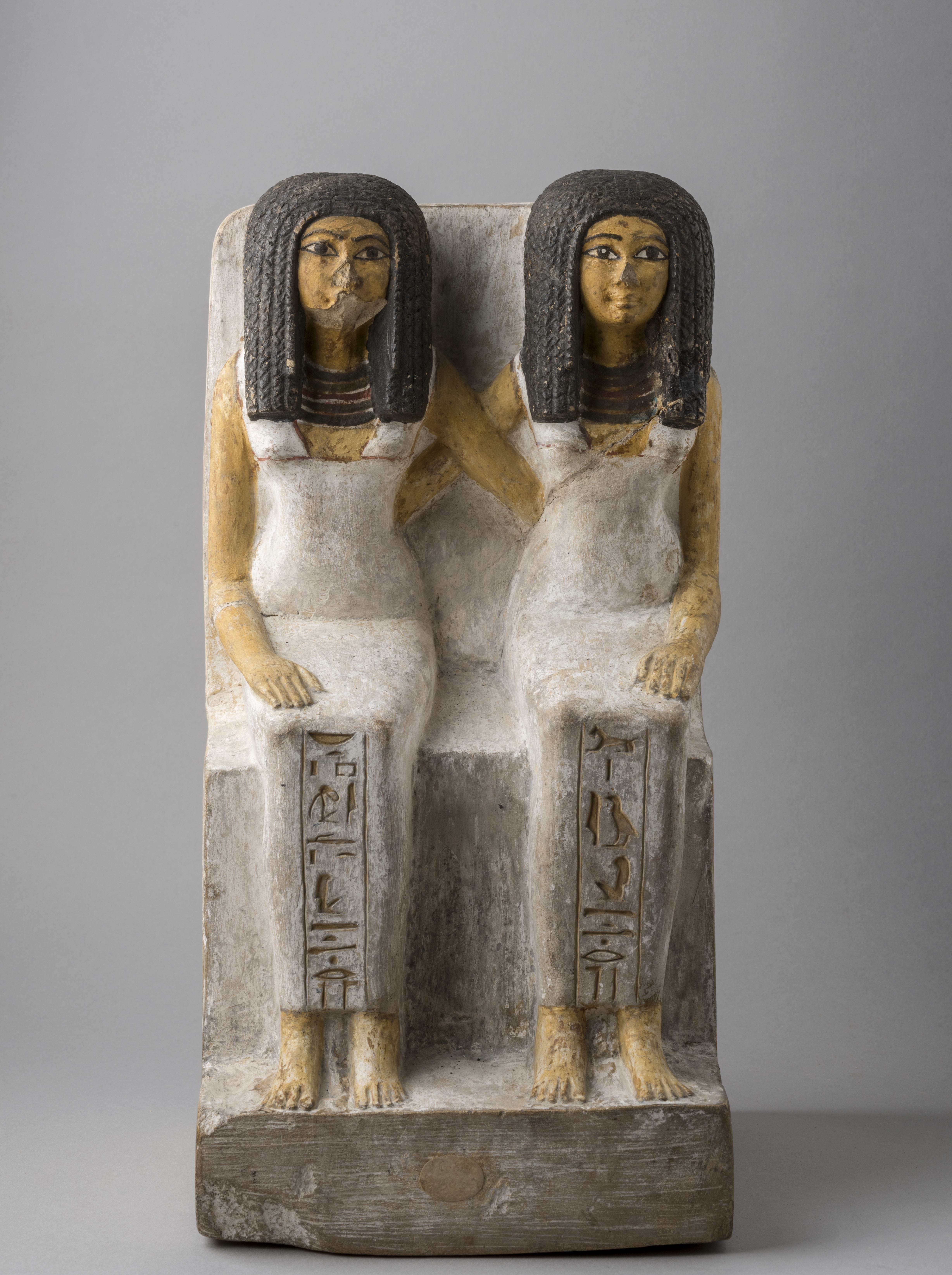
Thank you paid subscribers, KinchStalker, Phoenix, Tomas Johansson, and many others for tuning into this live video with Jordan Galczynski and Amber Myers! You filled the chat with such sharp and interesting questions. This is exactly the kind of conversation we love — primary sources, spirited disagreement, duck genitalia, and the occasional new moon. We’ll be back soon. CW— mature themes; sex; sexuality; sexual assault What does it mean to look for queer lives in the ancient world? We don’t want to impose today’s freedoms onto a patriarchal past, but we also don’t want to erase the biological reality that queer people have always existed in the world. That tension—generative, unresolved, and genuinely fun to argue about—animated our latest live conversation, and we’re thrilled so many of you joined us for it. Two Women, Arms Entwined We kicked things off with a pair statue currently held at the Museo Egizio in Turin. Amber had shared it earlier in the week and it immediately sparked debate among the three of us. Dating to the Thutmosid period and likely from a tomb in the Theban necropolis, it shows two women — Idu and Rui — seated side by side in white linen shifts and elegant bipartite wigs, arms wrapped around each other in precisely the embrace you’d expect to see between a husband and wife. The museum’s own description calls the relationship between them “unclear.” Which is, of course, the perennial problem. Are they friends? Sisters? Mother and daughter? Could they be something more? Kara was the self-described cynical voice in the room, skeptical that ancient Egyptian society would have allowed a formally commemorated queer female relationship — while also being completely open to the possibility that a very real relationship could have existed behind the scenes, just one that could and would never be named outright. Jordan pointed out something quietly fascinating: Idu holds the title nebet per — Mistress of the House — while Rui carries no title at all, no indication of kinship or any named social role. That asymmetry suggests a dependent relationship, but of what kind, we simply can’t say. They seem to have wanted to show themselves as the core of their household. What we can say is that someone commissioned this statue, paid for it, and had it placed in a tomb context so that both women would receive offerings in the afterlife. That’s not nothing. Whatever Idu and Rui were to each other, there was care—plus money, and intention—and a desire to keep this person in one’s eternal company. The group also floated an intriguing hypothesis: what if Idu had outlived her husband, inherited his property, and then got to live exactly as she chose? Two women, a shared household, just friends, obviously. Roommates even. The ancient world’s version of companions traveling down the Nile together — who, as Jordan noted, everyone quietly understood were probably lovers, but who would never in a thousand years have said so in a formal...
0:00I'm happy to see you all thanks for popping in um we have eight
0:07yeah great oh you
0:08guys can see all that okay yeah we can see and I can see the
0:11chat and the numbers
0:13okay um what are people saying let's see uh people are having
0:18you know too old to
0:20figure out how to join oh somebody's you're watching you've
0:23joined you've joined
0:25SPEAKER_03yeah I think it's like an instagram live so like
0:28the live is different from a zoom where we can't see each other
0:31yeah we can't see
0:32you kinch stalker black screen i don't know why well you're
0:36back now it was just
0:37when you were off of it um oh yeah me i was a black screen
0:42that's right oh you
More Afterlives of Ancient Egypt with Kara Cooney episodes →