
Afterlives of Ancient Egypt with Kara Cooney · Kara Cooney
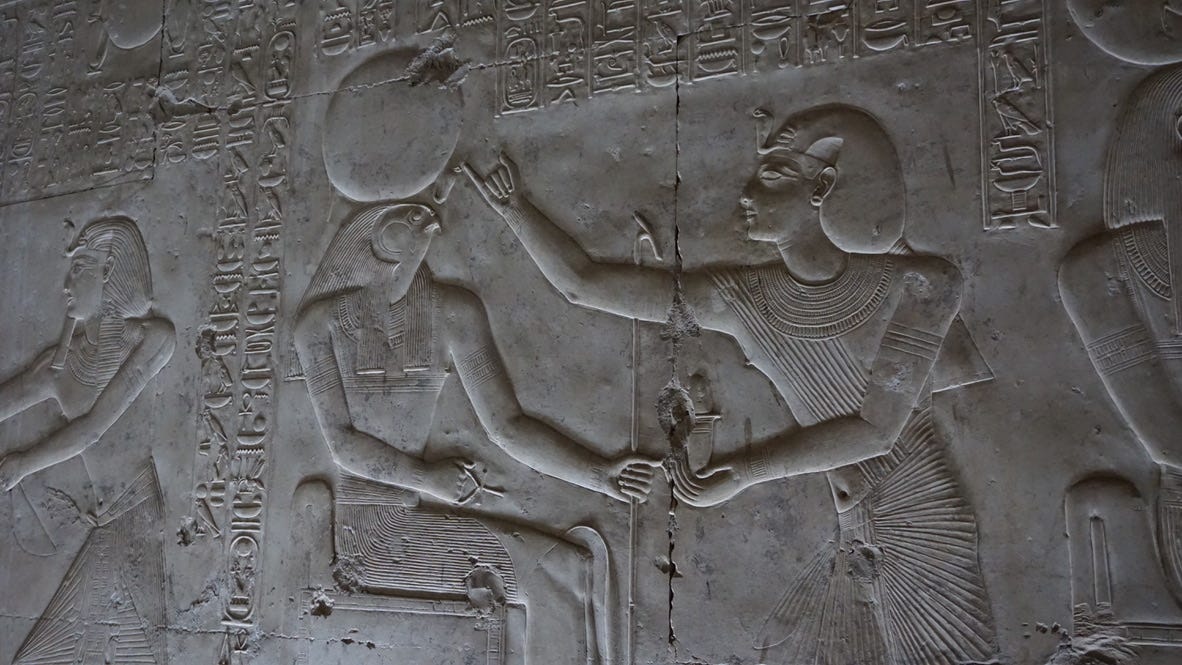
Egyptian priests didn’t just waft incense and mutter incantations; they had to run the cosmic machine, make sure the sun rose and set, the Nile rose and receded as appropriate. From feeding the gods to managing temple estates, priesthood sat where divinity, money, and monarchy intersected. It’s not that the Egyptian priests were so simple-minded as to believe humans were needed for grand actions of cosmic continuance, but rather they realized pleasing the gods would bring the best version of divine power into the human world—whether that best version was copper (Hathor), wheat and barley (Osiris), inundation (Sobek), healthy children (Isis), or miraculous craft (Ptah). The Egyptians thus knew they had to create a perfect habitat to pull the gods into their human spaces. First the god needed a body, a sacred statue made of precious things like gold, silver, electrum, precious stones, glass. Then that body needed a grand house, the temple. And the divinity would have to be carefully cleaned and anointed, fed the best bread and beer, wine and beef, duck and lettuce. The gods had to be dressed in fine linens, entertained with dancing and music. Without such magnificent bribery, they wouldn’t be pulled into the realm of the human, we are told, and they wouldn’t bestow their gifts. This was a give and take world, after all. Divine-human quid pro quo. When you tug on the priestly thread of religion in ancient Egypt, the garment unravels into issues of restricted knowledge, kingship, patriarchy, money, land, and power. Let’s start with the basics: what was a priest in ancient Egypt? When you think of an Egyptian priest, think of a specialist, someone set apart and equipped with bespoke and unusual knowledge of how to connect with the divine. He could read and write; he had thousands of incantations memorized. He knew the movements to make in front of the shrine, how loudly or quietly to speak, when to raise or lower his eyes. He held restricted knowledge that few had—spells that woke the god, calmed them, provided the conditions for their transformations—because in the end every god was representative of a life and death cycle that had to be renewed. Osiris had to be transformed seasonally, the sun god daily, the goddess yearly. Never forget that his knowledge of texts and spells made him privileged. It gave him power and access to those with political, economic and military power. And in ancient Egypt, these worldly powers were combined with religious powers such that the pharaoh was the highest of high priests atop a hierarchy descending down to his chief priests, lector priests, and on to the lowest wab priest, all of them helping to run the whole sacred-human game. But alongside the rituals that sustained the gods and the cosmos came bureaucracy, taxes, the constant search for income to keep the temple open. Priests didn’t just chant incantations and carry out their religious duties—they managed vast estates, redistributed offerings, and, in many...
0:03SPEAKER_02Welcome to Afterlives of Ancient Egypt,
0:06SPEAKER_02in which we discuss ancient history and relevant current events.
0:09SPEAKER_02I'm Cara Cooney,
0:10and I love to take deep dives into history that are not always
0:13possible in academic
0:15SPEAKER_02formats.
0:16SPEAKER_02So let's get started.
0:21SPEAKER_00Hello, hello.
0:22SPEAKER_02Hi, everyone.
0:24SPEAKER_02How are you doing?
0:25SPEAKER_02I'm good.
0:27I am officially not chair of the Near Eastern Leaders and
0:29Cultures Department at
0:30SPEAKER_02UCLA,
0:31SPEAKER_02and it's the most beautiful gift that I could ever have received.
More Afterlives of Ancient Egypt with Kara Cooney episodes →