
Afterlives of Ancient Egypt with Kara Cooney · Kara Cooney
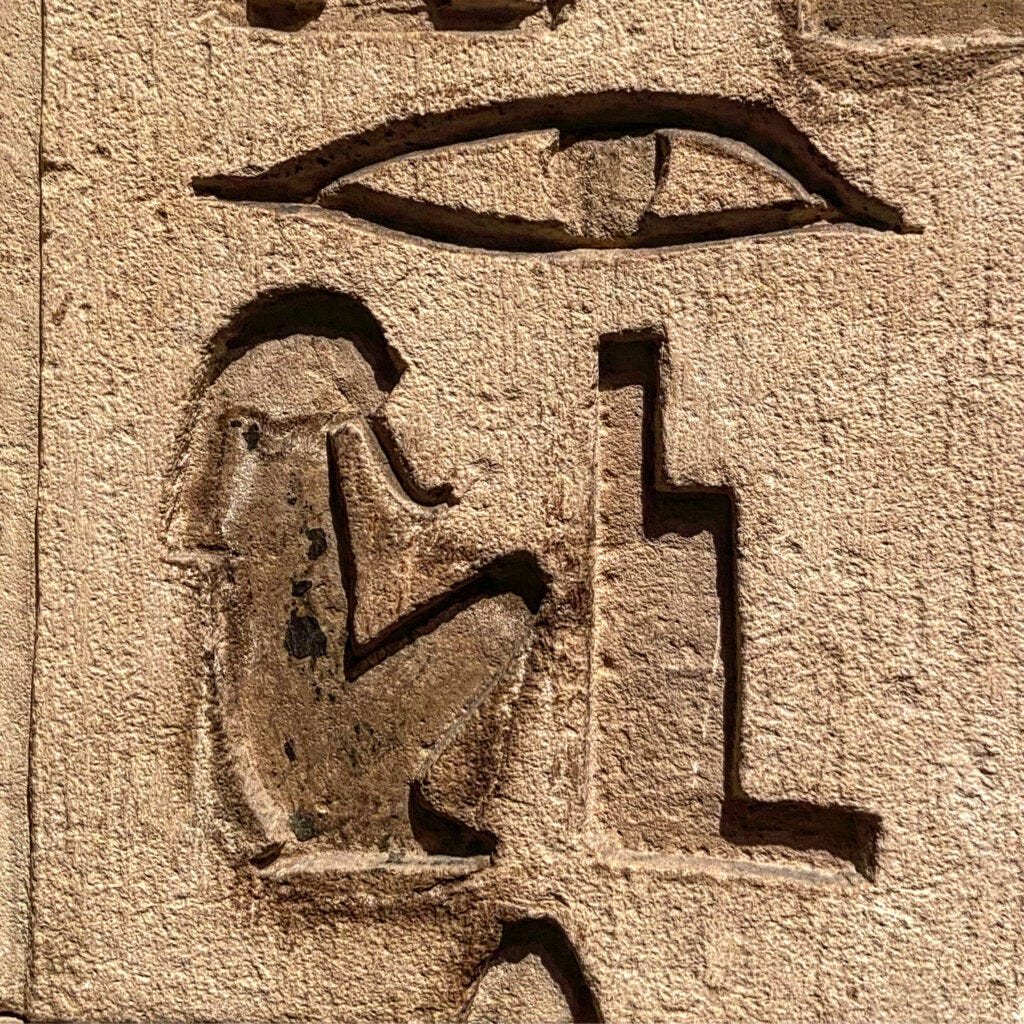
Part three of our ongoing series on the anatomy of the ancient Egyptian soul. Previously: the Ba and the Ka. Next up: the Akh, the Ib, the Shut, and the Khat. In turbulent times, let Egyptology be your resistance. That’s the spirit in which we (Kara and Amber) sat down for this episode — and if that sounds like an unusual rallying cry, well, you’ve come to the right place. Today’s topic is the Ren: the name. And before you go, I know what a name is, you don’t. Because the ancient Egyptians understood something about names that we’ve spent the last several thousand years forgetting (and that the modern American government is actively exploiting right now; yes, I know, we make everything political and history is now and all that…). What Is the Ren? In Faulkner’s Concise Dictionary of Middle Egyptian, the entry for rn (ren as we would say it in an Egyptian reading class) is almost insultingly short. Two phonetic characters, the mouth hieroglyph (r) and a single water sign (n). No dramatic determinative. No elaborate sign to illustrate it. Compare this to the Ba — the human-headed bird that flutters, moves and exists visually in the world — or the Ka, with its famous outstretched arms, intimate and embodied, ready to embrace. The Ren just sits there with no explanatory symbolism whatsoever. The writing of the word betrays the secrecy surrounding the name itself. But that spareness is the point. The Ren’s power is its abstraction. It is not a thing you can see or touch. It is a sound, an utterance, a vibration shaped by lips and tongue and the specific quality of a human mind. And this is where things get interesting: the hieroglyphic word rn begins with the mouth sign, because of course it does. The name lives in speech. It is born from the human body in the most literal sense possible. The name is utterance incarnate, which takes us to the Egyptian understanding of creation. In the Beginning Was the Name The Memphite Theology is an inscription said to be copied from an ancient, worm-eaten papyrus, even though this particular version comes to us as the so-called Shabaka Stone of the 25th Dynasty Kushite kings, and it describes the god Ptah creating the world through utterance. Ptah conceives (sia, abstract thought) of things with his heart (ib) and then brings them into material existence through his mouth (r) using the force of heka (magic). He speaks the name of something, and it becomes real by passing through the lips, tongue, and teeth. In the beginning was the word, as we know from the Bible. The idea that spoken language is a creative force, that naming something is a form of making it, runs through ancient Egyptian creation theology, including the Memphite Theology, through the Hebrew Bible, through Neoplatonic philosophy, and straight into the digital age, where the naming of things (brands, identities) still confers power. The ancient Egyptians were not doing something primitive or naive when they enshrined this idea. They were...
0:03SPEAKER_00Welcome to Afterlives of Ancient Egypt,
0:06SPEAKER_00in which we discuss ancient history and relevant current events.
0:09SPEAKER_00I'm Cara Cooney,
0:10and I love to take deep dives into history that are not always
0:13possible in academic
0:15SPEAKER_00formats.
0:16SPEAKER_00So let's get started.
0:21Hello everyone in these times of woe,
0:25let this Egyptological discussion be your resistance.
0:32as we are all overworked,
0:34overstressed,
0:36looking at the world around us with dismay.
0:39SPEAKER_00Let's look to the past.
0:41Let's try to understand what the ancient peoples did with such
0:46turbulent times and
More Afterlives of Ancient Egypt with Kara Cooney episodes →