
Adventures in Dreamland 🌙 Sleep Stories · Beth Hagendorf
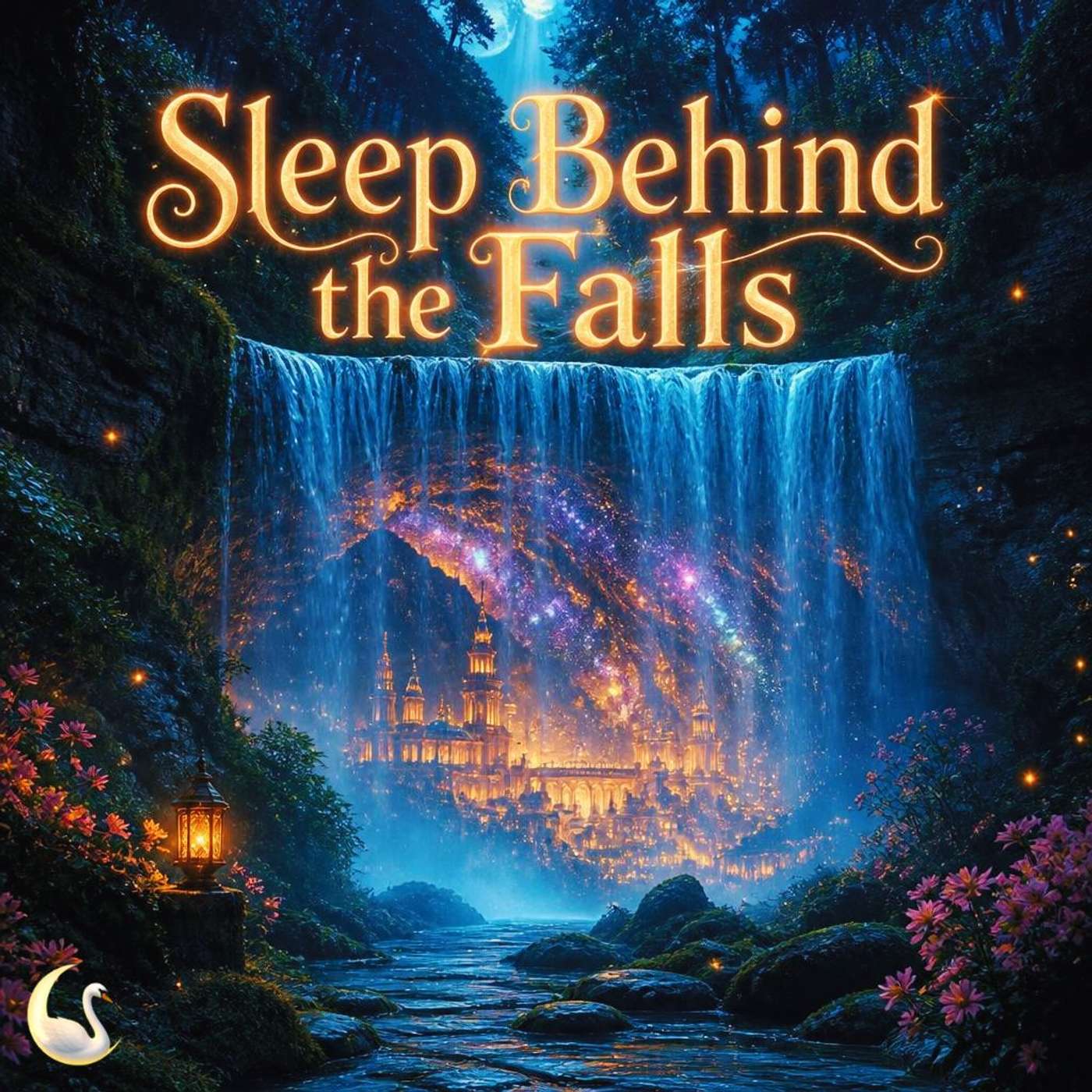
You'll step behind a forest waterfall and descend into a hidden underground city with Iris Vale, where warm bath terraces and a goldsmith's forge await. This Dreamscapes story unties the knots of your day, helping you drift into peaceful sleep. 🔭 Explore all of our series — ✨ DreamScapes, 🏡 Dream Grounding, 🧠 Dream Priming, 🐜 Dream Wonders, 📚 Dream Studies, and 🎭 Dream Spoofs — on YouTube 💤 @SleepDreamland
The City Beneath the Waterfall Is episode 96 and resides in our Dreamscapes playlist where we take you on surreal dream-like adventures. One— The Waterfall— You’re already there. Standing in front of a waterfall in a forest, late afternoon light slanting through the trees, the sound of falling water filling the space where regular thoughts go. You don’t remember the hike. You don’t need to. The forest is in no hurry to explain itself, and neither are you. This is the kind of waterfall that exists in screensavers. You should be taking a photo. Instead, you're walking around behind it like you've been here before. Either you've finally lost it, or your subconscious has booked a vacation rental that doesn't appear on any map and you've stopped questioning the booking confirmation. Both feel correct." Behind the curtain of falling water, in a fold of the cliff, a passage. Tall enough to walk into. Lit faintly from somewhere ahead by something that isn’t daylight. You step inside. The passage becomes a stairway, and the stairway descends, and somewhere in the next breath you’ve walked down a spiral of stone that should take an hour and instead takes the time it takes a thought to land. The stair ends. You step out onto a wide stone landing. And everything you thought you knew about being underground reorganizes itself. Two— The Great Stair— The cavern is enormous. You’re at the top of a wide stone staircase descending in slow tiers down into a city. Marble and hammered gold. Blue waterfalls cascading from terrace to terrace, filling lower pools, spreading into rivers between the buildings. Domes. Spires. Bridges arching between levels. Lamp-light at every doorway, warm and gold against the pale stone. And above — a sky. The cavern roof is so high it’s lost in distance, and across that distance, points of light glow soft and steady. Luminescent crystals embedded in the rock. Clusters of glowworms. Small floating lanterns drifting on currents you can’t feel, their flames somehow steady. Together they make a sky — patterned like a sky, scattered like a sky, with what could only be called a milky way of light streaming softly across the middle. Somewhere far below, a small bell rings — once, soft. The sound carries the way sound carries on a still lake. Halfway down the stair, on a wide landing where the steps level off briefly before continuing, a woman is waiting. Slim. Long dark hair gathered in a low braid that falls over one shoulder. A long dark robe over plain clothes. A small lantern in her hand even though the city below provides plenty of light. A thin gold cuff on her right wrist. She turns the moment your foot touches the first step, as if she’d been waiting for exactly that. When you reach her landing, she gives a small bow of the head — not formal, just kind. “Hello,” she says. She uses your name. You don’t remember telling her. “I’m Iris Vale. I keep watch on the city at night. Walk with me?” You nod. Iris doesn’t require a sentence. She turns and starts down the rest of the stair. You walk beside her, not behind. Three— The Bath Terraces— Iris turns down a side path that opens onto a marble plaza, and the plaza opens onto the bath terraces. Five tiers of warm pools, descending in a wide curve down the cavern wall. The topmost pool is small and intimate, fed by a soft cascade spilling down from somewhere above. Its water overflows in a thin gentle sheet down to the next pool, larger, rimmed with marble columns. That pool spills to the next. And the next. Steam rises gently from every level. The air smells of warm minerals and something faintly herbal, like the cavern has been growing things in the water. A few residents are in the pools — quiet, low conversation, no one performing relaxation. Iris walks you to a small alcove where folded robes are stacked on a stone bench. “The water heals what it touches,” she says. “Pick whichever pool calls.” You change into a robe that’s exactly your size and step into a wide pool ringed with marble columns. The water is the temperature your shoulders have been begging for — not too hot, not lukewarm, exactly right. The marble bench beneath the surface is curved to fit a back. Your back finds it. The mineral richness slips around you, faintly buoyant. The knots in your neck and jaw and the small hard place between your shoulder blades soften without ceremony. The water doesn’t insist. It just *is,* full of old minerals, and the knots understand they don’t have to be there anymore. Iris keeps watch from the rim, lantern beside her. Long enough to feel the shift. Then you’re out, robe warm, clothes already dry on the bench. “Square next,” she says. “Food. People will be glad to see you.” Four— The Mosaic Square— Iris walks you down a curved staircase that opens onto an enormous open plaza — wider than a city block, paved entirely in a mosaic of small colored stones in patterns of vines and stars and old symbols you can’t read but somehow find comforting. At the center, a fountain — three tiers of marble, blue water cascading from one to the next, glowing faintly from beneath. Around the fountain, long stone tables. At the tables, people. Not crowds. Maybe forty residents scattered along the tables and around the fountain. Just enough to feel peopled. An old man in a deep blue tunic sits on the lip of the fountain, playing a stringed instrument. Not for an audience — for himself. The melody is slow and unhurried. Three notes, then a pause, then four notes, then a pause. Music as a kind of breathing. Children play near the far edge of the square, weaving between marble columns, laughing in low conspiratorial voices the way children do when they’re delighted with themselves. Iris walks you toward one of the tables. An older woman sitting at the end notices you, smiles, slides over to make room. She doesn’t ask who you are or where you came from. She just hands you a piece of warm bread torn from a larger loaf, drizzles olive oil over it from a small jar in front of her, and pushes a small wooden cup of something steaming gently toward you. Sit," she says. That's all. You sit. There is, you suspect, no system for asking who you are or where you came from down here. There has never been such a system. The system, if pressed, would deny ever existing. You sit. The bread is soft. The olive oil is grassy and rich. The cup contains warm spiced wine — not strong, just deep enough to feel like something the city has been making for a long time. No one asks what you do or where you came from. You’re a person at a table eating bread, and that’s the whole job. A small stray feeling of belonging settles into your chest like a coin in a pocket — small, warm, yours. Iris finishes a section of orange. “Goldsmith next. He’ll want to see you.” Five— The Goldsmith’s Hall— The goldsmith’s hall is a few streets off the square — and *streets* is the right word, because the city does have streets, narrow paved lanes running between marble walls, lit by small lanterns set into stone niches. Hammered-gold patterns along the doorways catch the light. Vines grow up some of the walls. Iris stops in front of an open doorway warm with firelight. Inside, a workshop. Stone walls, low arched ceiling, a forge glowing soft amber at the back. Long wooden benches covered in tools. Small ingots of gold stacked in neat rows on a shelf. The air smells of warm metal and beeswax. At the central bench, the goldsmith. Older. Solid. Bearded. Wearing a leather apron worn soft with years and dusted faintly with gold residue. His hands are big and careful. His sleeves are rolled up. He’s working on something small — turning it slowly between his fingertips, examining it from every angle, muttering very quietly to himself. He doesn’t look up when you enter. Iris steps inside. “Brought you a visitor,” she says, gentle. The goldsmith doesn’t answer immediately. He keeps turning the small object in his hand. After a moment, he sets it down, wipes his hands on his apron, and finally looks up. He looks at your face. Just looks. He doesn’t say hello. He doesn’t ask your name. His eyes move slowly, the way someone might examine a piece of metal — not coldly, not invasively, just *looking,* the way a craftsman looks at material to see what it might want to become. He nods once. Small. To himself. He turns to a wooden tray on the bench and picks something up. He walks around the bench. He stops in front of you. He holds out his hand. On his palm — a small flat token of hammered gold. Round. Thumb-sized. Warm from his hand. The surface gently hammered, so the light catches it in dozens of tiny facets. A small old symbol on one side. You don’t recognize it. It looks, somehow, like it recognizes you. “Yours,” the goldsmith says. His voice is low, used to silence. “Don’t ask me why this one. The hands know. They always know.” You take the token. It fits your palm exactly. It hums faintly, the way a tuning fork hums after the note has gone. The goldsmith goes back to his bench. As far as he’s concerned, the conversation is complete. Iris touches your elbow gently and guides you back into the lamp-lit street. You tuck the token into your pocket. “Garden next,” she says. “Then music. Then bed.” Six— The Cavern Garden— Iris turns down a narrow lane that ends at an iron gate. Through it, a garden. Living, full, impossibly green for a place this far underground. Citrus trees you didn’t know could grow without sun — lemons and small oranges, glowing faintly gold under the cavern-sky. Long beds of mint and rosemary and something silver-leafed you don’t recognize. Low vines bearing small dark fruit. Bees you can’t quite see, humming somewhere. “Different light spectrum than the sun,” Iris says, plucking a small orange and tossing it to you. “Plants adjusted.” You catch it. It’s warm — actually warm, like it just came off something with a pulse. You peel it as you walk. Iris keeps moving. The peel comes away in long curls and the smell is sharper than any orange you've had above ground, like the fruit is louder down here, the way colors are louder in a dream. Above ground, this orange would be on a magazine cover. Down here, it's just lunch. You eat it on the move. Bright. Sweet. A little tart at the end. The juice runs down your hand and you laugh, the way you laugh when something is good and there’s no one to perform for. Iris is already at the far gate, holding it open. “Music next,” she says. “You’ll like the music.” Seven— The Listening Hall— The hall is round and domed, marble all the way up, the ceiling vaulting into a single point overhead. The floor is pale stone polished smooth by years of use. A rim of stone benches runs around the curved wall. In the center, a man sits cross-legged on a low cushion, a long-necked stringed instrument across his lap — dark wood, six or seven strings, simple and well-worn. He doesn’t look up as you enter. Iris steers you to a bench along the wall and sits beside you. The musician plucks a single string. And the dome catches it — and lifts it, and turns it over, and lets it go again. The single note becomes a chord without the musician playing a chord. The acoustics do the work. The note layers itself, multiplies, comes back down from above the way rain comes down — a single touched string raining a whole song. He plays a slow phrase. Three notes. Four. Then a longer one. The dome accepts everything and gives it back richer. You feel the bass in your sternum and the high notes in the bones behind your ears. The sound seems to come from every direction at once — from the marble, from the air, from inside your own chest. Iris leans over, her voice barely a whisper. “He plays for whoever's in the hall. Not before. Not after. The dome chooses." She considers this. "It's been a fair dome. Has good taste.” You watch his hands. Slow, deliberate, unhurried. The kind of hands that have done one thing for a very long time and gotten quiet about it. It holds you for one phrase, then another, then a third. Around the fourth, you realize you’re tired. The good tired. The kind you only feel after a really full day. Your eyelids are getting heavier without your permission. Iris stands. You stand. The musician keeps playing. The dome keeps catching it. As you walk out, the music fades behind you the way good music fades — getting smaller without getting smaller, somehow. “Bed,” Iris says. “We’ve got you a room.” Eight— The Resting Quarters— Iris walks you up a narrow stair carved into the cavern wall. The steps are pale stone, worn smooth by years of guests doing exactly what you’re doing now. At the top, a small stone landing. A heavy wooden door with a hammered-gold latch. Iris opens it. Your room is small and perfect. A single bed — already turned down, the sheets pale and clean, a soft wool blanket folded across the foot. A simple wooden table beside the bed. A single candle burning steady. A clay pitcher and a wooden cup. A window. The window is what stops you. It opens onto a private waterfall — a thin gentle cascade pouring straight down past your window from somewhere above to somewhere below, blue-glowing, soft. The sound of it is exactly the sound of falling water at the edge of sleep. The room smells faintly of cool water and clean stone. Iris sets the lantern down on the table. The gold token from the goldsmith is still in your pocket. The smell of orange is still on your fingers. The music from the hall is still somewhere behind your sternum. “The city will be here when you wake,” she says. “If you ever need it again, the waterfall is always there. The mountain doesn’t move.” You look at her. You want to say something — thank you, or goodbye, or both. The words don’t arrange themselves in time. Iris seems to understand. She gives a small bow of the head — the same one she gave you on the great stair, when you arrived. Not formal. Just kind. “Sleep well,” she says. She steps out, closing the door behind her with a soft click. You stand for a moment in the small warm room. The candle flickers. The waterfall outside the window pours quietly past, doing its slow blue work. You take the gold token out of your pocket and set it on the wooden table beside the candle, where you can see it from the bed. You go to the bed. The blanket is the right weight. The pillow is the right softness. The sheets are cool when you slip in and warm where your body lies. Your eyes close before you’ve finished settling. Nine— Wake— You wake in your own bed. Morning light, soft through the curtains. Your pillow soft beneath your head. Your blanket warm around your body. Everything where it should be. Everything quiet. On your nightstand — a small hammered-gold token, thumb-sized, the small old symbol on its face catching the morning light. You pick it up. It fits your palm exactly. Still warm. Still humming, just barely, the way a tuning fork hums after the note has gone. Beside it, the faint smell of citrus, somehow still on your fingers. On the windowsill, a single drop of water that catches the morning light and refuses to evaporate. You sit up. You hold the token. You sit there a while. Somewhere far below the regular world, a city stands lit and alive. The bath terraces are steaming gently in the cavern light. The square is humming with low conversation, the old musician at the fountain playing his three notes and then his four notes. The goldsmith is muttering at his bench, working on something small. The musician in the domed hall is playing for whoever the dome chooses to share him with. And Iris walks the streets keeping watch, her gold cuff catching lamp-light, her lantern lit by tradition, knowing the names of people who haven’t arrived yet. Behind a waterfall in a quiet forest, a passage waits. The mountain doesn’t move. You can go back. Whenever the world above gets too loud, too bright, too much. The waterfall is always there. The descent only takes the time it takes a thought to land. The city remembers you. The goldsmith always has the right token ready. Iris is always somewhere on the streets keeping watch. You lie back. The token is warm in your hand. The morning is gentle. You are safe. You are held. You are home. Sweet dreams. Good night.