
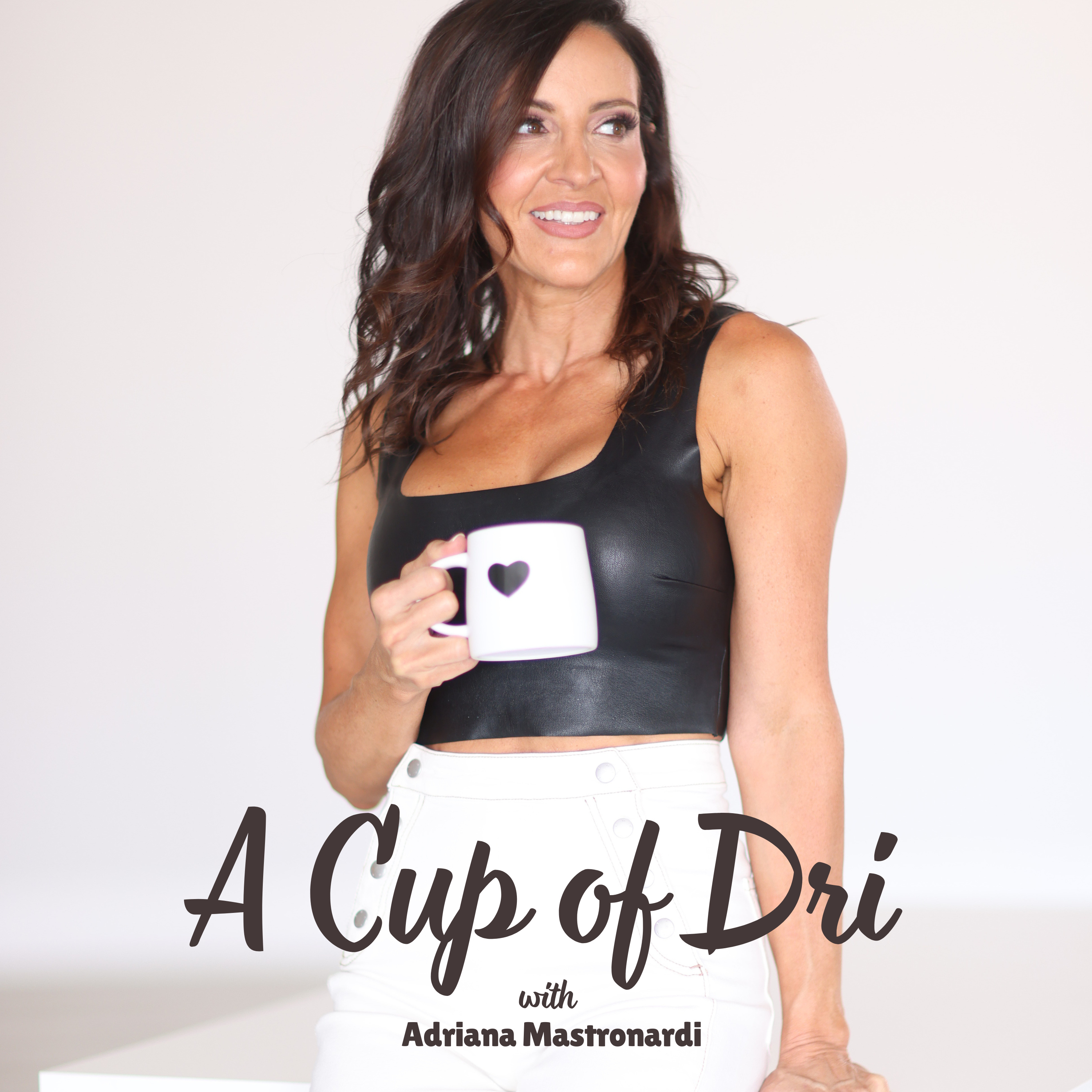
A Cup of Dri: Fitness Thoughts from My Car to Yours · Adriana Mastronardi
Six months ago, I had an abdominoplasty, or yes, a tummy tuck, with diastasis and hernia repair. I had thought about it for years, but fear, recovery and even worrying about what people would think of me as a fitness coach held me back. Today I’m sharing why I finally did it, what recovery really looked like, the parts that messed with my head, and how I feel about my decision six months later.
Adriana Mastronardi: Welcome to A Cup of Dree, the podcast where we simplify fat loss, strength training, and healthy habits so they actually fit your real life. I'm Adriana, an online nutrition and strength coach for women who are tired of starting over. Each week, I'll share the thoughts, lessons, and conversations that come out of coaching my clients, my own experiences, and the everyday questions I hear from women just like you. If you've ever felt overwhelmed by all the nutrition and fitness advice out there, my goal is to simplify it. These are short, honest episodes filled with practical tips, mindset shifts, and real life strategies to help you build strength, lose fat, and create habits that actually last. So whether you're sipping your morning coffee, enjoying a cup of tea, filling up your water bottle, or out for a walk, I'm so glad you're here. Let's get into today's episode. Surgery 1: Okay, so this episode is probably going to be a little bit different because today I'm talking about my abdominoplasty. And even saying that is interesting because for the longest time I had a really hard time saying the words tummy tuck. I could say abdominoplasty, maybe because it sounded medical, clinical. I could tell you that I had a significant diastasis, that I had an umbilical hernia. Those things were easy for me to talk about, but I had a tummy tuck that was harder. And I think it was because of everything I thought that came along with those words. I'm a fitness and nutrition coach. I spent years training. I've gone through multiple fat loss phases. I've built muscle. I've completely changed my body. So saying that I had a tummy tuck almost felt like I was somehow taking credit away from all of that. Like people might look at me afterward and think, that's why she looks the way she does. And that really bothered me because here's the truth. Surgery did not create my body. I brought my body into surgery. And that's a really important distinction for me because I didn't have this surgery because I hated my body, because I had all this weight to lose. And just a side note: an abdominoplasty tummy tuck is not a weight loss surgery. Okay. I was already confident in my body going into surgery. I didn't need the surgery to finally wear the bikini. to finally take a picture of myself or feel good about myself in my clothes. I choose surgery because after three pregnancies, years of training, and doing everything that was within my control, there was still something left that no amount of work in the gym was ever going to change. And for me, having this surgery was one of the pieces of my puzzle. Okay, so let me just take you back a little bit. I had three healthy pregnancies, like I said. It gave me my three beautiful children, and obviously my body changed over the years. Some of the loose skin definitely improved, but it never completely went away. And it always bothered me a little bit. Not a like not enough that I couldn't live my life, not enough that I couldn't be confident that I wouldn't wear a bathing suit, all of the things, right? But enough that I noticed it. And enough that I thought about doing something about it probably since I turned 40. and I'm 48 now. So this wasn't some like impulsive decision. I thought about it for years. And quite frankly, I was scared. it's a major surgery. There are risks involved, there's a significant scar, and there's a long recovery. So, you know, I kept thinking, do I really want this? Do I really, is this really what I want? Can I live with the scar? As opposed to the loose skin, right? That's kind of a trade-off. Can I handle the recovery? Do I have time to recover? and is it worth putting myself through all of that? Like, is it worth stopping training, stopping my life to kind of build back up again? you know, so I think about it, then I put it away, then I think about it again and put it away until eventually a friend of mine had surgery and I would watched her go through it. I watched her make the decision. Prepare for the surgery, go through her recovery, and like watched her for six months go through it. And finally, I was just like, enough's enough. I just want to do it. So I remember going home and telling my husband, like, you know, just explain to him again how much it bothered me and how I wanted to look into having it corrected, right? Along with my diastasis, along with my hernia. kind of everything all at once. And he knows me so well. And he said, you know, you realize that when you say to me, I want to look into this, looking into it for you means it's just a matter of time before you actually do it. And I kind of laughed at that, but he was right. Like I knew that I was going into this, going in to choose my surgery. Sorry, choose my surgeon, right? Once I made that decision, that was pretty much it. you know, and I think it's important for me to say as a coach, There are some things that training can't fix, right? I couldn't have lost more weight, dieted harder, I couldn't have trained more, gotten any leaner. The extra skin was not going anywhere, right? All of the treatments that say that they, you know, gets rid of loose skin or tightens things up, it it really will not give you the effect of what a full tummy tug could do. Plus, I had the umbilical hernia, plus I had a huge diastasis, like I had a four-finger separation. you know, when you lay down flat and you kind of put your fingers in between your belly button and you kind of come up and scrunch. I had four fingers right before like my abdominal walls will actually hit my fingers. So no amount of training or nutrition or dieting was gonna fix that. And I had to accept it. And it wasn't a matter of me not working hard enough. There are things we can change to lifestyle, and then there are things that we can't. And I decided, You know, I wanted to change the things that required surgery and and that was that. So, you know, the but then the fitness, like the fitness coach part of my brain said, which was one of like the biggest hurdles for me, what are people going to think? So I am a die-hired people pleaser or a recovering people pleaser. so what are people going to think was like a really big question in my mind because I'm putting myself out there online, right? Telling women to strength train, telling them to eat well, get their protein in. walk, build habits, be consistent, you know, stop looking for quick fixes. And here I am going into surgery, getting a tummy tuck. And I really, really struggled with that because I, you know, I didn't want people to think that I was a hypocrite. would they look at my body like I said afterward and discount all the work that I'd done, you know, and, you know, would somebody look at my picture and think, of course she looks like that. She had surgery. And I had to really work through that because I knew the truth, you know. I knew the truth going into surgery. I knew how strong I was. I knew how the muscle that I had. You know, I had spent years changing my habits and changing my body. So this, like I said, wasn't a weight loss surgery. I wasn't asking a surgeon to give me something I wasn't willing to work for, right? I bought, I brought years of work into that operating room with me. and the surgeon was just addressing something that that work couldn't change. So once I understood that for myself, I became much more comfortable with my decision. and at the end of the day, people are going to say something regardless of what you do. So it's not about that, it's about what makes sense for you. So, how did I find my surgeon? So I interviewed a few different surgeons, but I ultimately went with the same surgeon that my friend used. I looked at all of his before and after pictures. I looked at Women with the same body type as me going into surgery and coming out and what they look like from him specifically. I looked at tons of before and after pictures, thousands. I looked at their scars, results. I looked at belly buttons, so many belly buttons because I wanted mine to look natural, right? Like they're manufacturing you a new belly button, basically. They're pulling it back through your skin, and I did not want it to look. like a tummy tuck belly button. I wanted it to look like nobody could ever tell. So, you know, here I am contemplating major abdominal surgery and all of the things. but I'm also conducting like a full investigation into belly button aesthetics. But it really mattered to me. And I was wanted to be very, very confident in my surgeon, right? So going into surgery, I wasn't Like I I really wasn't afraid of the operation. I just was unsure of the recovery, right? People talk about it being painful. I had the possibility of having drains. What would my scar look like? Right. There were so many kinds of questions. I did all the prep work ahead of time. Like I rented a riser for my toilet. I had a shower chair. I had a walker. I had a recliner. So I had everything at home ready to go. I had my boatload of prescriptions, everything that I needed. but I remember thinking, you know, right before surgeries, like, I'm not gonna be able to train for for a while. And training is such a big part of my life, right? It's such a mental part of my life. but I also knew that I had to let go of that for recovery if I wanted to recover properly. So good thing I didn't have any drains. I was very happy about that. I was on narcotic like meds for a few days. But then I switched to extra strength Tylenol. So I was on those medications regularly. So I didn't feel a lot of pain per se. it was hard to move. My husband and kids had to lift my legs, right? Because I couldn't use my core muscle to lift anything or do anything strenuous. So I needed help with all of that. And I will tell you, the worst pain was back. pain because I had to like walk scrunched over like literally at a 90 degree for good two weeks because you don't want to put any tension on that incision, right? So I'm spending my entire day hunched over. so my stomach's been operated on, but my back was like, what the heck? Like what's going on here? I I slept in that recliner for four weeks. And you know my especially the first week like my husband had to help me in and out of that recliner every single day. So I think it was unexpected the amount of care that I needed from those people around me. I don't think they realized how much I was going to need help. And they all came through, like my husband, my kids, my parents. they were just so, so helpful. And I don't and I would not have been able to do without them. and the other thing is you don't want to laugh, sneeze. Or cough. So you're like, nobody make me laugh. And I hope to God I don't get a cold during this recovery process because that hurt. Like sneezing or laughing like hurt. It's it was, yeah, it wasn't like so painful, but it was like, my God, I can't even flex my muscles right now. and you know, taking all of those antibiotics, all of those medications also slowed things down. digestively for me. So I really had to, you know, I had to take stool softeners, I had to take some things like that just to help to get things moving and going because, you know, that bloating is uncomfortable too when you've had an abdominal surgery. So just sort of all of that together was a lot to deal with. and I also had to wear a compression garment for six weeks, almost 24-7. Okay. A compression garment. And then after six weeks. I only wore the compression garment when I went to the gym and I had to wear that for at least another six weeks. And then I could decide at that point whether or not I wanted to take it or leave it. you know, I think the the biggest thing for me was it was less physical and more emotional the recovery. You know, like nothing went wrong. I had no setbacks. But I couldn't do anything. And that was really hard for me. I'm just used to being independent, moving, getting my steps in, going to the gym. And then suddenly I couldn't do any of that. And I remember one of my first walks, like I literally made it to the mailbox and back, which is like six houses away from my house. Six houses. and I was going so slow. And I think my daughter walked with me, and I just thought, my God, this is crazy. But That was my starting point. And then every day from there, I thought, okay, can I go further? Like, can I go to the end of the block? Can I go to the next block? Right. And so every day there was like a new goal, even though the way that I was moving was so vastly different from the way that I moved before surgery. But you really have to meet yourself where you are, right? Not where you used to be, not where you think you should be, not where somebody else is, but where you are today. You start there and And that goes without, you know, that goes for anybody, whether you've had surgery or not. Where are you today and can you meet yourself there? I would say that around week four, I started feeling more like myself again. I started driving at that time. And I went back to the gym at six weeks very, very slowly. This is it wasn't me walking back into the gym and picking up where I left off, right? I had to wear the binder, like I said, and I respected what my body had just gone through and I didn't want to go backwards. So, you know, I did feel stretching in my abdomen. It wasn't pain, it was just like awareness that something major had happened there. So I didn't push it and I didn't care what I used to lift. I just needed to improve. From where I was. So what's my starting point? And let's build from there, right? And that requires a different kind of discipline because my ultimate job was to heal. And that came first. The other thing I want to mention was a part that I wasn't expecting. And that would be the scale. Okay. My weight went up actually. And I'm not going to pretend that that didn't mess with my head because it did. You, you know, you have the surgery, and there's a part of your brain that thinks, okay, this, you know, the skin is gone, the stomach is repaired. I'm gonna come out of this smaller. except your body doesn't work like an Instagram before and after, right? Right? There's swelling, significant swelling. Your activity is dramatically reduced. You're not training the way you normally train, your body is healing, everything feels different. And then my weight kind of started to creep up. And my immediate instinct, right? Instinct was, okay, I need, I need to be smaller. I need to shrink. maybe I should just start eating less. But I will tell you that when your body is recovering, when you're under stress, you actually need more fuel. You need more fuel to recover. When you put yourself into a fat loss deficit or when you strategically limit food, you are stressing your body out. So when your body is already stressed, when you're already trying to recover, the first thing should not be to eat less. It should be to eat at least what you need to be eating, if not more, for that recovery person per purpose. and you know, my body had just gone through major surgery. So it didn't need me to put it through a fat loss phase. It needed me to give it time. And that was really hard. because sometimes doing nothing drastic is harder than doing something, but I had to let my body recover. And so here I am six months later. my body's still changing. There's still like some swelling at the end of the day, not too much. There's still numbness in that area, but things are settling quite nicely. I'm starting to feel like myself again. My scar is healing beautifully. I'm using scar cream every single day. I went out in the sun, but I covered it up and I use scar tape. So you don't want to see sun on the scar for at least a year. I'm also starting to get some lymphatic massages just to kind of help things flow better. You know, once they once they cut you, you're disrupting those channels, those lymph channels, and you really need to help the fluid move around. So I'm trying to do that monthly. my clothes fit better, my stomach feels different for sure. I can feel the add additional support through my core. And I think my belly button looks good. So we can all relax. but there are also changes that I didn't expect. Like I said. I feel structurally stronger through my core. I actually have noticed that there has been less like leakage. Mine has improved dramatically. It's not even less, there's been none. and I can feel that additional support from the repair of the separation. So I want to be clear that this is my experience. And I am not saying any way that. An abdominoplasty or diastasis repair is guaranteed treatment for urinary leakage. But for me, this difference has been significant. and that made me realize how much this surgery wasn't simply about how my stomach looked. there was definitely a structural component to it too. So if you are a woman or if you've ever considered it first, let me be clear that a tummy tuck is not weight loss surgery. That distinction matters to me. I wanted to go into this in a body that I was already proud of. I wanted to be strong. I wanted to be well nourished. I wanted my body composition and my health to put me in a good position to recover. So if you're considering surgery, that's a conversation you need to have with a surgeon because what's appropriate and safe is going to be individual to you. But personally, I wouldn't go into something like this thinking, you know, this surgery is finally going to make me like my body. Because that wasn't my story. I already liked my body. I already felt confident. I already wore the clothes, the bathing suit, took the pictures. I didn't need this surgery to give me permission to do those things. I just wanted to add another piece to my puzzle. That's like the best way that I can explain it. You know, I had spent years putting pieces together. I changed my nutrition. I lost fat. I built muscle. I got stronger. All of these are puzzle pieces. You know, I changed my habits, I learned how to take care of myself, I became more confident, and I built a body that I was really proud of. And there was this last piece or one of the last pieces or a piece that I couldn't change myself. And the surgery did that for me, you know, my puzzle, not yours. So I'm not saying that every woman. with loose skin should do this. I'm not saying that every woman with a diastasis should have this surgery. And I'm definitely not saying you need a flat stomach to be confident. I I'm just saying that I wanted it. And eventually I decided that that was enough of a reason. And now I can say it, you know, I had a tummy tech there. I said it. And I don't need to call it an abdominoplasty every single time because somehow that sounds more legitimate. you know, or I think that it does. Yes, I had an umbilical hernia. Yes, I had a four finger diastasis. Yes, there were structural reasons for doing it. but I also wanted the loose skin gone. And both of those things can be true. I don't need to make my decision purely medical to justify it. I wanted it and I'm really happy I did it. So, you know, the Surgery 2: hardest part wasn't the surgery. When I think back on this entire experience, this is probably the biggest realization I've had. The hardest part wasn't the operation. You know, it wasn't the walker, the recliner that I had to sleep in for four weeks or my back hurting. It wasn't giving up the gym. it wasn't even the recovery. The hardest part was deciding that I was worth it, that I was worth the money, worth the time, worth asking my husband and kids to take care of me. worth putting my life on pause and worth doing something simply because it mattered to me. Okay. And worth risking somebody else having an opinion about it. Because I was scared people would judge me, especially as a coach. But six months later I've realized being scared of other people's opinions can stop you in your tracks every single time if you let it. And I don't want to live like that. So would I do it again knowing everything I know now, knowing everything about my recovery, knowing everything that I just told you, absolutely I would do it again because the scar doesn't bother me. It's part of my story. Three pregnancies changed my body. Years of training changed my body. Nutrition changed my body. Getting older has changed my body and surgery has changed my body too. None of those things cancels out the chapter that came before it. And maybe that's the biggest thing I've learned. You know, you don't have to hate your body to want to change something about it. You don't have to be insecure to choose cosmetic surgery. And choosing surgery doesn't erase the work you did before it. For me, it was simply one of the pieces of my puzzle. And if I could go back to the night of surgery, I would tell myself to trust the process. Give myself the time to heal and stop worrying so much about what everybody else is going to think. Because six months from now, you're going to look back and realize you're really freaking glad you finally did the thing you've been thinking about for almost eight years. Adriana Mastronardi: Thanks so much for spending some time with me today. I know there are a lot of podcasts you could be listening to, so it truly means a lot that you're here. If today's episode resonated with you, I'd love to hear from you. Come find me over on Instagram at Cup of Dree and send me a DM. Let me know what landed with you, what you're struggling with, or even an idea for a future episode. I read every message and many of these podcast topics come directly from conversations with women just like you. If you're looking for more support, coaching, or resources, you can also find me at www.cupofdree.com. And if you're enjoying a cup of dream, the biggest compliment you can give me is to follow the podcast, leave a rating and review, and share it with a friend who needs to hear it too. That's how this podcast reaches more women who are tired of starting over and are ready to build a healthier, stronger life. Until next time. Remember, you don't need to be perfect. You just need to keep showing up. Take care, and I'll see you in the next episode.
More A Cup of Dri: Fitness Thoughts from My Car to Yours episodes →