
8158 Podcast: Stories of Sacrifice · 8158 Podcast
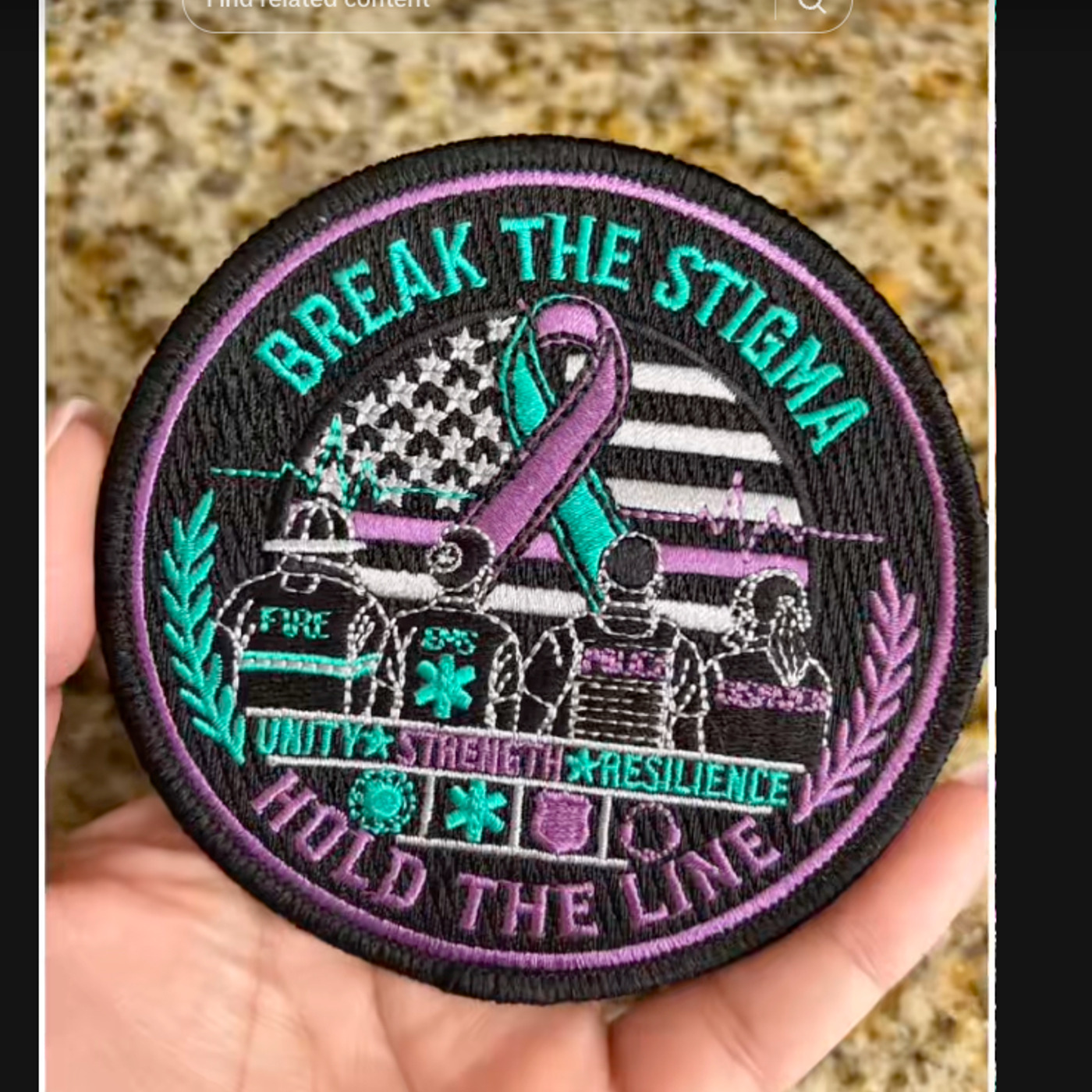
What happens when two first responders—separated by more than 1,500 miles—find each other through a shared mission of helping others? In this powerful episode of 8158: Stories of Sacrifice, Rico sits down with Derek, a police officer and former 911 dispatcher from Oklahoma, and Amanda, an EMS Field Supervisor from Northern California. Their relationship began as a friendship on TikTok but quickly grew into something much deeper—a partnership built on understanding the invisible wounds carried by those who answer the call. Together, they share deeply personal stories of officer-involved shootings, life-changing trauma, panic attacks, and the mental health battles that too many first responders face in silence. Derek opens up about surviving years of accumulated trauma, his recovery through peer support, therapy, and the Stellate Ganglion Block (SGB) procedure, while Amanda shares the emotional toll of leading EMS crews through critical incidents—and learning that even supervisors need support. The conversation also introduces their growing mission, Break the Stigma, Hold the Line, an initiative dedicated to connecting first responders with peer support, Critical Incident Stress Management (CISM), and life-saving mental health resources before trauma becomes tragedy. This episode is a powerful reminder that courage isn't just running toward danger—sometimes it's having the strength to ask for help. 🎙️ In this episode: • How a TikTok friendship became a life-changing partnership • The hidden emotional cost of policing, dispatch, and EMS • Why PTSD should be viewed as an injury—not a weakness • Derek's recovery through peer support, therapy, and SGB treatment • Amanda's experience supporting traumatized EMS crews • Breaking the stigma surrounding first responder mental health • The vision behind Break the Stigma, Hold the Line 💙 Because even those who dedicate their lives to saving others deserve someone willing to help save them. 💙 Support the mission: Donate to the William H. "Bill" Butler Jr. Foundation: https://www.8158podcast.com/donatepodcast-1 🌐 Website: https://www.8158podcast.com 🛍️ Shop Official 8158 Merchandise: https://www.8158podcast.com/shop 🎙️ Want to be a guest? Schedule your interview: https://www.8158podcast.com/appointments-4 📧 Contact Us: [email protected] 📢 Join our Patreon Community: http://Patreon.com/8158podcast 🍎 Listen on Apple Podcasts: https://podcasts.apple.com/us/podcast/8158-podcast-stories-of-sacrifice/id1786888538 📲 Follow 8158 Podcast: Facebook & Instagram: @8158Podcast #8158Podcast #StoriesOfSacrifice #FirstResponder #FirstResponderMentalHealth #Police #LawEnforcement #EMS #EMT #Paramedic #911Dispatcher #BackTheBlue #ThinLine
Rico: Welcome back to another episode of 8150 A Podcast Stories of Sacrifice. We have two wonderful guests today, Derek and Amanda, and they are both first responders and they are a couple. Isn't that amazing? How's Derek: Right. Rico: it going? Derek: So it's going great over here. Rico: Are you guys? Yeah. Derek: I'm actually still can on shift. I got about an hour of shift left, so Rico: Okay. And what exactly do you do as a first responder? Derek: Say I am a police officer. I've served for roughly about six years. I was also a nine one one dispatcher for about three and a half years. Rico: Awesome. And how about you, Amanda? Amanda: I am currently a field supervisor. I'm a night shift supervisor for a private ambulance company out here in Northern California. So, and Rico: my God. Amanda: I've been in EMS for a little over four years, maybe five years now. Rico: nice. Very nice. And how did you two meet? That's that's a far far distance there. Amanda: It is. It's kind of a funny story. when people ask us, I always say the short version is we met on TikTok. but the the longer version is just doing what we do now. We kind of connected that way. became really good friends at first and kind of worked together to support other first responders and then it just went from there. So had a lot in common. Derek: Right. Rico: Awesome. Now Derek, how long have you Derek: So I think our first conversation Rico: been in law enforcement? Okay, yeah, go ahead. Go ahead. Derek: So I've been and let's say it was kinda funny, our first conversation had to do with tattoos and music, so Rico: That's a good conversation. Amanda: Yeah, Derek: Right. Amanda: that's right. It did. Derek: but to answer your question, I've been in since my I went into the academy in two thousand nineteen and I graduated in two thousand twenty. So it kinda depends on if you wanna take academy time versus actually being certified. So if it's certified, it's almost about six years. Rico: wow. Okay. That's quite a while. Derek: So then I say I've got about three and a half years doing nine one one dispatch. Rico: Great. That's you know, that's that's a tough job in itself. Derek: So but right. Rico: I wouldn't wish that one on anybody. Derek: So Amanda: Yeah, it's it's not it's not for just anybody. That's that's for sure. I joke around you you interviewed my daughter recently, Frankie, and I always joke around with her because I yeah, that's my daughter. So yeah, Rico: okay. Amanda: so I I always whenever I go see her and dispatch, well, when we were on the same shift, because she works day shift and I work nights, but when we were kind of on the same schedule, I would joke around, you know, that I I I refuse to go see her in her environment just because it's it's too chaotic. You know, there was a couple of times where I'd walk into the dispatch center and I'd look around and it would be during peak hours, right, in the afternoon. And I would literally look around, turn around and walk back out and then I'd text her, I'll be back later when it quiets down. Rico: When yeah, when everything quiets down a little bit. Amanda: Yeah. Yeah. Rico: Yeah, we don't wanna say, you know, have a quiet shift because it's never quiet when you have a quiet shift. Derek: Those are my favorite words. Amanda: That word. That word. Rico: That that's a running joke with some of my buddies. They they do that on purpose to get people riled up on their shift. Amanda: Derek Derek does that quite often, actually. He does that to me quite often. Derek: No comment. Amanda: Right. Rico: Guilty as charged he is. Derek: A blue innocent until proven guilty? Amanda: Yeah. Rico: That's pretty awesome. So you, Amanda, are living in Northern California and you are in northern Oklahoma? Dirk? Derek: Yes, sir. Rico: Okay. That is amazing. So you guys met on TikTok and how did Amanda: Mm-hmm. Derek: Yep. Rico: that how did that happen? Amanda: just through a group of of first responders that we were kind of we knew mutually. and yeah, it just kind of took off from there. It was on one of Sarah's lives actually was the first time that he and I came across each other. So yeah, Rico: wow. Amanda: yeah. Rico: Love at first sight. Derek: Yeah. Yeah. So it Amanda: I don't think at the time I either one of us were looking for a relationship. Like we were both dead set against the whole relationship thing. So we were just, Rico: Yeah. Amanda: yeah, we're like, cool, really good friends. Yeah, no, that didn't last long. Derek: Next thing you know, we're on the phone Rico: You know Derek: for eight hours at a time. Yeah. Rico: You know, I can definitely relate to that. Amanda: I and I think what and he and I have talked about it a lot. And you know, we've we've gone back and we've talked about it a lot where we were then versus you know where we are now. And a lot of it just boiled down to we could relate. And that that was one of the big things that still is one of the big things with both of our jobs. Like we can we can relate. Like I I get it, you know, in a lot of what non first responder spouses are significant. others sometimes Derek: Yeah. Amanda: don't understand is when they shut down after that long shift. Right. Rico: Mm-hmm. Amanda: We both can relate to a lot of that. And we can understand, you know, it's it's a little bit of a different world being law enforcement EMS, like, but we can understand where the other one's coming from. And and that that was one of I think one of our foundations as well as Like the passion that we both have for helping other first responders for yeah, for helping other first responders. Rico: that's awesome. That's amazing. Derek: A hundred percent. Say Rico: That is amazing. Derek: through our conversations, we ended up discovering that we both had some trauma in a sort of way, so we kinda bonded a little bit regards to that. And you know, just with I had a previous relationship that she had no idea about first responders and that. And so it's just kinda benefiting, I would say, to have someone who understands the first responder aspect. Rico: Absolutely. You know, we find that a lot that, you know, it is hard for spouses who are married to somebody who's in the first responder world. They generally don't understand or grasp the concept of what you guys actually go through. So they don't understand, you know, where you're coming from or why you act the way you do, or you don't speak, or you don't talk about things that happen at work and that sort of thing. I see that a lot. And it's totally understandable because you don't wanna deliver that trauma. If you've seen something very horrific, you're not gonna wanna take that home to your family. You're gonna keep that in, you're gonna journalize it, and that's just kinda builds up inside of you. It's kinda like putting it in the in a backpack and it just kinda gets heavier and heavier type of thing. Amanda: Yeah. Or I always compare it to like putting it in a pressure cooker, right? Because you just load so Rico: Yeah, absolutely. Amanda: much and then at one point it's just all gonna come out at once. Rico: Right just kind of explodes a little bit. Amanda: Mm-hmm. Yeah. Rico: Yeah, it's amazing. Amanda: Yeah. So that had that had a lot to do with with our, you know, the way we bonded and the way we connected. and like I said, as well as wanting to help other first responders. Rico: That's pretty awesome. Now what kind of Derek, what kind of situations have you been in that you've seen, if you might don't mind me asking, Derek: Right, you're good. Rico: any any type of traumas that you've dealt with that you've kind of put away that were hard for you to deal with? Derek: yeah. it first started as a nine one one dispatcher. I've got multiple calls, but some of them that come back to light would be I dispatched an officer involved shooting. they say roughly about six minutes after I started my shift, which we worked twelve hour shifts at that time. I got the call. long story short, I got the family. It was a mother, a husband. And also two kids out of the house while my officer surrounded it, made contact. Unfortunately, the subject decided he was going to branch a firearm at my officers, not once but twice. The second time, my officer decided that he was going to there there's no way he had to put the person down. that whole surrounding ended up being to where I not only took the call, but I had to relive it twice. to three times more because my supervisor came in she had to make the tapes for the the excuse me district attorney's office, the Kansas Bureau of Investigation, also the sheriff's office. So instead of going to her office, she had the speakers there, so she was making the tapes. So I'm sitting there listening to the call, all the radio traffic, everything. unfortunately dispatch is very not thought of with all the trauma that they ended up experiencing. So No one checked on us. No one decided that we were okay or anything like that. It was just like, hey, you're just gonna deal with this and I'm making this and that kind of thing. I don't think it was ill-willed, but it just wasn't very thought of. we didn't know the status of the officer. All we knew that shots were fired. we found out that two hours later the officer was okay. He was taking critical condition because he was having a panic attack to a hospital. And in a month's all that, I had the news media calling me. And asking for, you know, hey, we want, you know, what's going on and stuff like that. And our general response was, we have nothing to report at this time. Well, we I had a news source say, hey, you have 30 minutes before I just print off everything that happened on the radio. Of course, we don't want that. So I was kind of thrust into that whole thing. about eleven hours went by. my partner who wasn't there at the time in dispatch because we had alternating twelve hour shifts. She had a mental breakdown, so I had to help her with her mental breakdown after the whole shift and it just kind of spradled from there. Plus all the calls where I had to talk someone through CPR over the phone. I had a 10 month old that was unresponsive. I just got hadn't been certified in EMD yet. And so just trying to get that whole aspect, just very traumatic on that whole aspect. So I just just to build up the traumas. Rico: Yeah. Derek: I had a guy who wanted me to shoot him than that. I had four justifiable chances, but you know, just for some reason I was like something's not right. Didn't pull the trigger. Turns out he was just intoxicated and just wanted to end it. he charged myself. He ended up trying to take a swing at one of my partners and I had a hard time with that. I'm like, am I do I need to get out of this field? Am I too scared to pull that trigger to defend my partner? So I had to come to battle with that. About a month later I had a guy who I was in the verge of trying to talk down of to he was former law enforcement, he was former military. And as we were getting everything set up 'cause it was right next to a highway, I looked back as we were trying to, you know, talk to him and he pulled the trigger, yeah, ending himself. Rico: Mano. Derek: So just a built up of all that kind of traumas and I could go on and on about everything that I've seen, but I mean just all that just kinda yeah, was traumatic. Rico: That's unfortunate. Now, how about you, Amanda? What kind of things have you gone through that have caused any kind of traumas or that you've seen personally doing this job? Amanda: my most recent one, it was a couple months ago. One of my crews, like I said, I'm I'm a field supervisor. So at night I have approximately I joke ground and I say I'm the only adult in charge at night. because as far as like leadership management, I'm it. I'm the only one on shift. and so with that being said, I have about anywhere from 18 to 21, 22 BLS crews under me, about four or five ALS crews, and then I have three CCT crews and three NICU crews. So I work for an IFT company out of, we're primarily IFT out of Northern California. Some areas we get in we get brought into the 911 system. but we do run specialties. We we specialize in NICU PQ CCT. so with that being said, I'm the only adult in charge at night. And we have two regions of California that we work out of. So in my region is where I have, you know, the 20 or approximately 20 VLS, about four or five ALS, three CCT Nicky Picky, just in my region, right? In the other region, we also have crews running and we have supervisor on duty. most of the time we have a supervisor on duty over there. My most recent incident involved it was actually one of my crews. at one of one of the other region's crews they were transporting a patient, a site patient here in California. We call him, you know, 5150, I think they're different all over. Yeah. Rico: Mm-hmm. Crazy. Yeah. Amanda: In in California, you know, they're known as 5150 patients, where they've been brought into the ER and now they're going to a psych facility to receive further care. And one of the crews, baby crews, both these both these kids were young. They're young. It's their first EMS job. One's only been in EMS for maybe two or three months, and the other one was less than six months. So not only were they young, but they were baby EMTs, right? Derek: Yeah, yeah. Amanda: And this patient brutally attacked them, got off of the gurney. They were kind of stranded on a two-lane highway at it was around one o'clock in the morning when the incident started. and it was a fight. the way everything happened, I was in the dispatch center when dispatch got word of it. in one of the things that I was not prepared for becoming a supervisor was that the trauma, it wouldn't not only would it not end, like you would still have a possibility of it, right? Because you're still in the field, but it's a different kind of trauma. because I I see that my crews as my kids. And even though I didn't know these two, it was a it was a it was a rough incident. It it kind of shook shook us in the company. It it had an effect on them for sure. They're both okay. But the way the whole incident happened, they were alone with this patient in the middle of a two-lane freeway at one o'clock in the morning in between you know, just like a a strand of highway where there's not many cars at all. And they had to defend themselves until an innocent bystander pulled over and and helped them. And then on top of it, they were pretty much abandoned by local law enforcement as well as fire. Because when when they were finally able to call for help, local fire department as well as a local sheriff's department responded. However, They didn't do anything about it. They just put the patient back on our gurney, strapped him down, and you know, told my crew, okay, continue transport. My crew's like, wait, we are now patients. Like one of one Rico: Right. Amanda: of my crew, one of the EMTs was punched in the head over 12 times by this patient. And fire, fire and the sheriff showed up and they left, you know, and so we had this crew shaken up. beaten up, just got done defending themselves, fighting for their life, pretty much. And then they had to continue to take care of this patient and an extra probably 30 minutes of a drive to where they can get anywhere, the local, you know, the closest hospital. So that was my most recent one. And it was rough. I I I struggled with that one for a few days. I didn't want to I don't want to admit that I don't, you know, as first responders, a lot of the times we don't want to admit when things are eating at us. We don't want to, it's part of the stigma, right? we don't wanna we don't really want to admit when things get to us and things get heavy and we struggle with dealing with what we go through. so yeah, that that one that one did that one did get me for a few days. I didn't realize it at first. but looking back, it it took a toll on me. Thankfully, I was able to, you know, if I I finally told myself, and and of course, with Derek's support, you know, a couple of days he was like, You need to talk to somebody. Like, you know, you you just went through a traumatic event and and I did the typical, it didn't happen to me. It wasn't me, you know, I was fine, it was my crew. And then I finally said, oop. No, I know. Sorry. I finally said, you know what? If I'm gonna sit here and I'm gonna preach to my fellow first responders, it's okay to not be okay and it's okay to ask for help. you know, and I'm constantly telling them like we can't take care of other people if we don't take care of ourselves, then I've got to freaking, you know. stand up and do the same thing. I've got to put my big girl panties on and do the same thing. And I finally did. and I reached out to Dennis Carradin, who he's pretty awesome. We've we've been able to team up with him a couple of times and I reached out to him and I was like, Okay, I need you for me this time. and and he was pretty awesome and he and he helped me through it, you know, Derek and yeah and Frankie Frankie was a big support system and Derek was a huge sport system during that that incident. And yeah, it just I felt like I couldn't I I should have got to them faster. I should have been able to prevent it. I should have, you know, all the things, right? There was nothing I could have done differently. Rico: No. I know as a supervisor you want to blame yourself, but obviously there wasn't anything you could do. I mean it would have been smart for LEO and FIRE or somebody to one treat the ambulance crew and two at least give escort, provide escort in case something else happened. I mean that would have been the smart thing to do, right? That's just my logical thinking. But fortunately Amanda: Yeah. Rico: nothing did happen after that, correct? Amanda: No, they were they were off for a couple of days. when I finally did get eyes on I met at the hospital that I d diverted to and and I was able to sit with them while they got, you know, evaluated. They handed over care of their patient and I sat with them until they were cleared. their station manager drove all the way out. It's cause their home base is two hours away. and so their station manager drove out and met us at the hospital. So I stayed with them until they got discharged and then I was able to check on them afterwards. And I think that's when I really I really started to I'm not even gonna say get over it because you don't. I still get stressed a little bit more than usual when I have a crew who's getting ready to transport a 5150. It kind of uh-oh, you know, that little red flag goes up. So I'm not even gonna say get over it, but I think I really started to process it and move past it once I was once the second one came back to work because he was off work for a while. And once he finally came back to work and I was able to call him and listen to him and talk to him and see how he was doing and that he was processing it in a healthy way. That's when I really started to move past it. But I don't I'm not gonna use the words get over it or like let it go. Rico: Yeah, I don't think that's something that anybody can really get over or let go. I mean, it's always gonna be there. The only way you can do is just, you know, change the process of how you deal with it. Amanda: Yeah, that's for Rico: Seeking help. Amanda: sure. Rico: And how about you, Derek? How did you seek out help for the situations that you've been through? Derek: So I'll admit one of the things that I'm faulty for is being very stubborn. say I noticed a change last year with because I have a five year old son when he would always come up and, Daddy, are you okay? And that kind of question. I'm like, that he's if he's five years old, he's picking on something that's not right. And so we have a foundation out here in Oklahoma called Warriors Rest. It's made up of first responders and I think there's some military people as well. it started out with Oklahoma Highway Patrol, where they realized, hey, something's not right around the Oklahoma City bombings. And so they ended up bringing together starting the foundation. And so I checked myself into a PCIS, a post-critical incident seminar. It's three and a half days where they work on you to get your head mentally straight, offer advice on how to get better, offer peer support in order to get better in regards to that. I checked myself into one of those. Amanda: So Derek: Got started getting better. actually met Amanda. We ended up starting talking, gotten, you know, close and that. And then a TikToker named Sad Team Chris came into one of the lives that we were in and was talking about an SGB injection. Don't give me a start on how to say it, because I'm a cop. I don't know those medical terms, but Amanda can definitely tell you exactly what the SGB stands for. but it was one of those things where I was talking to her and Amanda: I'm mad at more starting trashing in the Derek: just what he told me regards to it. I was like, there's no way that this would work, you know. But, you know, I've got a stubborn girlfriend down there and she said, Hey, look into it. What's the worst that could happen? she can tell you exactly how I was before the entire situation. I was on edge, hyper vigilant. I have what I call a work wife. He's a friend that I'm pretty close with, if people don't know that whole terminology. But I would just cook him some meals, stuff like that, bring him up to the office 'cause I live close by. He would eat it and I got my tuberware back. Well, Amanda f first came and saw me when what we call Snow Mageddon in Oklaho in Oklahoma, where it was just snowing everywhere, things were getting cancelled left and right. that's when we kinda had our first date and going to the P VR. went to go introduce her to him and I didn't think anything of it and I put the tupperware up on the dash with the heat going on. And because I've been shot at before and it hit the vehicle, I wasn't thinking anything of it. We were gonna go ghost hunting and all of a sudden that pop from the expanding of the tubware, it sent me to where I don't know how I stayed on the road technically for four miles, but I wasn't there. I was reliving, you know, all those kind of things. And then she finally spoke and it snapped me right back out of it. I'm like, hey, what's going on? From the point that it happened to the point that, you know, I've snapped back, I don't remember that four mile stretch. You know, and you know, f seeing that and having Amanda's support regards to it, because I'd had to fly all the way to Baltimore for it. Never flown before, and I was like, There's no way heck this, you know, big Oaky's been on the airplane willingly, it's gonna be great. But, you know, Rico: Yeah. Derek: just with her guy that's I was able to help get that injection to help calm me down. it resets the fight or flight reflux. So the best way I could Rico: Right. Derek: describe it. from before to after. for those who've been in dispatch, they know that when they're in there, you've got the fire radio, you've got the EMS radio going on, you've got the law enforcement radio going on, you've got the administrative line going on, plus no or the nine one one. You've got the dispatchers talking to each other. You know, you got the TV that no one hears because it's just on there for no visual inspection. all that's going on in the dispatch center. Well, after I received my first injection, it's like I walk back into dispatch, but It's closed. There's no phones ringing, nothing. I'm the only one there. So just that difference. Amanda: That's the best way he described it. Yeah, that's the best way he described it afterwards. It's like the calm center is shut down. Derek: Mm-hmm. And so it just Rico: Well, Derek: that aspect has helped me get better at my mental health. I'm seeking therapy now just to kinda keep on the trabs of it, 'cause if I don't, I'm possibly going to go back to where I was before. Rico: Right. Derek: So what Amanda: So it was a good combination of the seminar that he went to in like September. between the seminar that he went to and getting the injection as well as keeping up on therapy. He's come a long way since I first met him for sure. with a lot of his trauma, his triggers, the panic attacks. yeah. It's the I think the combination of all of it is what's made a significant difference for him. Rico: Right. Well, I can tell you I'm no stranger to panic attacks. Derek: Right. Mm-hmm. Amanda: They're not fun. They're Rico: I think no, they are not fun. Amanda: not they're not fun at all. Rico: Yeah. I take medications on the regular every day to keep my head level. It's unfortunate, but Derek: Right. Well, I'd originally started on medi Amanda: Yeah. Derek: I'm sorry. I was originally started on medication when I was a dispatcher and they had me on such a high dose because, you know, I'm not afraid to admit it, I did try to take my own life at one point. But they had me on such a high dose because they're like, Hey, we wanna, you know, make sure you're gonna be okay. I'm like, Okay. But it's made me feel like a robot. I'm like, I can't enjoy my kids because I can't even feel happiness. And so it's just like I d I don't want the medication. I need to do something else. Rico: Right. Yeah, th that was the thing with me too, as far as the panic attacks and stuff, is that I didn't want to take medications. I just I struggled through it for years and I didn't want to take any medications 'cause I didn't want to feel like that. I didn't want to feel like a zombie or just kinda like you know, I just wanted to be normal. I just wanted to be myself again. And they well they put me on I think it's cycloprin and clonazepam with a little bit of propanolol and I take the colonop the clonazepam and the the cycloprin every day and then propanolol whenever I need it whenever I feel an increase in heart rate because Derek: Yeah. Rico: that's usually what triggers my panic attacks. But I don't feel any different, you know, I just don't have the panic attacks anymore. Derek: Right. Right. Right. Yeah. yeah, Amanda can tell you how I was before 'cause she ended up being able to spend was it like five days with me before we went to Baltimore? Amanda: Yeah. Yeah. It was in a in a in a time span of of five days. He was, even though we were able to have a good time, he was still on edge, right? He was still in that fight or flight. He was he was ready, even out in public, especially out in public. just always on guard. a few panic attacks, nightmares. His nightmares were really bad. His nightmares Rico: Yeah. Amanda: were really bad. And this was after the the the seminar. So we went to the seminar in September. And then I came out like January, February, right? So there was some panic attacks, some triggers, some nightmares. And then we flew to Maryland after talking with the Chris and Justin, Justin Miller, talking to them extensively about the SGB. We flew out to Maryland. to Dr. Lynch in the beginning of March, March 9th and March 10th, are the days that he got his injections. And it's it was literally night and day, absolute night and day. from the moment that he got the injection. It was, he would only be like on guard when we were out in public, and he, but he was it not as much actually getting sleep. I noticed that he was getting more restful sleep. The nightmares stopped. I think from the time he had his injection in March to the time to now, actually, June when he was out here for my birthday week was the first time he had a nightmare. And that was only close because it was close to one of his incident anniversaries, a really, a really bad one. but that was the first nightmare since March. So he went from having nightmares multiple nights a week, and you know. being triggered multiple times a week to almost nil. So Rico: Right. So Amanda: Yeah. Rico: would you would you frame that? I mean a lot I know a lot of people don't like to call PTSD a disorder because I don't I don't believe it's a disorder. I think it's an injury. Yeah, because it's something that happened to you. It's not something that you were born with or some some kind of disease. It's something that has happened that's damaged you in a way that can be treated. Amanda: It's an injury, absolutely. Right. Derek: Right. Rico: So is that how you frame that, PTSD or PTSI? Derek: so I haven't really thought about it. Amanda: Yeah, absolutely. Derek: But I've always been told, it's PTSD, if it's PTSD, I'm like I I don't have a label for it. I just know I it it's it's not fun. Rico: Right. Yeah, and I think that's a lot of the problem where the d the stigma comes from is because they you know, we've had a lot of officers and firefighters and EMS refuse to talk about things with their superiors because they don't wanna be labeled, you know, fifty one fifty, right? They don't wanna be labeled as crazy, they want they don't wanna be untrustworthy, you know, they don't wanna live with that stigma or have There are peers looking at in a way that they're like, Well, we can't trust you because you're this and that. Derek: Right. Amanda: Yeah. And it's Rico: You know what I mean? And some have Amanda: sorry, go ahead. Rico: Yeah. Some have worried about losing their jobs over it, which we have talked to other guests who have lost their jobs because they came forward and they talked about their experiences and they have lost their jobs over it. not here on the show obviously, but this was before beforehand Derek: Right. Okay. Rico: going through their their process. And it's sad to see that it's you know, there's a lot of help available. It's just that people are just so scared because this is their life. This is our Derek: Yeah. Rico: livelihood. And the Amanda: Yeah. Rico: stigma is real. I know the stigma's real. Derek: Right. Amanda: It's horrible. And it just I can't. It's one of the the one of the things that really drives me to speak up for first responders is, you know, we normalize running into burning buildings, right? We normalize running towards the bullets to save complete strangers. We normalize showing up on somebody's worst days and taking on that trauma. To be that difference. We normalize all of that, taking care of strangers, being there for others, putting our lives on the line, you know. And we can't, we still cannot normalize taking care of ourselves. We bring on all that secondary trauma. And yet we still can't normalize speaking up to take care of ourselves and take care of free of each other. It's just so taboo, right? the the typical, you know what you signed up for. you should have thought of that before you signed up for it. it was a risk you were willing to take when you signed up for it. Derek didn't sign up to be shot at. I didn't sign up to be attacked, right? You know, people that we've lost in in the line of duty did not sign up for that. But yeah, it here it is, it happened. So I think that's one of like my driving forces is we're just expected to it. Because we signed up for it, but we cannot Rico: Right. Amanda: normalize taking care of ourselves. Rico: It's pretty unfortunate. Very fortunate. Amanda: Yeah. Yeah. And when you think about it, like the average person experiences possibly five to seven critical incidents in their entire lifespan. And that's Rico: Mm-hmm. Amanda: on the high end. The average first responder is exposed to six to seven hundred critical incidences in their career alone. May and Rico: Right. Amanda: yeah, it and we're just not we're Rico: Expected just to handle it. Amanda: Just to handle it and move on, get over it and and move on. Rico: That's not possible. Amanda: So no. Rico: I th there is no one person that's Superman that can deal with all that trauma. Six to seven hundred traumatic incidences building up inside of you. There is no possible way any sane person would just be okay with that. Amanda: That's if they make it through their whole career, because what are the chances? You know, that's if they make it their entirety of their career without analyving themselves, without becoming addicted to something and having the addiction affect their job. or you know, without it just beating them up so much that they just they become a shelf, you know, that's if they make it through their entire career, six to seven hundred critical incidents of in in their entire career that they're exposed to. So that's a Rico: That's a lot. Amanda: lot. That's a lot. Yeah. Derek: Thank you. Rico: Mm. Amanda: Yeah, so Rico: Yeah. Amanda: that's kind of what That's kind of what fire like added fuel to what Derek and I are doing now and what we have started. kind of as a result of of the first responders not having a voice. There's a lot of first responders, they either don't know how to come forward, they don't feel safe coming forward in their, Rico: Mm-hmm. Amanda: you know, their area, their employment, or they don't know who to turn to. There's a lot of people, like you said, they've been fired, right? So of course they're not gonna go to their work and say, I'm struggling. Where else are they gonna go? And so one of the one of the main missions that Derek and I decided to start together was SISM and becoming critical incident stress management trained. And we're super excited about it because he and I just last month we just became we went through the training and the certification and he and I are now both internationally critical incident stress management trained. So yeah. Rico: And now do you provide that service for any first responder around Amanda: Yes. Rico: the state in in the entire country or is it just locally? Amanda: it's open to anybody. It's brand new. We're still at the beginning of stages. we kind of started it. We're we're calling it we're we started our own, like I said, our own mission. And Rico: Okay. Amanda: we're calling it break the stigma, hold the line. And so he and I are working. we've talked to a couple other people who are either already certified or getting in the process of getting certified and they're wanting to join us too, because we're opening that up to any first responder. wherever you are, we're literally just a phone call away. if we have the means, you know, we can, you know, get to you or make a phone call and get somebody to you. We we have connections throughout. We're building connections. We have those resources. so for those who like for me, my company, we don't, we don't have a SISM team. We don't have peer support at my company. I'm I'm actually getting ready to start it. That was another another thing I've got my hands in as well when my company after everything I went through with this crew, my my company owner found out what I did outside of work with peer support and everything and what I was getting ready to do and get trained. And she asked me if I could help her start the peer support, the SISM program within my company. So not only am I doing Rico: wow. Amanda: it outside of work, but I'm starting it at my company. Yeah. Yeah. Rico: That's awesome. Now with is this an organization or is it like a non profit type of deal to where you're gonna accept donations or anything that helps you guys kinda advance? Amanda: You know what? We yeah. We haven't even got that far yet. Derek: Right. Amanda: We're we're literally in the baby steps. We are so excited and so blessed. Right now we are sponsored by by Tommy and Caleb and Kaden over at Misfit Mafia. Rico: Yeah. Amanda: they're a nationally training, yeah, national. Group for training for it's started by three firemen kind of on the same mission with education and Maisie. I I think you interviewed. Did you interview Maisie? I'm not sure if you've talked to Maisie yet. I think so. Yeah. Yeah, Maisie. Yeah, Maisie and Katie. Yeah. So Maisie, Hayden. Yeah. Yeah, I love Maisie, Rico: Yeah, from yeah, I did. Yeah. Yep. Crazy girls. Derek: Mm-hmm. Right. Amanda: but Maisie is part of Misfit Mafia. Caden, Caleb, Tom. And Maisie all run Miss Fit Mafia and she handles the EMS portion of it. But Derek and I we're super lucky. We've been sponsored by Miss Fit Mafia right now, and we're at the baby stages. would I love for it to one of these days grow bigger and possibly, you know, a foundation or nonprofit? Yeah, but right now we're just kind of getting our bearings straight and Rico: Okay. Amanda: like getting our feet off of the ground and I I I I haven't even thought that far just because I'm like, I just want to be there to help people. I in in one capacity or another. You know what I mean? If it if it grows, yes. Obviously, right? If it grows, yes. but I'm just super excited to kind of get it off of the ground, get our name out there and, you know. Because we both have had it, like people have reached out to us. people have I I've gotten messages like, hey, do you have a few minutes? I had a really tough shift last night. And I'm like, Yep, I'm here, you know, and whether they want a message or they want to call me, same thing with Derek. Derek has gotten some messages. And so that's just, you know, kind of how it all started. where it kind of all sparked it because it's like, wow. There's a lot of people out there that don't know where to go or don't have anybody to go to or they're afraid to come forward. Rico: Right. So do you guys since you're in Oklahoma and you are in California, that would be two different chapters that you could start. Derek: Well yes for the time being. some Rico: in your areas for the time being. Until Amanda: Yeah. Rico: until you guys kinda get together there. Derek: Right, right. Right. Amanda: Yeah. Until we share the same zip code at some point. Yeah. Rico: Yes. At least the same state for crying out loud. That's crazy. Amanda: Right, right, Derek: Yeah. Amanda: yeah, yeah, so Derek: So but yeah, what you said before is we've got a lot of resources. we can call Warriors Rest. They've got people throughout the nation that can help out with something. I could call right now be like, Hey, I've got a guy up in Maine, whatever that's having a problem. Do you have anybody? And if they don't, they'll reach use their resources to find some resources so eventually we'll at least get somebody there to actually talk to Rico: Right. Right. Amanda: But in the meantime, they have access to, you know, Derek or myself or you know, Ricky, who we're gonna be bringing onto our team as well. So we'll, you know, we'll be there with them until we can get somebody to them in person. and then one of the things that we worked out with them, you know, with Miss Fit Mafia sponsoring us is when they travel and do training. If there's if there's an agency or a department that, you know, reaches out to them and they want to do training. and get some certifications for their for their department if they're interested in having somebody come out and do you know peer support or you know any type of education. that that's part of our that's part of our plan with Misfit Mafia is we're is we're available to do that for them if they hear of anybody that they need. Rico: Okay. so since you're just just starting out this organization, break the stigma, hold the line. do you guys have a support hotline for anybody to call or anything like that? Is it 'cause I I myself have a a number. It's a hotline and it's directed directly to my cell phone. It's not my personal number, but it goes to my cell phone if anybody anybody has to talk. Like any first responder wants to talk. They could just call me and I'll just be there to talk. And Amanda: Not yet. And I'm glad you brought that up because I know you have that set up. And I was going to pick your brain about that because I know you have that set up. And so I was like, I I was I was kind of curious on on how to go about doing that because that's definitely one thing that Derek and I have talked about. Rico: Yeah, I mean it's pretty easy. I think my wife set it up off of what was it? I don't have my phone on here, but yeah, it's just like a voice thing. A voice it's not through the regular cell phone number, it's like through a different number. It's actually a California number. Yeah, and it's Amanda: really? Rico: and it and I have a Montana number so it just directly reroutes the phone line to me. And Amanda: It goes straight to your phone. Does it pop up on your phone? Does it let you know it's from the like from the app? Like it it differentiates the phone call. Rico: Yes. So basically my number the last four digits of my number are the podcast number. It's eighty one fifty Amanda: Okay. Rico: eight. So when anybody calls, the last four digits of that number show up. Derek: Okay. Rico: So you know it's Amanda: Okay. Rico: somebody calling your hotline. So it's not like, you know, it's a random we we've have had Amanda: Right. Rico: spam calls and I told them this was a hotline for first responders and police and they would hang up really fast. Cause they say Derek: You'll figure that one. Amanda: Yeah. Rico: they're from Amazon, they're like, nah, this is a hotline for police department, and they're like, hang up. Amanda: Yeah. Rico: But it does if if it if they do call you and they hang up, it leaves their phone number in in your call log. So you can call Derek: Okay. Rico: back. Derek: That's actually pretty cool. Amanda: That's yeah. Yeah, I did want to talk to you about that because I knew you had that too. And I'm thinking there's there's gotta be a way to Rico: yeah. Amanda: set that up. Yeah, like we're still we have we have the TikTok page up and then Miss Fit Mafia is also putting us on their web page. but as far as I don't I don't wanna have to do a whole web page. If I mean Derek: Mm-hmm. Amanda: if it gets to that point, I will. But at this point, I'm like, just give me the number, give me a number and an email so people can reach out to us when they need us. so yeah, that's what that's what we're working on right now. Rico: And you are you're you're planning on doing a five one C three? Hopefully. Amanda: Long term that would that Derek: Mm. Amanda: would be awesome. Long term that would be awesome. Derek: But Rico: Yeah. I Amanda: Yeah. Rico: it takes a little bit of work, but it's not all that difficult. Amanda: No, it's it's it's yeah, and it's worth it. I've fun fact in my previous life, prior to me becoming a first responder, I was vice president and interim president of a national 501c3 for law enforcement families. Rico: Mm-hmm. Amanda: So I do have that experience, which I think is gonna help. You know, it helps in this area for sure. but yeah, that that would be awesome. long term if we could do that. Rico: Okay. if you Derek: Don't forget our merch. Amanda: What? Rico: Said what? Derek: We've got merch for sale. Rico: you do. Okay. Amanda: yeah, our stickers, our shirt, yeah, we do. I don't know why I forgot about that. But yeah, so I designed a shirt. Rico: That's important. Amanda: Yes, it is. I designed a shirt. the shirt is in the shirt is being I think it's getting set to print this week or next week. I have to check with Tom on that. our stickers, one set of stickers, one of our sticker designs, which is the shirt, a replica of the back of the shirt, just came out and our patches, I designed the patch and our patches are, I think they're already in production this week and they're coming out. We're doing, we're gonna I actually have to announce that today a pre-sale for our our patches. Rico: You guys are gonna do challenge coins as well? Amanda: I want to, yes. Yes. I've already talked to Caleb and Tom Tommy about that. But yes, I absolutely want to do challenge coins and the main focus of the challenge coins, those are absolutely all the proceeds proceeds from the challenge coins are gonna go to I think Derek and I are talking about using them as a fundraiser. Most likely for Warrior's Rest because that's who we get our certification through. They helped him get his life back on track. And any of the training that we want to go through as far as like Sism and Peer Support, that kind of thing, Warrior's Rest puts that on for free for first responders. So yeah. Rico: Right. And see that's that's kind of what we do is we have challenge coins and we have merch and stuff, and all the proceeds that we get through the podcast merch and the foundation merch and the challenge Derek: Mm-hmm. Rico: coins goes into the foundation, William H. Bill Butler Junior Foundation. And that all Derek: Yeah. Amanda: Yeah. Rico: the all the proceeds go to helping out first responders and veterans as well as mental health assistance for first responders. we are connected with other organizations as well that get help to first responders. And also we want to help juvenile offenders to change their frame of thinking to kind of break the cycle. Amanda: I love that. Yep. Derek: I love that. Rico: And that that goes to helping their their counseling or whatever and hopefully they might want to be first responders because it's not too late for them. Amanda: Right. Right. Derek: Right. Rico: We can help change their their process and their thinking so that they don't, you know, continue the cycle of you know, committing crimes. Amanda: Great. Rico: Just like a vicious cycle. I mean, there's Derek: Mm-hmm. Rico: always gonna be crime, but at least if we can, you know, help, you know, one or two or three or four or several kids at a time. Amanda: Right. And it's a trickle effect because they're, you know, if you you help them and you change, you know, and they change their path, they're obviously gonna pay it for it. And at some point, whether they realize it or or not, they're gonna inspire somebody else. Rico: Absolutely. Yeah, they are. Absolutely. So you guys have merch and you're talking about challenge coins. Amanda: Yep. Yeah. And the main goal with with that, a lot of like it is the funding, right? Because, you know, we're gonna get to a point where we're gonna need to travel. We we're gonna need Rico: Mm-hmm. Amanda: to, yeah. Yeah. It's gonna be, you know, the funding and funding for our cause as well as funding for donations to give back. to you know the people who have already given to us, such as, you know, Warriors Rest, you guys, that would be awesome to be partners with, you know, you guys and and collab with you guys on something for funding for your causes as well. So yeah, that's that's the goal. That's the goal. Yeah. Rico: Yeah. Well I can I can have you get in touch are you leading this, Amanda, or are you Derek? Who's gonna take Okay. Derek: So that would be a mandush. She's got the brains for this whole situation. I can barely run TikTok. Rico: Okay. Amanda: Yeah, that's gonna be me. Rico: Like for for our foundation, my wife, she's the treasurer, but she's the mastermind behind everything, so I totally understand. Derek: Right. Rico: But I I am the the president and CEO of the foundation as well. Derek: I got that. Rico: so See if you need any help with that kind of stuff, you can reach out to Brianne, send her an email, and she's she has a lot of time because she works in the office and I'm always on the road, so I don't really have time to sit there and chit chat. So obviously she's smarter than I am, but Amanda: Yeah, I would love I would love to connect with her and and kind of pick her brain. and definitely get get it set up and get it done the right way, you know. for the longevity of it. for sure. Rico: Absolutely. And Amanda: Yeah. Rico: she could try to help you out as much as she can to to make sure you guys are s successful. Amanda: That would be awesome. Thank you. Rico: But I think you're on the right track. obviously you would the best thing to do is look at or actually just talk to Brianne, she can help you with the five one C three. because that's gonna be important to take Amanda: yeah. Rico: in donations. Derek: Mm-hmm. Rico: You're gonna have to set up an account and all that stuff. Amanda: Yeah. Rico: And if you need donations for travel and that sort of thing, you're gonna need a paper trail for the government because they're gonna wanna know what the heck you're doing with this money. Amanda: Yeah. Rico: Yeah. Amanda: Yeah. Yeah. That's Derek: Right. Amanda: yeah. That's why I was I was super glad in the beginning when Miss Fit Mafia decided to, you know, reach out and say, Hey, you know, let's let's partner together. Cause I thought, my gosh, this is gonna be a huge taking on, right? And when they decided to reach out and they said, I love, you know, they said, I love what you guys, we've been friends with them for a little bit. And when they got off the ground and going. They said, you know, we love what you guys are doing. We love your guys' story about Derek's SGB shot and everything. they said we would love to partner with you guys and and collab. And Rico: wow. Amanda: so we were so Derek: Mm-hmm. Amanda: thankful when they decided to sponsor us because they're the ones who sponsored my flight out to get trained. And so Rico: wow. Amanda: huge, yeah, huge, huge thanks to Miss Fitmampia for do for doing that. But yeah, we we lecked out, you know, we have a great support system that's been able to get behind us and and encourage us and and motivate us along the way and jump on board until we can get on our own feet, right? You know, until we can get to that point. But yeah, long term goal, that's that's that would that would be amazing if it if it got that big, you know, if we went that far, if we got that big. And it just, it would just reflect how many people we've been able to help along the way. Rico: Absolutely. And anything's possible, you know, and reaching out is is key, reaching out to people. if you ever have an any kind of opportunity to go to any kind of mental health awareness summits or anything like that, Amanda: Mm-hmm. Rico: I would not even doubt that just go. If you can Amanda: Yeah. Rico: go, go because you're gonna you're gonna be able to meet great people. You're gonna be able to connect with other people and and you know be able to make connections that way. That's what we did. We ended up going to the mental health awareness summit up in Wilmington in North Carolina Derek: Right. Amanda: Mm-hmm. Rico: with Pierce Provisions and it was just Amanda: Yeah. Rico: an amazing thing. We connected and with a lot of people and it was just great. It was a great experience. It was a wonderful thing. So many beautiful people. Genuine, awesome people. I would have liked to seen Maisie and Katie there, but you know, those crazy girls were, you know, doing their own thing. Derek: Right. Amanda: they're awesome. I love them. They're so adorable. They're so Rico: Yeah. Amanda: adorable. Yeah. Rico: Yeah. Yeah, they're my daughter's age. Exactly my daughter's age. Amanda: That's crazy. Yeah. Yeah. Rico: That is crazy. Amanda: Yeah, I guess they're I they're probably around Frankie's age now that I think about it. well. Rico: Yeah, twenty seven. Youngins. Amanda: yeah, they're a little bit they're a little bit older than than Frankie. Yeah. Derek: Yeah, that's not Amanda: Frankie's twenty four, so Rico: Still young. And Amanda: Yeah. But it doesn't help us, right? It doesn't help you and I, you know, fill any air. No. No. No. Rico: Not feeling any younger. I don't I don't imagine it makes you feel any younger there, Derek. But your beard Derek: I feel young. Rico: looks better than mine though. Derek: So what? Rico: Your beard looks better than mine though. Derek: Well, I mean, I appreciate that, but I might have to shave it off depending if I get a different job. So Amanda: No, I told him he's not allowed. Rico: Hey. She's right. You're not allowed Derek: Right. Rico: to 'cause, you know the Amanda: No Rico: women are right all the time. You gotta remember that. Derek: Right. Rico: I'm not allowed to shave. I could trim it but I can't shave it. Amanda: I really Derek: I told her one of these days I'm gonna end up shaving it just to see my son's reaction 'cause he's never seen me without it. So just to s see his reaction. Rico: We're gonna call Derek: Right. Rico: you babyface Derek. Amanda: Right. Derek: A hundred percent. Rico: That's pretty awesome. my gosh. So you guys have any more plans to, you know, trying to get together anytime soon, or are you just kind of, you know, working things out slowly? Amanda: was one of the conditions was when we went into this was not going very long without making a plan to see each other. So it's been back and forth, one of us going back and forth every two to three months. So I'm flying back out there in September for vacation. And then he's coming back out here in November for his birthday. So Rico: yeah. It'd be a great birthday. You know, I I I know exactly what that's like because I was living in up Ohio and when I reconnected with Brianne, my wife now, you know, I didn't want to be in a relationship and I thought, you know, when we reconnected on Facebook, 'cause her and I had known each other for like eleven ten or eleven years. Derek: Right. Rico: And she was dating a good friend of mine at that time when I first met her. So when we reconnected on Facebook, she was living in Oregon and I'd lived you know, I was in Montana and then I moved to Ohio with my previous wife and because my parents live up in my dad and my stepmom and my family live in Michigan. And it was kinda crazy because, you know, at that time my pre previous wife, her and I had been going through some problems and She wanted to go back to Montana and I was just like, Well, I'm not leaving. I'm not going anywhere. So she I took her back home and I stayed and I was just not interested in a relationship. Amanda: Nope. Rico: And then I f then I find out that, you know, my wife now, she's she was living down in Kentucky. She was only six hours from me. Amanda: Wow. Rico: And we hadn't talked for years. And it was just like it was crazy. I was always had it like, you know, a thing for. You know, she was just Derek: Right. Rico: a great, amazing person. But we've always just been friends and it just worked out that way. And I wasn't, you know, planning on trying to, you know, make any attempts to make a you know, serious relationship and then we started getting closer. Then it was getting hard. It got hard because it even six hours away we had to meet halfway. So we'd meet in like Derek: Right. Amanda: Yeah. Rico: Dayton, Ohio or Indianapolis or you know and spend our times like that and it was just harder and harder to separate. Derek: Yep. Yep. Amanda: Yeah. Yep. The separation anxiety after that, Rico: Yeah. Amanda: after that visit is rough. It's rough. Yeah. Rico: Right. Definitely. I mean I I imagine that's not easy on your psyche either. It's like you can't wait to see Derek: right. Yeah. Amanda: No. Rico: you you know, see each other but then you then then it's time to leave. It's like I gotta go back to my other life. Like, Derek: Yeah. Amanda: I end up I end up timing my trips to where I leave because I work nights. So I leave as soon as I get off work in the morning, I'll hop on a plane and then I plan my trip to where as soon as I get home, I have to readjust to go back to work. So I get home from the airport and I just crash hard and I try and, you know, and then I dive Rico: Right. It caught up. Amanda: into work. So that whole next week or two, if they need, you know, extra coverage or or You know, whatever. I'm like, Yep, undergirl, I'll do it. Keep my mind distracted just so I can, yeah. Derek: Right. Rico: Right. Then then the weeks go by, you know. That you know, actually her and I were talking about, you know, relationships and I told her I wasn't interested at the time. But then Derek: Mm-hmm. Rico: it was kind of funny because, you know, I was driving for a trucking company and we hauled materials out of Menards. I don't know if you guys are familiar with what what Menards is. It's a home improvement center. kind of like Lowe's and Home Depot and I was hauling out of one of their largest distribution centers in Ohio and I was driving for Ruan at the time and I was working three three to three so three in the afternoon to three in the morning and one of the things that really springboarded our relationship because we talked about it it kind of pushed us together was I came home one night three o'clock in the morning and my house had been robbed. Yeah. And and then I find out that somebody tried to steal my catalytic converter off of my truck. off of my pickup truck and I love that truck. You know what I mean? Amanda: Mm-hmm. Derek: Right. Rico: So I was like, I had enough. I'm done with this. You know, I love my job and everything. I wasn't planning on leaving yet, but it was just kind of something that pushed us together and Derek: Mm. Rico: I moved down to Kentucky. And now we have a beautiful home together and you know things Amanda: No. Rico: things have gotten, you know, crazy Amanda: Funny because that's like when you don't because we've talked about this before, too, because we were the same way where we were both adamant, we made that very clear to each other at the beginning of our friendship that neither one of us were looking for a relationship. Derek: Right. Amanda: We were very clear about that. But you dig your heels in, right? You weren't looking for a relationship when you reconnected with Brie, and the universe is like, listen to me, I have a plan for you, and you weren't listening. So then the universe had to. Throw that wrench in there. Rico: Sucker punched me Derek: Right. Yeah. Rico: right there. Amanda: Yeah, yeah. Derek: it I just found it. Rico: Well, hopefully you guys are a lot smarter than I am. Amanda: What was that? Rico: Hopefully you two are a lot smarter than I am. Derek: I don't know about that. But Amanda: We dug our heels in very, very, you know. We really dug our heels in in the beginning and yeah, it took a little Rico: I imagine, yeah. It's tough. Amanda: bit. Rico: So Yeah. So what do you Derek: I think it was funny. One of the first things I Amanda: Oopy. Derek: told her and called her was a short shit, so Rico: Shorts. Wake up Shortshit. Amanda: Yes, yes, yeah. That was yeah, that was pretty much but you know what, it got my intention, so there you go. Rico: Wow. Derek: Right. Amanda: I was like, all right, like this man does not know me and here he is calling me names. He's calling me a short shit. Okay. Like he's pretty brave. I like that. Derek: It helps that I'm six foot. Rico: Got some brass, buddy. You got some brass. Derek: Right. Well it helps I'm six foot three, Amanda: Yeah. Derek: so Rico: Yeah, well, yeah, you're tall. Derek: Yeah. Amanda: And I'm not. I'm not. That's I think that's what catches everybody off guard too when they when they see us together or when they find out our height difference. They're like, wait, what? Cause I'm Rico: So I imagine you're probably right to his knees and he's like Amanda: Pretty close. Pretty close. Yeah. Yeah. He's pretty much a whole foot taller. I'm I'm barely coming in at five foot three and he's probably just a little Rico: yeah. Amanda: over six foot three. So Rico: Ooh. Amanda: yeah. Yeah. Yeah. Derek: So Rico: Yeah. That's about how tall Brianne is. She's about five five one, five three, something like that. Amanda: she's fun sized like me. Rico: Yeah, she is fun size. But I'm not much taller than she is 'cause I'm only five eight. Derek: It's the height difference and then they keep saying I look like Luke Combs. Rico: Yeah, you kinda do. You kinda do. Amanda: He doesn't see. Yeah, he doesn't see it, but that's like the first thing everybody says. he looks like Luke Holmes. Yeah. Rico: Well it sounds like you two have a wonderful opportunity and you guys look good together. You guys are gonna have a a great thing going. And Amanda: We're excited. We're excited about what we have brewing. So Rico: I I'm actually excited about your organization and I would love to get with you guys about maybe partnering up and stuff. because I don't know if you guys know this, but my wife and I are DJs on the Thin Line Rock station. Okay. Amanda: Yeah. Yeah. Rico: So we oftentimes when we get organizations we'll talk about them on the radio Amanda: Yeah, okay. Rico: station. Amanda: wow. Yeah. Rico: And yeah, on our segments 'cause I'm we're on she used to have her own time slot and I had two days and we w I I was running four hours each every Tuesday and Thursday. But Amanda: Mm-hmm. Rico: since we have our own radio station now, we kinda cut back on that and she joined my segment so we do it together and then we have a show on our station together and then we also have two separate shows as well. And You can ask Katie about that because she's a DJ. She better have told you. Amanda: How do you have time for everything? I'm still trying to process this. Like, how do you have time Rico: Yeah. Amanda: for everything? I'm like, yeah. Rico: It's it's you know, it's one of those things that she pushes me. 'Cause you know, I I drive truck for a living and I'm gone and then it takes me thirty, forty minutes to get home and then when she gets home, 'cause I leave early in the morning and get home and then we gotta get right to doing you know, like that's why we scheduled our podcast hours 'cause we used to do it all week long and Derek: Mm-hmm. Rico: then we just switched it to the weekends and Fridays because We've got so much going on that it's hard to try to keep on keep track of everything. Amanda: Yeah. Yeah. Yeah. No, Rico: But Amanda: we would we would love to partner with you. We would love to to collaborate with you on, you know, anything. We would that would be awesome. That would mean a lot to us. Rico: Mm-hmm. Yeah, and we're and it we're very big on the mental health stuff. the only thing about our radio station is we don't talk about mental health because thin line, they do that on their radio station and we don't want to try to Derek: Yeah, Joe. Rico: cross cross with what Amanda: Right. Rico: they're doing. And we gave them our word that we wouldn't do that because we're a we're more of a nostalgia-based radio station, whereas Derek: Okay. Rico: they're like a a first responder radio station that does rock music and classic rock and all that stuff and we do nostalgia music from the seventies all the way through two thousand ten. Derek: Okay. Rico: Any kind of music you can imagine. We got like eleven thousand or twelve thousand songs. Derek: Okay. Amanda: well. Rico: on our playlist. And we do a spotlight. We do an artist spotlight. So if you know anybody who is unsigned and who is doesn't have a label, even if they have their own label, we'll we'll put on the station and put their songs on the rotation. Because we've done that. If you listen to the station on Thursdays, we've had several people come on there. you've never heard of Walter Howard. He's a unsigned artist. you probably heard of Colby Oakley. Derek: Name sounds familiar. Rico: Okay, Kobe Oakley. Yeah, he he's doing a show with 38 Special in Kansas here in Kentucky just the other day. And he's a Amanda: And wow. Rico: country artist. And he we came onto the radio station as well as we had the heck is I got Paul Lopez, he's from Texas, I believe. And we had a couple other guys, one of his name is Mike Rogers. He calls himself Mr. Mike Derek: Thank you. Rico: Rogers, but we call him the Mike Rogers because he is the great nephew of Kenny Rogers. Derek: Okay. Amanda: wow. wow, that's cool. Rico: Yeah, and he he's he's pretty awesome. And you're gonna like one of his songs if you look up Mr. Rogers, Mr. Mike Rogers on YouTube, there's a song called Chick Digs Beard Chicks Dig Beards. Derek: Okay. Amanda: Yes, they Rico: Yeah. Amanda: do. Rico: Look it up. You'll like it. Derek: Might have a new future ringtone. Rico: Yeah. Amanda: Right. Rico: Chicks dig berries and there's another one it's it's he does it's called Cowgirl Wiggle. Derek: Interesting. Rico: I love it. Amanda: Gotta okay. I've I've gotta like text this to myself or on my iPad or something. Mr. Mike Rogers, Rico: Yeah, you got Amanda: you said. Rico: Yeah, I think it's spelled out mi like Mr. Mr. Like the group Mr. Mr. I think it's spelled Amanda: Mm-hmm. Rico: out I S T R something like that. If you if you put on YouTube I'll bring it up. Or just type in Calgiral Wiggle or Chicks Dig Beards. Derek: Okay. Amanda: Okay. Definitely. Rico: And then that'll bring him up so you know it's the right one. Then he does Texas Toasted Amanda: That's awesome. Rico: But yeah, it's pretty awesome and I know we're looking for more DJs, so if you know anybody that might be interested, we would put it's it's all it's all for we don't pay anybody to do it. It's volunteer Amanda: Right. Rico: work. We don't get paid to do it. All we do is collect the the money to keep the radio station going so that we can 'cause we wanna give our first responders an outlet as well. So the majority Amanda: I was I was just gonna say it's it's the perfect outlet. It's take a break from our reality and have some fun. So I'm Rico: Right. Amanda: yeah, that would be that's a perfect outlet for for first responders. Rico: And that that's why we started that whole thing is because we know that Thinline has first responders doing it and we figured that, you know, we could do our part and start something different and give our first responders an outlet. So the majority of our DJs, other than my wife, myself, and my mother in law and my father in law, all the rest of our DJs are nurses, first responders, or s in some kind of medical field of sorts. Derek: Yeah. Amanda: That's so cool. Rico: Yeah. And the upstate cowboy, he was former law enforcement, former military, and now he is going back to law enforcement. Amanda: well. Rico: Yeah. So Derek: How I I don't think if I got out of it I'd want to go back to it, to be honest. Rico: He's like nope. Like I don't want to. Yeah. Derek: Well, after doing search warrants and also ICAC I just no. I'm once I get out of it, I'm gonna be out of it for a while. Rico: Yeah. now do you guys have any questions for me at all? Other than you wanted to pick my brain about stuff. I'd have to get my wife in here. You'd have to talk to her because she's the brains of the operation. Amanda: Yeah, I just yeah, and because I've been following you for a while. I've listened to it. Like I I love the story. I love how 8158 came to be and everything. but yeah, Derek: Yeah. Amanda: I definitely wanted to pick your brain on the whole hotline and and yeah. Rico: Okay. Yeah, we can do that. But do you have Derek: I don't have any questions at all. Rico: any other questions? No? It's like I'm ready to get off shift, man. I want go home. Derek: Nope. no, that's fine. That's fine. Rico: Yeah. Yeah, we definitely you know, we just did went to Michigan and they did a it was kind of like a an honor thing for so for the two hundred fiftieth anniversary of our country, the fourth of July, they honored my cousin and they did an honor guard and everything. They brought him in and brought him a wreath to the fairgrounds. Derek: Wow. Rico: And one of the officers that was with him when he lost his life, he is now a lieutenant. And so we got his support with the sheriff's office and I've been in contact with him quite a bit. So he's really big on mental health. He says Yeah. He he's he's right in line with you guys because he says you got there's something's wrong with you if you don't think that this job does not bother you. Derek: Right. Amanda: Right. Derek: Right. Amanda: Yeah. Rico: So it's just not normal. And you know Amanda: Yeah. Derek: Well it it used to be if you're in law enforcement, if you cried for help, they're like, Okay, I'm gonna take your badge and your gun, go find something else. You know, I found Rico: Right. Derek: law enforcement seems to be the hardest out of the three, besides this badge, to talk about things. And so that's kinda like what I like to do is I like to throw my story out there 'cause I'm not afraid of it. I mean, I used to have that stigma of like, hey, they're gonna judge me, but now it's like if I can s help sir or save an officer's life with my story and what I went through and offer them help, that's my biggest thing. Rico: Yeah. Yeah. That's pretty awesome. And that's what we're here for. And the more of us that kind of get together and support first responders and try to break that stigma, the better. You know, 'cause we love and support you guys as much as we can. And that's why we're doing this. It's one, to honor my cousin and his legacy. Two, you know, he wouldn't want us to just kind of focus our attention on him. Because he loved his first responders, he loved his, you know, his law enforcement family and his community. So what better way to honor his legacy and and memory to help his brothers and sisters Derek: Right. Rico: in that way? Because he knows they go through a lot Amanda: Right. I think Rico: of stuff. Amanda: I think that would be my only question that would that that comes to mind for you. What what do you think your cousin would think of everything you've done so far? Like Rico: I think it would be proud of what we do. Okay, go ahead. Go ahead and say what you do. Amanda: How do you yeah. Yeah. Yeah. I think that would be my my question for you is is how do you think he would feel about it if he were still here today? Rico: Yeah. He would I think he would definitely be proud of me for what we're doing and he would be a hundred percent behind it and support it. And you know, I know he's he's kind of like one of those guys that's like very humble and I'm sure he doesn't like his name everywhere, but this is how we honor him. Derek: Right. Amanda: Right. Rico: So, you know, we bring attention to that and say, This is why we're doing this in his memory, you know. Like in Hillsdale, he has two billboards with his name on it in memory of him. Amanda: Wow. Rico: One of is a picture of him and him walking up the stairway to heaven. And then the other one is a picture of of just the his badge number and his name and honor and memor loving memory dedicated to Bill Butler Jr. Derek: Okay. Rico: So in that community. Yeah, we have a lot of pictures of that stuff and and his headstone and all that stuff. It's it was sad. Amanda: Yeah. Rico: It was a sad thing, but you know the crazy thing is, is almost I gotta be honest, it's I used to be a very introverted person. I didn't like talking to people. I didn't like standing in front of people talking. And my wife actually put me up to doing the podcast. And I had I told her, No, I don't wanna do that. I thought she was crazy. Derek: Right. Amanda: But look Rico: But I Amanda: at it now. Look at yeah and yeah. Rico: did it. Yeah, I did it. Amanda: Yeah. Rico: And it just kinda increased from there. So if you guys ever have an opportunity, always take the opportunity. You know what I mean? That's what my wife and I say. Never say no to an opportunity. Because Amanda: Yeah. Rico: It went from we did a podcast and I don't know if you've seen us I was actually on the news twice during the vigil for my cousin. They interviewed two different news stations, interviewed me and then when we got home and we started the podcast after nine episodes, Lex eighteen came to the house into my office and interviewed me in my office about why we do the podcast and we talked about, you know know the su suicide rates and all that kind of stuff and and why we started the podcast. Derek: yeah. Rico: So that was on the news and then it went to that to being on a radio station. Now we started our own radio station. We have like seven businesses under our LLC right now. Derek: Wow. Amanda: You just and it started with an idea. just just an idea Rico: Yes. Amanda: for to carry on his memory, his legacy, right? Rico: Yes. Amanda: So that it doesn't happen to somebody else or you know, and look at where you're at. It just it just snowballed. Rico: And and I could see that for both of you as well. You guys can make it happen for your organization to do more to help your brothers and sisters. Derek: Well, it's funny you say that. Amanda: I always say sorry, babe, go ahead. Derek: good. I was asked by one of the members from the Pierce Foundation to put an application in to speak at Nashville in October. And somebody in Rico: You should. Derek: this group here, whatever, has been pushing me quite a bit along with our other friends to go ahead and put in there and I I've filled out the application and we'll see where it goes. Rico: You should. And Brad is a great guy. Brad is awesome. He's the one that runs it. Derek: Right. Say we'll we'll we'll see how it goes, see if I like getting in front of people and speaking. I mean I've worn a dress on stage, so what's the difference? Rico: Well Amanda: And it's funny because I'm the extroverted introvert. I d I don't like being in the spotlight. I I don't I'm I'm like you put in the application, I'll help you put your presentation together, and then I'll stand back there. I'll stand backstage and I'll cheer you on like you go do that. Rico: Yeah. Well if you guys go to Nashville, we're only three hours from you in Nashville. Derek: Okay. Amanda: Okay. Yeah, we'll definitely keep you updated then. Rico: Yeah, 'cause we're in Harrodsburg, Kentucky. Derek: Okay. Rico: That's about forty five minutes from Lexington. Yeah. Derek: Okay. Amanda: Yeah, we'll definitely keep you updated. Rico: It's a nice little town. Yeah. But I I would encourage you if you c if you have an opportunity to speak in front of somebody and tell your story, you don't Realize how much impact that has on these people. Just like me telling my story about my cousin and why we do this, it has had so much impact Amanda: Mm. Rico: on people. I never even realized it. I didn't know. Because, you know, nobody ever said anything. And then we start getting more interviews and I started learning a lot more and which helped me want to support you guys more. And then we start hearing back and hearing the feedback and like how many people we helped. And, Derek: Mm-hmm. Rico: you know, like what when Katie Amanda: Yep. Rico: and Maisie says, whenever somebody says they're gonna go on your podcast, we tell to do it. Derek: That's all right. Rico: You know? Because it's good. It's Amanda: Yeah. Rico: a good thing to have your voices heard. And we always support that because we believe that our first responders deserve to have their voices heard. You know, y you guys are there for us when we need you the most. And we feel like it's up to us as a community to be there for you when you need us. So there are people that do care. Majority of them, well, they don't matter. Derek: Right. Right. Amanda: Always said if we can just help just one person, if there's just one person out of everybody that we talk to, then my goal has been accomplished. I've achieved that goal. you know, just Rico: Absolutely. Absolutely. Amanda: that one person having a tough time. and then anything else from there is a bonus, I feel like. Derek: Mm-hmm. Rico: Right. Amanda: But yeah, I mean, it's we'll see. I'm excited. I'm excited about what. We have Bruin with Break the Stigma, Hold the Line. I'm excited about the merch, the patch that's coming out, the t-shirt and the stickers that just got launched. So we'll see. It's just the beginning. Rico: That's awesome. That's awesome. Well, I definitely wish the best Derek: Which all was mined by them. Rico: for you guys. Yeah. And it's gonna take a lot, you know, take some time and take a lot of money. It takes Derek: Mm-hmm. Right. Amanda: Yeah. Yeah. Rico: money. You know, we we fund all of this stuff with our own money. We don't use the foundation money unless we go to travel because that's within our purview. As long as it has to do with the foundation, we're allowed to use some of the funds for lodging and all that stuff. business stuff only, but majority Amanda: Right. Yeah. Rico: of that stuff is to help first responders. But we're still young in our in our stages. So we're trying to get the word out there. And we're trying to do events and trying to get involved with people, you know, and so hopefully that's a springboard for us to kind of get it out there. And, you Derek: Right now. Rico: know, maybe working with you guys and and other organizations it'll help as well. Get bring attention. Especially Amanda: Yeah, that would be that would be awesome. Derek: Right. Rico: with especially with the radio and the music. Ha ha ha. Derek: Right. Right. Amanda: Yeah, Derek: Yeah. Amanda: yeah. Rico: Brings attention and awareness to people. So that's why we do that. Amanda: And it's so needed. It's so needed. I don't think a lot of people realize how much awareness is needed Rico: Absolutely. Amanda: with what the stigma Rico: yeah. Amanda: you know, about it. So and a lot of education too, a lot of education. I know I've talked to some people about the difference between schism and therapy. And just the education behind it. A lot of people don't understand that it's two completely separate things, you know. Rico: Mm-hmm. Amanda: if they're not aware of the difference, they look at schism, they look like you know, at the critical incident debriefing about, you know, I don't want to go to therapy. And I'm like it, but it's not therapy, you know, it's it's processing what you went through, hopefully to prevent you from needing therapy long term for it, right? It's that's Rico: Okay. Amanda: kind of one of the ways that I break down the difference between the two. it's another tool. so a lot of people kind of avoid it because they feel like if they go through like if their department does have a debriefing, sometimes they don't want to go through it because they feel like they're gonna be psychoanalyzed and it's therapy and they're gonna have to sit, you know, and talk to a a therapist about their whole history. And it's no, it's just how you responded to that one incident. So Rico: Exactly. Amanda: I feel like with a lot more education out there and letting people know that there's a difference. You don't have to go through a whole lot of therapy to go through, you know, your debriefing on the incident and bring awareness to that and and you know, Rico: Absolutely. Amanda: get rid of that stigma. Rico: So I was gonna ask you, SISM, is that a an acronym for something? Amanda: Yes, it's critical incident stress management. Rico: Okay. Amanda: So to break it down, you know, you go through a traumatic event, and you're it's it's managing the way your body processes the stress that you're put under for that critical incident. And there's Rico: Okay. Amanda: two forms of it. there's peer-to-peer, which is just one-on-one. and then there's critical incident debriefing, which is a group of people that have been involved in an incident. So the the The critical incident debriefing would involve, say, a dispatcher, two officers that were on scene, as well as maybe, you know, EMS and fire. Everybody who is involved in that particular incident, all the way up to dispatch, because there are first first responders, right? There are true first responders. So dispatches included should be, and most Rico: absolutely. Amanda: of the time they are included in the debriefing. But then there's peer-to-peer, and that's just one on one. it doesn't involve anybody else. It's not a Kumvaya circle. It's just you meeting with somebody who was involved in an incident, just checking on them, seeing what they've been experiencing since that incident. So Rico: Right. Okay. Derek: And it's totally confidential. So whatever someone were to say to us and that the only two ways we break that confidentiality is if they're gonna hurt themselves or others. Otherwise it's if say a supervisor goes, Hey, what'd you talk about? No, can't. I'm not gonna tell tell you. Amanda: Can't it. Yeah. Rico: Right. Amanda: Or if I tag, say somebody comes to me with an incident and say they're based out of Kansas, right? I'm all the way in California. If somebody reaches out to me, I'm all the way in California. Another, another I would be allowed to break that confidentiality if I were to reach out to Derek and say, hey, there's this person in Kansas. I'm tagging you in because you're closer to them than I am, because he's also certified. Rico: Right. Amanda: and that's it. Other than that, I as a matter of fact, there was I got a phone call. It was literally the my shift coming back to work after getting trained after the Oklahoma trip. The first shift back to work as a supervisor. I get a phone call from somebody with some concerns, right? And it's a complete right up that alley. And the next day they came into my office to talk to me about it. And so I'm sitting in my office with them. And on their way out, another supervisor was walking in and she asked me, she's like, What what was that all about? Because she kind of heard like the not much of it, but she knew it was a a confidential conversation. And she looks over at me and she goes, What was that all about? And I looked at her and I said, I can't. And she goes, What do you mean you can't? And I just kind of pointed to the certificate because I already have the certificate up at at my desk at work. And Rico: Right. Amanda: I just kind of pointed to it. She goes, gotcha. Okay. but yeah. Yeah. Rico: It's kinda like the HIPAA laws. Yeah. Amanda: Right. Yeah. Yeah. Rico: Yeah. Yeah, you can't say anything unless there's any Amanda: Mm. Rico: kind of possibility for self harm or harming others type of thing. Amanda: Mm-hmm. Rico: And that's kinda like the rule that we follow is generally when people call, I'll they can text or call. And generally when they call, I don't really know who they are unless they give Derek: Right. Rico: that information out. And I'm just a random guy that they could talk to. So I'm not clinically certified or anything like that. I'm just your average person as an ear to listen. Amanda: But that is so helpful sometimes. Sometimes it's even more helpful when it's a complete stranger that you don't know, they don't know you. It's yeah, it it does wonders sometimes. Rico: Yeah. That is kind of odd though. I mean I see I Amanda: Yeah. Derek: Right. Rico: see the logic, but it is strange because you don't know me from Adam and you want to sit here and talk to me about this. And I I I find it interesting as well doing the podcast because people have come on here and spilled their, you know, most you know, deepest things in their hearts and I'm like, You don't even really know who I am but yet you're here giving giving away a piece of yourself. in and releasing the load off of your shoulders, basically. Amanda: Mm-hmm. Yeah. Rico: And I think I think to me that's something special. And that's something that I honor and and respect a lot. So you know, we give a lot of respect for Amanda: It says it says a lot about you. Derek: yeah. Rico: Well, I don't know. My wife has a lot to say about me, but no. Just easy. Derek: Amanda too, I understand that. Rico: Ha ha ha. But we try our best, you know, and to make you guys as comfortable as possible so that you could tell your stories and so that everybody else can hear your story because your stories matter and it impacts other people. Just like when we're talking about, you know, going to Pierce Provisions and talking in at the summits and all this stuff. Your stories matter because it can relate and resonate with other people. Amanda: Yeah. Yeah. Rico: My story resonates with people. Your story resonates with people because not one person goes through trauma alone because we Derek: Right. Rico: all have the same traumas. Amanda: Right. Yeah. Rico: And my my traumas were weren't from the jobs or, you know, not necessarily for what happened to my cousin. My traumas were like way back in the day. From Derek: Right. Rico: childhood traumas, you know, growing up. Amanda: Yeah. Rico: But see, you already know. You guys Amanda: Yeah. Derek: Yep. Rico: already Alright now. Derek: Yep. Well, when I went to that whole Rico: So like I say, you know. Derek: sorry. When I Rico: good. Derek: went when I went to that summit in that I had two hours of drive time till I got there and I had to force myself to go because just that whole stigma that we have is, hey, I know I don't want to do this. Hey, this is uncomfortable. I wanna have to talk about everything that's going on. I don't want to do this. And not if anyone's like would watch this and like, I want to go to that. But I'm gonna tell them a little part of it. There is a big circle that you tell everybody what you're going through. And I encourage everyone to go through that because I felt alone when I was going through it. It's like no one understands me. No one's gonna understand what I'm going through. But as we're going around the circle and that speaking whenever we want to, I realized that the traumas may be different, but the feelings are completely the same. Like we would have, you know, someone who had the exact same feelings I am. Rico: Absolutely. Amanda: So I'm so blown by pretty funny. All right, we have to. Derek: And it's like, hey, I can understand what you're going through. I may not know the trauma. Or I may not have been there when a house collapsed on you while you're a firefighter because the cops are out back, you know, roasting marshmallows. But you know, at the same time, it's we get to understand that hey, you went through a traumatic experience, you're feeling alone, you're not, I'm here, I feel the same thing. And we can lift each other up. Rico: Right. Absolutely. And that's what we're all about. Lifting each other up. Yeah, I would encourage you to do that. You need to get on that. Derek: Right, right, right. Amanda: Ha ha ha. Rico: And if you ever Amanda, if you ever have any opportunities you should do the same thing. Amanda: Yeah, yeah. Rico: Be a great speaker. I know it's tough. Trust me, it's tough. I used to be a Amanda: Yep, it is. Rico: very, very shy, shy, introverted person. I couldn't walk up to people without my palms sweating. And then I would get nervous and sweaty and it was just kind of like a weird thing. But after the loss of my cousin something had shifted in my brain. And I know some of it was anger, some of it was, you know, you know, just the the idea of losing somebody so close to me and you know, that kind of trauma that changed me into something else. And and also I gotta give my wife credit too, because she's helped me along a long a law this way. And she's Derek: Right. Rico: kinda like pushed me, you know. Amanda: It kind of gave you a purpose. Like Rico: Yes. Amanda: you had a purpose and you were gonna fulfill that purpose at all cost and you just had the perfect support system right beside you with three. You know, it was for the Rico: Yeah, exactly. You're right about that. Amanda: right reasons. Rico: Right. And that's what you guys have, so Derek: Right. Rico: I I have high hopes for everything going your way and if you need any help from us, we could do what we can to help you guys out. Derek: We definitely appreciate it. Amanda: Thank you. Yeah, that would be awesome. Yeah, that would be awesome. Rico: Yeah, 'cause we're huge supporters of this stuff and you know, and like we have anybody that we can refer them to you. So the sooner you get your number set up, I'll have you talk to Brienne about that. Amanda: I will add that to my list of things to do for this evening. Considering it's Rico: Yeah. Derek: Right. Amanda: only it's not even six o'clock out here yet. That'll be on my list. Yeah. I've got to work on that Rico: my gosh, what time is it? It's almost nine o'clock here. Amanda: in launching our our patch. I have to do, yeah, we're doing a pre-sale for the patch. So yeah. Rico: Yeah. Yeah. It's always good to get your merch done. websites are very beneficial but they do cost a lot of money. Derek: Right. Amanda: Yeah. And the way I see it, like in the beginning when it's just, you know, Derek and I getting things started. like the website, yeah, it's it's a nice thing to have, right? For you know, information. But the most important thing is that access for people to get a hold of us, for people to get a hold of somebody they need to talk to. So yeah, I I definitely need to work on getting that number set up tonight. Rico: Yeah. if you wanna stay on here I'll go get her and we'll Amanda: Okay. Rico: and you can stay on tier too if you want to. Amanda: Yeah. Rico: Unless you've got other things to do. But I'm gonna Derek: So yeah, I gotta get fucked out and everything like that, but I do appreciate it. Rico: Absolutely. And we'll definitely be in touch. We also have an off duty addition to this podcast that we started. Amanda: I forgot about that. Yeah. Rico: Yes. So we go back and do the off duty, you know, outside of, you know, what you do in your personal time and we don't get like intermittent or nothing like that. It's nothing like that. But Derek: Right, right. Amanda: Mm-hmm. Rico: you know, what you guys do in your normal lives, you know Amanda: To turn Derek: I got it. Amanda: off our first responder brain. Yeah. Derek: Ha Rico: Right. What do you do to shift that mindset? Amanda: Yep. Derek: Gotcha. Rico: But that's all I have for you right now. hopefully we can get you back on on for an off duty session, both of you. That would be great. Derek: yeah. Amanda: That would be fun. Yeah. Derek: Would love to. Rico: All right. Well I appreciate you coming on here, Derek. I'm gonna have Brienne come and talk to your lovely lady here and Derek: Right. Rico: hopefully we'll be talking soon and hopefully we can get together and maybe do a collaboration with your your foundation or Derek: All right. Rico: whatever you're gonna do, what you whatever you wanna call it. Yeah. Amanda: Sounds good. Derek: All right. Well I appreciate it. Thank you so much. Rico: All right, buddy. Absolutely. Derek: How do we exit? Okay. Rico: See later. Derek: Well.