
8158 Podcast: Stories of Sacrifice · 8158 Podcast
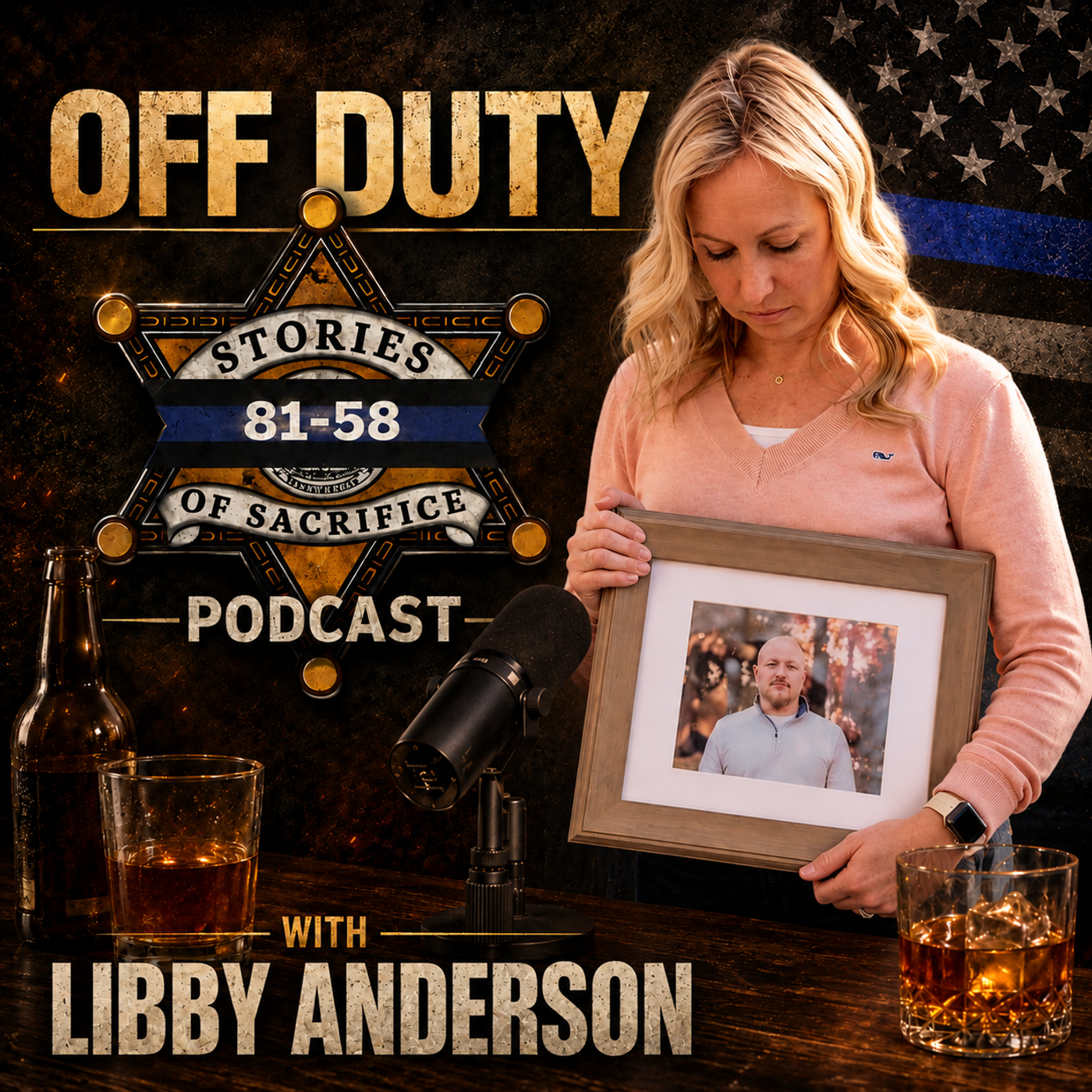
⚠️ CONTENT WARNING: This episode contains conversations about suicide, mental health struggles, trauma, PTSD, grief, and the loss of a spouse. Please listen with care. What happens after the story everyone remembers? In this episode of 8158: Off Duty, Rico welcomes back Libby, a military spouse whose powerful story left a lasting impact when she first joined 8158: Stories of Sacrifice. Nearly two years after losing her veteran husband to suicide, Libby returns to talk about what life looks like now — not just surviving the aftermath, but learning how to live again. Libby opens up about raising four children through grief, completing school, connecting with other families who have experienced similar losses, and discovering just how important support can be for the spouses and children standing beside veterans struggling with trauma. She and Rico discuss the gaps families can face when treatment programs end, the need for continued mental health care and trauma-informed resources, and why supporting a veteran has to include supporting the family around them. Libby shares how her own experience left her wishing she had known more about the resources, warning signs, and support available while her husband was still alive. The conversation also turns deeply personal as Libby explains how she helps her children navigate grief — allowing them to be angry, cry, talk about their dad, visit his grave, and keep his memory present in their everyday lives rather than treating him as someone they are supposed to leave in the past. But this episode isn't only about loss. Libby has remarried, is blending a family of eight children, and has discovered something she wasn't sure she could have said the first time she sat down with Rico: There is still joy. There is still happiness. There is still more life ahead. Her experiences have also given her a desire to help other spouses understand that they don't have to carry everything alone. Sometimes healing comes from allowing someone else into your story — and sometimes helping another person through their darkest moment helps you heal, too. Rico and Libby also talk about advocacy, peer support, trauma-informed mental health care, service animals, funding for veteran programs, and the possibility that Libby's next chapter could include using her own voice to reach even more military spouses and families. This is a conversation about grief without pretending grief disappears. It's about trauma without allowing trauma to become the entire story. And most importantly, it's a reminder that the hardest chapter of your life does not have to be the final chapter. 🎙️ 8158: Stories of Sacrifice — Off Duty 🌐 Website: https://www.8158podcast.com 🛍️ Merch: https://www.8158podcast.com/shop 🎙️ Want to share your story? https://www.8158podcast.com/appointments-4 💙 Support the mission: https://www.8158podcast.com/donatepodcast-1 📧 Contact: [email protected] If you or someone you know is struggling or in crisis, call or text...
Rico: Welcome back everybody to another episode of 8158 Off Duty Edition. And we have a return guest, Libby. How's it going, Libby? libby: Yay. Good. How are you? Rico: I'm doing fantastic. So for everybody who does not know, Libby was a guest on our podcast with the 8158 Stories of Sacrifice. And she came on here, she was the wife of a military veteran. And that's all I will say for that. She can tell the rest of the story for anybody who wants to get caught up on that. So how's everything going with you? libby: so fairly well. Things have gone way different than I would have ever expected. Rico: Okay. I know I know the last time that we spoke you were talking about doing some public speaking, getting involved in organizations and everything like that. So what actually transpired with that? It's been over what a year or so since we last spoke. libby: So yeah, I can't remember exactly when we spoke, but coming up in October, it will have been two years since my late husband passed away and took Rico: Okay. libby: his life. Yeah. So some days it seems like forever ago. Sometimes it seems like it all just happened. I wish I could say I've done more with advocating. takes a lot of motivation and a lot of support and just pushing myself and with four kids and I was in school at the time I have since graduated. I've helped a little bit here and there, done a few podcasts, visited a family who actually experienced the same tragedy in Texas. So I've done a little bit here and there, but there's always more to do for stuff like this. Rico: Yeah, there's definitely a lot of work that needs to be done. And one person can't do it all. libby: Mm mm. Rico: we're trying to do our best. And since we last spoke, we actually attended a mental health awareness summit in Wilmington, North Carolina. libby: Okay. Rico: And it was primarily first responders, but you know, mostly first responders are veterans as well. libby: Yeah. Rico: And it was put on by Pierce Provisions and that turned out really well. That was their very first libby: That's great. Rico: annual event and it was at the college there. libby: That's great. Rico: And we didn't do any speaking. We were just like vendors and supporters of that event, but it actually went very well. I don't know if you've ever heard of that. libby: So just raising awareness, is that pretty much what it was? Rico: Yes, they had a lot of influencers from TikTok on there. you know, people like I don't know if you heard of Salty Paramedic, libby: Okay. Rico: people like that, they were on there, they had panel speakers and you know, just bringing awareness to the mental health aspect of it and just people libby: Yeah. Rico: who supported the first responder world and the veterans and all that stuff and they had different breakout sessions and all that, but we were part of the main group of the the whole deal so libby: That's great. Rico: It was pretty awesome. libby: That is. yeah, Rico: And libby: I still am in a bunch of groups and stuff and have some different contexts out there. And I still see the same thing happening. And I'm sure somewhere in the mix of all this there's progress being made. But too many families, too many veterans are still suffering. and it's just more has to be done. Rico: Yeah, more awareness and we need more organizations to step forward to, you know, fill in the gap. libby: Yeah. And more funding. I think that's a huge thing. I think there are a lot of people that are willing to help a lot of organizations, nonprofits that start out and then there's not the funding needed. Because it's a lifelong process. I feel like with my late husband, it was he was in a program for two and a half years. That was great. He was doing better. He had a team of people working around him. But when that program was over, he was left to figure it out by himself. And Then we were back to square one and that's how we ended up where we were. Rico: So he didn't have any sort of like aftercare or any kind of follow up with his treatments libby: Mm mm, mm mm. Rico: or anything like that. libby: Nothing. Rico: Mm. libby: And I feel like I didn't know enough. Right? Like I wasn't Rico: Okay. libby: educated enough. Now that I've been on the other side of this for almost two years, looking back, I didn't know enough. I didn't know what I could do, who to contact, what he really needed, that he was so over-medicated. You know, and it shouldn't be that way. I shouldn't have to be on the other side to understand. You know. Rico: So you think there should be more awareness groups for spouses that should be involved in that? So they get understanding, yeah. libby: for sure. For sure. For sure. and I know there are some out there, like the Elizabeth Dole Foundation. But and I think some of that is another piece of this whole thing of raising awareness for. And I do feel like there needs to be more support for the family, for the spouse. because a majority of what was going on was everyone was helping him, which he needed and he deserved. But I think had I Had better tools or better resources for myself, maybe I could have understood the situation better and done more. So sometimes I think, if I were to put myself fully back into this, maybe I would help that side, you know. My son was serving, he still is currently serving a mission for our church, but for a time he was in Texas and there was a family that he was going to church with, and the wife, they had four kids, and the wife experienced the same thing. The husband took his life, army veteran, had a lot of the same disabilities going on and then she had no resources. The VA drops you from everything, drops your insurance, drops your payments. And so I was able to fortunately fly out there and be with her and help her and support her and kind of guide her through the things that she needed to do to get all her benefits back. And I wish that there was more of that. Rico: Right. libby: You know, there is the TAPS organization and and they were great for me as well. but I think there needs to be more support for the family. Rico: Yeah, family definitely libby: Yeah. Rico: doesn't get enough support. libby: Yeah. And I'm not trying to belittle what the veteran gets because they they need more support as well. But it's like an encompassing theme, right? Like Rico: You're you're in the middle of it. I mean, that's that's your spouse that's going through all of these traumas and going through all of this stuff. And there's no way for you to understand what he's going through because you have no knowledge libby: Yeah. Rico: as to what's happening inside his his head. I'm just saying I'm speaking, you know, metaphorically. libby: Yeah. Rico: because there's no way for you or the spouses to understand if you have not been educated. libby: Yeah. Yeah. Rico: And there should be more education for that. libby: Yeah. And all of that costs. Rico: And the VA should be a part of it. libby: Yeah. All of that costs and needs Rico: Yeah. libby: funding that is not available. stuff like that. I also think that when dealing with the veteran, they need a full team. So something that I found was very frustrating was When he would go to his doctor's appointments or therapy, it was only his side, which when you're struggling with mental health, the picture looks a little bit different for yourself, right? The story's a little bit different than maybe reality. Not that those things that you're dealing with weren't real to the veteran, but there's more to the story. And I felt like when he was in the program, Everyone was working together. There was a full team. You know, it was like the therapists and the different doctors, psychiatrists. They were all working together. They were working with me, you know, as well. And then when he got out, it was just him and the VA psychiatrist or a counselor. That he could hop counselors and go to where he got what he wanted to hear. Or the VA doctors are rotating so frequently that I feel like every eight to nine months he was getting a new doctor that he could manipulate the situation again. And so when there's not a whole team working together, I think that is detrimental to the veteran. Rico: Right. There's like no accountability. libby: Yeah, yeah. Rico: So pretty much he was left to his own devices to just kind of jump from therapist to therapist or psychologist, psychiatrist, whatever they libby: Yeah. Rico: provided at the time. And libby: Yeah. Rico: he obviously realized very quickly that that was going to be easy for him to get more drugs or medications. Because obviously he still hadn't libby: And they hand it out like crazy. Rico: fully dealt with all of the things that he had dealt with. libby: Yeah. Rico: through his service. libby: Yeah, because I do think what they go through is traumatic. It's very traumatic. and it's a lifetime process, is what I'm thinking, you know, is what I'm learning. It's Rico: yeah, absolutely. Yeah. libby: not we deal with it and then we're done. and I unfortunately understand it more now. after going through what I went through, It does, it comes up and it hits you different some days. And when you see your kids suffer, it's a whole nother level, you know, because you don't just get over, you learn to move forward and process it, but you don't forget it, you don't move on. and neither do they. And there are tr things that are Rico: Yeah, sorry for that. libby: triggering. Like the first year for fireworks was a disaster for me. The fourth four the first fourth of July. It was really intense. Rico: Yes. Yeah. libby: and it's gotten better. But there are still things that if it sounds like a gunfire, that are very startling for me. so will I ever fully get over that? I don't know. And so for them to have gone through what he went through, I don't think you've ever fully get over that. And so it's a lifelong process on managing that in your life. Rico: Yeah, it definitely is. And it just never goes away. It's always gonna be there. So obviously libby: Mm-hmm. Mm-hmm. Rico: it is a lifelong process. libby: Yeah. Rico: you know, I deal with my own traumas, so I know, I understand, and I'm still going through the process. I'm still gonna take in my medications and libby: Yeah. Rico: it's never gonna end. And there's no magic thing that's ever gonna quit or stop it. because it's always going to be a long time, lifetime process to manage and deal with the traumas. And I can imagine what our service members go through dealing with that when they're out doing what they have to do for our country. libby: Yeah, and I and another thing is I don't think people should be ashamed that they have trauma or something hard that they have to work through. and I think that stigma is being lessened a little bit. But I think people shouldn't be ashamed. Work through it and make yourself better for what you've gone through. You know? And I don't think there's Rico: Absolutely. Yeah. libby: a magic pill or a magic anything. And I feel like that's what my late husband thought a lot of times. Like if I'm just on the right cocktail of medicines, Rico: Mm-hmm. libby: this will all stop or I'll be better. And I don't think that's the solution either. That helps for sure. I'm on stuff, but I think it is in conjunction with other things like therapy. Rico: Right, you gotta have the therapy to kind of get through to guide you through some of the process. That's definitely libby: Yeah, yeah. Yeah. Rico: important. And having a support group as well also helps. Having a good support group will help you to kind of get through, especially when you're going through your top days. libby: Yeah, cause they come, for sure. Rico: Absolutely. trust me, I know. I still I still have panic attacks sometimes. Like libby: Yeah. I Yeah. Rico: the other night, I just woke up out of a dead sleep in a panic attack and I don't know why. It just happened. libby: Yeah. Yeah, it does. The brain is a crazy thing. Rico: Yeah, it's it is it's nuts. libby: It is, it is. But I'm glad that you're figuring out how to deal with it. Rico: Trying to. We're still trying to. Yeah. libby: Try or try, yeah, trying to, you know, and and I think what works one time might not work the next, but you just gotta Rico: Right. libby: keep working through things. I know with my Rico: Right. libby: kids, there are there's four of them and they each handle it differently. And what works for one kid doesn't always work for the next. So it's kind of the same Rico: That's true. libby: thing. It's, you know, you gotta figure out what works and everyone ticks differently. Rico: Yeah, everybody's brain is wired differently, so obviously different things will affect them differently. So libby: Yeah. Rico: different techniques have to be utilized to manage libby: huh. Rico: that sort of trauma. And it's unfortunate that your children have to go through that trauma dealing with this kind of thing. libby: It really is. It's it is unfortunate. And there are so many kids out there that have dealt with this. and all ki I mean there's all kinds of trauma that kids go through right but that I'm like I can I can figure out how to deal with it but when you involve the kids who are so innocent in all this I feel like that's when it really hurts these innocent children you know they don't they don't deserve this Rico: No, they don't. They're too young and they don't understand fully because their brains aren't totally developed. libby: Mm-mm. Rico: They're not fully developed and they're still, you know, learning and trying to develop and it I imagine it's very traumatic for them. libby: It is. It is. It's been hard. And my youngest was eleven at the time. And so that's a lot. That's a lot. My older ones saw a lot. They understood a lot more. And so even Rico: Mm. libby: now it's easier because they understand more. but it's still something that they shouldn't have to understand. Rico: Yeah. So what's one of the ways that you help them to kind of cope or go through this process? I know there's different ways that you have to manage that. So what are some of the ways that you use to kind of help them through this process? libby: I let them say what they want and feel what they want to feel. I feel like if you if I try to correct, or not necessarily I don't feel like I've ever really tried to correct, but make it like I can't let my logical brain. talk with them and talk through all their emotions when it first hits. Like I have to let them cry or be angry or not want to you know move or like validate their feelings I guess is what I'm trying to say. For me validating my kids and how they feel and whatever emotion they are feeling has been the best for me. Some of them want to hit things. And I'm like, that's okay. You need I mean, you have to do appropriately, like let's do the punching bag, or let's go Rico: Absolutely. libby: hit some baseballs or throw the football or the boys are more physical. my daughter, I just have to let her cry and be loud in her crying. and tell them, I get it. It's not fair. It's not fair at all. This does suck really bad. You know? I think something that's also helped my kids is to talk about their dad all the time. And sometimes I'm like searching for things to talk, like, like it could just be any random thing, you know. Something small like we're eating for dinner, like your dad loved this, or your dad, you know, just bringing him up so that they don't think that he is someone of the past. Inviting him in our home still, making him a part of our everyday life. 9-11, you know, being yesterday was a good opportunity to talk about him a lot. that's the event that sent him to war. And so we did a lot of watching things on TV and looking through some old magazines that we have from like the Time magazine that came out you know, a week later. things like that. Just Helping them feel him, I think helps them process. what they've been through, helping them remember he was a real person. Rico: Allowing his presence, yeah. Ex absolutely. He definitely had a presence and he still has a presence. I think it's important is to keep libby: Yeah. Rico: his memory alive through presence. libby: Yeah. Yeah. and we go visit his his grave. one of my sons, he's 18 and he's off to college now, but this summer when he was having a hard time, he would go visit his dad and just sit up there and cry and talk to him. And I think allowing that space for them is important too. Or if they don't want to talk to anyone for a little bit and just be in their room, I think allowing that space, allowing them to have that time is important as well. Rico: Absolutely. Now do you think dealing with these ways with your kids helps you on your situation with your how you deal with things? libby: Like allowing myself space as well, like things like that. Rico: Yes, yes. libby: Yeah. for sure. there's times that I do need space or I just need a moment to be sad. But I think that can be tricky. You can't let yourself spiral, and that's easy Rico: Right. libby: to do. but I think that's where support comes in and just being well enough yourself to not get carried away. And sometimes that's hard. Sometimes you have to make yourself move forward and not get stuck in those moments. And so I feel that I'm in a good enough place where I can do that. But for my kids, that's harder. And so even when I allow them to have their space, eventually I'm like, okay, it's time to come out. It's time to be part, you know, of the family or come up with something to do. And sometimes that takes a lot of work for me to You know, I could be very busy, but sometimes I have to take time out of my day to be like, hey, let's play a game, or hey, let's go for a walk, or do you want to go out to lunch? You know, to help them just get out of themselves and not get stuck in that rut. 'Cause that's an easy place to get stuck in. And I think that's what happened with my late husband, is he would get stuck there and spiral. Rico: That's definitely not a place that you want to be in. libby: No, no. Rico: But at least you can recognize it and know how to cope with it and deal with it and manage that to bring yourself out of that rut. libby: Yeah, yeah. And I think it took time to get there. I mean I've and had lot I've had lots of therapy. and I still see someone occasionally just to check in and make sure I'm staying on track. Because it's not easy, especially in the beginning. It was really easy to just lay on the couch and get stuck there. But I have been given the tools to help get myself out of those places where my kids are still young and brains are developing and they're still learning. And so they need that help from me. Rico: Absolutely. And you definitely are their support system. And hopefully libby: Yeah, I'm like I'm hop what I what they got left. Rico: Right. And hopefully when they are older and more aware and have more understanding that they can be more of your support system and you can kind of, you know, lean on each other that way. libby: Yeah. I think something we've done as well is Been more empathetic towards others who are going through struggles. I think that helps. you know, just to kind of have a purpose, which I'm sure you feel that as you know, you're doing these podcasts and stuff, to get outside of yourself and help others. that helps. We are very open with our story. And I feel that when you're open with others, It helps others relax and feel more vulnerable and willing to share and work through what they're going through. Rico: Absolutely. libby: And so unfortunately we have had several times that we've been able to do that. that I think helps them be more courageous and feel better in when they can help others. Who have been through similar things. I've actually been remarried and just the last couple months, and my new husband and his family went through the exact same thing. And so that happened seven months after our situation. And so My boys actually were friends, so my husband has four kids as well, and so he has three daughters and then a son. And my older boys were friends with his older daughters. And so I had never met him. And so immediately when they hear that they're these girls had been through the same thing, like they jump to wanting to support them. And be there for them and constantly check in on them and it helped them process what they were going through. To be able to have someone to talk to about it really was therapeutic for them. More so I think my older ones than my younger ones, but even at that, it makes you not feel so alone in the process and in what you've experienced. so I think that's another way, maybe not for everyone, but for some of us to share. You know, I think it helps process. Rico: Yeah, sharing your story and making it making yourself vulnerable allows other people to come out and share their story, make themselves vulnerable. And it also could be a healing process for them as well, knowing libby: Yeah, yeah. Rico: that they're not alone. libby: Yeah. And I feel that it's been a huge healing process for my family in different ways. But and some of us more than others. But supporting others is and can be very healing. Rico: Absolutely. That's kind of why we do what we do here is to support other people. And we've kind of taken a step beyond just the podcast and supporting people. We have been getting in contact with psychiatrists, psychologists, therapists who are trauma informed, who they come onto the podcast and they give us information so that we can, you know Give their information to people who need it. So if anybody wants to reach out, we can get them in touch with them so that they can help. And also, you know, that's how we got involved with the Pierce Provisions so that they can reach out to them and also reach out to anybody who has an organization. we had other organizations come through and help people. I did an interview with healing thehero.org. and I was able to refer a firefighter to them. this libby: wow. Rico: guy was a former veteran, he was also a sheriff's deputy who started this organization, and he paired him up with another firefighter that helped him through his process of dealing with the job libby: That's great. Rico: and stuff, and it's done wonders for him. So, you know, we're trying to do our part and not just you know. telling the story about other people, but also getting them connected with other organizations to get them help. libby: And I think that's great, yeah. And I think that's part of educating people, like bringing psychiatrists and therapists and stuff on, it helps educate people. Yeah, which is so Rico: Especially once libby: needed. Rico: yeah, especially ones that are trauma informed. A lot of them have been either in the military or they were first responders at one time. And now they taken that and they reversed that position. So now they understand the whole process. So now these first responders know that hey, I don't have to sit here and tell my story to this therapist who doesn't understand what I'm going through. libby: Yeah. Yeah. Rico: and relive all of this stuff. Now I could talk to somebody who knows what I've been through. libby: Yeah. And really can understand it on a different level. Because that's what I found about my husband now is that he understands it in a way that most people don't. People can listen and be sympathetic, but he understands because he's been through it. Or even like this lady that I went out to visit in Texas. Like We got each other, you know. It was for me just as much as it was for her. It's just a different level of understanding. Rico: Right. It's pretty awesome that you're able to to be there for somebody who's been through that. That's kind of a rare thing to be able to just kind of fly out to a different state and just be there for somebody who's been through a similar situation. libby: It was kind of crazy. It's kind of crazy to think now of how many people have entered my life who have dealt with a spouse. That took their life. It's kinda crazy and it's really sad. But I feel like I can't just hide my story and not help people. You know? And like I said, I feel like it's all of us helping everyone. Like me going out there was also therapeutic to me. You know? and someone did that for me, as well. It was a younger kid who, He was like 32, but he came out and it was he had gone through the situation when he was a kid. So he was there more for my kids, where I was more there for the wife. But like, shouldn't we be doing that for each other? You know what I mean? Like supporting each other, supporting people strangers, like that's like how we make this all better. through these tragic moments, you know. so yeah, I was really grateful to have that opportunity. And we stay in touch a little bit, you know, just checking in on her and seeing where she is in her progress and in her story and It's hard, but I think that's what we need to be doing for each other. Rico: Absolutely. Now have you ever thought of maybe starting your own podcast and inviting these spouses to interview them so they can tell their stories and make it more broader so that other people can hear and maybe relate to what you've gone through, what they've gone through, and maybe seek support through you guys. libby: I have not that sounds Rico: Ha ha ha. libby: daunting. but at the same time, like it's a great idea. But it takes Rico: I know because I know you wanted to do public speaking. And one of the ways to get that out there is to, you know, telling your own story in your own way through your own podcast and getting people to tell their stories through you and connecting. You can connect with a lot more people. I I can even imagine, you know, how many people you can get in touch with. I mean, through our experience, we've connected with so many different people. That I know that we're like at 140 something episodes, and it's been like a year now since we started the podcast, libby: That's great. Rico: a little over a year. And we've been connected with organizations. I don't know if you know who Sheriff Mark Lamb was. We interviewed him, he's running for Congress right now. we we've talked to other people who are running for office, another sheriff in Texas, Harris County. He wants me to do come and do some public speaking for his inmates. libby: That's cool. Rico: If he ever is elected for sheriff, and that's a big county, they got like 10,000 inmates. That's kind of crazy. So maybe this could be an opportunity for you and a springboard to start something like that. Or, you know, because I know you wanted to be a part of an organization. I mean, we have our own organization and we don't get paid. We just Take that money and help other people with it. libby: Yeah, yeah. like yeah, I'd love to do that. But it takes a lot of work, right? Like I'm all for public speaking and being on podcasts and to start it up myself, that's a lot of work. Rico: Well, you know, let me tell you something. I was not a very social person. I did not think libby: I remember you guys saying that. Rico: yeah, I did not think I would ever do this. And we're still going strong. And there's times when it seems like it's just kind of faded out and then all of a sudden it's just boom, picks back up again. I'm like, we get calm we we kinda we get overwhelmed a little bit. Because there's so many, that's why we kind of drop down to like because we're working full-time jobs as well. So we libby: Yeah. Rico: kind of like do our our episodes and everything. We only do one a week now because we were doing like two a week. It was like boom, libby: Yeah. Rico: boom, boom, boom. And then we just came up with other ideas and and started doing other things. That's why we set up the off-duty edition as a secondary portion of it to bring people back to see libby: Yeah. Rico: where they are today. You know, and just but libby: Yeah. Rico: it it's kind of weird because it kind of springboarded us into other things. libby: Which can be exciting. Rico: Yes, it is exciting. It not only springboarded us for you know meeting other people with foundations and getting involved with other veteran groups and stuff, but it also springboarded us into radio. So now my wife and I, we have a show together on an internet radio station called the Thin Line Rock Station. libby: that's cool. Rico: It is a first responder based radio station. And we have two shows. Well, she started off with her own show, and I started off with two two segments, or mine was every Tuesday and Thursday, and I and I did like four hours for that show every those two days, and then we combined shows together, which springboarded us into creating our own radio station. So now we have libby: That's really cool. Rico: our own radio station called Slightly Unhinged Radio. libby: That's cool. Rico: And we invited all first responders and veterans to be DJs, so we give them an outlet. libby: That's cool. That's cool. You guys are busy. Doing good stuff. Rico: So we're kind of like yes, very busy. And my book, I did I did write a memoir, so that is being close to being finished. So you see what I mean? libby: That's cool. That's really cool. Rico: So I mean, you never know where life might take you. And if libby: You don't. Rico: if you think that doing a podcast is hard, you it you know, getting started off it is kind of difficult. But Once you get into the swing of things and once you start getting more comfortable with it. It seems like it changes your whole world and your whole outlook because you start becoming more educated. Like me, libby: Yeah. Rico: when I started off with you and other guests, I used to have a script, you know, of questions in front of me. I don't anymore. I don't need it anymore because libby: Okay. Yeah. Yeah, now you can just Yeah, flow. Rico: I'm more educated. I I kind of have an idea, and I don't need that crutch. So libby: Yeah, yeah, which is great. Rico: We're just talking like just regular people. I have more of an understanding of what's going on. I don't have a lot of the technical stuff done yet, but I'm working on it. libby: Yeah, yeah. There's always something to work on, right? Rico: Absolutely. And you know, you can do great things with your story. Your story is very profound. And let me tell you something. I have never ever forgotten your story. Not once. And you know, I have a lot of guests on here. And one of your story is one of the ones that I will never forget. It stuck with me. Not not in a bad way. It just stuck with me. It stuck with my heart because I was like I I constantly remember it's like, my gosh, look what she went through and the struggles she she you know the struggles she's going through right now. And, you know, how is she dealing with that? libby: It's awful stuff, for sure. Rico: Yes, definitely. It wasn't traumatizing for me or anything like that. I'm just saying that it's stuck with me because my heart goes out to you and your family libby: Yeah. Rico: for everything you've gone through and what you're dealing with. And I'd like to see a lot of good positive things and I know that you want to do all of these great things and it's hard and it costs money, but you know. libby: And it's not out of my mind, it's not off the table. I think about it and I've Rico: Yeah. libby: been thinking about it more lately. because I have found myself with a little extra time on my hands lately. Rico: Yeah, a little extra time we had. libby: But yeah, I just don't I guess I don't know the best way to get started. I guess it's I don't know. It takes a lot of energy to put yourself out there constantly. Rico: It does. It really does. But you know, take it from me. My wife and I we work a full time job. So we barely have any time for anything, but we make time. libby: Yeah. Rico: And we come home, we do the podcast, we make schedules for the podcast, we make schedules for the radio station, two radio stations. We were on three. It was becoming a little too much. It was a radio station in Canada. libby: Tell me what it's called again. Rico: the first one is the Thin Line Rock Station. You can download it on your app. It's free to listen to, free to download. libby: Okay, I'm gonna check it out. Rico: And those are all first responders. And it's the the app has like a little yellow badge on it with the headphones around it. And libby: Okay, I'm writing this down. Thin line rock. Rico: Yes. And they talk about mental health stuff a lot. What they go through. libby: Not what? Rico: They talk about mental health stuff, you know, like libby: Yeah. Rico: Aaron Jane, she's a she's a TikTok influencer. She gets on there. Her show is like right after the Sport Cat on Tuesdays, which is after mine, because I have a morning show with my wife, and she does she is a counselor herself, and she's a former police detective from Australia, libby: wow. Rico: and she is married to a firefighter from Boston. So she lives in the Boston area. And she's awesome. libby: Cool. Yeah. Rico: She's an awesome person. but yeah, they do all kinds of stuff. And our radio station is called Slightly Unhinged Radio. It's the same thing. libby: Slightly unhinged. Rico: Yeah. We we play music from 1970 all the way to 2010, every genre of music that you can possibly libby: Let's go. Rico: listen to. And this is this is what it looks like. That's our logo. libby: Okay. Cool. That's so fun. You guys are doing so much great stuff. Rico: Yeah. And we have a lot of DJs on there. So and all of our DJs are first responders and we give an outlet to, you know, express themselves. libby: Which I don't feel like there is a safe outlet for a lot of people like that. Like I know my late husband felt a lot of that. You know. There's nowhere I can really be myself and let it all out. Rico: Right. libby: So I think that's great that you're creating that space. Rico: Yeah, and we're trying to do our best and we try to think of ourselves as more than just a podcast because we want to build relations with our guests and we want to help them out as much as we can, whether it's giving them a voice, giving them another outlet, or giving them you know, somebody to turn to, peer support groups, libby: Yeah. Rico: therapists, counselors, psychiatrists, psychologists, whatever it is that they need. we did an episode with healing Or horses for Heroes is called. And libby: yeah. Rico: they have you heard of them? libby: Yeah, I think so because we did my husband did my late husband did a lot of equine therapy. So there Rico: Okay, so libby: was there's all kinds of things like that, yeah. Rico: Yeah, so they they they're out of Indianapolis and they bring people in and they just kinda take out and you know, take care of the horses and just kinda get their mind off of things and stuff like that, libby: Mm-hmm. Yeah. Rico: which is helpful. And they do a pretty good job, I think. libby: It it is really cool. I think working with animals was always therapeutic for my late husband. Which Rico: Yeah. libby: seems weird, but I I don't know, it works. Rico: Well, horses are very majestic and they obviously have this. power in them that is very calming. Just like when you pet your aunt your pets, your dogs or your cats or something, you know, it releases the endorphins to calm you down, or it releases that, you know, whatever libby: Yeah. Rico: it is, oxytocin or whatever kind of release it gives you to calm down. libby: Yeah. Rico: And one experience I had is when we were at the Mental Health Awareness Summit, we met a lot of people and I do very very poorly with large crowds and white noise and stuff. I did really good libby: Mm-hmm. Rico: in the in the conference because I was very engaged, I was focused and you know I was very involved. But when we were out to dinner with a large group of people towards the end, it started to become a little too much for me. And then I had to step out of the restaurant because it wasn't just the group The group was great. Great group of people. Everybody loved everybody. It was everybody got along. It was just like the rest of the restaurant was just getting to me. It's like really loud. libby: The noise. Rico: Yes, the noise was just like I've had enough. So I had to step out because I could feel it coming on, even though I take medications for it. Well, one of the gals that was on a podcast with us, she stayed with us at an Airbnb. And she brought her service dog with her. And that dog, such an amazing, such an amazing dog. Her name was Bailey. And when my wife came out, and I said, You have to drive us back. And then the only thing I could think about was getting back to Bailey because I knew Bailey was a service dog. And when I got back, she came right up to me and I sat down on the couch and she sat next to me and I was able to pet her. libby: She could probably sense it from you too, that you needed that. Rico: Yes. Right. And it did. She totally calmed me down. Such an amazing thing. I'm telling you, animals are just great. libby: Yeah. have you ever thought of getting a service dog? Rico: We have two dogs. They are not service dogs, so libby: Okay. Okay. So they're not service dogs with two dogs. Rico: they're brats. libby: So my late husband did have a service dog for a little bit. I don't think it was properly trained. Rico: Okay. libby: but there were moments that I could tell that it was very beneficial for him. Yeah, yeah. Rico: They're very helpful to a lot of people. And maybe libby: Yeah. Yeah. Rico: that's something else that can be looked at is having more organizations that deal with service dogs for veterans and also with first responders because they are libby: Yeah. Rico: needed. libby: Yeah. Yeah, I do think it helps. And even like my kids, w one of mine is like my one that loves dogs the most is so highly allergic. But if he wasn't Rico: man. libby: my gosh, from the time he was young, like animals just really calm him. So I think even for kids, like it's a great thing. Even if it's not like a specific service dog, just to have a trained dog in the home. But I think that goes straight back to funding. Rico: Yeah. libby: Like there's so such a lack of funding for so many things. You know? Rico: Right. Definitely. There is definitely a lack of funding for these kind of programs. And I think there needs to be more involvement with people. And I know we're trying to get more involved. And it's hard for even far for us to get funding for, you libby: Yeah. Rico: know, the organization to help first responders. We take donations and we try to, you know, utilize those donations. Like the last event we went to was in Hillsdale. during the two hundred and fiftieth birthday of our country, our great nation. And they also honored my cousin during that. And libby: That's cool. Rico: part of that was they let us in because of our organization and because of the podcast, they did a dunk tank and they dunked the sheriff. libby: that's fine. Rico: And part of the proceeds came to the foundation. libby: That's really cool. Rico: So we thought that was pretty awesome. libby: That is really awesome. Rico: But that's pretty much the only way that we've been able to get any funding was doing, you know, events and trying to get out and you know sell merchandise, which we don't make the merch anymore because it it's so much work. So we libby: Yeah. Rico: had to do that. And we don't s we still don't make enough money for the merchandise to to put into the foundation to do all the things that we want to do. It's a slow process. libby: So you understand that firsthand, yeah. Rico: Yeah. libby: It's hard to get the funding needed for the support. And so people keep suffering. Rico: Yeah. And that's why we're trying to combat, you know, this by doing continuing with the podcast. And we're not gonna let this podcast go away. libby: Yeah, I think that's great. Yeah. Rico: You know, we we started doing other things with the podcast, like we talk about we spotlight some of the organizations that we talk to, or we look look up organizations and we run a spotlight on them and then we do fallen officers segment. like I think it's once a week or once a month we do a fallen officers 'cause there's so many of It's libby: Yeah. Yeah. Rico: it's hard to keep up. And And plus we still do our interviews, which we continue to get. libby: Yeah, you guys are doing a lot of great work. Rico: We're trying to. libby: Yeah, I think it's great. I'm grateful for little, you know, for this stuff. Like I think it's so great. It's needed. Cause how Rico: Absolutely. libby: else how else do we get the word out, you know, of the help and the Rico: Right. libby: suffering that's really happening? Because I don't think people really understand it. Rico: I don't think so either. A lot libby: You know, Rico: of people don't. libby: no. I mean, like, even myself, I knew the VA was bad. I knew they weren't helping us. But after I went through what I went through, like for my family, it was awful what they they don't do anything. You know, and I know that there's other people who have different more positive experiences, but mine wasn't that Mine wasn't positive. And I think it opened a lot of people's eyes around me. Like, wow, the VA really isn't doing anything, you know, and our veterans really are suffering. so yeah, it's unfortunate that experiences like this, situations like this have to happen for more people to understand. Rico: Yeah, and unfortunately it's gonna continue because it hasn't stopped. libby: Yeah. Rico: It it hasn't ended. And I mean we can only do so much. libby: Yeah. Rico: And that's that's kind of why I was trying to maybe plant the seed for you to maybe start your own podcast so that other spouses can understand what you've gone through. and maybe help educate them and educate others and to know what to expect from their libby: Yeah. Rico: spouse when they come back. If they're going through this, they understand, and maybe you can align yourself with other organizations that can possibly help them or maybe give them information. You know, the more people out there that are doing this and and creating A web of organizations that can help first responders or veterans, libby: Yeah. Rico: you know, you know, more specifically for you, veterans, because that's what you went through. it will be totally beneficial because the more awareness that we can bring out there, the more people can get help. And I know it's just a drop in a bucket, but still. libby: Yeah. The door's not closed. Yeah. Yeah. I would like and maybe you're my little push, 'cause I haven't done anything in a long time. So maybe you're my push to get back out there and Rico: Ha ha ha libby: just be more support to spouses even, you know? Cause it was so lonely. Rico: Yeah, it just get out there. Yeah. libby: I talked to friends about it now and I'm like, Why didn't you guys ever like say this or encourage me to do this or and they're like we didn't know that life was so hard for you. We didn't know really what you were going through. You kept it a big secret. Which I did because no one understood. You know, they had Rico: Read it. libby: lives. I had a life with a veteran husband who was losing his mind over what he went through and all the trauma. And in the meantime, causing my kids a night drama. And so it was embarrassing. And it was hard. And so yeah, it was lonely because I didn't share with anyone. And now I would tell women to like or any spouse, like, don't keep it in. Find support. Like, I'm here. There, you know, people want to help. Rico: There are people that want to help and libby: Yeah. Rico: we're we're here to help and then you know we want to give you an opportunity to help and you're already doing it. So why not broaden your libby: Yeah. Rico: your reach? libby: I should I should get back on it. I should Rico: You should broaden your reach to help. libby: do a little more, yeah. Rico: You know, and if you ever do decide to do a podcast, my wife can help you out with that. we libby: Okay, good to know. Rico: do we do have a media network that we started as well that we help people get started with podcasts. And we can help yes, libby: Okay. You guys have your hands in a lot of things. Rico: we can help them edit and do I create all all the music for the podcasts. Every podcast libby: Okay. Rico: that we have, because we have three podcasts now. My wife has one and we do one together. It's kind of like more of a folklore type of thing about libby: Okay. Rico: things that happen in creepy towns that nobody knows about, that kind of thing, you know. And libby: That's cool. Rico: and then plus this one. So all the music that I do, I do for all the podcasts. I handle all that stuff. I do all the editing. So we help people with editing their podcasts if they need it and kind of put them in the right direction. libby: Okay, that's cool. You guys are busy. Rico: These are the things that we've learned. Yeah, we've learned it through trial and error. libby: How long have you been at this? Rico: let's see since The first January first of twenty five. libby: Okay, that's cool. Rico: And that's how much we've kind of pushed out there. Yeah. And we're you know, we're still libby: Yeah, yeah, you guys are doing great things. That's awesome. Rico: growing, we're still trying to get things flowing, but it's it's a struggle. It's not easy. It never is. libby: That's life. That is life. But I've learned that there are so many moments of just joy and happiness through the hardness. You know? And Rico: Yes, absolutely. libby: I w would I'm not I'm not sure last time we talked, I could have told you that. Rico: No, y the last time we talked it was kind of a different situation back then. libby: Yeah, yeah. My kids have in the last year and a half, my kids have lived, I guess we all have lived in five different homes, like after living in the same home their whole life. Like it's crazy. But like we really have found some good things in life and and I guess that's another thing that I would want to share with women or spouses dealing with this is like there's still so much to life. There's so much goodness, and just don't think that what you're going through is it, you know. And I don't know how long that takes to get, every situation is different to get to that happy happiness or you know, to find those little pieces of joy in your life. But that struggle, that trauma, that hard doesn't have to be it. There's more out there. It's not the end. Rico: It's not the end, it's only the beginning. libby: And I wish my late husband and all these people who take their life could see that. That there's more to it. There's more out there. Let people help. Rico: Absolutely. Yeah, and I wish yeah, I wish you had that information. You know, it's unfortunate. But libby: Yeah. Rico: you know, we're happy for you that you're able to grow through this, learn through this, and you're capable of moving on. And congratulations on the new merge. Hopefully libby: Yeah, thank you. Yeah. Thanks. Thanks. Rico: everything's going great for you guys. libby: It's good. It's good. There's so much joy and there's so much happiness. And there's so many challenges too. Like like life. Rico: Absolutely. libby: And I think it's what you choose to focus on. Like we're blending a family with eight kids. Yeah. Yeah. Rico: wow. That's exactly libby: we had six with us this summer and now they're c most of them are in college. But So there's three at home, but there's challenges, but I think it's what you choose to focus on. And I realize that mental health can make that hard to focus on what's happy instead of the challenges. So I'm not trying to minimize that. Rico: Yeah. libby: I know mental health is so real. Rico: Absolutely. libby: And it can be hard to move on and move forward. But it's possible. It's a lot of hard work. But there are happy things to focus on as well. Rico: Right. And you know, I always say your book isn't fully written yet. libby: Yeah. Rico: It's only the beginning. You're proof of it. I'm proof of it. My wife is proof of it. She never realized that she would be where she is today. I libby: Yeah. Rico: never realized that I would be where I am today. I mean I'm not saying that we're like rich or anything. We're rich in life. We're rich in spirit. And you know, yeah. libby: Yes, I was gonna say that doesn't mean money. Rico: It it's we are helping people. get through their worst moments of their life. And libby: Yeah. Yeah. Rico: that's the way I like to see it is because I want to help people. I want people to understand. Yes. Absolutely it does. libby: It feels good, don't you think? Yeah. Rico: It does. It feels good and it makes me feel like I have a purpose in life. And that means more to me than anything libby: Yes, and everyone needs a purpose. Rico: else is having purpose. libby: Yeah. Yeah. So it's twofold. You're helping Rico: And you have a purpose. libby: others as well as yourself. Rico: Absolutely. And you also have a purpose. You libby: Yeah. Rico: live through this horrible, tragic ordeal, and your purpose is to educate and to understand because you understand more than anybody else because you live through it. libby: Yeah. Rico: And you have a voice. libby: Yeah. Rico: And you can speak about it and spread the word. And hopefully other people will relate to that and they can come out and maybe get the help that they need instead of struggle, you know, struggle to it alone. You know, don't know if you have a peer support group or you can start your own peer support group or anything like that. It could be helpful too. libby: You've got lots of great ideas. Now if I just had a little more faith in myself to push forward with some of them. Rico: Coming from somebody who does not like talking to people, trust me. I when when Brianne told me that I should do a podcast, I told her she was absolutely crazy. libby: Yeah, yeah, I get it. Rico: But look where we are today. libby: Yeah, which is great, yeah. I'm definitely more of Rico: Yeah. libby: an introvert, so it would take a lot of me to push myself to do something like that, but Rico: But here you are on a podcast and how many other podcasts have you been on? libby: Maybe seven? Yeah. Rico: Okay, so you've been on seven podcasts, so you're not so much of an introvert anymore. Maybe libby: I guess you could look at it that way a little bit. Rico: maybe maybe still it's still hidden in there, but here you are, you're telling your story, you're giving yourself to the world, because yes, we are broadcast worldwide, and you're you're you're giving intimate things about yourself. about the traumas that you've been through and the things that your children have gone through, things that other people are going to relate with, that is not an easy thing to do. libby: No, it's not. Rico: It's hard being vulnerable. libby: It is, but what I went through was so painful. Rico: Absolutely. libby: Like, how can I not try to help other people? I guess is how I see that. Like, if I can help even one person not go through what I went through or support them going through what I went through to make it a little bit easier. Rico: Yeah. libby: It's worth it. Rico: I think that's why it's important for your voice to be heard. I really do. I think it's very important for your voice to be heard because there there are other people that are going through what you've gone through. libby: Yeah. Too Rico: You know. libby: many. Rico: Yeah. Yeah, funding is definitely a hard thing to come across. But you know, there's certain ways to do things and even if you have to do it in your own space and you invite people over and you talk to them and be a part of their group, or like what I do is I have a hotline that you know, if people want to call and talk to me about things, they can call the hotline and it goes to a number. libby: You've had that a while, right? I think I remember Rico: Yes. Yeah, I libby: Yeah. Rico: still have it. So peep random libby: That's great. Rico: people call and I do you know I listen, I talk and then but it's good for them to know that they have something. And I could be a part of their peer support group. libby: Yeah. Rico: But I don't have to know who they are. libby: Yeah. Rico: I'll remember their voice, but I won't know who they are. libby: Yeah. Rico: But there's so many different ways that you can help. I'm just giving libby: Yeah. Rico: you some ideas. libby: I need to start dabbling a little bit more, see what I can do. Rico: You know, if you can't get involved in the old the organizations that you want to get involved with, you gotta start your own or at least libby: Yeah. Rico: become your own entity so that you can broaden your your reach to other people and let your voice be heard. libby: Yeah, that's true. Does your wife have trauma as well? No. So she's just a great support. Which is so awesome. Rico: No, she does not. So yes, she she supports what we do. She supports libby: Yeah. Rico: you know, she know understands the traumas. because one of the things I thought was very important was when I went to counseling and my therapy sessions was for her to be there. libby: Yeah. Yeah. Rico: So she was beside me listening to everything that I had been through. What caused, you know, we don't know the exact cause of my traumas, but we do know that there's definitely a lot of traumas, and she understands what I've been through. So there's part of her education. So she supports me in that way. And then she knows that how much how important this is. And she she does a lot of the media stuff here. on you know she pushes our our be stuff out on Facebook TikTok and all that stuff so libby: Mm-hmm. Rico: she's the social media gal libby: Gotcha. Rico: and she's also the treasurer for our foundation libby: Okay. Rico: so libby: I love that she goes to therapy with you. I Rico: Yeah. libby: feel like that is so helpful in so many different ways. Like that's part of working as a team and having a team there for you. Where my late husband just tried to do it all alone, didn't want, you know, the real side told maybe. But I love that. I love that she's there to support you and that you're inviting her in that space. Rico: Yeah. You know, thinking about your late husband, maybe he did not, you know, if you if you think about it this way, maybe there's a reason why he didn't want you there. Whether if it's the real story, if something actually took place that haunts him, or maybe he just did not want that trauma to be put onto you. Because we hear that a lot. A lot of first responders libby: That's true. Rico: and veterans don't want their families to be burdened. with those traumas, that's why they keep it to themselves and that's why they refuse to seek help. libby: That's true, that's a good point. Yeah. Yeah, that's a good side to a good way to look at it too. Yeah. Cause I know a few of the stories and they're Rico: Because they knew it's hard. libby: pretty bad. Rico: Yeah. libby: Which I understand and it makes sense. But I guess that's where you f you need to find the right people to talk to, you know, so that you constantly Rico: Yes. libby: have some kind of support. Rico: Right. People that have been through it and are still libby: Yeah. Rico: going through it, and people that will hold you accountable when you're on the wrong path. And I think that's libby: Yes, yes. Rico: where you know your late husband had didn't have that support. It wasn't because of you, it was because after he was done with his treatment, it was done. There was no more purpose. There was nothing else. He didn't have libby: Yeah, yeah, yeah. Rico: a support group. He didn't have, you know, and obviously you didn't have the knowledge of what he was still going through because there was no education. libby: Yeah. Yeah. And I think I tried to be the support, but I wasn't educated enough to give him the support that he needed. Yeah. So there's Rico: So libby: so many things that come into play there. Rico: Absolutely, there's a lot of things that come into play and it's not one thing that you can narrow down, but you know, you have to bring everything together to to make it possible for you to maybe help the situation. libby: Yeah. Yeah. Rico: And you as as the spouse can't do it alone. libby: Nope. I try. Rico: Other people you know, other people have to get involved. libby: Yeah. Yeah. It's a whole team of people. Rico: Right. Absolutely. And you know, I have my in laws. My family, they really don't support me as much as I would hope. But my in laws though, libby: Yeah. Family's that way. Rico: yeah, my in laws are very supportive. They understand. libby: That's great. Rico: And you know, they believe in what we're doing. libby: And that's important to have that push and that support and that, you know, motivation Rico: Yeah. libby: behind you. Rico: Absolutely. That's what you need. You need that support. libby: Well, I think you guys are doing great things. What's that? You're Rico: I appreciate that. libby: breaking up a little bit. Rico: you that's what you need. Is you need that sport somebody to push you. libby: So here you are, you're pushing me. Move forward. Rico: Poke prowly libby: Yep. I I got the poke. I got the poke. I know my husband was like, What do you think about this? Doing another podcast 'cause it's been a while and I was like, I Rico: Yeah. libby: don't know, I guess I'll see at the end what like if this motivates me to want to do more or 'cause I think we both Rico: I think you should, your voice is very important. libby: what? Rico: I think you should, your voice is very important. libby: Thank you. Yeah. Yeah. And both of us going through the same thing. I mean, his spouse, she wasn't military, but still, this trauma of there is that desire to want to help others. Rico: Yeah. And you know what might help is that would be your first interview is your spouse. Because you're familiar with that person and would be more comfortable for you to talk to that person. libby: Okay, I see. Yeah. Rico: You do you realize okay, so let me tell you this. The one thing that we did when we started the podcast, the very first interview wasn't me interviewing somebody. It was my wife interviewing me libby: I Rico: about why I started the podcast and why we're doing this. The second libby: That's cool. Rico: yes, the second interview was My cousin's wife. libby: Okay, yeah. Rico: And then the third one was my cousin Christy. Billy's sister. Well, my cousin, obviously. And then the libby: Yeah. Rico: third was Christy's husband, who was close with my cousin Billy. So there were people that we knew. libby: Yeah, all the people. Rico: It made it comfortable for me to talk to them, which made libby: Okay. Rico: it comfortable for me to start talking to other people. Because now it's out there. Yeah. libby: Yeah, that makes sense. I like that your wife interviewed you first. I like that. Rico: Yeah. libby: That's really cool. Rico: It kinda it kinda gave us a baseline of how to start the podcast. And libby: Yeah. Rico: I felt like it would be a better production that way because I was thinking, I just don't want to get on here and just blab about myself and why I'm doing this. I was like, since we're gonna be doing an interview b interview based podcast, why libby: Yeah. Rico: don't you just interview me first? libby: That's cool. That's really cool. Rico: And she did. And yes, there was a struggle because it was the beginning, the very beginning of everything. And it was like libby: Yeah. Rico: you could tell it was like the beginning of something. libby: Yeah. Rico: And then all of a sudden it just kind of bloomed from there. And I don't know if you I don't know if I told you this or remembered this, but n after nine episodes, I believe, we got a call from the news or local news from Lexington and they did an interview with us. Yes. So libby: I you did tell me that. That's really cool. That's really cool. Yeah, you just never know where things can go. Yeah. Rico: Right. Life takes you in some crazy places when you put yourself out there and you tell libby: Sure does. Rico: your story and you start giving people and helping people with what they need. That's libby: Yeah. Yeah. Rico: my that's my gift to you. My message to you is to libby: Okay. Rico: just do it. libby: Okay, just do it. Okay, well you're in the back of my mind now. You're you know. I'll put Rico: Ha ha ha libby: a little more thought into this, what I can do. Rico: And if you need help, we're here to help you. I mean we've only been doing this what since the first of January first, twenty five, so just about. libby: So almost two years. Yeah. Rico: But we've excelled at it and we've libby: Yeah. Rico: gotten comfortable with it. And you know, we now own a radio station and a media network. And you know, we don't generate a lot of money through it, but the whole thing is to help people libby: Yes. Rico: to to get them in into that arena. Not just we can help people through the podcast, we can help people with the radio station. and we're always looking for new DJs. So libby: Mm. Rico: if you know anybody with a DJ voice or wants to talk, you know, we libby: Gotcha. Okay. Yeah. Rico: are always looking for fresh voices on the radio. libby: Yeah. I love that you're helping in so many different avenues. I love that. I think it reaches more people. Rico: Absolutely. Yeah. These are just crazy ideas that my wife and I come up with and it's just, you know. libby: They're great. They're great. You guys are doing great things. Rico: But now what other things do you have planned in your life aside from helping people? Have you been in touch with any organizations and have been able to do any like large public speaking? libby: No, I have it. There was one organization I was helping out a little bit. They were in Texas. Hats off for veterans. and it's more of a spouse-based, you know, helping People like me who have are still maybe in that situation that I was in, like right before it happens when it's bad and what do you do and who's there to support you? and then, you know, women like me who have been through it. So I've worked with them a little bit. I haven't put myself out there too much just because my own life is really busy and the summer was busy. We got married at the beginning of the summer, we moved, we moved kids, you know, brought our families in one home, then getting kids off to college and stuff like that. So I haven't done too much I wanna do more. I don't know what's I don't know what is to come in the future. I don't know. It's all unknown at this point. Rico: Right. You know, you just gotta sit down and think about it and see where your mind is and just kinda make a decision. What do you want to do with your life? libby: I know. Yeah, yeah. And I I'm kind of there now that Rico: How are you gonna help me? libby: school has started and kids are back in school and I'm just home more, I'm like, what am I doing? Like, I need a bigger purpose. So maybe this is why we're meeting today. Rico: Absolutely. You have a a huge purpose. You have you're sitting on this purpose and it needs to be utilized. And libby: Yeah. Yeah. Yeah. Rico: that that event that you went through in Texas, that was a great place to make contacts. libby: Yeah. Rico: And that's how we get our interviews is we go through these events and we contact with people, we reach out to people through social media, and we also go to these other events and we and we meet people that way. That's how we met a lot of our DJs was through this mental health awareness summit and we got a lot of our interviews through them. libby: Yeah. Rico: So that's how you you know, you you do a lot of networking. Is that what we're doing? That's we we network libby: Yeah. Yeah. And that's what Rico: with people. libby: that's what I need to be doing more of is networking and that's where I'm lacking. Rico: I know it's hard. I know it's tough. Trust me. Talking to people is not my forte. But the more you do it, the easier it gets. Yes. And it's libby: The easier it gets, yeah. Yeah. Rico: tough. You know, I used to get like really sweaty. Like I'd clam up and then, you know, this like anxiety just hits me and like clamming and get all sweaty. But now it's just like, okay, I'm gonna go talk to this person. Yeah. libby: Just natural. Yeah. Yeah. Rico: I'm gonna put a smile on my face and I'm gonna talk to this person and I'm gonna greet myself libby: Yeah. Rico: and you know. libby: There's definitely a difference between the first podcasts I did and then the previous ones. Like I'm definitely more confident, comfortable, can tell my story Rico: Yeah. libby: a little bit differently. Yeah, you get used to it. Rico: Yeah, you see, there's there's gonna be a change and there's also gonna be a growth in you as libby: Yeah, Rico: well. libby: for sure. Yeah. Rico: I have faith in you. I know you could do it. You can do libby: Thanks. Rico: it. I have faith in you. And we're gonna be looking for you. It's libby: All right. Thanks for the push. Rico: more of a boot. Your libby: There you go. There you go. I like it. Rico: your voice needs to be heard. I really do. I really think so. And you know, whether it's starting a peer support group or something like that for spouses, I think it's important libby: Yeah. Rico: and I know funding is tight and there's other unique ways of doing things like this. libby: Yeah. Yeah. Well, thanks for putting that back in my mind. Making that more of a focus for me. Rico: She's like it's like now again, first my husband tells me now this guy's telling me this stuff. libby: Yeah, maybe this is something. Yeah. Yeah. Rico: Yes, there is something to that. You you gotta think about that. The universe always has its way of you know you know but you know, if libby: for sure. For sure. For sure. Rico: you really want to help people I think that would be a good thing. Really would. And if libby: Yeah, I think you're right. I think you're right. Rico: you need help, we can help you. libby: Okay, perfect. Rico: Okay, that's libby: Well I love what you guys are doing. You guys are doing great things. Rico: I appreciate that and I really appreciate you coming back on here. As hard as it was, I mean, I know the first time was just devastating. It was very hard. It was hard for me. It was hard for you. But you know, it takes a lot of strength to do what you're doing. And I commend you for that. libby: It does to do what we're holding. Yeah. Rico: Yeah. And I appreciate the fact that you're you're moving forward and that you're helping your kids cope. In the best way possible. libby: Yeah. Thanks. That's not easy. Rico: My hat's off to you. libby: Thanks. I appreciate it. Thanks for having me back on. It's fun Rico: You're very welcome. libby: to catch up. Rico: Yes. But once again I appreciate you coming on here and hopefully we get to talk to you again and hopefully libby: Yeah. Rico: you have progressed in a different way. libby: I hope so too. Thanks for the nudge. Yep. Rico: if you ever need anything, just reach out to my wife and she can help you out. And libby: Okay, perfect. Rico: like I say, we we have the media network, so we do a lot of stuff. So if anything's very taunt daunting for you, if you need ideas or if you need help like that, you can always reach out and we can help you with all that kind of stuff. libby: Perfect. Thank you. I'm glad that Rico: So libby: you guys are there. Rico: Absolutely. thank you for coming on, Libby. It was good to see you again. And libby: Thanks for having me. Rico: you know, I'm I'm glad that to see that you have a smile and a glow on you and it's a totally different aspect than when we first met. libby: Yeah. Rico: Totally different. And that's good to see. And I'm glad that you're doing better. That's awesome. And tell your husband, we said hello, and congratulations. libby: Thanks. Thanks. Thank you. I will. Okay, thanks. Nice to talk to you again. Okay, bye. Rico: You too. Goodbye.