
4th Period U.S. History · Mr. Stepp
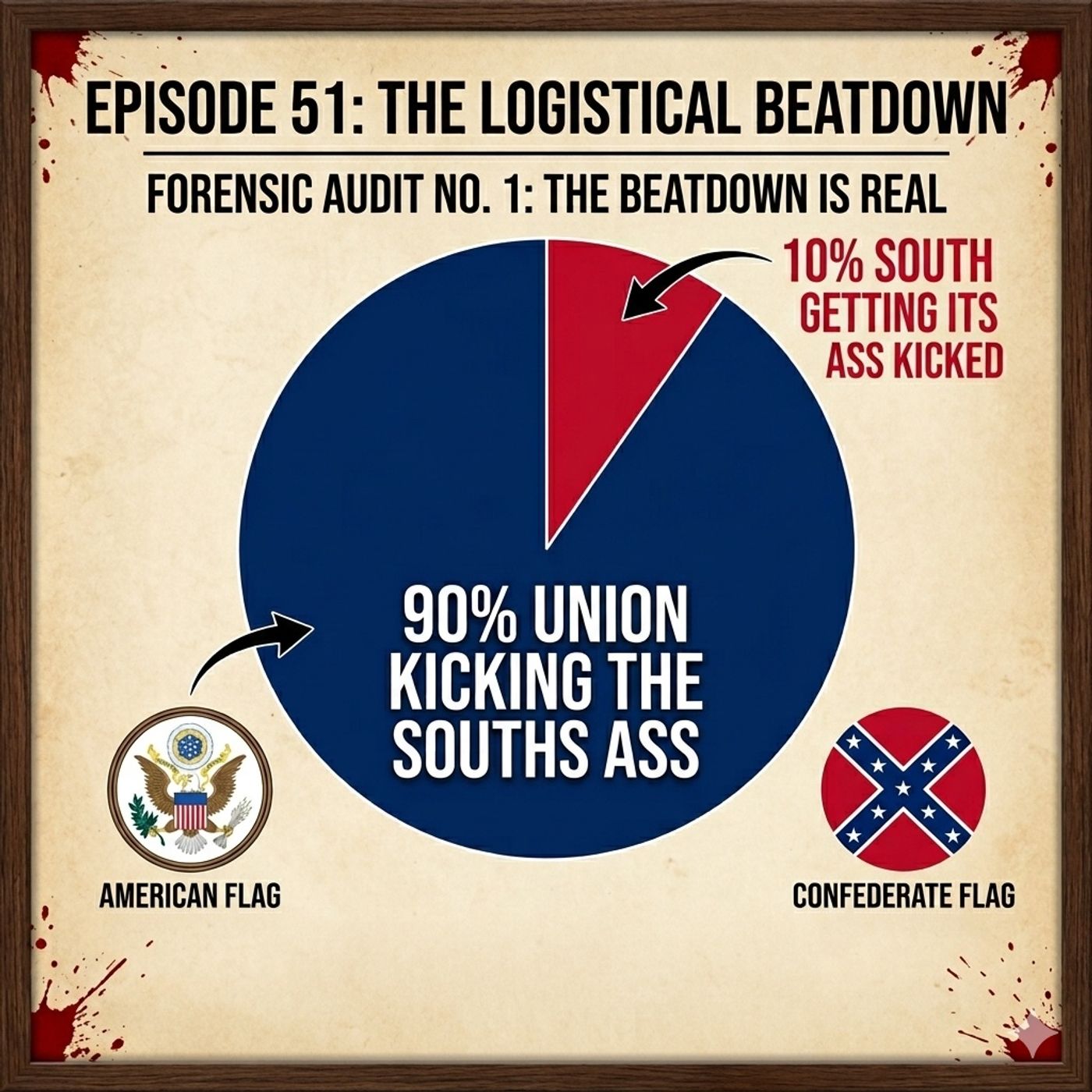
We are officially back on the clock, and the luxury of our self-indulgent intermission is over. Today, we drop the hammer on the cold, hard mathematics of the American Civil War. The sentimental mythology of the "Lost Cause" and the romanticized notions of Southern military chivalry end here. We are auditing the raw, operational assets of both the Union and the Confederacy to evaluate exactly why the North prevailed. The uncomfortable truth of 1861 is that before a single minié ball was fired, the war had already been won and lost on the balance sheets of industrial infrastructure, logistics, and demographic capital. We begin this forensic audit by dissecting the final political fracture: the catastrophic, highly divisive Election of 1860. When Abraham Lincoln secured the executive seat without appearing on a single Southern ballot, he did not just win an election—he triggered a full-blown corporate liquidation of the Republic. South Carolina’s immediate secession note cited Lincoln’s "House Divided" declaration that a government cannot endure permanently half-slave and half-free as a direct, existential threat to their agricultural economic model. But when the Confederacy struck Fort Sumter, they willfully blindfolded themselves to a terrifying reality: they were attempting to fight a modern, total war against a monolithic manufacturing machine while holding a remarkably losing hand. The rest of the period will be spent looking at the industrial spreadsheets that sealed the South's doom. We will contrast the numbers side-by-side: the Union's crushing 61% population dominance, which fed a relentless human assembly line of blue coats, against a Confederacy where nearly 40% of the population was enslaved human property. We will track how the North held 71% of the nation's railroad mileage to move troop logistics at mechanical speed, while the South suffocated under its own geographic isolation. Most damningly, we will look at a factory output ledger where the Union controlled a staggering 92% of the manufacturing capacity. The South mistakenly believed their King Cotton export dominance would force European alliance, but you cannot shoot raw cotton out of a cannon. Open your ledgers; it is time to look at the math of total slaughter. Become a supporter of this podcast: https://www.spreaker.com/podcast/4th-period-u-s-history--5621461/support. Visit the class at Spreaker.com and follow! Link to the page HERE! It would mean a lot and go a long way in helping grow class! Thank you for your support!
0:01Speaker 1Were the people of the United States, number of representatives
0:04Speaker 1sham bayers you name as FAMI and the House during
0:07Speaker 1the United States.
0:09Speaker 2Didn't really establish this constitution of the United States of America.
0:18Speaker 1Oh hey, Dominique, how's it going? What's going on? What
0:21Speaker 1is this you're handing me? You need a recommendation letter? Yeah, dude,
0:25Speaker 1I'll totally write you recommendation letter? What is this for?
0:30Speaker 1Stripper University? Dominique? Do you really need a recommendation for this?
0:37Speaker 1And in such? What the hell am I gonna write? No?
0:46Speaker 1I don't think I'm gonna do this. Okay, least you
0:49Speaker 1have a name for it, you know, if that is
0:51Speaker 1indeed your real name? Is it? Yes, Dominique is your
0:56Speaker 1real name? What would you go by? Glow? Oh, glitter princess? Okay, well,
1:03Speaker 1definitely not writing a recommendation for you, but I'm pretty
1:06Speaker 1sure you don't need one for that, So go ahead,